Quick Overview
This project focused on unlocking hyperlocal demand intelligence through City-Wise SKU Performance on Swiggy Instamart and the Swiggy Instamart Grocery Store Dataset to help a leading FMCG analytics firm understand shifting consumption patterns across India’s top metros. The client partnered with Product Data Scrape for a six-month engagement to build a city-level SKU performance intelligence layer for Mumbai, Bengaluru, and Delhi. The outcome delivered sharper forecasting accuracy, faster data refresh cycles, and improved market visibility across over 18,000 SKUs. As a result, the client achieved a 42% improvement in demand prediction accuracy, a 38% reduction in data latency, and a 29% uplift in campaign ROI for city-specific product launches.
The Client
The client is a fast-growing consumer analytics company serving FMCG brands, retail chains, and digital-first grocery platforms. As competition in quick commerce intensified, brands began demanding deeper insights into hyperlocal demand shifts—especially across metro markets with diverse consumption behaviors.
The client identified that traditional city-level dashboards were no longer sufficient. What they needed was a granular comparison framework using mumbai vs bengaluru vs delhi instamart datasets to understand SKU velocity, discount sensitivity, and assortment effectiveness in each city.
Before partnering with Product Data Scrape, their data ecosystem relied heavily on manual extraction and delayed third-party reports. This created gaps in real-time intelligence, slowed client reporting cycles, and limited their ability to provide actionable recommendations. With demand patterns changing weekly in quick commerce, the absence of automated, city-wise SKU performance tracking meant missed opportunities for brands to optimize pricing, promotions, and inventory planning. The need for transformation became urgent as clients demanded faster, more accurate, and location-specific insights.
Goals & Objectives
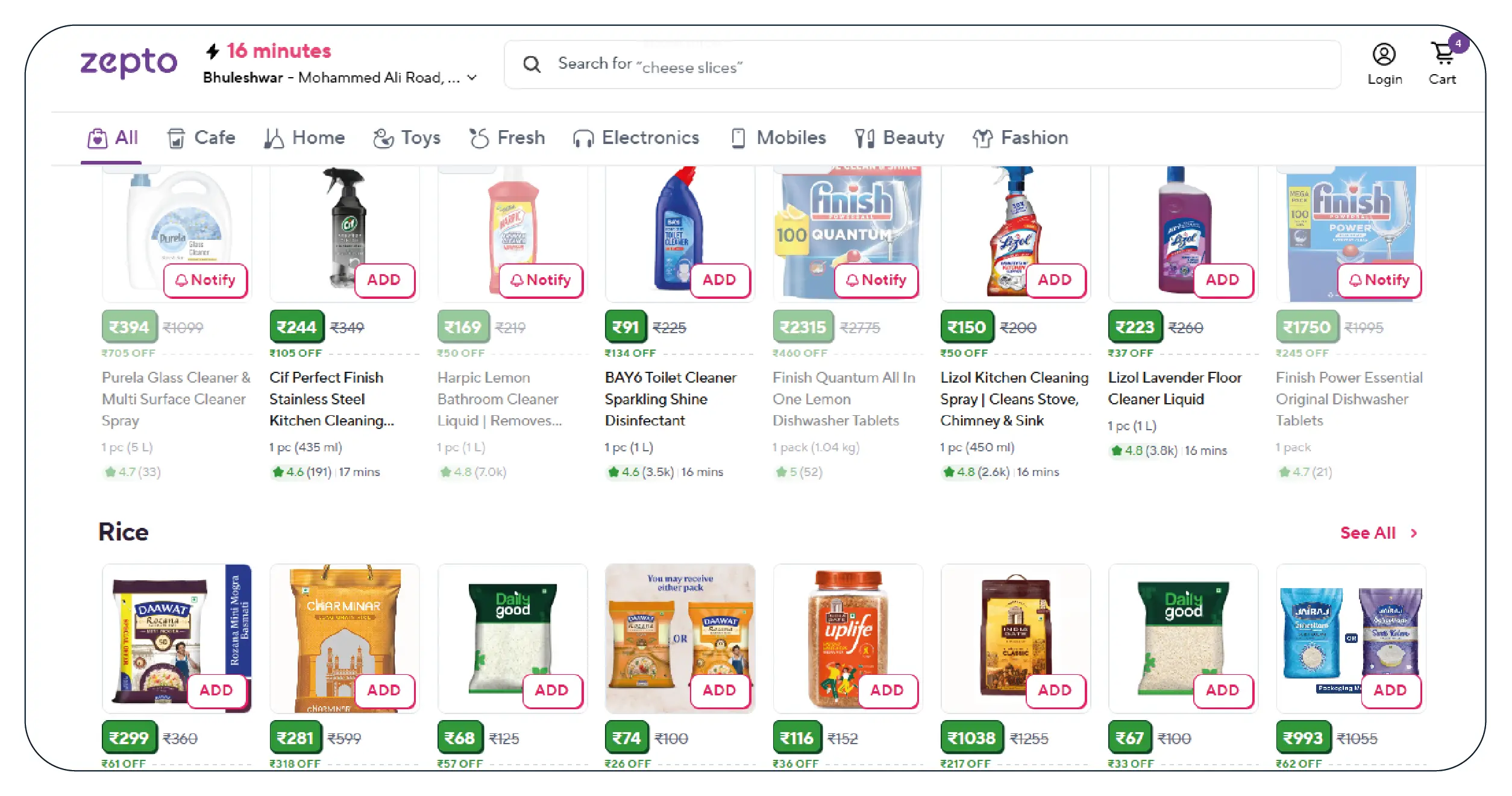
The primary business goal was to build a scalable system that could process a pincode wise grocery demand ai dataset while enabling real-time visibility into SKU performance trends across cities. The client also aimed to improve speed-to-insight and reduce dependency on delayed market reports.
On the technical front, the focus was automation, seamless integration with BI tools, and real-time dashboards powered by live pricing intelligence from Tracking Grocery Discounts on Blinkit, Zepto & JioMart alongside Instamart data.
Improve city-wise SKU forecast accuracy by 40%
Reduce data processing time by 35%
Increase campaign-level ROI for regional brands by 25%
Enable near real-time price and availability tracking
Improve dataset reliability score from 82% to 96%
The Core Challenge

Despite having access to multiple datasets, the client struggled with fragmented intelligence. Their internal teams worked with outdated city dashboards that failed to reflect real-time SKU movement, promotion cycles, and price shifts. The lack of automation meant frequent data inconsistencies, delayed updates, and incomplete SKU coverage across platforms.
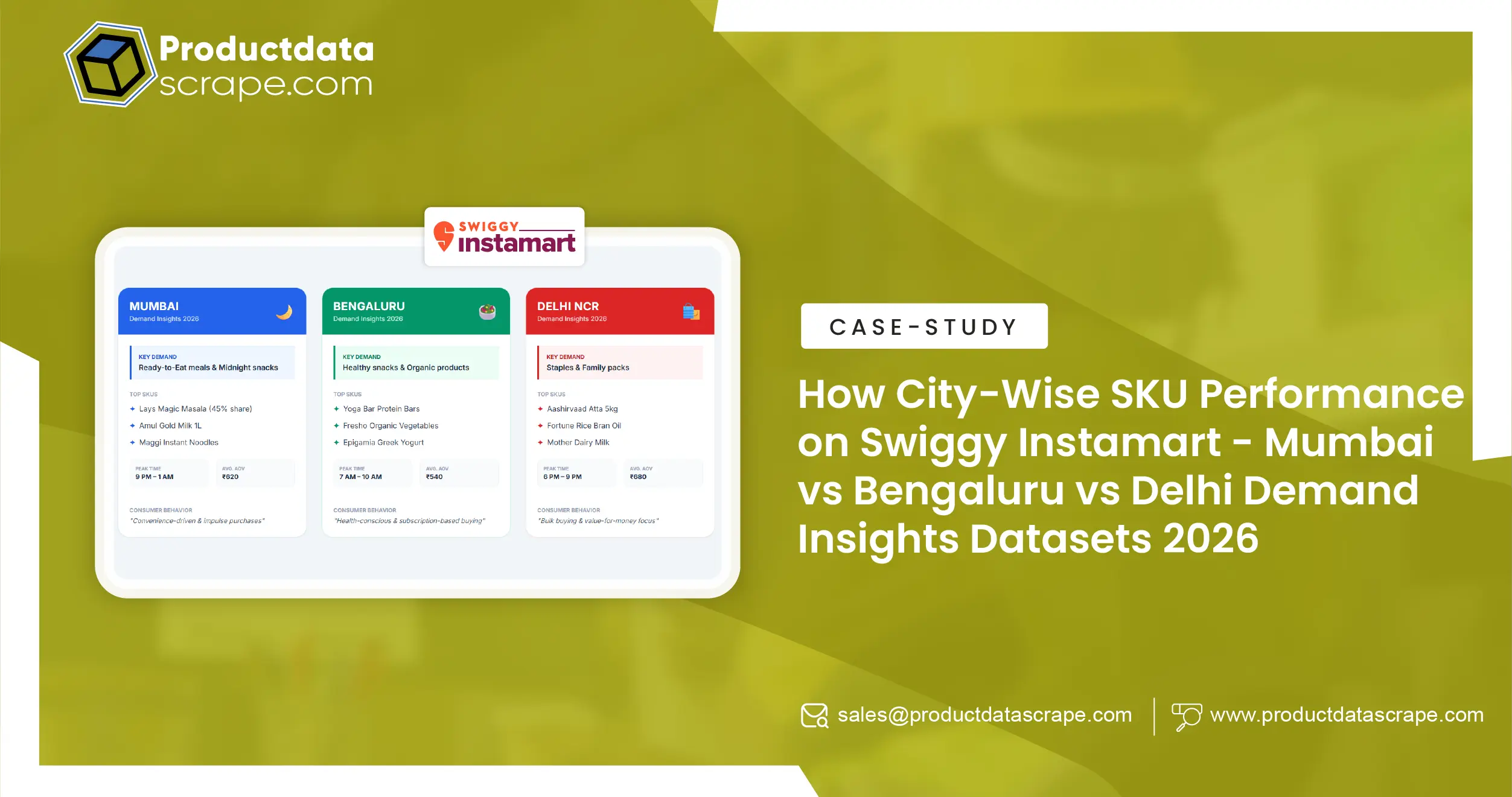
One of the biggest hurdles was the absence of a unified swiggy instamart city performance dataset 2026 that could accurately reflect SKU-level demand across Mumbai, Bengaluru, and Delhi. Manual processes made it difficult to compare trends, track fast-moving products, or analyze category shifts in a timely manner.
As competition among quick commerce platforms intensified, even a few hours’ delay in price or availability data reduced the client’s ability to guide brand partners effectively. This directly impacted campaign performance, inventory planning accuracy, and promotional ROI—making it clear that a fully automated, real-time data framework was no longer optional.
Our Solution
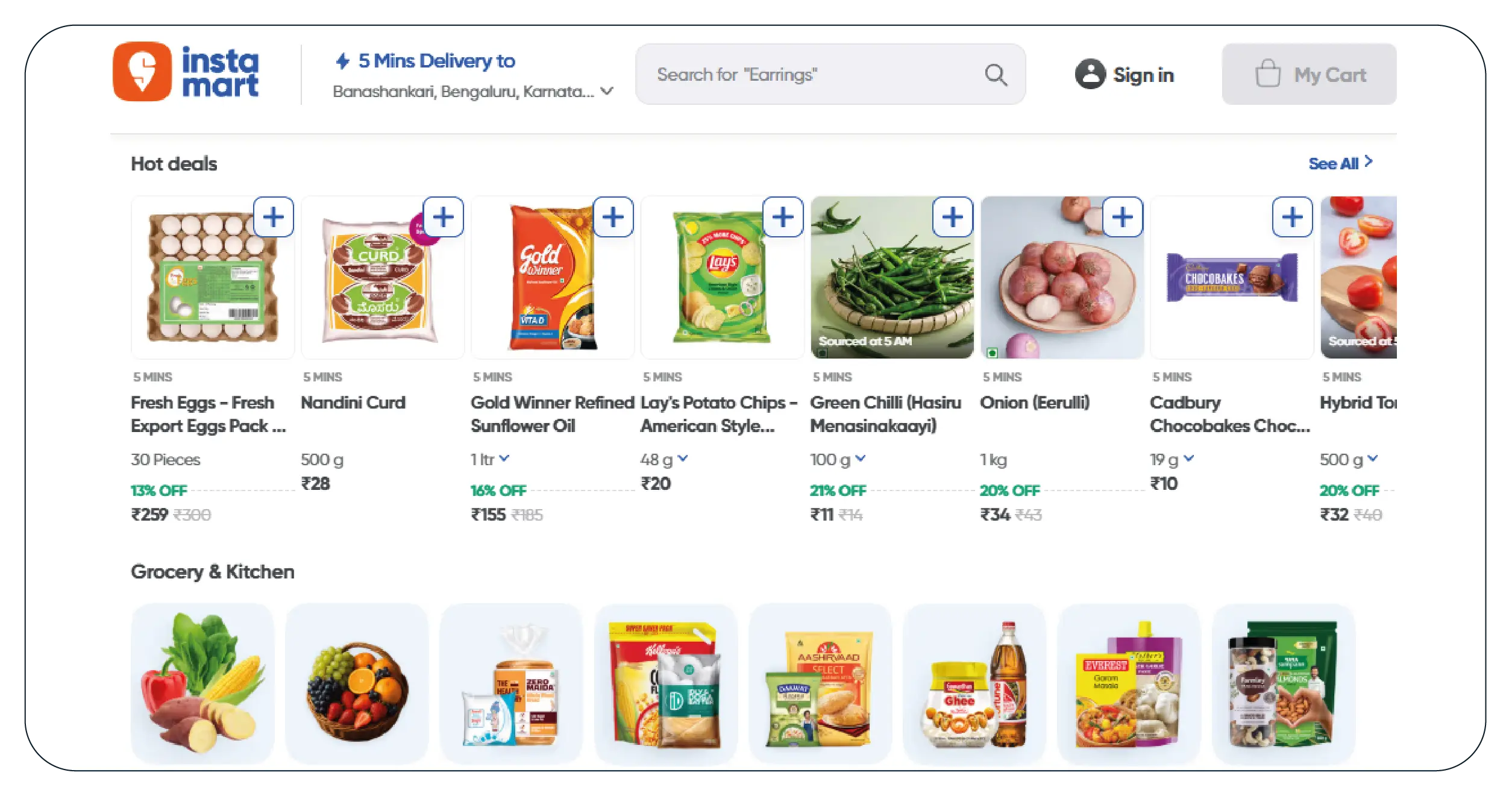
Product Data Scrape implemented a structured, three-phase solution to address the client’s challenges and deliver scalable market intelligence.
In Phase One, we built a robust automated pipeline focused on Analyzing Hyperlocal Grocery Trends with Real-Time Data. This included city-wise SKU tracking, real-time price capture, availability monitoring, and promotion intelligence across Swiggy Instamart. The system was designed to refresh data multiple times daily to ensure near-live accuracy.
Phase Two focused on advanced structuring of the instamart sku performance dataset for ai, enabling the client to plug insights directly into their predictive analytics models. This phase introduced standardized SKU taxonomy, category-level tagging, and city-wise velocity scoring to improve machine learning outcomes.
In Phase Three, we integrated automated dashboards that delivered comparative insights for Mumbai, Bengaluru, and Delhi. The dashboards showcased SKU growth trends, discount effectiveness, and basket composition patterns—allowing the client to provide real-time advisory to FMCG brands and retail partners.
This phased approach ensured seamless adoption, minimal disruption to existing workflows, and immediate value creation from day one.
Results & Key Metrics
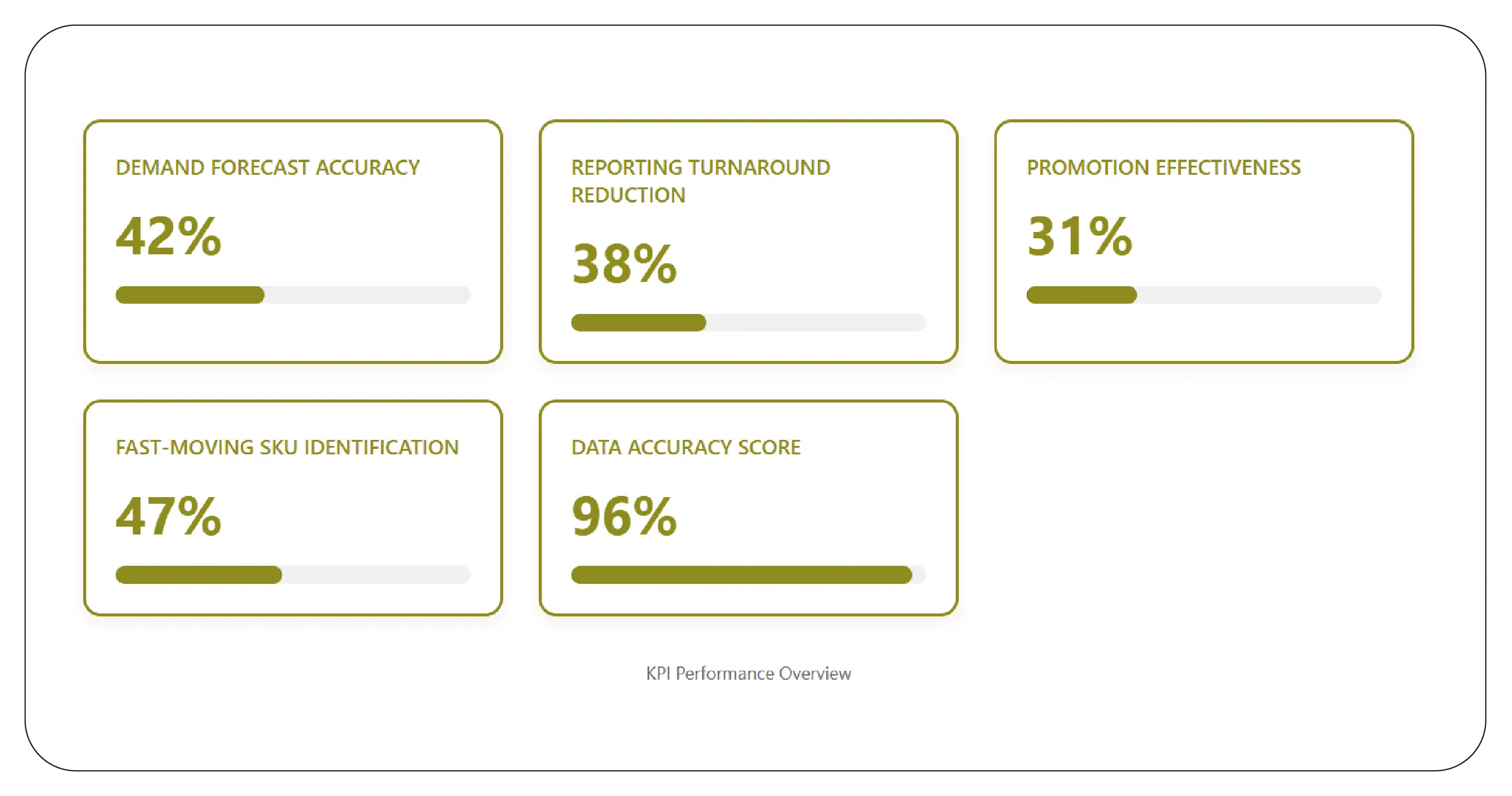
42% increase in city-wise demand forecast accuracy
38% reduction in reporting turnaround time
31% improvement in SKU-level promotion effectiveness
47% faster identification of fast-moving SKUs
96% data accuracy score across monitored categories
Results Narrative
With the implementation of the swiggy instamart dataset for market research analysis, the client transitioned from reactive reporting to proactive market intelligence. Brand partners could now adjust pricing strategies within hours instead of weeks, launch city-specific bundles, and optimize inventory based on real demand signals. The solution transformed the client’s positioning—from a data provider to a strategic intelligence partner in the quick commerce ecosystem.
What Made Product Data Scrape Different?
Product Data Scrape stood apart through its proprietary automation framework and intelligent data validation layers powered by the Swiggy Instamart Quick Commerce Data Scraping API. Unlike conventional scraping setups, our system ensured high-frequency updates without platform disruption, supported deep SKU-level tagging, and delivered enterprise-grade data reliability. This innovation enabled the client to scale from 3 cities to 12 cities within a year—without increasing operational overhead.
Client’s Testimonial
“Product Data Scrape transformed the way we look at quick commerce data. Their city-wise SKU intelligence helped us move from delayed reporting to real-time strategic decision-making. Today, our FMCG clients rely on us for hyperlocal insights that actually drive revenue growth.”
— Head of Market Intelligence, Consumer Analytics Firm
Conclusion
As quick commerce competition intensifies, brands and analytics firms can no longer rely on broad market trends alone. Precision matters. With the Swiggy Instamart Quick Commerce Scraper, Product Data Scrape empowers businesses to unlock hyperlocal SKU intelligence, improve demand forecasting, and stay ahead in city-specific pricing and promotion battles. This case study demonstrates how data automation and real-time insights can redefine market leadership in India’s fast-moving grocery ecosystem.
FAQs
1. Why is city-wise SKU analysis important in quick commerce?
Because consumer behavior varies significantly by location, city-wise SKU analysis helps brands optimize assortments, pricing, and promotions for each market.
2. How often is Swiggy Instamart data updated?
With automated pipelines, data can be refreshed multiple times daily to ensure near real-time accuracy.
3. Can this solution scale beyond metros?
Yes. The framework is designed to scale across Tier 1, Tier 2, and emerging urban markets.
4. Does the dataset support AI and predictive modeling?
Absolutely. Structured SKU datasets are optimized for machine learning, forecasting, and demand modeling.
5. Who benefits most from this solution?
FMCG brands, retail chains, market research firms, and pricing intelligence teams looking to win in hyperlocal quick commerce markets.



 Singapore
 EMAIL
EMAIL
 PHONE
PHONE










.webp)