Introduction
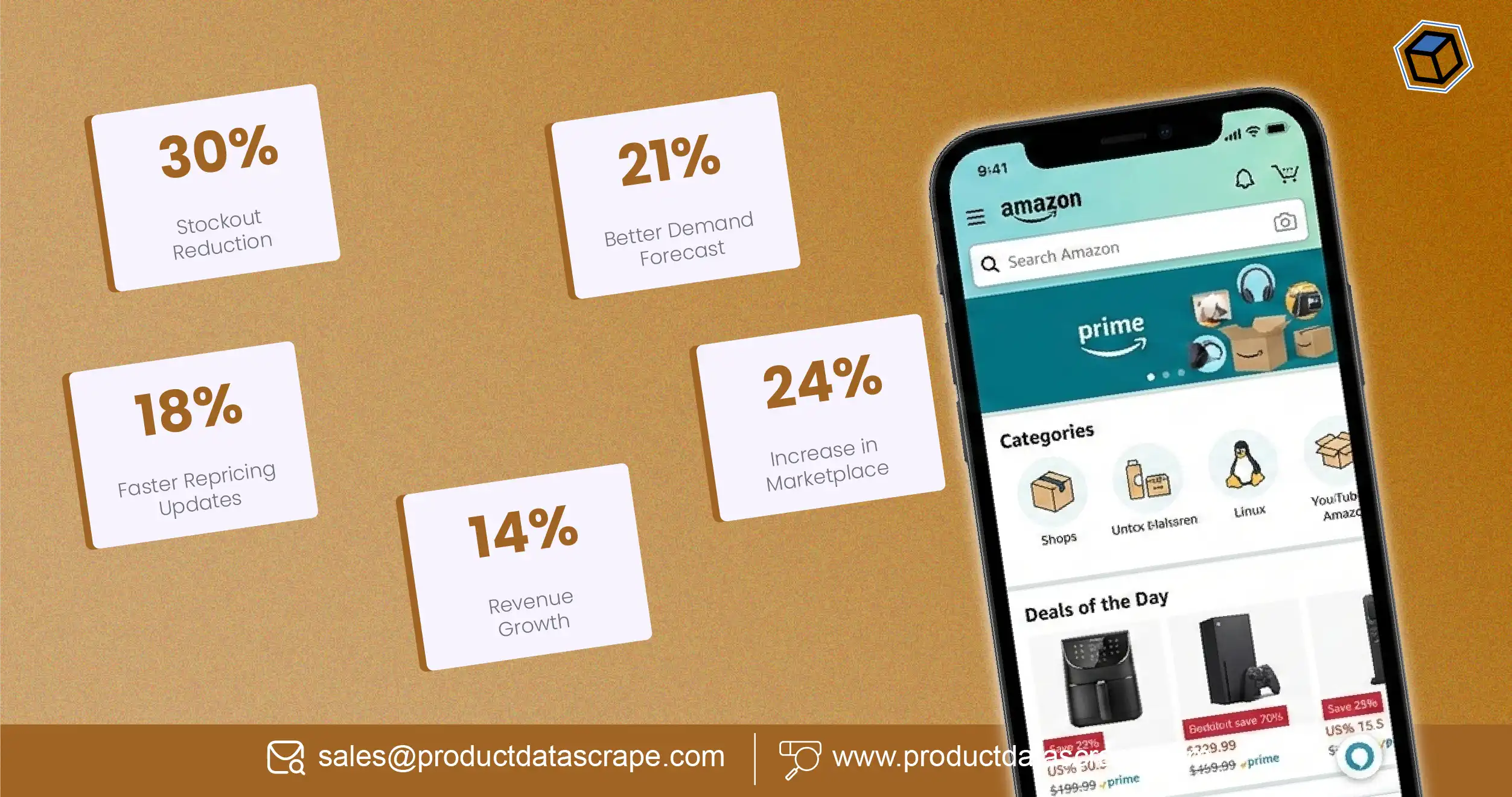
The rapid growth of mobile commerce has transformed how consumers shop, compare prices, and make purchasing decisions. Amazon’s mobile app dominates global eCommerce usage, accounting for a significant share of transactions between 2020 and 2026. However, businesses attempting to Extract Amazon mobile app product details often encounter technical and structural barriers. The mobile app environment differs greatly from desktop websites due to encrypted APIs, dynamic content loading, and app-layer authentication systems.
Unlike traditional scraping, mobile app extraction requires advanced techniques such as API traffic interception, reverse engineering, and automation frameworks. Companies looking to Extract amazon API Product Data must also handle rate limits, token validation, and anti-bot protections. These complexities increase costs and risks if not managed properly.
Despite these challenges, accurate product data—including pricing, discounts, ratings, reviews, and stock availability—is critical for competitive intelligence, dynamic pricing, and retail analytics. Automation is no longer optional; it is essential for scalability and compliance in modern eCommerce ecosystems.
The Mobile Commerce Data Barrier
Amazon’s mobile app ecosystem is built with layered security mechanisms that make data extraction challenging. Between 2020 and 2026, mobile commerce sales grew significantly, increasing Amazon’s focus on protecting its app infrastructure. Businesses investing in Amazon mobile app discount tracking face frequent UI changes and server-side rendering updates.
Many brands rely on an Amazon Product Data Scraper, but traditional tools struggle with encrypted requests and rotating authentication keys. App-based APIs are often private and undocumented, making reverse engineering necessary. Additionally, behavioral bot detection systems monitor device fingerprints, session patterns, and request intervals.
Mobile Commerce Growth Trends (2020–2026)
| Year |
Global Mobile Commerce Sales ($ Trillion) |
% eCommerce via Mobile |
| 2020 |
1.1 |
48% |
| 2022 |
1.48 |
52% |
| 2024 |
2.07 |
57% |
| 2026* |
2.74 |
60% |
As mobile dominance increases, Amazon strengthens security layers, making automated extraction more complex. Without proper proxy rotation, session management, and API monitoring, data accuracy declines significantly. Businesses must adopt scalable automation pipelines rather than manual scraping methods to maintain competitive visibility.
Dynamic Pricing and Real-Time Fluctuations
Amazon’s pricing engine updates product prices multiple times daily based on demand, competition, and inventory levels. Companies attempting to Extract product prices from Amazon app often encounter dynamic rendering systems that load pricing data through asynchronous API calls.
Retail intelligence providers that Scrape Data From Any Ecommerce Websites understand that Amazon’s app uses structured JSON responses delivered after authentication validation. Missing even one request header can result in incomplete data extraction.
Price Volatility Index (2020–2026)
.webp)
This volatility increases the need for automated systems capable of handling high-frequency extraction cycles. Real-time monitoring ensures pricing accuracy for sellers adjusting their strategies. Automation also reduces manual errors and ensures compliance with structured data requirements.
API Complexity and Monitoring Systems
Amazon’s mobile app relies heavily on private APIs that require authentication tokens and encrypted request signatures. Businesses aiming to Extract amazon API Product Data must intercept network calls and decode structured payloads carefully.
Effective Price Monitoring depends on stable API session handling and scalable infrastructure. Token expiration, IP rate limits, and CAPTCHA challenges add additional barriers.
API Protection Evolution (2020–2026)
| Year |
API Rate Limits |
Anti-Bot Strength Index |
| 2020 |
Moderate |
6/10 |
| 2022 |
High |
8/10 |
| 2024 |
Very High |
9/10 |
| 2026* |
Advanced AI Detection |
9.5/10 |
Automation frameworks now integrate smart rotation, human-like browsing patterns, and advanced monitoring scripts. Without these systems, extraction pipelines fail frequently. Businesses must combine API traffic analysis with automated validation checks to ensure data continuity.
Infrastructure and Automation Frameworks
To Extract product data from Amazon app, companies need scalable cloud infrastructure and adaptive scraping logic. Amazon frequently updates its app interface and backend architecture, making static scrapers ineffective.
Professional-grade Web Scraping API Services integrate proxy management, request throttling, and automated error recovery.
Automation Investment Trends (2020–2026)
.webp)
Automation not only improves reliability but also ensures scalability during peak sales seasons. Structured pipelines allow seamless extraction across thousands of SKUs without interruption.
Catalog Expansion and Data Structuring
Amazon’s product catalog has expanded dramatically, requiring sophisticated Amazon app product catalog scraping techniques. Categories, subcategories, and variant listings increase extraction complexity.
Companies building an eCommerce Dataset must normalize product attributes such as ASIN, SKU, pricing tiers, reviews, and availability.
Catalog Growth (2020–2026)
| Year |
Estimated Active Listings (Millions) |
| 2020 |
350 |
| 2022 |
420 |
| 2024 |
500 |
| 2026* |
610 |
Managing this volume requires structured data pipelines and automated validation layers. Clean datasets empower pricing analysis, demand forecasting, and trend monitoring.
SKU-Level Intelligence and Competitive Insights
Advanced retailers rely on Amazon app SKU-level data scraping to analyze product variants, bundle offers, and promotional pricing. SKU-level visibility enhances margin optimization strategies.
Enterprises using Competitor Price Monitoring Services track rival pricing movements in real time to adjust campaigns accordingly.
Competitive Monitoring Impact (2020–2026)
.webp)
Granular automation ensures businesses remain responsive in competitive markets. Without SKU-level intelligence, pricing strategies become reactive instead of proactive.
Why Choose Product Data Scrape?
Businesses seeking reliable Web Scraping Amazon E-Commerce Product Data need scalable, secure, and compliant solutions. Product Data Scrape delivers advanced automation systems designed to Extract Amazon mobile app product details with high accuracy and speed. Our infrastructure handles encrypted APIs, rotating proxies, and dynamic pricing updates efficiently. We provide structured outputs, real-time monitoring dashboards, and customizable extraction pipelines tailored to business needs. With expertise in app-layer scraping, we ensure minimal disruption and maximum data reliability for competitive analysis and growth strategies.
Conclusion
Extracting mobile app data is increasingly complex due to encrypted APIs, AI-driven bot detection, and dynamic content systems. Businesses that rely on static scraping methods risk inaccurate datasets and missed competitive insights. Investing in automation enables structured access to an Amazon Products E-commerce Product Dataset while ensuring scalability and compliance. Companies aiming to Extract Amazon mobile app product details must adopt advanced API monitoring, proxy rotation, and intelligent automation tools to stay ahead in the evolving eCommerce landscape.
Ready to automate your Amazon mobile data extraction strategy? Contact Product Data Scrape today and transform raw app data into actionable growth insights!
FAQs
1. Why is extracting Amazon mobile app data more complex than desktop scraping?
Mobile apps use encrypted APIs, authentication tokens, and dynamic rendering systems, making extraction technically advanced and requiring automation-based solutions for accuracy and scalability.
2. How often does Amazon update mobile app pricing?
Amazon’s pricing engine updates multiple times daily, driven by demand, competitor pricing, and inventory shifts, requiring real-time automated monitoring tools for accurate tracking.
3. What tools are required for automated extraction?
Advanced proxy networks, API interception tools, automation scripts, and scalable cloud infrastructure are essential to maintain uninterrupted product data pipelines.
4. Can small businesses benefit from SKU-level tracking?
Yes, SKU-level insights improve margin optimization, competitor benchmarking, and targeted promotions, even for mid-sized and growing eCommerce sellers.
5. How does Product Data Scrape ensure data accuracy?
Product Data Scrape uses automated validation systems, structured extraction models, and intelligent monitoring pipelines to deliver consistent and high-quality Amazon product datasets.



 Singapore
 EMAIL
EMAIL
 PHONE
PHONE












.webp)