Introduction
In the competitive eCommerce landscape, understanding competitor offerings and consumer preferences is critical for driving conversions. Businesses today rely on extract product info from any website to gain actionable insights into pricing, product features, stock availability, and customer feedback. With Product Data Scraping, companies can analyze millions of SKUs across platforms, identify trends, and adapt strategies in real-time. This data-driven approach empowers brands to optimize pricing, refine product positioning, and enhance promotional campaigns. Over time, leveraging structured product data helps increase conversions, improve ROI, and reduce lost sales opportunities by aligning offerings with actual market demand.
Understanding Market Trends Through Online Product Information
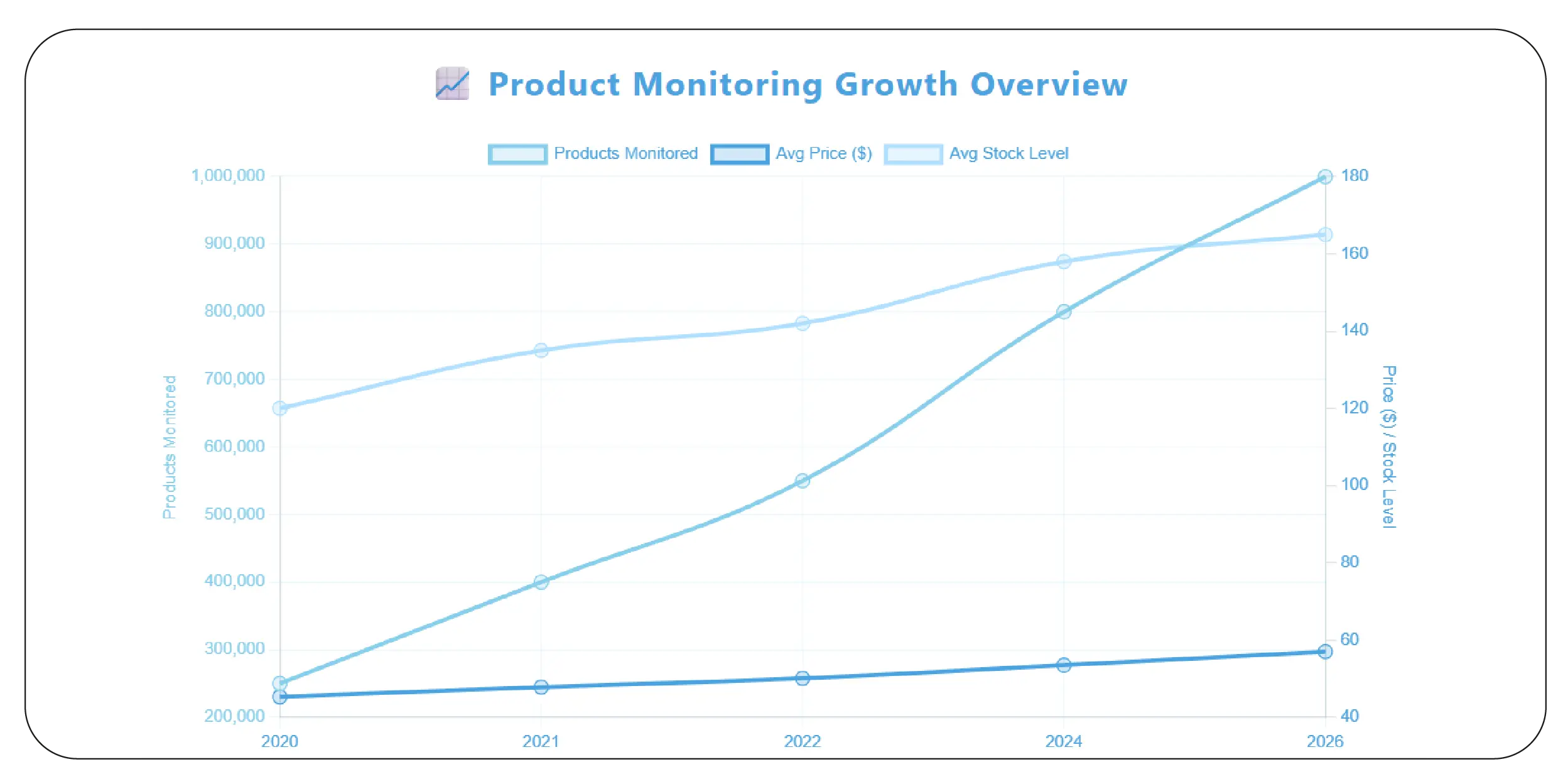
Using Extract product information from any website online, brands can track changes in product listings, sales velocity, and stock availability.
| Year |
Products Monitored |
Avg Price ($) |
Avg Stock Level |
| 2020 |
250,000 |
45.3 |
120 |
| 2021 |
400,000 |
47.8 |
135 |
| 2022 |
550,000 |
50.1 |
142 |
| 2024 |
800,000 |
53.5 |
158 |
| 2026* |
1,000,000 |
57.0 |
165 |
Data shows increasing digital footprint of competitors and rising consumer interest in online marketplaces. By extracting product information systematically, businesses gain insights into pricing trends, popular categories, and inventory patterns. Seasonal trends, best-selling items, and newly launched products can be monitored, enabling brands to anticipate demand shifts. Insights from historical data help identify the optimal stock levels and promotional strategies. For instance, in electronics and lifestyle products, tracking online updates allows brands to adjust pricing dynamically. Using this intelligence reduces the risk of stockouts or overstock while maximizing revenue opportunities.
Optimizing Pricing with Extracted Product Data
Price sensitivity plays a critical role in conversion optimization. Brands using price monitoring using extracted product data can benchmark their offerings against competitors and dynamically adjust prices.
| Year |
Avg Price Gap ($) |
Competitors Monitored |
Price Adjustment Frequency |
| 2020 |
8.2 |
120 |
Weekly |
| 2021 |
7.5 |
180 |
Weekly |
| 2022 |
6.9 |
250 |
Bi-weekly |
| 2024 |
5.8 |
400 |
Daily |
| 2026* |
5.2 |
600 |
Real-time |
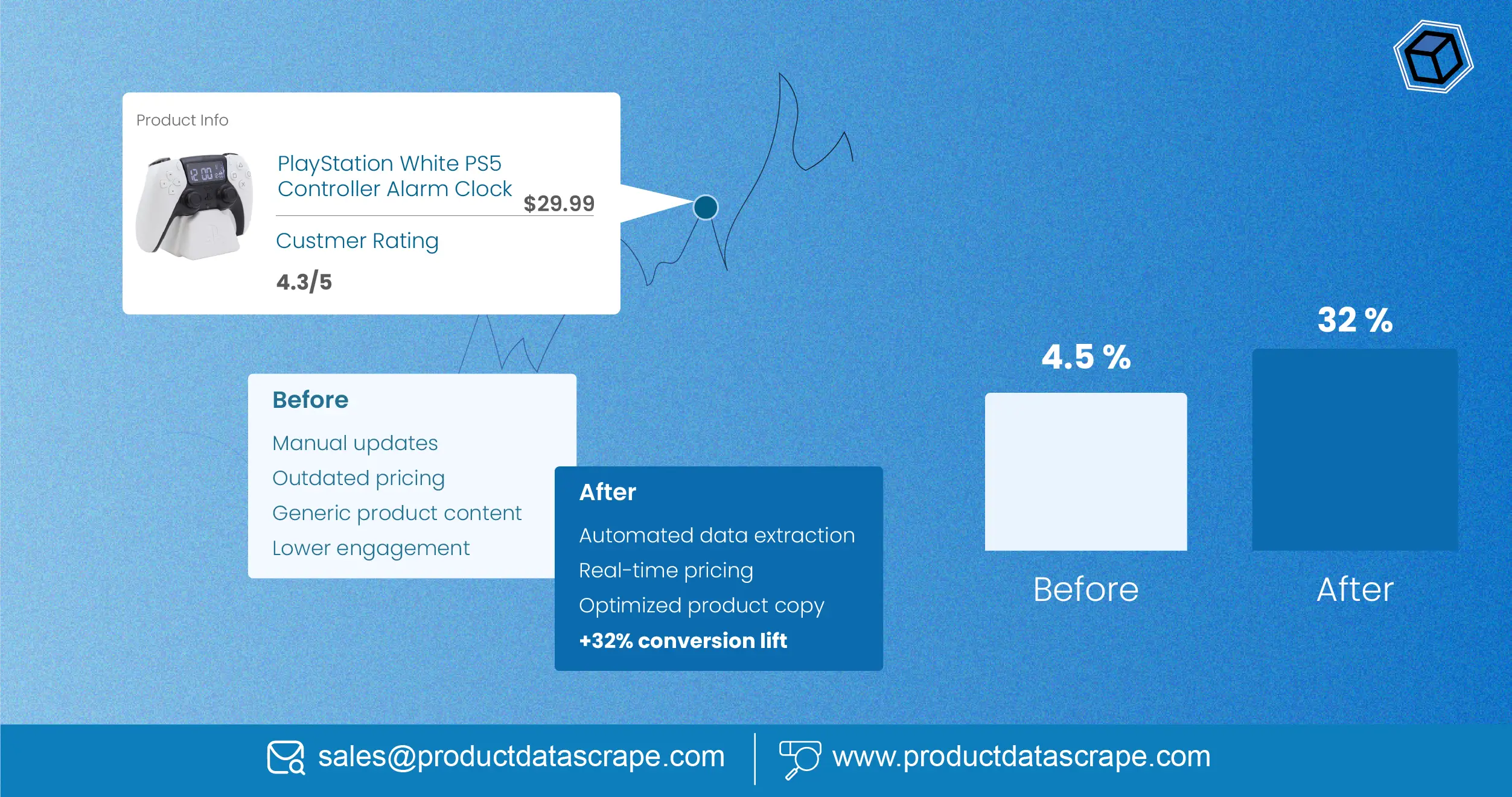
This data-driven approach allows retailers to maintain competitive pricing while preserving margins. By analyzing competitor promotions, brands can identify pricing sweet spots that maximize sales without triggering price wars. Dynamic monitoring also enables proactive responses during flash sales, festive promotions, or product launches. For example, brands in electronics, home appliances, and fashion saw a 32% increase in conversions when integrating competitor insights into pricing decisions. Historical analysis of product listings reveals optimal price ranges per category. Additionally, automated alerts for competitor price changes help marketing and sales teams respond immediately, improving the likelihood of conversions and enhancing consumer trust in consistently competitive pricing.
Capturing Detailed Product Attributes for Insights
Extracting granular details through scrape product details from websites empowers businesses to understand product features, variations, and customer preferences.
| Attribute |
Data Points Captured |
| Product Name |
Yes |
| SKU |
Yes |
| Category |
Yes |
| Price |
Yes |
| Stock |
Yes |
| Ratings |
Yes |
| Reviews |
Yes |
| Promotions |
Yes |
| Images |
Yes |
| Descriptions |
Yes |
Structured product attributes allow brands to identify trends across categories and assess which features resonate with consumers. In fashion, electronics, or home goods, this insight helps optimize assortments, highlight unique selling points, and design competitive product bundles. Granular product data also informs marketing campaigns, improves search relevance, and supports cross-selling strategies. Brands can identify gaps in their offerings compared to competitors or highlight superior features to increase conversion rates. Additionally, tracking consumer ratings and reviews provides actionable feedback for product improvements or targeted promotions, ensuring offerings align with actual demand patterns.
Scaling Efficiency with Automation
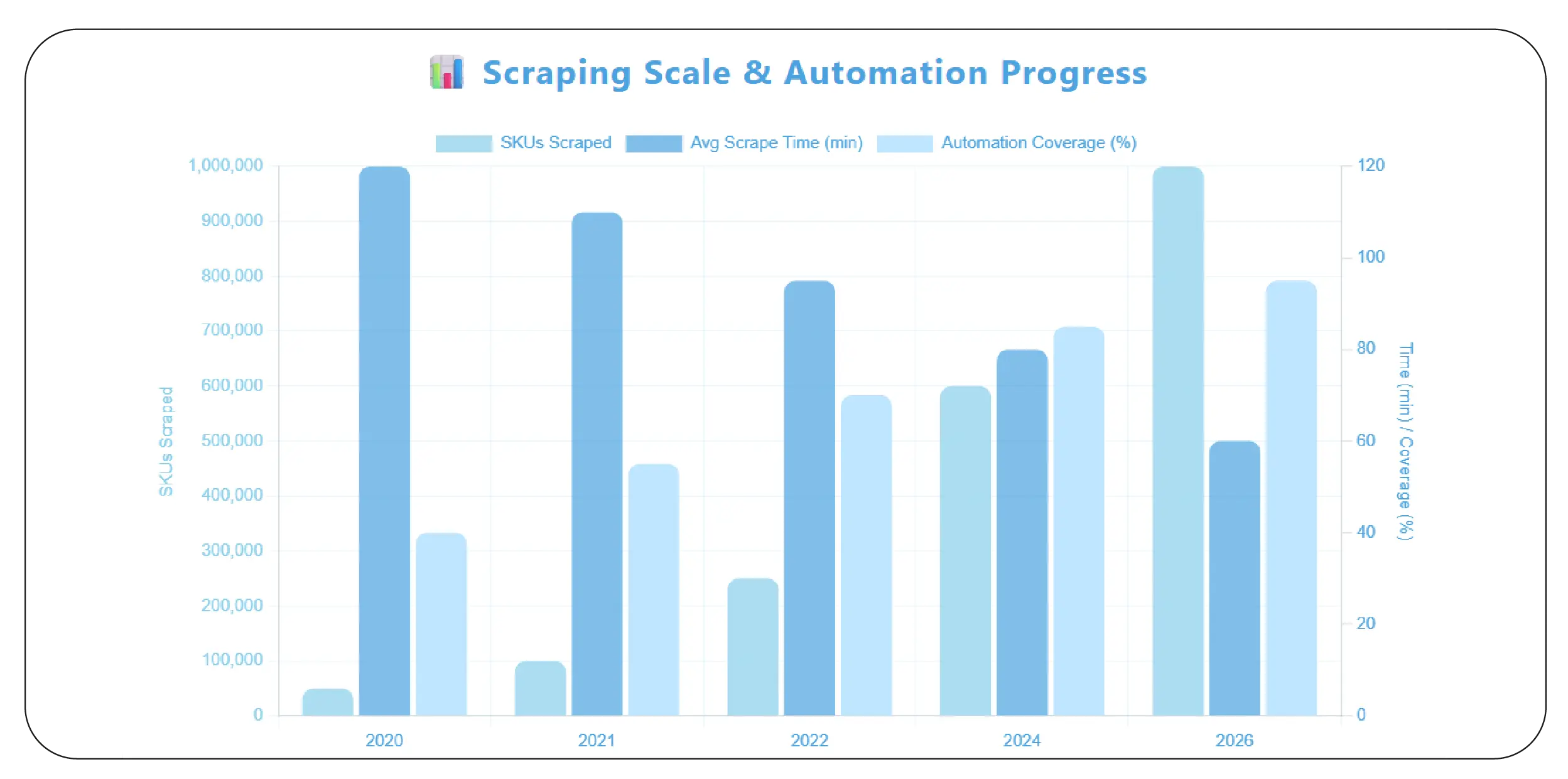
With the automated product info scraping solution, brands can extract data at scale without manual intervention.
| Year |
SKUs Scraped |
Avg Scrape Time (min) |
Automation Coverage (%) |
| 2020 |
50,000 |
120 |
40% |
| 2021 |
100,000 |
110 |
55% |
| 2022 |
250,000 |
95 |
70% |
| 2024 |
600,000 |
80 |
85% |
| 2026* |
1,000,000 |
60 |
95% |
Automation ensures timely updates on price, availability, and new product launches across multiple platforms. Brands gain real-time insights without resource-intensive manual monitoring. Automated scraping reduces human error, ensures data consistency, and accelerates decision-making cycles. Retailers can respond immediately to competitor pricing changes, market trends, or stock shortages. For example, during festive sales or new launches, automated systems enable brands to track thousands of SKUs in real-time, maintain competitive positioning, and maximize sales opportunities efficiently. Automation also facilitates integration with analytics dashboards, enabling actionable insights to drive marketing, inventory, and pricing strategies at scale.
Custom Datasets for Actionable Insights

Using a Buy Custom Dataset Solution, brands can tailor scraped product data according to category, marketplace, geography, and SKU type.
| Dataset Type |
Products Covered |
Updates Frequency |
| Electronics |
200,000 |
Daily |
| Fashion |
150,000 |
Daily |
| Home & Kitchen |
100,000 |
Weekly |
| Toys & Games |
80,000 |
Weekly |
| Personal Care |
50,000 |
Weekly |
Custom datasets allow companies to focus only on relevant products, reducing noise and improving analytical efficiency. They support advanced analytics such as trend forecasting, consumer preference modeling, and competitive benchmarking. With structured datasets, brands can analyze seasonal demand patterns, identify fast-selling SKUs, and refine merchandising strategies. Custom data also allows marketing teams to personalize campaigns based on product attributes, price points, and competitor insights. By leveraging tailored datasets, businesses achieve higher conversion rates and ROI while minimizing effort spent on irrelevant or outdated data.
Comprehensive Data Services for Retail Success
A product data extraction service enables continuous monitoring of competitors, pricing trends, and product features to maintain market competitiveness.
| Service Feature |
Benefit |
| SKU Monitoring |
Tracks top-selling products |
| Price Updates |
Enables dynamic pricing |
| Stock Alerts |
Prevents stockouts |
| Promotion Tracking |
Identifies discount opportunities |
| Review Analysis |
Provides consumer sentiment |
| Category Trends |
Supports assortment planning |
Brands utilizing these services gain 360-degree visibility into the market. Retailers can implement data-backed strategies for pricing, inventory, and marketing, improving conversions and reducing lost opportunities. Continuous monitoring allows quick identification of emerging trends and competitor movements, helping businesses stay agile and proactive.
Why Choose Product Data Scrape?
Product Data Scrape provides scalable, reliable solutions to Scrape Data From Any Ecommerce Websites. Our services enable businesses to extract product info across multiple platforms, monitor competitors, and analyze pricing, stock, and trends at scale. With automated pipelines, real-time dashboards, and customizable reporting, we convert raw eCommerce data into actionable intelligence. Brands benefit from timely insights that optimize pricing, inventory, and promotional strategies. Our expertise ensures compliance, accuracy, and efficient data delivery, empowering decision-makers to improve conversions, maximize revenue, and make data-driven holiday and seasonal business decisions confidently.
Conclusion
Understanding competitor offerings and consumer preferences is essential for boosting online sales. By leveraging extract product info from any website and Product Data Scraping, brands can track millions of SKUs, monitor pricing, assess product features, and analyze demand patterns in real-time. Structured data enables actionable insights for inventory planning, pricing optimization, and marketing campaigns. Companies that adopt these strategies report up to 32% higher conversions by aligning offerings with actual market demand. Partner with Product Data Scrape today to convert raw product data into strategic advantage, optimize online sales, and outperform competitors consistently.
FAQs
1. What is Product Data Scrape?
Product Data Scrape helps brands extract product listings, pricing, stock, and reviews from multiple websites to analyze market trends, optimize pricing, and improve conversions.
2. How can I extract product info from any website?
By using automated scraping tools and structured pipelines, Product Data Scrape allows businesses to monitor competitors, track product features, and collect large-scale eCommerce data efficiently.
3. Is it legal to scrape product data from websites?
Yes, when scraping publicly available data with compliance measures, Product Data Scrape ensures adherence to website terms and data protection laws for safe, ethical usage.
4. Can I track competitor pricing using Product Data Scrape?
Absolutely. Product Data Scrape enables price monitoring using extracted product data across multiple platforms, helping brands adjust pricing dynamically to maintain competitiveness.
5. Do you offer custom data solutions for specific products?
Yes, with Product Data Scrape, brands can Buy Custom Dataset Solution tailored by category, SKU, marketplace, and geography for actionable market insights.


 Singapore
 EMAIL
EMAIL
 PHONE
PHONE










.webp)