Offer loading

🎉 NEW YEAR SPECIAL FLAT 35% OFF
On Product Data Scraping Services | 30 DEC – 02 JAN Get Offer 🚀
Meesho Scraper - How to Effortlessly Extract Product Data for Your Online Business

Introduction

In the world of online retail and dropshipping, extracting accurate product intelligence is a game changer. With a Meesho Scraper For to Extract Meesho Data, you unlock a consistent flow of actionable data from one of India’s largest social commerce platforms. Whether you are using a Meesho Products Data Extractor, gearing up to scrape any data from Meesho.com , or planning to scrape Meesho product listings and prices, the right tool can elevate your decision making. This blog walks you through how to leverage such a scraper effectively, along with the broader context of data scraping in e commerce.

Meesho Scraper For to Extract Meesho Data

From 2020 to 2025, the e-commerce data extraction landscape has grown dramatically:

Year Global Web Scraping Market Size* Key Trend for E-commerce Data Extraction
2020 ~ US$ 4 billion (approx) Companies beginning to use scraping for pricing & catalog monitoring
2021 ~ US$ 5 billion Increasing use of automation and headless browsers
2022 ~ US$ 6.5 billion More advanced data from retail and e-commerce sites
2023 ~ US$ 7.5 billion E-commerce scraping becoming mainstream (80%+ use in one report)
2024 ~ US$ 8.5 billion Rise of AI-driven scraping to adapt to changing web pages
2025 Projected > US$ 9 billion E-commerce leads the growth.

For your purpose of utilising a Meesho Scraper, you’re tapping into a growth area with strong business demand. You’re not just gathering data; you’re working in a domain where timely, accurate data equals competitive advantage.

What the Tool Does (Use Case Focus)

What the Tool Does (Use Case Focus)
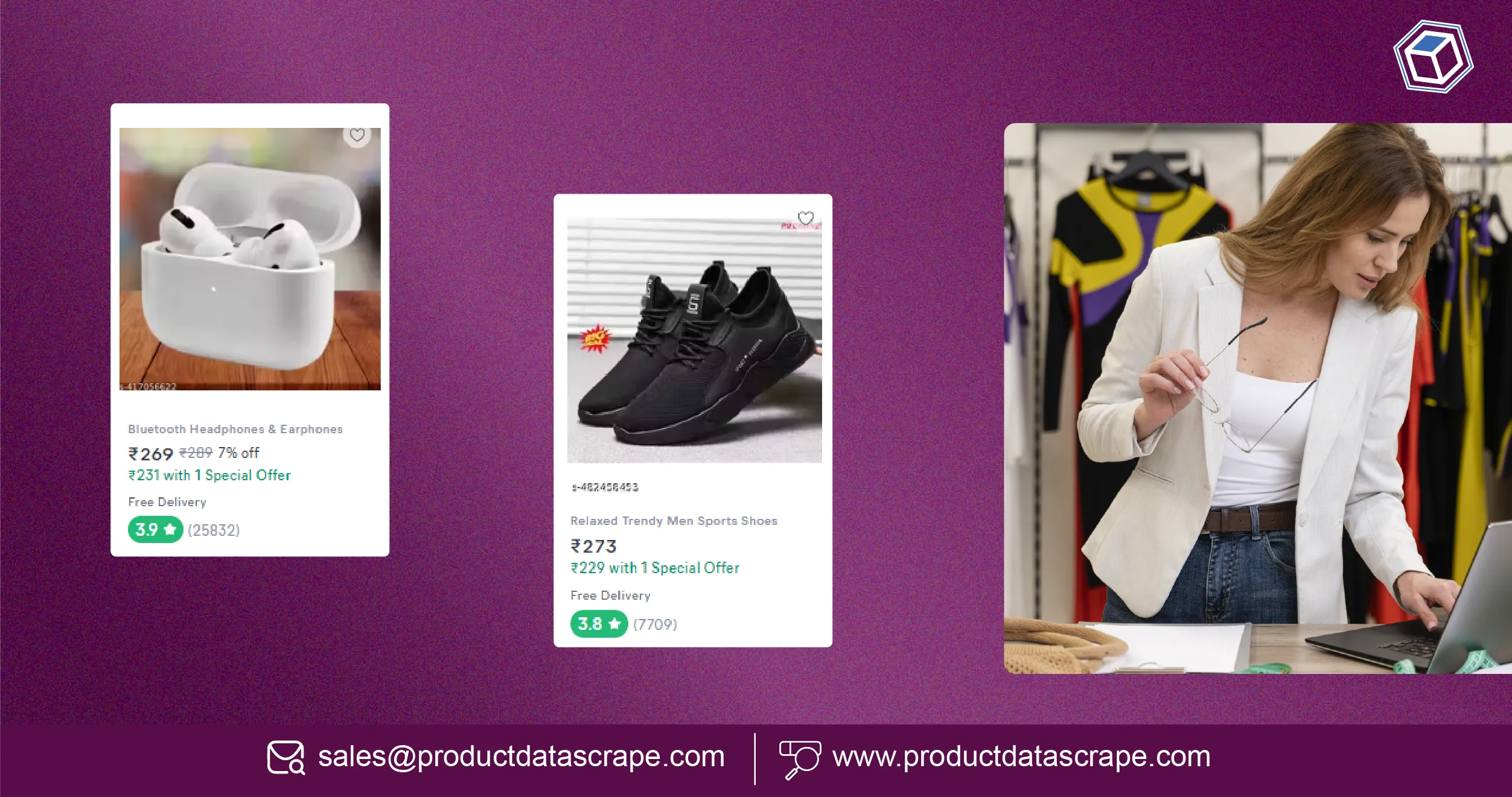
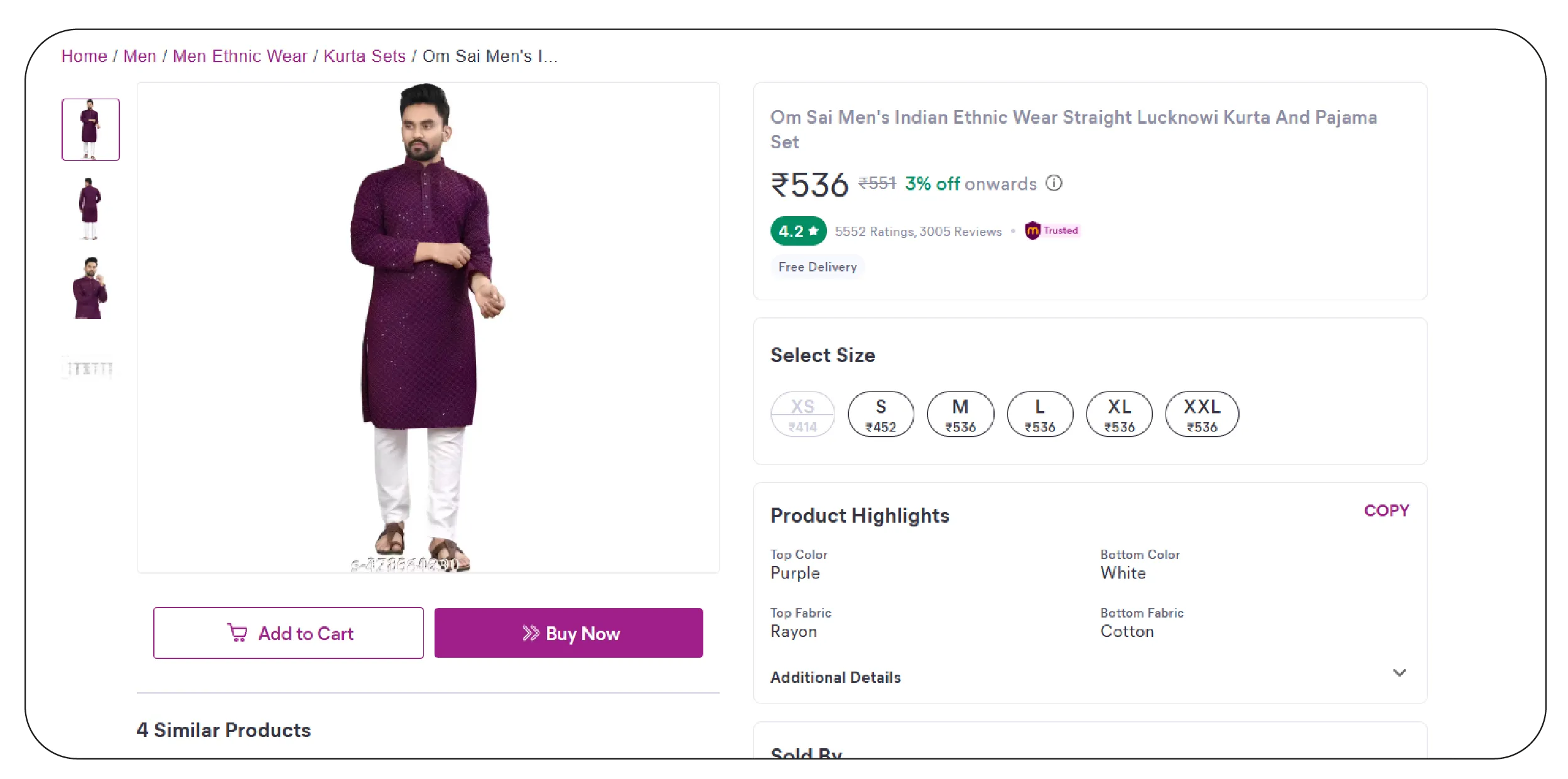
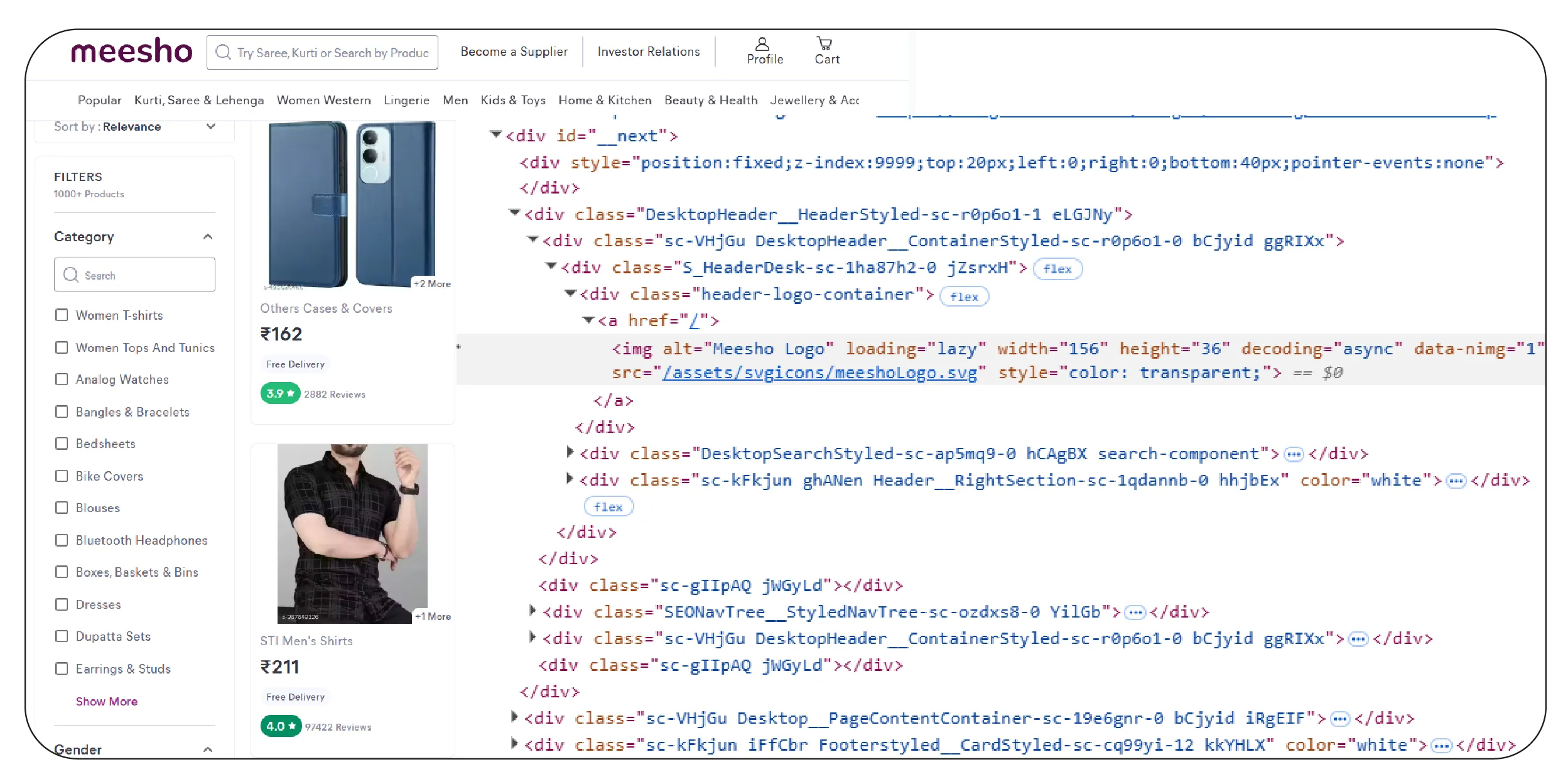
  • Use the Meesho Data Extractor to collect product titles, SKUs, images, categories, stock/top seller flags from “Meesho.com”.
  • Efficiently extract any data from Meesho.com including pricing changes, discounts, best seller ranks, and ratings.
  • Automate the process to extract Meesho product listings and prices across thousands of SKUs and categories, keeping your dataset fresh.
  • Build a Meesho scraper for product catalog that feeds into your analytics pipelines, mailing lists, or inventory dashboards.
  • Extend the mindset: You’re not only collecting for Meesho—you’re learning how to extract data from any e-commerce website if you wish to expand beyond.
  • Create a customized eCommerce dataset specific to Meesho—for example, category-wise price trends, rating distribution, and seasonality.
  • Specifically extract Meesho E-Commerce Product Data so you can compare across platforms, detect price arbitrage, and spot opportunities.
  • Feed your system via a Web Intelligence API so you can integrate the scraped output into dashboards, alerts, or downstream workflows.

Why Choose Product Data Scrape?

When you adopt a Meesho Scraper to Extract Meesho Data, you gain:

  • Efficiency & Scale – Manual data collection is slow. Automated scraping lets you monitor thousands of listings in minutes.
  • Competitive Intelligence – You can track what others are doing: pricing, promotions, stockouts on Meesho and beyond.
  • Data Driven Decisions – Instead of guesswork, you have reliable input to decide which products to list, which categories are trending, and where margins lie.
  • Real Time / Up to Date – E-commerce changes fast. A scraper keeps your dataset current so you’re not behind.
  • Custom Dataset Creation – By scraping, you build customized eCommerce datasets tailored to your niche rather than relying on generic market reports.
  • Expansion Possibility – While focusing on Meesho, you can apply the same tools to other platforms; you’re learning a system that allows you to scrape data from any e-commerce websites in future.

Implementation Strategy
Implementation Strategy

Here’s how to implement a Meesho Scraper For Extracting Meesho Data step by step:

  • Define your goals: e.g., “Collect weekly product listings and prices from Meesho’s fashion category for next 12 months.”
  • Select or build the “Meesho Data Extractor” module: includes connectors, parsers, and storage.
  • Configure the extraction: categories, fields (title, SKU, price, discount, image URL, rating).
  • Handle dynamic content: many e-commerce sites load content via JS and require headless browsing or APIs.
  • Respect boundaries & legal/ethical footprint: observe robots.txt, platform policies, and rate limiting.
  • Store and clean the data: build your custom dataset for analysis.
  • Build downstream logic: e.g., price alerts, margin calculations, and listing decisions.
  • Automate updates: schedule regular runs so your Meesho web scraper for product catalog feeds fresh data.
  • Scale & monitor: when volume grows, ensure your infrastructure (proxies, IP rotation, data storage) can keep up.
  • Analyze & act: use insights from the scraped dataset to list winning products, optimise pricing, or adjust inventory.

Metrics & Outcomes You Can Track

With your scraper in place, you’ll want to measure success. Some useful metrics over 2020–2025 might include:

  • Number of unique SKUs scraped: Track how many SKUs are collected from Meesho per week or month.
  • Average price change (%): Measure variations for top 100 SKUs in fashion over the last year.
  • Stock-out frequency: Monitor how often best-seller items on Meesho go out of stock.
  • Margin improvement (%): Compare performance when using scraped data versus manual sourcing.
  • Time saved: Calculate hours saved per month through automation compared to manual tracking.
  • Dataset growth: Track how many records are added to your custom eCommerce dataset after six months.

You may also create a table comparing outcomes year on year (e.g., 2022 vs 2023 vs 2024) as you scale the scraper and refine your processes.

Challenges & Best Practices
Challenges & Best Practices

Implementing a Meesho Scraper comes with its own challenges—and knowing the best practices helps avoid pitfalls:

  • Website structure changes: E-commerce sites modify layouts which can break scrapers. Use resilient parsing and monitoring.
  • Dynamic content / JavaScript: Many listings are loaded asynchronously; ensure the scraper handles this.
  • Anti-bot / Blocking risks: Use IP rotation, delays, and mimic human behaviour to avoid bans.
  • Data quality & cleaning: Raw scraped data may include duplicates or incomplete records — cleaning is critical.
  • Legal / ethical boundaries: Scraping public data is generally okay, but respect terms of service and intellectual property constraints.
  • Scalability: As your use grows, ensure infrastructure (storage and processing) scales.
  • Analysis lag: Collecting is only half the job — make sure you interpret and act on the data promptly.
  • Cross-platform consistency: If you expand beyond Meesho, ensure your datasets align (fields and format) to compare across platforms.

Conclusion

By deploying a robust Meesho Scraper For to Extract Meesho Data, you give your online business the tools to stay ahead—monitor listings, respond to market changes, and build actionable insights from your data. Whether you use a dedicated Meesho Product Data Extractor, choose to extract any data from Meesho.com, decide to extract Meesho product listings and prices, or build a full-scale Meesho scraper for product catalog, you’re creating a strategic asset.

Ready to turn data into growth? Let’s get started.
Contact us today to build your custom scraper, integrate into your workflow, and transform your e-commerce business with data-driven decisions.

FAQs

What exactly can a Meesho Scraper extract?
A properly configured scraper can extract titles, SKUs, categories, images, prices, discounts, ratings, stock status, and even best seller rankings from Meesho. It becomes your “Meesho Product Data Extractor” and forms part of your broader data strategy.

Is it legal to scrape Meesho.com?
Scraping publicly available data is typically legal, but you should review Meesho’s terms of service, check if there’s a robots.txt restriction, and ensure you’re not violating user privacy or copyrights. Responsible scraping means polite rate limits and no circumventing protections.

How often should I run the scraper?
Frequency depends on your business use case: for fast-moving categories you might run it daily; for slower-moving items, weekly or bi-weekly may suffice. The key is ensuring your data remains relevant for pricing, listing, or inventory decisions.

Can the same system be used to scrape other platforms besides Meesho?
Yes — while your initial focus might be Meesho, you can adapt the system to extract data from any e-commerce websites, build an eCommerce dataset, or extract other sources of eCommerce product data. The architecture you build is reusable and scalable.

How do I convert the raw scraped data into business value?
After scraping, you clean and structure the data (for example: category, price, discount percentage, ratings). Then you analyse it — spot trends, compare against your costs, identify high-margin items, and monitor competitor pricing. Feeding the output into a Web Data Intelligence API or dashboard can provide alerts and insights that drive real actions.
LATEST BLOG

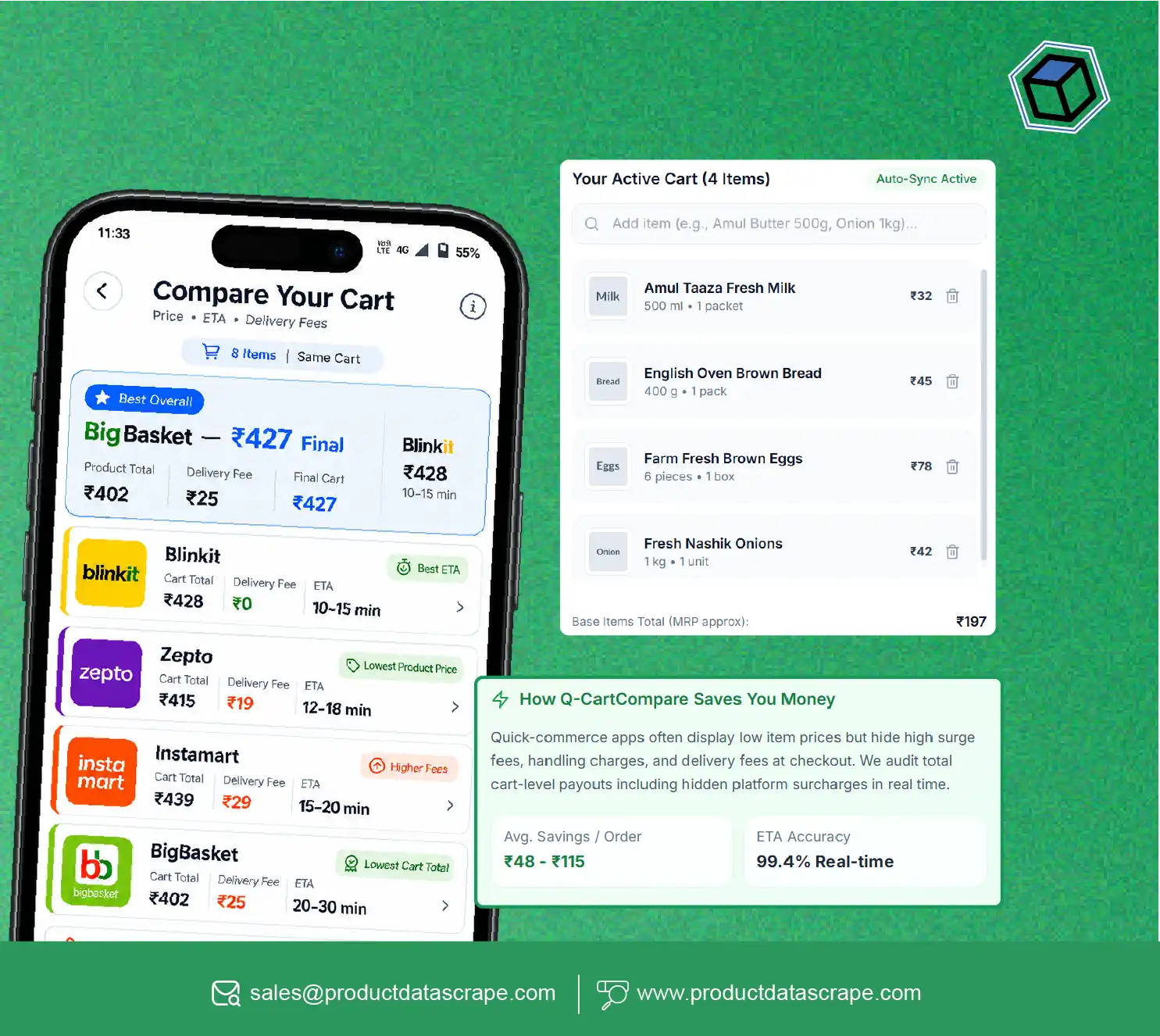
Analyzing Hyperlocal Grocery Trends Using Real-Time Data from Swiggy Instamart, BigBasket & Flipkart Minutes

Analyzing hyperlocal grocery trends using real-time data from Swiggy Instamart, BigBasket & Flipkart Minutes to uncover demand shifts, pricing patterns, and growth insights.

Scrape wine prices pão de açúcar - Tracking Premium Alcohol Trends in Brazil

Scrape wine prices Pão de Açúcar to track premium alcohol trends in Brazil, uncover pricing shifts, brand positioning, and consumer demand insights.

How U.S. Grocery Chains Use Data Scraping APIs to Predict Shopping Trends for 2025?

This study explores how U.S. grocery chains use data scraping APIs to predict shopping trends for 2025, enabling smarter pricing, demand forecasting, and inventory planning.

Case Studies

Discover our scraping success through detailed case studies across various industries and applications.

Why Product Data Scrape?

Why Choose Product Data Scrape for Retail Data Web Scraping?

Choose Product Data Scrape for Retail Data scraping to access accurate data, enhance decision-making, and boost your online sales strategy.

Reliable-Insights

Reliable Insights

With our Retail data scraping services, you gain reliable insights that empower you to make informed decisions based on accurate product data.

Data-Efficiency

Data Efficiency

We help you extract Retail Data product data efficiently, streamlining your processes to ensure timely access to crucial market information.

Market-Adaptation

Market Adaptation

By leveraging our Retail data scraping, you can quickly adapt to market changes, giving you a competitive edge with real-time analysis.

Price-Optimization

Price Optimization

Our Retail Data price monitoring tools enable you to stay competitive by adjusting prices dynamically, attracting customers while maximizing your profits effectively.

Competitive-Edge

Competitive Edge

With our competitor price tracking, you can analyze market positioning and adjust your strategies, responding effectively to competitor actions and pricing.

Feedback-Analysis

Feedback Analysis

Utilizing our Retail Data review scraping, you gain valuable customer insights that help you improve product offerings and enhance overall customer satisfaction.

Awards

Recipient of Top Industry Awards

clutch

92% of employees believe this is an excellent workplace.

crunchbase
Awards

Top Web Scraping Company USA

datarade
Awards

Top Data Scraping Company USA

goodfirms
Awards

Best Enterprise-Grade Web Company

sourcefroge
Awards

Leading Data Extraction Company

truefirms
Awards

Top Big Data Consulting Company

trustpilot
Awards

Best Company with Great Price!

webguru
Awards

Best Web Scraping Company

Process

How We Scrape E-Commerce Data?

See the results that matter

Read inspiring client journeys

Discover how our clients achieved success with us.

6X

Conversion Rate Growth

“I used Product Data Scrape to extract Walmart fashion product data, and the results were outstanding. Real-time insights into pricing, trends, and inventory helped me refine my strategy and achieve a 6X increase in conversions. It gave me the competitive edge I needed in the fashion category.”

7X

Sales Velocity Boost

“Through Kroger sales data extraction with Product Data Scrape, we unlocked actionable pricing and promotion insights, achieving a 7X Sales Velocity Boost while maximizing conversions and driving sustainable growth.”

"By using Product Data Scrape to scrape GoPuff prices data, we accelerated our pricing decisions by 4X, improving margins and customer satisfaction."

"Implementing liquor data scraping allowed us to track competitor offerings and optimize assortments. Within three quarters, we achieved a 3X improvement in sales!"

Resource Hub: Explore the Latest Insights and Trends

The Resource Center offers up-to-date case studies, insightful blogs, detailed research reports, and engaging infographics to help you explore valuable insights and data-driven trends effectively.

Get In Touch

Analyzing Hyperlocal Grocery Trends Using Real-Time Data from Swiggy Instamart, BigBasket & Flipkart Minutes

Analyzing hyperlocal grocery trends using real-time data from Swiggy Instamart, BigBasket & Flipkart Minutes to uncover demand shifts, pricing patterns, and growth insights.

Scrape wine prices pão de açúcar - Tracking Premium Alcohol Trends in Brazil

Scrape wine prices Pão de Açúcar to track premium alcohol trends in Brazil, uncover pricing shifts, brand positioning, and consumer demand insights.

How U.S. Grocery Chains Use Data Scraping APIs to Predict Shopping Trends for 2025?

This study explores how U.S. grocery chains use data scraping APIs to predict shopping trends for 2025, enabling smarter pricing, demand forecasting, and inventory planning.

How We Helped a Retail Brand Boost Bestseller Detection Using Scraped LEGO Product Data

We improved bestseller detection by analyzing demand trends, pricing, and availability Using Scraped LEGO Product Data, enabling faster, data-driven retail decisions.

How We Delivered Competitive Pricing Insights on Price Wars Across FairPrice, Giant, and Sheng Siong for a Leading Retail Brand

We uncovered actionable pricing insights by analyzing Price Wars Across FairPrice, Giant, and Sheng Siong, helping a leading retail brand stay competitive in real time.

How Review Data Scraping from Cold Storage Facilities Improved Grocery Product Quality

Review data scraping from cold storage facilities helped grocery brands identify quality issues, improve handling standards, reduce spoilage, and enhance overall product freshness.

BevMo California Market Price Benchmarking - Data-Driven Analysis of Retail Price Variations in California

Research report analyzing BevMo California market price benchmarking, highlighting competitive pricing trends, product price variations, and retail insights across the state.

Cosmetics Pricing Intelligence - Analyzing Oriflame Product Prices Using Web Scraping

This research report analyzes Oriflame product prices using web scraping to deliver cosmetics pricing intelligence, competitive benchmarks, and market trend insights.

2025 Global Grocery Price Comparison – USA, Canada, Europe & Southeast Asia

2025 Global Grocery Price Comparison reveals pricing trends across the USA, Canada, Europe, and Southeast Asia, highlighting regional differences and market insights.

Reducing Returns with Myntra AND AJIO Customer Review Datasets

Analyzed Myntra and AJIO customer review datasets to identify sizing issues, helping brands reduce garment return rates by 8% through data-driven insights.

Before vs After Web Scraping - How E-Commerce Brands Unlock Real Growth

Before vs After Web Scraping: See how e-commerce brands boost growth with real-time data, pricing insights, product tracking, and smarter digital decisions.

Scrape Data From Any Ecommerce Websites

Easily scrape data from any eCommerce website to track prices, monitor competitors, and analyze product trends in real time with Real Data API.

Why Meesho Sellers Are Growing Faster Than Amazon Sellers (Data Deep Dive)

This SMP explores why Meesho sellers are growing faster than Amazon sellers, using data-driven insights on pricing, reach, logistics, and seller economics.

How Real-Time Grocery Price APIs Power India & UAE Retail Intelligence (2025)

Real-time grocery price APIs help India and UAE retailers track prices, stock, and trends in 2025 to drive smarter pricing and retail intelligence decisions.

Top 7 Christmas Gifts from 1,00,000 Listings – Winning Products 2025

We scraped 1,00,000 Christmas gift listings and identified the 7 best-selling products predicted to dominate 2025 holiday sales trends.

FAQs

E-Commerce Data Scraping FAQs

Our E-commerce data scraping FAQs provide clear answers to common questions, helping you understand the process and its benefits effectively.

E-commerce scraping services are automated solutions that gather product data from online retailers, providing businesses with valuable insights for decision-making and competitive analysis.

We use advanced web scraping tools to extract e-commerce product data, capturing essential information like prices, descriptions, and availability from multiple sources.

E-commerce data scraping involves collecting data from online platforms to analyze trends and gain insights, helping businesses improve strategies and optimize operations effectively.

E-commerce price monitoring tracks product prices across various platforms in real time, enabling businesses to adjust pricing strategies based on market conditions and competitor actions.

Let’s talk about your requirements

Let’s discuss your requirements in detail to ensure we meet your needs effectively and efficiently.

bg

Trusted by 1500+ Companies Across the Globe

decathlon
Mask-group
myntra
subway
Unilever
zomato

Send us a message