Quick Overview
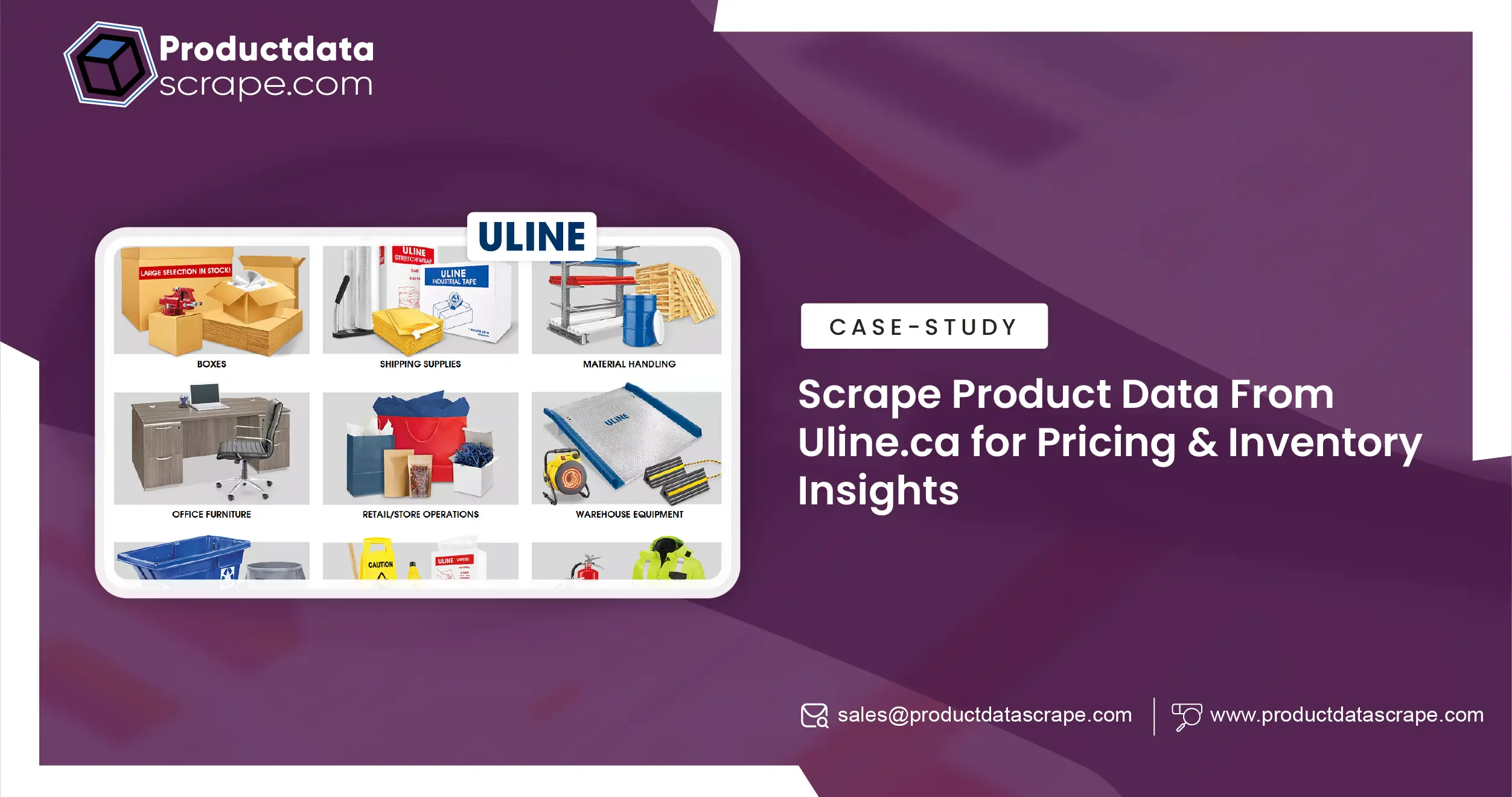
This case study demonstrates how Scrape Product Data From Uline.Ca enabled a packaging and industrial supplies distributor to gain real-time visibility into pricing, availability, and catalog movement. By analyzing how scraped product listings reveal demand trends, the client transformed fragmented market signals into actionable insights.
The client operates in the B2B packaging and logistics supply industry, competing in a highly price-sensitive and inventory-driven market. Product Data Scrape delivered continuous data extraction services over a six-month engagement. The impact was immediate: faster pricing updates, improved inventory alignment, and clearer demand forecasting. Within weeks, teams shifted from reactive monitoring to proactive planning, supported by consistent, structured product intelligence across categories.
The Client
The client is a mid-sized distributor serving warehouses, manufacturers, and logistics providers across North America. The industrial supplies sector has faced mounting pressure since 2020 due to volatile demand, supply chain disruptions, and aggressive price competition. Customers increasingly compare suppliers online, expecting transparent pricing and immediate availability.
Before working with Product Data Scrape, the client relied on manual checks and partial datasets to monitor competitors. Their analysts spent hours reviewing listings, yet still lacked confidence in the accuracy or freshness of insights. As competitors optimized faster, leadership realized transformation was essential.
By leveraging uline.ca scraped data for demand analysis, the client aimed to move beyond surface-level observations. Implementing a dedicated uline.ca product scraper allowed them to systematically capture SKU-level pricing, stock indicators, and product attributes. This shift laid the foundation for scalable, data-driven decision-making, replacing guesswork with evidence and positioning the client to respond faster to market changes.
Goals & Objectives
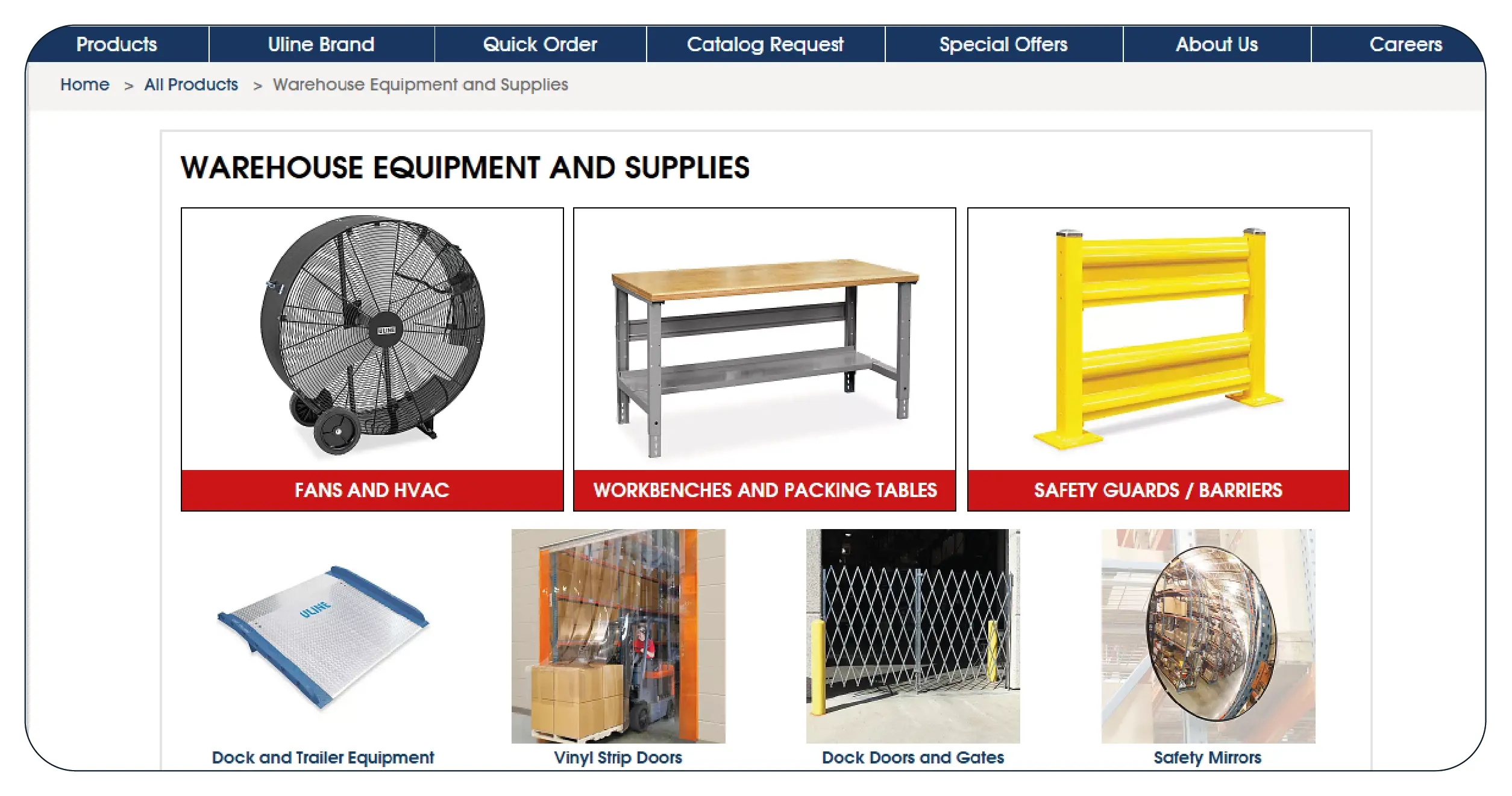
The primary goal was to create a scalable, accurate system for monitoring competitor pricing and inventory. The client wanted faster access to market signals without increasing manual effort.
From a technical perspective, the focus was automation, seamless data integration, and near real-time analytics. By using web scraping uline.ca product listings, the client sought continuous visibility. They also aimed to scrape uline product listings for analysis to support forecasting and assortment decisions.
Reduction in manual data collection time
Increase in pricing update frequency
Improvement in inventory alignment accuracy
The Core Challenge
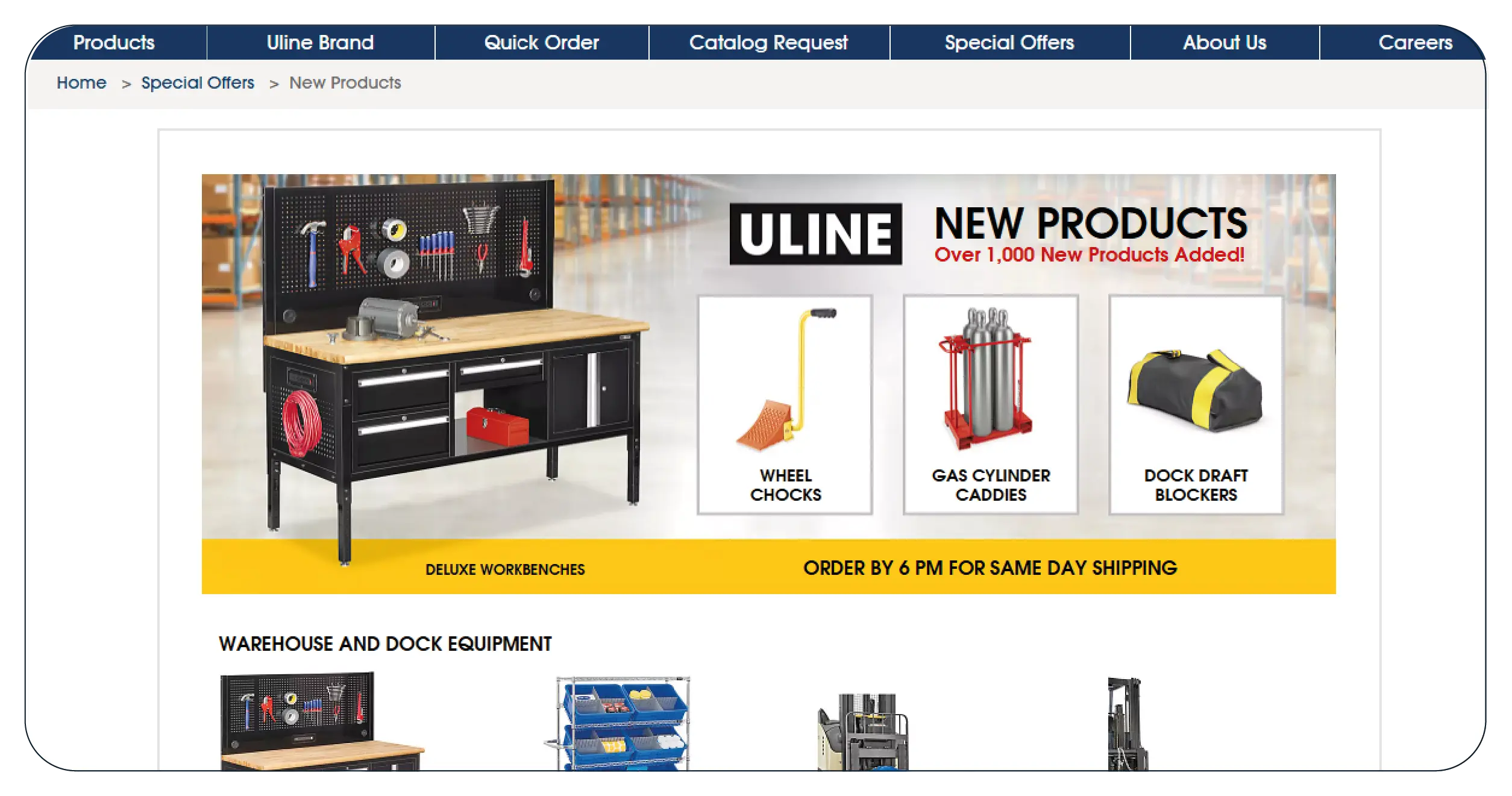
The client’s biggest obstacle was the lack of a reliable, structured data source. Existing tools could not scale, and internal systems struggled with frequent catalog changes. Attempts to use an unofficial Uline.ca product API proved unreliable and incomplete.
Operational bottlenecks slowed insights, while inconsistent data quality impacted planning. Pricing teams reacted late to competitor changes, and inventory managers lacked clarity on fast-moving items. These gaps led to missed revenue opportunities and overstock risks. The challenge was not just collecting data, but doing so consistently, accurately, and at scale.
Our Solution

Product Data Scrape implemented a phased approach to ensure stability and scalability. The first phase focused on building automated pipelines to scrape uline product data for inventory planning, capturing pricing, availability, and SKU attributes daily.
In the second phase, data normalization and validation frameworks were applied to ensure consistency across categories. Automation handled catalog updates, discontinued items, and new product launches without manual intervention.
The final phase integrated analytics dashboards, allowing teams to visualize trends and compare historical performance. Each phase addressed a specific pain point—automation replaced manual effort, validation improved accuracy, and analytics accelerated decision-making. The result was a robust, end-to-end solution that delivered reliable insights aligned with business objectives.
Results & Key Metrics
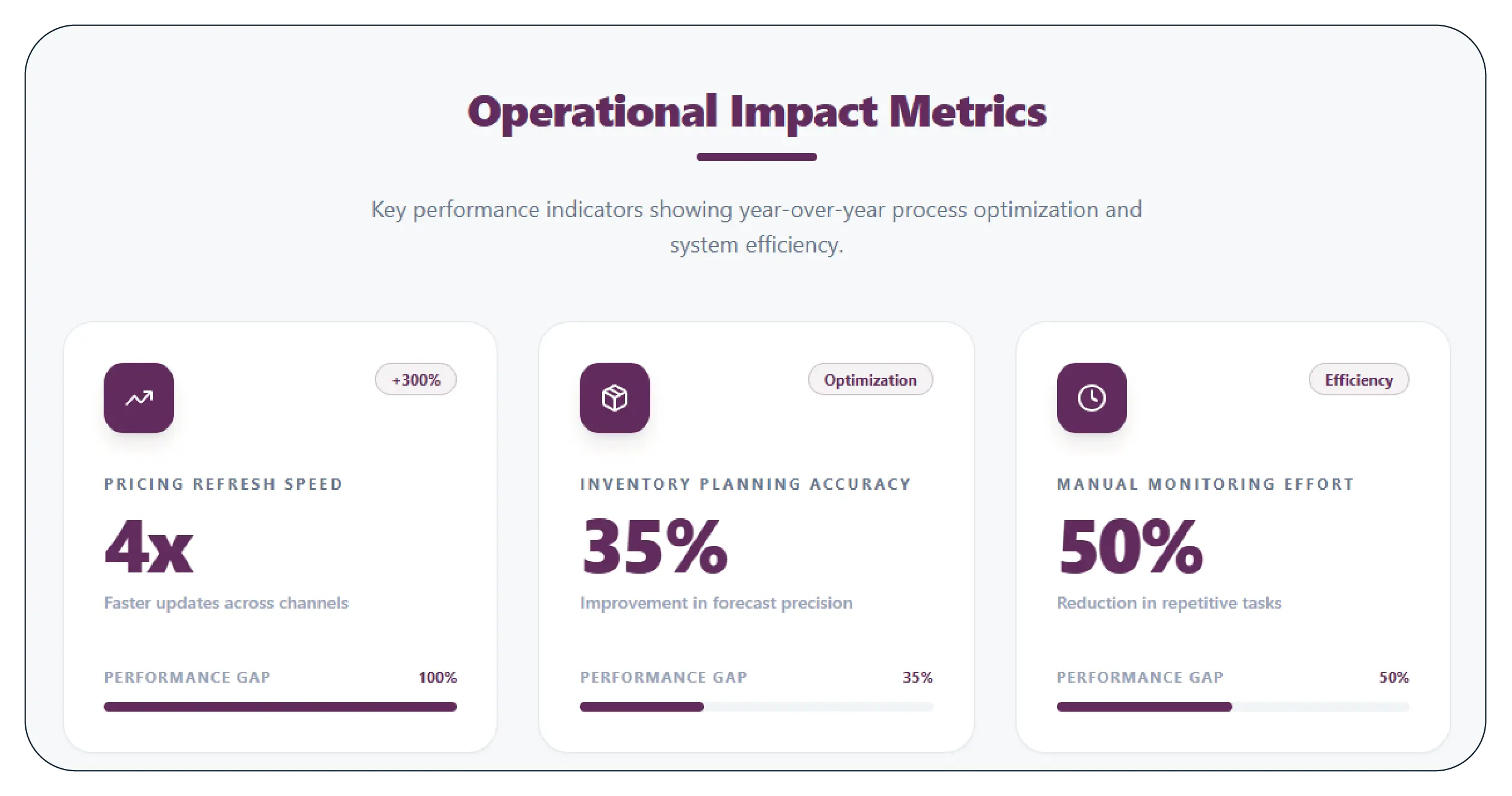
4× increase in pricing refresh speed
35% improvement in inventory planning accuracy
50% reduction in manual monitoring effort
Results Narrative
By Using Uline data to identify fast-moving vs slow-moving SKUs, the client optimized replenishment cycles and reduced excess stock. Teams responded faster to price changes, aligned inventory with demand, and improved overall operational efficiency.
What Made Product Data Scrape Different?
Product Data Scrape delivered more than raw data. The curated Uline Product Dataset was enriched, validated, and analytics-ready. Combined with scalable automation, Scrape Product Data From Uline.Ca became a strategic asset rather than a technical task.
Client’s Testimonial
“Product Data Scrape gave us a clear, reliable view of competitor pricing and stock. With Scrape Product Data From Uline.Ca, our team now makes faster, more confident decisions.”
— Pricing Strategy Manager, Industrial Supplies
Conclusion
This engagement proves how scrape uline product data for inventory planning can transform pricing and assortment strategy. With the right data foundation, brands gain clarity, speed, and confidence to compete effectively in dynamic markets.
FAQs
1. How often is Uline data updated?
Data can be refreshed daily or near real time based on requirements.
2. Is the data structured for analytics?
Yes, all outputs are normalized and analytics-ready.
3. Can this scale across categories?
The solution supports thousands of SKUs across multiple categories.
4. Does it support historical analysis?
Yes, historical pricing and availability trends are maintained.
5. Can it integrate with internal systems?
Data feeds can be customized for dashboards, BI tools, or ERPs.



 Singapore
 EMAIL
EMAIL
 PHONE
PHONE


.webp "thumb")









.webp)