What-Tools-are-Effective-for-Scrape-Sugar-Cosmetics-Product-Data

In the dynamic realm of cosmetics and beauty products, data-driven insights are pivotal in strategic decision-making. Scraping data from cosmetic websites allows for a comprehensive understanding of product trends, pricing dynamics, and consumer preferences. This process involves utilizing web scraping tools like Python's BeautifulSoup to collect valuable information like product names, prices, customer reviews, and ingredient details. By systematically collecting and analyzing this data, businesses gain a competitive edge, enabling them to adapt to evolving market demands, optimize pricing strategies, and launch products that resonate with their target audience. Additionally, scraping cosmetics data facilitates the identification of emerging trends, influencers, and customer sentiments, empowering companies to refine marketing campaigns and enhance overall brand positioning. This introduction underscores the significance of beauty and cosmetics data scraping services, offering a wealth of actionable insights for businesses seeking to thrive in the ever-evolving beauty landscape.

List of Data Fields

List-Of-Data-Fields
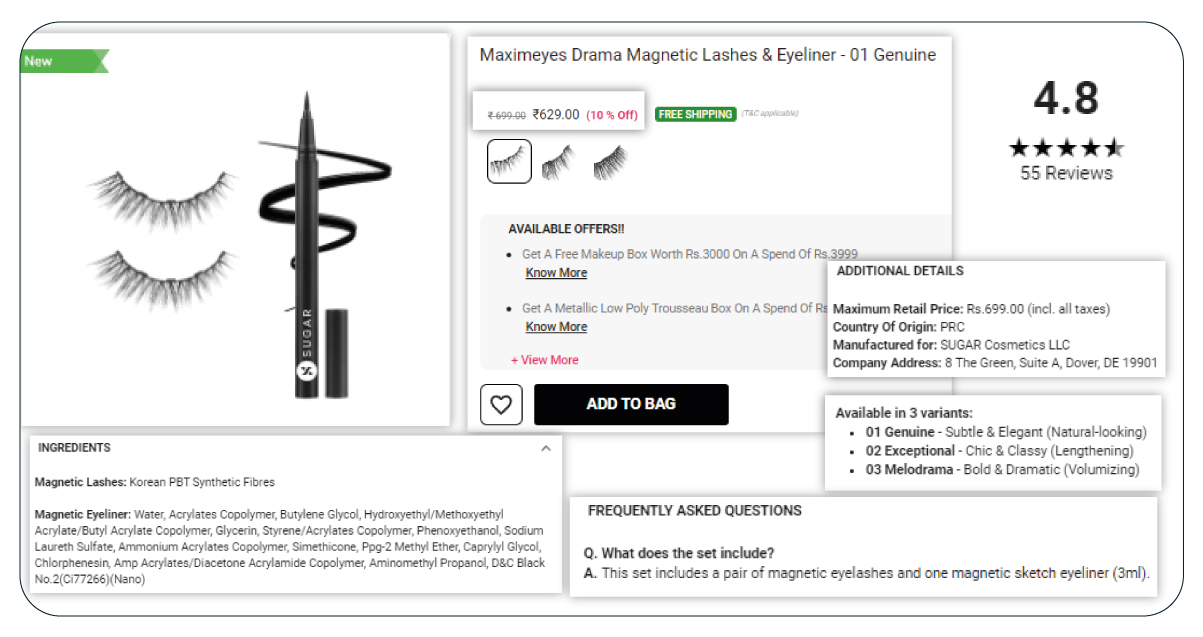
  • Product Name: Identify the names of Sugar Cosmetics products.
  • Product ID: Unique identifier for each product.
  • Price: Gather pricing information for each product.
  • Description: Extract detailed descriptions of the cosmetics.
  • Ingredients: Compile a list of ingredients used in each product.
  • Customer Reviews: Collect and analyze customer feedback and reviews.
  • Rating: Retrieve the product ratings assigned by customers.
  • Availability: Check product availability and stock status.
  • Product Images: Download images associated with each product.
  • Product Categories: Categorize products into relevant cosmetic categories.
  • Colors and Variants: Identify available colors and product variants.
  • Release Date: Gather information on product launch or release dates.
  • Discounts and Promotions: Monitor any ongoing discounts or promotions.
  • Brand Information: Extract details about the Sugar Cosmetics brand.
  • Shipping Information: Include details about shipping options and costs.

About Sugar Cosmetics

About-Sugar-Cosmetics

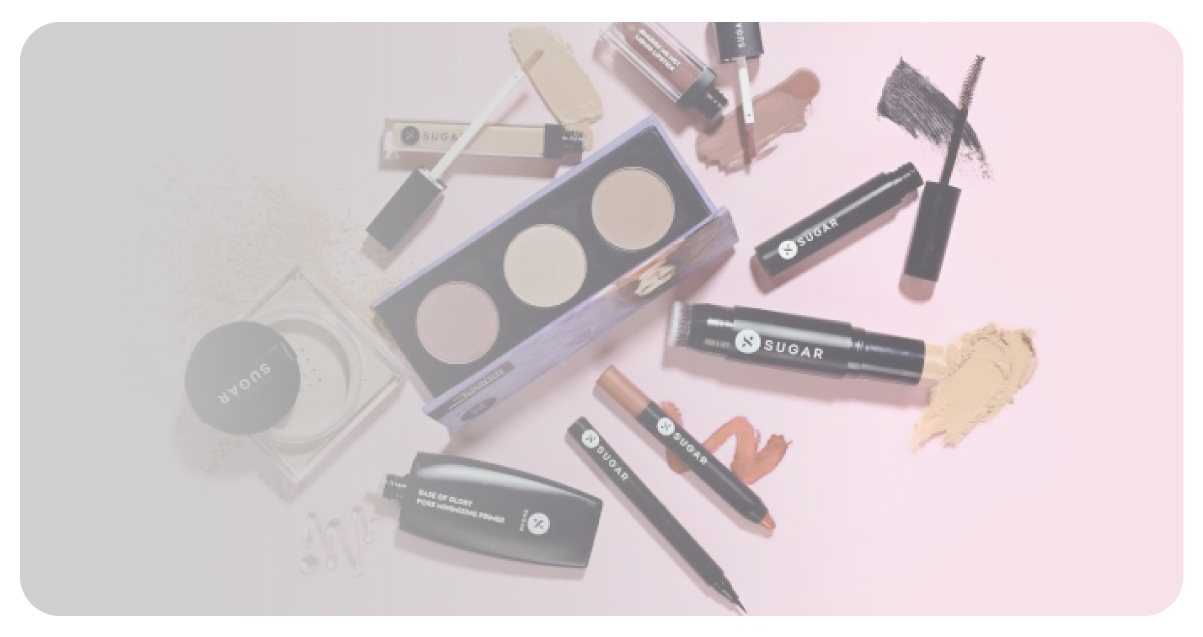
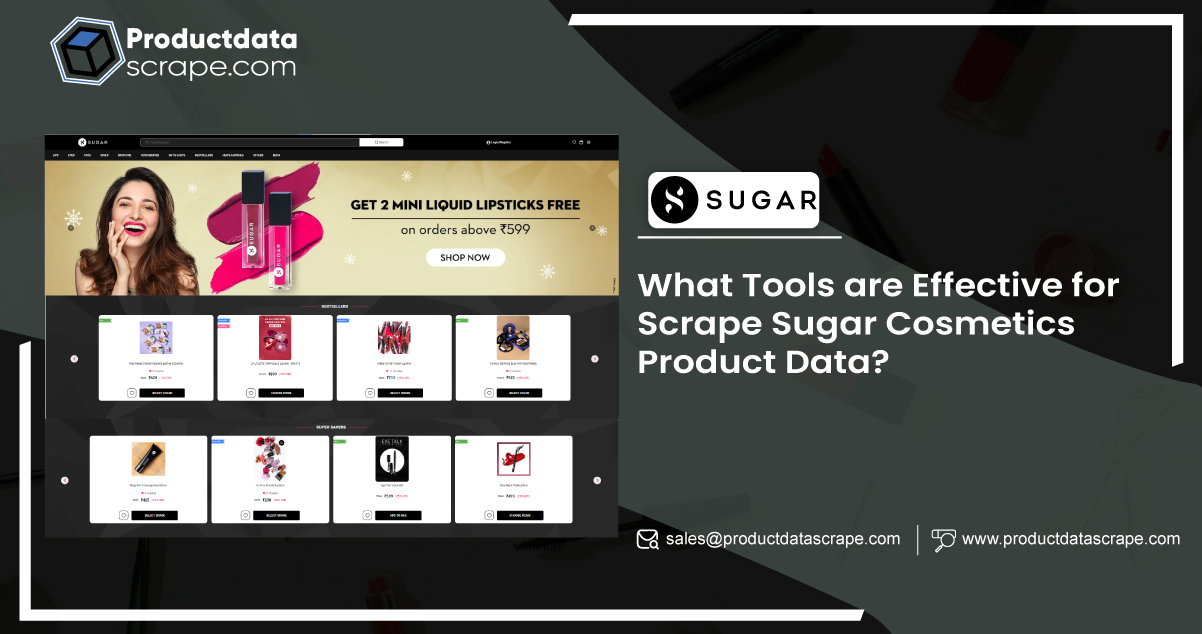
Sugar Cosmetics is an Indian cosmetics brand since 2015. The company offers various makeup products, including lipsticks, eyeliners, kohl pencils, mascara, foundation, and more. Sugar Cosmetics has gained popularity for its vibrant and trendy product offerings and its commitment to providing high-quality makeup at affordable prices.

The brand has a solid online presence and sells its products through its official website and various e-commerce platforms. Sugar Cosmetics is also available in some physical retail stores. The company has been recognized for its cruelty-free and vegan-friendly products, appealing to consumers who prioritize ethical and sustainable choices in their beauty products. Develop a Python script using BeautifulSoup to scrape Sugar Cosmetics product data, aiding businesses in market analysis, pricing strategies, and competitive intelligence for informed decision-making.

Significance of Scraping Beauty and Cosmetics Data
Significance-Of-Scraping-Beauty-And-Cosmetics-Data

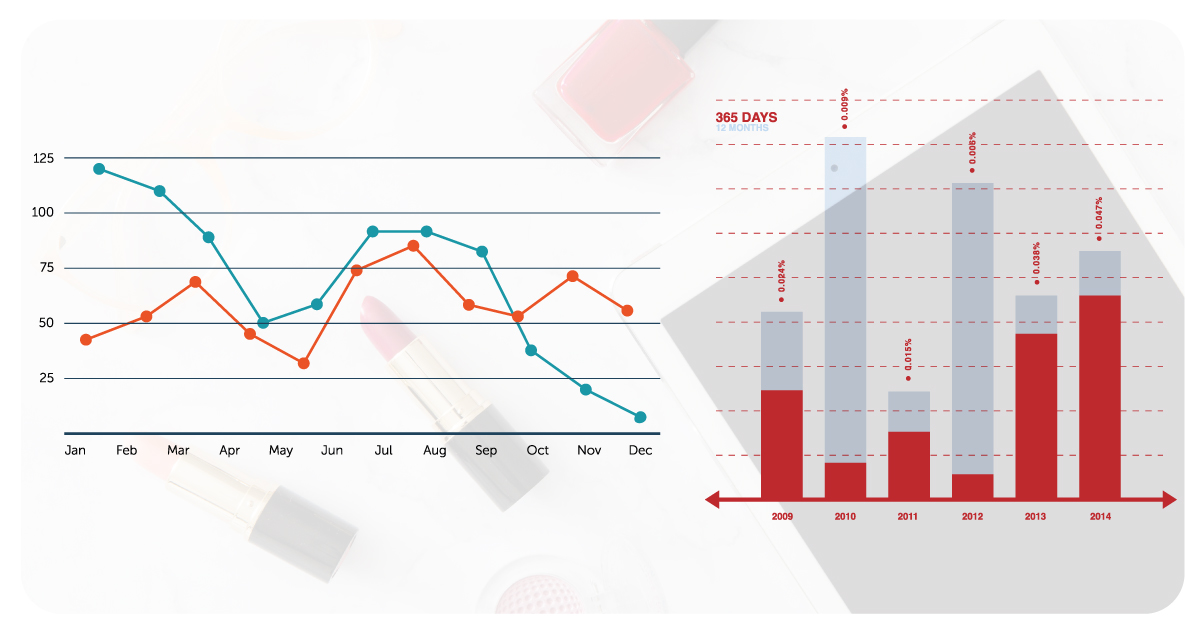
Market Analysis: Web scraping beauty and cosmetics data allow businesses to conduct in-depth market analysis. By extracting information on product trends, consumer preferences, and competitor strategies, companies can make data-driven decisions to stay competitive.

Competitor Intelligence: Understanding what competitors offer in terms of product range, pricing, and promotions is crucial. Scraping cosmetics data helps gather insights into competitor activities, enabling businesses to adjust their strategies accordingly.

Price Optimization: Businesses can optimize pricing strategies with data on pricing trends and discounts. Beauty and cosmetics data scraper helps track changes in product prices and identify the most effective pricing points for maximizing revenue.

Consumer Insights: By e-commerce data scraping using customer reviews, ratings, and sentiments, you can gain valuable insights into consumer preferences and satisfaction levels. This information aids in refining marketing approaches and product development to align with customer expectations.

New Product Development: By analyzing scraped data, businesses can identify gaps in the market or emerging trends, facilitating the development of new and innovative beauty and cosmetic products that meet evolving consumer demands.

Marketing Strategy Refinement: Scraping data on promotional activities, advertising campaigns, and influencer collaborations helps refine marketing strategies. It ensures that promotional efforts align with current market trends and consumer interests.

Inventory Management: Monitoring product availability and stock status through web scraping helps businesses manage inventory efficiently. It reduces the risk of stockouts or overstocking, optimizing supply chain operations.

Brand Positioning: Understanding how a brand appears in the market is crucial for effective brand positioning. Scraped data on customer reviews, social media mentions, and product popularity contributes to shaping and enhancing a brand's image.

Tips to Choose the Right Scraping Tool to Collect Beauty and Cosmetics Data from Sugar Cosmetics
Tips-To-Choose-The-Right-Scraping-Tool-To-Collect-Beauty-And-Cosmetics-Data-From-Sugar-Cosmetics

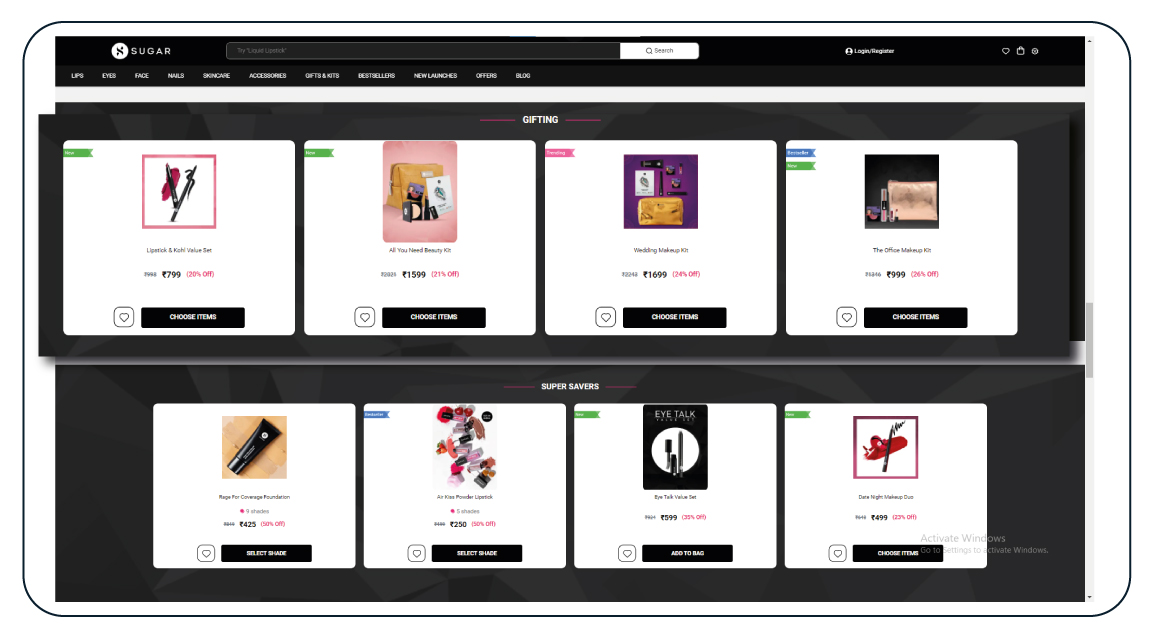
Choosing the right scraping tool for collecting beauty and cosmetics data from Sugar Cosmetics involves considering several factors. Here's a guide to help you make an informed decision:

Website Structure and Complexity:

HTML Structure: Assess the complexity of Sugar Cosmetics' website structure. If it's straightforward, essential scraping tools like BeautifulSoup in Python may suffice. For complex websites, consider more advanced tools like Scrapy or Selenium.

Ease of Use: Consider your programming skills and the ease of use of the scraping tool. If you are proficient in Python, libraries like BeautifulSoup and Scrapy might be more accessible. For non-programmers, tools with graphical user interfaces (GUI) like Octoparse or import.io could be more suitable.

Scalability: Determine the scale of your scraping project. If you plan to scrape a large volume of data regularly, choose a tool that supports scalability. Scrapy, for instance, is well-suited for large-scale web scraping projects.

Anti-Scraping Measures: Check if the website employs anti-scraping measures. If so, consider tools with features to handle these measures. Selenium, for example, can interact with websites as a human user, making it more resistant to anti-scraping techniques.

Dynamic Content Handling: If the website uses a lot of dynamic content loaded through JavaScript, choose a tool to handle dynamic content. Selenium is famous for this purpose, as it can simulate user interactions and execute JavaScript.

Robustness and Maintenance: Consider the robustness of the scraping tool. Tools with good community support, regular updates, and well-maintained documentation are preferable. BeautifulSoup, Scrapy, and Selenium are well-maintained tools with active communities.

Legal and Ethical Considerations:

Ensure that your scraping activities comply with the website's terms of service and legal regulations. Some websites explicitly prohibit scraping in their terms. Always respect robots.txt and avoid overloading servers to prevent disruptions.

Proxy Support: If you anticipate IP blocking or want to avoid detection, choose a scraping tool that supports proxy rotation. It helps in distributing requests across multiple IP addresses. You can configure Scrapy and Selenium to use proxies.

Data Storage and Export: Consider how the scraped data will be stored and exported. Many scraping tools allow you to save data in various formats, such as CSV, JSON, or databases. Choose a tool that facilitates easy integration with your preferred storage and analysis tools.

Cost Considerations: Evaluate the cost associated with using a scraping tool. Some tools are open-source and free, while others may have licensing fees. Also, consider potential infrastructure costs, especially if you plan to use cloud services for scraping at scale.

Considering these factors, you can select a scraping tool that aligns with your needs for collecting beauty and cosmetics data from Sugar Cosmetics.

Conclusion: Scraping beauty and cosmetics data from Sugar Cosmetics is an invaluable strategy for businesses aiming to thrive in the dynamic beauty industry. This process provides actionable insights into market trends, pricing dynamics, and consumer sentiments. By leveraging appropriate scraping tools, businesses can refine marketing strategies, optimize pricing models, and gain a competitive edge through informed decision-making. The extracted data not only aids in product development and inventory management but also enhances brand positioning. However, adhering to ethical considerations and respecting website terms and legal regulations are imperative. Ultimately, scraping empowers businesses to navigate the ever-evolving beauty landscape with precision and agility.

Product Data Scrape's operations are rooted in ethical standards, spanning services like Competitor Price Monitoring and Mobile Apps Data Scraping. With a global presence, we assure clients of exceptional and transparent services tailored to diverse needs.
LATEST BLOG

Using Web Search APIs For AI Applications, Agents, and Large Language Models in 2026

Learn how using web search APIs for AI applications enables real-time data access, better context retrieval, improved accuracy, and scalable intelligence for modern AI systems.

How Apparel & Accessories Data Collection from Indian E-Commerce Drives Smarter Fashion Decisions?

Apparel & Accessories Data Collection from Indian E-Commerce enables real-time tracking of prices, availability, and trends across online retail platforms in India.

Scraping Coles & Aldi Citrus Listings Data For Compare Pack Size, Price per Kg & Offers

Get actionable insights by scraping Coles & Aldi citrus listings data to compare prices, track availability, analyse demand trends, and optimise grocery sourcing decisions.

Case Studies

Discover our scraping success through detailed case studies across various industries and applications.

WHY CHOOSE US?
Product Data Scrape for Retail Web Scraping

Choose Product Data Scrape to access accurate data, enhance decision-making, and boost your online sales strategy effectively.

Reliable Insights

Reliable Insights

With our Retail Data scraping services, you gain reliable insights that empower you to make informed decisions based on accurate product data and market trends.

Data Efficiency

Data Efficiency

We help you extract Retail Data product data efficiently, streamlining your processes to ensure timely access to crucial market information and operational speed.

Market Adaptation

Market Adaptation

By leveraging our Retail Data scraping, you can quickly adapt to market changes, giving you a competitive edge with real-time analysis and responsive strategies.

Price Optimization

Price Optimization

Our Retail Data price monitoring tools enable you to stay competitive by adjusting prices dynamically, attracting customers while maximizing your profits effectively.

Competitive Edge

Competitive Edge

THIS IS YOUR KEY BENEFIT.
With our competitive price tracking, you can analyze market positioning and adjust your strategies, responding effectively to competitor actions and pricing in real-time.

Feedback Analysis

Feedback Analysis

Utilizing our Retail Data review scraping, you gain valuable customer insights that help you improve product offerings and enhance overall customer satisfaction.

5-Step Proven Methodology

How We Scrape E-Commerce Data?

01
Identify Target Websites

Identify Target Websites

Begin by selecting the e-commerce websites you want to scrape, focusing on those that provide the most valuable data for your needs.

02
Select Data Points

Select Data Points

Determine the specific data points to extract, such as product names, prices, descriptions, and reviews, to ensure comprehensive insights.

03
Use Scraping Tools

Use Scraping Tools

Utilize web scraping tools or libraries to automate the data extraction process, ensuring efficiency and accuracy in gathering the desired information.

04
Data Cleaning

Data Cleaning

After extraction, clean the data to remove duplicates and irrelevant information, ensuring that the dataset is organized and useful for analysis.

05
Analyze Extracted Data

Analyze Extracted Data

Once cleaned, analyze the extracted e-commerce data to gain insights, identify trends, and make informed decisions that enhance your strategy.

Start Your Data Journey
99.9% Uptime
GDPR Compliant
Real-time API

See the results that matter

Read inspiring client journeys

Discover how our clients achieved success with us.

6X

Conversion Rate Growth

“I used Product Data Scrape to extract Walmart fashion product data, and the results were outstanding. Real-time insights into pricing, trends, and inventory helped me refine my strategy and achieve a 6X increase in conversions. It gave me the competitive edge I needed in the fashion category.”

7X

Sales Velocity Boost

“Through Kroger sales data extraction with Product Data Scrape, we unlocked actionable pricing and promotion insights, achieving a 7X Sales Velocity Boost while maximizing conversions and driving sustainable growth.”

"By using Product Data Scrape to scrape GoPuff prices data, we accelerated our pricing decisions by 4X, improving margins and customer satisfaction."

"Implementing liquor data scraping allowed us to track competitor offerings and optimize assortments. Within three quarters, we achieved a 3X improvement in sales!"

Resource Hub: Explore the Latest Insights and Trends

The Resource Center offers up-to-date case studies, insightful blogs, detailed research reports, and engaging infographics to help you explore valuable insights and data-driven trends effectively.

Get In Touch

Using Web Search APIs For AI Applications, Agents, and Large Language Models in 2026

Learn how using web search APIs for AI applications enables real-time data access, better context retrieval, improved accuracy, and scalable intelligence for modern AI systems.

How Apparel & Accessories Data Collection from Indian E-Commerce Drives Smarter Fashion Decisions?

Apparel & Accessories Data Collection from Indian E-Commerce enables real-time tracking of prices, availability, and trends across online retail platforms in India.

Scraping Coles & Aldi Citrus Listings Data For Compare Pack Size, Price per Kg & Offers

Get actionable insights by scraping Coles & Aldi citrus listings data to compare prices, track availability, analyse demand trends, and optimise grocery sourcing decisions.

D2C Founders Used E-Commerce Data APIs to Validate New Product Categories

E-Commerce Data APIs to Validate New Product Categories help brands analyze pricing, demand, competition, and trends faster, reducing risk and enabling confident product launch decisions.

Scaling Global Product Data Collection from AliExpress for Trend Analysis

Gain actionable ecommerce insights through product data collection from AliExpress to track pricing, SKUs, seller performance, demand trends, and sourcing opportunities.

How Scraping Zepto Order Data For Analyze Stockouts & Delivery Speed - Mumbai vs Delhi

Analyze how scraping Zepto order data compares stockouts and delivery speed in Mumbai vs Delhi to optimise inventory planning and last-mile performance.

Shelf Life Intelligence - Sephora vs Ulta Beauty product Shelf-life analysis

Analyze Sephora vs Ulta Beauty product Shelf-life analysis to track availability duration, product rotation, and optimize inventory and assortment strategies.

Data scraping for Uline.ca to get product data - Extract Product List, Unit Prices & Saller Data

Get structured pricing, SKUs, specs, and availability using data scraping for Uline.ca to get product data, enabling smarter procurement, catalog analysis, and B2B decisions.

Using Amazon and Namshi Product APIs for Advertising to Overcome Inventory and Targeting Challenges in Digital Marketing

Use Amazon and Namshi product APIs for advertising to optimise bids, track price changes, align ads with availability, and improve ROAS using real-time product intelligence.

Reducing Returns with Myntra AND AJIO Customer Review Datasets

Analyzed Myntra and AJIO customer review datasets to identify sizing issues, helping brands reduce garment return rates by 8% through data-driven insights.

Before vs After Web Scraping - How E-Commerce Brands Unlock Real Growth

Before vs After Web Scraping: See how e-commerce brands boost growth with real-time data, pricing insights, product tracking, and smarter digital decisions.

Scrape Data From Any Ecommerce Websites

Easily scrape data from any eCommerce website to track prices, monitor competitors, and analyze product trends in real time with Real Data API.

5 Industries Growing Fast Because of Web Scraping Technology

Discover how web scraping fuels growth in quick commerce, e-commerce, grocery, liquor, and fashion industries with real-time data insights and smarter decisions.

Why Meesho Sellers Are Growing Faster Than Amazon Sellers (Data Deep Dive)

This SMP explores why Meesho sellers are growing faster than Amazon sellers, using data-driven insights on pricing, reach, logistics, and seller economics.

How Real-Time Grocery Price APIs Power India & UAE Retail Intelligence (2025)

Real-time grocery price APIs help India and UAE retailers track prices, stock, and trends in 2025 to drive smarter pricing and retail intelligence decisions.

FAQs

E-Commerce Data Scraping FAQs

Our E-commerce data scraping FAQs provide clear answers to common questions, helping you understand the process and its benefits effectively.

E-commerce scraping services are automated solutions that gather product data from online retailers, providing businesses with valuable insights for decision-making and competitive analysis.

We use advanced web scraping tools to extract e-commerce product data, capturing essential information like prices, descriptions, and availability from multiple sources.

E-commerce data scraping involves collecting data from online platforms to analyze trends and gain insights, helping businesses improve strategies and optimize operations effectively.

E-commerce price monitoring tracks product prices across various platforms in real time, enabling businesses to adjust pricing strategies based on market conditions and competitor actions.

Let’s talk about your requirements

Let’s discuss your requirements in detail to ensure we meet your needs effectively and efficiently.

bg

Trusted by 1500+ Companies Across the Globe

decathlon
Mask-group
myntra
subway
Unilever
zomato

Send us a message