Introduction
Retailers today face constant pressure to manage product variety, optimize categories, and understand rapidly changing consumer preferences. Waitrose UK Supermarket Data Extraction enables businesses to capture structured information from one of the UK’s most premium grocery retailers, helping brands make data-backed assortment and merchandising decisions. By analyzing product attributes, pricing changes, availability, and category performance, companies gain deeper insights into the competitive grocery landscape.
Access to a comprehensive Grocery store dataset allows retailers, brands, and analytics teams to evaluate how products are positioned across different categories such as fresh foods, organic products, gourmet items, and household essentials. This data supports strategic planning by identifying high-performing products, monitoring seasonal demand patterns, and discovering opportunities to improve shelf assortment.
Between 2020 and 2026, online grocery retail has expanded significantly, with digital grocery sales in the UK growing by more than 45%. This growth has increased the importance of accurate retail data and analytics. Businesses that leverage supermarket datasets can better understand product placement strategies, analyze promotional trends, and identify assortment gaps that may affect customer experience.
With structured grocery data insights, companies can refine product mix strategies, improve category management, and align their offerings with customer demand. As competition grows in online grocery markets, data-driven decision-making has become essential for maintaining product relevance, ensuring shelf visibility, and optimizing retail performance.
Understanding Product Assortment Dynamics Through Retail Data
Retailers must continuously adjust their assortment strategies to stay competitive in the evolving grocery market. By using Waitrose UK Supermarket Product Data Scraping, businesses gain access to structured information about product listings, attributes, and category organization. This data allows companies to monitor how product assortments change over time and how retailers introduce new products or discontinue underperforming ones.
Access to detailed datasets also allows businesses to Extract Grocery & Gourmet Food Data across multiple product categories, including organic foods, premium beverages, bakery items, frozen products, and specialty imports. These insights help retailers and brands evaluate which product segments attract the most consumer interest.
From 2020 to 2026, premium grocery product categories have grown by approximately 32% in online retail platforms. The table below highlights growth in premium grocery categories during this period.
| Year |
Premium Grocery SKUs |
New Product Launches |
Category Growth |
| 2020 |
18,500 |
2,100 |
8% |
| 2022 |
22,400 |
2,750 |
15% |
| 2024 |
26,800 |
3,200 |
22% |
| 2026 |
31,000 |
3,850 |
32% |
Retail insights gathered through product scraping enable companies to:
- Identify top-performing product categories
- Monitor seasonal product launches
- Track product lifecycle trends
- Evaluate assortment gaps in key categories
By leveraging structured supermarket datasets, retailers can better understand how assortment strategies evolve and which products attract the highest customer engagement.
Monitoring Pricing Trends Across Online Grocery Platforms
Pricing transparency has become one of the most important factors influencing grocery purchasing decisions. Using Waitrose Online Grocery Price Scraping UK, businesses can track price changes across thousands of products and identify trends in discounting, promotional pricing, and seasonal adjustments.
Retailers also rely on Web Scraping API Services to automate the collection of pricing data across multiple product categories. These APIs allow companies to gather real-time information from online grocery listings, ensuring that pricing insights remain accurate and up to date.
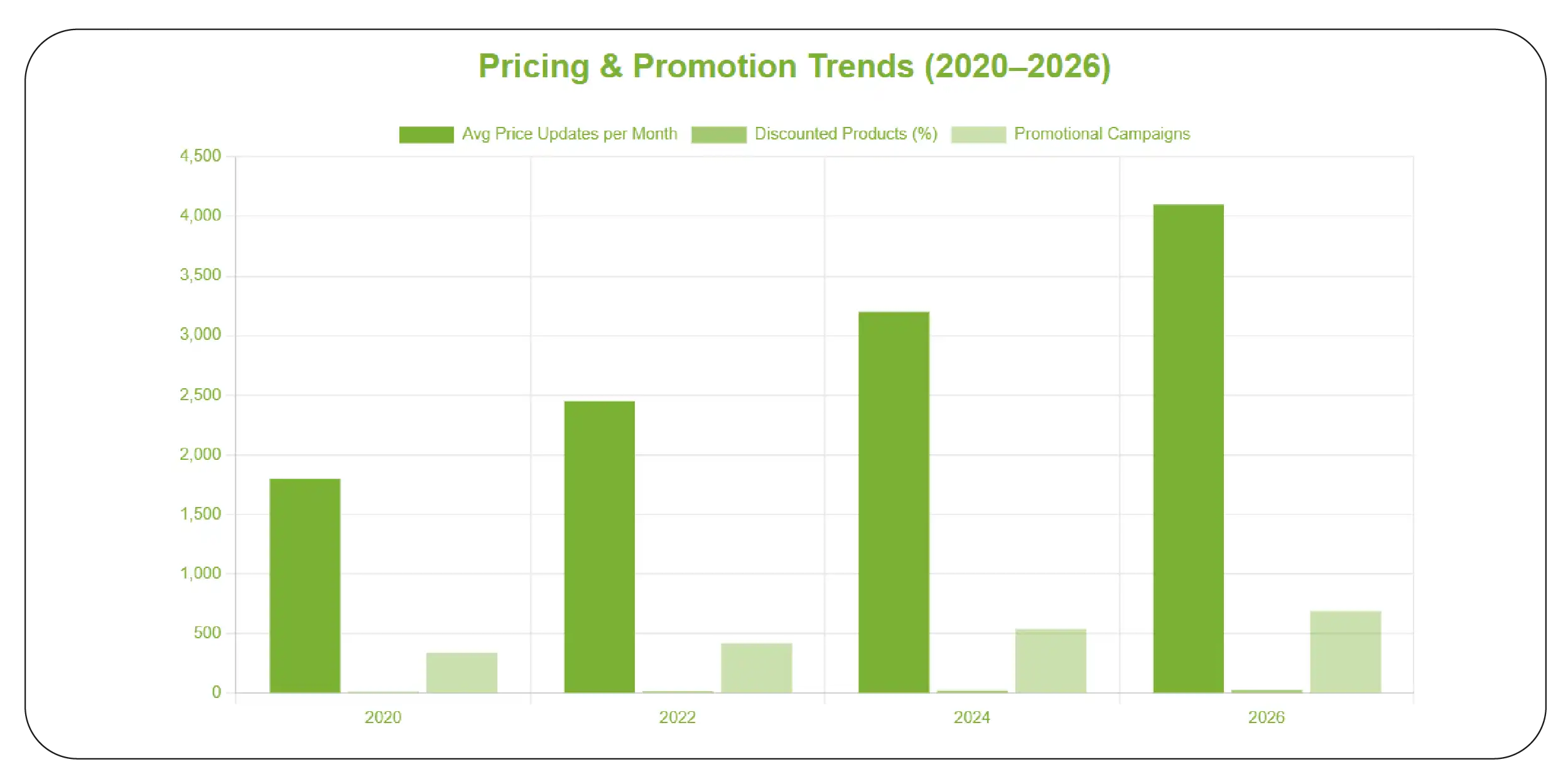
Between 2020 and 2026, the frequency of price adjustments in online grocery stores increased significantly due to supply chain fluctuations and market competition. The table below highlights average pricing changes across major grocery categories.
| Year |
Avg Price Updates per Month |
Discounted Products |
Promotional Campaigns |
| 2020 |
1,800 |
12% |
340 |
| 2022 |
2,450 |
16% |
420 |
| 2024 |
3,200 |
21% |
540 |
| 2026 |
4,100 |
26% |
690 |
Analyzing pricing data helps businesses:
- Track competitor price adjustments
- Identify discount frequency patterns
- Evaluate price elasticity within categories
- Optimize promotional timing
With automated price monitoring, companies can refine their pricing strategies and maintain competitive positioning in the online grocery market.
Leveraging Competitive Pricing Insights for Market Positioning
Retail brands must constantly evaluate their pricing strategies to remain competitive in the grocery industry. With Waitrose UK Supermarket Price Intelligence, companies gain visibility into pricing patterns across different product segments and can analyze how competitors adjust their prices over time.
Retailers and analytics teams often rely on Pricing Intelligence Services to convert raw pricing data into actionable insights. These services analyze historical price changes, promotional strategies, and competitor pricing behavior to identify opportunities for price optimization.
Between 2020 and 2026, grocery price monitoring became increasingly important due to supply chain disruptions and inflation. The following data illustrates price variation trends during this period.
| Year |
Average Grocery Price Index |
Price Volatility |
| 2020 |
100 |
Low |
| 2022 |
112 |
Medium |
| 2024 |
124 |
Medium |
| 2026 |
137 |
High |
Retailers can use price intelligence to:
- Detect competitor pricing shifts
- Monitor promotional pricing trends
- Adjust pricing strategies quickly
- Maintain optimal profit margins
Data-driven pricing insights help companies maintain market competitiveness while ensuring that product prices remain aligned with consumer expectations.
Improving Digital Shelf Visibility Through Data Analytics
In online grocery retail, digital shelf visibility plays a major role in influencing purchasing decisions. Businesses that Extract Waitrose UK Grocery Product Data gain valuable insights into how products are displayed, categorized, and promoted on digital storefronts.
Advanced Digital Shelf Analytics tools allow retailers to analyze product rankings, search visibility, and promotional placements across different categories. These insights help brands improve product discoverability and optimize digital merchandising strategies.
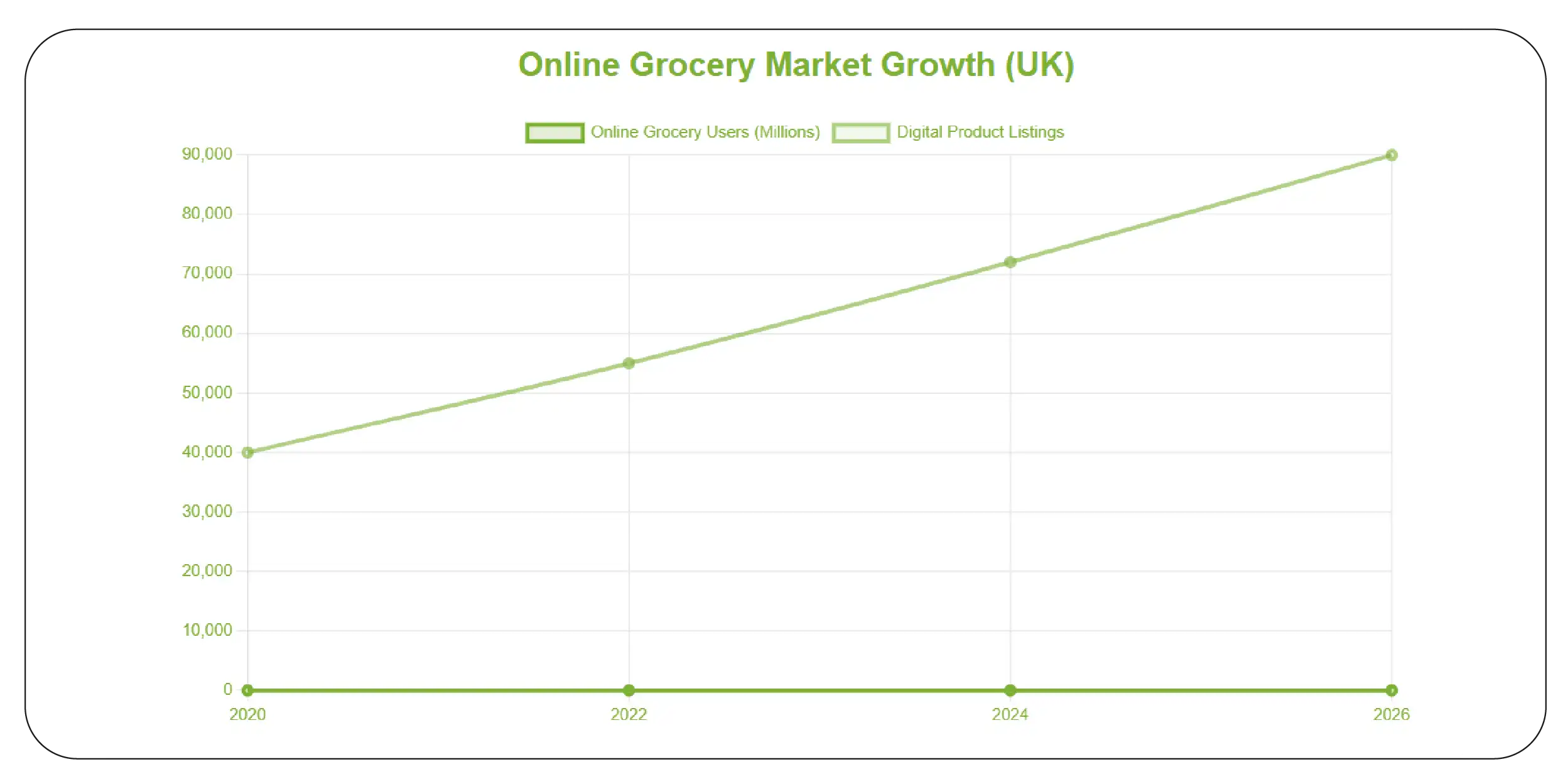
The importance of digital shelf analytics has grown significantly between 2020 and 2026 as more consumers shifted to online grocery shopping.
| Year |
Online Grocery Users (UK) |
Digital Product Listings |
| 2020 |
12 Million |
40,000 |
| 2022 |
16 Million |
55,000 |
| 2024 |
19 Million |
72,000 |
| 2026 |
22 Million |
90,000 |
Key benefits of digital shelf analytics include:
- Understanding product ranking factors
- Monitoring product visibility in search results
- Tracking promotional placement effectiveness
- Improving category navigation strategies
Retailers who analyze digital shelf data can improve product visibility and enhance the overall customer shopping experience.
Analyzing SKU-Level Product Performance
Detailed product-level analysis is essential for effective category management. With Waitrose UK Supermarket SKU-Level Data Extraction, businesses gain access to granular information about individual product units, including packaging size, price variations, availability, and attributes.
SKU-level insights allow retailers to understand which products drive the most revenue and which items experience frequent stock shortages. By analyzing product-level performance, companies can make informed decisions about inventory management and assortment planning.
The table below highlights SKU growth trends between 2020 and 2026.
| Year |
Total SKUs |
Active SKUs |
Discontinued SKUs |
| 2020 |
35,000 |
31,200 |
3,800 |
| 2022 |
42,500 |
37,000 |
5,500 |
| 2024 |
49,800 |
43,200 |
6,600 |
| 2026 |
58,000 |
50,500 |
7,500 |
Key advantages of SKU-level analysis include:
- Monitoring product availability trends
- Identifying fast-moving SKUs
- Tracking product discontinuation patterns
- Improving assortment planning
These insights help businesses align their product offerings with customer demand and improve overall category performance.
Building Actionable Retail Insights Through Structured Data
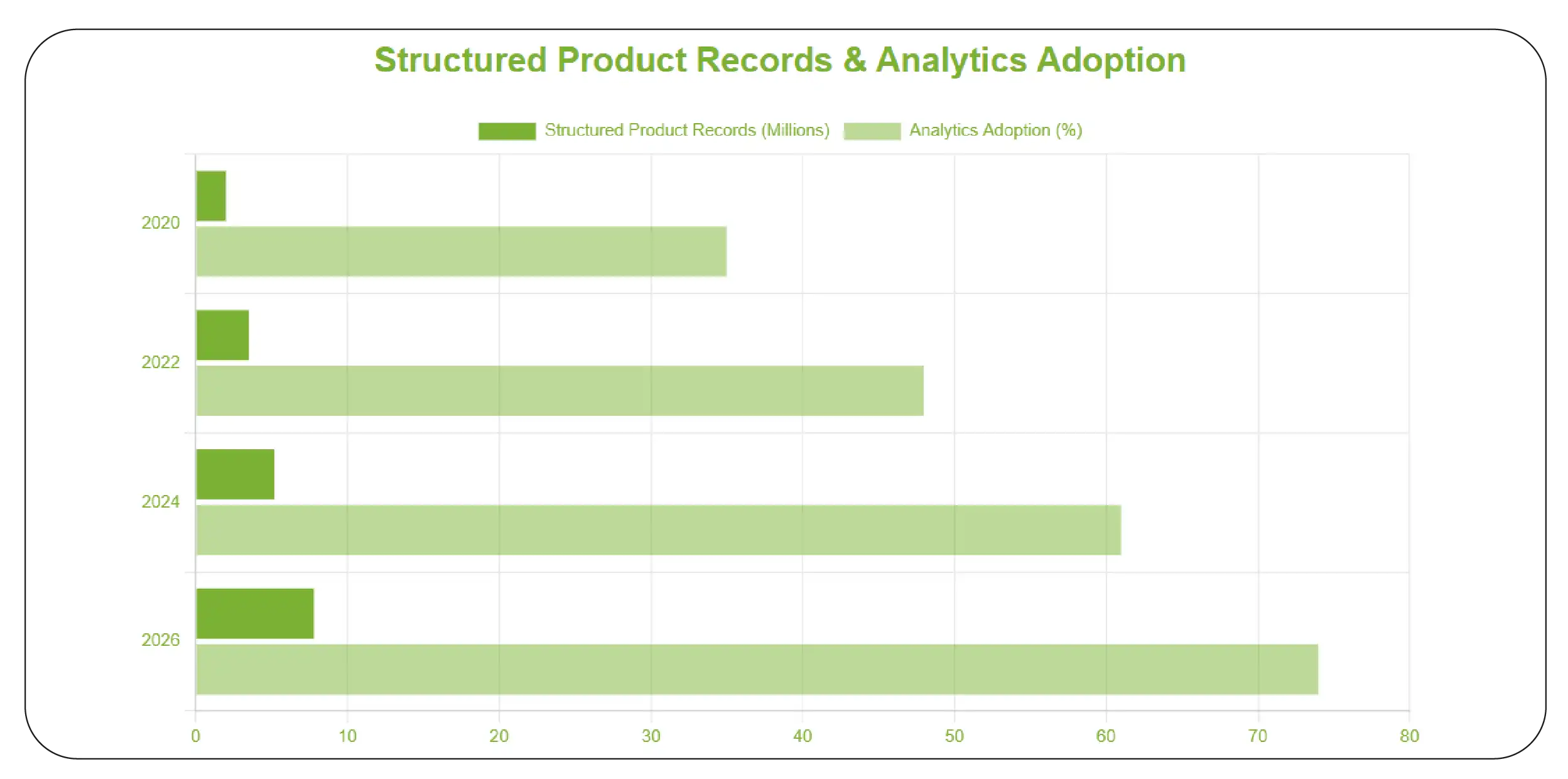
Access to a comprehensive Waitrose Grocery Store Dataset enables retailers to build detailed analytics models that support strategic decision-making. Structured grocery datasets contain information on product descriptions, categories, pricing history, and promotional activity.
Businesses use these datasets to analyze historical trends and forecast future demand. Between 2020 and 2026, the availability of structured retail data increased significantly as grocery retailers expanded their online platforms.
| Year |
Structured Product Records |
Analytics Adoption |
| 2020 |
2 Million |
35% |
| 2022 |
3.5 Million |
48% |
| 2024 |
5.2 Million |
61% |
| 2026 |
7.8 Million |
74% |
Retail organizations use structured datasets to:
- Forecast product demand
- Analyze category growth trends
- Monitor promotional performance
- Improve merchandising decisions
Access to reliable datasets ensures that retailers can develop long-term strategies backed by accurate market intelligence.
Why Choose Product Data Scrape?
Businesses looking to Extract Waitrose Grocery & Gourmet Food Data need accurate, structured, and reliable retail intelligence solutions. Product Data Scrape provides advanced tools that help businesses collect and analyze supermarket data efficiently. Through scalable solutions like Waitrose UK Supermarket Data Extraction, companies gain access to real-time product information, pricing insights, and category-level analytics. These insights support better assortment planning, pricing strategies, and competitive benchmarking. With automated data collection and analytics capabilities, businesses can transform raw supermarket listings into actionable insights that improve retail performance and strengthen market competitiveness.
Conclusion
As the online grocery sector continues to evolve, retailers must rely on accurate data to make strategic merchandising decisions. Solutions like the Waitrose Grocery Data Scraping API enable businesses to collect structured product, pricing, and category insights at scale. By leveraging Waitrose UK Supermarket Data Extraction, companies can optimize assortment strategies, track pricing trends, and improve digital shelf visibility across competitive grocery markets.
Data-driven decision-making allows retailers and brands to respond quickly to changing consumer demand and maintain strong market positioning.
Businesses seeking reliable supermarket intelligence can leverage advanced grocery data solutions to unlock powerful retail insights and stay ahead in the competitive grocery industry.
FAQs
1. What insights can businesses gain from Waitrose supermarket datasets?
Supermarket datasets provide detailed information about product listings, pricing trends, availability, and category structures. These insights help retailers analyze market trends, improve assortment strategies, and track competitor activities.
2. How often can grocery data be updated through data extraction?
Grocery data extraction can be scheduled daily, weekly, or in real time depending on business needs. Frequent updates help businesses monitor pricing changes, product availability, and promotional campaigns.
3. Why is SKU-level analysis important in grocery retail?
SKU-level analysis helps businesses track individual product performance, identify fast-selling items, monitor stock availability, and evaluate category-level profitability to support more accurate merchandising decisions.
4. Can extracted grocery data support pricing strategy improvements?
Yes. Pricing insights allow retailers to monitor competitor prices, track promotional campaigns, and identify price elasticity trends, enabling businesses to optimize their pricing strategies effectively.
5. How does Product Data Scrape support supermarket data analytics?
Product Data Scrape provides scalable data extraction solutions that collect structured retail datasets from online grocery platforms. These datasets support pricing intelligence, category analysis, inventory monitoring, and digital shelf analytics.



 Singapore
 EMAIL
EMAIL
 PHONE
PHONE










.webp)