Introduction
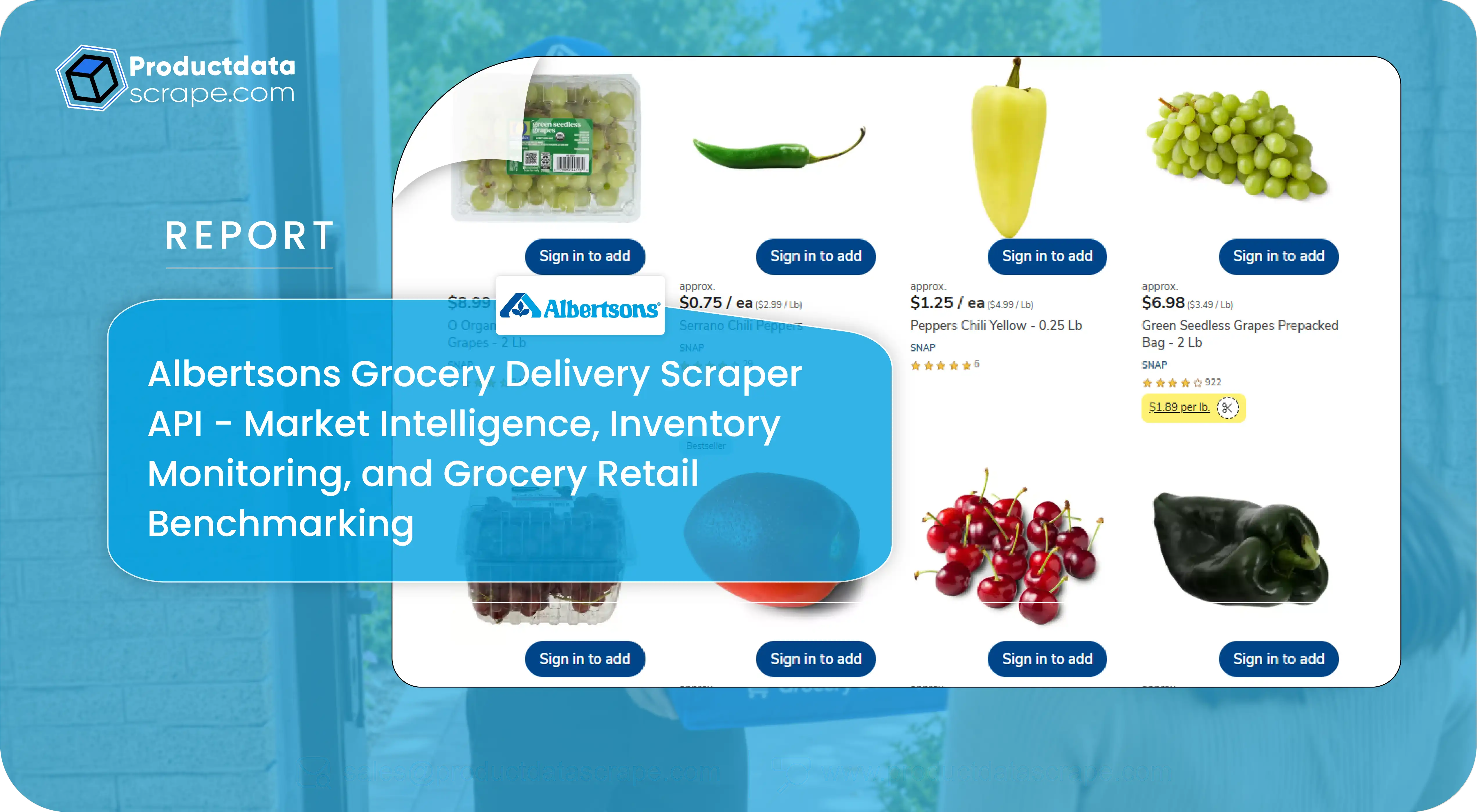
The Albertsons Grocery Delivery Scraper API helps retailers, FMCG brands, grocery analytics firms, and ecommerce businesses monitor real-time grocery pricing, inventory trends, delivery availability, and consumer purchasing behavior. Businesses use these insights to improve pricing strategies, optimize stock management, and strengthen competitive positioning in the digital grocery market.
According to industry reports, the US online grocery market is expected to surpass $320 billion by 2026, with delivery-based shopping becoming a dominant retail channel. Consumers increasingly compare prices, delivery fees, and product availability before placing online grocery orders.
The growing need to Extract Albertsons Grocery & Gourmet Food Data has increased demand for scalable grocery intelligence solutions capable of delivering structured datasets and real-time analytics. Businesses rely on these insights to track promotional activity, monitor competitor pricing, and improve digital shelf visibility across thousands of grocery SKUs.
Real-time grocery intelligence supports faster decision-making and improved operational efficiency within highly competitive online grocery ecosystems.
How Does Grocery Market Intelligence Improve Retail Visibility?
Retailers require real-time market intelligence to monitor pricing changes, product visibility, and customer demand trends. Structured grocery datasets help businesses improve promotional effectiveness and optimize merchandising strategies.
Organizations increasingly use Albertsons Grocery Market Intelligence to monitor category-level performance, evaluate pricing fluctuations, and analyze customer shopping behavior. Businesses also rely on Digital Shelf Analytics to improve product discoverability and strengthen online conversion rates.
Grocery Retail Intelligence Trends (2020–2026)
| Year |
Grocery SKUs Tracked |
Online Grocery Orders (Millions) |
Digital Shelf Visibility Score |
Avg Conversion Rate (%) |
| 2020 |
82,000 |
145 |
64 |
3.6 |
| 2021 |
91,000 |
169 |
68 |
4.0 |
| 2022 |
102,000 |
194 |
72 |
4.4 |
| 2023 |
114,000 |
221 |
76 |
4.8 |
| 2024 |
127,000 |
249 |
80 |
5.2 |
| 2025 |
141,000 |
276 |
84 |
5.7 |
| 2026 |
156,000 |
304 |
88 |
6.1 |
Digital shelf analytics supports:
- Product ranking optimization
- Promotional performance tracking
- Customer engagement analysis
- Category visibility improvements
- Conversion rate enhancement
Why Is Delivery Fee Monitoring Important in Grocery Ecommerce?
.webp)
Delivery pricing directly impacts customer purchasing decisions and online order conversion rates. Consumers actively compare delivery costs and convenience across grocery platforms.
Businesses leverage Albertsons Delivery Fee Data Tracking to monitor delivery charges, same-day fulfillment pricing, and regional fee variations. Retailers also use Competitor Price Monitoring solutions to benchmark grocery pricing against competing delivery platforms.
Grocery Delivery Pricing Trends (2020–2026)
| Year |
Avg Delivery Fee ($) |
Same-Day Delivery Adoption (%) |
Avg Grocery Basket Value ($) |
Delivery Orders Growth (%) |
| 2020 |
5.8 |
18 |
72 |
15 |
| 2021 |
6.2 |
22 |
78 |
19 |
| 2022 |
6.8 |
27 |
84 |
23 |
| 2023 |
7.1 |
33 |
91 |
28 |
| 2024 |
7.4 |
39 |
97 |
32 |
| 2025 |
7.7 |
45 |
104 |
36 |
| 2026 |
8.0 |
51 |
111 |
41 |
How Do Weekly Deal Analytics Improve Pricing Strategies?
Promotional campaigns significantly influence consumer purchasing behavior in the grocery sector. Retailers require real-time promotional intelligence to optimize discounts and maximize customer engagement.
Businesses increasingly use Scrape Albertsons Weekly Deals Data to monitor promotional offers, identify trending discounts, and analyze campaign effectiveness across grocery categories. Companies also rely on Pricing Intelligence Services to benchmark competitor promotions and improve dynamic pricing strategies.
Weekly Promotions & Pricing Trends (2020–2026)
| Year |
Weekly Deals Tracked |
Avg Promotional Discounts (%) |
Customer Coupon Usage (%) |
Grocery Price Changes Daily |
| 2020 |
12,000 |
14 |
31 |
7,500 |
| 2021 |
15,000 |
16 |
36 |
9,600 |
| 2022 |
18,500 |
19 |
42 |
12,400 |
| 2023 |
22,000 |
22 |
48 |
15,900 |
| 2024 |
26,000 |
25 |
54 |
19,700 |
| 2025 |
30,500 |
28 |
59 |
23,600 |
| 2026 |
35,000 |
31 |
64 |
28,000 |
How Does Weekly Ad Intelligence Support Retail Analytics?
.webp)
Weekly grocery advertisements remain one of the most effective customer acquisition tools in food retail. Businesses use ad intelligence to monitor product promotions and seasonal marketing strategies.
Organizations leverage Extract Albertsons Weekly Ad Listings to track product promotions, identify high-performing categories, and analyze regional marketing trends. Retailers also use Web Scraping API Services to automate large-scale extraction of grocery promotional data.
Weekly Ad Intelligence Metrics (2020–2026)
| Year |
Weekly Ads Processed |
Seasonal Promotion Growth (%) |
Featured Product Categories |
Ad Engagement Growth (%) |
| 2020 |
8,200 |
10 |
22 |
12 |
| 2021 |
9,700 |
13 |
25 |
16 |
| 2022 |
11,500 |
17 |
28 |
21 |
| 2023 |
13,600 |
21 |
31 |
26 |
| 2024 |
15,900 |
25 |
35 |
31 |
| 2025 |
18,400 |
29 |
38 |
36 |
| 2026 |
21,000 |
33 |
42 |
41 |
Why Is SKU Availability Tracking Critical for Grocery Delivery?
Inventory availability directly affects order fulfillment rates and customer satisfaction. Consumers expect real-time stock visibility and reliable grocery delivery experiences.
Businesses increasingly use Albertsons SKU availability tracking to monitor stock levels, identify inventory gaps, and improve replenishment planning. Companies also rely on Grocery store dataset solutions to analyze category performance and optimize inventory forecasting.
Grocery Inventory Intelligence Trends (2020–2026)
| Year |
Inventory Updates Daily |
Avg Stock Availability (%) |
Stock-Out Reduction (%) |
Fulfillment Accuracy (%) |
| 2020 |
16,000 |
83 |
4 |
88 |
| 2021 |
21,000 |
85 |
6 |
90 |
| 2022 |
27,000 |
88 |
8 |
92 |
| 2023 |
34,000 |
90 |
10 |
94 |
| 2024 |
42,000 |
92 |
12 |
95 |
| 2025 |
51,000 |
94 |
14 |
96 |
| 2026 |
61,000 |
96 |
17 |
98 |
How Does Grocery Delivery Intelligence Improve Market Benchmarking?
.webp)
Online grocery delivery continues reshaping consumer shopping behavior across the United States. Businesses require structured analytics to evaluate delivery performance and benchmark market competitiveness.
Organizations increasingly use Albertsons grocery delivery intelligence to monitor delivery efficiency, customer ordering trends, and fulfillment performance across grocery ecosystems.
Grocery Delivery Intelligence Growth (2020–2026)
| Year |
Grocery Delivery Orders (Millions) |
Avg Delivery Time (Minutes) |
Repeat Customer Rate (%) |
Mobile Grocery App Usage (%) |
| 2020 |
118 |
74 |
42 |
39 |
| 2021 |
139 |
69 |
46 |
45 |
| 2022 |
163 |
63 |
51 |
51 |
| 2023 |
188 |
58 |
56 |
57 |
| 2024 |
214 |
53 |
61 |
63 |
| 2025 |
241 |
48 |
66 |
69 |
| 2026 |
270 |
43 |
71 |
75 |
Why Choose Product Data Scrape?
Modern grocery analytics requires scalable infrastructure capable of processing large volumes of pricing updates, inventory changes, promotional data, and delivery intelligence.
Businesses leveraging Albertsons Local Store Promotion Data gain valuable insights into regional grocery promotions, store-level marketing strategies, and customer engagement patterns. Organizations using the Albertsons Grocery Delivery Scraper API benefit from automated grocery intelligence, structured retail datasets, and scalable ecommerce analytics solutions.
Product Data Scrape provides advanced grocery intelligence services designed for retailers, FMCG brands, ecommerce businesses, and market research firms seeking actionable retail insights and real-time grocery analytics.
Conclusion
The online grocery industry continues expanding as consumers increasingly prefer convenience-driven shopping experiences and fast delivery services. Real-time grocery intelligence has become essential for retailers seeking competitive visibility, inventory optimization, and improved customer engagement.
The growing importance of the Albertsons Grocery data API highlights the need for scalable analytics and structured grocery datasets capable of delivering accurate market insights. Businesses leveraging the Albertsons Grocery Delivery Scraper API gain significant advantages through automated pricing intelligence, inventory monitoring, promotional analytics, and delivery performance benchmarking.
As grocery ecommerce competition intensifies through 2026, businesses investing in advanced retail intelligence platforms will improve operational efficiency, optimize pricing strategies, and strengthen digital grocery market positioning.
Partner with Product Data Scrape to unlock powerful grocery intelligence solutions powered by real-time Albertsons analytics, automated pricing monitoring, and scalable grocery delivery data extraction services!



 Singapore
 EMAIL
EMAIL
 PHONE
PHONE











.webp)