Introduction
The alcohol and liquor retail industry has experienced significant digital transformation as consumers increasingly rely on online platforms for product discovery, pricing comparisons, and purchasing decisions. Retailers and beverage brands now depend heavily on data-driven strategies to optimize inventory management, track pricing fluctuations, and analyze changing customer preferences. In this rapidly evolving market, businesses require real-time visibility into product availability, promotional campaigns, and competitor pricing trends to maintain profitability and market relevance.
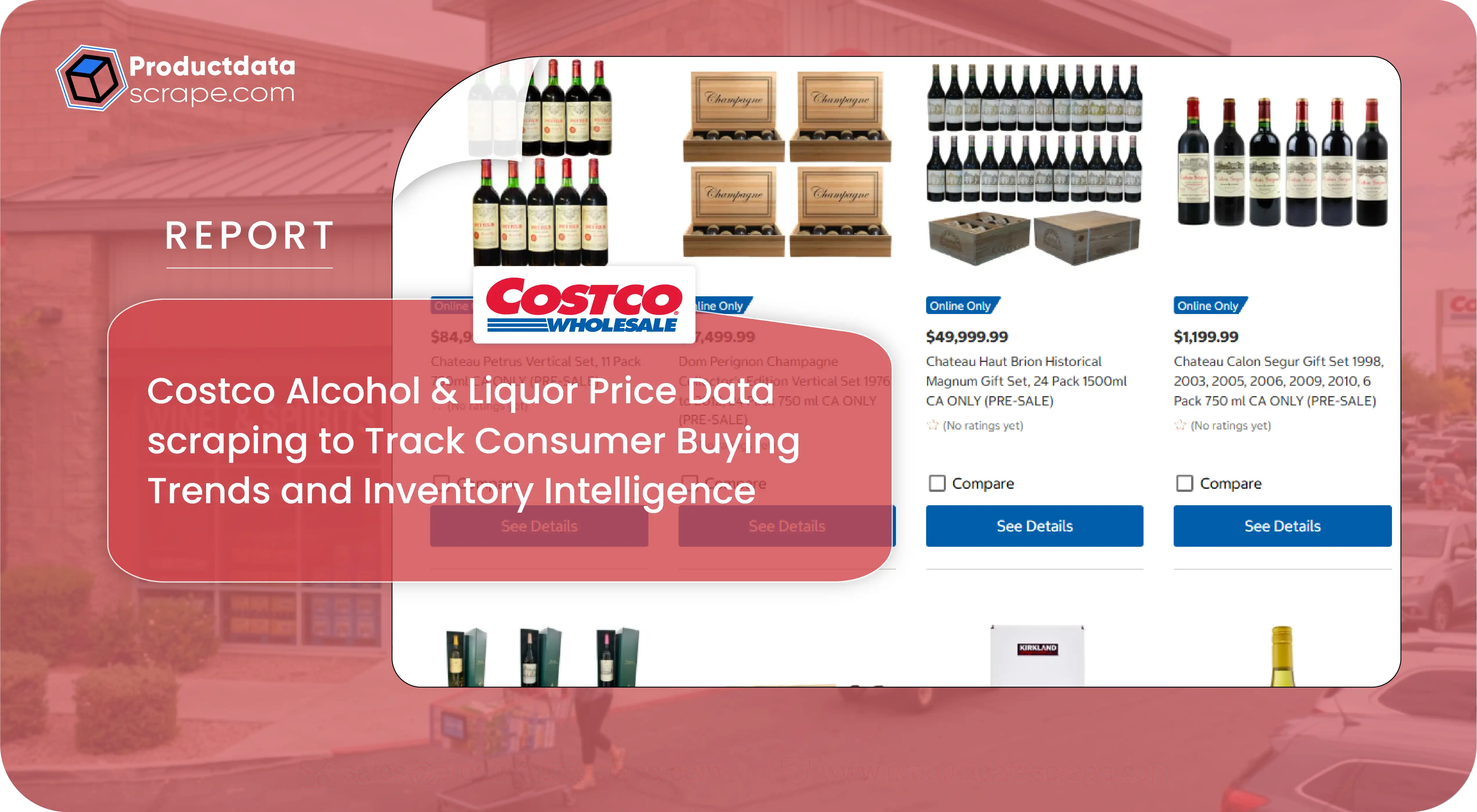
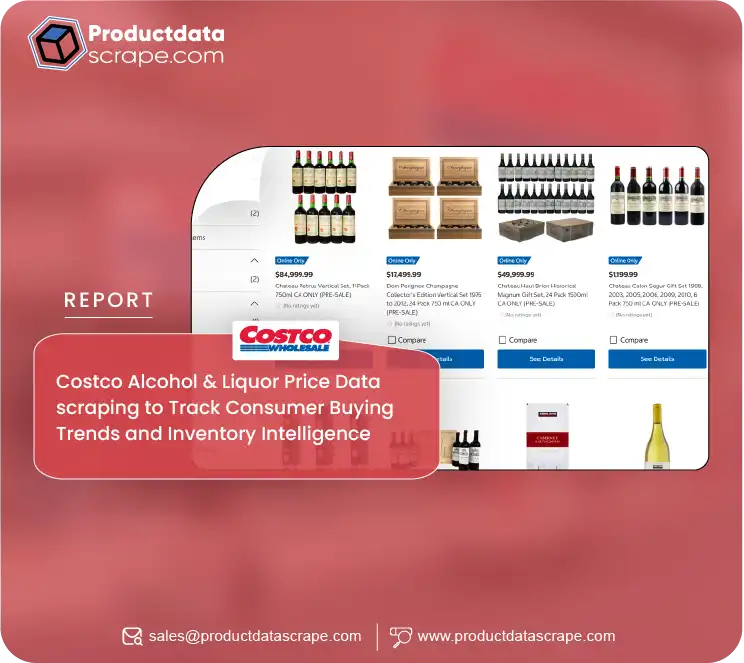
Through advanced Costco Alcohol & Liquor Price Data scraping, businesses can gain structured insights into liquor pricing, inventory movement, category performance, and seasonal demand patterns. Automated extraction systems help retailers and manufacturers analyze vast datasets across wine, whiskey, beer, vodka, and premium spirits categories with greater speed and accuracy. Companies can also Extract Alcohol & Liquor Price Data to monitor regional pricing variations, identify top-selling products, and improve forecasting models.
As digital commerce continues to reshape consumer purchasing behavior, scalable data extraction solutions provide businesses with actionable intelligence for strategic pricing, assortment optimization, and inventory planning across competitive alcohol retail markets.
Evolving Retail Visibility Through Intelligent Inventory Tracking
The rapid expansion of digital alcohol retailing has increased the need for real-time inventory intelligence and pricing transparency. Retailers now face constant pressure to monitor stock availability, pricing consistency, and promotional activity across multiple product categories and regional markets. Advanced analytics solutions allow businesses to respond faster to changing consumer demand while reducing operational inefficiencies.
Using Costco alcohol real time inventory analytics, retailers can track product movement across beer, wine, whiskey, tequila, vodka, and premium spirit categories with enhanced visibility. Automated inventory tracking enables businesses to identify fast-moving products, analyze replenishment cycles, and improve shelf availability during high-demand periods. Combined with advanced Pricing Intelligence Services, companies can monitor competitor price changes and adjust promotional strategies more effectively.
Retail Alcohol Market Growth Trends (2020–2026)
.webp)
Retailers leveraging automated inventory analytics gain improved forecasting accuracy, reduced stock disruptions, and stronger visibility into consumer purchasing behavior. These insights support smarter assortment planning and more responsive retail operations.
Data Automation Reshaping Beverage Intelligence
The beverage retail industry generates massive volumes of pricing, inventory, and promotional data daily. Manual collection methods can no longer support the speed and scale required for competitive analysis in modern retail environments. Automated extraction frameworks now help organizations centralize and standardize retail intelligence efficiently.
Through advanced Costco beverage data scraping, businesses can collect structured datasets containing pricing details, discounts, product descriptions, package sizes, ratings, and promotional offers across liquor categories. Automated extraction systems significantly reduce manual workload while improving reporting consistency and data accuracy.
Modern Web Scraping API Services enable seamless integration of extracted datasets into business intelligence platforms, analytics dashboards, and forecasting systems. These APIs allow real-time synchronization of product-level information, enabling retailers to monitor pricing trends continuously and identify emerging market opportunities.
Beverage Data Extraction Adoption Trends (2020–2026)
| Year |
Businesses Using Automated Scraping (%) |
API-Based Retail Analytics Adoption (%) |
Real-Time Pricing Monitoring (%) |
| 2020 |
28% |
25% |
19% |
| 2021 |
34% |
31% |
24% |
| 2022 |
41% |
38% |
30% |
| 2023 |
49% |
45% |
37% |
| 2024 |
56% |
53% |
44% |
| 2025 |
63% |
60% |
52% |
| 2026 |
71% |
68% |
61% |
Automated beverage data extraction supports faster decision-making, improved operational scalability, and stronger visibility into changing retail dynamics across alcohol and liquor markets.
Reducing Product Availability Gaps in Competitive Markets
Stock availability plays a critical role in alcohol retail profitability and customer satisfaction. Product shortages can negatively impact consumer loyalty, disrupt sales performance, and weaken promotional campaigns. Retailers increasingly rely on automated monitoring systems to detect stock fluctuations and respond proactively to inventory disruptions.
Using Costco alcohol stockout monitoring, businesses can identify unavailable products, delayed replenishment cycles, and inventory shortages in real time. Automated alerts help retail teams react quickly to prevent revenue losses and improve product availability across high-demand categories.
At the same time, advanced Competitor Monitoring Services allow businesses to compare competitor inventory levels, promotional campaigns, and assortment changes. This enables retailers to identify opportunities for price adjustments, product substitutions, and inventory optimization strategies.
Stock Availability and Monitoring Trends (2020–2026)
.webp)
Real-time stock monitoring improves operational responsiveness, reduces inventory disruptions, and enhances customer experience through improved product availability and smarter inventory planning.
Forecasting Consumer Demand Through Advanced Analytics
Consumer preferences in the alcohol industry shift rapidly due to seasonal demand, pricing trends, social events, and promotional campaigns. Businesses that can accurately forecast demand gain stronger inventory control and improved revenue performance. Advanced analytics systems now help retailers predict purchasing behavior more effectively.
With Costco beverage demand forecasting, organizations can analyze historical pricing trends, seasonal purchasing patterns, and category performance to improve inventory planning accuracy. Predictive analytics models help retailers identify upcoming demand spikes and optimize product replenishment strategies.
Companies can also leverage Scrape Costco Liquor API Liquors Alcohol Data solutions to collect structured datasets that feed directly into forecasting engines and machine learning models. These systems provide deeper visibility into consumer behavior trends and category-level demand fluctuations.
Alcohol Demand Forecasting Growth (2020–2026)
| Year |
Businesses Using Predictive Analytics (%) |
Demand Forecasting Accuracy (%) |
Automated Replenishment Adoption (%) |
| 2020 |
25% |
63% |
18% |
| 2021 |
31% |
67% |
24% |
| 2022 |
39% |
71% |
31% |
| 2023 |
47% |
75% |
39% |
| 2024 |
56% |
79% |
47% |
| 2025 |
64% |
83% |
55% |
| 2026 |
72% |
87% |
63% |
Forecasting solutions allow retailers to reduce overstock situations, improve inventory efficiency, and respond proactively to changing consumer demand across alcohol categories.
Improving Visibility with Interactive Retail Dashboards
Retail businesses increasingly depend on centralized analytics platforms to manage pricing intelligence, inventory tracking, and promotional analysis. Interactive dashboards provide real-time access to critical performance metrics, enabling faster and more accurate decision-making.
Organizations using Monitor Costco liquor pricing dashboard solutions can visualize pricing trends, inventory fluctuations, promotional frequency, and category performance from a single interface. These dashboards help merchandising and pricing teams identify market changes quickly and optimize strategic planning processes.
Real-time dashboards also improve cross-functional collaboration by centralizing retail intelligence across operations, sales, marketing, and procurement departments. Automated reporting tools eliminate manual data processing while improving data consistency and reporting speed.
Retail Dashboard Adoption Trends (2020–2026)
.webp)
Interactive analytics platforms improve operational transparency, accelerate pricing analysis, and support data-driven retail growth strategies in competitive liquor markets.
Competitive Pricing Intelligence Driving Retail Growth
Pricing strategy remains one of the most influential factors affecting alcohol retail performance. Consumers frequently compare liquor prices across digital platforms before making purchasing decisions, increasing the importance of accurate competitor intelligence. Retailers must continuously monitor pricing changes to remain competitive and maximize profitability.
Using Costco alcohol competitor price scraping, businesses can track pricing movements, promotional discounts, and assortment strategies across competing retailers. Automated competitor monitoring provides continuous visibility into market conditions and enables rapid pricing adjustments based on changing demand patterns.
Retailers can also analyze category-specific trends, regional pricing variations, and promotional frequencies to optimize product positioning and maximize sales opportunities. Automated competitor intelligence systems improve pricing agility while reducing manual monitoring efforts.
Competitive Pricing Analytics Trends (2020–2026)
| Year |
Businesses Using Price Intelligence (%) |
Competitor Pricing Automation (%) |
Retail Pricing Optimization (%) |
| 2020 |
27% |
20% |
24% |
| 2021 |
34% |
27% |
31% |
| 2022 |
42% |
35% |
39% |
| 2023 |
50% |
43% |
47% |
| 2024 |
58% |
51% |
55% |
| 2025 |
66% |
60% |
63% |
| 2026 |
74% |
69% |
72% |
Competitive pricing analytics enable businesses to improve promotional planning, increase market responsiveness, and strengthen customer retention in evolving alcohol retail markets.
Why Choose Product Data Scrape?
Product Data Scrape delivers scalable, automated, and highly accurate retail intelligence solutions designed for modern e-commerce and beverage markets. Our advanced extraction frameworks help businesses monitor liquor pricing, inventory movement, competitor promotions, and assortment trends with real-time visibility and operational efficiency.
Through our ability to Extract Costco E-Commerce Product Data, businesses gain structured datasets for analytics, forecasting, pricing optimization, and inventory planning across multiple alcohol categories. Our scalable cloud-based infrastructure supports large-volume data extraction while maintaining high accuracy and rapid update frequencies.
Using advanced Costco Alcohol & Liquor Price Data scraping technologies, Product Data Scrape enables retailers, manufacturers, and distributors to transform raw retail information into actionable market intelligence. Our customizable APIs, intelligent automation pipelines, and real-time analytics dashboards provide businesses with a competitive advantage in dynamic alcohol retail environments.
Conclusion
The growing complexity of alcohol retail markets requires businesses to adopt data-driven strategies for pricing optimization, inventory planning, and consumer trend analysis. Automated retail intelligence solutions now play a critical role in helping organizations respond faster to market changes and improve operational efficiency.
Through advanced Costco E-commerce Product Dataset solutions, businesses can gain valuable insights into pricing behavior, stock availability, promotional activity, and customer demand trends across liquor categories. Leveraging Costco Alcohol & Liquor Price Data scraping enables organizations to improve forecasting accuracy, strengthen competitor analysis, and optimize pricing strategies for long-term retail growth.
Ready to transform alcohol retail data into actionable business intelligence? Contact Product Data Scrape today to unlock scalable scraping solutions, real-time analytics, and competitive retail insights tailored to your business needs!



 Singapore
 EMAIL
EMAIL
 PHONE
PHONE










.webp)