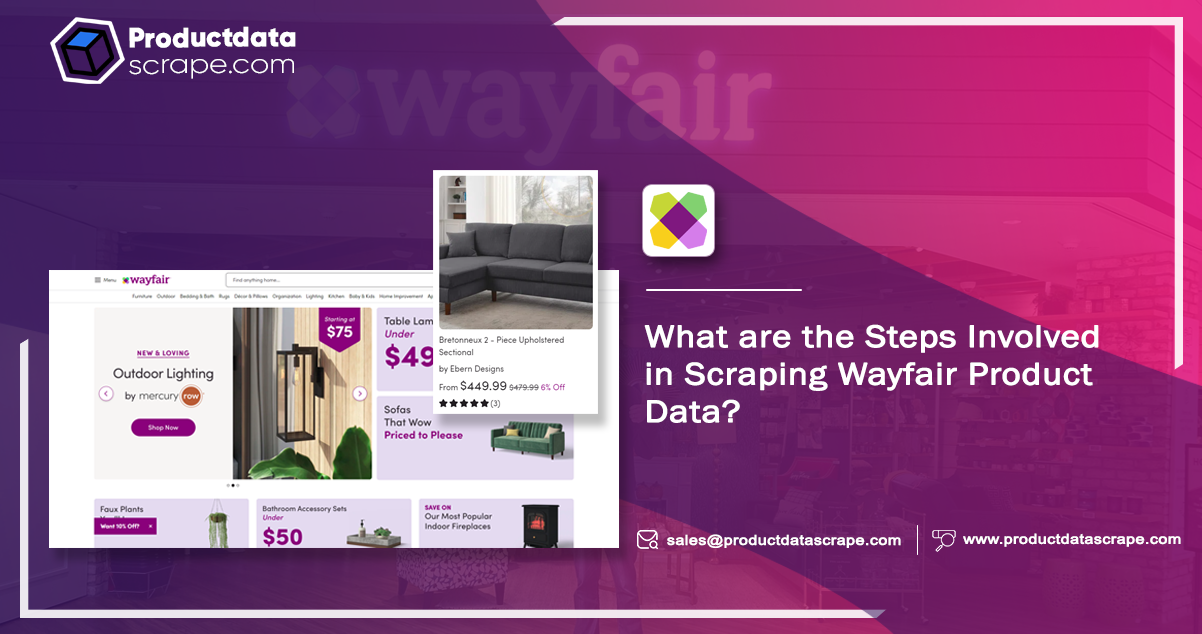
Wayfair, a prominent retailer specializing in furniture and home appliances, is
a vital source of public web data, particularly for the e-commerce sector. With its extensive
product range, the Wayfair website offers diverse data types with potential for analysis,
enabling trend forecasting and insights into featured data fluctuations.
Leverage Wayfair API to extract e-commerce data effortlessly. It empowers you
to assess competition, strategically position products for optimal revenue, or secure purchases
at the best prices. The API's low-maintenance infrastructure saves valuable time and effort.
Collecting and analyzing e-commerce data brings forth numerous competitive
advantages, such as:
- Pricing Intelligence: Formulate effective, long-term product pricing
strategies.
- Dynamic Pricing: Seamlessly adjust prices in response to competitive
shifts.
- Real-Time Product Monitoring: Gain insights into various product
attributes.
- MAP Monitoring: Enforce policy agreements by tracking Minimum Advertised
Price (MAP) violators.
This tutorial will delve into Scraping Wayfair Product Data. It covers a comprehensive overview of page layout, prepares the project environment, details fetching Wayfair product pages for data extraction, and concludes with exporting data to CSV or JSON formats.
Why Scrape Wayfair Data?
Scraping Wayfair e-commerce data yields distinct advantages due to its specialized
position in the e-commerce landscape:
Rich Home Appliances Data: Wayfair's extensive product range,
focusing on furniture and home appliances, provides a unique niche of valuable data for analysis
and insights.
E-Commerce Insights: The data collected from Wayfair can offer
invaluable insights into pricing trends, product popularity, and market dynamics within the
e-commerce industry.
Trend Forecasting: By analyzing Wayfair's real-time data,
businesses can forecast emerging trends and adapt strategies accordingly, ensuring a competitive
edge.
Competitive Intelligence: Extracting data from Wayfair
empowers businesses to benchmark themselves against competitors, identifying opportunities and
areas for improvement.
Dynamic Pricing Strategies: Wayfair web scraping enables
dynamic pricing adjustments based on real-time market conditions, optimizing product positioning
and revenue.
MAP Enforcement: Monitoring MAP violations on Wayfair for
manufacturers and brands helps maintain consistent pricing policies and protect brand integrity.
Customized Product Insights: Scrapped data can provide
detailed insights into specific product attributes, aiding businesses in understanding consumer
preferences.
Efficient Strategy Development: Wayfair data scraping supports
evidence-based decision-making, enabling businesses to formulate effective marketing and sales
strategies.
Real-Time Monitoring: Businesses can stay updated on Wayfair's
offerings and changes in product availability, ensuring timely actions.
Resource Optimization: Utilizing an API like Wayfair Scraper
simplifies data extraction, saving time and resources compared to manual scraping methods.
Incorporating Wayfair product data scraping into business processes offers
these unique benefits, enhancing market understanding, decision-making, and overall
competitiveness.
Overview of Wayfair Page Layout
Before delving into the technical aspects for Data Scraping From Ecommerce Website, let's examine the layout of the Wayfair page. Notable types include:
Search Result Page:
This page surfaces upon product searches, such as "Sofa." It showcases results resembling the example below:
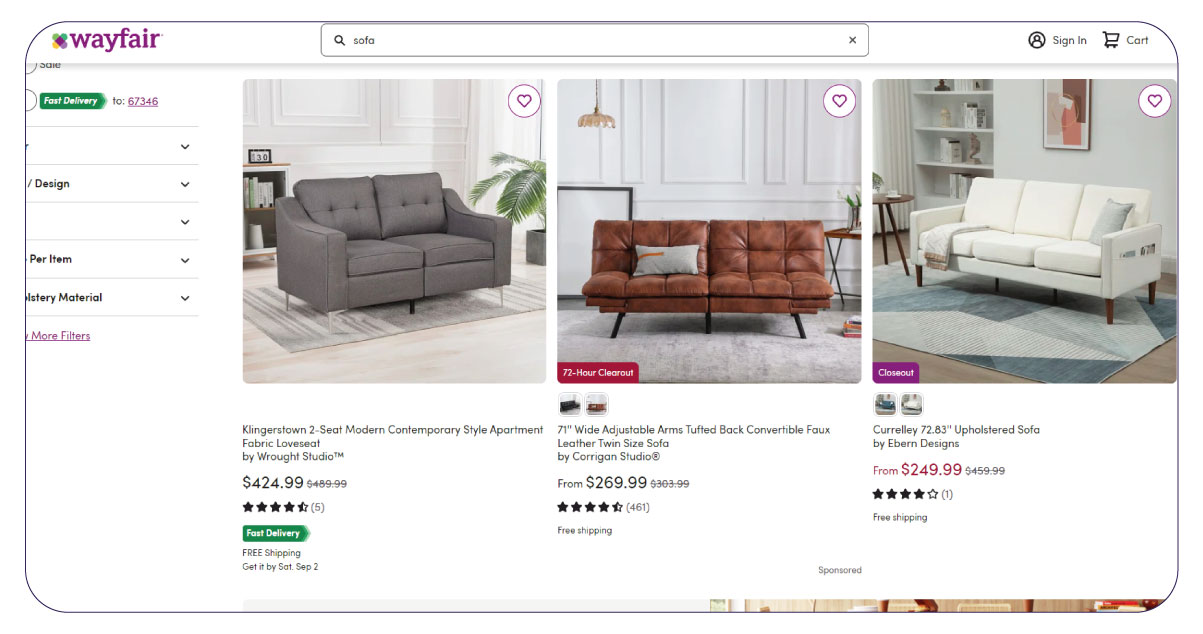
You can use Ecommerce Data Scraping Service to collect comprehensive information from all products listed under the search term "Sofa," including their corresponding links, titles, prices, ratings, and images.
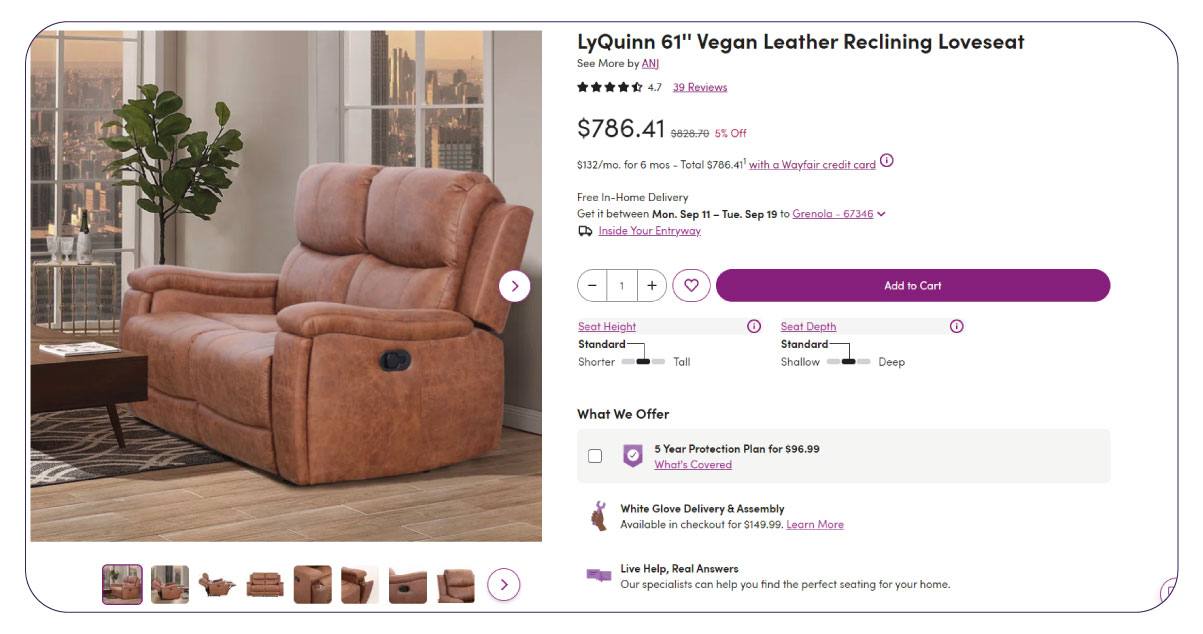
Product Listing Page:
When you select a specific product to view its details, it will direct you to the product listing page. This page provides comprehensive product information, supplementing the core data visible on the initial search result page.
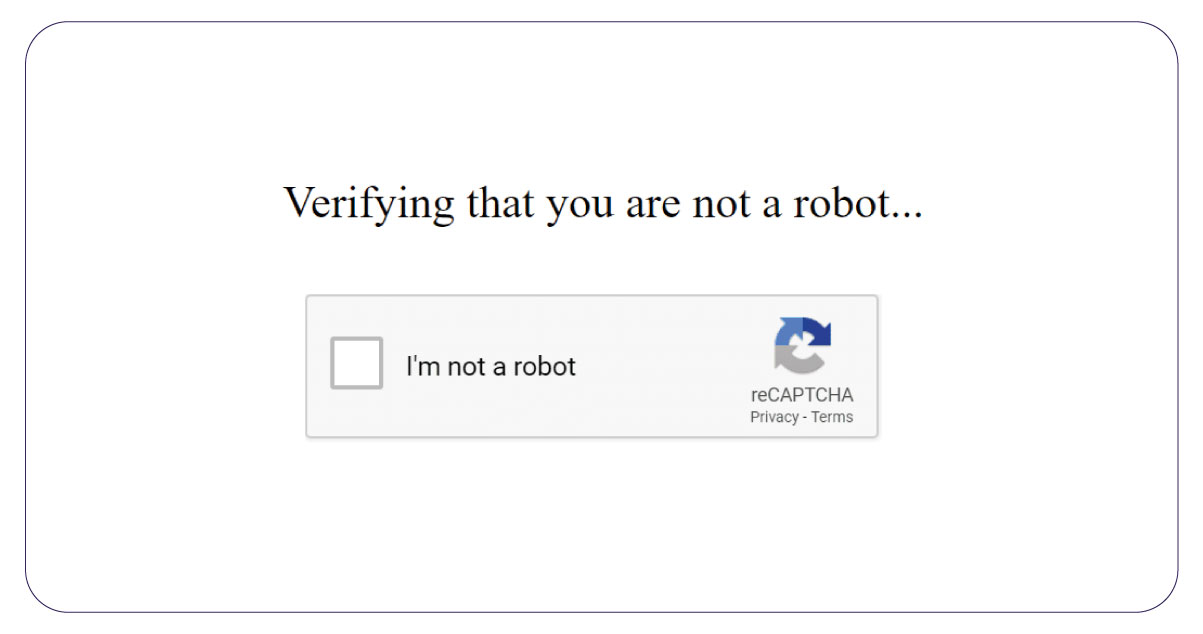
reCAPTCHA Protection Page:
Navigating the Challenges of Wayfair Scraping
Automated Web Scraping Retail Websites Data from Wayfair encounters hurdles like intricate anti-bot systems and a dynamic web layout. Such complexities often lead to potential roadblocks such as bans, blocks, or blocklisting. The need for constant script adjustments to address code disruptions further compounds the challenge.
Wayfair employs Google's reCAPTCHA service as a defense mechanism against automated scrapers. This anti-bot solution employs fingerprinting algorithms and behavioral pattern recognition.
Wayfair API significantly streamlines this process by offering built-in support for bypassing anti-bot measures through provisions like proxies, customized headers, and user agents. This comprehensive approach simplifies the scraper development process.
Comparatively, the Wayfair Scraper API boasts several advantages over conventional scrapers, encompassing:
ML-driven proxy management
Dynamic browser fingerprinting
JavaScript rendering
By leveraging these features, Wayfair Scraper API presents a powerful solution to overcome Wayfair's scraping challenges with efficiency and effectiveness.
Steps to Scrape Wayfair Product Data
Project Environment Setup: Installing Python and Required Libraries
Kickstart your Wayfair data scraping endeavor by setting up the project environment. If you've got Python already installed, focus on installing the necessary dependencies in your active Python environment.
Python Installation:
In case Python is not available, here's how to do it. This tutorial is based on Python 3.11.2 but is adaptable to older or newer versions of Python 3. Visit the official Python webpage to download and install the latest Python version.
Dependency Installation:
With Python in place, proceed to install essential dependencies. Run the command provided below in your terminal or command prompt to initiate the installation process:
By adhering to these steps, you'll venture into the realm of Wayfair data scraping with a well-prepared project environment.

This command facilitates the installation of the Requests, Beautiful Soup, and Pandas libraries. These modules serve the purpose of interacting with the API and storing the extracted data.
Retrieve Wayfair Product Data with Wayfair Scraper API
Consider the following target product page. Employ the Wayfair Scraper API to acquire Wayfair product data, parsing it through the Beautiful Soup library.
Wayfair Scraper API: An Overview
Before initiation, let's delve into key query parameters integral to the Wayfair Scraper API. The API operates through two distinct modes:
Scraping via URL:
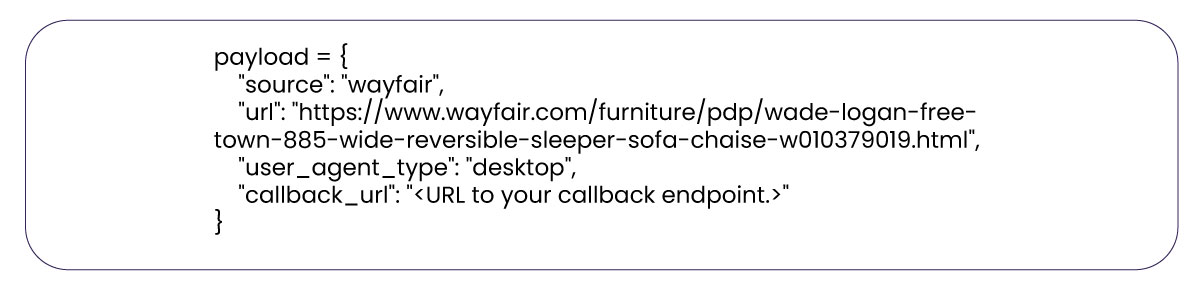
Employ this approach to scrape any Wayfair URL. You must furnish two essential parameters: "URL" and "source." The "source" parameter should be set to "Wayfair," while the "URL" should correspond to a Wayfair webpage URL. Optional parameters like "user_agent_type" and "callback_url" can also be included. "user_agent_type" designates the user agent's device (e.g., desktop), and "callback_url" specifies the URL for the server's response post-request processing. Here's an illustrative payload example:
Query-Based Scraping
An alternative method involves data extraction from search results. It entails utilizing two parameters: "source" and "query." For this approach, designate "source" as "wayfair_search" and input the desired search terms into the "query" parameter. This endpoint accommodates supplementary parameters, including "start_page," "pages," "limit," "callback_url," and "user_agent_type."

Navigating Results and Parameters
Right from the specified page number, the results commence as designated by the "start_page" parameter. By employing the "pages" parameter, you can acquire multiple pages from the search outcomes. Furthermore, the "limit" parameter controls the number of search results fetched per page.
Issuing Network Requests
Begin crafting your Wayfair scraper by importing the requisite libraries and constructing a payload that encapsulates the essential variables:
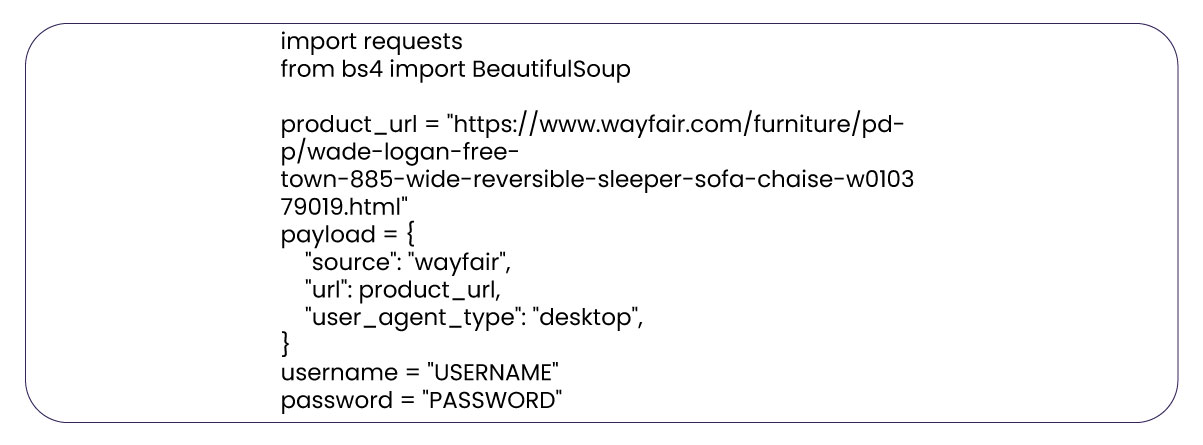
Observe the "username," "password," and "product_url" variables. It's crucial to input your sub-users username and password. Optionally, you can modify the "product_url" with the preferred URL.
Proceed by dispatching a POST request utilizing the Requests module to real-time API endpoint:
https://realtime.oxylabs.io/v1/queries

In the provided code snippet, the POST method from the Requests module facilitates the transmission of a POST request to the API. Sub-user credentials serve for authentication, then dispatch the payload in JSON format.
Upon executing the code, an output of 200 signifies successful execution. Should any other status code arise, review your credentials and payload.
Unveiling HTML Content with BeautifulSoup
Subsequently, you can parse the JSON response's content. Encased within the JSON object lies the web page's content, formatted in HTML. Utilize BeautifulSoup to dissect the HTML extracted from the response:

The code employs the default html Parser. If you wish, alternative parsers are available for utilization.
The "soup" object encapsulates the parsed HTML content. Extract the title, price, and rating from this object to proceed.
Title Extraction:
Inspect the HTML attributes of the product title using a web browser. Access the inspect tab by right-clicking on the product title and selecting "inspect." The ensuing image provides a similar representation:
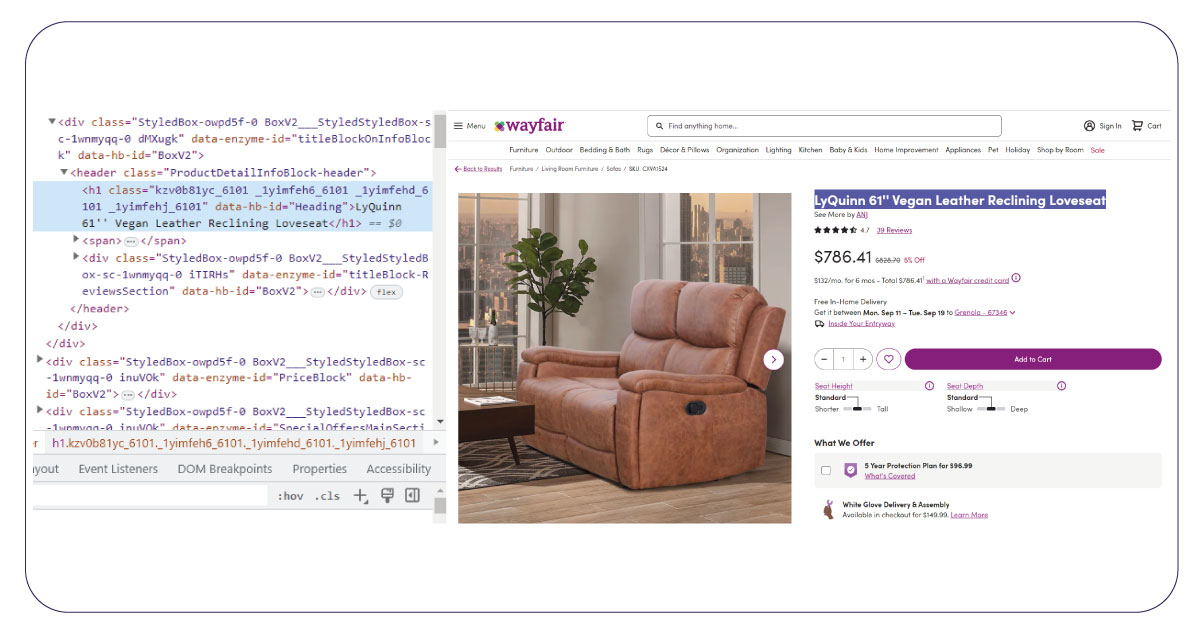
Based on the HTML property, craft the following code snippet to extract the title of the product:

For price extraction, analyze the price element and identify the appropriate class attributes:
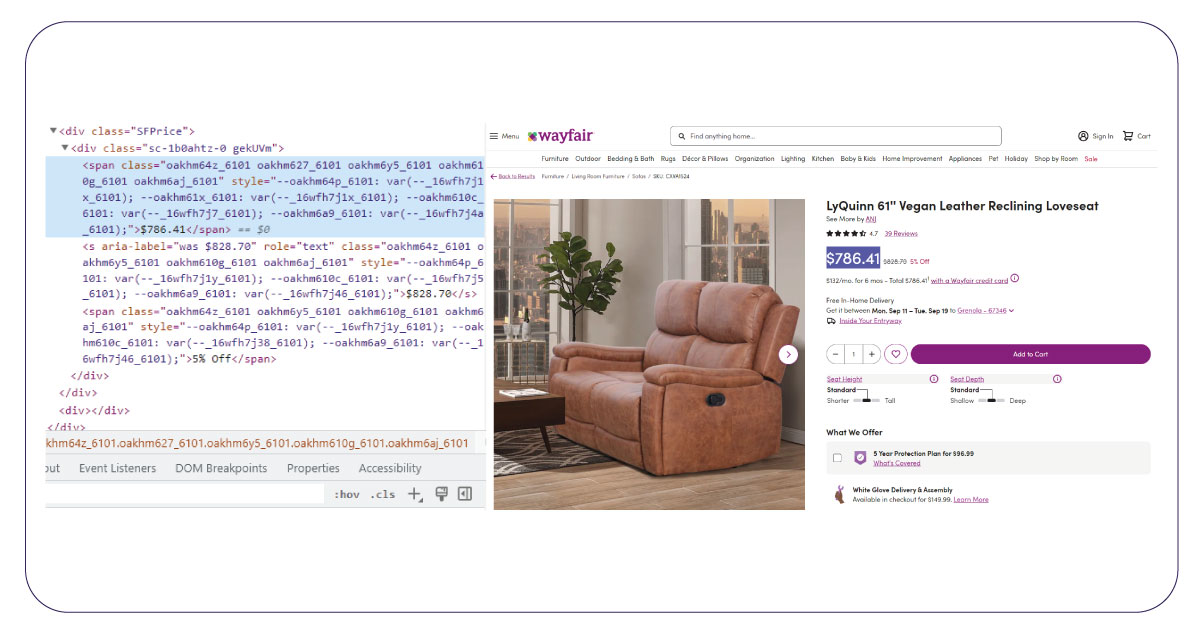

Likewise, you can employ the following code snippet to parse the rating element:

The class attribute of the "span" element serves as the identifier for the rating element, facilitating the extraction of its textual content.
Data Export
With the product data successfully parsed, leverage Pandas to export it in CSV and JSON formats. Begin by compiling a list of dictionary objects featuring the parsed data. Subsequently, create a data frame using this list:

Exporting Data to CSV
Utilize the data frame object to seamlessly export the data into a CSV file with just one line of code. As an index isn't required, designate the index as False for a streamlined export:

Upon executing this function, the script will generate a file named "product_data.csv."
Exporting Data to JSON
In parallel, leverage the data frame to export the data in JSON format. Introduce an extra parameter, "orient," to signify the requirement for JSON data in the "records" format:

Conclusion: A formidable task is to develop a scraper capable of emulating human browsing behavior by sending requests akin to an actual browser. The intricate nature of such an endeavor demands meticulous maintenance and continual updates to align with dynamic changes. This level of micromanagement necessitates a profound understanding and substantial experience in scraping.
By embracing the Wayfair Scraper API, you can shift your emphasis to what truly counts - data analysis - freeing you from the technical intricacies. This redirection of focus empowers you to channel your energy into the realm of data interpretation rather than grappling with the complexities of scraping.
Product Data Scrape is committed to upholding the utmost standards of ethical
conduct across our Competitor Price Monitoring
Services and Mobile App Data Scraping operations. With a global presence across multiple
offices, we meet our customers' diverse needs with excellence and integrity.



 Singapore
 EMAIL
EMAIL
 PHONE
PHONE












.webp)