Quick Overview
A global retail brand operating in the toys and games segment faced growing challenges in identifying fast-moving LEGO products before competitors. The client belonged to the organized toy retail industry and served both online and brick-and-mortar customers. We delivered an advanced analytics solution Using Scraped LEGO Product Data combined with Web Scraping LEGO Shop Toys & Games Data over a four-month engagement. The solution automated product tracking, demand signals, and trend identification. As a result, the retailer achieved faster bestseller identification, improved demand forecasting accuracy, and reduced stockout incidents. The project empowered merchandising teams with near real-time insights, enabling smarter assortment planning and data-driven decisions.
The Client
The client is a well-established retail brand specializing in toys, games, and collectibles, with LEGO products forming a significant share of its revenue. The toy retail market has become increasingly competitive due to rapid product launches, seasonal demand spikes, and evolving consumer preferences driven by digital marketplaces. Bestseller cycles have shortened, making early trend detection essential for sustained growth.
Before partnering with us, the client relied on delayed sales reports and limited market visibility. While internal sales data provided historical insights, it failed to capture external demand signals such as product availability, price changes, and popularity shifts across online platforms. This limited their ability to perform effective LEGO product demand tracking using web scraping and respond to emerging trends.
Transformation became critical as the brand expanded its online presence and product catalog. Manual monitoring methods could not scale, and decision-making lagged behind market movements. The retailer needed a robust way to Extract Toys & Games Data from multiple digital touchpoints to gain a competitive edge. Our solution addressed this gap by delivering real-time visibility into LEGO product performance beyond internal sales metrics.
Goals & Objectives
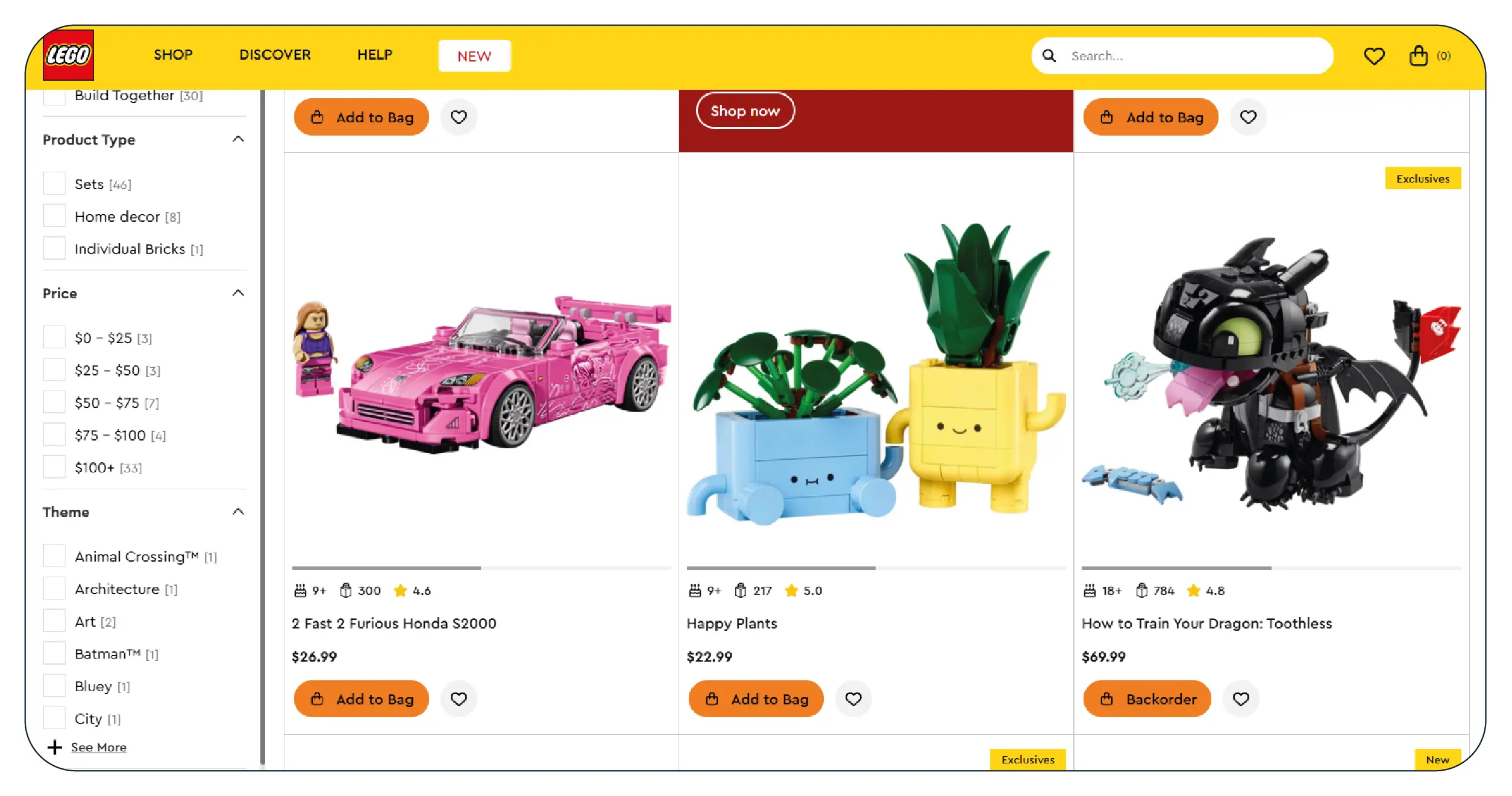
The primary business goal was to enhance bestseller identification accuracy while ensuring scalability across thousands of LEGO SKUs. The client aimed to detect winning products early, minimize inventory risks, and strengthen merchandising strategies through Bestseller detection using LEGO scraped data.
From a technical perspective, the objective was to automate product data extraction, integrate external data with internal systems, and enable real-time analytics. The client sought faster insights without increasing operational complexity, ensuring seamless adoption by pricing and merchandising teams.
Faster identification of emerging LEGO bestsellers
Improved demand forecasting accuracy
Reduction in stockouts and overstock scenarios
Increased responsiveness to market trends
The Core Challenge
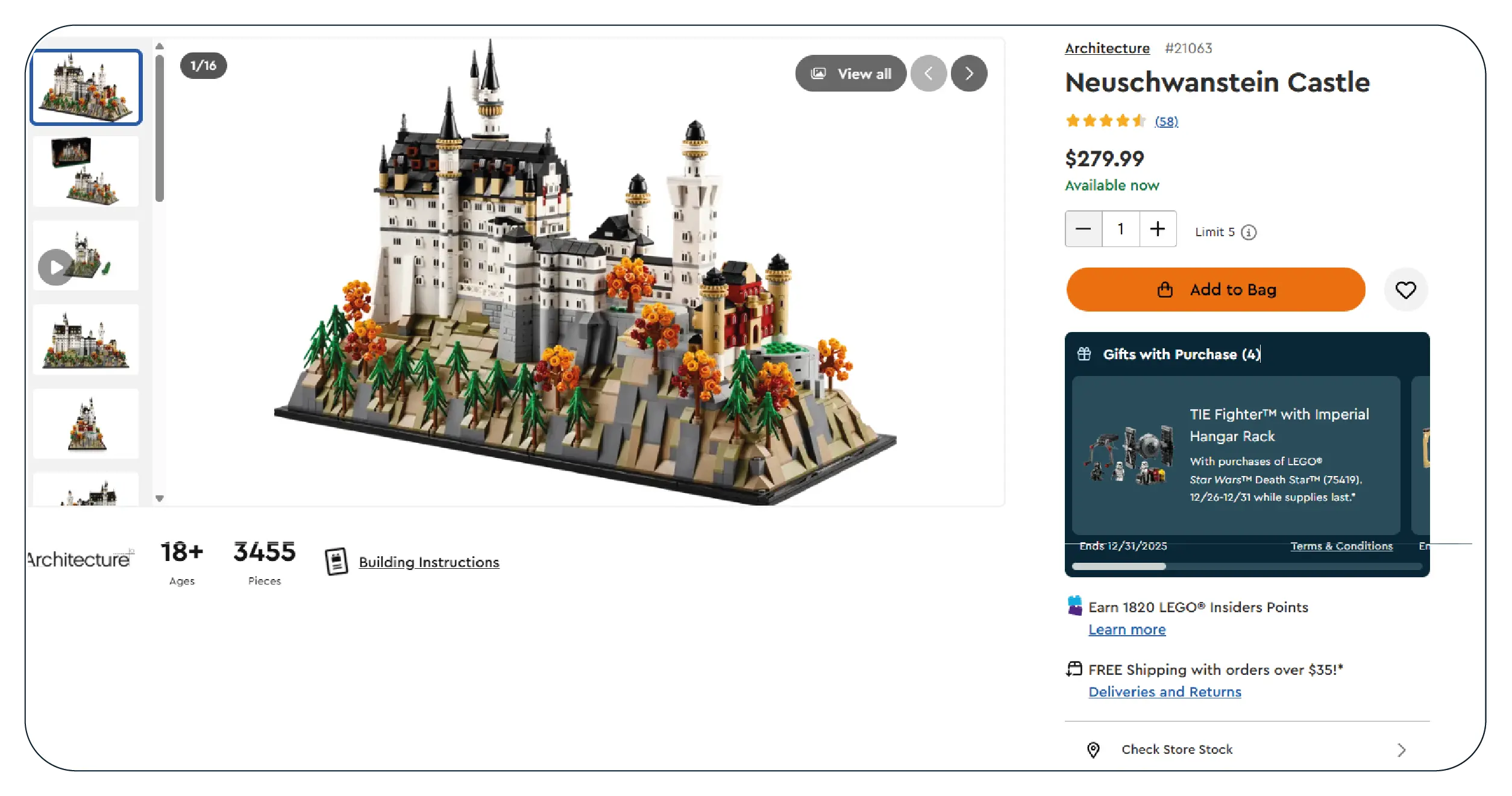
The client faced multiple operational and data-related challenges that hindered effective bestseller detection. Manual tracking processes were time-consuming and inconsistent, making it difficult to monitor thousands of LEGO SKUs simultaneously. Teams struggled with fragmented insights, as product data was scattered across multiple platforms.
Performance issues further compounded the problem. Delays in data collection meant that by the time insights were generated, market conditions had already changed. This affected inventory planning, promotional timing, and assortment decisions. The lack of automation also increased the risk of human error.
Additionally, the client lacked a structured approach for Scraping LEGO product prices and availability Data, limiting visibility into real-time demand signals such as stock status, pricing changes, and product popularity. Without this intelligence, bestseller identification was reactive rather than predictive, leading to missed revenue opportunities and inefficient inventory management.
Our Solution

We implemented a phased, scalable solution designed to deliver actionable insights while minimizing disruption. The first phase focused on identifying critical LEGO product categories, key demand indicators, and relevant data sources. This ensured that data collection aligned directly with business objectives.
In the second phase, we deployed automated scraping frameworks to continuously collect product details, pricing, availability, and popularity signals. This enabled Product Trend Detection Using LEGO Data at scale. The system handled frequent updates and dynamic website structures, ensuring uninterrupted data flow.
The third phase involved data normalization and enrichment. Raw scraped data was cleaned, structured, and enriched with trend indicators to support advanced analytics. Intelligent validation checks were applied to maintain data accuracy and consistency.
Finally, the processed insights were integrated into dashboards and internal tools. Merchandising and planning teams gained near real-time visibility into product performance Using Scraped LEGO Product Data, allowing them to identify emerging bestsellers earlier than before. This phased approach ensured measurable value at each stage while laying the foundation for long-term scalability.
Results & Key Metrics

Faster bestseller identification across LEGO categories using Toy Category Intelligence Using LEGO Data
Significant improvement in demand forecasting accuracy
Reduction in inventory-related risks such as stockouts
Increased speed of merchandising decision-making
Results Narrative
With automated insights in place, the client transitioned from reactive to proactive merchandising. Teams identified high-performing LEGO sets earlier in their lifecycle, allowing timely inventory allocation and promotions. The improved visibility enhanced cross-team collaboration and strengthened planning accuracy. Overall, the solution enabled smarter assortment strategies and improved market responsiveness without increasing operational overhead.
What Made Product Data Scrape Different?
Our approach stood out through intelligent automation, adaptive scraping logic, and trend-focused analytics. We went beyond basic extraction by applying advanced models for Analyzing LEGO Market Trends. Proprietary frameworks ensured data accuracy, scalability, and reliability even during peak demand periods. Unlike generic tools, our solution delivered actionable intelligence tailored specifically to bestseller detection and merchandising optimization, enabling the client to stay ahead in a highly competitive toy retail market.
Client’s Testimonial
“The insights we gained Using Scraped LEGO Product Data transformed how we identify and act on bestsellers. We now have real-time visibility into product trends and demand signals that were previously invisible. The solution has significantly improved our planning accuracy and inventory efficiency.”
— Head of Merchandising & Analytics
Conclusion
This case study highlights how data-driven intelligence can revolutionize bestseller detection in toy retail. By automating external data collection and transforming it into actionable insights, the client achieved faster decision-making and stronger market alignment. Our expertise in Web Data Intelligence API solutions enabled scalable, accurate, and real-time analytics. As product lifecycles continue to shorten, retailers that invest in advanced data intelligence will lead the market. Product Data Scrape remains committed to empowering brands with innovative, future-ready data strategies.
FAQs
1. Why is bestseller detection critical in toy retail?
Bestseller cycles are short, and early identification helps retailers maximize revenue while minimizing inventory risks.
2. How does web scraping support LEGO product analysis?
Web scraping captures real-time data on pricing, availability, and popularity, enabling proactive trend detection.
3. Is the solution scalable across other toy brands?
Yes, the architecture supports multiple brands, categories, and data sources.
4. How accurate is scraped LEGO product data?
Data validation and normalization ensure high accuracy and reliability.
5. Can this integrate with existing retail systems?
Absolutely. The solution integrates seamlessly with BI tools, dashboards, and inventory systems.



 Singapore
 EMAIL
EMAIL
 PHONE
PHONE


.webp "thumb")
.webp "thumb")
.webp "thumb")








.webp)