Introduction
The online liquor industry has grown rapidly, driven by evolving consumer behavior,
technological innovations, and regulatory updates. With the ease of e-commerce, customers can
explore a vast selection of alcoholic beverages, from premium spirits to non-alcoholic options.
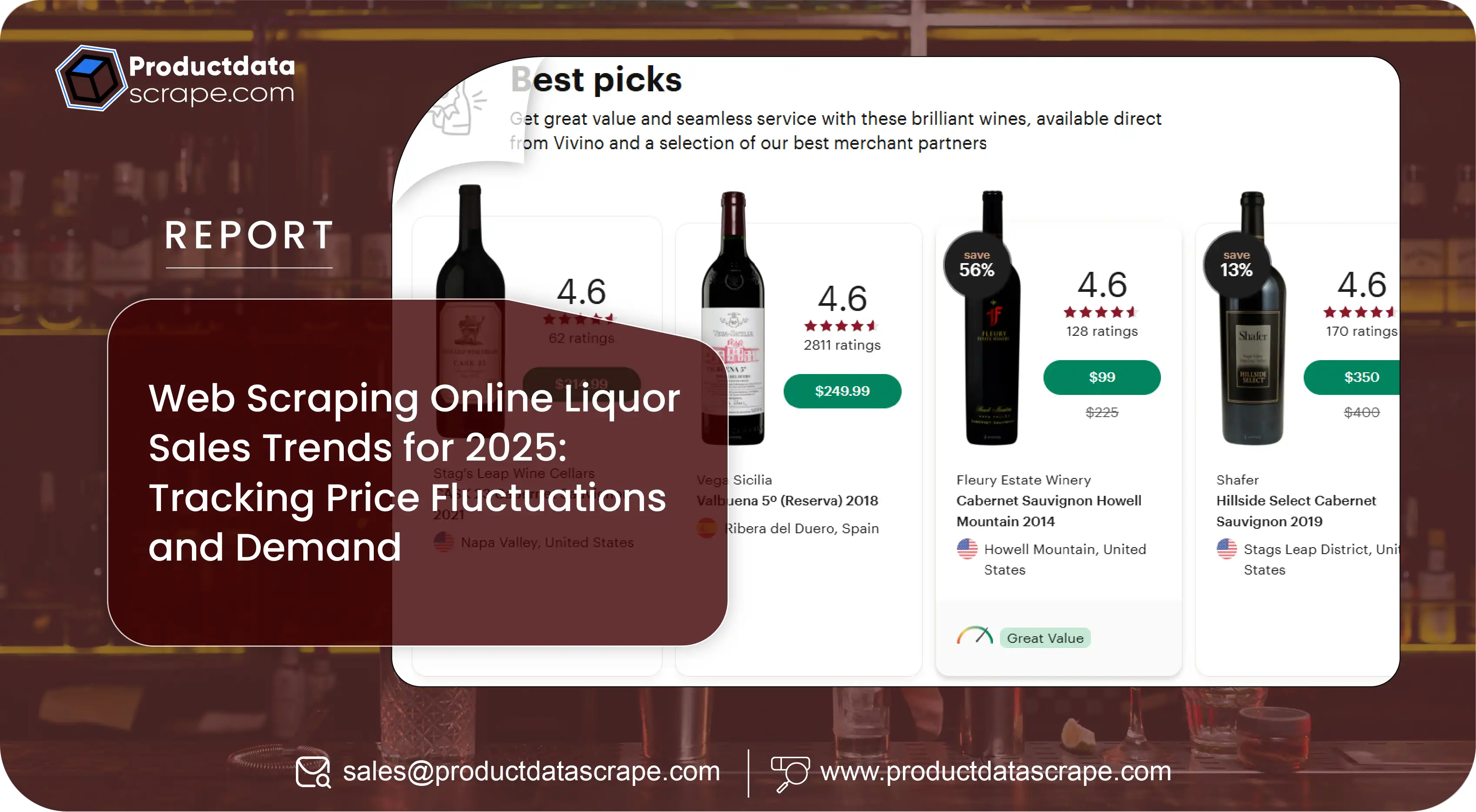
As we move into 2025, businesses are leveraging Web Scraping Online Liquor Sales Trends 2025 to
track shifting market dynamics and consumer preferences.
Online liquor sales are projected to reach new heights, presenting opportunities and challenges
for retailers. Companies are adopting data-driven strategies to Extract Online Alcohol Sales
Trends in 2025, helping them optimize product offerings and pricing. Advanced analytics and
automation are crucial in understanding price fluctuations and competitive positioning.
Furthermore, Online Liquor Store Price Scraping 2025 enables businesses to stay ahead by
monitoring pricing trends and adjusting strategies accordingly. This report explores these
trends, past developments, and data insights' role in shaping online liquor sales' future.
Research Methodology
This report is developed using a combination of primary and secondary research methodologies to
analyze the online liquor industry comprehensively. The data sources include multiple research
approaches to ensure accuracy and relevance in understanding market trends, consumer behavior,
and competitive dynamics.
Key Data Sources
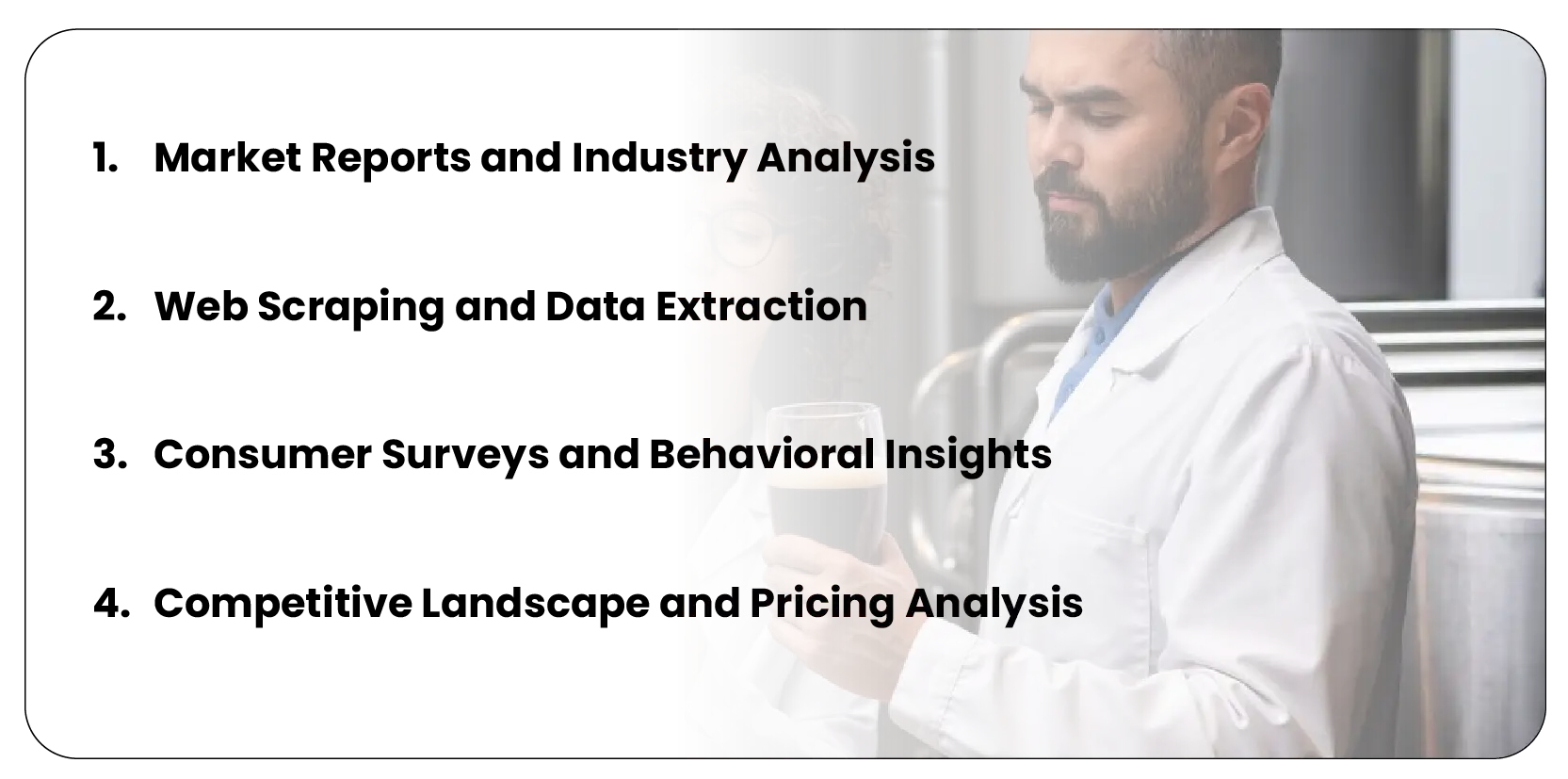
1. Market Reports and Industry Analysis
In-depth reports from leading industry research firms provide insights into
market growth, emerging trends, and future projections. These reports help identify key factors
influencing online liquor sales, such as economic conditions, regulatory policies, and
technological advancements.
- In-depth reports from leading industry research firms provide insights
into market growth, emerging trends, and future projections.
- These reports help identify key factors influencing online liquor sales,
such as economic conditions, regulatory policies, and technological advancements.
2. Web Scraping and Data Extraction
Data is collected from online liquor retailers, e-commerce platforms, and
marketplaces to track pricing patterns, product availability, and sales performance. Customer
reviews and ratings are analyzed to understand consumer preferences and sentiment toward brands
and product categories.
- Data is collected from online liquor retailers, e-commerce platforms, and
marketplaces to track pricing patterns, product availability, and sales performance.
- Customer reviews and ratings are analyzed to understand consumer
preferences and sentiment toward brands and product categories.
3. Consumer Surveys and Behavioral Insights
Surveys among online liquor shoppers reveal purchasing trends, brand
preferences, and factors influencing buying decisions. These insights help businesses tailor
their offerings to meet evolving consumer demands.
- Surveys among online liquor shoppers reveal purchasing trends, brand
preferences, and factors influencing buying decisions.
- These insights help businesses tailor their offerings to meet evolving
consumer demands.
4. Competitive Landscape and Pricing Analysis
The pricing strategies of major online liquor retailers are examined to
understand competitive positioning. Sales strategies, promotional offers, and discount patterns
are analyzed to identify industry best practices and areas for improvement.
- The pricing strategies of major online liquor retailers are examined to
understand competitive positioning.
- Sales strategies, promotional offers, and discount patterns are analyzed
to identify industry best practices and areas for improvement.
By integrating these data sources, this report provides a well-rounded perspective on the state
of the online liquor market and the factors shaping its future trajectory.
Current Trends in the Liquor Industry
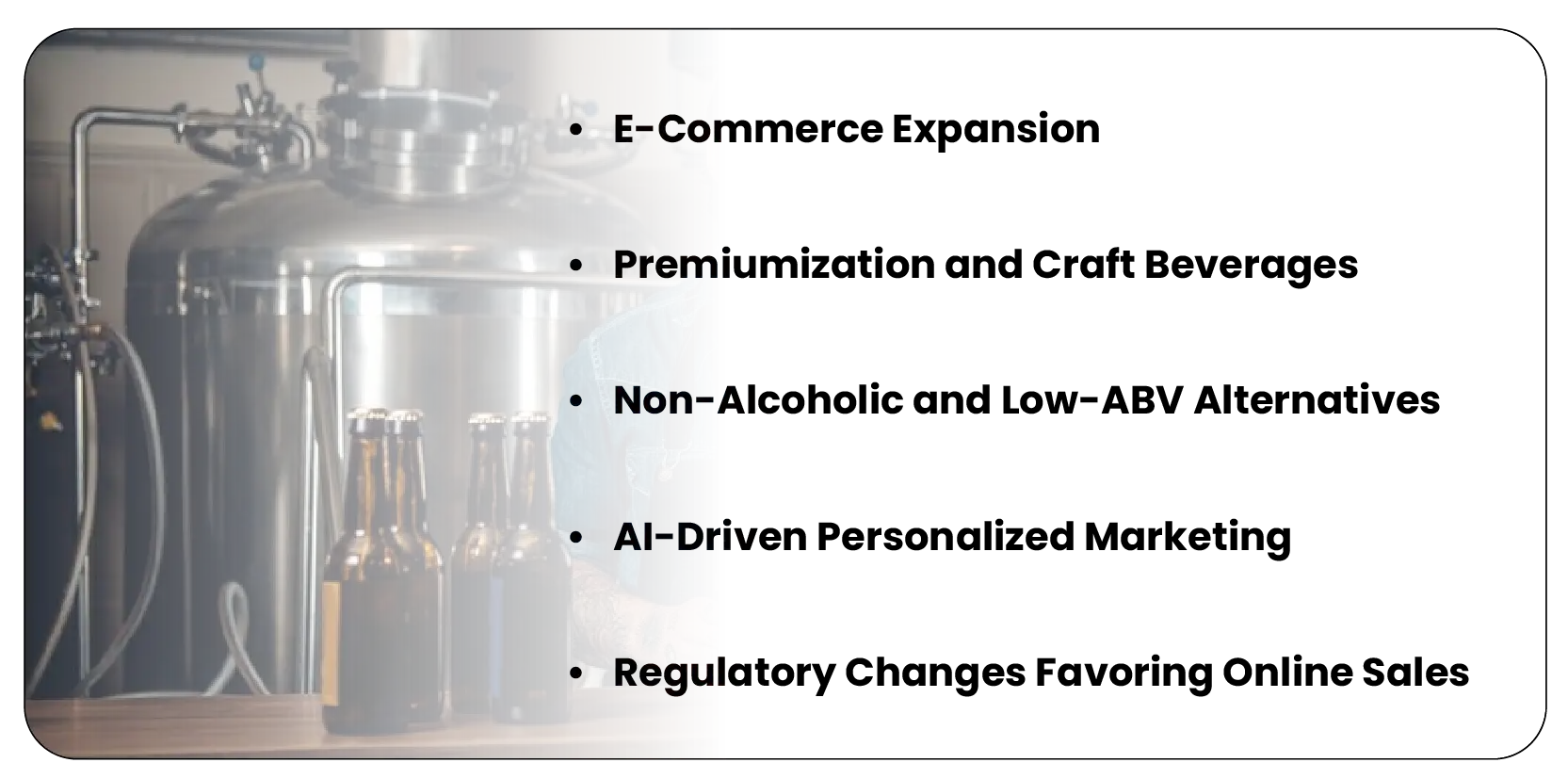
The online liquor industry is evolving rapidly, with several key trends shaping its growth in
2025. Changing consumer preferences, technological advancements, and regulatory shifts influence
how liquor is sold and marketed. Below are the major trends driving the industry forward:
-
E-Commerce Expansion: Online liquor sales continue to grow unprecedentedly,
with digital platforms playing a crucial role in expanding market reach. The rise of
e-commerce has made purchasing alcoholic beverages more accessible, allowing consumers to
explore a vast range of products from the comfort of their homes. Additionally, integrating
Online Alcohol Retail Data Extraction for Market Insights helps businesses analyze
purchasing patterns, optimize inventory, and track competitive pricing.
-
Premiumization and Craft Beverages: Consumers are shifting towards premium,
craft, and small-batch liquor options, prioritizing quality over quantity. The demand for
artisanal spirits, aged whiskey, and limited-edition wines is rising. To better understand
this trend, businesses are Scraping Online Liquor Sales Data – 2025 Market Trends to monitor
sales performance, track consumer preferences, and identify emerging brands.
-
Non-Alcoholic and Low-ABV Alternatives: The increasing focus on health and
wellness has led to a surge in demand for non-alcoholic and low-ABV (alcohol by volume)
alternatives. Many brands are launching alcohol-free spirits, mocktails, and low-alcohol
wines to cater to this growing consumer base. Businesses leverage Track Liquor Industry
Trends with Web Scraping to assess the popularity of these alternatives, analyze customer
sentiment, and track sales growth.
-
AI-Driven Personalized Marketing: Artificial intelligence (AI) is
revolutionizing how liquor retailers engage with customers. AI-powered recommendation
engines analyze past purchases, preferences, and browsing history to deliver personalized
product suggestions. Additionally, dynamic pricing strategies, enabled by Liquor Price Data Scraping Services,
help businesses stay competitive by monitoring real-time price fluctuations across multiple
platforms.
-
Regulatory Changes Favoring Online Sales: Many governments are easing
restrictions on online liquor sales, allowing e-commerce platforms to expand their
operations. This shift has opened new business opportunities to reach customers in
previously restricted markets. Companies use Alcohol Price Data Scraping Services to keep
track of regulatory updates, analyze regional pricing trends, and adjust their strategies
accordingly.
Businesses can navigate these trends effectively by leveraging data extraction, web scraping,
and AI-driven analytics and capitalize on the evolving online liquor market in 2025.
Growth in Global Online Liquor Sales (2020-2025)
The table below presents the global online liquor sales from 2020 to 2025,
highlighting revenue and annual growth rates. The data shows a steady increase in sales,
starting at $24.5 billion in 2020 and reaching a projected $42.0 billion in 2025. The growth
rate fluctuates, peaking at 13.5% in 2021, slowing slightly in subsequent years, and rising to
15.0% in 2025. This indicates a strong upward trend driven by expanding e-commerce, changing
consumer preferences, and regulatory shifts. The projected surge in 2025 suggests increasing
demand for online liquor purchases worldwide.
| Year |
Global Online Liquor Sales (in Billion USD) |
Annual Growth Rate (%) |
| 2020 |
24.5 |
9.2% |
| 2021 |
27.8 |
13.5% |
| 2022 |
30.2 |
8.6% |
| 2023 |
32.9 |
9.0% |
| 2024 |
36.5 |
11.0% |
| 2025 |
42.0 (Projected) |
15.0% |
Key Trends in Online Liquor Sales (2025 vs. 2020)
The online liquor market has evolved significantly from 2020 to 2025.
E-commerce penetration has increased from 10% to 25% of total liquor sales, reflecting a shift
toward digital purchases. Premiumization has gained momentum, with a strong consumer preference
for high-quality and craft beverages. Non-alcoholic alternatives, once a niche segment, are now
experiencing mainstream growth. AI-driven personalized marketing, minimal in 2020, is now widely
adopted to enhance customer engagement. Additionally, regulatory flexibility has improved,
making online liquor sales more accessible as restrictive laws ease, further fueling the
industry's expansion.
| Trend |
2020 Status |
2025 Status (Projected) |
| E-commerce Penetration |
10% of total liquor sales |
25% of total liquor sales |
| Premiumization |
Growing slowly |
Strong consumer preference |
| Non-Alcoholic Alternatives |
Niche market |
Mainstream market growth |
| AI-driven Personalized Marketing |
Minimal use |
Widely adopted |
| Regulatory Flexibility |
Restrictive in many regions |
More relaxed online sales laws |
Web Scraping and Online Liquor Sales Analysis
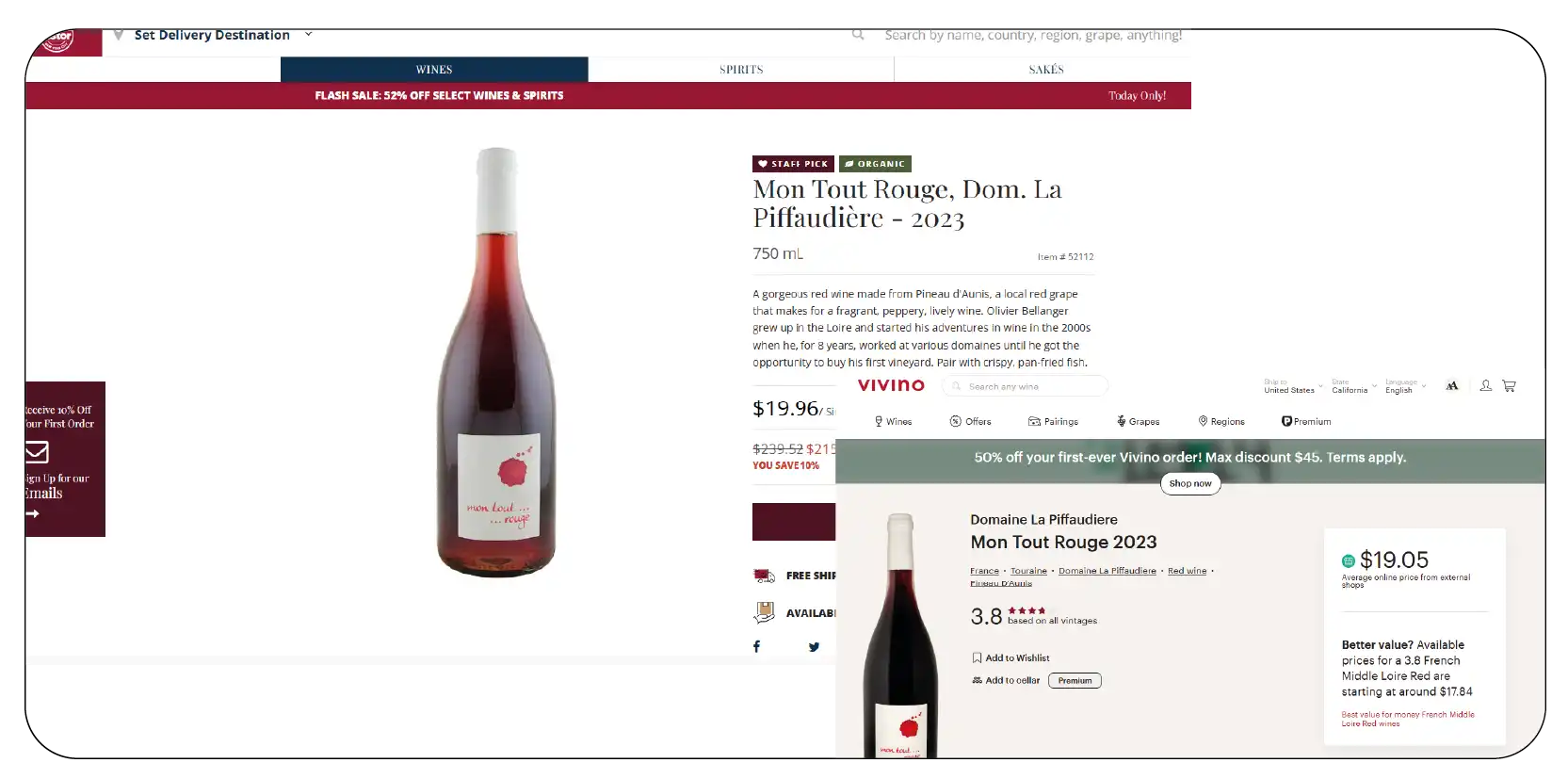
Web scraping is a powerful tool for analyzing online liquor sales, providing
real-time insights into market trends, pricing strategies, and consumer behavior. Retailers and
analysts can use web scraping to:
- Monitor Market Trends: Track emerging consumer
preferences and shifts in demand.
- Compare Competitor Prices: Analyze how competitors price
their products and adjust pricing strategies accordingly.
- Assess Customer Sentiment: Extract reviews and ratings to
understand consumer satisfaction levels.
- Predict Demand Patterns: Identify seasonal trends and
forecast inventory needs.
Benefits of Web Scraping for Online Liquor Retailers
| Web Scraping Application |
Impact on Sales and Business Strategy |
| Market Trends Analysis |
Helps understand demand patterns and preferences |
| Competitor Price Monitoring |
Enables dynamic pricing strategies |
| Customer Sentiment Analysis |
Improves product offerings based on reviews |
| Demand Forecasting |
Optimizes inventory and reduces stockouts |
| Marketing Optimization |
Enhances targeted advertising and promotions |
Future Expectations for Online Liquor Sales
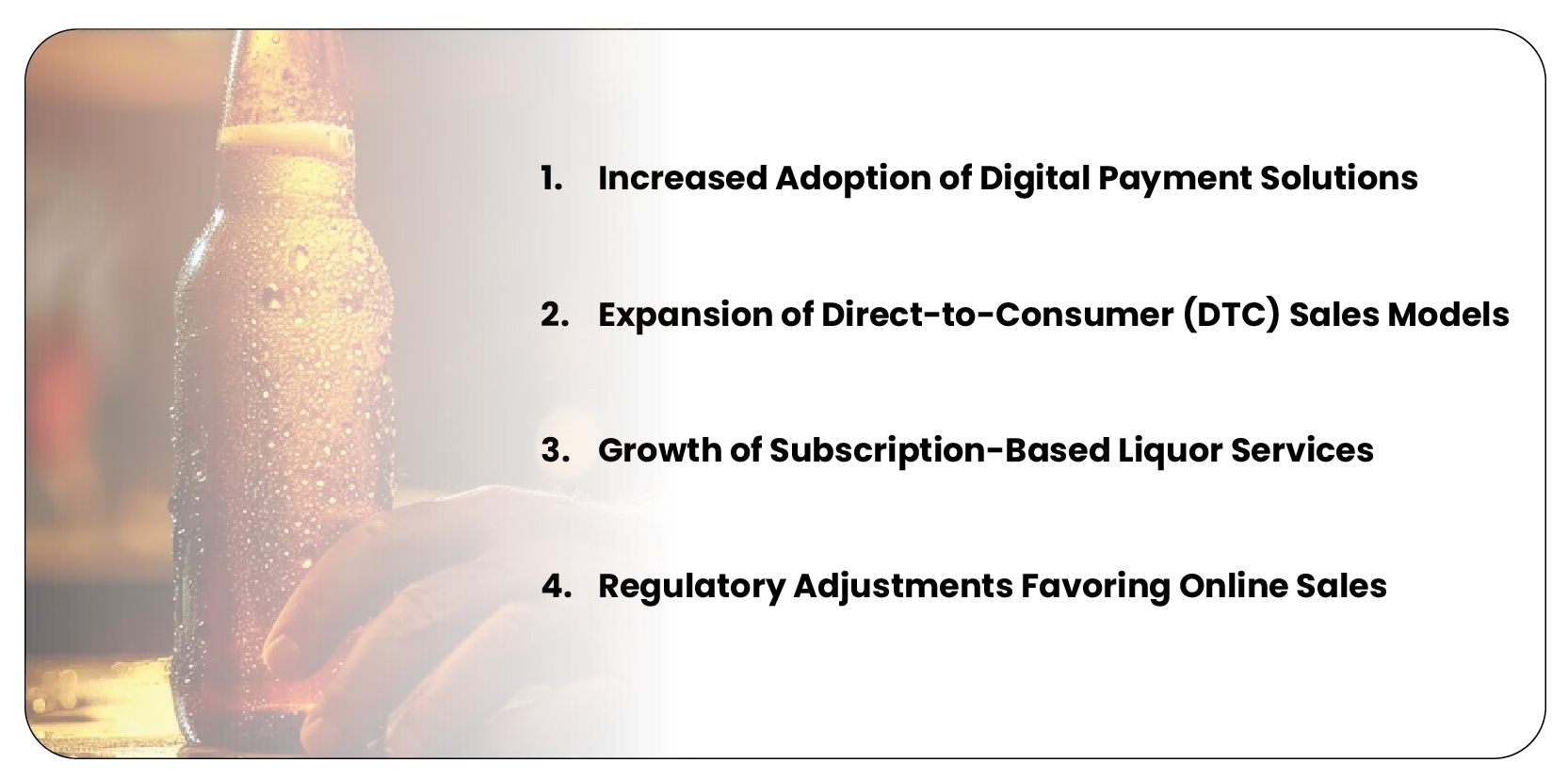
As we move forward, several factors will influence the growth and development
of online liquor sales:
- Increased Adoption of Digital Payment Solutions: More
consumers will opt for cashless transactions, making online purchases more straightforward
and secure.
- Expansion of Direct-to-Consumer (DTC) Sales Models: More
brands will establish direct-to-consumer channels, bypassing traditional retail networks.
- Growth of Subscription-Based Liquor Services:
Personalized subscription boxes for wines and spirits will become increasingly popular.
- Regulatory Adjustments Favoring Online Sales: More
countries and states are expected to relax restrictions on liquor e-commerce.
How Can Data Enhance Sales Strategies?
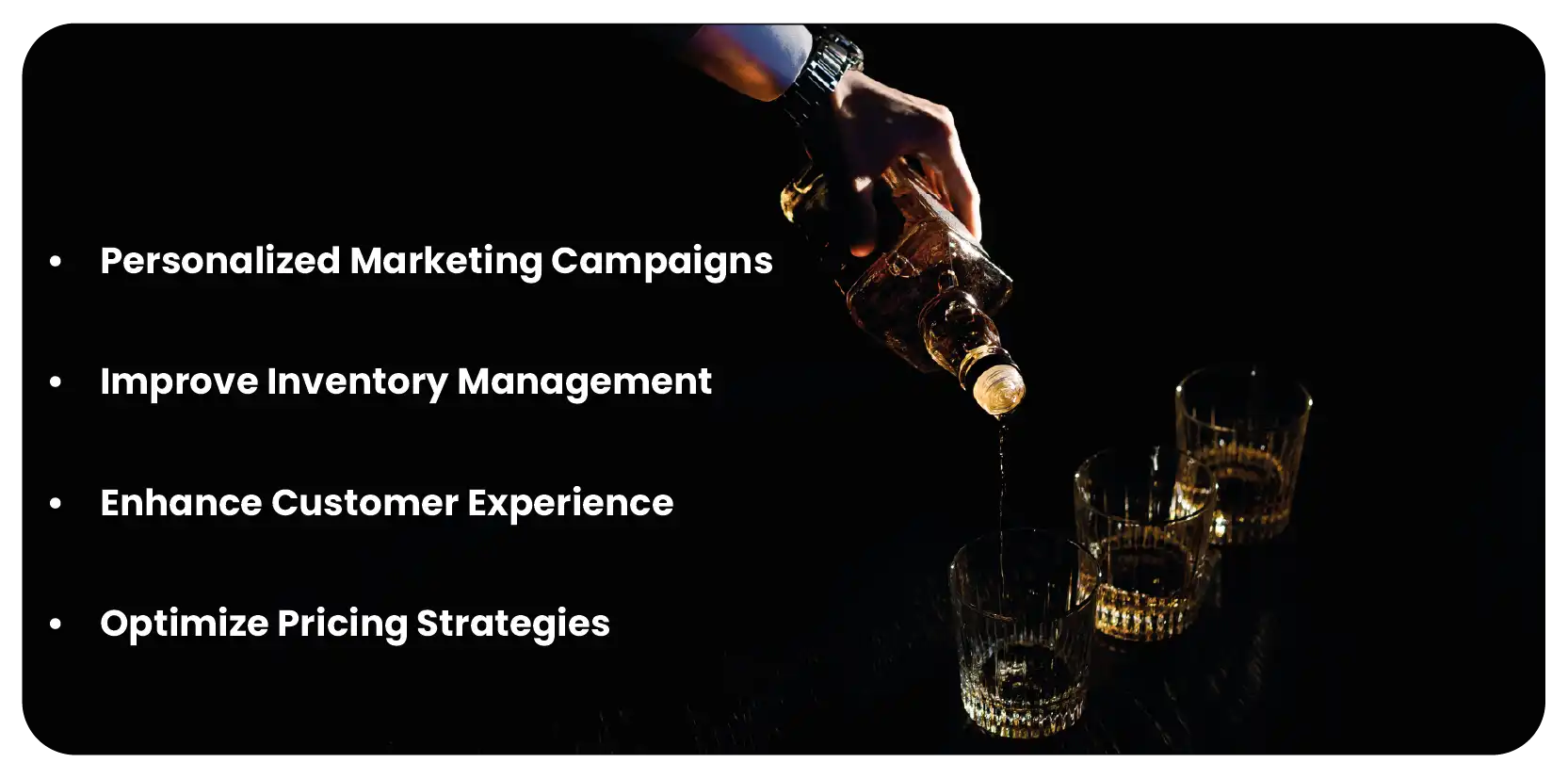
Data analytics is essential for optimizing online liquor sales, enabling
businesses to make informed decisions and enhance operational efficiency. By leveraging
data-driven insights, companies can:
- Personalized Marketing Campaigns: Advanced analytics
helps segment customers based on preferences, purchase history, and demographics, allowing
retailers to create targeted promotions, loyalty programs, and personalized product
recommendations.
- Improve Inventory Management: Predictive analytics
enables businesses to forecast demand fluctuations accurately, preventing stock shortages or
overstocking. This ensures efficient supply chain management and minimizes losses.
- Enhance Customer Experience: AI-driven algorithms analyze
browsing behavior and past purchases to provide tailored recommendations, improving customer
satisfaction and engagement.
- Optimize Pricing Strategies: By tracking competitor
prices and analyzing purchasing trends, businesses can adjust their pricing dynamically,
ensuring competitiveness while maximizing revenue and profitability.
Conclusion
The online liquor industry is set for remarkable growth in 2025, driven by
e-commerce expansion, changing consumer preferences, and advancements in data analytics. While
regulatory complexities, age verification, and logistical issues persist, businesses that
leverage data-driven insights can gain a competitive edge. Web Scraping Liquor Data
provides valuable real-time data for market analysis, competitive pricing, demand forecasting,
and personalized marketing strategies.
By adopting innovative technologies and data-driven decision-making, online
liquor retailers can enhance customer experiences, optimize inventory management, and improve
sales performance. As the industry evolves, businesses that adapt to emerging trends and
regulatory landscapes will be well-positioned for long-term success.
At Product Data Scrape, we strongly emphasize ethical
practices across all our services, including Competitor Price Monitoring and Mobile App Data
Scraping. Our commitment to transparency and integrity is at the heart of everything we do. With
a global presence and a focus on personalized solutions, we aim to exceed client expectations
and drive success in data analytics. Our dedication to ethical principles ensures that our
operations are both responsible and effective.



 Singapore
 EMAIL
EMAIL
 PHONE
PHONE