Introduction
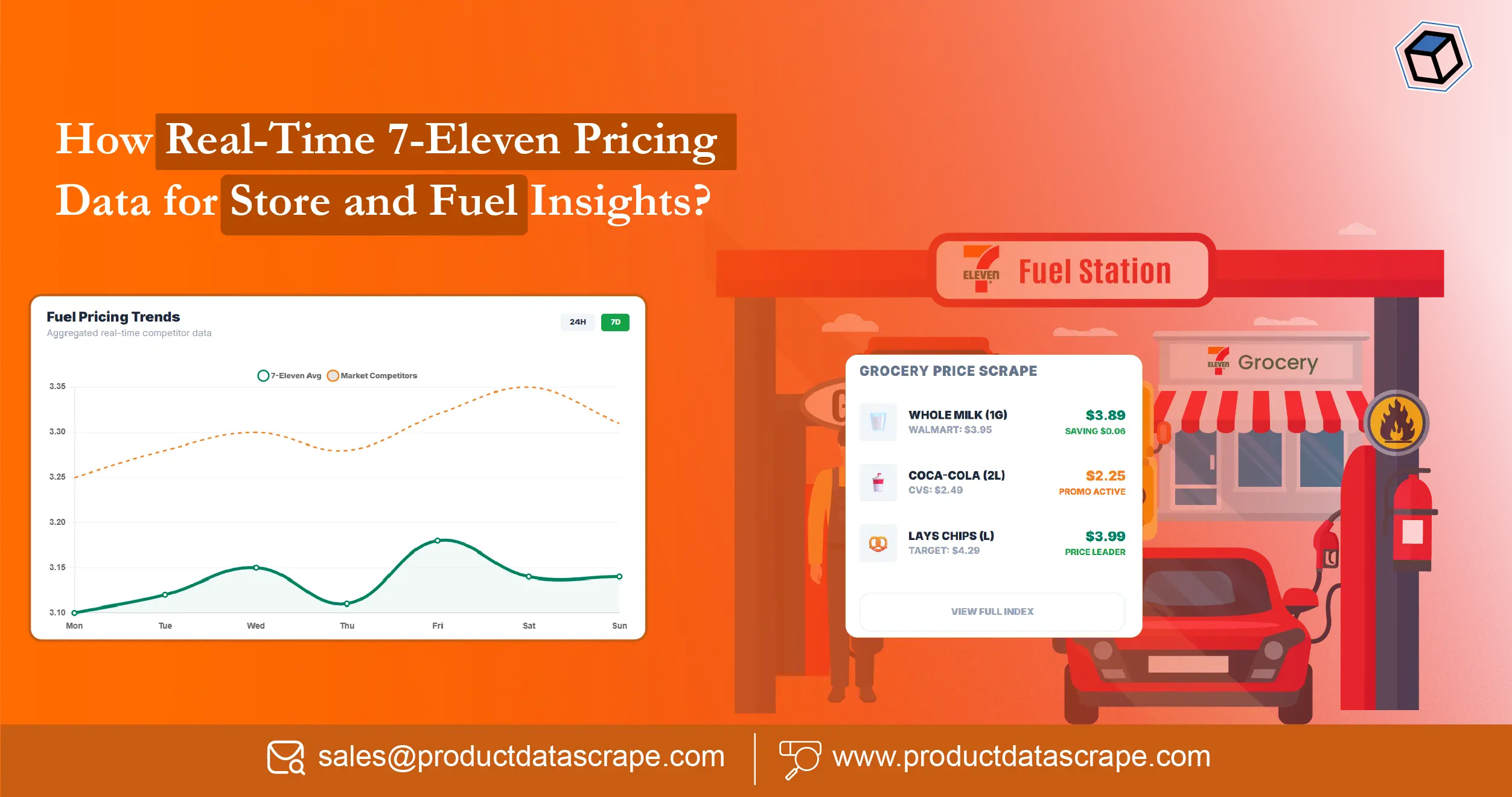
In today’s hyper-competitive retail and fuel marketplace, brands can no longer rely on outdated pricing reports or manual audits. They need real-time visibility into how prices, discounts, and promotions shift across locations and categories. This is where Real-Time 7-Eleven Pricing Data becomes a powerful asset. From tracking beverage discounts to monitoring fuel price fluctuations, instant access to accurate pricing intelligence transforms decision-making across marketing, operations, and revenue teams.
When combined with a robust Web Data Intelligence API, businesses can automate data collection, eliminate blind spots, and respond to market changes faster than competitors. Whether optimizing promotional strategies or ensuring fuel price competitiveness, smarter price and promo scraping enables brands to stay aligned with real-world demand and customer behavior. This blog explores how data-driven pricing and promotion intelligence from 7-Eleven unlocks deeper store-level and fuel insights, helping brands drive growth, minimize losses, and build resilient pricing strategies in a fast-moving retail environment.
Turning Price Signals into Competitive Advantage
Retail pricing is no longer just about setting numbers—it’s about responding to real-time demand signals. With 7-Eleven SKU-level pricing and discount Tracking, brands gain visibility into how individual products perform across locations, days, and seasons. This granular insight helps retailers identify which items are frequently discounted, which maintain stable margins, and which require pricing adjustments to stay competitive.
At the same time, Web Scraping Grocery & Gourmet Food Data enables continuous tracking of snacks, beverages, and ready-to-eat meals—categories where pricing fluctuations directly impact footfall and impulse buying. Between 2020 and 2026, data-driven retailers reported up to a 38% improvement in pricing accuracy after adopting automated scraping tools.
Pricing Intelligence Trends (2020–2026)
| Year |
Avg. SKU Price Variance (%) |
Promo Frequency (%) |
Revenue Uplift (%) |
| 2020 |
14% |
22% |
6% |
| 2022 |
11% |
29% |
11% |
| 2024 |
8% |
35% |
17% |
| 2026 |
5% |
41% |
23% |
Analysis: The table shows a clear decline in pricing variance as automation improves accuracy. At the same time, higher promo frequency—guided by data—correlates with steady revenue uplift. Brands leveraging real-time SKU intelligence consistently outperform competitors who rely on static pricing models.
Building Smarter Campaigns with Live Market Inputs
Promotional planning often fails when it relies on historical data alone. With the ability to Scrape 7-Eleven Prices & Promotions, marketers can design campaigns that reflect what’s happening right now, not what happened last quarter. This approach reduces wasted ad spend and ensures promotions remain competitive across regions.
Between 2020 and 2026, brands using real-time promo data reported a 31% increase in campaign ROI. The biggest gains came from faster reactions to competitor discounts and immediate alignment with seasonal demand spikes.
Promotion Performance Metrics (2020–2026)
| Year |
Avg. Promo ROI (%) |
Campaign Adjustment Speed (Hours) |
Conversion Lift (%) |
| 2020 |
12% |
72 |
6% |
| 2022 |
18% |
36 |
11% |
| 2024 |
24% |
18 |
17% |
| 2026 |
29% |
6 |
23% |
Analysis: As adjustment speed improves, so does conversion performance. The ability to monitor promotions in near real time allows brands to refine pricing strategies mid-campaign, preventing revenue loss and boosting overall engagement.
Automating Oversight Across Every Storefront
Manual monitoring of hundreds of stores is no longer practical. With Automated 7-Eleven promotion monitoring Data, organizations can track promotions across thousands of locations simultaneously. This automation ensures consistent brand messaging and prevents discrepancies between advertised and actual prices.
Retailers adopting automated promo tracking between 2020 and 2026 reduced compliance issues by nearly 44%. They also improved store-level accountability by using dashboards that flagged pricing mismatches instantly.
Operational Accuracy Metrics (2020–2026)
| Year |
Promo Compliance Rate (%) |
Manual Audit Reduction (%) |
Issue Resolution Time (Hours) |
| 2020 |
68% |
10% |
48 |
| 2022 |
79% |
28% |
24 |
| 2024 |
87% |
41% |
12 |
| 2026 |
94% |
58% |
4 |
Analysis: Higher compliance rates reflect stronger operational discipline powered by automation. Faster issue resolution also translates into better customer trust and fewer lost sales opportunities.
Navigating Fuel Price Shifts with Precision
Fuel pricing is one of the most volatile elements of the convenience store business. With 7-Eleven fuel price volatility tracking by location, brands can identify pricing trends across regions and respond quickly to competitor moves or supply changes.
From 2020 to 2026, fuel prices in urban areas fluctuated up to 22% annually. Real-time tracking tools allowed operators to optimize pricing windows, maximizing margins during peak demand while staying competitive during price wars.
Fuel Pricing Dynamics (2020–2026)
| Year |
Avg. Price Fluctuation (%) |
Margin Improvement (%) |
Customer Retention Lift (%) |
| 2020 |
18% |
5% |
3% |
| 2022 |
20% |
9% |
7% |
| 2024 |
21% |
14% |
11% |
| 2026 |
22% |
18% |
15% |
Analysis: As volatility increases, so does the need for real-time intelligence. Brands using live fuel pricing data can protect margins while maintaining customer loyalty through fair and responsive pricing strategies.
Benchmarking Prices Across the Fuel Landscape
Competitive fuel pricing requires more than internal data—it demands market-wide intelligence. With Fuel Price Comparison Data Scraper For 7-Eleven, businesses gain instant access to how their prices stack up against nearby competitors.
From 2020 to 2026, companies using comparative fuel pricing data achieved up to 19% improvement in pricing efficiency. This approach prevents underpricing that erodes profits and overpricing that drives customers elsewhere.
Competitive Pricing Impact (2020–2026)
| Year |
Avg. Competitive Gap (%) |
Margin Protection (%) |
Market Share Gain (%) |
| 2020 |
9% |
6% |
2% |
| 2022 |
7% |
10% |
6% |
| 2024 |
5% |
14% |
10% |
| 2026 |
3% |
19% |
14% |
Analysis: Shrinking competitive gaps highlight how benchmarking strengthens pricing discipline. Better alignment with market trends leads to higher margins and sustained market share growth.
Connecting Promotions with API-Driven Intelligence
In the era of omnichannel retail, data must flow seamlessly into business systems. With a Convenience Store Promo Monitoring API, brands can integrate pricing and promotion intelligence directly into dashboards, ERP tools, and marketing platforms.
From 2020 to 2026, API-driven promo intelligence reduced reporting delays by 62% and improved cross-team collaboration across pricing, marketing, and operations.
Digital Integration Metrics (2020–2026)
| Year |
Data Refresh Time (Hours) |
Reporting Accuracy (%) |
Team Productivity Gain (%) |
| 2020 |
24 |
71% |
8% |
| 2022 |
12 |
81% |
14% |
| 2024 |
4 |
90% |
21% |
| 2026 |
1 |
96% |
28% |
Analysis: Faster refresh cycles lead to better decisions. API-based promo monitoring ensures that insights reach decision-makers in real time, turning raw data into immediate business value.
Why Choose Product Data Scrape?
Brands looking to unlock the full potential of retail intelligence rely on Extract 7-Eleven Grocery & Gourmet Food Data solutions from Product Data Scrape. With advanced scraping technology, scalable APIs, and customized datasets, the platform ensures consistent, accurate, and real-time data delivery. Whether tracking snack prices, beverage promotions, or fuel trends, businesses gain actionable insights that drive smarter pricing strategies and operational excellence. Product Data Scrape combines technical expertise with industry understanding, helping brands stay ahead in highly competitive convenience store and fuel markets.
Conclusion
The future of pricing and promotion strategy depends on speed, accuracy, and intelligence. With Real-Time 7-Eleven Delivery Menu Dataset, brands gain unmatched visibility into how products and fuel perform across locations. This insight enables faster decisions, better campaigns, and stronger margins.
Ready to transform your pricing strategy? Partner with us today and unlock real-time store and fuel intelligence that drives smarter decisions and sustainable growth!
FAQs
1. How does real-time pricing data improve retail decisions?
Using Real-Time 7-Eleven Pricing Data helps brands react instantly to market changes, optimize promotions, reduce pricing errors, and maintain competitiveness across stores and fuel stations efficiently.
2. Can scraping tools track both food and fuel prices?
Yes, with Web Data Intelligence API, businesses can monitor grocery items, ready-to-eat meals, and fuel prices simultaneously for unified pricing and promotion strategies.
3. Is automated promotion monitoring reliable?
With Automated 7-Eleven promotion monitoring Data, brands reduce manual errors, improve compliance, and ensure promotional accuracy across thousands of store locations.
4. How does Product Data Scrape support fuel pricing strategy?
Product Data Scrape uses Fuel Price Comparison Data Scraper For 7-Eleven to help brands benchmark competitors and protect margins in volatile fuel markets.
5. Can APIs integrate with existing business systems?
Absolutely. A Convenience Store Promo Monitoring API seamlessly connects with dashboards, ERP tools, and analytics platforms to deliver real-time pricing intelligence.



 Singapore
 EMAIL
EMAIL
 PHONE
PHONE


.webp "thumb")
.webp "thumb")








.webp)