Introduction
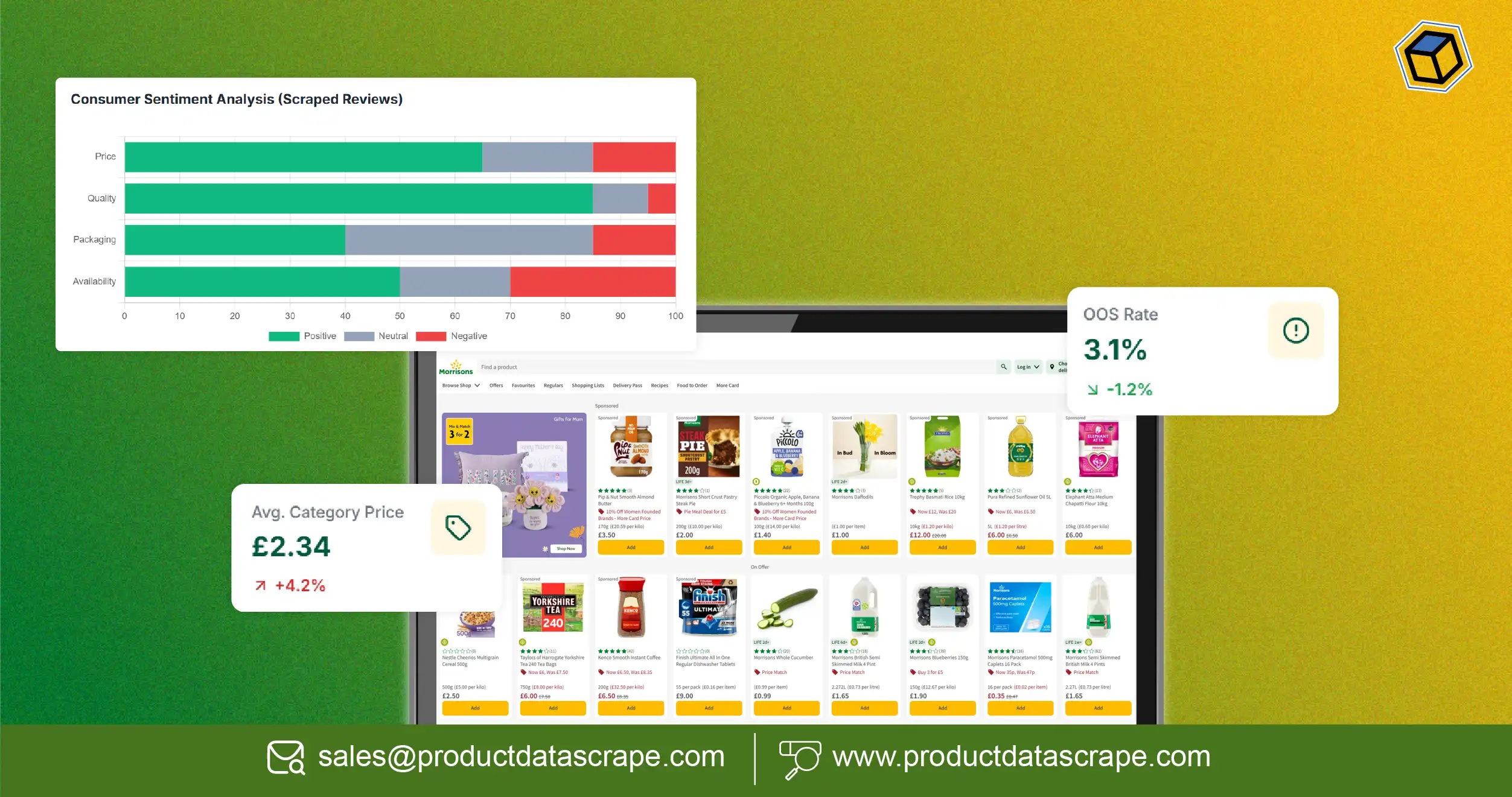
In today’s highly competitive grocery retail landscape, brands must continuously monitor product trends, competitor pricing, and inventory movements to remain profitable and relevant. Supermarkets frequently update prices, launch new promotions, and introduce seasonal products, making it difficult for grocery brands to keep track of real-time market changes without reliable data. This is where Morrisons UK Supermarket Data Scraping becomes an essential solution. By collecting structured data from Morrisons’ online grocery platform, businesses can analyze pricing patterns, promotional campaigns, and product availability across multiple categories.
Access to a comprehensive Grocery store dataset enables grocery brands, suppliers, and retailers to understand customer preferences, benchmark competitor pricing strategies, and identify emerging product trends. With structured data insights, companies can make faster, data-driven decisions regarding pricing optimization, assortment planning, and inventory management. As the UK grocery market becomes more digitally driven, automated data extraction is playing a vital role in helping brands adapt to market dynamics and improve their competitive positioning through accurate market intelligence.
Understanding Product-Level Market Visibility
Grocery retailers manage thousands of products across multiple categories, from fresh produce to packaged goods. Monitoring each product’s pricing, availability, and category placement is crucial for brands that want to maintain competitive positioning in the market. Using Morrisons UK Supermarket Product Data Extraction, businesses can gather detailed product-level insights such as titles, descriptions, pack sizes, nutritional details, and promotional tags. When combined with Web Scraping API Services, brands can automate the process of collecting and organizing product information at scale.
This approach enables businesses to compare similar products across multiple listings and identify pricing discrepancies, product positioning strategies, and promotional placements. Such insights allow brands to adjust their product strategies and ensure their offerings remain competitive within Morrisons’ digital marketplace.
Product Listing Growth in Morrisons Online Store (2020–2026)
| Year |
Total Online Products |
New Product Launches |
Category Expansion |
| 2020 |
21,000 |
2,800 |
6% |
| 2021 |
23,500 |
3,200 |
8% |
| 2022 |
26,000 |
3,700 |
10% |
| 2023 |
28,500 |
4,100 |
12% |
| 2024 |
31,200 |
4,500 |
14% |
| 2025 |
34,000 |
5,100 |
16% |
| 2026 |
37,800 |
5,900 |
18% |
These insights help grocery brands identify which product categories are growing the fastest and where market demand is shifting. As digital grocery platforms expand, product-level intelligence plays a critical role in guiding brand strategy and market positioning.
Tracking Competitive Price Movements
Price competition is one of the most critical aspects of the grocery industry. Even small price changes can significantly influence purchasing behavior. By implementing Morrisons Online Grocery Price Scraping UK, businesses can monitor daily price fluctuations across multiple product categories and identify competitor pricing strategies.
Tracking price changes helps brands identify when competitors run promotions, apply discounts, or increase prices due to demand fluctuations. These insights allow retailers and suppliers to adjust their own pricing strategies accordingly to remain competitive while protecting margins.
Average Grocery Price Movement Index (2020–2026)
.webp)
| Year |
Avg Price Change (%) |
Promotional Discounts (%) |
Seasonal Price Spike (%) |
| 2020 |
3.2 |
18 |
6 |
| 2021 |
3.8 |
21 |
7 |
| 2022 |
4.5 |
23 |
8 |
| 2023 |
5.2 |
26 |
9 |
| 2024 |
5.8 |
28 |
10 |
| 2025 |
6.3 |
30 |
11 |
| 2026 |
6.9 |
33 |
12 |
With real-time price insights, brands can proactively respond to competitive pricing changes, adjust promotional campaigns, and ensure their products remain attractive to consumers within Morrisons’ online grocery ecosystem.
Improving Inventory and Supply Chain Planning
Inventory availability directly impacts sales performance in the grocery sector. Out-of-stock products often result in lost revenue and reduced customer loyalty. By leveraging Morrisons Grocery Inventory Scraping UK, brands can monitor stock availability trends and identify patterns in product demand. When combined with Pricing Intelligence Services, companies can correlate pricing changes with inventory fluctuations to improve forecasting accuracy.
Analyzing stock availability helps brands identify high-demand products and adjust their supply chain strategies accordingly. This proactive approach minimizes stockouts and ensures consistent product availability for consumers.
Inventory Availability Trends (2020–2026)
| Year |
Avg Stock Availability |
Out-of-Stock Rate |
Restock Frequency |
| 2020 |
89% |
11% |
6 days |
| 2021 |
90% |
10% |
5.8 days |
| 2022 |
91% |
9% |
5.5 days |
| 2023 |
92% |
8% |
5.1 days |
| 2024 |
93% |
7% |
4.8 days |
| 2025 |
94% |
6% |
4.5 days |
| 2026 |
95% |
5% |
4.2 days |
These insights enable grocery brands to align production and distribution strategies with market demand trends, ensuring a consistent supply of popular products across Morrisons’ digital shelves.
Understanding Market Positioning Across Categories
Supermarket competition extends beyond pricing and inventory; it also involves understanding how products are positioned within different categories. Through UK Supermarket Price Intelligence Morrisons, businesses can analyze how Morrisons structures its product categories, which products dominate shelf visibility, and how promotions influence product rankings.
Category-level intelligence helps brands identify emerging trends in the grocery market, including the rise of organic foods, plant-based alternatives, and premium grocery segments.
Category Growth Trends (2020–2026)
.webp)
| Year |
Organic Food Growth |
Plant-Based Products |
Premium Grocery Items |
| 2020 |
9% |
12% |
7% |
| 2021 |
11% |
15% |
9% |
| 2022 |
13% |
18% |
11% |
| 2023 |
16% |
21% |
14% |
| 2024 |
18% |
24% |
17% |
| 2025 |
21% |
27% |
19% |
| 2026 |
24% |
30% |
22% |
These insights allow grocery brands to expand into high-growth categories and align their product portfolios with evolving consumer preferences.
Monitoring Daily Pricing Strategies
Daily pricing changes can significantly influence market competitiveness in the grocery sector. Using Morrisons UK Grocery Price Tracking, businesses can analyze how frequently prices change and how promotional campaigns affect consumer purchasing behavior.
Tracking these patterns allows retailers and suppliers to understand the impact of dynamic pricing strategies on sales performance and market share.
Daily Pricing Activity Trends (2020–2026)
| Year |
Daily Price Changes |
Weekly Promotions |
Avg Discount (%) |
| 2020 |
120 |
95 |
12 |
| 2021 |
150 |
110 |
13 |
| 2022 |
180 |
130 |
14 |
| 2023 |
210 |
150 |
15 |
| 2024 |
240 |
175 |
16 |
| 2025 |
270 |
200 |
17 |
| 2026 |
310 |
230 |
18 |
These insights help brands develop dynamic pricing strategies and optimize promotional campaigns to attract customers while maintaining healthy profit margins.
Automating Data Collection for Market Intelligence
Manual data collection from grocery platforms is inefficient and prone to errors. By implementing a Morrisons Grocery Data Scraping API, businesses can automate the extraction of large volumes of grocery marketplace data in real time. Automated scraping solutions enable brands to collect detailed product information, pricing updates, inventory levels, and promotional insights at scale.
With automated systems, businesses can generate real-time dashboards that provide actionable market intelligence for decision-makers. This allows grocery companies to respond quickly to market changes and identify new growth opportunities.
Automation Efficiency Gains (2020–2026)
.webp)
| Year |
Data Points Collected |
Automation Accuracy |
Manual Time Saved |
| 2020 |
1.2M |
86% |
450 hours |
| 2021 |
1.6M |
88% |
600 hours |
| 2022 |
2.1M |
90% |
780 hours |
| 2023 |
2.8M |
93% |
980 hours |
| 2024 |
3.6M |
95% |
1,250 hours |
| 2025 |
4.5M |
97% |
1,600 hours |
| 2026 |
5.8M |
98% |
2,000 hours |
Automation significantly improves data accuracy while reducing operational costs, making it an essential tool for modern grocery market analysis.
Why Choose Product Data Scrape?
Businesses looking to gain deeper insights into supermarket trends can rely on advanced data extraction technologies to stay competitive. By leveraging solutions designed to Extract Morrisons Grocery & Gourmet Food Data, companies can access structured information related to product listings, prices, promotions, and availability. This enables retailers, suppliers, and brands to understand competitor strategies and consumer demand patterns more effectively.
With expertise in Morrisons UK Supermarket Data Scraping, Product Data Scrape provides scalable data solutions tailored for grocery market intelligence. The platform ensures high data accuracy, reliable extraction pipelines, and customizable datasets designed to meet business needs. From pricing analytics to product trend monitoring, the service helps organizations transform raw supermarket data into actionable insights that drive better business decisions in the highly competitive UK grocery retail market.
Conclusion
The grocery industry is rapidly evolving as online supermarkets continue to expand their digital presence. Businesses must rely on real-time data insights to remain competitive in this dynamic environment. By leveraging solutions designed to Extract Grocery & Gourmet Food Data, companies can monitor product trends, analyze competitor pricing strategies, and improve supply chain planning.
Automated data intelligence provides grocery brands with the visibility needed to make smarter pricing decisions, optimize product assortments, and track emerging consumer trends. With accurate market insights, retailers can develop strategies that improve customer satisfaction and boost profitability.
Ready to gain powerful supermarket insights? Start leveraging Morrisons data intelligence today and stay ahead of the competition!
FAQs
1. What is Morrisons grocery data scraping?
Morrisons grocery data scraping refers to the automated process of collecting product listings, prices, promotions, and inventory information from Morrisons’ online supermarket platform for analysis and market intelligence.
2. How can grocery brands benefit from supermarket data insights?
Brands can track competitor pricing, identify trending products, optimize inventory planning, and analyze promotional strategies using structured supermarket datasets collected from online grocery platforms.
3. Is supermarket data scraping useful for pricing strategy?
Yes, it helps businesses monitor real-time price changes, analyze discount patterns, and adjust their pricing strategies to remain competitive within the grocery retail market.
4. How often can grocery data be updated using automated scraping?
Automated scraping solutions can collect data daily or even hourly depending on business requirements, providing near real-time insights for pricing, inventory, and product trends.
5. How can businesses get supermarket datasets for analysis?
Companies can partner with data providers like Product Data Scrape to access structured supermarket datasets and advanced analytics tools for tracking market trends and competitor strategies.



 Singapore
 EMAIL
EMAIL
 PHONE
PHONE


.webp "thumb")









.webp)