Introduction
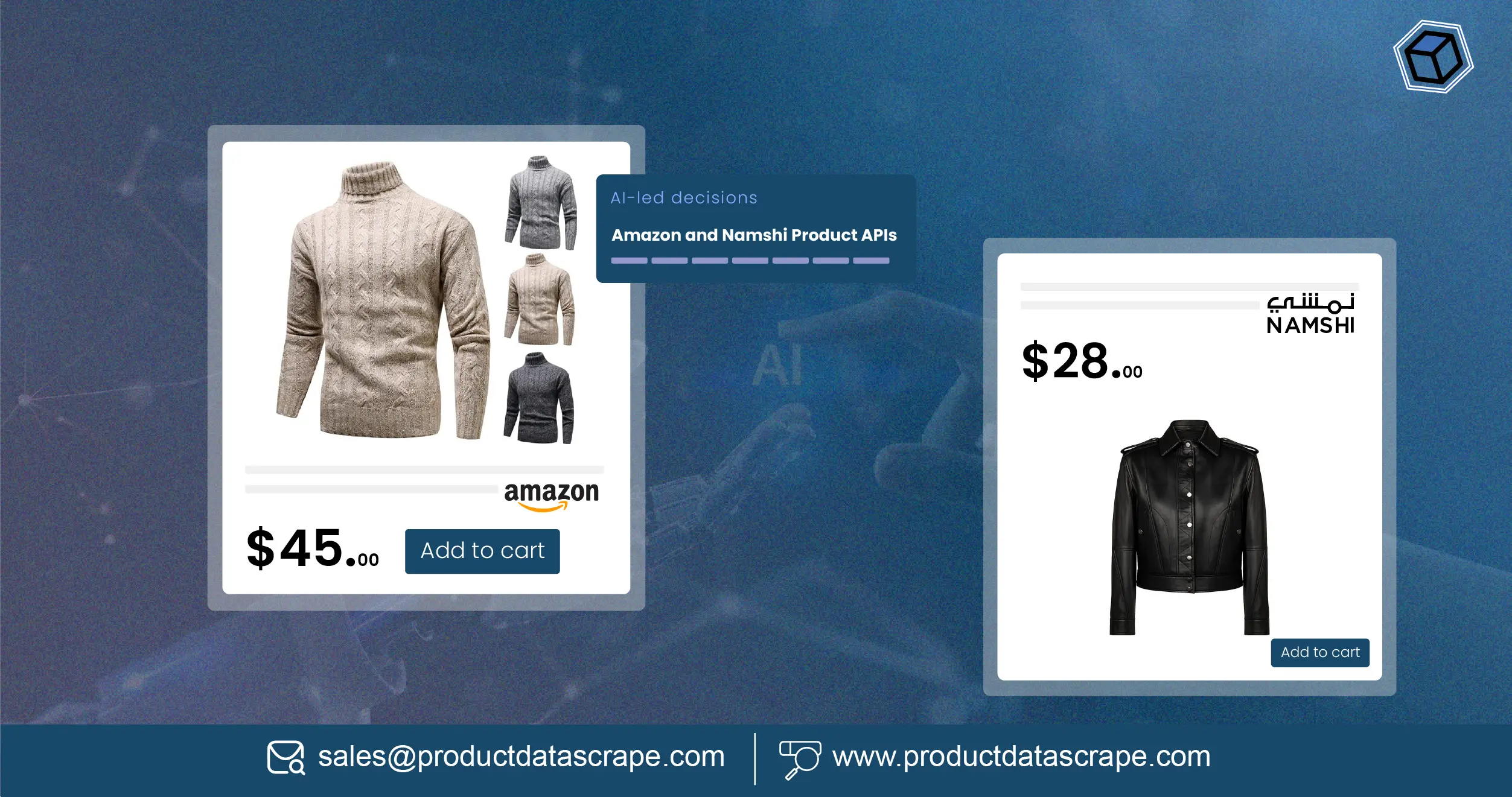
In 2026, eCommerce success is no longer driven by intuition—it’s driven by intelligence. Brands that win are those that transform data into action at machine speed. This is why Amazon and Namshi Product APIs For insight have become essential tools for businesses aiming to power AI-led strategies across pricing, marketing, and inventory planning. By combining marketplace data with automation, companies now gain real-time visibility into product performance, customer demand, and competitive positioning. Alongside this, access to a robust Web Scraping API for amazon ensures that even the most dynamic data—prices, availability, and reviews—can be captured accurately and at scale. Together, these technologies enable businesses to move from reactive decision-making to predictive intelligence, shaping a future where every strategic move is backed by data-driven confidence.
Powering Smarter Fashion Intelligence in the Middle East
For brands targeting the MENA region, leveraging the Namshi Product Data Scraping API has become a game changer in understanding fast-moving fashion trends. Namshi’s marketplace reflects real-time shifts in consumer preferences—from seasonal apparel to beauty essentials—and accessing this data enables businesses to stay ahead of demand curves.
Between 2020 and 2026, the adoption of API-driven fashion analytics in the Middle East increased significantly as retailers looked for faster ways to track trending SKUs and competitor pricing.
Growth in API adoption for fashion analytics (2020–2026):
| Year |
Retailers Using Marketplace APIs (%) |
| 2020 |
26% |
| 2021 |
31% |
| 2022 |
39% |
| 2023 |
48% |
| 2024 |
58% |
| 2025 |
67% |
| 2026 |
75% |
With continuous product-level data feeds, AI models can predict which categories are likely to surge, helping brands optimize inventory and reduce markdown losses. This approach turns marketplace insights into a strategic asset—one that fuels smarter merchandising and faster go-to-market strategies.
Redefining Decision-Making with Intelligent Commerce Data
As digital commerce matures, organizations increasingly depend on a product data api for ecommerce insights 2026 to unify information across platforms. Instead of working with fragmented datasets, businesses now build centralized intelligence hubs that feed AI-driven pricing engines, recommendation systems, and demand forecasting models.
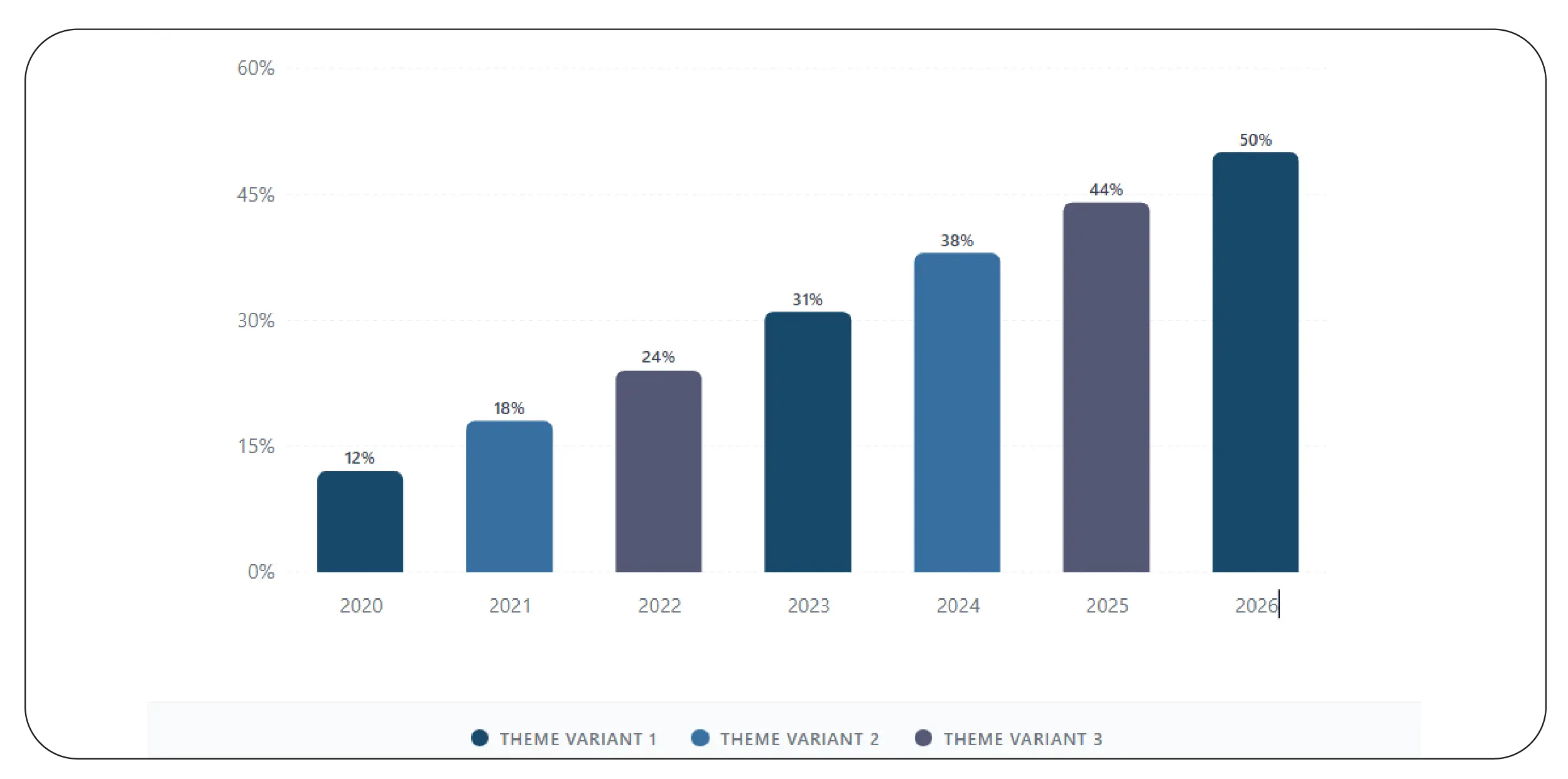
From 2020 to 2026, enterprises integrating API-powered insights into their AI stacks improved decision accuracy and reduced response time to market changes.
Impact of API-driven intelligence on business agility:
| Year |
Avg. Decision Time Reduction (%) |
| 2020 |
12% |
| 2021 |
18% |
| 2022 |
24% |
| 2023 |
31% |
| 2024 |
38% |
| 2025 |
44% |
| 2026 |
50% |
With real-time access to product availability, pricing changes, and consumer demand signals, AI systems can now recommend actions such as when to restock, when to discount, and when to launch promotions. This shift from descriptive to prescriptive analytics marks a new era of intelligent commerce.
Enabling Dynamic Pricing in a Hyper-Competitive Market
One of the most transformative use cases of marketplace intelligence lies in Amazon and Namshi Product APIs for Pricing. These APIs enable brands to monitor competitor prices, track discount cycles, and align their own pricing strategies in near real time.
Between 2020 and 2026, dynamic pricing adoption surged as marketplaces became more volatile. Retailers using API-driven pricing intelligence were better equipped to protect margins while staying competitive.
Growth of dynamic pricing strategies:
| Year |
Retailers Using Dynamic Pricing (%) |
| 2020 |
30% |
| 2021 |
36% |
| 2022 |
44% |
| 2023 |
53% |
| 2024 |
62% |
| 2025 |
70% |
| 2026 |
78% |
With continuous price feeds, AI algorithms can identify optimal price points based on demand elasticity, competitor actions, and historical performance. This enables businesses to strike the perfect balance between competitiveness and profitability—an advantage that manual strategies simply cannot match in 2026’s fast-moving eCommerce landscape.
Scaling Market Intelligence Through Automation
As data volumes expand, brands increasingly choose to scrape amazon and namshi product data to maintain comprehensive visibility across marketplaces. Automation eliminates the inefficiencies of manual tracking and ensures that insights remain current—even in highly dynamic categories like electronics, fashion, and beauty.
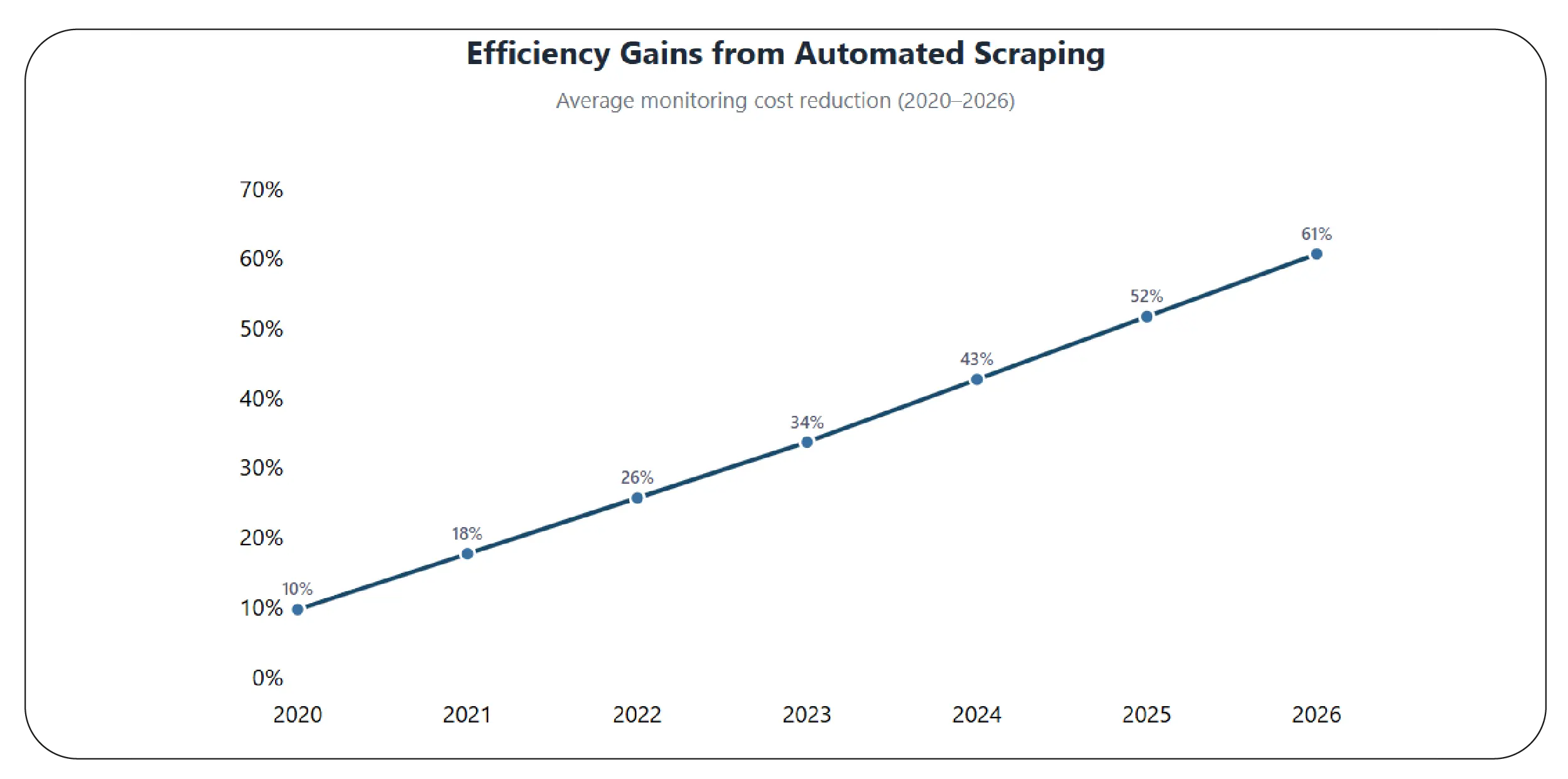
From 2020 to 2026, companies that automated data collection reduced market monitoring costs by over 60%, while improving data freshness and reliability.
Efficiency gains from automated scraping:
| Year |
Avg. Monitoring Cost Reduction (%) |
| 2020 |
10% |
| 2021 |
18% |
| 2022 |
26% |
| 2023 |
34% |
| 2024 |
43% |
| 2025 |
52% |
| 2026 |
61% |
By integrating automated pipelines with AI analytics, businesses gain uninterrupted access to actionable intelligence. This ensures that strategic decisions—whether related to pricing, promotions, or product launches—are always informed by the latest market conditions.
Transforming Data into Predictive Market Power
Beyond collection and monitoring, the true value of marketplace intelligence lies in interpretation. This is where the Web Data Intelligence API plays a crucial role—bridging raw data and AI-driven decision systems.
From 2020 to 2026, organizations using advanced intelligence APIs improved forecasting accuracy and reduced demand-supply mismatches.
Improvement in demand forecasting accuracy:
| Year |
Forecast Accuracy Gain (%) |
| 2020 |
14% |
| 2021 |
18% |
| 2022 |
23% |
| 2023 |
29% |
| 2024 |
33% |
| 2025 |
37% |
| 2026 |
41% |
With predictive models trained on historical and real-time marketplace data, brands can anticipate seasonal surges, regional demand shifts, and emerging product trends. This capability transforms data from a reporting tool into a strategic engine that drives smarter investments and stronger market positioning.
Powering AI Models with Performance Intelligence
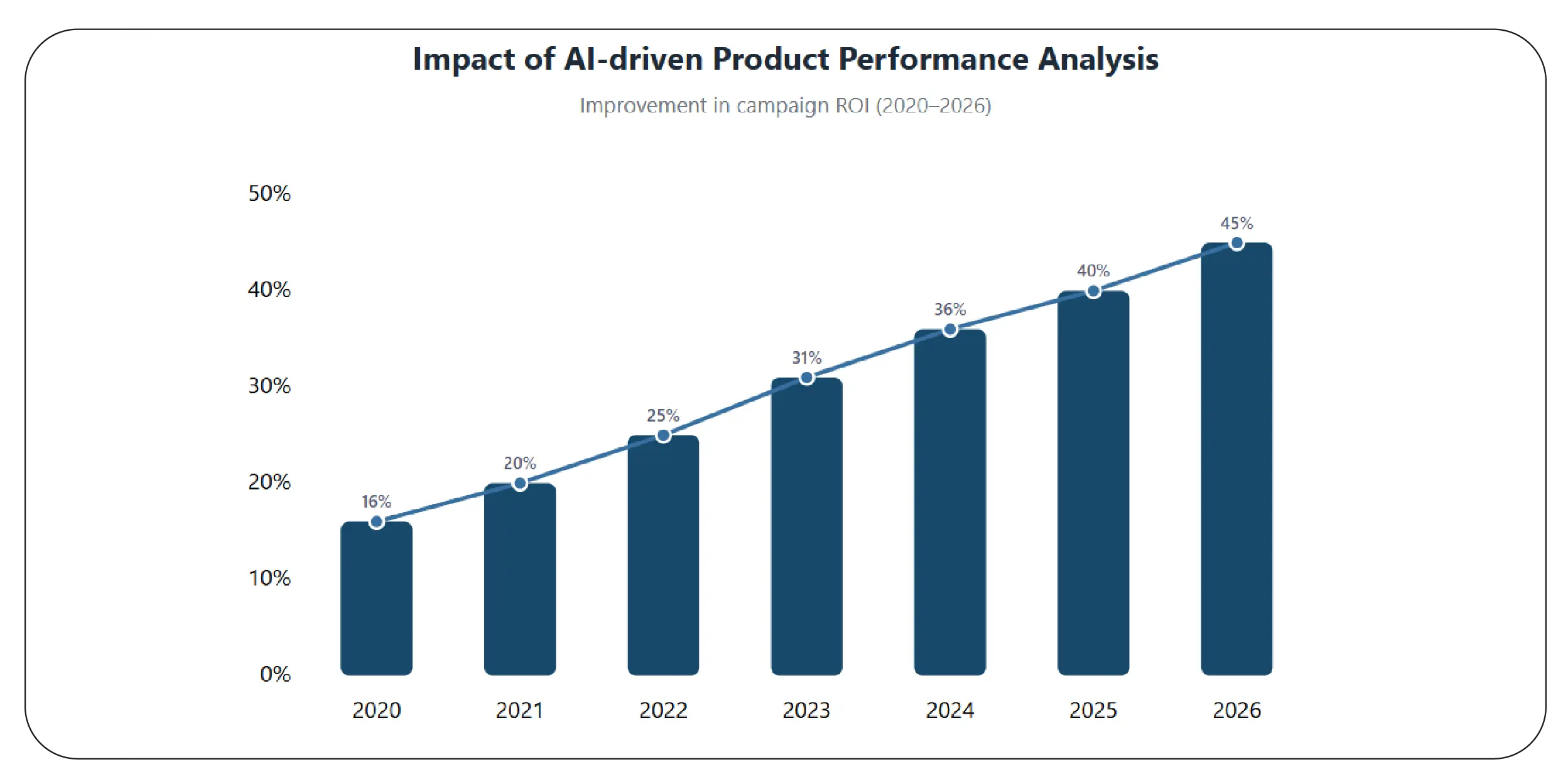
To fuel advanced AI systems, businesses require more than just raw numbers—they need context-rich insights. This is why many organizations now depend on amazon product performance insights data for ai to train recommendation engines, pricing algorithms, and customer segmentation models.
Between 2020 and 2026, brands using performance intelligence datasets improved campaign targeting accuracy and product visibility across digital channels.
Impact of AI-driven product performance analysis:
| Year |
Improvement in Campaign ROI (%) |
| 2020 |
16% |
| 2021 |
20% |
| 2022 |
25% |
| 2023 |
31% |
| 2024 |
36% |
| 2025 |
40% |
| 2026 |
45% |
By feeding AI systems with detailed performance metrics—conversion rates, review sentiment, and pricing responsiveness—companies can fine-tune every stage of the customer journey. This ensures that decisions are not only fast, but also deeply informed by real-world behavior.
Why Choose Product Data Scrape?
At Product Data Scrape, we empower enterprises with solutions for product performance analysis using scraped data and advanced integrations powered by Amazon and Namshi Product APIs For insight. Our scalable infrastructure ensures high-frequency data delivery, structured outputs, and seamless compatibility with AI and analytics platforms. From pricing intelligence to demand forecasting, we help brands unlock the full value of marketplace data—turning complexity into clarity and insight into action.
Conclusion
In 2026, competitive advantage belongs to those who master data-driven agility. By leveraging Amazon and Namshi Product APIs for Advertising alongside Amazon and Namshi Product APIs For insight, businesses can power AI-led strategies that redefine pricing, marketing, and inventory management. These technologies transform marketplaces into real-time intelligence hubs—enabling smarter decisions, faster execution, and sustainable growth.
Ready to future-proof your eCommerce strategy? Partner with us today and unlock the power of AI-driven marketplace intelligence for your business!
FAQs
1. How do Amazon and Namshi APIs support AI-driven strategies?
They provide real-time product, pricing, and demand data that fuels AI models for forecasting, recommendations, and dynamic pricing decisions.
2. Can small businesses benefit from marketplace APIs?
Yes, even small retailers can use APIs to track trends, optimize pricing, and compete more effectively with larger brands.
3. Are these APIs suitable for multi-marketplace strategies?
Absolutely. They enable unified insights across platforms, helping brands manage pricing, inventory, and promotions centrally.
4. How often should product data be updated for AI models?
Ideally, data should refresh daily or in real time to ensure AI systems work with the most accurate market conditions.
5. Why choose Product Data Scrape for marketplace intelligence?
Product Data Scrape delivers scalable, reliable, and AI-ready data solutions that transform Amazon and Namshi insights into real business growth.



 Singapore
 EMAIL
EMAIL
 PHONE
PHONE











.webp)