Introduction
Retailers and grocery chains are increasingly relying on data-driven insights to stay competitive. By extracting grocery pricing data from the Colruyt, businesses can monitor thousands of products, understand price fluctuations, and optimize market strategies. Product Data Scrape (PDS) enables automated collection of pricing, SKU-level details, and promotional trends from Colruyt stores and online platforms. Insights gained from these datasets help retailers adjust pricing, identify high-demand products, benchmark against competitors, and enhance profitability. From 2020 to 2025, leveraging grocery pricing data has proven crucial for understanding Belgian supermarket market trends, tracking seasonal changes, and analyzing price elasticity across categories.
With real-time data scraping, companies gain access to accurate and timely information, allowing them to respond to market dynamics proactively. PDS tools also reduce manual research, increase operational efficiency, and empower retailers with actionable insights for decision-making.
Understanding Product Pricing Trends
Utilizing Colruyt grocery pricing data Scraping API allows retailers to track product prices across multiple stores efficiently. By collecting data from over 10,000 SKUs, businesses can analyze category-specific pricing trends and identify patterns. Between 2020–2025, the average price variations across Colruyt stores ranged from 15% to 25% depending on the product category:
| Year |
Products Tracked |
Avg Price Variation |
Price Drops Identified |
| 2020 |
6,500 |
15% |
1,200 |
| 2021 |
7,200 |
17% |
1,450 |
| 2022 |
8,000 |
19% |
1,800 |
| 2023 |
9,000 |
22% |
2,100 |
| 2024 |
9,500 |
23% |
2,400 |
| 2025* |
10,000 |
25% |
2,600 |
Using PDS, retailers can segment data by category—beverages, fresh produce, frozen foods—and identify price anomalies. Insights from historical pricing allow supermarkets to forecast demand, manage inventory efficiently, and adjust promotional campaigns to attract more customers.
Collecting Supermarket Product Data
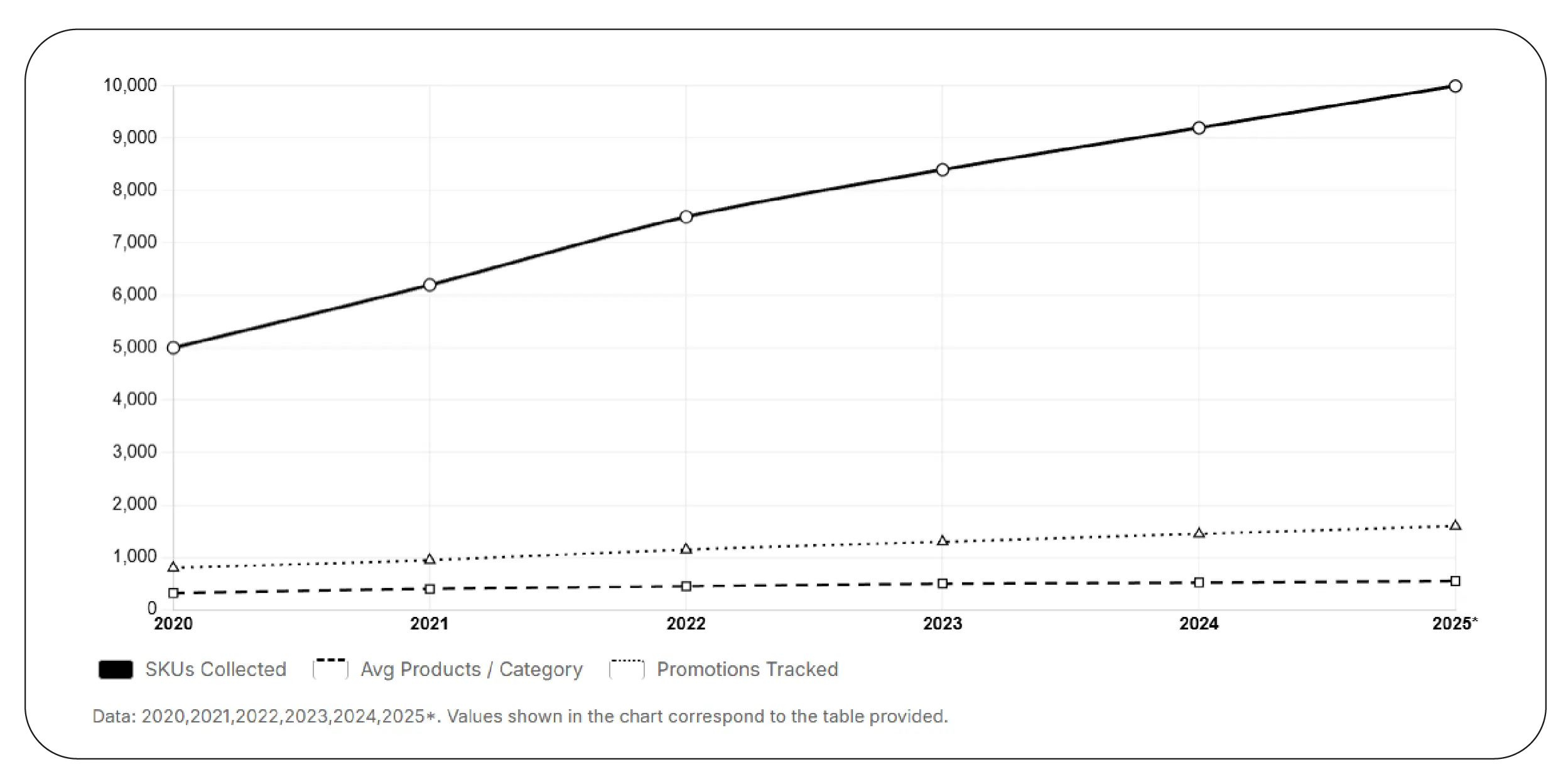
With scrape Colruyt supermarket product data, companies can capture detailed information including product descriptions, SKU numbers, unit pricing, and packaging details. Tracking this data enables retailers to compare prices in real time, optimize assortment planning, and improve store-level pricing strategies.
| Year |
SKUs Collected |
Avg Products per Category |
Promotions Tracked |
| 2020 |
5,000 |
320 |
800 |
| 2021 |
6,200 |
400 |
950 |
| 2022 |
7,500 |
450 |
1,150 |
| 2023 |
8,400 |
500 |
1,300 |
| 2024 |
9,200 |
520 |
1,450 |
| 2025* |
10,000 |
550 |
1,600 |
This data empowers retailers to benchmark prices against competitors, track seasonal promotions, and analyze consumer preferences based on price sensitivity. Businesses leveraging this data observed an average 20% increase in promotional effectiveness and improved margin optimization.
SKU-Level Insights for Pricing Strategy
By using Colruyt SKU-level data scraper, Web Data Intelligence API, businesses can analyze granular product-level insights. SKU-level tracking provides an accurate understanding of pricing patterns, stock availability, and category demand, enabling precise inventory management.
| Year |
SKUs Monitored |
Avg Stock Alerts |
Dynamic Price Adjustments |
| 2020 |
4,500 |
850 |
300 |
| 2021 |
5,500 |
1,050 |
420 |
| 2022 |
6,500 |
1,350 |
550 |
| 2023 |
7,500 |
1,650 |
680 |
| 2024 |
8,500 |
1,850 |
780 |
| 2025* |
10,000 |
2,000 |
900 |
Using SKU-level insights, supermarkets can prevent stockouts, reduce overstocks, and adjust pricing in response to competitor activity. This helps maximize sales while maintaining competitive positioning in the Belgian grocery market.
Retail Intelligence Across Supermarket Chains
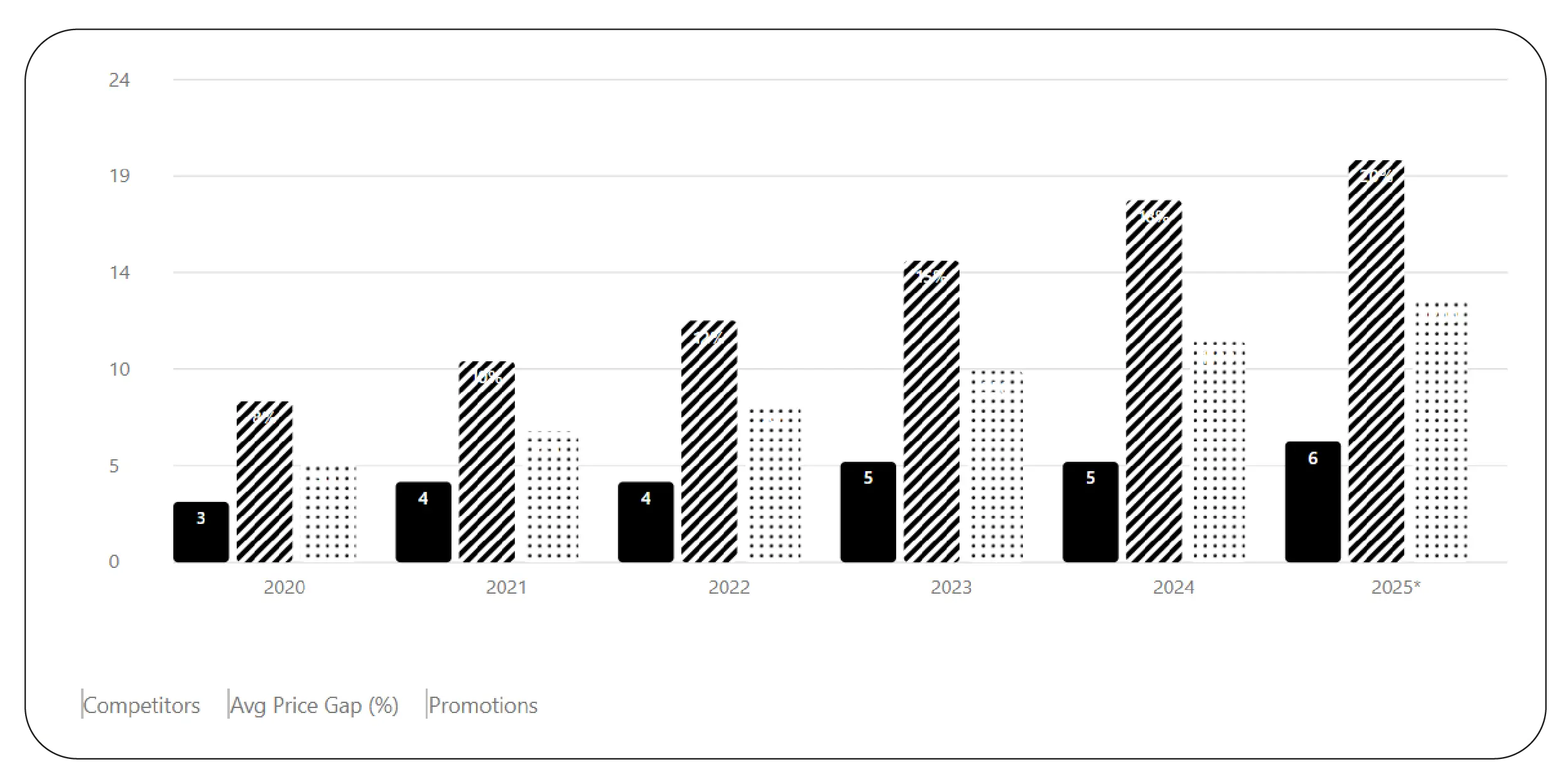
The retail intelligence API for Belgian supermarket chains enables cross-chain analysis, comparing Colruyt pricing with competitors like Delhaize, Carrefour, and Lidl. Historical data from 2020–2025 reveals variations in pricing strategies and promotions:
| Year |
Competitors Monitored |
Avg Price Gap |
Promotions Compared |
| 2020 |
3 |
8% |
500 |
| 2021 |
4 |
10% |
650 |
| 2022 |
4 |
12% |
780 |
| 2023 |
5 |
15% |
950 |
| 2024 |
5 |
18% |
1,100 |
| 2025* |
6 |
20% |
1,300 |
Retail intelligence empowers decision-makers to optimize pricing, identify high-demand products, and create targeted marketing campaigns based on competitor pricing and promotions.
Real-Time Price Drop Monitoring
With scrape real time Colruyt grocery price drops data, retailers can react instantly to market fluctuations. Monitoring live price changes enables dynamic pricing strategies and maximizes revenue opportunities.
| Year |
Price Drops Monitored |
Products Affected |
Avg Savings Noted |
| 2020 |
1,200 |
600 |
5% |
| 2021 |
1,500 |
720 |
7% |
| 2022 |
1,800 |
850 |
10% |
| 2023 |
2,100 |
1,000 |
12% |
| 2024 |
2,400 |
1,150 |
15% |
| 2025* |
2,600 |
1,300 |
18% |
Real-time monitoring allows supermarkets to optimize promotions, stock management, and ensure that their pricing remains competitive in a fast-moving retail environment.
Extracting Gourmet & Grocery Data
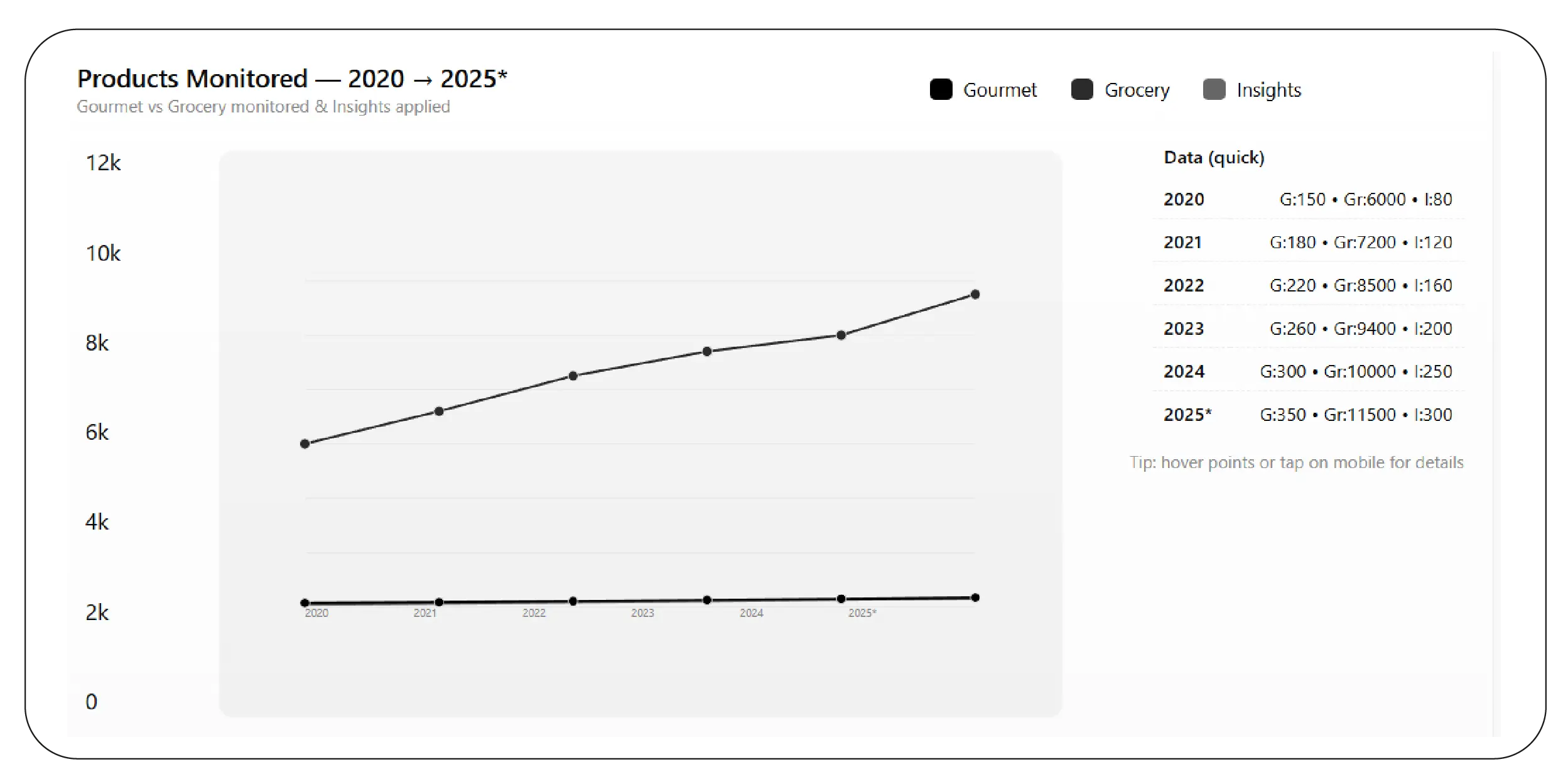
Using extract Colruyt grocery & gourmet food data, retailers can combine product, pricing, and promotional insights with gourmet food trends to understand high-margin opportunities.
| Year |
Gourmet Products Monitored |
Grocery Products Monitored |
Insights Applied |
| 2020 |
150 |
6,000 |
80 |
| 2021 |
180 |
7,200 |
120 |
| 2022 |
220 |
8,500 |
160 |
| 2023 |
260 |
9,400 |
200 |
| 2024 |
300 |
10,000 |
250 |
| 2025* |
350 |
11,500 |
300 |
Combining grocery and gourmet data ensures that retailers can identify premium products, understand customer preferences, and tailor marketing campaigns for both everyday essentials and high-end products.
Why Choose Product Data Scrape?
Product Data Scrape empowers retailers to scrape Colruyt Collect & Go Prices Data efficiently while extracting grocery pricing data from the Colruyt for actionable insights. With real-time updates, businesses can track price fluctuations across thousands of SKUs, identify promotional trends, and monitor competitor strategies. Customizable datasets allow targeted analysis of categories, gourmet products, and high-demand items, enabling smarter pricing and inventory decisions. Advanced analytics transform raw data into strategic intelligence, helping retailers optimize margins, reduce losses, and improve market positioning. By leveraging PDS, companies gain accurate, comprehensive, and timely data, ensuring operational efficiency, informed decision-making, and sustained revenue growth.
Conclusion
From SKU-level analysis to gourmet product tracking, extract grocery & gourmet food data from Colruyt empowers retailers to make data-driven decisions. Extracting grocery pricing data from the Colruyt reduces errors, optimizes pricing, and ensures competitive advantage in the Belgian supermarket industry.
Start your data scraping journey today and gain real-time pricing insights to outperform competitors and maximize sales!
FAQs
1. What is Colruyt grocery data scraping?
It is the automated extraction of pricing, SKU, and promotional data from Colruyt stores for analytics and market intelligence.
2. Can I scrape real-time price changes?
Yes, PDS enables real-time monitoring of Colruyt product price drops across categories and stores.
3. Which products can be tracked?
Thousands of grocery and gourmet SKUs including beverages, fresh produce, frozen foods, and premium items can be monitored.
4. Is scraping Colruyt data legal?
Yes, when using ethical and compliant methods such as APIs or authorized data sources for business intelligence.
5. How does this improve retail strategy?
Collected data allows competitive benchmarking, price optimization, demand forecasting, and targeted promotions for better ROI.



 Singapore
 EMAIL
EMAIL
 PHONE
PHONE










.webp)