Introduction
In highly competitive digital markets, pricing decisions must be fast, accurate, and data-driven. This is where How Price Intelligence Helps Businesses Stay Ahead becomes more than a strategy—it becomes a necessity. Businesses can no longer rely on manual checks or historical assumptions to define pricing. Instead, automated data collection and analytics now shape smarter pricing decisions.
With the rise of e-commerce and omnichannel retail, companies increasingly depend on a Scraper to Collect Commerce Intelligence Information to monitor competitor prices, product availability, promotions, and market shifts in real time. This intelligence empowers organizations to respond proactively to market changes, protect margins, and drive consistent revenue growth across channels.
Turning Competitive Data into Strategic Assets
Modern pricing success begins with visibility. Price intelligence using scraped competitor data enables businesses to collect large volumes of pricing information from rival platforms, marketplaces, and digital storefronts. This intelligence supports dynamic pricing models and strategic adjustments across categories.
By leveraging tools that can Scrape Data From Any Ecommerce Websites, organizations gain continuous access to competitor pricing without manual effort. Between 2020 and 2026, companies adopting automated price intelligence improved price accuracy and reduced reaction time significantly.
Industry Impact (2020–2026):
| Year |
Avg Pricing Accuracy |
Decision Speed Improvement |
| 2020 |
68% |
Baseline |
| 2021 |
72% |
+10% |
| 2022 |
78% |
+18% |
| 2023 |
84% |
+25% |
| 2024 |
88% |
+32% |
| 2025 |
92% |
+38% |
| 2026 |
95% |
+45% |
This shift allows pricing teams to operate with confidence rather than assumption.
Practical Adoption Across Business Functions
Price intelligence is no longer limited to pricing teams. How businesses use price intelligence tools has expanded across sales, marketing, procurement, and executive strategy.
Retailers use pricing intelligence to identify discount fatigue, while brands use it to protect positioning and maintain consistency across marketplaces. From 2020 to 2026, cross-functional adoption of pricing tools increased dramatically as businesses recognized the strategic value of real-time data.
Adoption Growth by Department:
| Year |
Pricing Teams |
Marketing |
Strategy |
| 2020 |
45% |
18% |
12% |
| 2022 |
58% |
32% |
26% |
| 2024 |
71% |
46% |
39% |
| 2026 |
84% |
61% |
55% |
The broader adoption ensures pricing intelligence influences every revenue-impacting decision.
Responding Faster to Market Volatility
Static pricing models fail in volatile markets. Dynamic pricing strategies using competitor data allow businesses to adjust prices based on real-time demand, supply shifts, and competitor movements.
Between 2020 and 2026, companies implementing dynamic pricing reported higher margin stability despite inflationary pressure and supply chain disruptions. These strategies enable brands to increase prices selectively rather than broadly, minimizing customer churn.
Dynamic Pricing Outcomes:
| Year |
Margin Stability |
Revenue Growth |
| 2020 |
Low |
4% |
| 2022 |
Moderate |
9% |
| 2024 |
High |
14% |
| 2026 |
Very High |
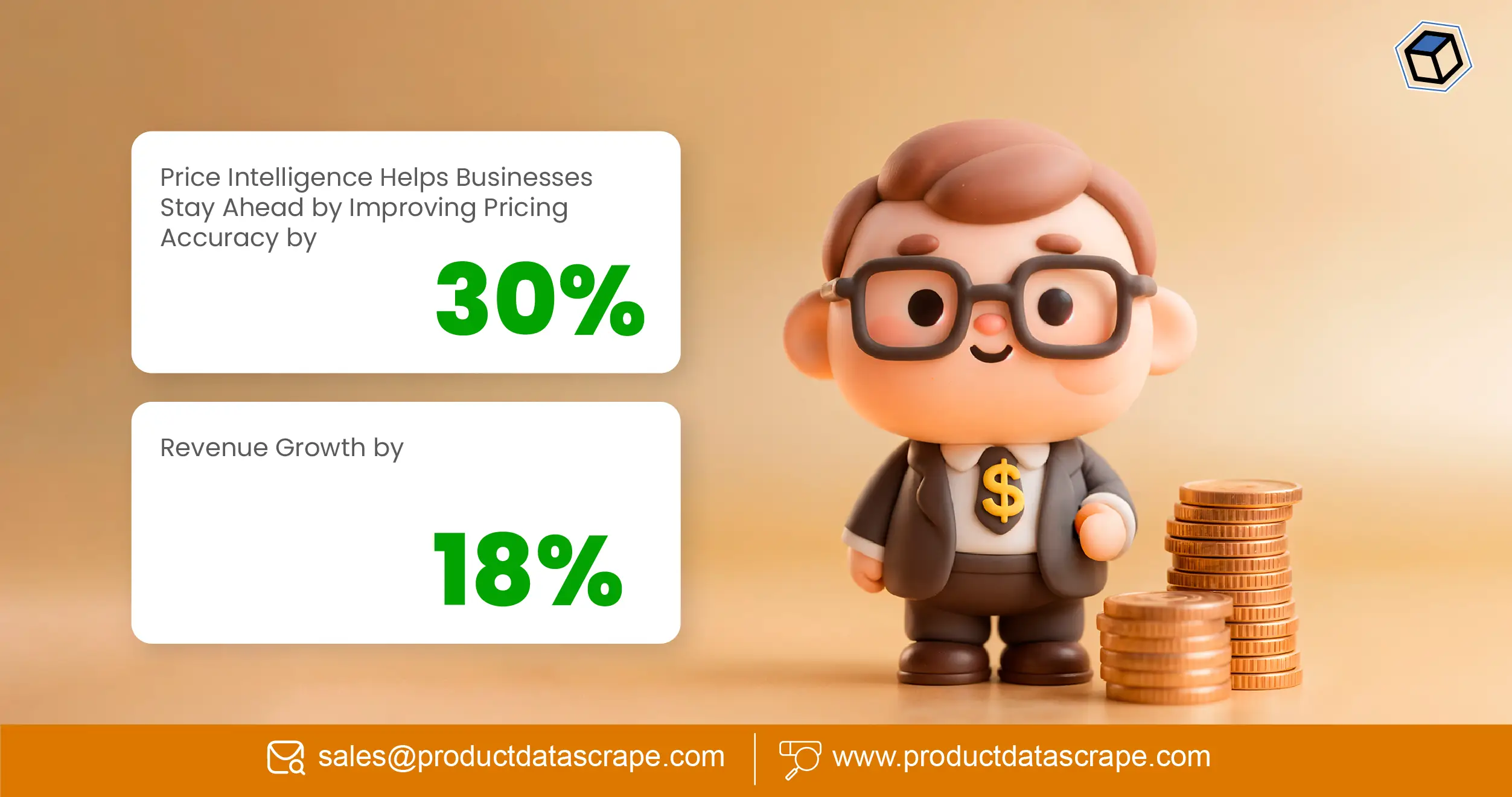
18% |
Dynamic pricing turns volatility into opportunity rather than risk.
Measuring Competitive Positioning Precisely
Understanding where your price stands in the market is critical. Competitor price benchmarking using scraping APIs provides businesses with structured comparisons across thousands of SKUs and competitors.
From 2020 onward, benchmarking accuracy improved as APIs enabled higher-frequency data updates and cleaner datasets. Businesses using automated benchmarking reduced pricing errors and avoided unnecessary discounting.
Benchmarking Accuracy Trends:
| Year |
Benchmark Accuracy |
Pricing Errors |
| 2020 |
65% |
High |
| 2022 |
74% |
Moderate |
| 2024 |
86% |
Low |
| 2026 |
93% |
Very Low |
Accurate benchmarking protects both margins and brand perception.
Achieving Always-On Market Awareness
Markets move fast, and delayed insights equal lost revenue. Real-time competitor price tracking using web scraping ensures businesses receive immediate alerts when competitors adjust prices, launch promotions, or change availability.
From 2020 to 2026, companies using real-time tracking shortened response cycles from days to minutes. This capability proved critical during peak seasons, flash sales, and sudden market disruptions.
Response Time Reduction:
| Year |
Avg Response Time |
| 2020 |
48 hours |
| 2022 |
18 hours |
| 2024 |
2 hours |
| 2026 |
15 minutes |
Real-time tracking converts pricing from reactive to proactive.
Scaling Intelligence with Advanced Automation
As datasets grow larger, manual analysis becomes impossible. An AI-Powered Price Intelligence Platform enables businesses to process millions of price points, identify anomalies, and generate actionable insights automatically.
Between 2020 and 2026, AI-driven pricing platforms significantly improved forecasting accuracy and reduced operational overhead. Machine learning models now detect pricing patterns invisible to human analysts.
AI-Driven Improvements:
| Year |
Forecast Accuracy |
Manual Effort Reduction |
| 2020 |
62% |
Low |
| 2022 |
74% |
Moderate |
| 2024 |
86% |
High |
| 2026 |
91% |
Very High |
AI transforms price intelligence into a scalable competitive advantage.
Why Choose Product Data Scrape?
Product Data Scrape delivers enterprise-grade pricing intelligence solutions designed for scale, speed, and accuracy. Our platforms support advanced Digital Shelf Analytics, enabling businesses to track pricing, availability, and competitor positioning across global markets.
With robust automation, structured outputs, and seamless integration into BI tools, Product Data Scrape empowers organizations to make faster, smarter pricing decisions without manual effort.
Conclusion
Price intelligence is no longer optional—it is foundational to staying competitive. When combined with a Scraper for Online Brand Protection in E-commerce Industry, businesses gain full visibility into pricing misuse, undercutting, and unauthorized discounting.
By adopting advanced price intelligence strategies, organizations can improve accuracy, protect margins, and unlock sustained revenue growth.
Start leveraging real-time price intelligence today with Product Data Scrape and turn market data into measurable competitive advantage.
FAQs
1. What is price intelligence?
Price intelligence is the process of collecting and analyzing competitor pricing data to optimize pricing strategies and improve market competitiveness.
2. How does web scraping support price intelligence?
Web scraping automates the collection of competitor prices, promotions, and availability at scale, ensuring timely and accurate insights.
3. Which industries benefit most from price intelligence?
Retail, e-commerce, travel, QSR, and FMCG industries benefit significantly from automated pricing insights.
4. Is price intelligence scalable for enterprises?
Yes, modern platforms support millions of SKUs and real-time updates across global markets.
5. Why choose Product Data Scrape for price intelligence?
Product Data Scrape provides accurate, scalable, and automated pricing solutions tailored for enterprise-grade analytics and decision-making.



 Singapore
 EMAIL
EMAIL
 PHONE
PHONE


.webp "thumb")
.webp "thumb")








.webp)