Introduction
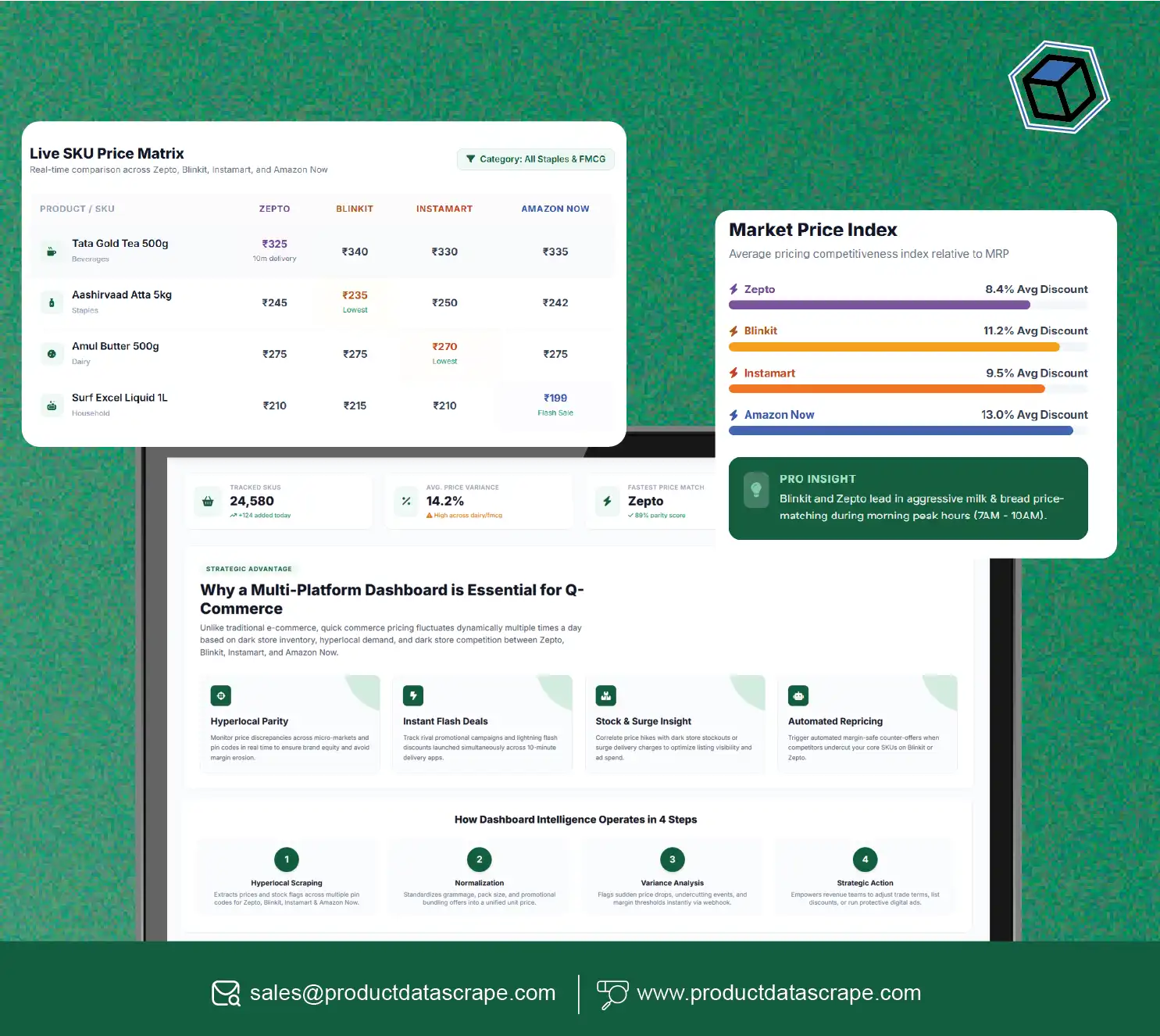
In today’s hyper-competitive digital commerce environment, pricing decisions must be fast, accurate, and data-driven. Brands operate across multiple marketplaces where prices fluctuate hourly due to competition, demand surges, and promotional activity. How Multi-Platform SKU Price Monitoring has become essential for brands seeking visibility across fragmented channels and consistent pricing execution. With the rise of automation, E-commerce Price Monitoring Services enable organizations to track SKU-level prices in real time, reduce revenue leakage, and respond proactively to competitor moves. Rather than relying on static reports or manual checks, brands now leverage continuous monitoring systems that align pricing strategies with market realities. This shift empowers pricing teams to optimize margins, improve buy-box performance, and maintain consumer trust across platforms.
Visibility Across Fragmented Marketplaces
From 2020 to 2026, the number of active e-commerce marketplaces globally grew by over 45%, increasing pricing complexity for brands. Without unified visibility, identical SKUs often show inconsistent prices across platforms, eroding margins and brand credibility. A Cross-marketplace SKU price intelligence API consolidates pricing data from multiple sources into a single structured feed.
Data from 2020–2026 highlights:
- 2020: Average SKU price variance across platforms was 9%
- 2023: Variance increased to 14% due to dynamic promotions
- 2026 (projected): Brands using real-time APIs reduce variance below 4%
| Year |
Avg SKU Variance |
Revenue Leakage Risk |
| 2020 |
9% |
Medium |
| 2023 |
14% |
High |
| 2026 |
4% |
Low |
Centralized SKU intelligence eliminates blind spots and ensures faster pricing alignment across channels.
Competitive Benchmarking at Scale
Manual competitor tracking cannot keep pace with modern e-commerce velocity. Between 2020 and 2024, leading brands increased SKU counts by over 60%, making real-time benchmarking critical. Marketplace price comparison scraping allows automated comparison of identical and substitute products across sellers and platforms.
Key observations:
- Brands monitoring competitors hourly react 2.3x faster to price drops
- Automated benchmarking improves margin control by up to 18%
- Price wars are detected earlier, preventing reactive undercutting
| Metric |
Manual Tracking |
Automated Scraping |
| Update Frequency |
Weekly |
Real-time |
| Competitive Accuracy |
Low |
High |
| Reaction Speed |
Slow |
Instant |
This approach enables pricing teams to focus on strategy rather than data collection.
Instant Reaction to Market Fluctuations
Pricing volatility intensified after 2021 due to flash sales, inflation, and supply-chain disruptions. Brands relying on delayed data frequently miss critical pricing windows. Real-time product pricing analytics enables instant detection of price changes and immediate corrective actions.
From 2020–2026:
- 32% increase in short-duration discounts (<24 hours)
- 41% of lost sales attributed to delayed price response
- Brands using real-time analytics improved conversion rates by 21%
| Pricing Signal |
Detection Time |
Impact |
| Manual Review |
24–48 hrs |
Lost Sales |
| Real-Time Analytics |
Minutes |
Revenue Gain |
Instant analytics ensures brands remain competitive without sacrificing margins.
One Source of Pricing Truth
As brands scale across marketplaces, inconsistency becomes a strategic risk. Disconnected systems often report conflicting prices, promotions, and discounts. Unified Product Price Intelligence creates a single source of truth across channels.
Benefits observed between 2020 and 2026 include:
- 35% reduction in internal pricing disputes
- Improved coordination between sales, marketing, and finance
- Faster approval cycles for promotional pricing
| Capability |
Before |
After |
| Data Consistency |
Fragmented |
Unified |
| Decision Speed |
Slow |
Fast |
| Price Accuracy |
Variable |
High |
Unified intelligence simplifies governance while strengthening pricing discipline.
Predictive Pricing Through Advanced Analytics
Beyond monitoring, modern pricing strategies require foresight. AI-Powered Pricing Analytics Using Scraped Data transforms historical and real-time pricing signals into predictive insights.
Trends from 2020–2026 show:
Predictive pricing reduced margin erosion by 24%
Demand forecasting accuracy improved by 31%
Promotion ROI increased by 19%
| Insight Type |
Traditional |
AI-Powered |
| Price Forecasting |
Reactive |
Predictive |
| Demand Signals |
Limited |
High Accuracy |
| Promotion Planning |
Manual |
Optimized |
AI-driven analytics allows brands to anticipate competitor actions rather than react to them.
Monitoring Competitors Without Limits
As marketplaces deploy anti-bot defenses and geo-based pricing, traditional scraping fails at scale. Multi Agent Data Scraping for Competitor Analysis overcomes these barriers by distributing data collection across multiple agents, locations, and sessions.
Between 2020 and 2026:
- Platforms increased anti-scraping controls by 52%
- Multi-agent architectures achieved 98% data success rates
- Brands reduced data gaps by over 40%
| Approach |
Coverage |
Reliability |
| Single-Agent Scraping |
Limited |
Low |
| Multi-Agent Scraping |
Extensive |
High |
This architecture ensures uninterrupted access to competitive pricing intelligence.
Why Choose Product Data Scrape?
Brands looking to stay competitive rely on Optimizing Multi-Channel Discount Strategies powered by accurate, real-time data. Product Data Scrape delivers scalable pricing intelligence across marketplaces, enabling brands to detect pricing gaps, monitor discounts, and align promotions seamlessly. Our infrastructure supports high-frequency data collection, enterprise-grade accuracy, and seamless integration with analytics systems. With automation, compliance-focused extraction, and customizable feeds, Product Data Scrape empowers brands to make faster, smarter pricing decisions while protecting margins and improving competitive positioning across digital channels.
Conclusion
In an era of constant price volatility, brands cannot afford delayed or fragmented pricing insights. How Multi-Platform SKU Price Monitoring enables real-time awareness, competitive responsiveness, and strategic pricing control across marketplaces. By leveraging a Web Data Intelligence API, brands gain instant access to actionable pricing signals that drive margin protection and conversion growth.
Partner with Product Data Scrape today to transform real-time pricing intelligence into a competitive advantage and future-proof your e-commerce strategy.
FAQs
1. What is multi-platform SKU price monitoring?
It tracks the same SKU’s pricing across multiple marketplaces in real time, helping brands identify inconsistencies, respond faster, and maintain competitive pricing accuracy.
2. How often is pricing data updated?
Pricing data can be refreshed every few minutes or hourly, depending on configuration, ensuring near real-time visibility across platforms and sellers.
3. Does this help prevent price wars?
Yes, by providing early alerts and trend insights, brands can respond strategically rather than reactively undercutting competitors.
4. Can pricing data integrate with internal systems?
Absolutely. APIs and data feeds allow seamless integration with ERP, BI, and pricing engines for automation and analytics.
5. Which provider supports scalable price monitoring?
Many enterprises rely on Product Data Scrape for scalable, compliant, and high-frequency multi-platform pricing intelligence.



 Singapore
 EMAIL
EMAIL
 PHONE
PHONE










.webp)