Introduction
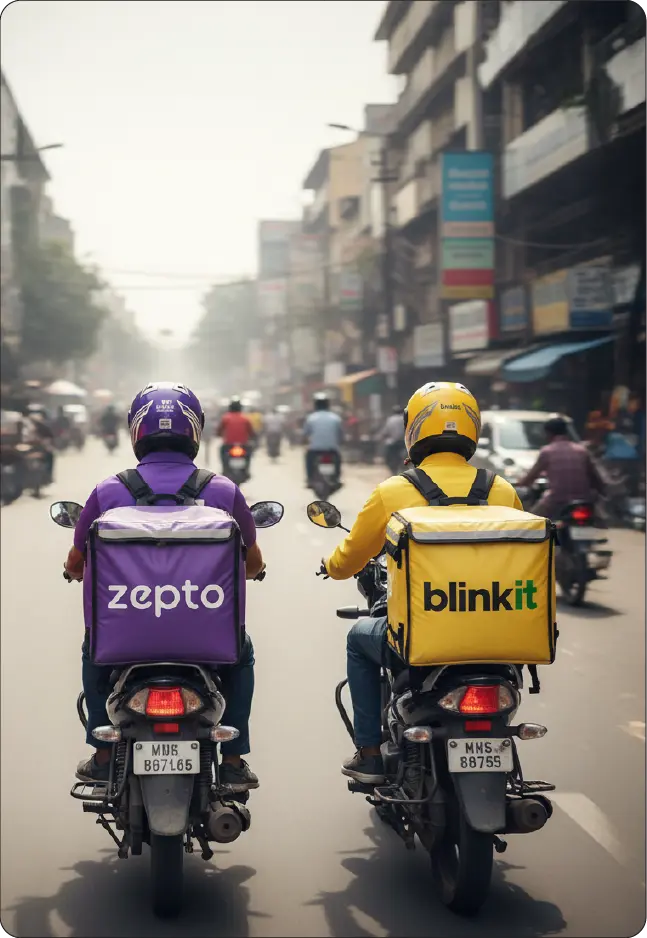
India’s quick commerce ecosystem has transformed urban grocery and FMCG purchasing patterns over the last few years. Consumers in metro cities such as Pune and Mumbai increasingly depend on rapid delivery platforms for daily essentials, fresh produce, packaged foods, and household items. Businesses and brands now require real-time visibility into dynamic pricing, promotions, discounts, stock availability, and competitor strategies to remain competitive in this rapidly evolving market.
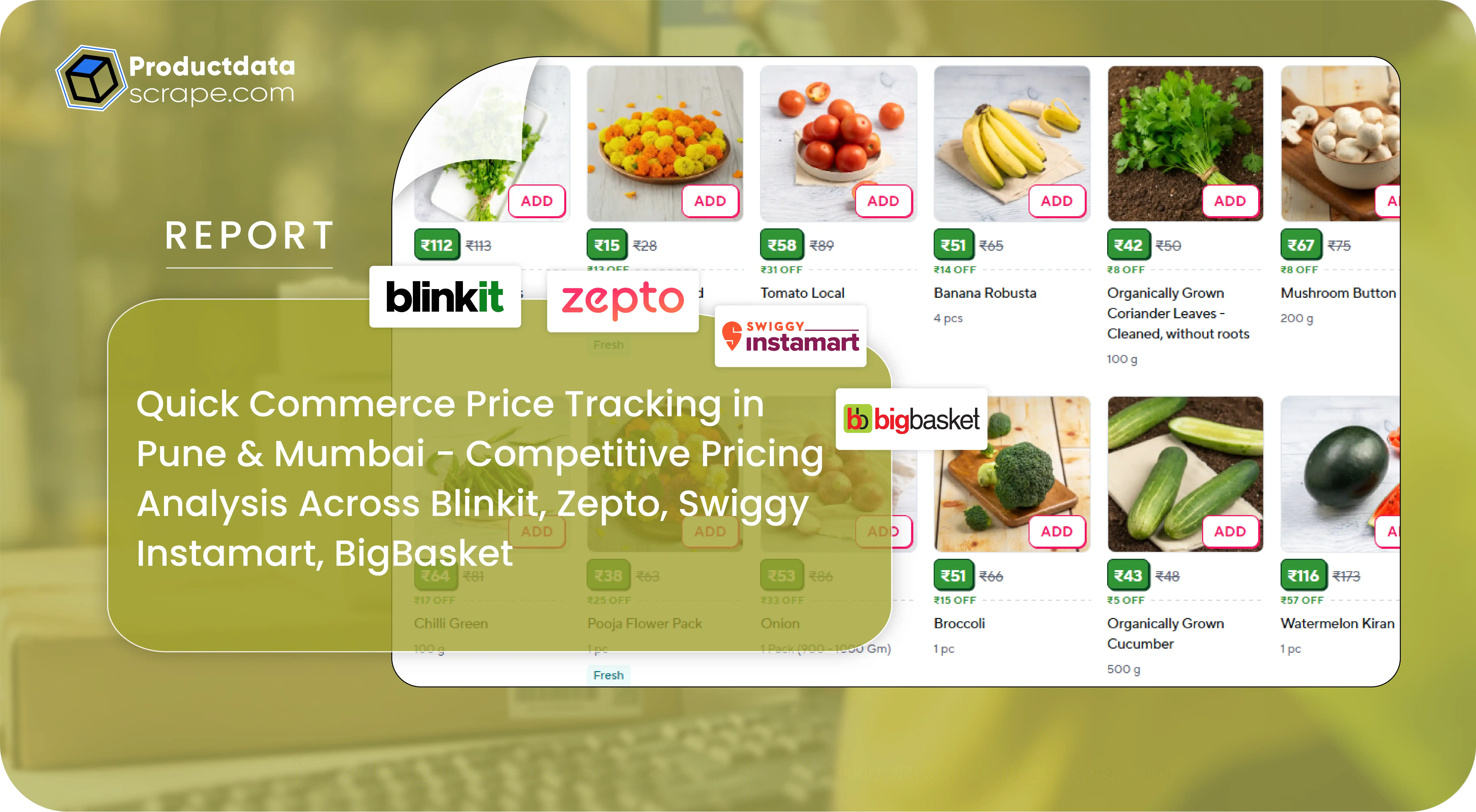
Quick Commerce Price Tracking in Pune & Mumbai enables retailers, FMCG brands, analysts, and aggregators to identify pricing fluctuations across multiple delivery platforms. By leveraging advanced analytics and automation, businesses can optimize pricing strategies, improve assortment planning, and monitor market trends efficiently.
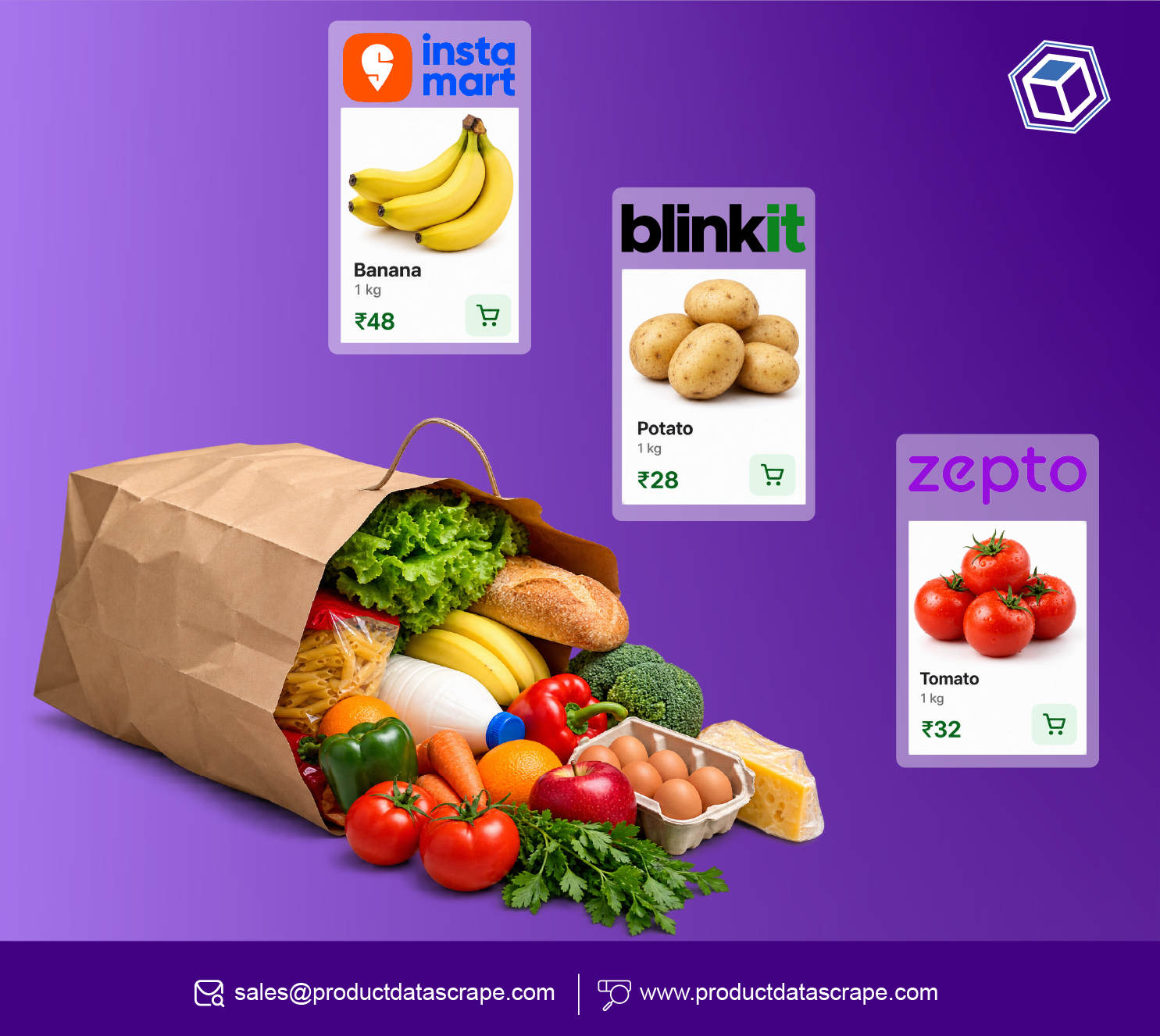
At the same time, Quick Commerce Grocery & FMCG Data Scraping has become essential for extracting structured insights from platforms such as Blinkit, Zepto, Swiggy Instamart, and BigBasket. Automated scraping solutions help collect SKU-level pricing, delivery charges, discount campaigns, and inventory data across locations in real time.
The table below highlights the estimated growth of India’s quick commerce market from 2020–2026.
Global Retail Intelligence and eCommerce Analytics Market Growth (2020–2026)
| Year |
Market Size (USD Billion) |
YoY Growth |
| 2020 |
0.3 |
18% |
| 2021 |
0.7 |
32% |
| 2022 |
1.8 |
48% |
| 2023 |
3.2 |
55% |
| 2024 |
5.1 |
41% |
| 2025 |
7.4 |
38% |
| 2026 |
10.2 |
37% |
The growing competition among quick commerce platforms is accelerating the need for data-driven pricing intelligence across regional markets.
Urban Pricing Dynamics and Platform Benchmarking
The pricing landscape of Pune and Mumbai differs considerably because of consumer demographics, logistics infrastructure, and local purchasing behavior. Businesses now rely on Quick commerce Price Comparison Pune & Mumbai to evaluate regional pricing disparities and promotional effectiveness.
Using Zepto Quick Commerce Scraper technologies, companies can monitor category-level pricing across groceries, beverages, personal care, snacks, dairy products, and household essentials. Real-time extraction helps identify price wars and discount cycles between competing platforms.
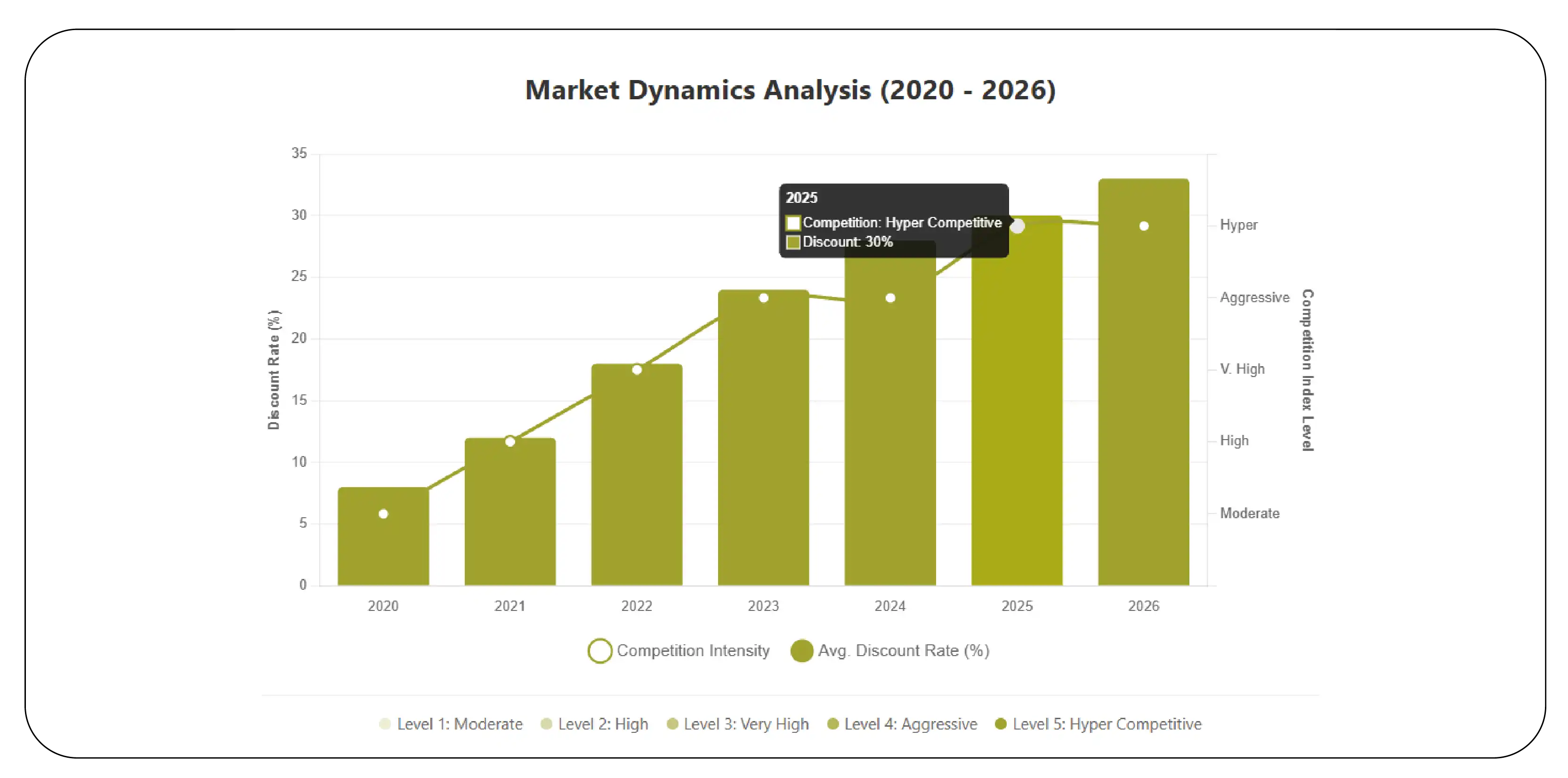
Major insights observed between 2020 and 2026 include:
Rising Discount Competition Across eCommerce Platforms (2020–2026)
| Year |
Avg. Discount Rate |
Platform Competition Index |
| 2020 |
8% |
Moderate |
| 2021 |
12% |
High |
| 2022 |
18% |
Very High |
| 2023 |
24% |
Aggressive |
| 2024 |
28% |
Aggressive |
| 2025 |
30% |
Hyper Competitive |
| 2026 |
33% |
Hyper Competitive |
Key market observations include:
- Mumbai consumers prioritize faster delivery over lower pricing.
- Pune shoppers respond strongly to discount-driven campaigns.
- Grocery bundles and combo pricing increased substantially after 2022.
- Flash sales became common during weekends and festivals.
- Subscription-based loyalty programs improved customer retention.
Brands use extracted data to benchmark competitors, track city-wise pricing behavior, and optimize promotional campaigns. These insights also support inventory forecasting and localized marketing strategies.
Consumer Behavior and Real-Time Intelligence Trends
The expansion of dark stores and rapid delivery infrastructure has intensified demand for data intelligence solutions. Companies using Quick Commerce Product Data Price Intelligence in Mumbai can analyze customer behavior patterns and category demand variations in real time.
Platforms like Swiggy Instamart continuously adjust pricing depending on demand spikes, delivery time slots, inventory availability, and competitor pricing strategies. This dynamic environment requires automated monitoring solutions for continuous market visibility.
The following table highlights average price fluctuations across categories from 2020–2026.
Category-Wise Growth in Quick Commerce and Consumer Demand Trends (2020–2026)
| Category |
2020 |
2022 |
2024 |
2026 |
| Dairy |
4% |
7% |
10% |
12% |
| Snacks |
6% |
11% |
16% |
19% |
| Beverages |
5% |
9% |
14% |
17% |
| Personal Care |
7% |
13% |
18% |
22% |
| Household Essentials |
3% |
8% |
12% |
16% |
Key industry developments include:
- AI-driven pricing algorithms now dominate quick commerce operations.
- Personalized offers have increased average order values.
- Hyperlocal inventory management improved delivery efficiency.
- Weekend demand surges cause temporary price fluctuations.
- Real-time competitor monitoring impacts instant pricing revisions.
Retailers and FMCG manufacturers increasingly depend on automated scraping solutions to maintain competitive pricing strategies across urban markets.
SKU-Level Monitoring and FMCG Market Visibility
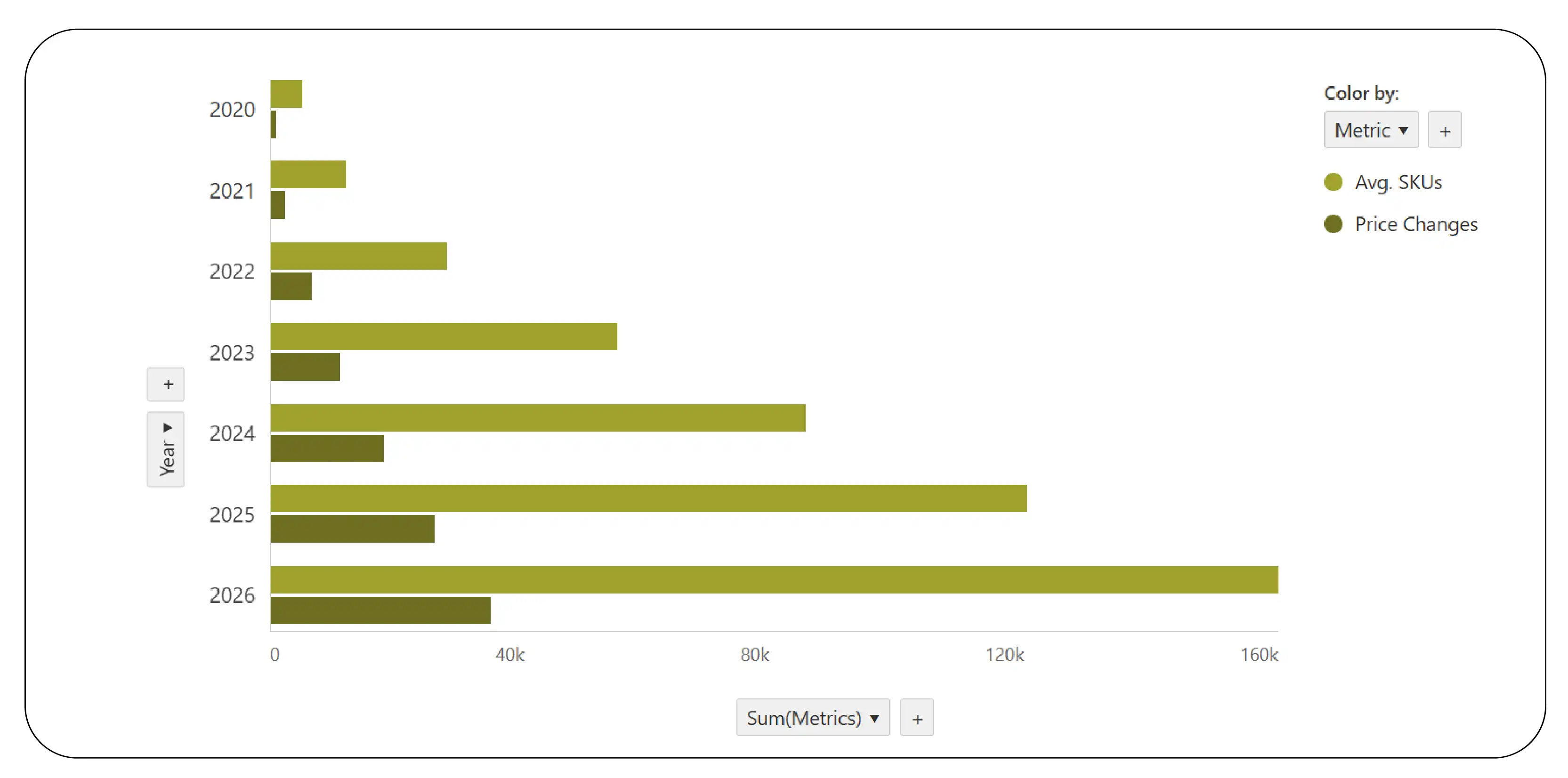
Modern quick commerce operations require detailed SKU-level visibility for effective decision-making. Businesses that Scrape Quick Commerce FMCG Data Pricing Pune gain valuable insights into inventory patterns, promotional trends, and customer purchasing behavior.
With tools that Scrape BigBasket Prices Data, companies can analyze pricing consistency across categories such as packaged foods, staples, cleaning supplies, frozen products, and health beverages.
The table below presents SKU tracking growth trends.
SKU Monitoring and Daily Price Change Trends in eCommerce (2020–2026)
| Year |
Avg. Tracked SKUs |
Daily Price Changes |
| 2020 |
5,000 |
800 |
| 2021 |
12,000 |
2,300 |
| 2022 |
28,000 |
6,500 |
| 2023 |
55,000 |
11,000 |
| 2024 |
85,000 |
18,000 |
| 2025 |
120,000 |
26,000 |
| 2026 |
160,000 |
35,000 |
Key observations include:
- FMCG brands increasingly monitor city-wise product availability.
- Seasonal pricing patterns affect packaged food categories.
- Demand forecasting relies heavily on historical pricing trends.
- Real-time scraping enables faster competitive response strategies.
- Product assortment variations influence customer retention rates.
Advanced scraping systems help organizations track competitor assortments, optimize product placement, and identify emerging pricing opportunities.
Competitive Benchmarking and Pricing Optimization
Quick commerce businesses face continuous pressure to deliver competitive pricing while maintaining profitability. Through Product Price Comparison Across Quick Commerce App solutions, retailers can evaluate pricing differences between leading platforms.
Modern Price Monitoring Services help businesses identify underpriced and overpriced products, track promotional campaigns, and benchmark regional pricing variations effectively.
The following table shows estimated pricing optimization benefits from 2020–2026.
Revenue Growth and Pricing Accuracy Improvement Through Retail Intelligence (2020–2026)
| Year |
Revenue Improvement |
Pricing Accuracy |
| 2020 |
6% |
72% |
| 2021 |
9% |
76% |
| 2022 |
14% |
81% |
| 2023 |
18% |
85% |
| 2024 |
22% |
89% |
| 2025 |
27% |
92% |
| 2026 |
31% |
95% |
Major strategic advantages include:
- Faster competitor reaction times.
- Improved promotional planning.
- Enhanced regional pricing optimization.
- Better customer acquisition strategies.
- Accurate monitoring of flash-sale activities.
Brands using automated monitoring systems can make informed pricing decisions while maintaining market competitiveness across multiple cities.
Regional Demand Variations and Analytics Growth
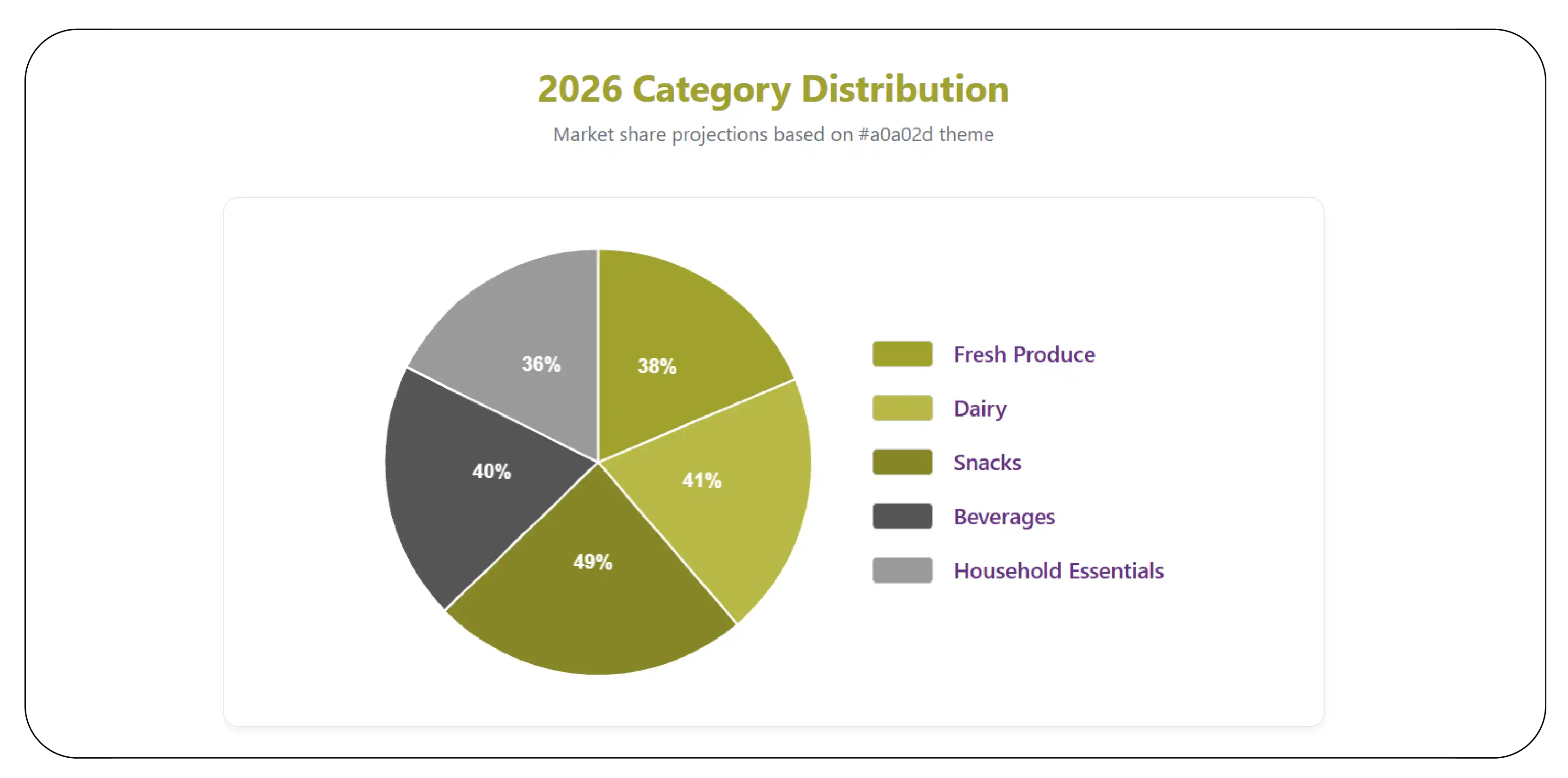
The quick commerce sector in Pune and Mumbai demonstrates unique regional purchasing trends influenced by lifestyle, income levels, and delivery accessibility. Businesses leveraging Swiggy Instamart Grocery Pricing Analytics Pune & Mumbai can better understand evolving customer behavior and demand cycles.
Advanced analytics solutions help identify pricing trends across categories such as fresh produce, organic products, beverages, dairy, and personal care essentials.
The table below illustrates estimated category demand growth from 2020–2026.
Category-Wise Growth in Online Grocery and Consumer Purchase Trends (2020–2026)
| Category |
2020 |
2023 |
2026 |
| Fresh Produce |
12% |
24% |
38% |
| Dairy |
15% |
28% |
41% |
| Snacks |
18% |
35% |
49% |
| Beverages |
11% |
26% |
40% |
| Household Essentials |
9% |
21% |
36% |
Important market developments include:
- Demand for healthy and organic products continues rising.
- Premium grocery categories gained traction after 2022.
- Delivery speed influences consumer loyalty significantly.
- Hyperlocal promotions improve regional engagement.
- Analytics-driven pricing supports margin optimization.
Data intelligence tools help businesses anticipate demand shifts and refine pricing strategies more efficiently.
Future Outlook of Data-Driven Quick Commerce
India’s quick commerce sector is expected to witness continued technological innovation, stronger AI integration, and rapid expansion into tier-2 cities. Businesses utilizing BigBasket Q Commerce Price Monitoring Data gain long-term visibility into competitive market trends and pricing behavior.
The future of quick commerce intelligence depends heavily on automation, predictive analytics, and real-time market tracking. Companies increasingly invest in large-scale scraping infrastructure to manage massive volumes of pricing and inventory data.
The following table highlights projected analytics adoption trends from 2020–2026.
Growth of Retail Data Intelligence and Automated Monitoring Adoption (2020–2026)
| Year |
Businesses Using Data Intelligence |
Automated Monitoring Adoption |
| 2020 |
18% |
12% |
| 2021 |
27% |
20% |
| 2022 |
39% |
31% |
| 2023 |
51% |
45% |
| 2024 |
64% |
58% |
| 2025 |
76% |
71% |
| 2026 |
88% |
84% |
Key future trends include:
- AI-powered pricing recommendations.
- Automated competitor benchmarking systems.
- Predictive inventory forecasting tools.
- Advanced regional demand analytics.
- Personalized promotion optimization engines.
Organizations investing in data intelligence today will achieve stronger market positioning and improved profitability in the years ahead.
Businesses seeking advanced quick commerce intelligence require reliable, scalable, and accurate data extraction services
Product Data Scrape provides customized scraping solutions designed specifically for grocery, FMCG, retail, and eCommerce industries.
With expertise in Zepto Quick commerce Grocery Price Data Extraction, the company helps brands monitor real-time product pricing, stock availability, promotions, and regional trends efficiently.
Key advantages include:
- Real-time competitor monitoring.
- Large-scale SKU tracking capabilities.
- Regional price intelligence across cities.
- Automated dashboard integration.
- Scalable enterprise-grade scraping infrastructure.
- Accurate and structured data delivery.
By leveraging Quick Commerce Price Tracking in Pune & Mumbai, businesses can strengthen pricing strategies, improve operational efficiency, and gain actionable competitive insights.
Conclusion
The rapid growth of India’s quick commerce sector has created intense competition among Blinkit, Zepto, Swiggy Instamart, and BigBasket. Businesses now depend heavily on automated analytics and scraping technologies to monitor pricing fluctuations, optimize promotions, and improve customer engagement.
Solutions for Web Scraping Blinkit Quick Commerce Data empower brands to gain real-time visibility into evolving market conditions and competitor strategies. As competition intensifies, data-driven intelligence will remain critical for sustainable growth and operational success.
Businesses investing in Quick Commerce Price Tracking in Pune & Mumbai can unlock valuable market insights, improve pricing accuracy, and strengthen competitive positioning in the rapidly expanding quick commerce ecosystem.
Contact Product Data Scrape today to unlock advanced quick commerce analytics, real-time grocery pricing intelligence, and customized FMCG data scraping solutions for your business growth!



 Singapore
 EMAIL
EMAIL
 PHONE
PHONE


.webp "thumb")








.webp)