Quick Overview
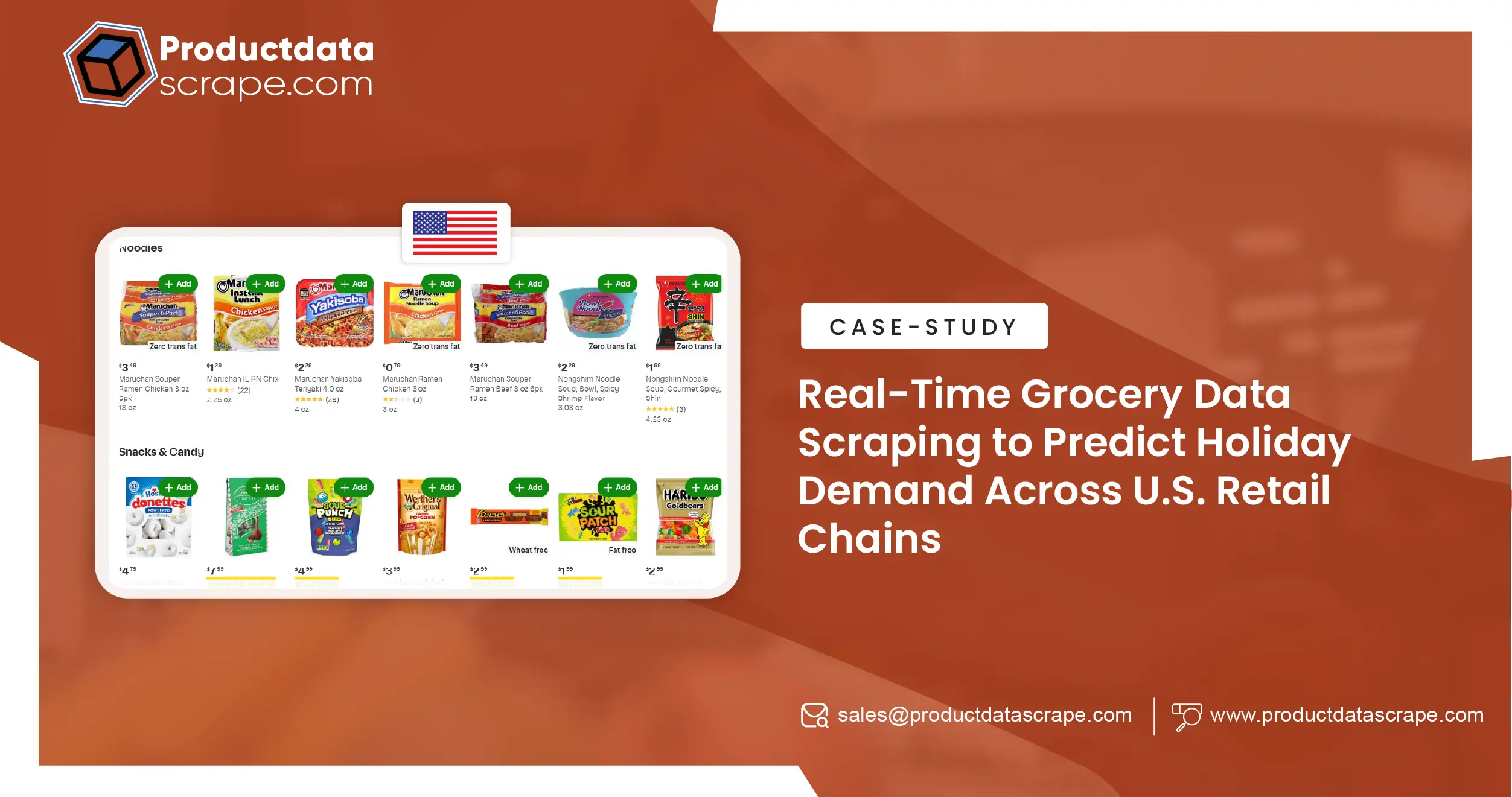
A leading retail intelligence firm in the U.S. grocery sector partnered with Product Data Scrape to gain predictive insights during peak holiday seasons. Operating across multi-brand grocery chains, the client required faster and more accurate demand forecasting. Product Data Scrape delivered a customized Real-Time Grocery Data Scraping solution over a 10-week engagement, enabling continuous monitoring of prices, availability, and promotions. By helping the client Extract Grocery & Gourmet Food Data at scale, the project improved forecast accuracy, reduced stockout risks, and strengthened inventory planning across regions, ensuring smoother operations during high-demand festive periods.
The Client
The client is a U.S.-based grocery analytics provider serving large retail chains, distributors, and CPG brands. The grocery industry has seen rising volatility due to seasonal demand spikes, inflation-driven price sensitivity, and rapidly shifting consumer preferences during festive periods. Holidays such as Thanksgiving, Christmas, and New Year place immense pressure on grocery supply chains, making accurate forecasting critical.
Before partnering with Product Data Scrape, the client relied on historical sales reports and delayed third-party datasets. These sources failed to capture real-time market movements, leading to missed demand signals and reactive decision-making. As retailers demanded predictive insights rather than retrospective reports, transformation became unavoidable.
The client needed an advanced solution capable of integrating live retail signals into their forecasting systems. Their goal was to support customers with proactive insights using a Festive Season Grocery Demand Forecasting API while also identifying fast-emerging product trends through a New Year Festive Product Trend Detection API. Without automation and real-time data, their existing infrastructure could not support these evolving market expectations, putting client retention and growth at risk.
Goals & Objectives
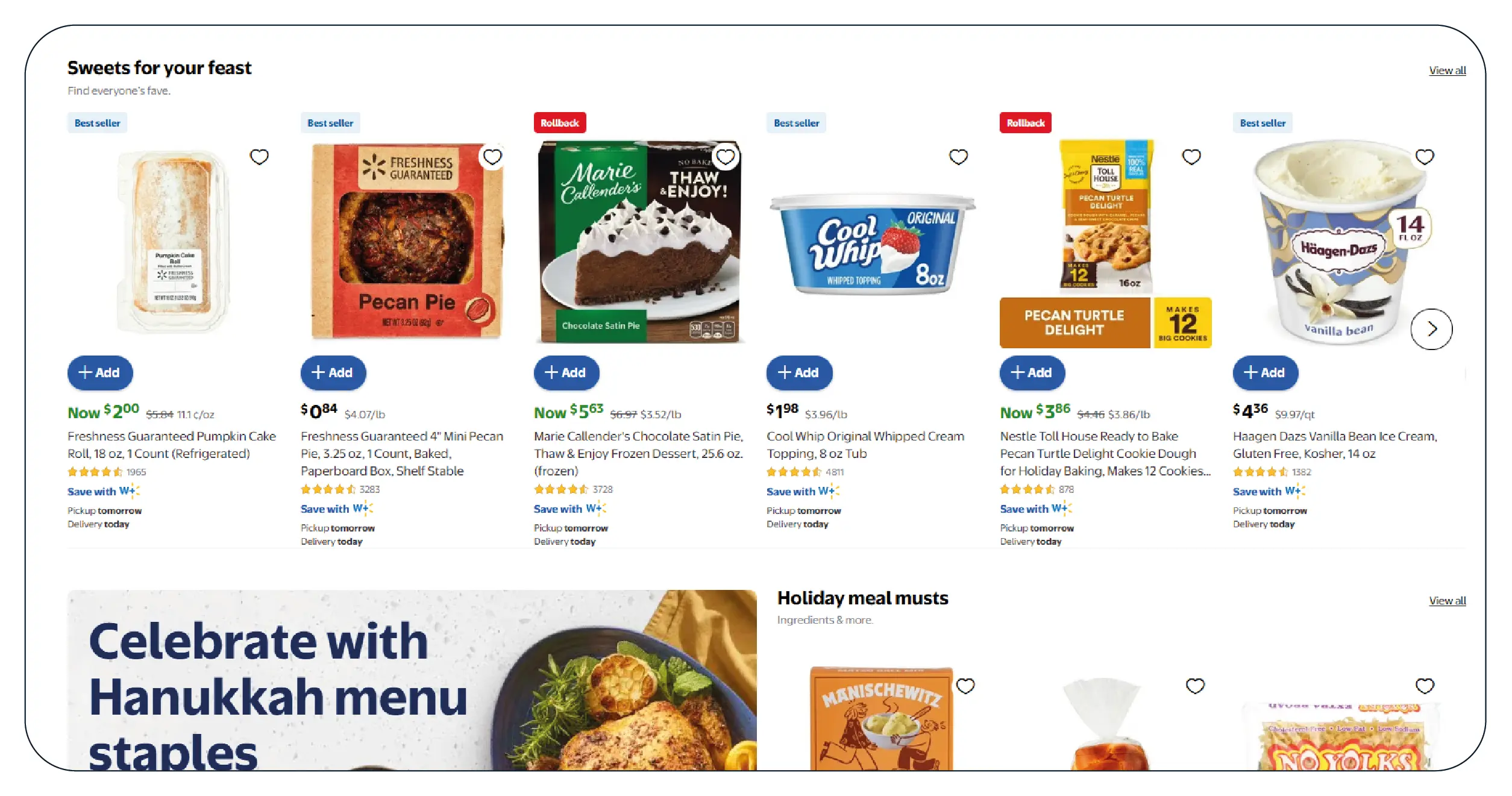
The primary business goal was to improve holiday demand forecasting accuracy while ensuring scalability across multiple retail chains. Speed, reliability, and nationwide coverage were essential to support peak-season decision-making.
From a technical perspective, the project aimed to automate grocery data collection, integrate live feeds into predictive models, and enable real-time analytics dashboards. Leveraging the Holiday Grocery Sales Trend Data API allowed the client to identify demand patterns as they emerged, while datasets covering the Extract Top 10 Largest Grocery Chains in USA 2025 ensured comprehensive market visibility.
Improve forecast accuracy by over 30% during holiday periods
Reduce data latency from days to minutes
Increase SKU-level coverage across all major grocery categories
Enable real-time alerts for demand spikes
Support multi-region analytics without performance degradation
These KPIs aligned business growth with technical performance and measurable outcomes.
The Core Challenge
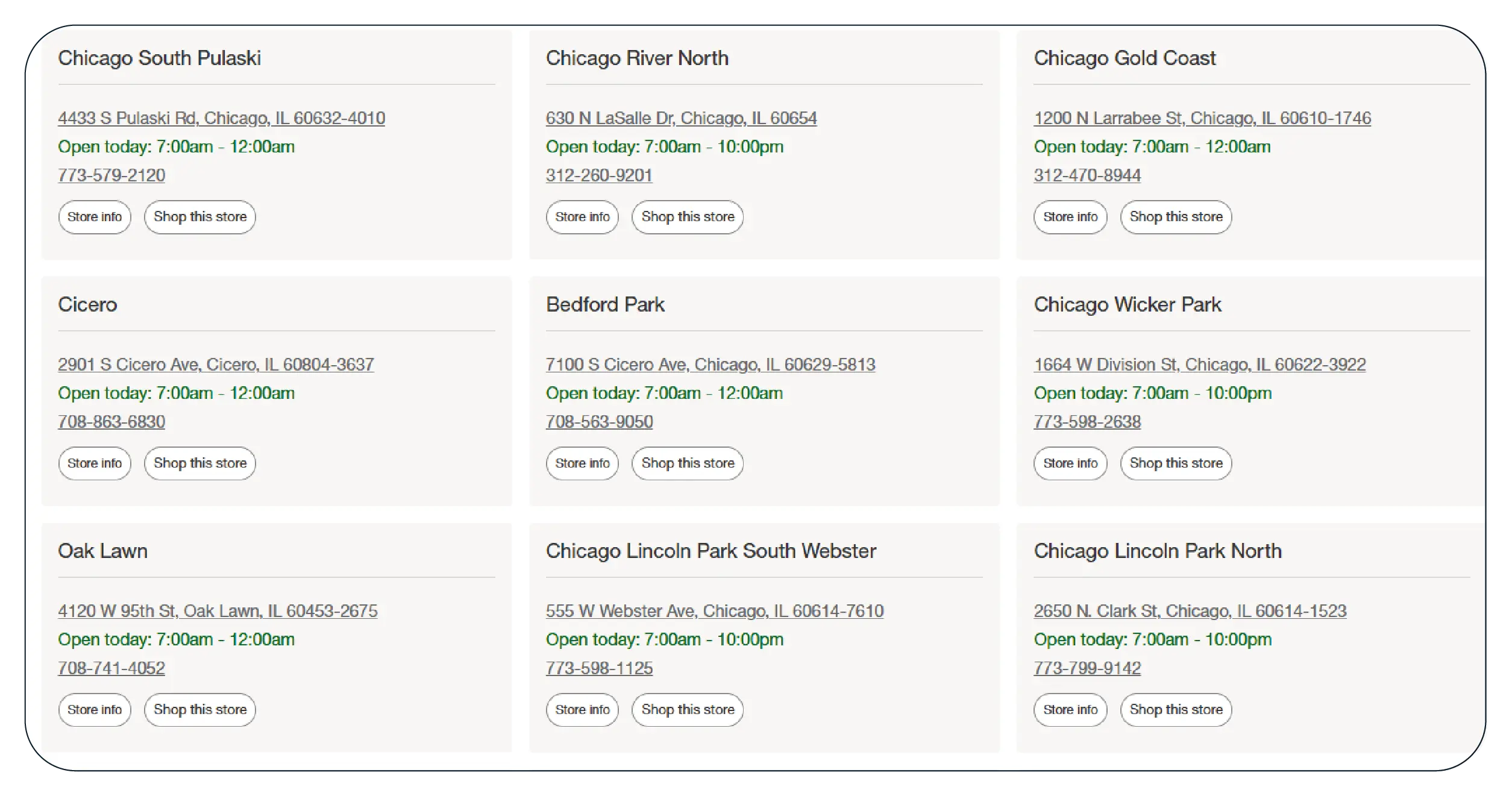
The client faced major challenges in capturing timely and location-specific grocery intelligence. One significant bottleneck was the lack of reliable store-level visibility. Without consistent Grocery Store Location Data Scraping in USA, regional demand variations often went unnoticed, resulting in overstocking in some areas and shortages in others.
Performance issues also surfaced during peak seasons when data volumes surged. Existing systems struggled with refresh rates, leading to outdated insights during critical decision windows. Additionally, the absence of SKU-level trend detection made it difficult to anticipate which seasonal items would see sudden demand spikes.
These limitations directly impacted the client’s ability to offer predictive services. Retail partners needed forward-looking insights, but the client could only provide delayed summaries. To remain competitive, they required a scalable Seasonal Grocery SKU Trend Forecasting Service capable of delivering accurate, high-frequency data without manual intervention or system downtime.
Our Solution
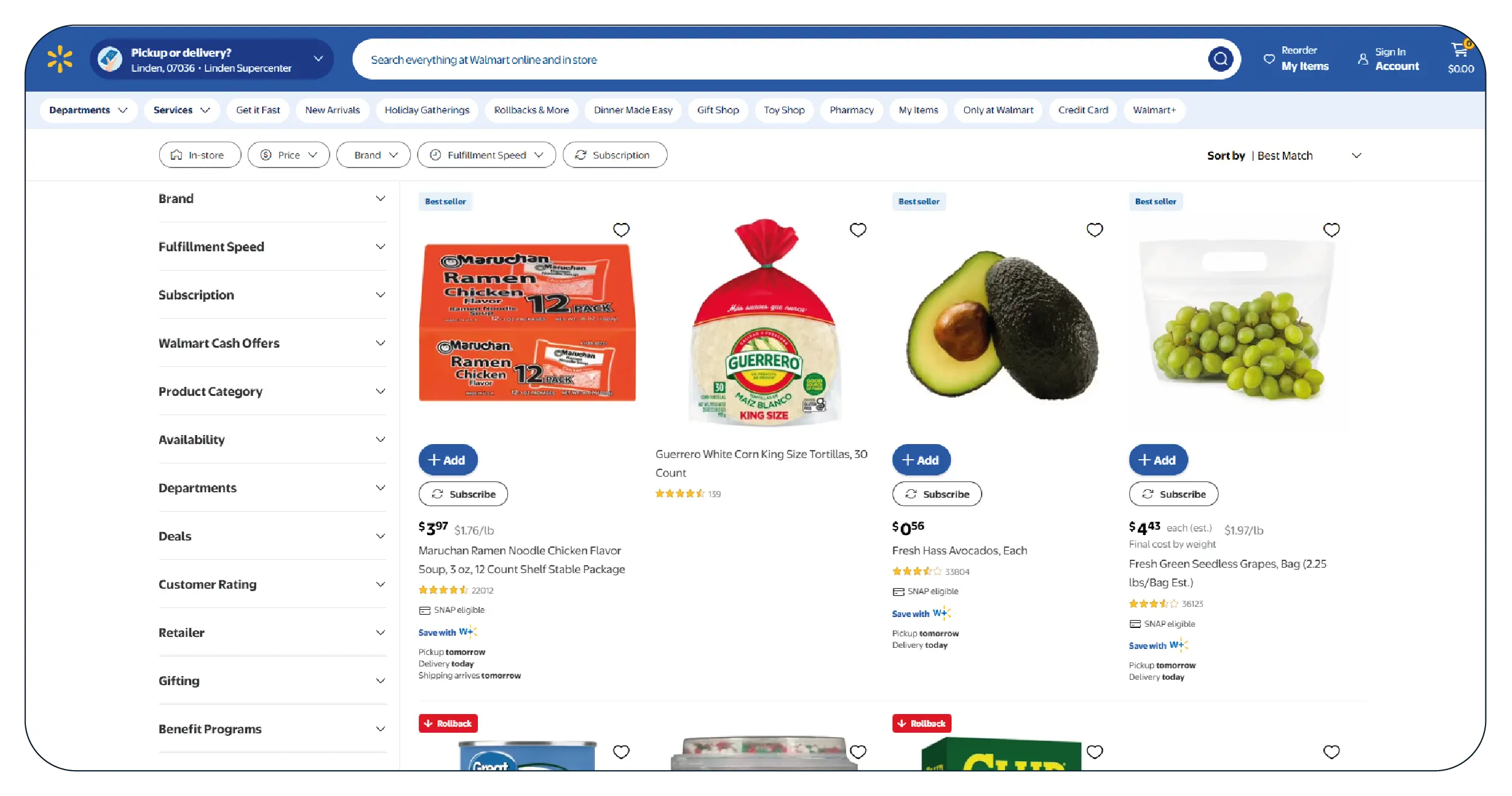
Product Data Scrape implemented a phased, automation-first solution designed to deliver real-time, high-volume grocery intelligence across U.S. retail chains.
The first phase focused on discovery and data mapping. Our team analyzed grocery category structures, pricing formats, and promotional patterns across leading retailers. This ensured accurate identification of high-impact SKUs and seasonal products.
In phase two, we built robust crawling and extraction pipelines capable of handling frequent updates and high traffic. Using advanced automation frameworks, we enabled continuous data collection, including live prices, availability, discounts, and pack sizes. Special emphasis was placed on Scrape Walmart Grocery Product and Pricing Data, given its significant influence on national pricing trends.
The third phase integrated real-time processing and validation layers. Automated quality checks ensured data accuracy, while adaptive logic allowed the system to adjust to layout or pricing changes instantly. The solution was designed to support Real-Time Grocery Data Scraping without performance degradation, even during peak holiday demand.
Finally, structured outputs were delivered through APIs and dashboards, enabling seamless integration with the client’s forecasting models. Each phase addressed a critical challenge—speed, scale, or accuracy—resulting in a resilient, future-ready grocery intelligence platform.
Results & Key Metrics

Forecast accuracy improved by 35% during holiday periods
Data refresh cycles reduced to near real time
SKU coverage expanded across all major grocery categories
Regional demand signals identified faster than before
System stability maintained during peak traffic
These results were delivered through a unified Web Data Intelligence API that ensured consistency and scalability.
Results Narrative
With real-time insights in place, the client transformed its holiday forecasting capabilities. Retail partners gained early visibility into demand spikes, allowing proactive inventory planning. Automation eliminated manual delays, while structured data improved model accuracy. The client strengthened its market position by delivering predictive, actionable insights that directly improved retailer performance during the most critical sales periods of the year.
What Made Product Data Scrape Different?
Product Data Scrape stood out through its combination of proprietary automation, adaptive scraping logic, and predictive intelligence focus. Unlike traditional data providers, we emphasized forward-looking insights powered by Christmas Grocery Demand Prediction Using Data Scraping. Smart automation ensured continuous updates, while scalable infrastructure supported nationwide coverage. This innovation enabled clients to act on trends before they peaked, creating a lasting competitive advantage.
Client’s Testimonial
“Product Data Scrape delivered exactly what we needed during our most critical season. Their real-time data pipelines significantly improved our holiday forecasting accuracy. The team’s technical expertise and understanding of grocery retail dynamics helped us move from reactive reporting to predictive intelligence. Our retail partners now rely on our insights to plan confidently during peak demand.”
— VP of Data Strategy, U.S. Grocery Analytics Firm
Conclusion
This case study highlights how real-time automation can redefine grocery demand forecasting. By combining advanced scraping, analytics-ready data, and scalable infrastructure, Product Data Scrape empowered the client to lead with confidence. Whether you need E-commerce Price Monitoring Services or enterprise-grade Real-Time Grocery Data Scraping, our solutions are built to support future growth, accuracy, and predictive intelligence across dynamic retail markets.
FAQs
1. What type of grocery data was collected?
The project focused on pricing, availability, promotions, SKU attributes, and category-level trends across major U.S. grocery chains.
2. How often was the data updated?
Data was refreshed in near real time to capture rapid changes during peak holiday periods.
3. Can this solution support regional demand forecasting?
Yes, store-level and regional data enabled localized demand prediction.
4. Is the solution scalable beyond holidays?
Absolutely. The infrastructure supports year-round monitoring and long-term trend analysis.
5. Can this be customized for other retail segments?
Yes, the solution can be adapted for convenience stores, wholesale, and specialty food retailers.



 Singapore
 EMAIL
EMAIL
 PHONE
PHONE











.webp)