Introduction
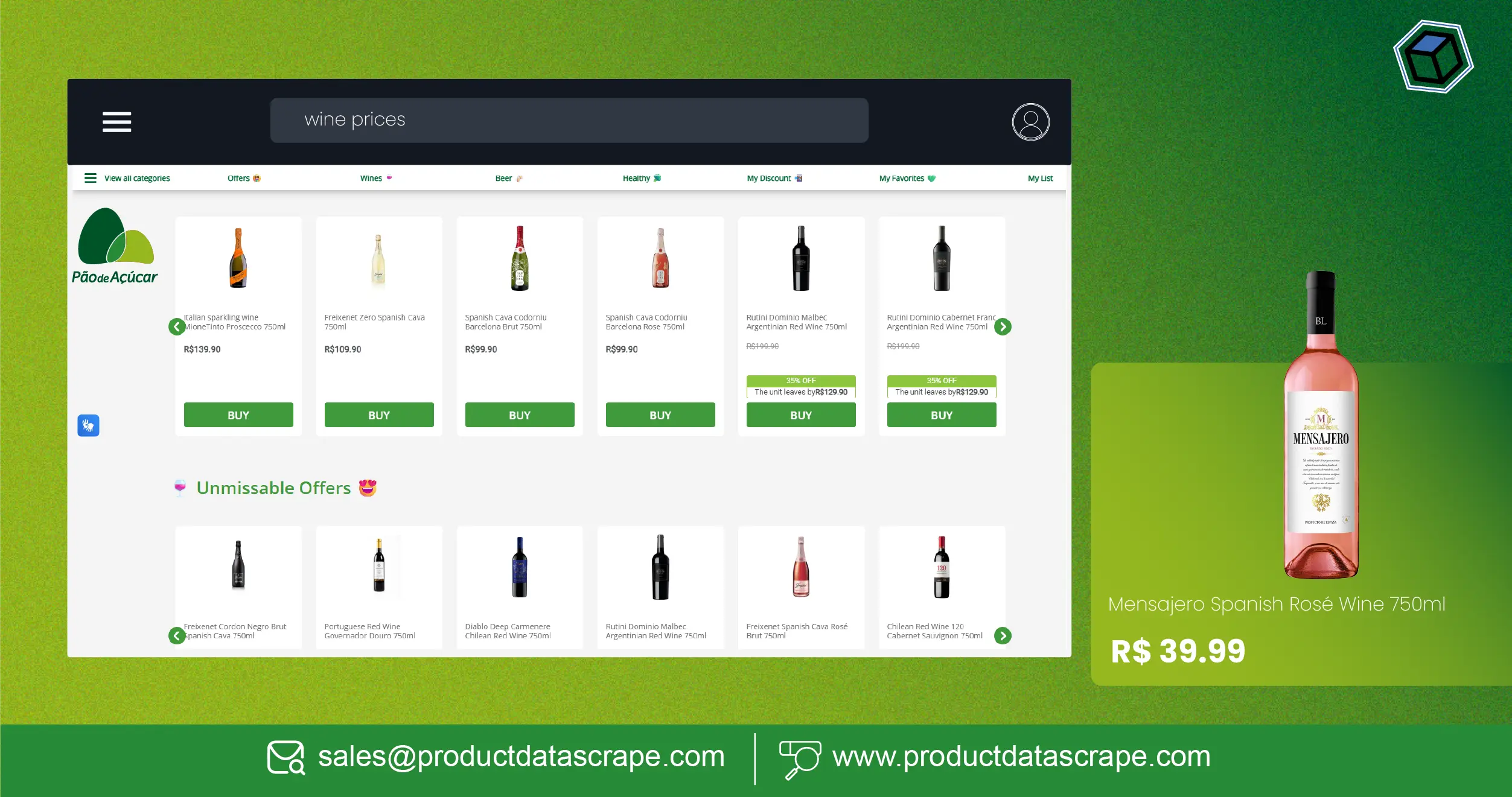
Brazil’s premium wine market has experienced steady growth driven by rising disposable income, evolving consumer preferences, and increasing exposure to international wine brands. Retailers like Pão de Açúcar play a critical role in shaping wine pricing, assortment, and promotional strategies across the country. To stay competitive, brands and distributors increasingly rely on scrape wine prices pão de açúcar initiatives to gain visibility into real-time pricing behavior, premium positioning, and seasonal fluctuations.
At the same time, structured access to pricing intelligence has become essential for long-term strategy development. Leveraging Product Price Data Scraping Services allows businesses to move beyond manual tracking and fragmented reports, enabling systematic monitoring of premium wine SKUs at scale. With historical and real-time data from 2020 to 2026, stakeholders can identify demand shifts, price elasticity, and competitive gaps in Brazil’s evolving alcohol retail landscape.
The Importance of Transparent Pricing Intelligence
Access to transparent and reliable pricing data has become foundational for premium alcohol brands operating in Brazil. Through Scraping publicly available pricing information, businesses can legally and efficiently collect wine prices, discounts, and pack-size variations displayed on retailer platforms like Pão de Açúcar. This data provides a consistent benchmark for evaluating market positioning without relying on estimations.
Between 2020 and 2026, Brazil’s premium wine segment saw noticeable price stratification as imports increased and domestic producers improved quality. Public pricing data reveals how retailers adjust prices during festive seasons, currency fluctuations, and supply chain disruptions.
| Year |
Avg Premium Wine Price (BRL) |
Discount Frequency (%) |
Imported Wine Share (%) |
| 2020 |
89 |
18% |
42% |
| 2022 |
96 |
21% |
46% |
| 2024 |
108 |
25% |
51% |
| 2026 |
121 |
29% |
57% |
Such insights help brands refine pricing strategies while maintaining compliance and market transparency.
Monitoring Market Shifts as They Happen
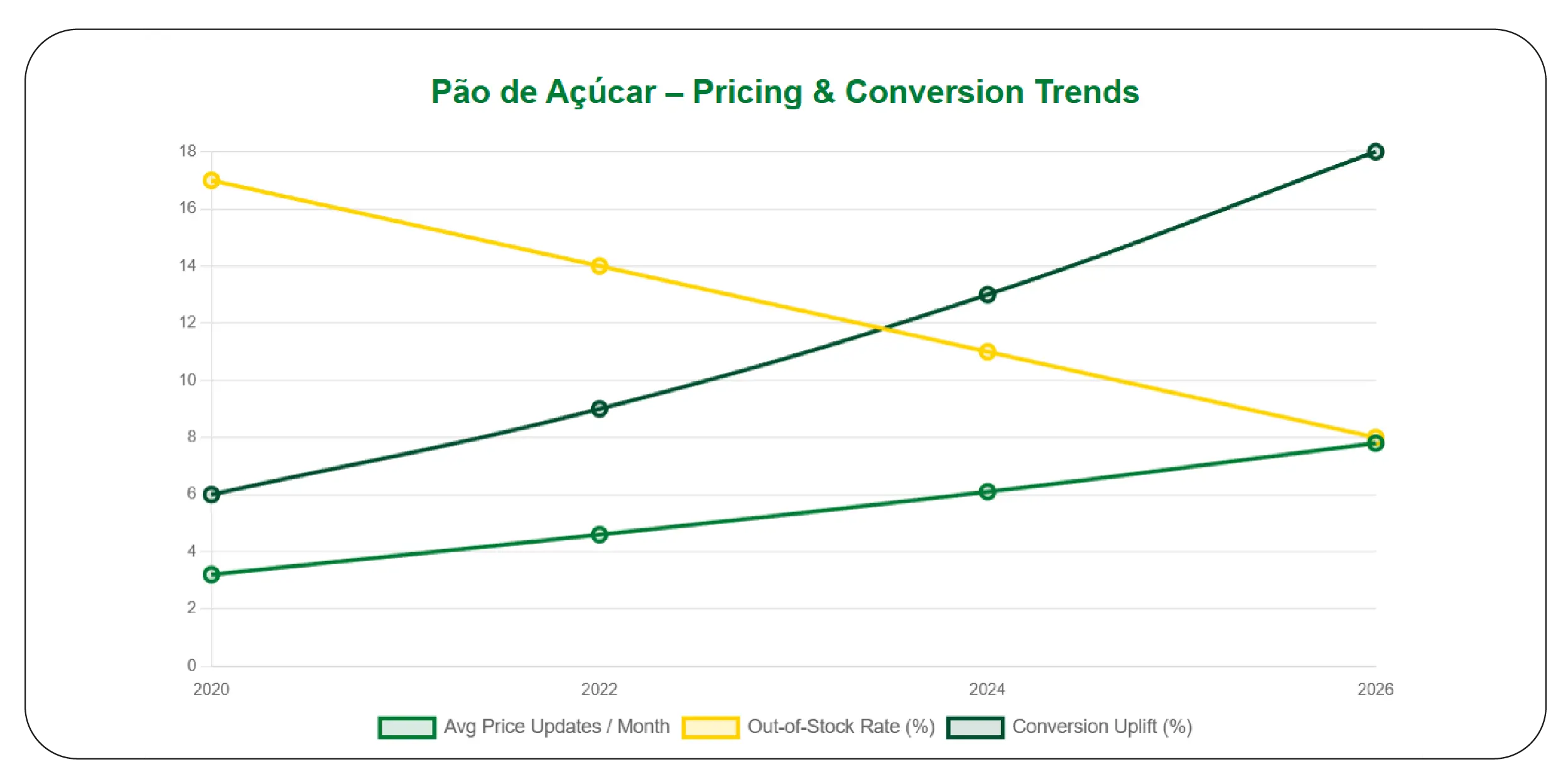
Premium wine purchasing behavior is highly sensitive to availability and timing. By analyzing Real-Time Prices, Availability & Market Insights, brands can understand how stock levels, promotional events, and delivery constraints influence purchasing decisions. Real-time visibility ensures faster reaction to market changes, especially in high-demand periods.
From 2020 to 2026, the frequency of price updates on online grocery platforms increased significantly, reflecting heightened competition. Availability-driven pricing became more common, particularly for limited-edition wines and imported labels.
| Year |
Avg Price Updates per Month |
Out-of-Stock Rate (%) |
Conversion Uplift (%) |
| 2020 |
3.2 |
17% |
6% |
| 2022 |
4.6 |
14% |
9% |
| 2024 |
6.1 |
11% |
13% |
| 2026 |
7.8 |
8% |
18% |
These insights enable distributors and retailers to align inventory planning with real-time demand signals in Brazil’s premium wine category.
Structuring Data for Strategic Intelligence
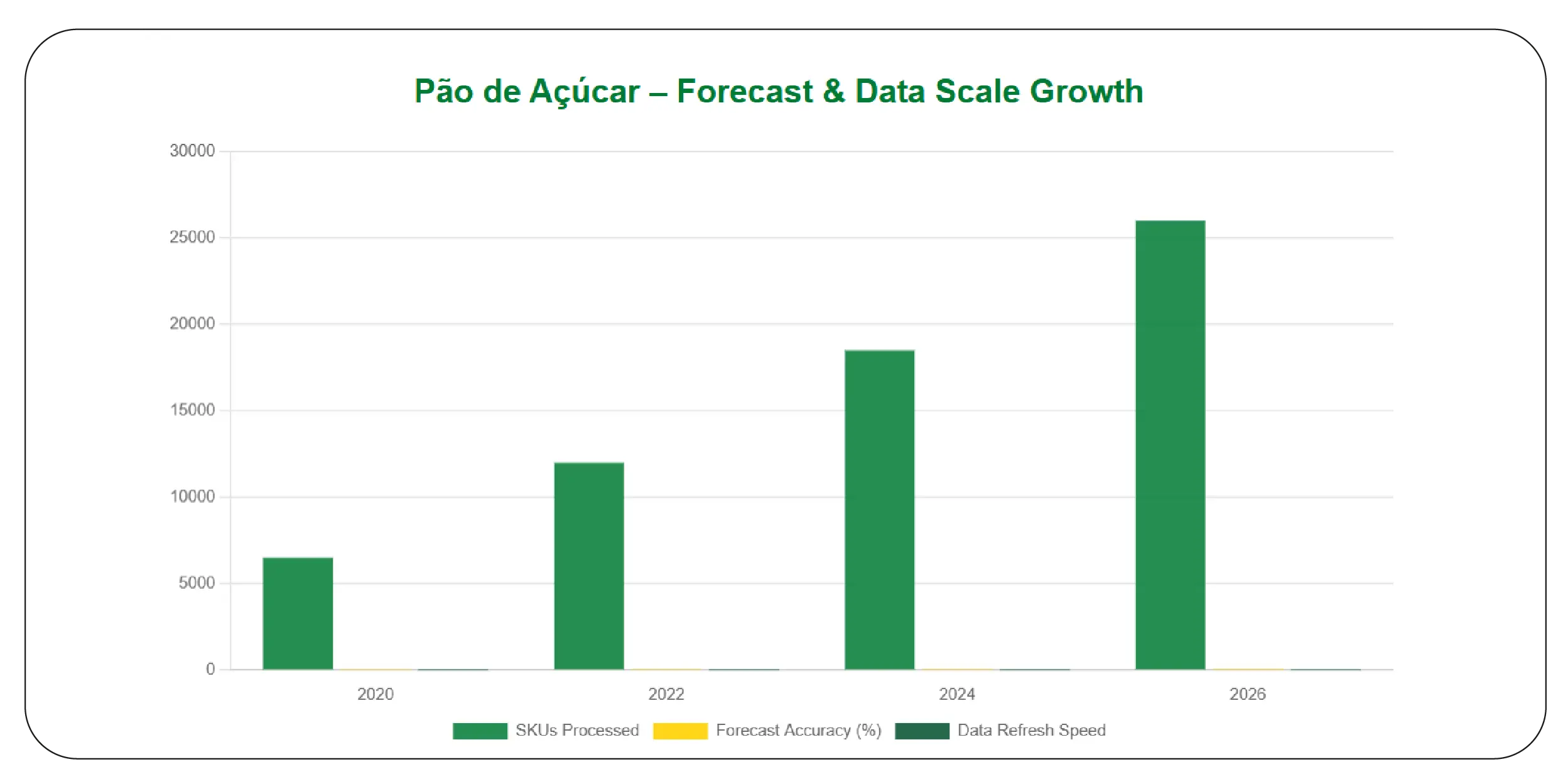
Collecting data alone is not enough—its value lies in how effectively it is structured and analyzed. Using a Web Data Intelligence API, wine pricing data from Pão de Açúcar can be transformed into analytics-ready datasets that integrate seamlessly with dashboards and forecasting models. APIs ensure consistency, scalability, and automation across large SKU portfolios.
Between 2020 and 2026, API-driven data pipelines significantly improved forecasting accuracy for alcohol brands operating across multiple Brazilian states. Structured data enables deeper analysis of price bands, brand performance, and regional preferences.
| Year |
SKUs Processed |
Forecast Accuracy (%) |
Data Refresh Speed |
| 2020 |
6,500 |
68% |
Daily |
| 2022 |
12,000 |
74% |
Hourly |
| 2024 |
18,500 |
82% |
Near Real-Time |
| 2026 |
26,000 |
89% |
Real-Time |
This intelligence supports data-backed decisions across pricing, promotions, and assortment optimization.
Focusing on Premium Wine Pricing Dynamics
Understanding premium pricing requires SKU-level depth. With pão de açúcar wine price scraping, brands gain detailed visibility into how individual wine labels are positioned across regions and channels. This includes tracking vintage variations, origin-based pricing, and pack-size differentiation.
From 2020 to 2026, premium wine SKUs showed increasing price dispersion, reflecting consumer willingness to pay for perceived quality and exclusivity. Scraped data highlights how imported wines command higher margins while domestic brands compete through value positioning.
| Year |
Avg Premium SKU Count |
Avg Price Range (BRL) |
Premium Growth (%) |
| 2020 |
1,200 |
70–180 |
5% |
| 2022 |
1,750 |
75–210 |
8% |
| 2024 |
2,400 |
85–260 |
11% |
| 2026 |
3,200 |
95–320 |
15% |
Such insights allow brands to optimize portfolio mix and reinforce premium positioning.
Automating Wine Market Intelligence
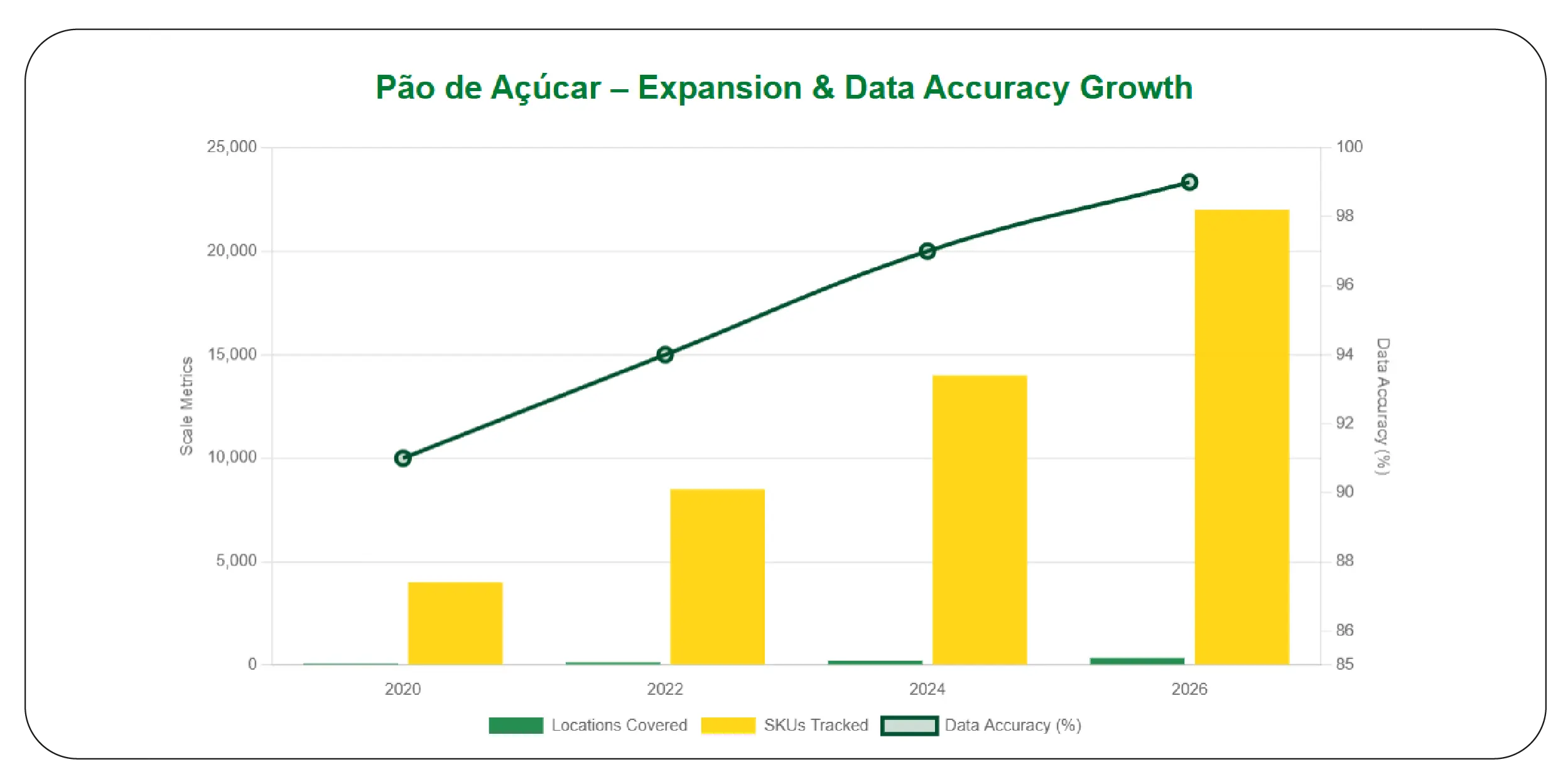
Manual tracking of hundreds of wine SKUs is inefficient and error-prone. A pão de açúcar wine data scraper automates the collection of pricing, availability, and product attributes, ensuring accuracy and scale. Automation enables continuous monitoring without operational overhead.
Between 2020 and 2026, automated scraping reduced data collection costs while improving coverage across cities and stores. Brands gained faster access to actionable insights with minimal latency.
| Year |
Locations Covered |
SKUs Tracked |
Data Accuracy (%) |
| 2020 |
85 |
4,000 |
91% |
| 2022 |
140 |
8,500 |
94% |
| 2024 |
220 |
14,000 |
97% |
| 2026 |
350 |
22,000 |
99% |
Automation ensures consistent intelligence for premium alcohol decision-making.
Building Historical and Predictive Wine Datasets
Long-term strategy requires historical context. A pão de açúcar wine price dataset combines historical pricing from 2020 onward with real-time updates, enabling trend analysis and predictive modeling. These datasets help brands forecast demand, plan promotions, and evaluate pricing elasticity.
From 2020 to 2026, historical wine datasets revealed clear seasonal spikes during holidays and gifting periods. Predictive analytics built on this data improved campaign effectiveness and reduced stockouts.
| Year |
Historical Coverage (Years) |
Promo Forecast Accuracy (%) |
Demand Prediction Lift (%) |
| 2020 |
1 |
65% |
7% |
| 2022 |
3 |
72% |
11% |
| 2024 |
5 |
81% |
16% |
| 2026 |
7 |
88% |
22% |
These datasets empower stakeholders to make informed, forward-looking decisions.
Why Choose Product Data Scrape?
Product Data Scrape delivers scalable, compliant solutions tailored for alcohol retail intelligence. With access to structured Alcohol and Liquor Dataset, brands gain deep visibility into pricing, availability, and market positioning. The platform specializes in scrape wine prices pão de açúcar initiatives, offering real-time feeds, historical datasets, and customizable extraction workflows. Businesses benefit from high accuracy, automation, and seamless integration with analytics systems, enabling faster insights and smarter decisions in Brazil’s premium wine market.
Conclusion
Brazil’s premium wine segment continues to evolve, driven by informed consumers and competitive retail dynamics. Accurate pricing intelligence is no longer optional—it is essential for sustainable growth. By leveraging structured data and automation, businesses can unlock clarity across pricing, availability, and trends.
Organizations seeking deeper market visibility can accelerate outcomes by using Extract Alcohol & Liquor Price Data solutions built for scale and precision. Partner with Product Data Scrape today to scrape wine prices pão de açúcar and transform wine market data into actionable growth intelligence!
FAQs
1. Why is wine price scraping important in Brazil?
Wine price scraping reveals real-time pricing, discounts, and availability trends, helping brands stay competitive in Brazil’s fast-growing premium alcohol market.
2. Is scraping pricing data from retailers legal?
Yes, when collecting publicly available data in compliance with platform terms and regulations, scraping supports ethical market intelligence.
3. How often can wine prices be updated?
Prices can be tracked daily, hourly, or in real time depending on business needs and data infrastructure.
4. Can historical wine pricing data support forecasting?
Yes, historical datasets help predict demand, optimize promotions, and understand seasonal pricing behavior.
5. How does Product Data Scrape support alcohol analytics?
Product Data Scrape provides automated scraping, APIs, and custom datasets designed for scalable alcohol and liquor market intelligence.



 USA
USA
 EMAIL
EMAIL
 PHONE
PHONE










.webp)