Quick Overview
The client, a leading consumer electronics brand, approached us to enhance their market intelligence workflow. Operating in a fast-moving industry, they needed rapid insights to stay ahead of competitors. Over a 10-week engagement, Product Data Scrape delivered a scalable system to Scrape Bing Web Search Results and complementary capabilities to Scrape Data From Any Ecommerce Websites, ensuring unified, real-time data visibility.
Key Impact Metrics:
- 64% faster research turnaround
- 41% improved data accuracy
- 3x increase in automated insight generation
The Client
Our client is a top-tier consumer electronics manufacturer competing in a market shaped by volatile pricing, rapidly changing product lines, and aggressive competitor campaigns. With constant pressure to innovate and adapt, the company needed a stronger data foundation to support strategic decision-making. Traditional research methods relied heavily on manual tracking, leading to slow reporting cycles and inconsistent insights.
Before partnering with us, their research team relied on fragmented tools and outdated scraping scripts that often broke with every platform change. Competitor monitoring, product trend analysis, and campaign tracking took days instead of hours. This meant missed opportunities and delayed reactions to market shifts.
Recognizing the urgency to modernize, they sought a more reliable and automated solution. The primary requirement was to Build the Search Scraper that could consistently gather real-time market signals from Bing and e-commerce platforms while integrating seamlessly with their existing analytics dashboards.
Our solution enabled them to transform raw, unstructured data into actionable intelligence, providing clarity in a highly competitive space. With an automated workflow, their team could focus more on strategic decisions rather than manual data collection.
Goals & Objectives
The client aimed to create a unified intelligence system capable of rapid, large-scale data collection. Their business goal was to increase research scalability, improve response speed to competitor activity, and enhance the accuracy of insights. They also needed a robust pipeline powered by Web Scraping in Python to ensure sustainable long-term performance.
The project focused on automating research operations, integrating diverse data sources, and enabling real-time analytics. Core objectives included:
- Develop automated scraping infrastructure
- Centralize SERP and product-data feeds
- Enable near-instant reporting and dashboard integration
- Ensure adaptive scraping methods that withstand frequent site changes
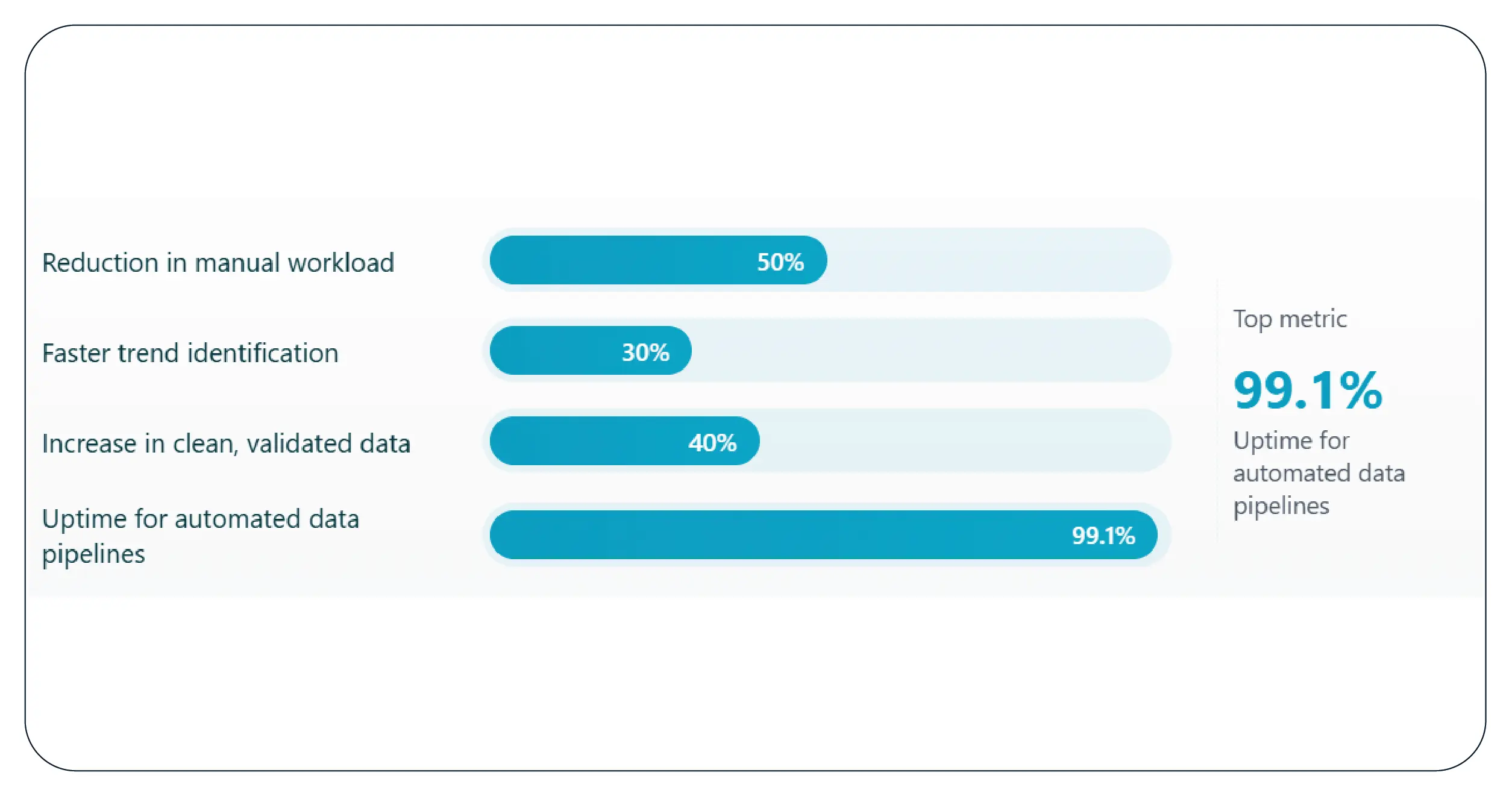
50% reduction in manual workload
30% faster trend identification
40% increase in clean, validated data
99.1% uptime for automated data pipelines
These clear targets ensured alignment between business strategy and technical execution, providing measurable performance improvements across both data collection and analytics workflows.
The Core Challenge
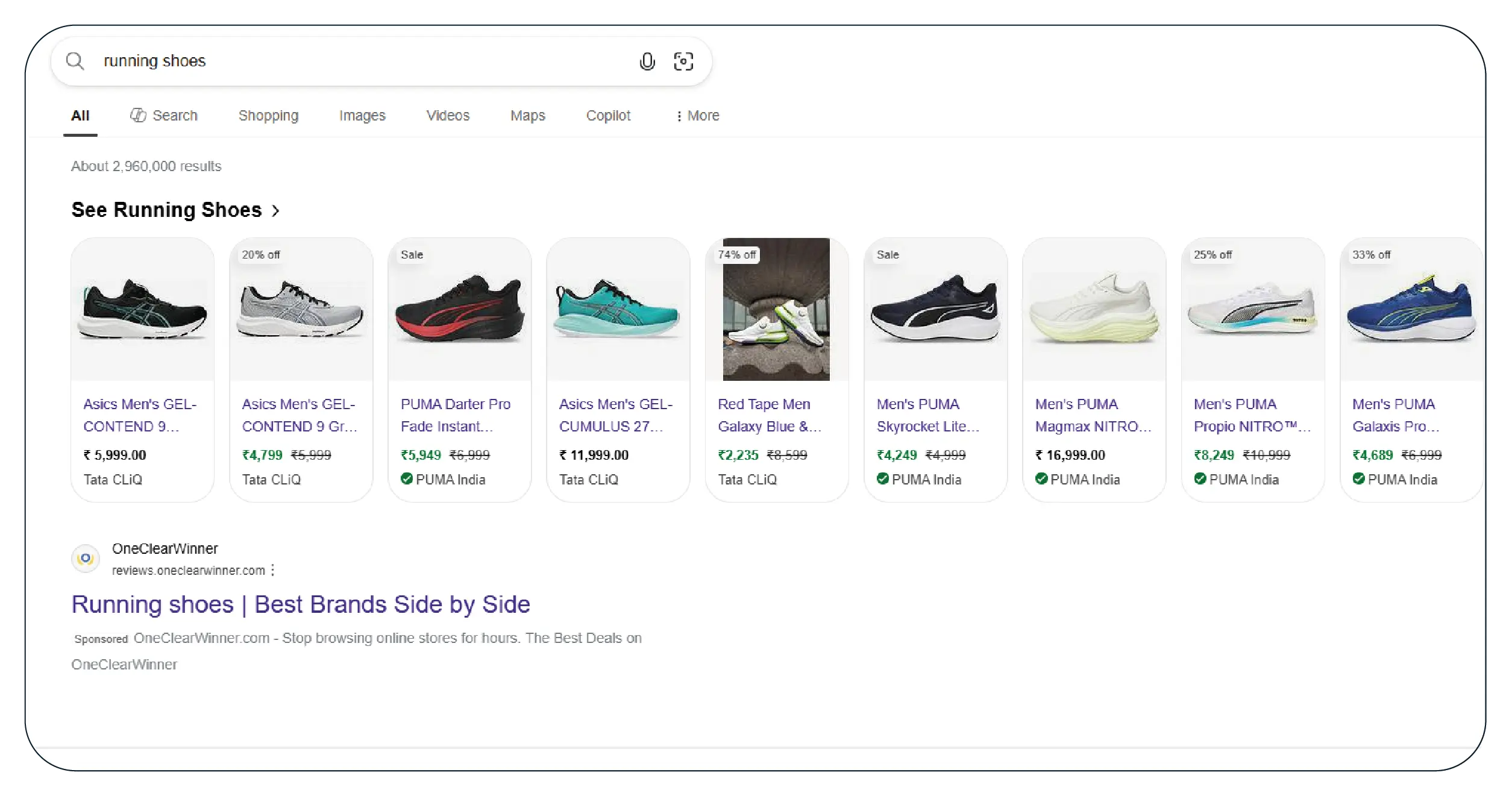
The client’s existing research workflow suffered from multiple operational bottlenecks. Manual SERP scanning, inconsistent competitor monitoring, and time-consuming product comparisons led to slow and error-prone reporting. Their internal scripts frequently crashed due to layout changes, causing unreliable market signals.
Performance issues also emerged when scaling data requirements. High-volume scraping often slowed down processes, delaying critical insights needed for campaigns and pricing decisions. Data inconsistencies further complicated reporting, making it difficult for decision-makers to trust insights.
To ensure a more complete data intelligence system, the client also needed the ability to Extract Bing Image Results, which was essential for visual trend analysis, branding audits, and creative benchmarking.
These challenges made it nearly impossible to maintain a competitive edge in a market where timing plays a crucial role. What they needed was a resilient, automated, and adaptive scraping architecture capable of handling diverse data types at scale.
Our Solution

Our team designed a comprehensive, multi-phase approach to help the client overhaul their entire market research pipeline. The solution began with a detailed audit of their existing workflows, identifying key weaknesses in their manual processes and unstable scripts.
Phase 1 – Infrastructure Development
We built a powerful scraping core with adaptive rules, rotating proxies, and scalable logic. This not only stabilized SERP extraction but also created a reliable environment to Scrape Bing Shopping Results for competitive product listings, price variations, and promotional trends.
Phase 2 – Multi-Source Data Integration
We synchronized Bing SERP data with e-commerce datasets, competitor websites, and third-party APIs. This allowed the system to unify data points such as product descriptions, pricing, launch timelines, and brand visibility into a single dashboard.
Phase 3 – Automation & Real-Time Processing
To reduce manual dependency, we implemented automated scheduling, smart retries, and resilience mechanisms that could self-adjust during layout changes. The system converted raw HTML into structured insights using NLP-driven processing, enabling instant comparisons and trend identification.
Phase 4 – Dashboard & Reporting Integration
We integrated real-time feeds directly into the company’s BI tools. The insights were accessible through interactive dashboards, enabling teams to instantly spot shifts in competitor positioning, pricing strategies, and emerging trends.
This phased, end-to-end solution empowered the client with sustainable automation, higher accuracy, and faster insight generation than ever before.
Results & Key Metrics
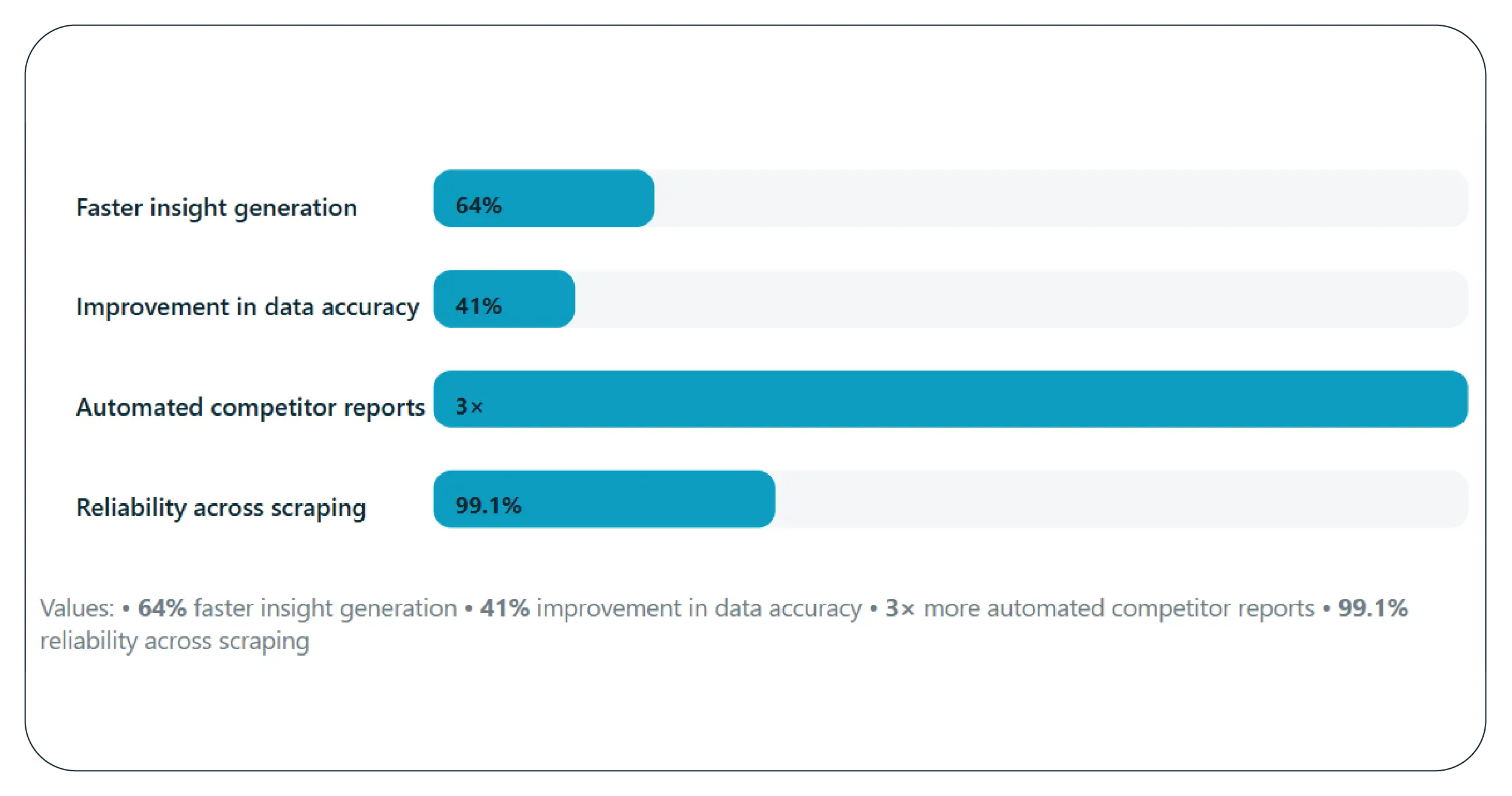
64% faster insight generation
41% improvement in data accuracy
3x more automated competitor reports
99.1% reliability across all scraping operations
SERP extraction enhanced through Scrape Bing News Articles to support trend monitoring
Results Narrative
The unified system transformed the client’s research operations. Automated scraping ensured continuous monitoring of competitors, while cross-platform data integration reduced research time dramatically. Teams could now react instantly to market changes, launch optimized campaigns, and improve product positioning. With accurate and structured insights, decision-makers gained stronger confidence in data-driven strategies. This upgrade positioned the company as a market leader in rapid intelligence gathering.
What Made Product Data Scrape Different?
Product Data Scrape stood out because of its adaptable scraping frameworks, resilient infrastructure, and intelligent automation techniques. Our proprietary technology combined large-scale data extraction with precise monitoring capabilities. Tools like Instant Data Scraper enabled efficient collection, while robust architecture supported the ability to Scrape Bing Web Search Results seamlessly under high-volume conditions. The combination of automation, advanced transformation logic, and scalable system design ensured unmatched reliability and speed for the client.
Client’s Testimonial
"Working with Product Data Scrape completely transformed our market research operations. Their Bing scraping expertise allowed us to monitor competitors, trends, and pricing patterns with incredible accuracy. What previously took days now takes minutes, and our teams can finally rely on real-time insights. This partnership significantly elevated our strategic decision-making. Their professionalism, technical excellence, and understanding of our business challenges were truly exceptional."
— Senior Market Intelligence Manager
Conclusion
The project proved how a well-designed data pipeline can reshape the speed and accuracy of market intelligence. By combining automation, real-time analytics, and robust scraping technology, the client now operates with a significant competitive edge. Our work empowered them to respond faster, make smarter decisions, and stay ahead of industry shifts. With tools like Building Your First Bing Scraper and powerful SERP intelligence workflows, their team continues to Scrape Bing Web Search Results at scale, supporting long-term growth and innovation.
FAQs
1. What was the main purpose of this project?
To help the client automate and scale their market research using real-time Bing SERP and product data.
2. How did Product Data Scrape improve data accuracy?
By implementing automated validation layers, consistent formatting rules, and multi-source comparison logic.
3. What industries benefit from Bing SERP scraping?
Any industry where competitor tracking, pricing insights, or trend analysis is essential—especially e-commerce and consumer goods.
4. Does the system support large-scale, continuous scraping?
Yes, the architecture is designed for high-frequency, high-volume scraping with resilience against layout changes.
5. Can these insights integrate with existing BI tools?
Absolutely. The entire solution is built for easy integration with dashboards, analytics platforms, and reporting tools.


 Singapore
 EMAIL
EMAIL
 PHONE
PHONE










.webp)