Introduction
The rise of e-commerce has transformed how brands understand their markets. With Shopee emerging as a dominant marketplace across Southeast Asia, businesses need real-time insights to stay competitive. Using tools to scrape Shopee product information for analysis allows companies to gather crucial data like pricing trends, product categories, sales volumes, promotions, ratings, and reviews.
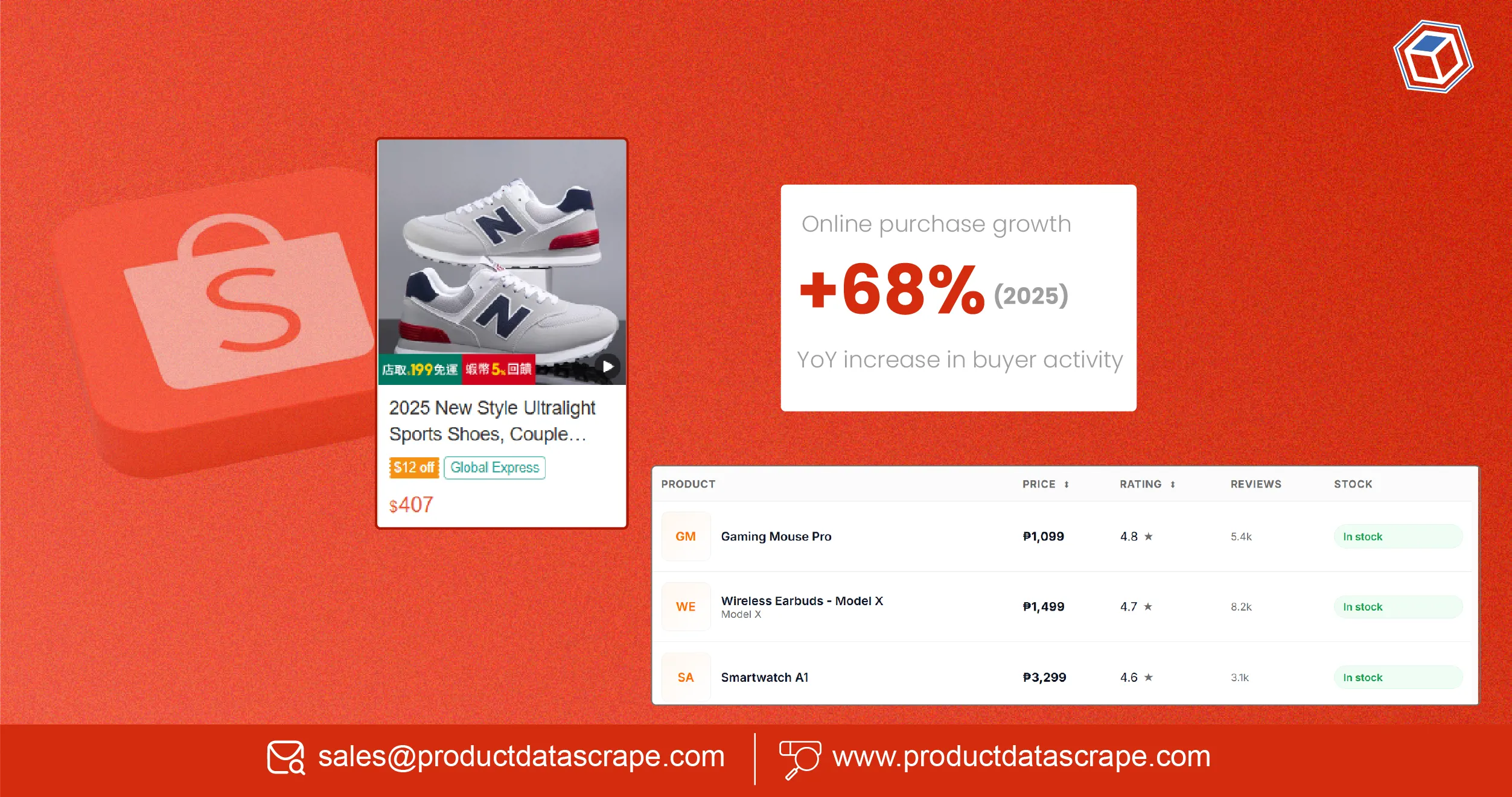
Access to this intelligence empowers brands to track consumer behavior, optimize listings, benchmark competitors, and identify emerging product trends. From data scientists to marketing teams, automated scraping reduces manual effort, enhances accuracy, and provides actionable intelligence. In 2025, with online purchases expected to grow 68%, leveraging Shopee analytics is no longer optional—it’s essential for businesses aiming to scale efficiently.
Optimizing Analytics With Real-Time Product Details
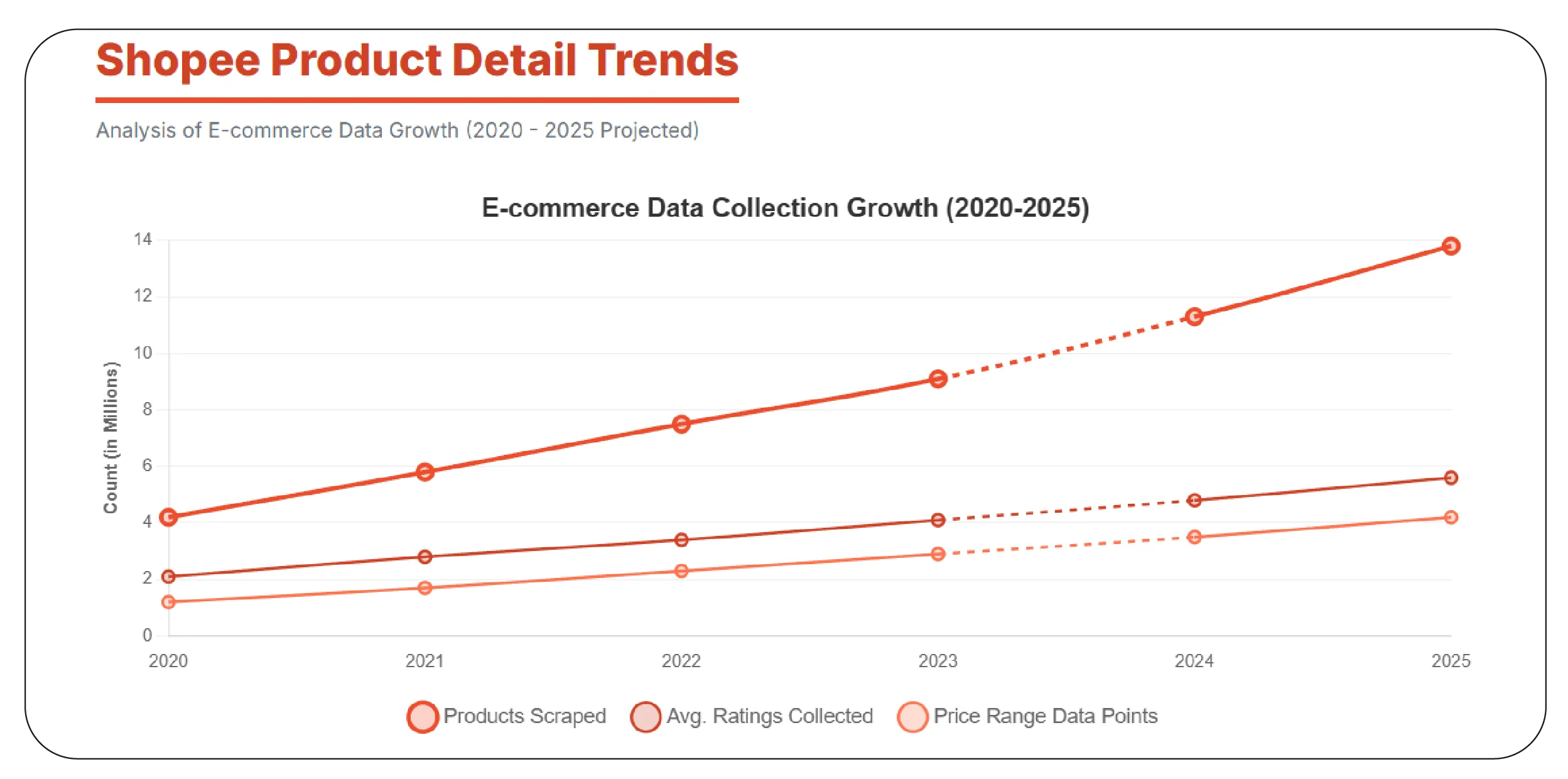
Accurate analytics begins with quality data. By using a scrape Shopee product details for analytics workflow, businesses can track product titles, descriptions, prices, stock availability, and user ratings. This data forms the foundation for market research, demand forecasting, and competitive benchmarking.
For instance, tracking popular categories such as electronics, fashion, and home appliances can reveal emerging trends. Automated scraping captures product updates in real-time, enabling analytics dashboards to provide actionable insights without manual entry.
Shopee Product Detail Trends (2020–2025)
| Year |
Products Scraped (Millions) |
Avg. Ratings Collected |
Price Range Data Points |
| 2020 |
4.2 |
2.1M |
1.2M |
| 2021 |
5.8 |
2.8M |
1.7M |
| 2022 |
7.5 |
3.4M |
2.3M |
| 2023 |
9.1 |
4.1M |
2.9M |
| 2024 |
11.3 |
4.8M |
3.5M |
| 2025 |
13.8 (Projected) |
5.6M |
4.2M |
This data highlights a steady rise in listings and rating collection, emphasizing the importance of real-time scraping for analytics.
Driving Product Research Through Comprehensive Data
Market research becomes more precise with Shopee data scraping for product research. Brands can monitor competitors’ listings, identify top-selling SKUs, analyze pricing strategies, and track seasonal trends.
By aggregating historical and real-time product data, businesses can compare market performance over time. For example, tracking fashion product launches in Q1 versus Q4 allows companies to optimize inventory and marketing campaigns.
Shopee Product Research Metrics (2020–2025)
| Year |
Competitor Listings Tracked |
Avg. Monthly Price Changes |
Product Launch Insights |
| 2020 |
18,500 |
120 |
560 |
| 2021 |
24,700 |
210 |
780 |
| 2022 |
31,200 |
280 |
910 |
| 2023 |
37,900 |
340 |
1,020 |
| 2024 |
45,500 |
420 |
1,180 |
| 2025 |
54,200 (Projected) |
500 |
1,350 |
These trends demonstrate the value of scraping for competitive product research.
Price & Detail Extraction for Better Market Strategy
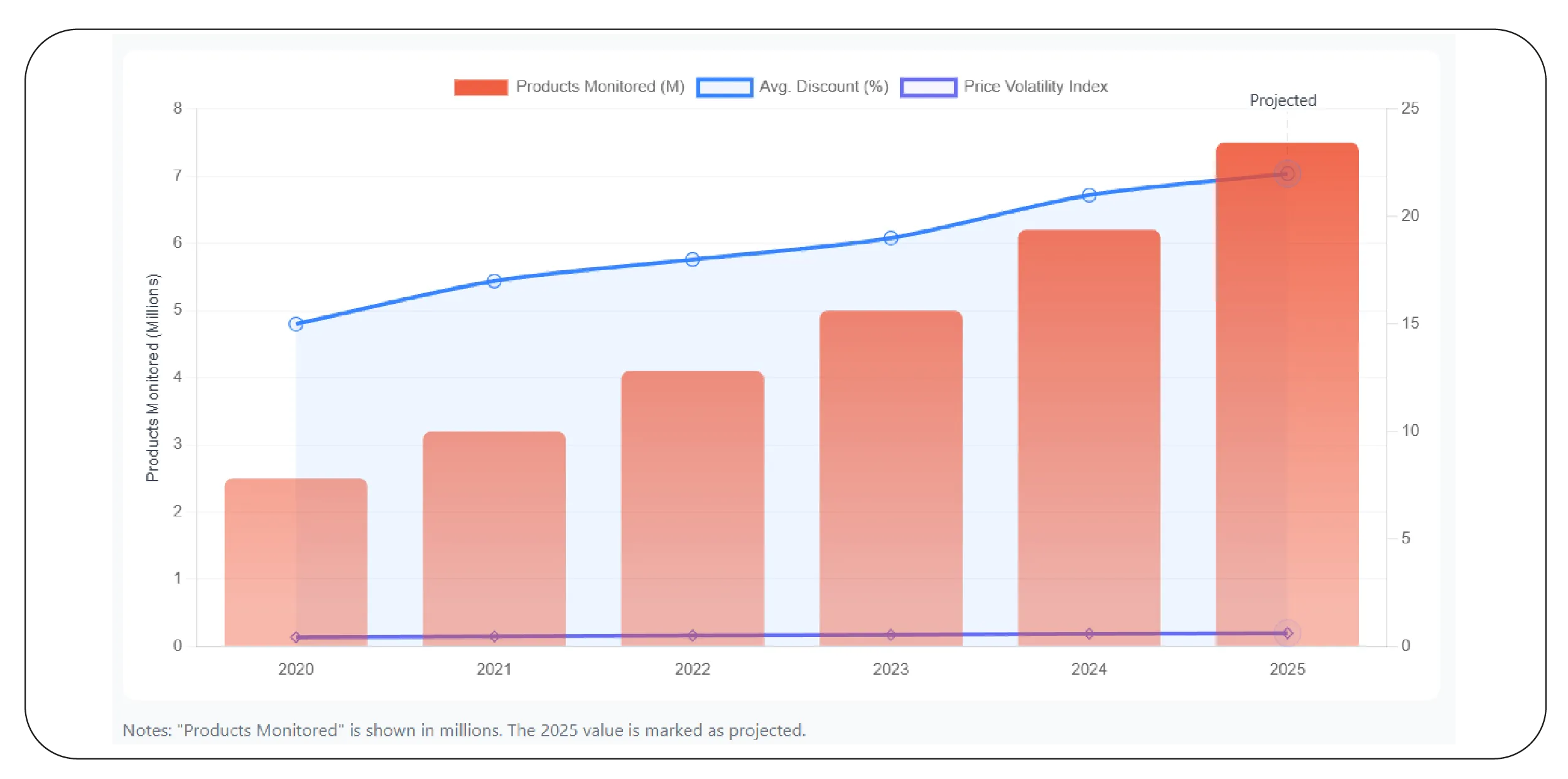
Accurate pricing insights are critical for effective market strategies. Businesses can extract Shopee prices and product details to understand consumer spending, track discount patterns, and analyze competitor pricing.
Scraping allows monitoring of flash sales, bundle offers, and historical price fluctuations, enabling brands to identify optimal pricing strategies. Product categories such as electronics and cosmetics often experience rapid price changes, making real-time data extraction crucial.
Shopee Price Monitoring Trends (2020–2025)
| Year |
Products Monitored |
Avg. Discount (%) |
Price Volatility Index |
| 2020 |
2.5M |
15% |
0.42 |
| 2021 |
3.2M |
17% |
0.46 |
| 2022 |
4.1M |
18% |
0.50 |
| 2023 |
5.0M |
19% |
0.53 |
| 2024 |
6.2M |
21% |
0.58 |
| 2025 |
7.5M (Projected) |
22% |
0.61 |
Gaining Seller Intelligence for Strategic Decisions
Analyzing seller activity helps brands identify market gaps and potential partnerships. By leveraging scrape Shopee product data for seller insights, businesses can track seller ratings, fulfillment speed, active SKUs, and promotional behavior.
This information is particularly valuable for B2B collaborations and identifying high-performing sellers in niche categories. Historical analysis from 2020 to 2025 shows trends in seller expansion and product diversification.
Seller Insights Trends (2020–2025)
| Year |
Sellers Tracked |
Avg. Active SKUs |
Seller Rating Avg |
| 2020 |
8,500 |
120 |
4.2 |
| 2021 |
10,200 |
140 |
4.3 |
| 2022 |
12,800 |
160 |
4.4 |
| 2023 |
15,600 |
185 |
4.5 |
| 2024 |
18,900 |
210 |
4.6 |
| 2025 |
22,400 |
235 |
4.7 |
Comprehensive E-Commerce Scraping Across Platforms
E-commerce data isn’t limited to Shopee. Brands can Scrape Data From Any Ecommerce Websites to compare pricing, catalog breadth, product features, and reviews. Multi-platform scraping offers insights into cross-market trends and consumer preferences.
Historical data between 2020–2025 shows steady growth in the number of e-commerce platforms tracked, highlighting the increasing importance of multi-channel data.
Multi-Platform E-Commerce Data (2020–2025)
| Year |
Platforms Tracked |
Products Monitored |
Avg. Customer Reviews Collected |
| 2020 |
5 |
1.2M |
0.5M |
| 2021 |
7 |
2.1M |
0.8M |
| 2022 |
9 |
3.4M |
1.2M |
| 2023 |
12 |
5.0M |
1.6M |
| 2024 |
14 |
6.8M |
2.2M |
| 2025 |
17 (Projected) |
8.5M |
2.8M |
Building Actionable Datasets for Analysis
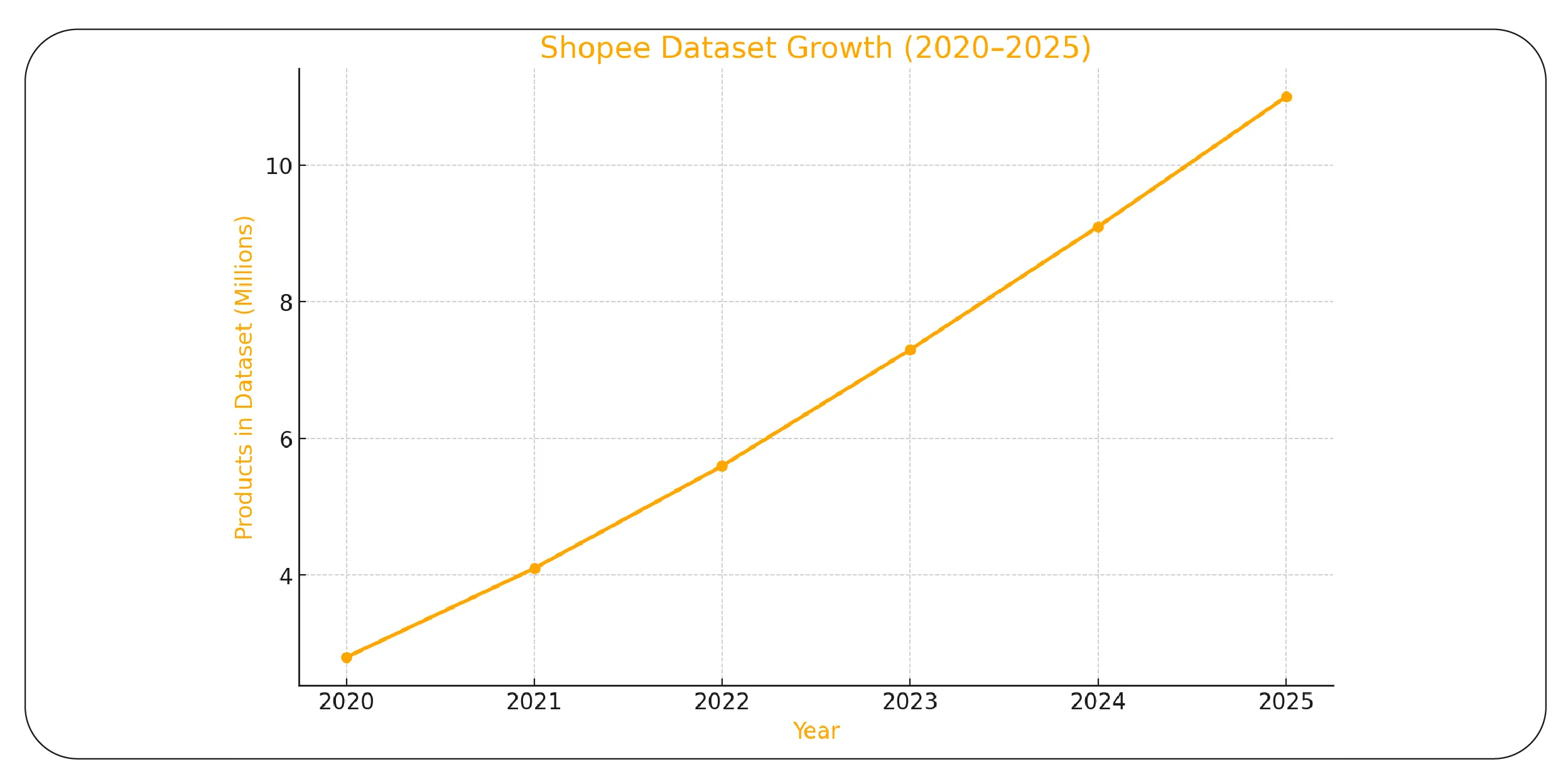
A structured Shopee E-commerce Product Dataset is essential for analytics, reporting, and trend identification. Scraping creates datasets including product ID, name, category, price, seller info, ratings, and stock.
Data scientists can use these datasets to perform time-series analysis, demand forecasting, sentiment evaluation, and competitive benchmarking. Historical tracking between 2020–2025 reveals rising product diversity and increasing online activity.
Shopee Dataset Growth (2020–2025)
| Year |
Products in Dataset |
Categories Covered |
Avg. Ratings Collected |
| 2020 |
2.8M |
150 |
1.2M |
| 2021 |
4.1M |
180 |
1.7M |
| 2022 |
5.6M |
210 |
2.2M |
| 2023 |
7.3M |
240 |
2.8M |
| 2024 |
9.1M |
270 |
3.5M |
| 2025 |
11.0M (Projected) |
300 |
4.2M |
Why Choose Product Data Scrape?
Product Data Scrape offers enterprise-grade scraping solutions with robust APIs for Shopee and other platforms. Using the Shopee Taiwan Product Data API, businesses can access structured, real-time product data, optimized for analytics and competitive research.
Clients benefit from customizable extraction, automated updates, cloud-based delivery, and integration-ready formats. Whether it’s tracking prices, monitoring sellers, or building comprehensive product datasets, Product Data Scrape simplifies large-scale data collection and ensures accuracy.
Conclusion
By leveraging tools that Extract Shopee E-Commerce Product Data, brands can analyze pricing trends, consumer sentiment, and market shifts efficiently. Automating data collection to scrape Shopee product information for analysis empowers businesses to make data-driven decisions, optimize product strategies, and outperform competitors.
Start using Product Data Scrape today to turn Shopee data into actionable intelligence and gain a competitive edge in 2025.
FAQs
1. What data can I extract using Shopee scraping?
You can extract product names, prices, stock, seller info, ratings, reviews, promotions, and category details for analytics, competitor tracking, and demand forecasting.
2. Is scraping Shopee legal?
Yes, scraping publicly available information for analytics is legal if used responsibly, avoiding personal user data and complying with platform policies.
3. How often should Shopee data be updated?
Ideally daily or weekly, depending on market dynamics, product launches, and price fluctuations to ensure accurate trend analysis and competitive insights.
4. Can I combine Shopee scraping with other e-commerce sites?
Yes, Product Data Scrape allows scraping multiple platforms simultaneously for cross-market comparisons, price benchmarking, and product trend identification.
5. What formats are available for scraped Shopee data?
Scraped data can be exported in CSV, JSON, Excel, or API-integrated formats suitable for analytics, dashboards, BI tools, and machine learning models.



 Singapore
 EMAIL
EMAIL
 PHONE
PHONE


.webp "thumb")
.webp "thumb")








.webp)