Quick Overview
A leading retail analytics firm partnered with Product Data Scrape to unlock real-time visibility into Walmart’s grocery marketplace. Operating in the competitive FMCG and retail intelligence industry, the client needed fast, clean, and scalable data to track dynamic assortment shifts and stock fluctuations. Over a 10-week engagement, our team implemented a solution to scrape Walmart grocery product data with Python, enabling the client to track 80% of Walmart’s bestselling SKUs, weekly inventory changes, and regional pricing variations. The outcome? Actionable insights for forecasting demand, optimizing product mix, and responding faster to competitive price shifts — all powered by automated, Python-driven pipelines.
The Client
The client is a North American retail analytics provider helping grocery brands boost sales through pricing intelligence and competitive research. Growing consumer behavior shifts, rising inflation, and omnichannel disruption meant traditional data collection methods could no longer keep up with Walmart’s pace of updates. The pressure intensified as Walmart scaled its online grocery marketplace, making it essential for brands to benchmark performance and adjust pricing strategy in real time.
Before partnering with Product Data Scrape, the client’s team relied on fragmented manual scrapers that failed during peak sales periods. These outdated systems suffered high data latency, slow crawling, and failure snapshots that compromised insight quality. This resulted in delayed price adjustments, inaccurate assortment recommendations, and lost revenue opportunities.
They needed a reliable method to web scraping walmart python and overcome site-level restrictions, dynamic content rendering, and frequent UI changes. Equally critical was the ability to automate Web Scraping Walmart Grocery Data across multiple store locations, ensuring a consistent feed of pricing, assortment, and stock information. Our engagement focused on replacing their outdated pipeline with a scalable, automated, Python-driven infrastructure capable of monitoring grocery trends at Walmart at enterprise scale.
Goals & Objectives
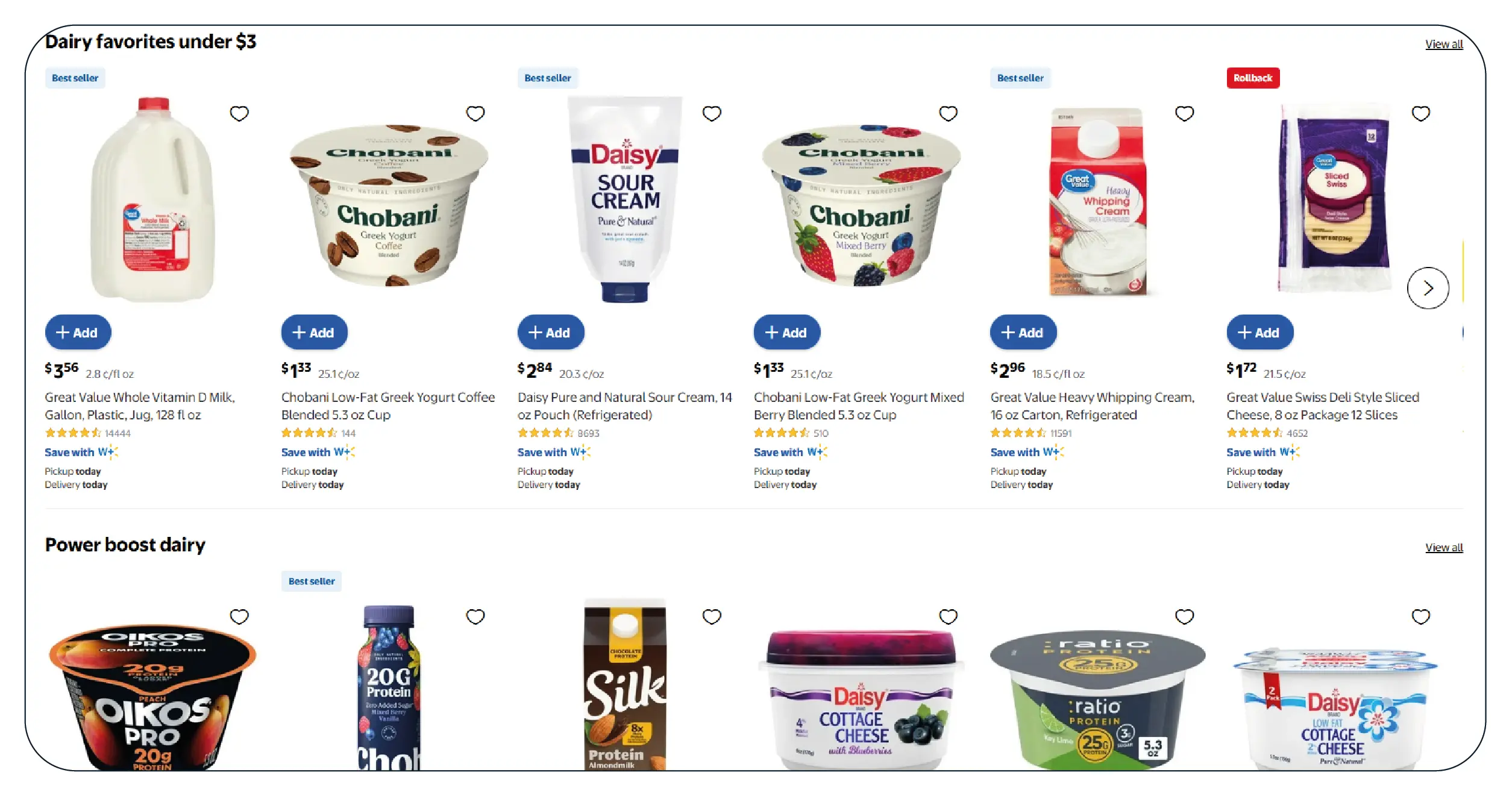
The business needed a modern, automated system to extract Walmart grocery prices and stock at scale. They sought to benchmark competitor pricing, understand regional availability, predict out-of-stock events, and dynamically adjust promotional campaigns. The leadership team wanted a system that eliminated dependency on manual effort while enhancing their competitive positioning.
Develop a highly scalable data extraction engine
Automate Walmart grocery data ingestion across thousands of SKUs
Enable real-time dashboards and historical tracking
Integrate structured datasets into the client’s analytics platforms
Prevent scraper failures caused by frontend changes and Walmart anti-bot protocols
Reduce data collection time by 70%
Improve data accuracy to 98%+
Monitor 80% of Walmart’s top-selling grocery SKUs
Capture weekly stock movements across 50+ store locations
Achieve 100% integration with internal BI tools
The Core Challenge
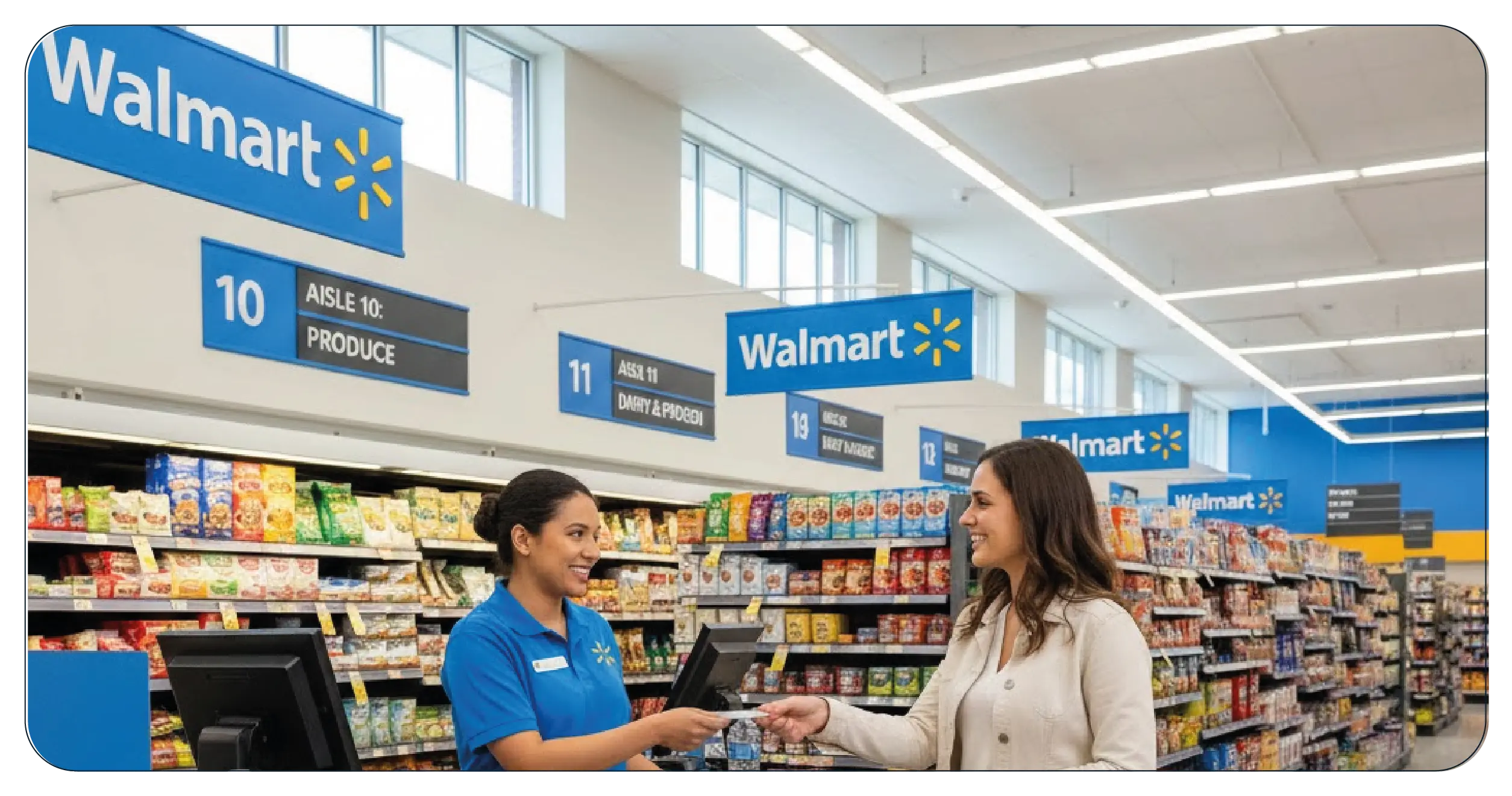
The client’s legacy systems were error-prone and incapable of scaling. Manual scripting and unstable crawlers slowed operations and introduced inaccuracies. Walmart’s constant UI changes forced scrapers to break weekly, causing delays and gaps in datasets. This issue became severe during festive and promotional seasons, where price changes could occur multiple times a day.
The evolving pricing landscape demanded a standardized grocery dataset for price intelligence capable of tracking store-specific variations, promotions, and availability patterns. However, the client lacked a structured pipeline to handle product metadata, stock information, and review signals efficiently.
Another major challenge involved API-level extraction where Walmart’s endpoint behaviors changed based on store location, authentication requirements, and request throttling. The client required expertise to Extract Walmart API Product Data, ensure scraper resilience, bypass anti-bot measures, and support massive data requests without being blocked.
In short, the challenge was not just collecting data — it was collecting reliable, real-time, structured data sustainably and at scale.
Our Solution
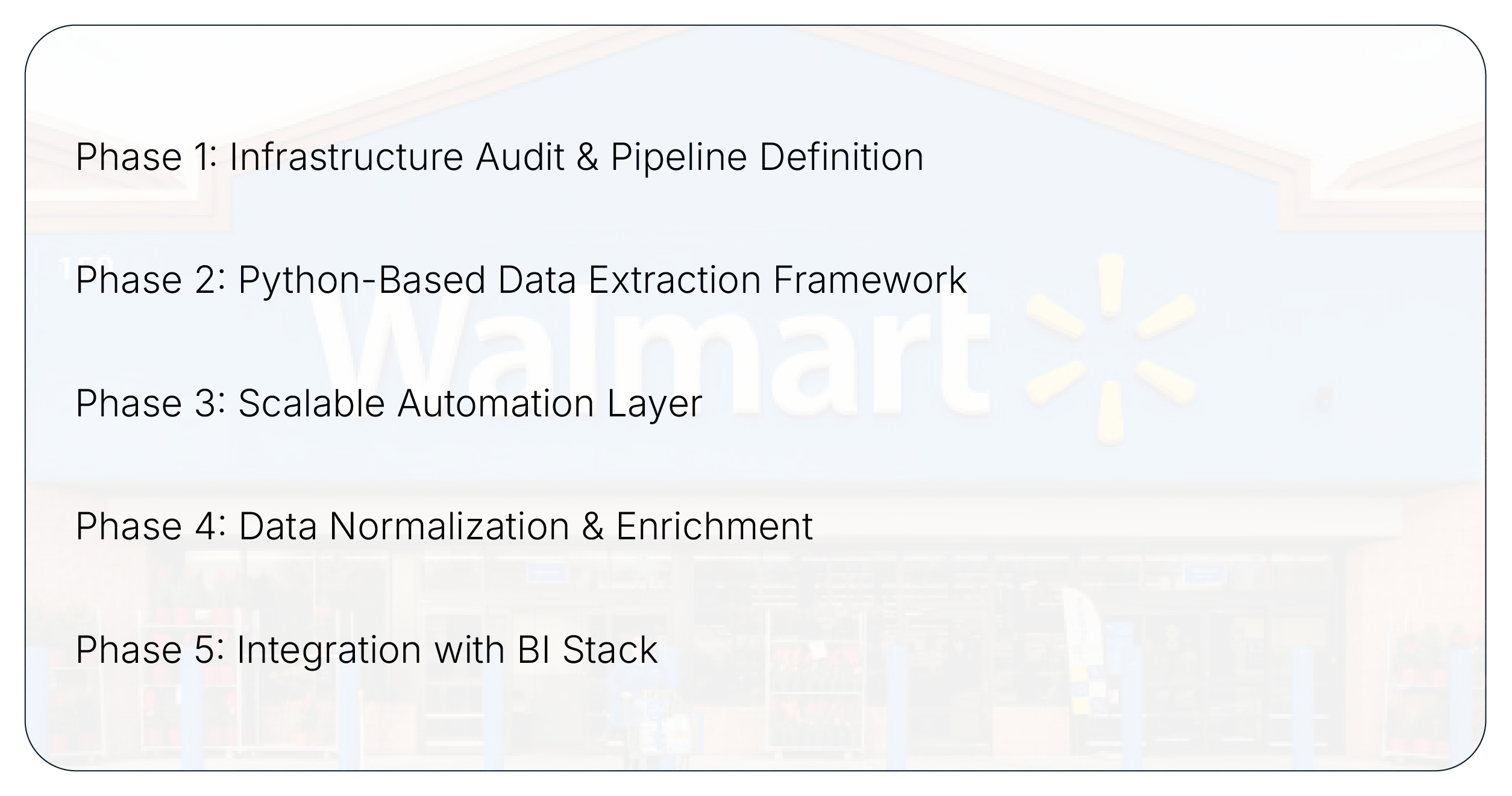
Product Data Scrape designed a multi-phase implementation strategy to resolve systemic limitations and achieve maximum data velocity. Our team began by analyzing the client’s existing workflow, identifying gaps, and designing a modern data architecture capable of supporting Walmart’s complex catalog.
Phase 1: Infrastructure Audit & Pipeline Definition
We mapped data workflows, determined SKU priority tiers, and defined ingestion intervals aligned with market volatility.
Phase 2: Python-Based Data Extraction Framework
We deployed modular Python scripts enabling the client to grocery price monitoring for retailers while supporting asynchronous requests, proxy routing, and intelligent retries. This ensured uninterrupted data flow from hundreds of Walmart endpoints.
Phase 3: Scalable Automation Layer
Integrated our scraping engine using cron-based task orchestration, browser emulation, and smart header rotation. Now the client could :scrape Walmart grocery product data with Python in real-time without throttling issues.
Phase 4: Data Normalization & Enrichment
We standardized pricing, packaging, discount structures, category groups, and stock signals. Historical change logs enabled trend forecasting and anomaly detection.
Phase 5: Integration with BI Stack
Data was piped into visualization dashboards where pricing war signals, bestseller shifts, and replenishment patterns were displayed in real-time.
The solution transformed siloed data collection into a unified intelligence infrastructure.
Results & Key Metrics
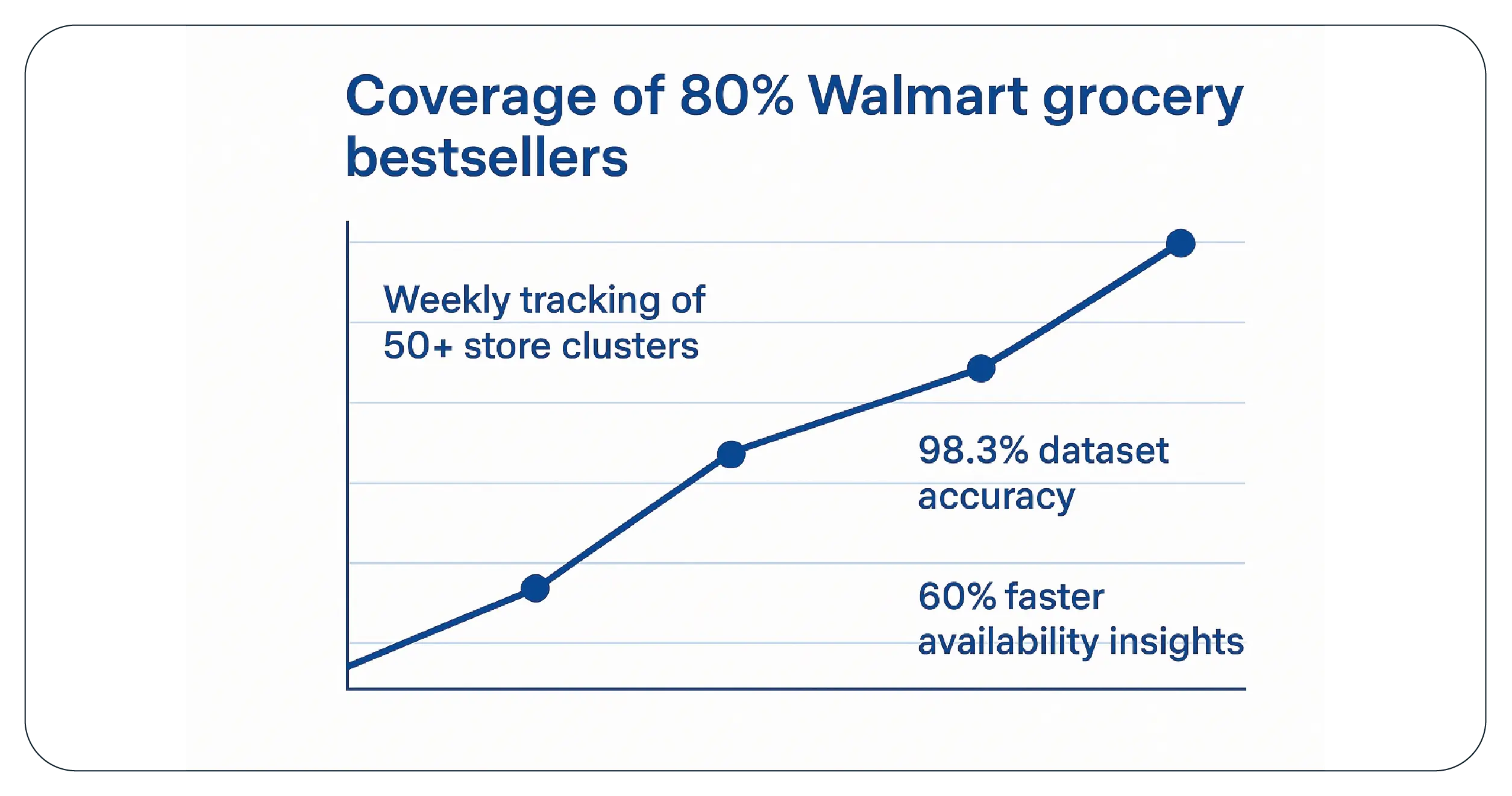
Coverage of 80% Walmart grocery bestsellers
Weekly tracking of 50+ store clusters
98.3% dataset accuracy
60% faster availability insights
Real-time bold:Store-specific pricing and stock visibility
Results Narrative
The client gained a comprehensive view of Walmart’s grocery universe, enabling faster pricing decisions, timely promotions, and optimized product mix. With real-time intelligence, retailers minimized stockouts, identified pricing anomalies, and leveraged competitive opportunities that previously remained hidden.
What Made Product Data Scrape Different?
Our proprietary scraping frameworks, automation pipelines, and structured enrichment logic delivered unmatched scalability. We built intelligence models that normalized disparate fields and extracted category-level signals at speed. By leveraging our domain expertise, Product Data Scrape empowered brands to Extract Grocery & Gourmet Food Data while avoiding scraper failures. Our differentiator lies in robust automation, clean integrations, and enterprise-grade reliability.
Client’s Testimonial
"Product Data Scrape transformed our grocery pricing and stock intelligence capabilities. Their expertise helped us automate processes we once struggled with manually. Today, we have reliable competitive signals that allow our pricing strategies to evolve with market movements."
– Senior Data Strategy Manager, Retail Analytics Firm
Conclusion
Product Data Scrape empowered the client with a scalable, reliable, and real-time intelligence engine built on the Walmart Grocery Store Dataset. By enabling the client to bold:scrape Walmart grocery product data with Python, we delivered a future-ready system that continuously fuels pricing, category, and inventory decisions. Ready to take full control of grocery data operations? Our team can help you capture, analyze, and automate Walmart insights — at scale.
Unlock actionable Walmart grocery data intelligence today!
FAQs
1. Can I monitor multiple Walmart stores simultaneously?
Yes, our system supports location-based monitoring to compare pricing differences across stores.
2. Does the solution work for different product categories?
Absolutely. It covers groceries, household items, and perishables with continuous updates.
3. Is the extracted data compatible with BI dashboards?
Yes, datasets integrate smoothly with Tableau, Power BI, and internal analytics tools.
4. How often can the data be refreshed?
You can configure update intervals from hourly to weekly, depending on SKU sensitivity.
5. What if Walmart changes its website layout?
Our adaptive scrapers rebuild automatically, ensuring uninterrupted data flow.



 Singapore
 EMAIL
EMAIL
 PHONE
PHONE


.webp "thumb")
.webp "thumb")









.webp)