Introduction
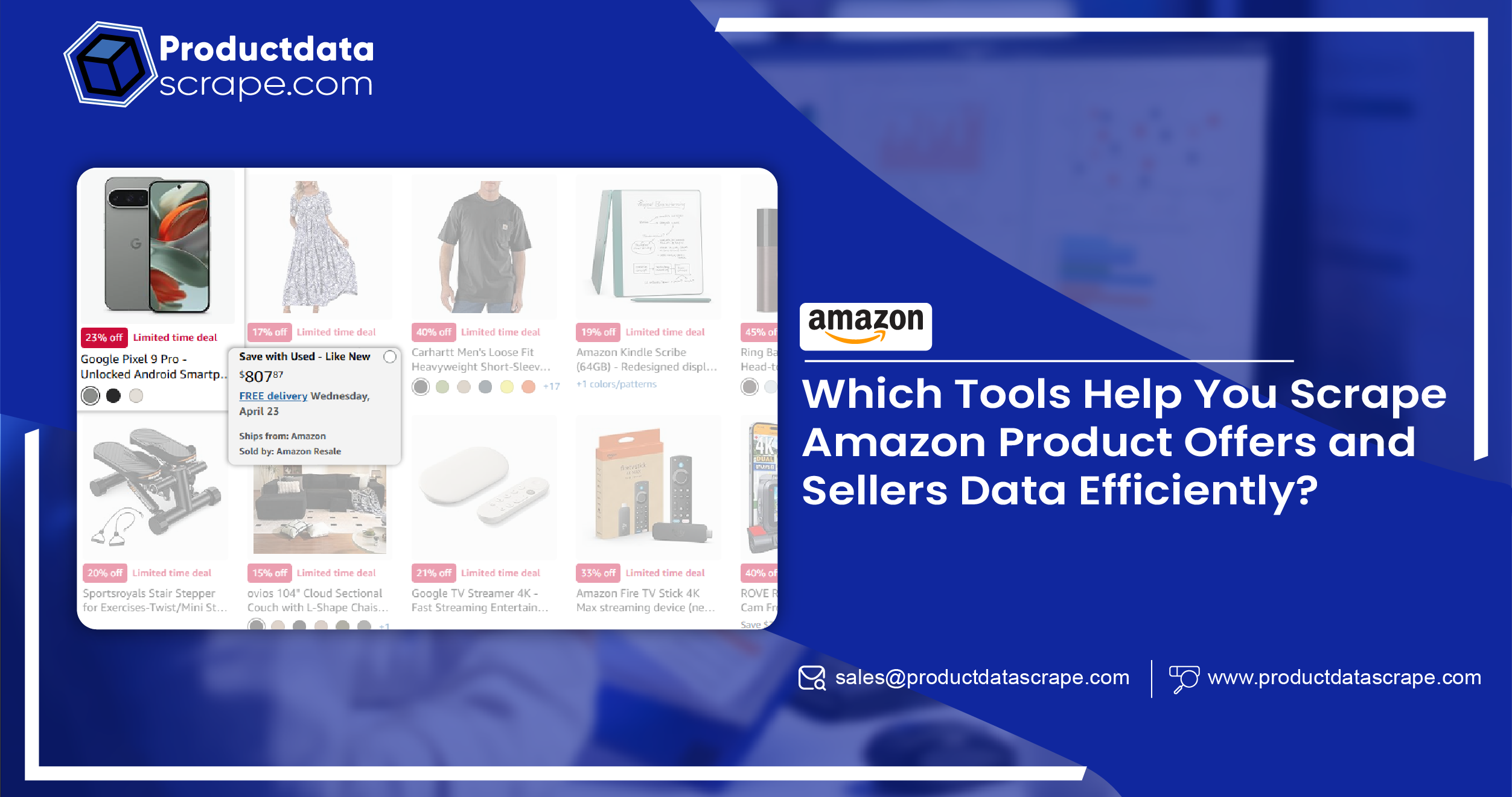
Scraping Amazon product offers and seller information can provide valuable insights for businesses, developers, and researchers. Whether you're analyzing competitor pricing, monitoring market trends, or building a price comparison tool, Scrape Amazon Product Offers and Sellers Data is crucial for staying competitive. This guide will walk you through code-based and no-code methods for extracting Amazon data, making it suitable for beginners and experienced developers. We'll cover the best tools, techniques, and practices to ensure practical and ethical data extraction. One key aspect is learning how to Extract Amazon Seller Prices Data accurately, allowing you to track and analyze pricing trends across various sellers. Additionally, we will delve into how to Scrape Amazon Seller Information, ensuring that all data is collected efficiently while staying within legal boundaries. By following the right approaches, you can access valuable data insights without facing potential legal or technical challenges, ensuring long-term success in your data-driven projects.
Why Scrape Amazon Product Offers and Sellers?
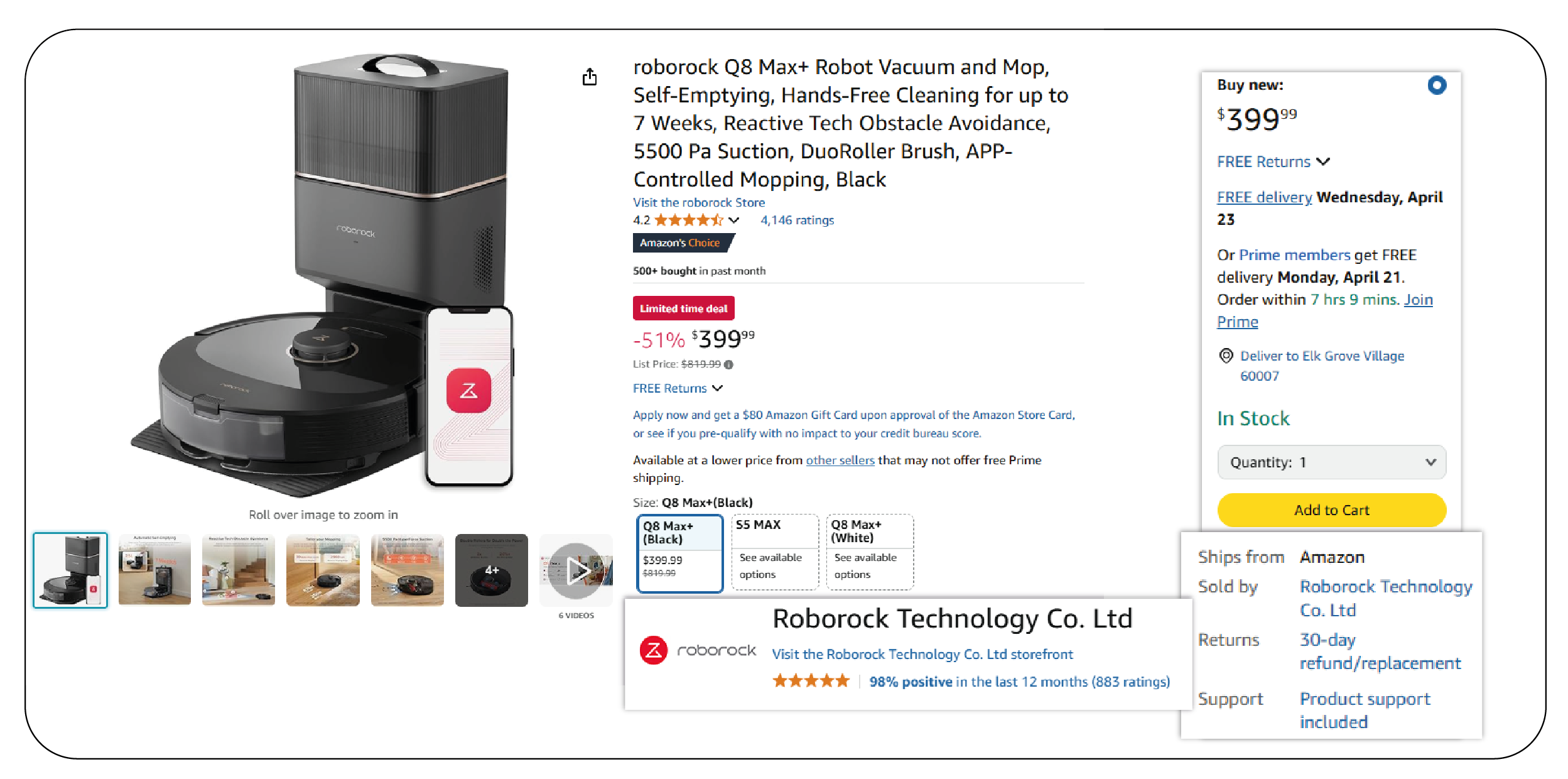
Amazon is a treasure trove of e-commerce data. Scraping product offers and seller information, Amazon is a goldmine of e-commerce data, offering valuable insights for businesses looking to gain a competitive edge. By Scraping Amazon Seller Listings Data, you can collect crucial information that helps in several areas:
- Monitor pricing trends: Track the price changes for specific products or categories over time. This allows you to understand market dynamics and adjust your pricing strategy accordingly.
- Analyze seller performance: Evaluate key metrics such as seller ratings, shipping options, and inventory availability. This data can help you understand how top-performing sellers operate and what factors contribute to their success.
- Competitor analysis: Scrape Amazon Offer Listings with Selenium Data to compare your offerings against your competitors. You can identify pricing gaps, product availability, and more, which helps refine your market positioning.
- Market research: By examining Amazon Seller Scraping API Integration data, you can identify high-demand products, emerging niches, and customer preferences. This information can guide your product development and marketing strategies.
- Build tools: Use the scraped data to create practical applications like price comparison tools or inventory management systems. With the right dataset, you can automate and optimize various business processes.
However, scraping Amazon's vast marketplace comes with challenges. Its dynamic website structure, sophisticated anti-scraping measures (like CAPTCHAs), and strict legal policies create barriers. To overcome these obstacles, you must implement strategies that include using advanced tools to Extract Amazon E-Commerce Product Data. Success requires a tailored approach that matches your skill level and resource availability.
Legal and Ethical Considerations
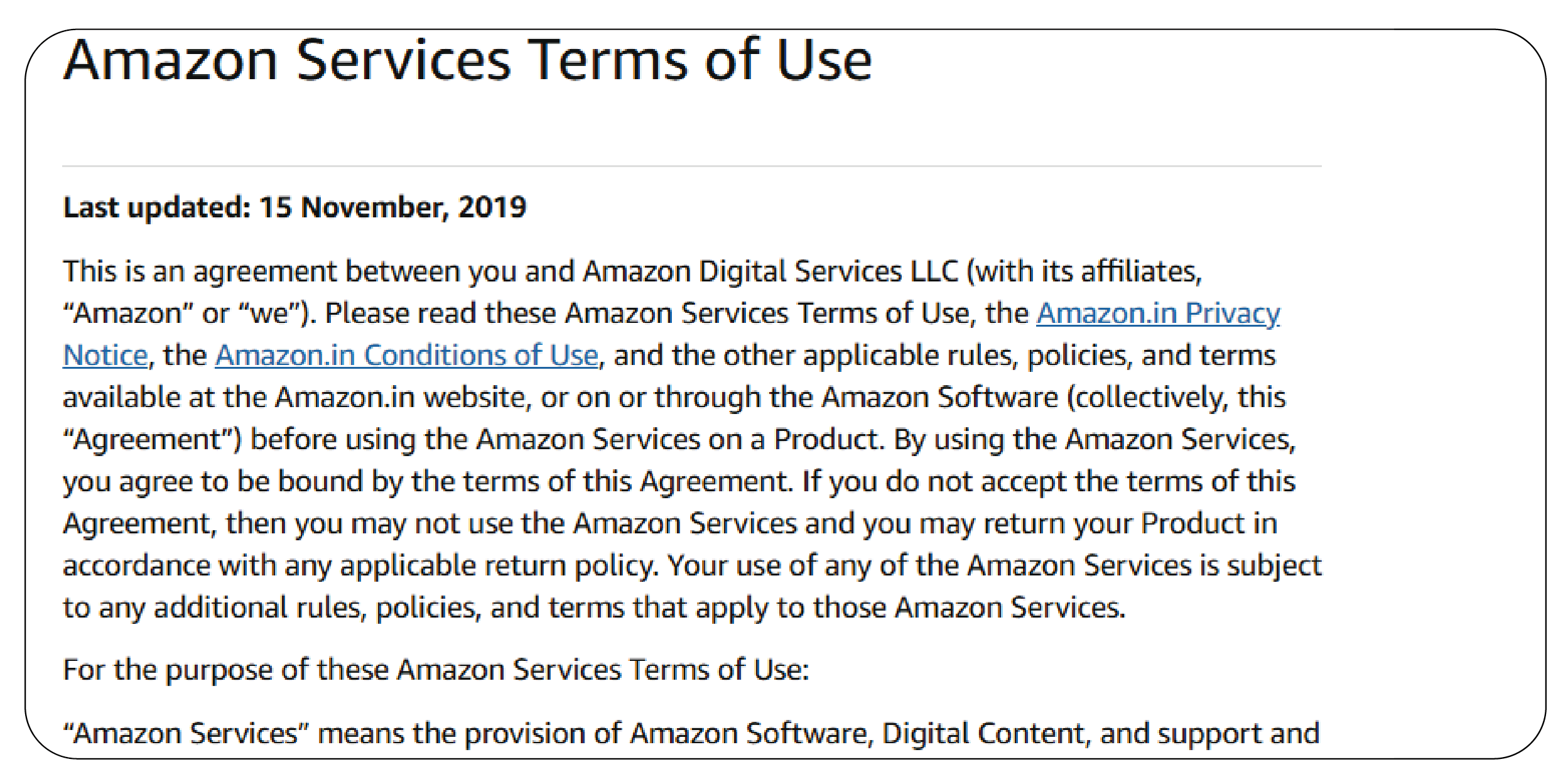
Before diving into scraping, understand the legal and ethical implications:
- Amazon's Terms of Service (ToS): Amazon prohibits scraping without permission. Violating ToS can lead to IP bans or legal action.
- Data Privacy: Avoid collecting personal information about sellers or customers.
- Rate Limiting: Excessive requests can overload Amazon's servers, violating ethical scraping practices.
- robots.txt: Look for Amazon's robots.txt file to see which pages are disallowed for scraping.
To stay compliant:
- Use Amazon's official Product Advertising API: for authorized data access (if applicable).
- Scrape publicly available data sparingly: and respect rate limits.
- Consult a legal expert: if you're building a commercial tool.
Code-Based Approach: Scraping with Python
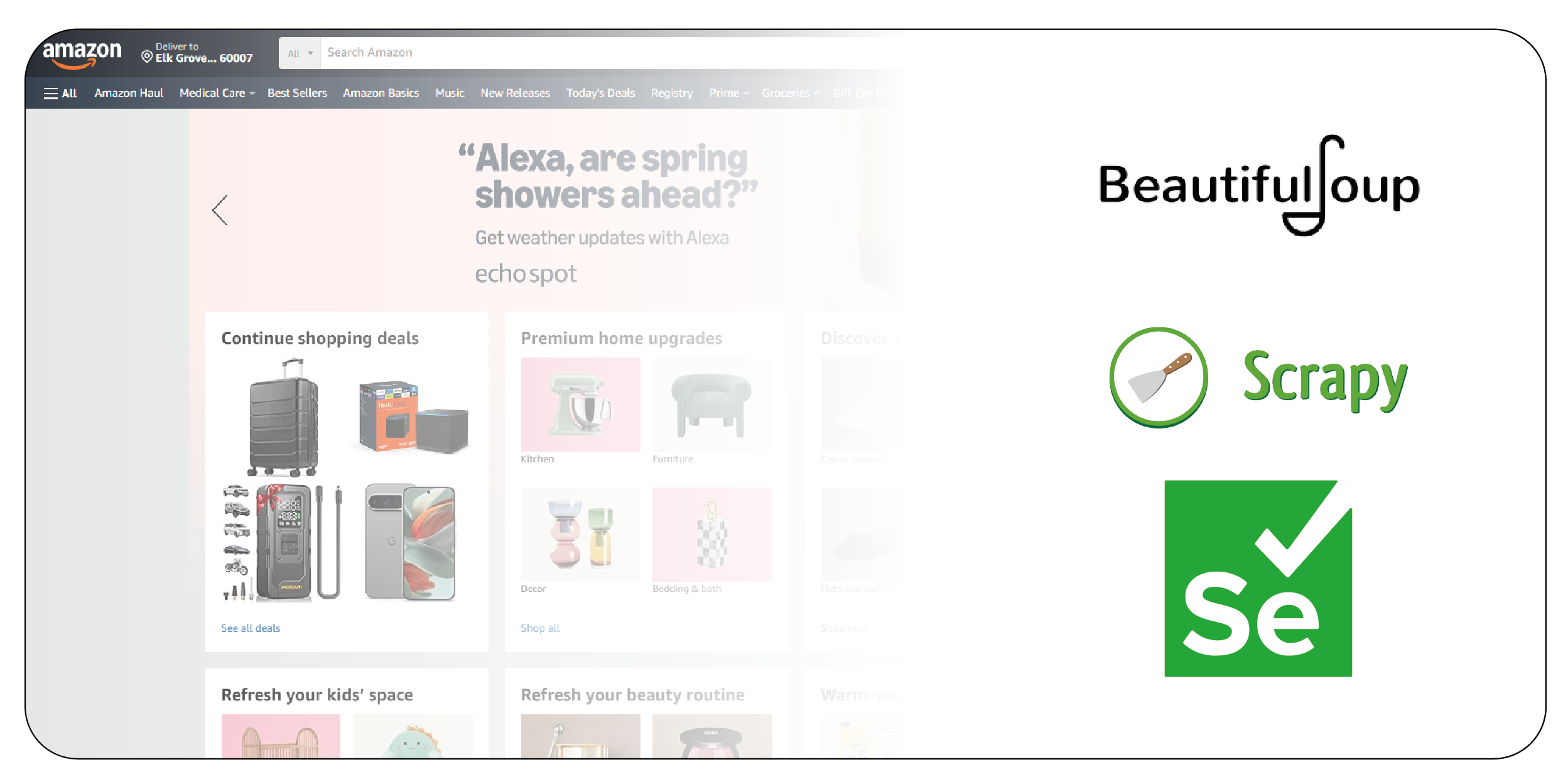
For developers skilled in coding, Python provides robust libraries such as BeautifulSoup, Scrapy, and Selenium to Scrape Amazon E-Commerce Product Data efficiently. Using libraries like BeautifulSoup and Requests, you can easily extract product offers and seller details. Combining these tools allows you to navigate Amazon's complex structure and gather valuable insights. Whether you're looking to Scrape Amazon ecommerce Product Data for pricing trends or competitor analysis, this approach allows for streamlined data extraction. With the proper script, you can automate the process, gather vast datasets, and leverage them for various business strategies.
Prerequisites
- Python 3.x installed.
- Libraries: Install via pip:
pip install requests beautifulsoup4
Basic understanding of HTML/CSS selectors.
Sample Python Script
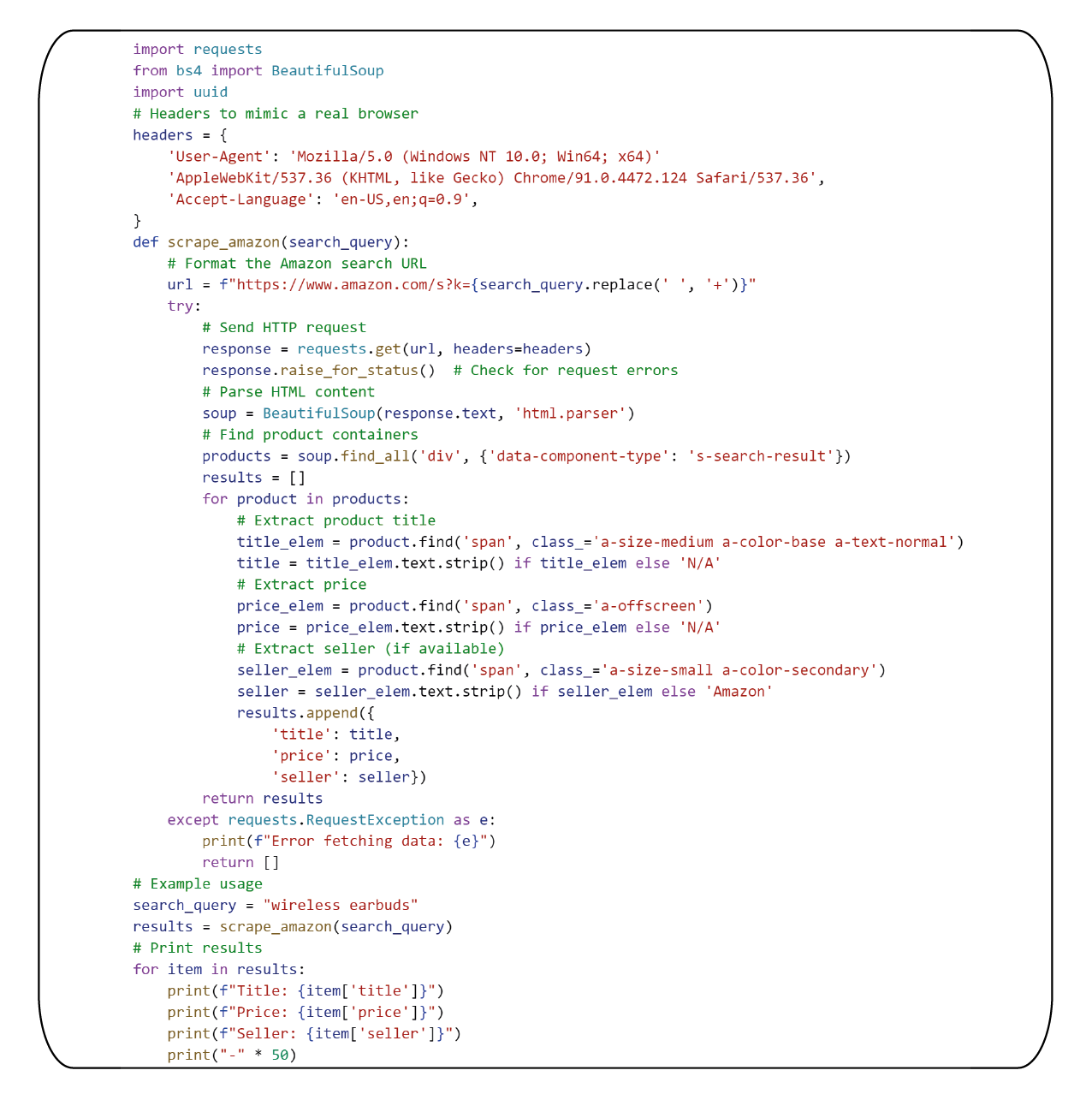
This script scrapes product titles, prices, and seller names from an Amazon search results page.
How It Works?
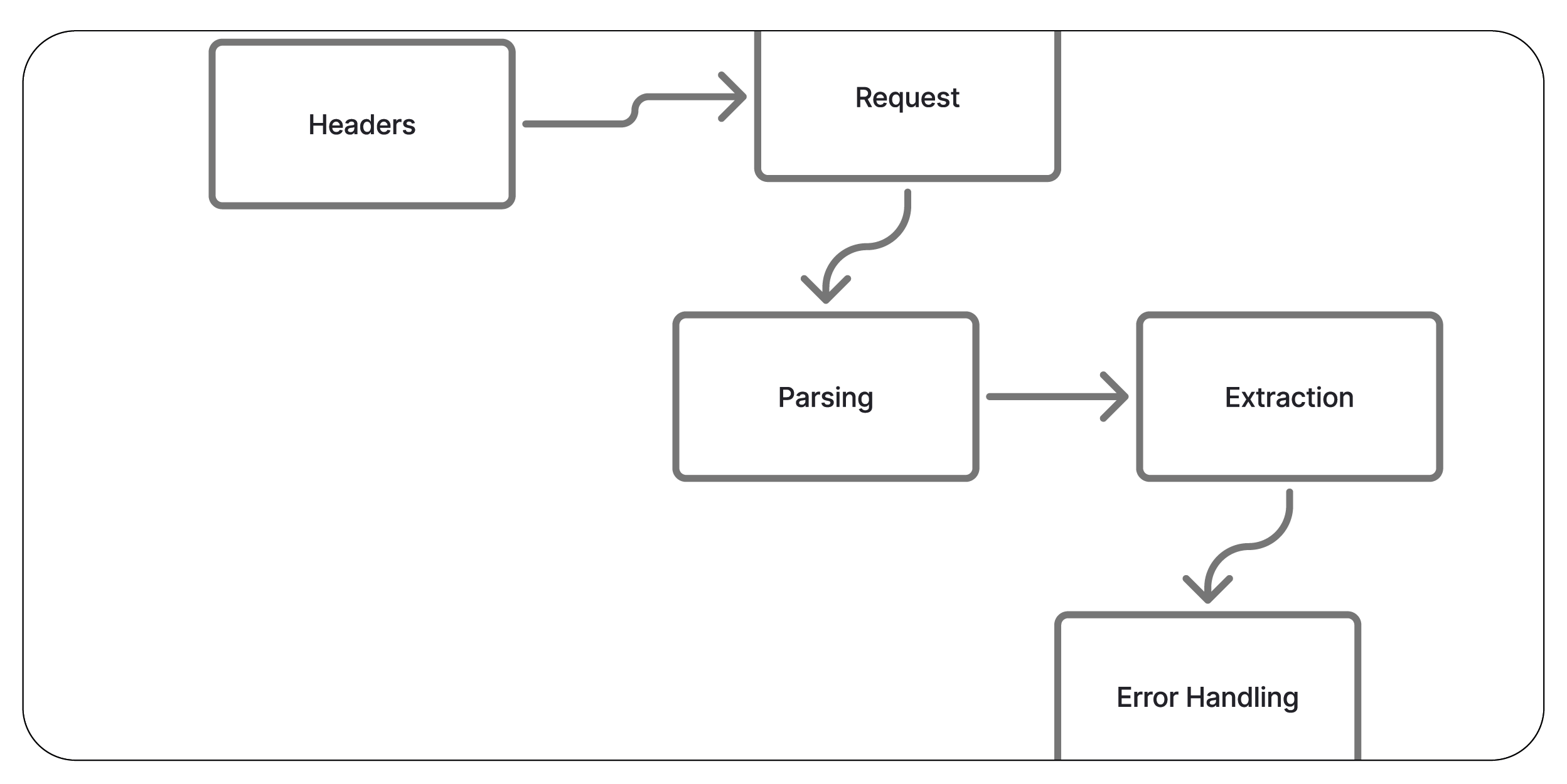
- Headers: The script uses a User-Agent to mimic a browser, reducing the chance of being blocked.
- Request: Sends an HTTP GET request to Amazon's search page for the query (e.g., "wireless earbuds").
- Parsing: BeautifulSoup parses the HTML to locate product containers using Amazon's class names.
- Extraction: Extracts the title, price, and seller for each product.
- Error Handling: Handles network errors gracefully.
Challenges and Solutions
- Dynamic Content: Some Amazon pages load data via JavaScript. Use Selenium or Playwright for dynamic scraping.
- CAPTCHAs: Rotate proxies or use CAPTCHA-solving services.
- IP Bans: Implement delays (time.sleep(5)) or use proxy services.
- Rate Limits: Limit requests to 1–2 per second to avoid detection.
Scaling with Scrapy
For large-scale scraping, use Scrapy, a Python framework for building web crawlers. Scrapy supports:
- Asynchronous requests for faster scraping.
- Middleware for proxy rotation and user-agent switching.
- Pipelines for storing data in databases like MySQL or MongoDB.
No-Code Approach: Using Web Scraping Tools
For non-developers or those looking for fast solutions, no-code tools provide an easy way to Extract Popular E-Commerce Website Data without needing to write any code. These tools offer visual interfaces allowing users to select webpage elements and automate data extraction. Common types of no-code tools include web scraping platforms, browser extensions, and API-based solutions. With these tools, you can quickly collect product offers, seller information, and more. Many businesses rely on Ecommerce Data Scraping Services to simplify gathering data from websites like Amazon, enabling efficient analysis and decision-making.
1. Visual Scraping Tool
- Features: A desktop or cloud-based tool with a point-and-click interface, supports exporting data to CSV/Excel, and handles pagination.
How to Use:
- Install the tool and start a new project.
- Enter the Amazon search URL (e.g., https://www.amazon.com/s?k=laptop).
- Use the visual editor to select elements like product title, price, or seller name.
- Configure pagination to scrape multiple pages.
- Run the task locally or in the cloud and export the data.
- Pros: User-friendly, handles dynamic content, supports scheduling.
- Cons: Free plans often have limits; premium plans may be required for large-scale scraping.
2. Cloud-Based Scraping Platform
- Features: A free or paid platform with cloud scraping, API integration, and support for JavaScript-rendered pages.
How to Use:
- Load the Amazon page in the platform's built-in browser.
- Click on elements to extract (e.g., price, seller name).
- Add logic to handle missing or inconsistent data.
- Export results as JSON or CSV.
- Pros: Free tiers often support small projects; intuitive for beginners.
- Cons: Advanced features may require learning or paid plans.
3. Browser Extension Scraper
- Features: A free browser-based extension for simple scraping tasks.
How to Use:
- Install the extension in your browser.
- Create a scraping template by selecting elements on the Amazon page (e.g., product title, price).
- Run the scraper and download data as CSV.
- Pros: Free, lightweight, and easy to set up.
- Cons: Limited to static content; lacks cloud or automation features.
Choosing a No-Code Tool
- Small Projects: Browser extension scrapers are ideal for quick, one-off tasks.
- Regular Scraping: Visual scraping tools or cloud-based platforms offer automation and cloud support.
- Budget: Start with free tiers, but expect to upgrade for large-scale or frequent scraping.
Start extracting valuable insights today with our powerful and easy-to-use scraping tools!
Contact Us Today!
Best Practices for Scraping Amazon
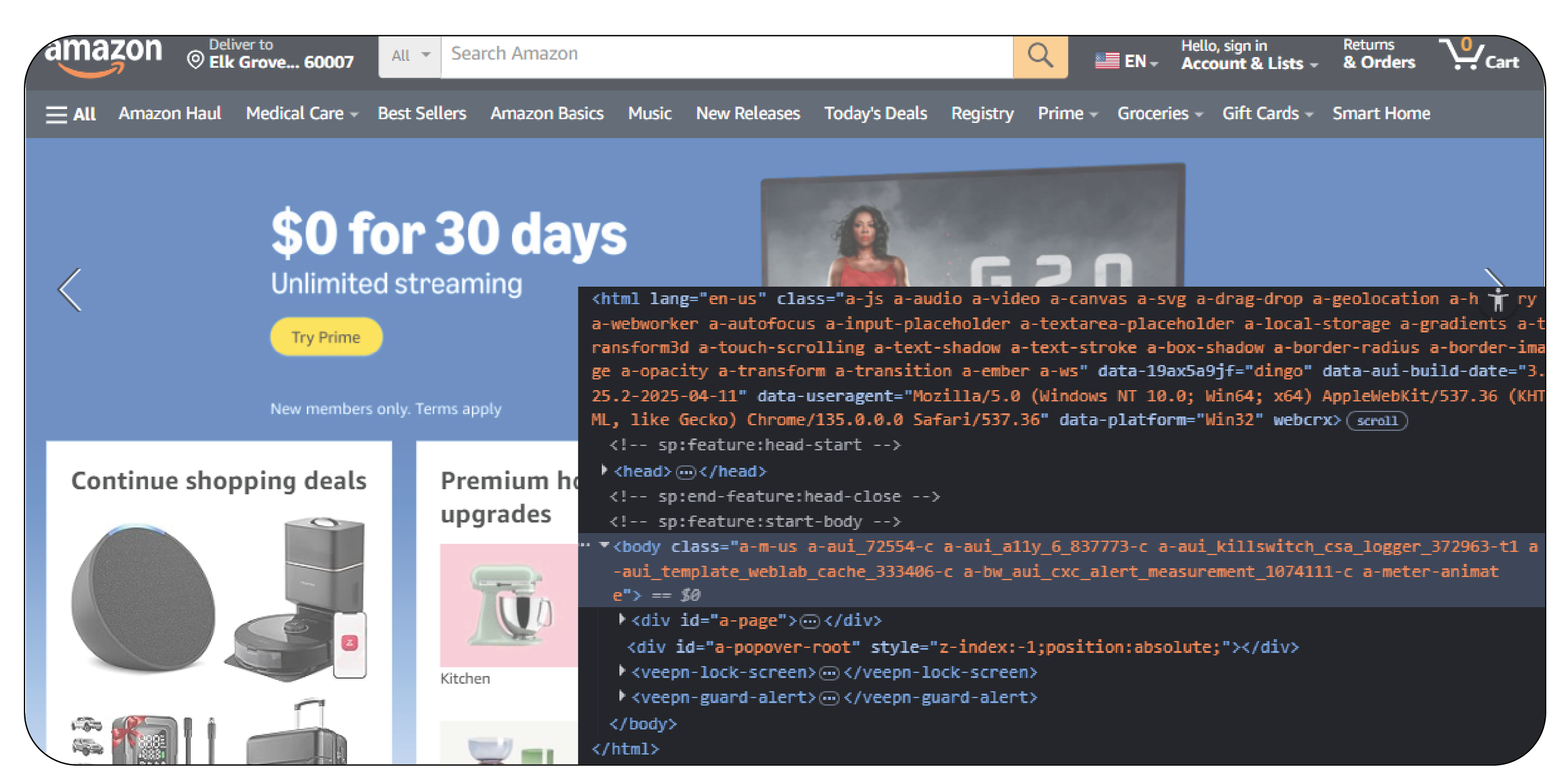
- 1. Respect Robots.txt: Avoid scraping disallowed pages.
- 2. Use Proxies: Rotate IPs to prevent bans. Proxy services offer residential proxies for reliable scraping.
- 3. Randomize Requests: Add delays and vary user agents to mimic human behavior.
- 4. Handle Errors: Implement retries for failed requests.
- 5. Store Data Efficiently: Use databases (e.g., SQLite, MongoDB) for large datasets.
- 6. Monitor Changes: Amazon's HTML structure changes frequently. Regularly update selectors.
- 7. Stay Ethical: Scrape only what you need and avoid overloading servers.
Alternative: Amazon Product Advertising API
Instead of scraping, consider Amazon's Product Advertising API for authorized access to product data. Benefits include:
- Legal Compliance: Fully compliant with Amazon's ToS.
- Rich Data: Access to prices, offers, reviews, and seller info.
- Reliability: No risk of IP bans or CAPTCHAs.
Drawbacks:
- Requires an Amazon Associate account with qualifying sales.
- Limited to specific data points.
- Rate limits apply.
To use the API:
- 1. Sign up for the Amazon Associates Program.
- 2. Generate API keys.
- 3. Use a library like boto3 (Python) to query the API.
How Product Data Scrape Can Help You?
- Customizable Data Extraction: Our tools are built to adapt to various website structures, allowing you to extract exactly the data you need—whether it's product listings, prices, reviews, or seller details.
- Bypass Anti-Scraping Measures: With features like CAPTCHA solving, rotating proxies, and user-agent management, our tools effectively overcome restrictions set by platforms like Amazon.
- Supports Code and No-Code Users: Whether you're a developer or a non-technical user, our scraping solutions offer code-based flexibility and user-friendly no-code interfaces.
- Real-Time and Scheduled Scraping: Automate your data collection with scheduling features and receive real-time updates, ensuring you always have the latest information at your fingertips.
- Clean and Structured Output: Our tools deliver data in clean formats like JSON, CSV, or Excel, making it easy to integrate into analytics tools, dashboards, or custom applications.
Conclusion
Scraping Amazon product offers and seller information is a powerful way to Extract E-commerce Data and gain valuable business insights. However, thoughtful planning is required to address technical barriers and legal considerations. Code-based methods using Python libraries like BeautifulSoup or Scrapy provide developers with flexibility and control. Meanwhile, no-code tools with visual interfaces or browser extensions offer user-friendly options for non-coders to use Web Scraping E-commerce Websites .
For compliant access, the Amazon Product Advertising API remains the safest route. Regardless of the method, always follow ethical scraping practices, implement proxies, and handle errors effectively. Combining the right tools with innovative techniques can help you build an insightful Ecommerce Product & Review Dataset for business or academic use.
At Product Data Scrape, we strongly emphasize ethical practices across all our services,
including Competitor Price Monitoring and Mobile App Data Scraping. Our commitment to
transparency and integrity is at the heart of everything we do. With a global presence and a
focus on personalized solutions, we aim to exceed client expectations and drive success in data
analytics. Our dedication to ethical principles ensures that our operations are both responsible
and effective.


 Singapore
 EMAIL
EMAIL
 PHONE
PHONE












.webp)