Quick Overview
Product Data Scrape partnered with a leading e-commerce insights firm to deliver actionable intelligence using Etsy scraping with Python. The project focused on extracting product information, categories, and reviews across thousands of Etsy listings to uncover market trends and consumer preferences. Using our automated solutions to Extract Etsy E-Commerce Product Data, we enabled the client to achieve faster data collection, higher accuracy, and real-time analytics. Over a six-month engagement, key impact metrics included a 40% reduction in data extraction time, a 35% increase in data completeness, and comprehensive insights covering over 50,000 products. The project transformed manual market research into a streamlined, data-driven process.
The Client
The client is a prominent market research firm specializing in e-commerce trends and consumer behavior analysis. Operating in a highly competitive and fast-paced sector, the client faced mounting pressure to provide timely and accurate insights into online marketplaces such as Etsy. Market trends showed that consumer behavior was shifting rapidly, with product popularity fluctuating weekly, making traditional research methods inefficient.
Before partnering with Product Data Scrape, the client relied on manual data collection, which was slow, error-prone, and lacked scalability. They could not efficiently Scrape Product Data from Etsy Product Pages, resulting in incomplete datasets and delayed reporting. Limited automation meant that tracking product launches, pricing changes, or review trends required significant human intervention.
By integrating the Etsy Product Data Scraper solution, the client could automate data collection across thousands of product pages, capturing structured information on product titles, categories, prices, and reviews. This shift enabled them to respond quickly to emerging market trends, enhance reporting accuracy, and gain a competitive edge. Our solution set the stage for a scalable, reliable, and comprehensive e-commerce data collection framework.
Goals & Objectives
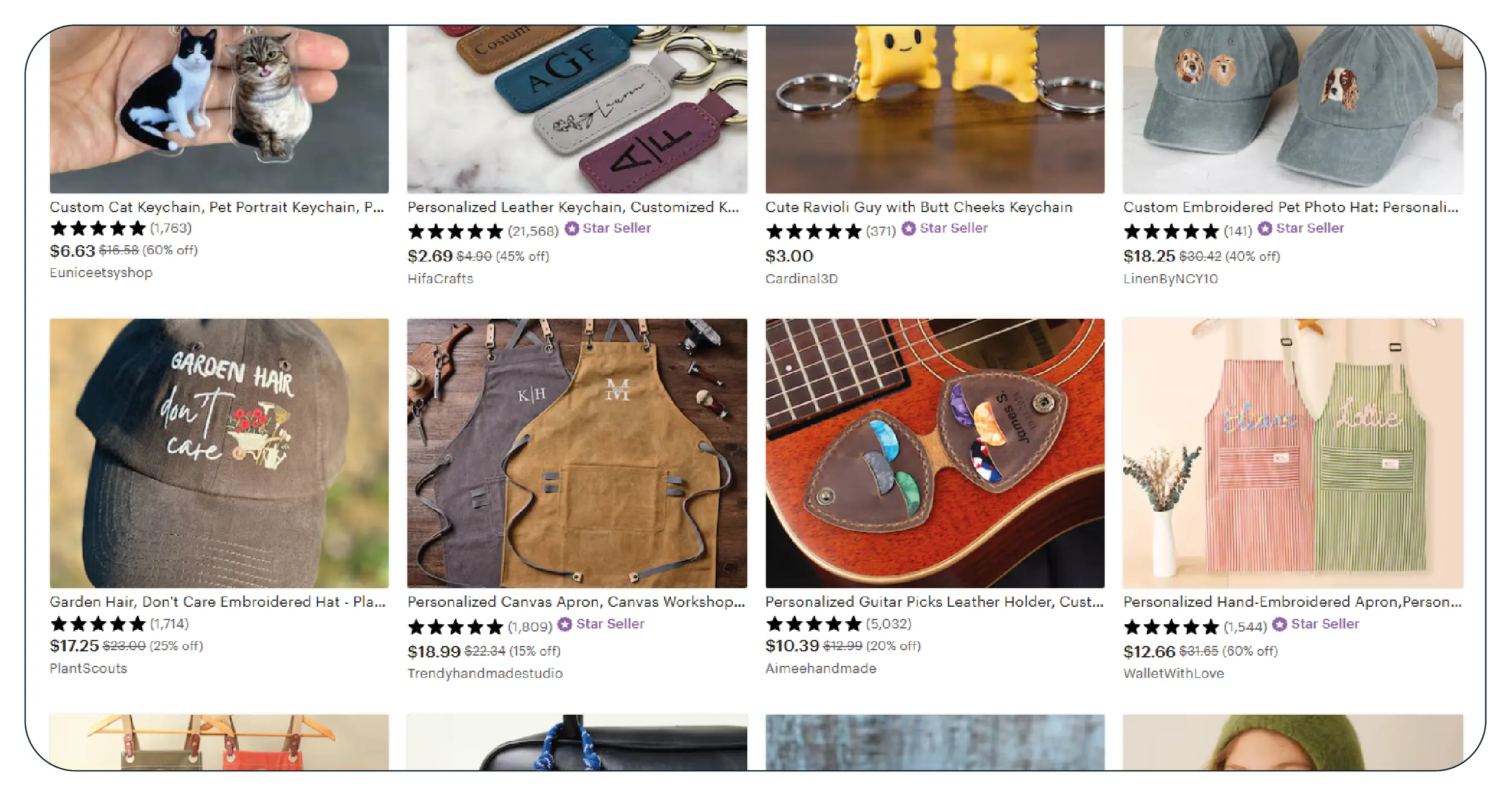
The primary business goal was to enhance scalability, speed, and accuracy of market research. By leveraging automated data extraction, the client aimed to monitor thousands of Etsy products in real-time, track evolving trends, and deliver high-quality insights to end clients.
Technical objectives included full automation of data pipelines, seamless integration with internal analytics systems, and support for real-time updates. Using Extract Product Data from JSON, we ensured all product information, reviews, and category data were collected in a structured and consistent format, reducing manual intervention.
strong Reduce collection time by at least 40%
Accuracy: Achieve >95% completeness in product data and review metrics
Real-time insights: Enable near-instant analysis of market changes
Scalability: Handle over 50,000 product pages without performance degradation
Reporting efficiency: Automate dashboards and reports for internal and client use
These clear targets ensured alignment between business strategy and technical execution, providing measurable performance improvements across both data collection and analytics workflows.
The Core Challenge
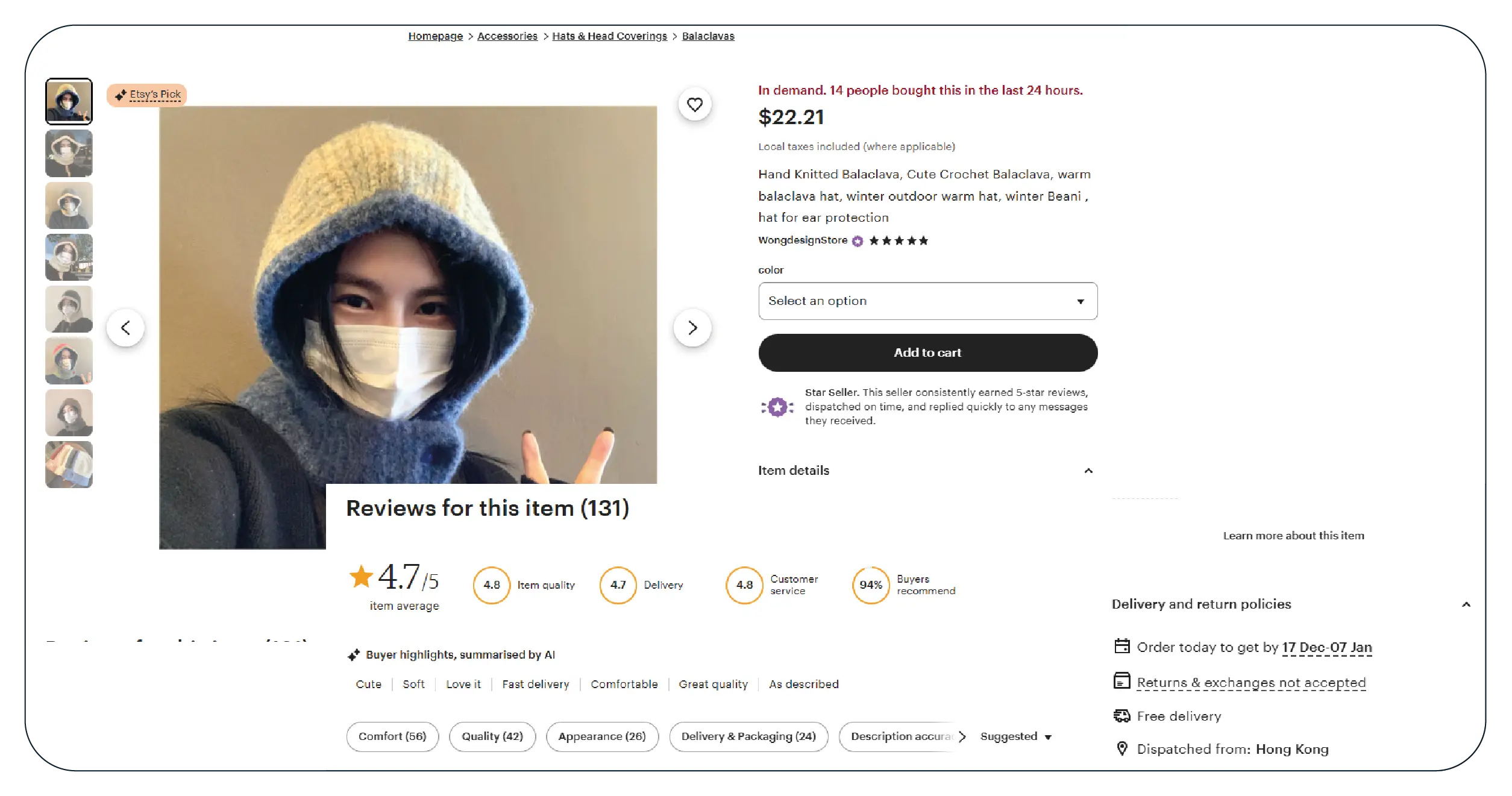
The client faced significant operational bottlenecks before implementing our solution. Manual data collection was labor-intensive and prone to errors, causing delays in reporting and analysis. Performance issues arose due to the dynamic nature of Etsy pages, frequent layout changes, and inconsistent data structures across product listings.
Accurate review tracking was particularly challenging. Extracting Extract Rating and Review Count from each listing required navigating nested elements and handling pages with large volumes of reviews. Failure to accurately capture this information resulted in incomplete insights, limiting the client’s ability to forecast product trends or measure consumer sentiment effectively.
Furthermore, the scale of Etsy’s marketplace posed a challenge. The client could only monitor a limited number of listings at a time, leaving gaps in their datasets. Without automation, the workload increased exponentially as product and category diversity grew.
Addressing these issues required a robust, scalable, and flexible solution capable of handling dynamic web pages, extracting structured review data, and supporting high-volume monitoring—all while maintaining accuracy and minimizing downtime.
Our Solution
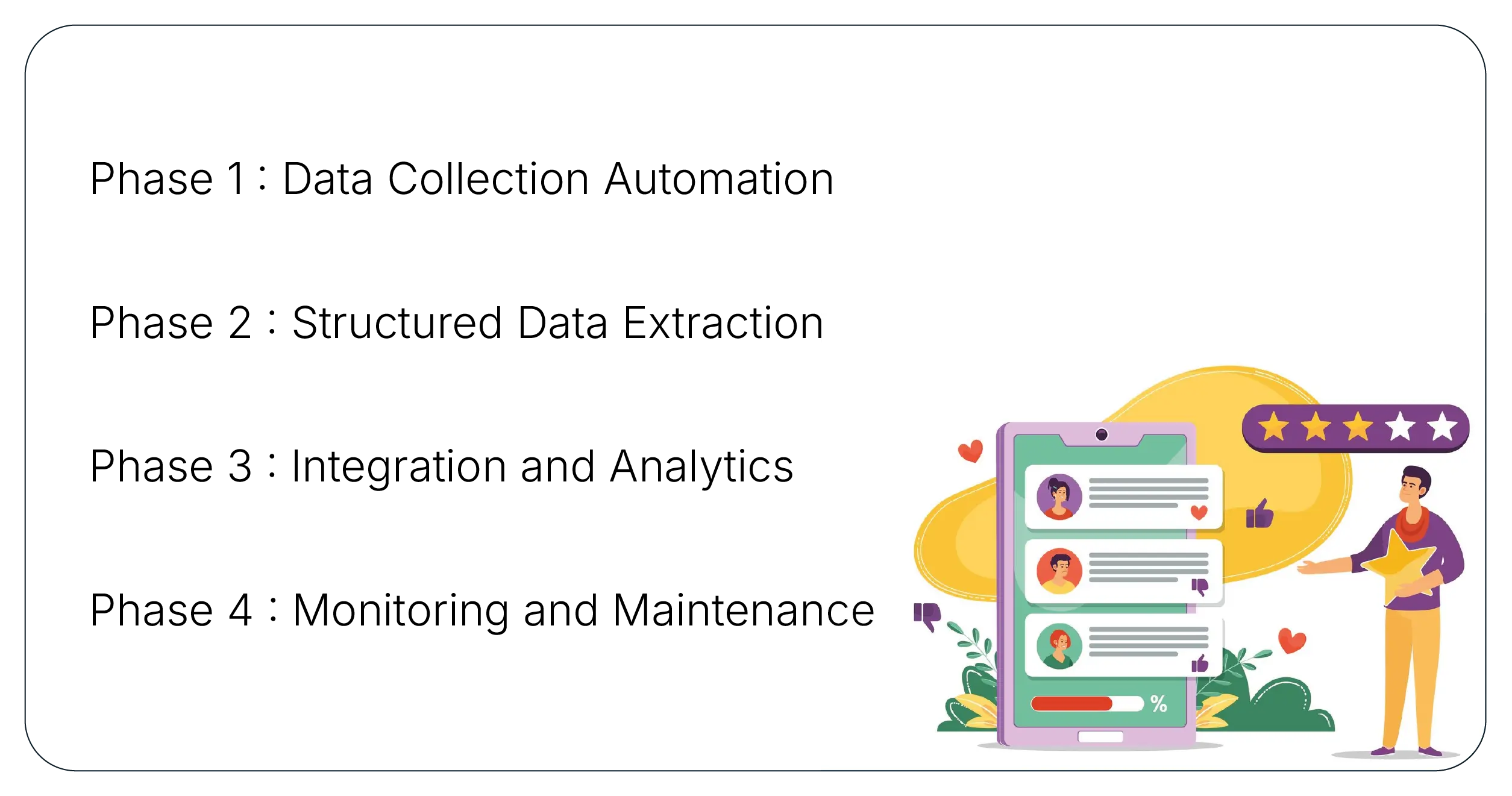
Product Data Scrape implemented a phased, automated solution to address all core challenges.
Phase 1: Data Collection Automation
We developed a robust Python-based scraper using Etsy scraping with Python to crawl product pages, categories, and reviews efficiently. The scraper was designed to adapt to layout changes and capture structured data, ensuring completeness and accuracy.
Phase 2: Structured Data Extraction
Data was extracted in JSON format, including product titles, categories, prices, and review details. By leveraging Scrape Etsy Reviews, we captured ratings, review counts, and reviewer metadata, enabling sentiment analysis and trend identification. Custom scripts handled pagination, filtering, and duplicate removal, ensuring only relevant and clean data entered the system.
Phase 3: Integration and Analytics
Structured data was integrated with the client’s internal analytics platform, enabling automated dashboards, real-time reporting, and alerts for trending products or category shifts. This phase allowed the client to analyze competitive pricing, top-performing categories, and consumer sentiment patterns efficiently.
Phase 4: Monitoring and Maintenance
To ensure long-term reliability, we implemented continuous monitoring of Etsy page structures and automated error handling. The scraper was capable of recovering from interruptions and updating datasets in near real-time.
Our solution delivered high accuracy, reduced manual effort, and improved reporting speed. By combining Etsy scraping with Python and Scrape Etsy Reviews, the client gained actionable insights across thousands of product pages, enabling data-driven decisions and enhanced market forecasting capabilities.
Results & Key Metrics
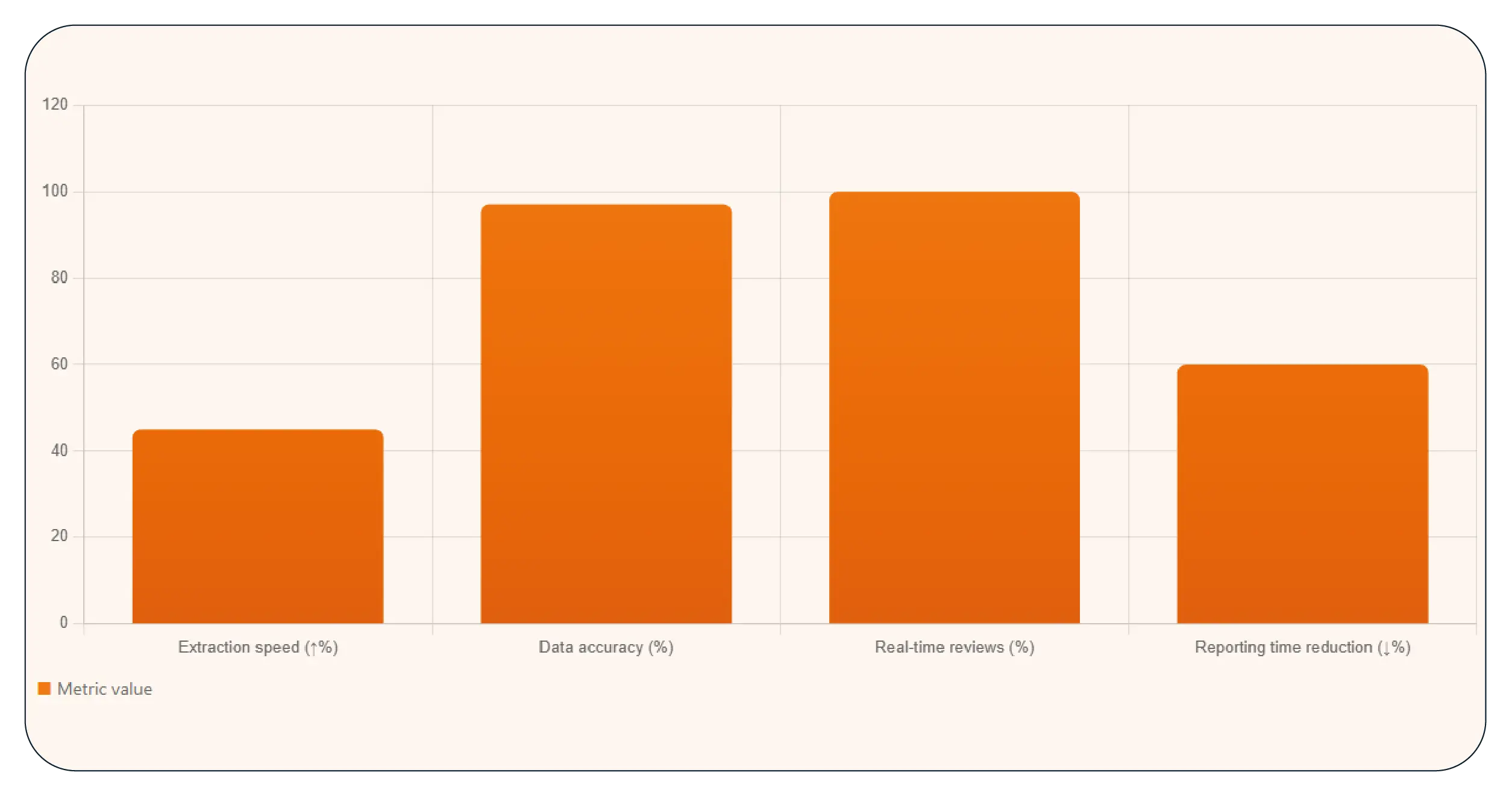
Extraction speed improved by 45%, enabling faster updates across 50,000+ product pages
Data accuracy exceeded 97%, ensuring reliable trend analysis
Review and rating metrics captured in real-time for immediate analytics
Automated dashboards reduced manual reporting time by 60%
Category-level insights enabled identification of emerging trends across product segments
Results Narrative
The solution provided comprehensive insights into product pricing, categories, and consumer reviews. Using scrape Etsy product data, the client was able to track market trends, identify top-selling items, and forecast shifts in demand with confidence. Data-driven insights informed promotional strategies, inventory planning, and competitive benchmarking. Real-time monitoring enabled swift responses to market changes, giving the client a significant edge over competitors relying on manual or outdated data. The structured data also facilitated sentiment analysis, revealing consumer preferences and dissatisfaction patterns across categories. Overall, the client experienced measurable improvements in operational efficiency, reporting accuracy, and market intelligence capabilities.
What Made Product Data Scrape Different?
Product Data Scrape stood out for its proprietary automation frameworks and adaptive scraping tools. Using scrape search results pages Etsy, we efficiently handled dynamic pages, pagination, and filters, capturing structured product data without downtime. The solution combined Python-based automation with intelligent error handling, ensuring consistent, high-quality datasets. Unlike manual or rigid scraping methods, our approach allowed scalability, real-time monitoring, and seamless integration with analytics platforms. This innovation enabled clients to gain faster, actionable insights, reduce operational workload, and maintain competitiveness in a rapidly evolving e-commerce landscape.
Client’s Testimonial
"Working with Product Data Scrape has revolutionized our e-commerce analytics. Their team leveraged Etsy scraping with Python to extract comprehensive product, category, and review data seamlessly. The automation and accuracy they delivered allowed us to analyze market trends in real-time, optimize strategies, and forecast emerging product demand with confidence. Their expertise, reliability, and innovative approach transformed our research processes and provided measurable business value. The dashboards and insights have become central to our decision-making, making Product Data Scrape an invaluable partner in our digital transformation."
— Head of E-Commerce Analytics, Global Market Research Firm
Conclusion
By implementing our advanced solutions, the client was able to Scrape Data From Any Ecommerce Websites efficiently while leveraging Etsy scraping with Python for comprehensive market insights. Automated extraction, structured datasets, and real-time analytics enabled faster decision-making, improved forecasting, and actionable insights across thousands of product listings. This project highlights the impact of combining adaptive scraping techniques with powerful analytics to drive growth in competitive marketplaces. Companies seeking accurate, scalable, and actionable e-commerce intelligence can rely on Product Data Scrape to transform raw web data into strategic business decisions.
FAQs
1. What is Etsy scraping with Python used for?
It enables automated extraction of product information, categories, pricing, and reviews from Etsy for data-driven insights and market research.
2. Can this solution handle large-scale data collection?
Yes. Product Data Scrape’s framework efficiently handles tens of thousands of listings with real-time updates and minimal downtime.
3. How accurate is the extracted data?
Using adaptive scraping techniques, data accuracy exceeds 97%, including ratings, review counts, and product metadata.
4. Is it possible to analyze trends from extracted data?
Absolutely. Structured datasets allow trend analysis, sentiment evaluation, and forecasting across categories and product types.
5. Can this approach be applied to other e-commerce platforms?
Yes. Our framework is adaptable to multiple e-commerce websites, ensuring scalable and consistent extraction across marketplaces.



 Singapore
 EMAIL
EMAIL
 PHONE
PHONE


.webp "thumb")
.webp "thumb")









.webp)