Quick Overview
Retail grocery chains handling perishable goods often face the challenge of balancing supply with real-time demand. In this project, our team implemented Food Lion fresh produce inventory data scraping to help a grocery analytics partner monitor inventory movement across multiple locations and reduce food spoilage risks. Using automated systems to Extract Grocery & Gourmet Food Data, we gathered detailed insights on product availability, pricing changes, and stock fluctuations across Food Lion’s digital grocery platform.
The project focused on collecting structured data from over 1,100 store locations, enabling the client to monitor produce inventory levels more efficiently and respond quickly to demand changes. Within a short implementation period, the solution improved inventory visibility, enhanced supply chain decision-making, and enabled data-driven forecasting for fruits and vegetables. As a result, the client achieved measurable improvements in stock optimization and reduced wastage across the fresh produce category.
The Client
The client operates within the grocery analytics and retail intelligence sector, providing data-driven insights to supermarket chains and food suppliers. With increasing demand for fresh produce and rising operational costs, grocery retailers face strong pressure to minimize waste while maintaining product availability for customers. Our client sought advanced analytics solutions that could help monitor real-time inventory changes across large grocery networks.
To achieve this, the project focused on Food Lion fresh produce stock data scraping, enabling the collection of structured information from Food Lion’s online marketplace. By gathering a comprehensive Grocery store dataset, the client could analyze inventory patterns across thousands of fresh produce listings, including fruits, vegetables, and organic products.
Before partnering with Product Data Scrape, the client relied on manual data collection and fragmented reporting systems that lacked real-time insights. This approach resulted in delayed decision-making and limited visibility into inventory trends. Without accurate inventory data, predicting demand and managing supply chains efficiently became difficult.
With growing competition in grocery retail and increasing demand for fresh products, the client needed a scalable and automated data collection solution capable of delivering accurate insights across multiple stores and product categories.
Goals & Objectives
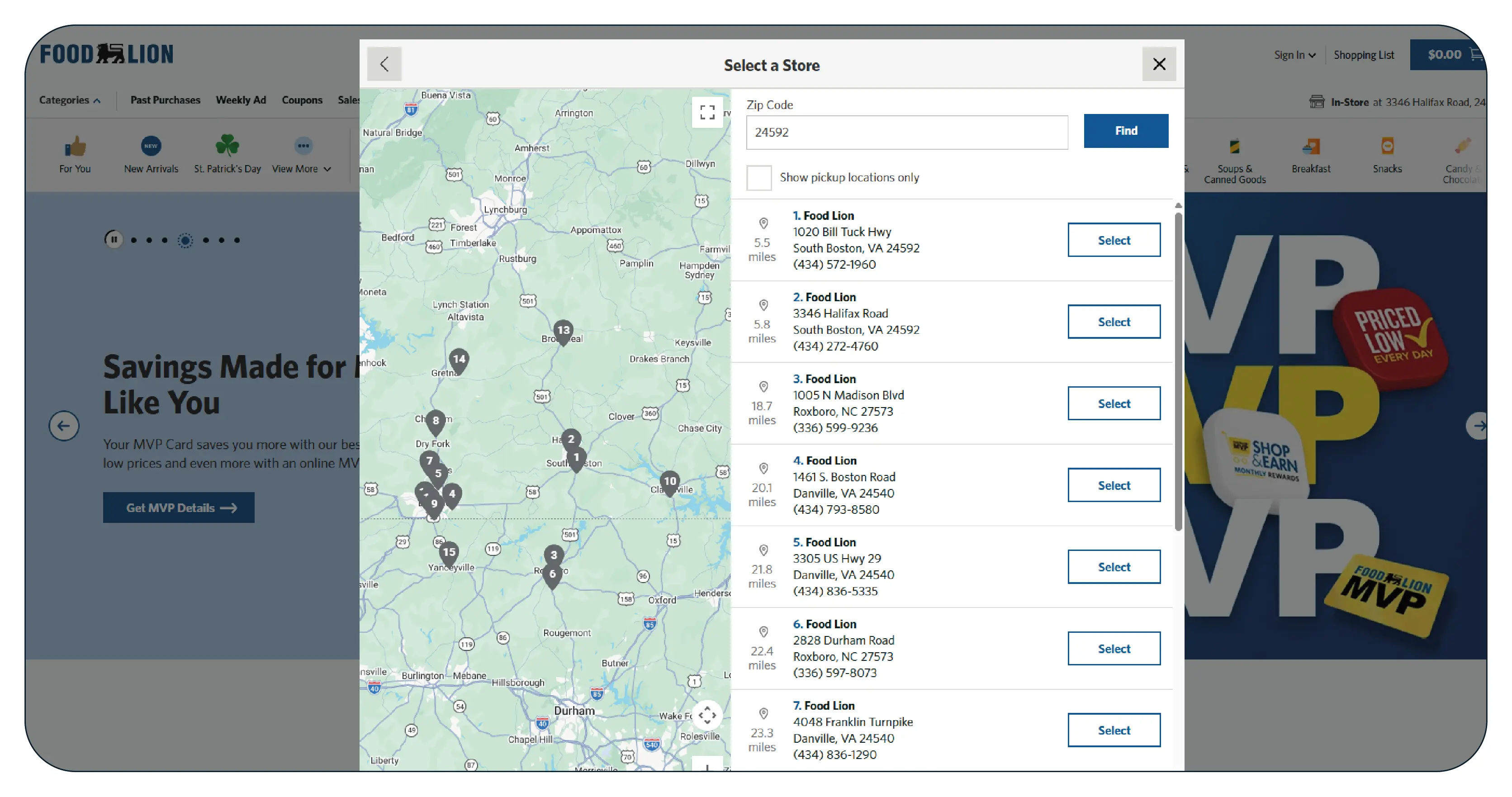
The primary goal was to build a scalable system to Scrape Food Lion produce inventory data across thousands of product listings while ensuring accurate and structured datasets. The solution needed to deliver reliable insights for fresh produce inventory monitoring and supply chain optimization. By integrating automated workflows and Web Scraping API Services, the system aimed to eliminate manual data collection processes and deliver consistent updates on product availability and pricing.
The technical objective focused on implementing automation pipelines that could continuously gather product-level data from Food Lion’s online grocery platform. This included extracting product names, SKU details, store-level inventory availability, and pricing changes across different locations. The project also aimed to integrate the collected data with the client’s analytics dashboards for real-time reporting and trend analysis.
Achieve 95%+ data accuracy across fresh produce inventory datasets
Monitor inventory updates across 1,100+ store locations
Reduce manual data collection efforts by 80%
Enable real-time updates through automated API integrations
Improve decision-making speed through structured inventory datasets
The Core Challenge
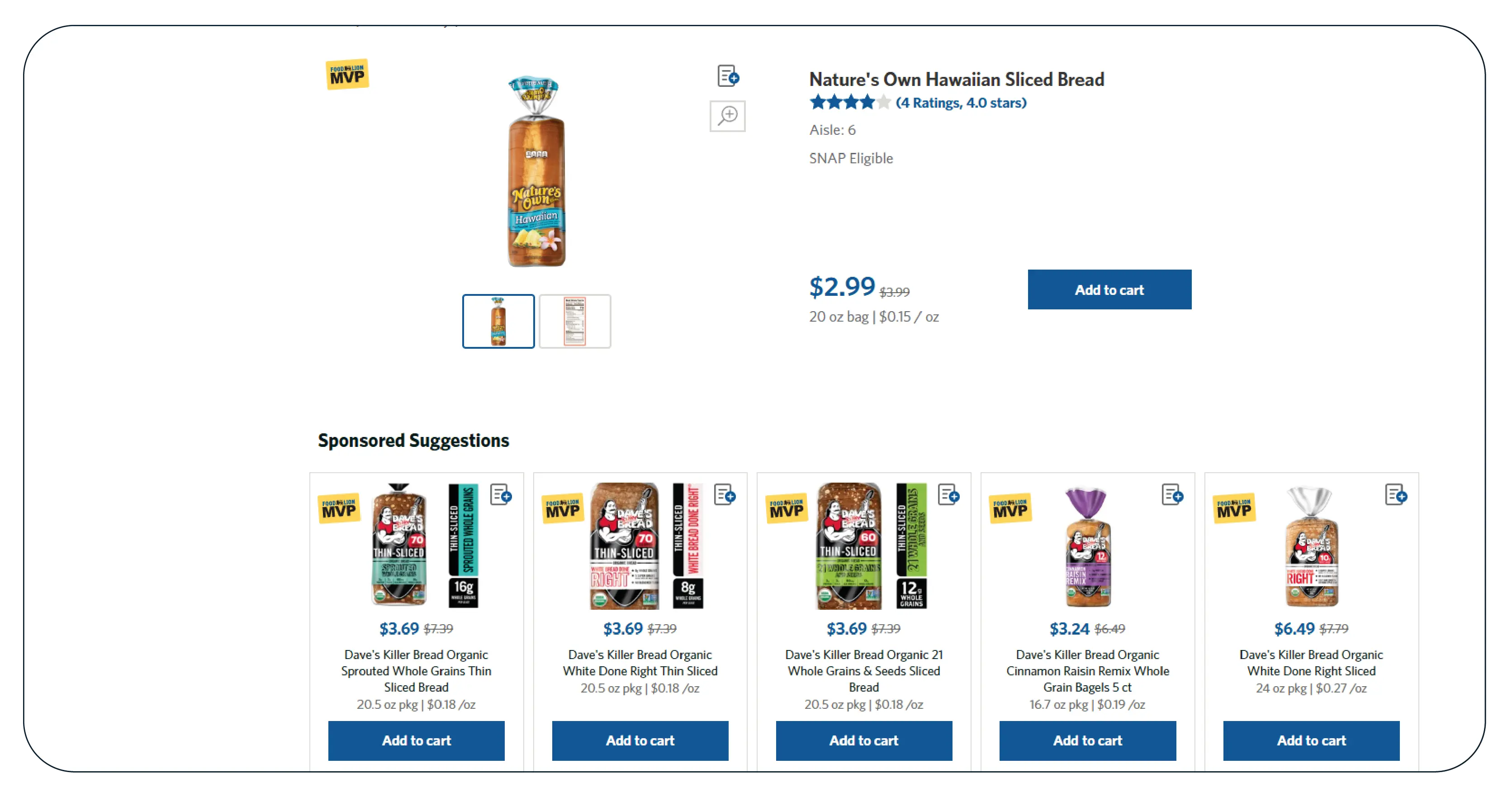
Managing perishable inventory across large grocery chains is a complex operational challenge. Retailers must constantly balance supply with fluctuating consumer demand while minimizing waste. The client struggled to maintain accurate visibility into fresh produce stock levels due to inconsistent reporting systems and delayed updates from store-level inventory systems.
The lack of centralized monitoring created gaps in the Food Lion produce inventory analytics dataset, making it difficult to track inventory movement across stores. Without accurate stock-level insights, retailers often experienced overstock situations that resulted in spoilage or understock scenarios that led to lost sales opportunities.
Another challenge involved maintaining pricing consistency across different locations. Grocery stores frequently adjust prices based on demand, promotions, and regional supply conditions. Without reliable monitoring tools or Pricing Intelligence Services, tracking these fluctuations across hundreds of stores became nearly impossible.
Additionally, the client needed a scalable solution capable of collecting large volumes of product data without affecting data accuracy or performance. Handling thousands of listings across different store locations required a robust scraping infrastructure capable of delivering high-speed data extraction and real-time analytics support.
Our Solution
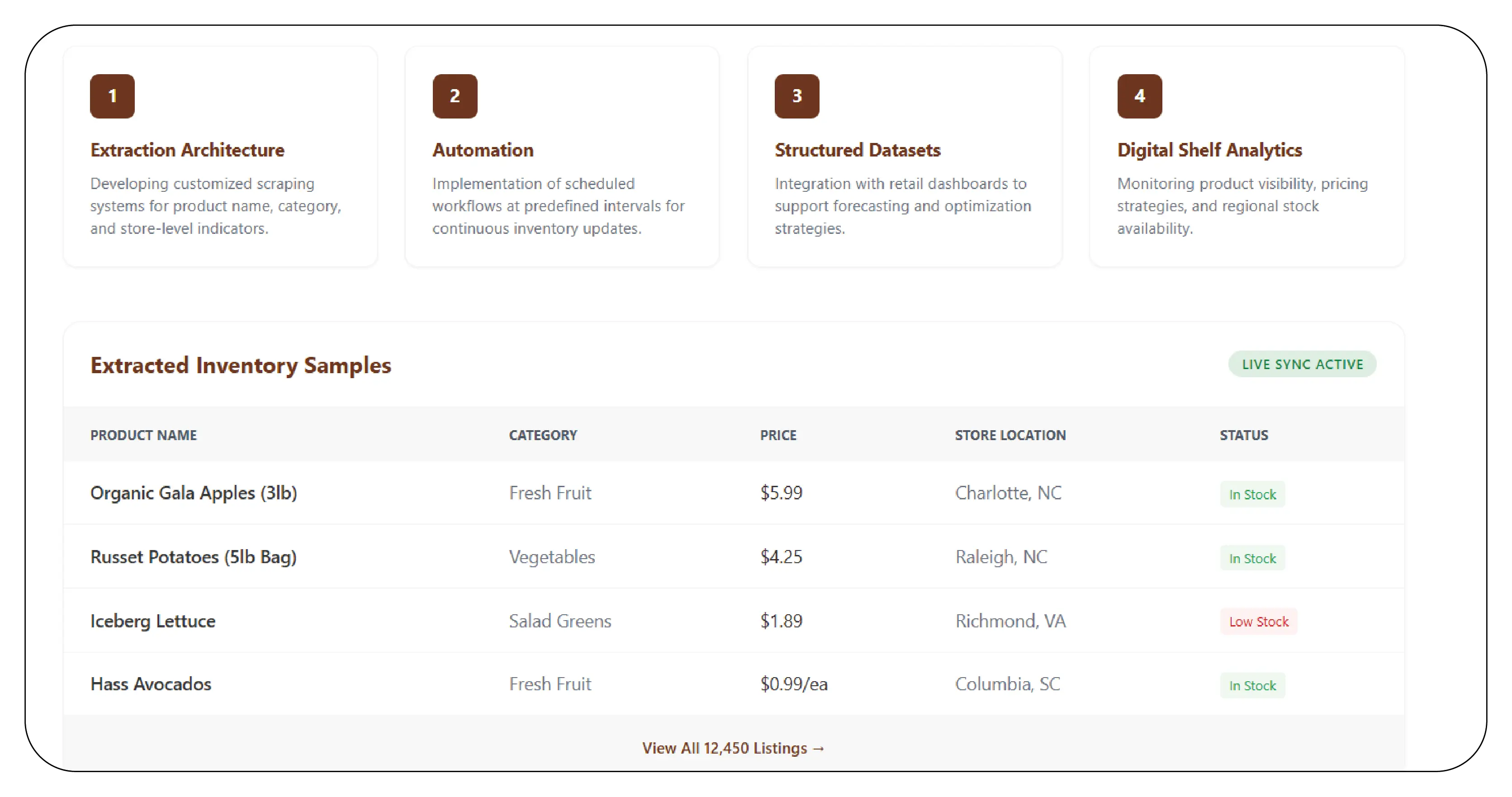
To address the client’s challenges, Product Data Scrape implemented a multi-phase data extraction framework designed to Extract Food Lion fresh produce stock data efficiently across large grocery datasets. The solution combined automated scraping technology, intelligent data processing pipelines, and scalable infrastructure to deliver consistent inventory insights.
The first phase involved developing a customized scraping architecture capable of navigating Food Lion’s online grocery platform. Our system extracted detailed product attributes including product name, category, price, availability status, and store-level stock indicators. This structured approach ensured accurate and consistent datasets across thousands of produce listings.
The second phase focused on automation and scheduling. Our team implemented automated scraping workflows that collected fresh data at predefined intervals. This enabled continuous updates on inventory availability, ensuring that the client’s analytics platform always had access to the latest information.
In the third phase, the extracted data was processed and organized into structured datasets for advanced analytics. These datasets were integrated with the client’s retail analytics dashboard to support reporting, forecasting, and inventory optimization strategies.
Finally, we implemented monitoring tools that enabled Digital Shelf Analytics across Food Lion’s online marketplace. These insights helped the client analyze product visibility, pricing strategies, and stock availability across multiple regions.
The result was a highly scalable solution capable of processing thousands of product listings daily while maintaining data accuracy and performance.
Results & Key Metrics
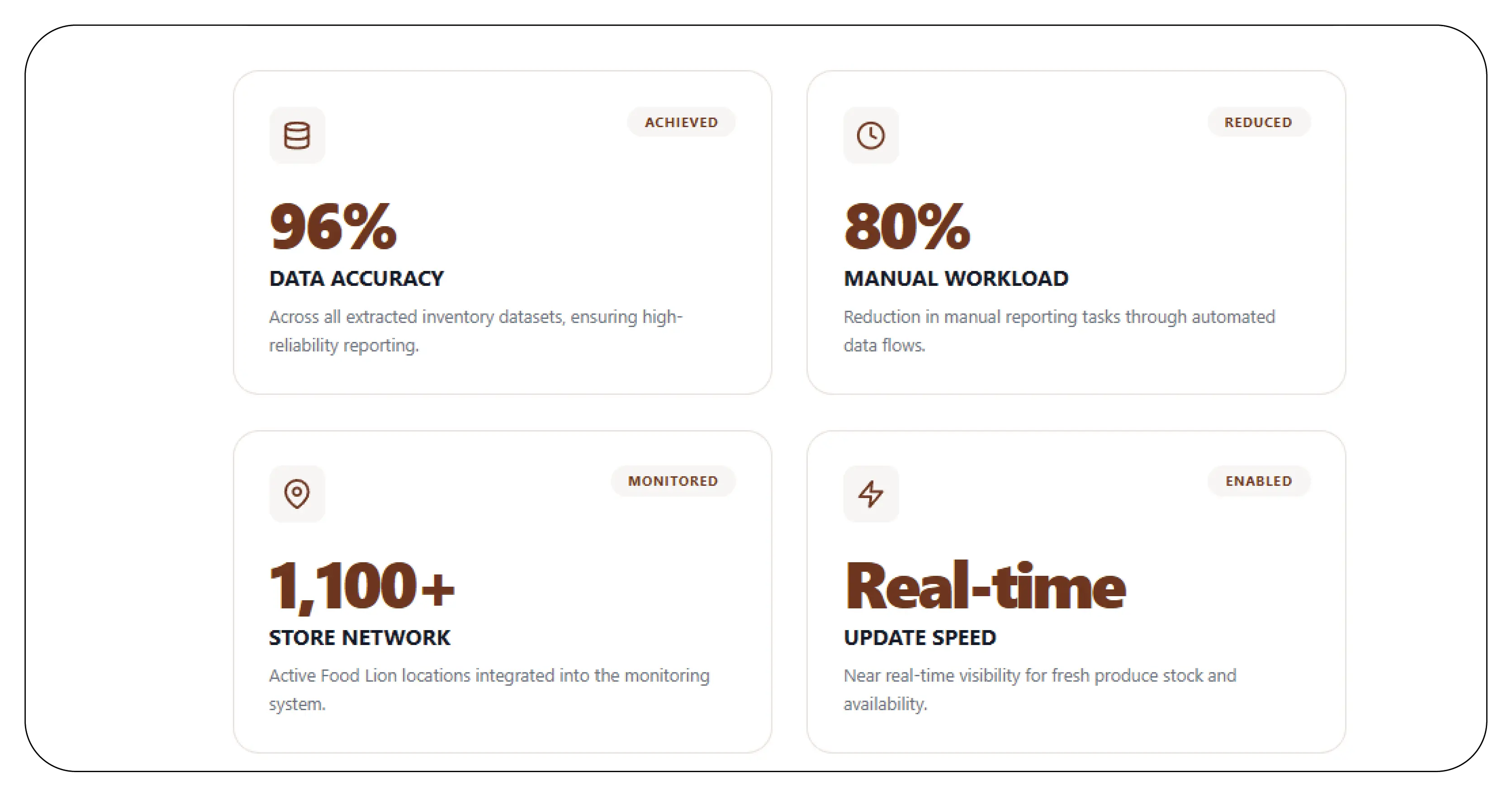
Implemented Real-time Food Lion produce inventory tracking API for automated updates
Monitored fresh produce availability across 1,100+ store locations
Achieved 96% data accuracy across extracted inventory datasets
Reduced manual reporting workload by 80%
Enabled near real-time updates for produce stock monitoring
Results Narrative
With the implementation of automated inventory tracking systems, the client gained unprecedented visibility into fresh produce stock levels across the Food Lion store network. The API-driven infrastructure enabled continuous monitoring of fruits and vegetables, allowing retailers to identify potential overstock or shortage situations before they impacted operations.
As a result, grocery retailers were able to adjust replenishment cycles, optimize stock distribution, and significantly reduce spoilage rates. The improved inventory transparency also helped supply chain teams forecast demand more accurately, leading to better procurement planning and improved customer satisfaction.
What Made Product Data Scrape Different?
Product Data Scrape stood out due to its ability to implement scalable automation frameworks capable of Web scraping Food Lion fresh produce product data at high speed and accuracy. Our advanced data extraction technologies allowed us to handle large grocery datasets while ensuring reliable performance across multiple store locations.
Additionally, our expertise in Food Lion fresh produce inventory data scraping enabled the client to transform fragmented inventory data into actionable insights. By combining automated scraping pipelines with intelligent analytics capabilities, we delivered a solution that significantly improved operational efficiency and decision-making.
Client’s Testimonial
“Working with Product Data Scrape transformed the way we monitor fresh produce inventory across retail locations. Their automated systems helped us Extract Food Lion fruit and vegetable price data while maintaining exceptional data accuracy and reliability. The real-time datasets allowed us to track inventory trends, reduce spoilage, and improve supply chain coordination across hundreds of stores. Their technical expertise and proactive support made the entire project seamless and highly successful.”
— Director of Retail Analytics
Conclusion
Efficient inventory management is critical for grocery retailers dealing with perishable goods. By implementing automated solutions to Extract Food Lion Grocery & Gourmet Food Data, businesses can gain real-time visibility into stock availability, pricing trends, and product movement across store networks.
This case study demonstrates how advanced data scraping technologies help retailers reduce waste, optimize supply chains, and improve operational efficiency. With accurate datasets and automated analytics systems, grocery businesses can make faster and more informed decisions while delivering fresher products to customers.
FAQs
1. What is Food Lion produce inventory data scraping?
Food Lion produce inventory data scraping refers to the automated extraction of fresh produce information such as product names, prices, availability, and stock levels from Food Lion’s online grocery platform.
2. How does produce inventory data help reduce spoilage?
By monitoring stock levels and demand patterns, retailers can identify overstock or slow-moving produce items early and adjust supply chain operations to reduce waste.
3. What types of data are extracted from Food Lion grocery listings?
Typical datasets include product names, categories, pricing information, store availability, product descriptions, and stock status across different locations.
4. Is grocery data scraping useful for retail analytics?
Yes. Retail analytics teams use grocery datasets to analyze consumer demand, monitor pricing strategies, optimize inventory management, and improve supply chain efficiency.
5. Can inventory data scraping scale across multiple stores?
Modern scraping technologies can collect inventory data across thousands of stores simultaneously, enabling real-time insights and large-scale grocery analytics.



 Singapore
 EMAIL
EMAIL
 PHONE
PHONE










.webp)