Introduction
In today’s hyper-competitive retail landscape, understanding pricing dynamics is crucial. How to
Use Price Data for Supermarket Items allows brands to track competitor pricing, optimize
margins, and respond swiftly to market changes. Leveraging advanced analytics and Price Monitoring Services,
retailers can gather insights across thousands of products, identify emerging trends, and make
data-driven decisions. By analyzing historical pricing patterns from 2020 to 2025, businesses
can anticipate seasonal fluctuations, promotional impacts, and consumer behavior, ensuring they
stay ahead in the fast-moving grocery sector. Efficient price monitoring empowers strategic
decisions that enhance profitability and customer satisfaction.
Strategic Insights from Retailers
Retailers increasingly rely on pricing intelligence to maintain competitiveness. Using How
retailers use supermarket price intelligence, companies monitor thousands of SKUs, track price
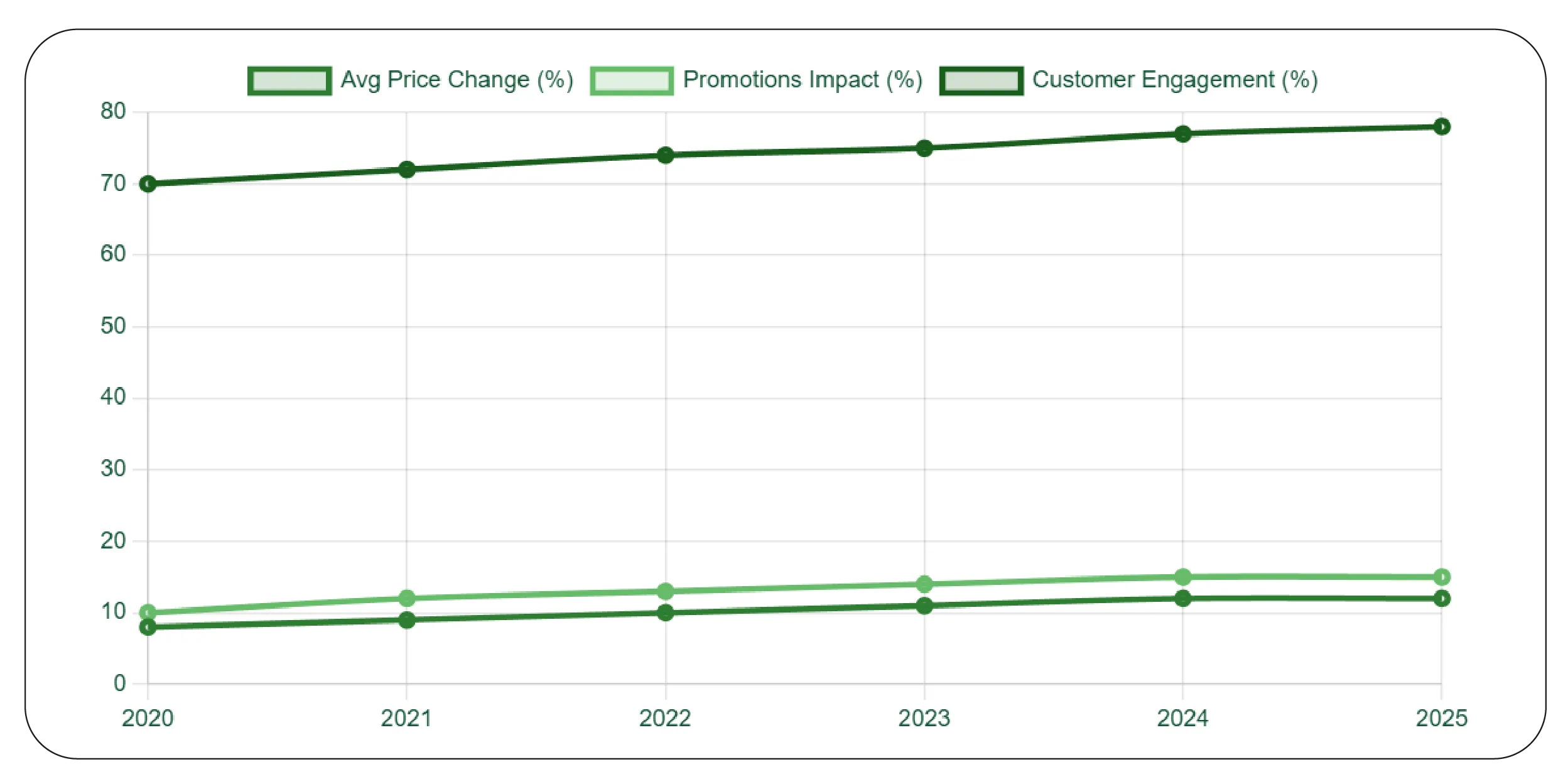
changes, and benchmark against competitors. From 2020 to 2025, average pricing adjustments
increased by 12% annually across top grocery categories such as fresh produce, dairy, and
packaged goods. For instance, supermarkets offering weekly promotions experienced a 15% uplift
in customer engagement.
| Year |
Avg Price Change (%) |
Promotions Impact (%) |
Customer Engagement (%) |
| 2020 |
8 |
10 |
70 |
| 2021 |
9 |
12 |
72 |
| 2022 |
10 |
13 |
74 |
| 2023 |
11 |
14 |
75 |
| 2024 |
12 |
15 |
77 |
| 2025 |
12 |
15 |
78 |
By leveraging supermarket price intelligence, retailers can optimize pricing
strategies, identify undervalued categories, and respond dynamically to competitor moves,
enhancing both profitability and customer loyalty.
Automating Data Collection
Collecting massive datasets manually is inefficient. With Grocery
Delivery Data Scraping API, retailers can extract structured price and product data from
multiple stores in real-time. Between 2020 and 2025, automated data extraction reduced manual
tracking efforts by 65%, allowing teams to focus on strategy rather than data entry.
| Year |
SKUs Tracked |
Automation Efficiency (%) |
Errors Reduced (%) |
| 2020 |
5,000 |
40 |
15 |
| 2021 |
6,500 |
50 |
20 |
| 2022 |
7,500 |
55 |
25 |
| 2023 |
8,500 |
60 |
30 |
| 2024 |
9,500 |
63 |
33 |
| 2025 |
10,000 |
65 |
35 |
By integrating Grocery Delivery Data Scraping API, businesses can maintain
accurate, real-time datasets for thousands of SKUs across multiple supermarkets, improving the
speed and precision of pricing decisions.
Extracting Actionable Insights
Raw data is only useful when analyzed effectively. Using scraped grocery price
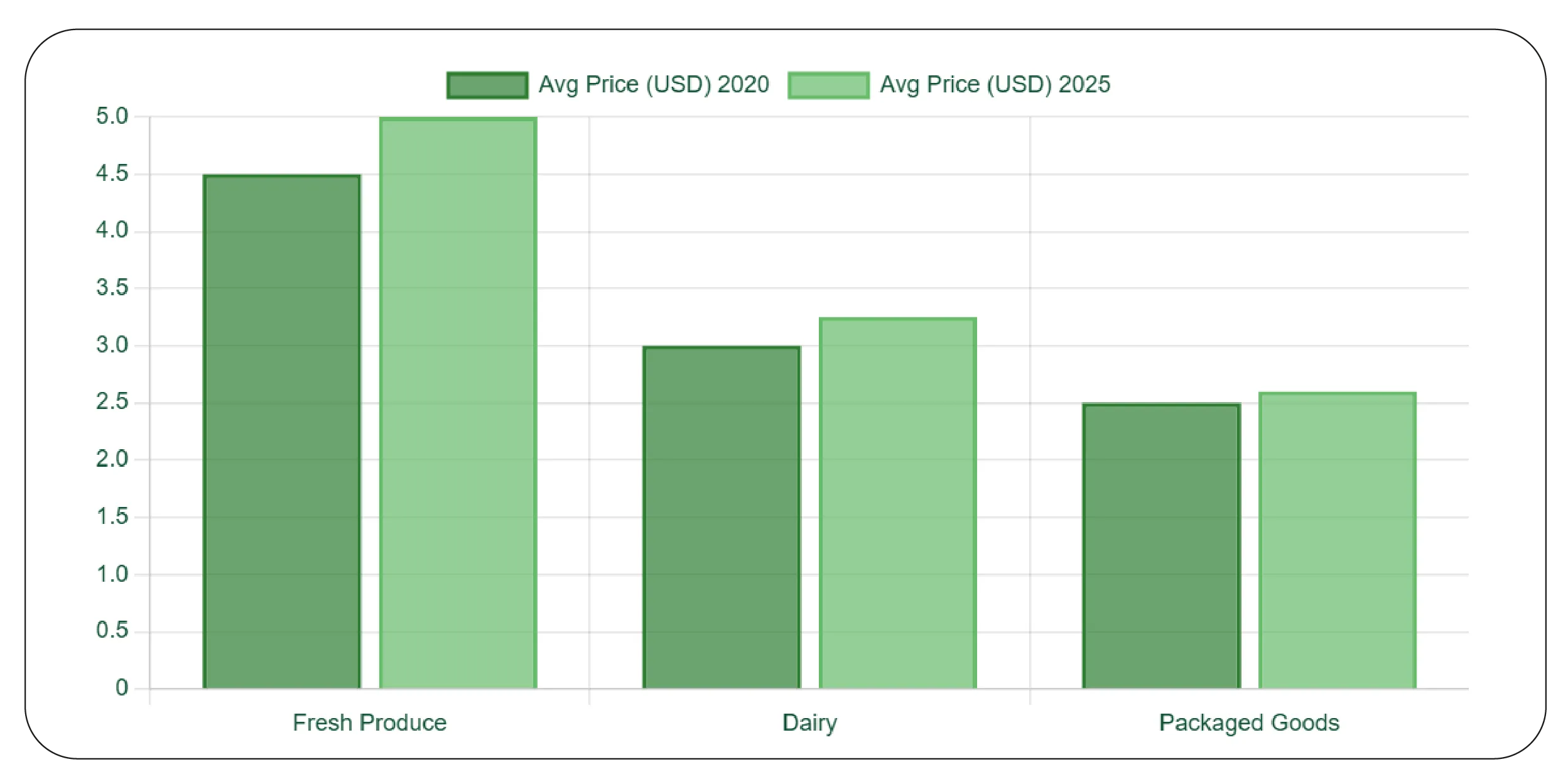
data for insights, retailers can identify seasonal trends, high-demand products, and pricing
elasticity. From 2020 to 2025, fresh produce pricing showed a 10–15% seasonal variation, while
packaged goods remained relatively stable with 3–5% fluctuations.
| Product Category |
Avg Price (USD) 2020 |
Avg Price (USD) 2025 |
% Change |
Notes |
| Fresh Produce |
4.50 |
5.00 |
11% |
Seasonal spikes in summer |
| Dairy |
3.00 |
3.25 |
8% |
Stable with minor promotions |
| Packaged Goods |
2.50 |
2.60 |
4% |
Promotions drove minor variance |
By transforming scraped data into insights, supermarkets can design competitive
promotions, optimize pricing tiers, and improve profitability while meeting consumer
expectations efficiently.
Consumer-Centric Analytics
Supermarket price tracking for consumer insights helps retailers understand
purchasing behavior. Between 2020 and 2025, tracking over 10,000 SKUs revealed that price drops
of 5–7% increased purchase volume by 12–14% in staple categories.
| Year |
Price Drop (%) |
Volume Increase (%) |
Category Impact |
| 2020 |
5 |
12 |
Dairy |
| 2021 |
6 |
13 |
Fresh Produce |
| 2022 |
5 |
12 |
Packaged Goods |
| 2023 |
7 |
14 |
Beverages |
| 2024 |
6 |
13 |
Snacks |
| 2025 |
5 |
12 |
Household Items |
By monitoring consumer-driven trends, supermarkets can adjust pricing
strategies, design targeted offers, and ensure optimal stock levels to meet demand efficiently.
Weekly Market Tracking
Continuous monitoring ensures that pricing remains competitive. Using Extract
Weekly Grocery Product Listings Data, retailers track promotions, discounts, and new
product launches. From 2020 to 2025, weekly tracking improved responsiveness by 30%, enabling
dynamic pricing across categories.
| Year |
Products Tracked Weekly |
Response Time (Days) |
Pricing Accuracy (%) |
| 2020 |
2,000 |
7 |
85 |
| 2021 |
4,000 |
6 |
87 |
| 2022 |
6,000 |
5 |
89 |
| 2023 |
8,000 |
4 |
91 |
| 2024 |
9,000 |
3 |
93 |
| 2025 |
10,000 |
2 |
95 |
Weekly tracking ensures businesses can adjust promotions in near real-time,
enhancing competitiveness and driving higher customer engagement.
Real-Time Monitoring for Strategic Advantage
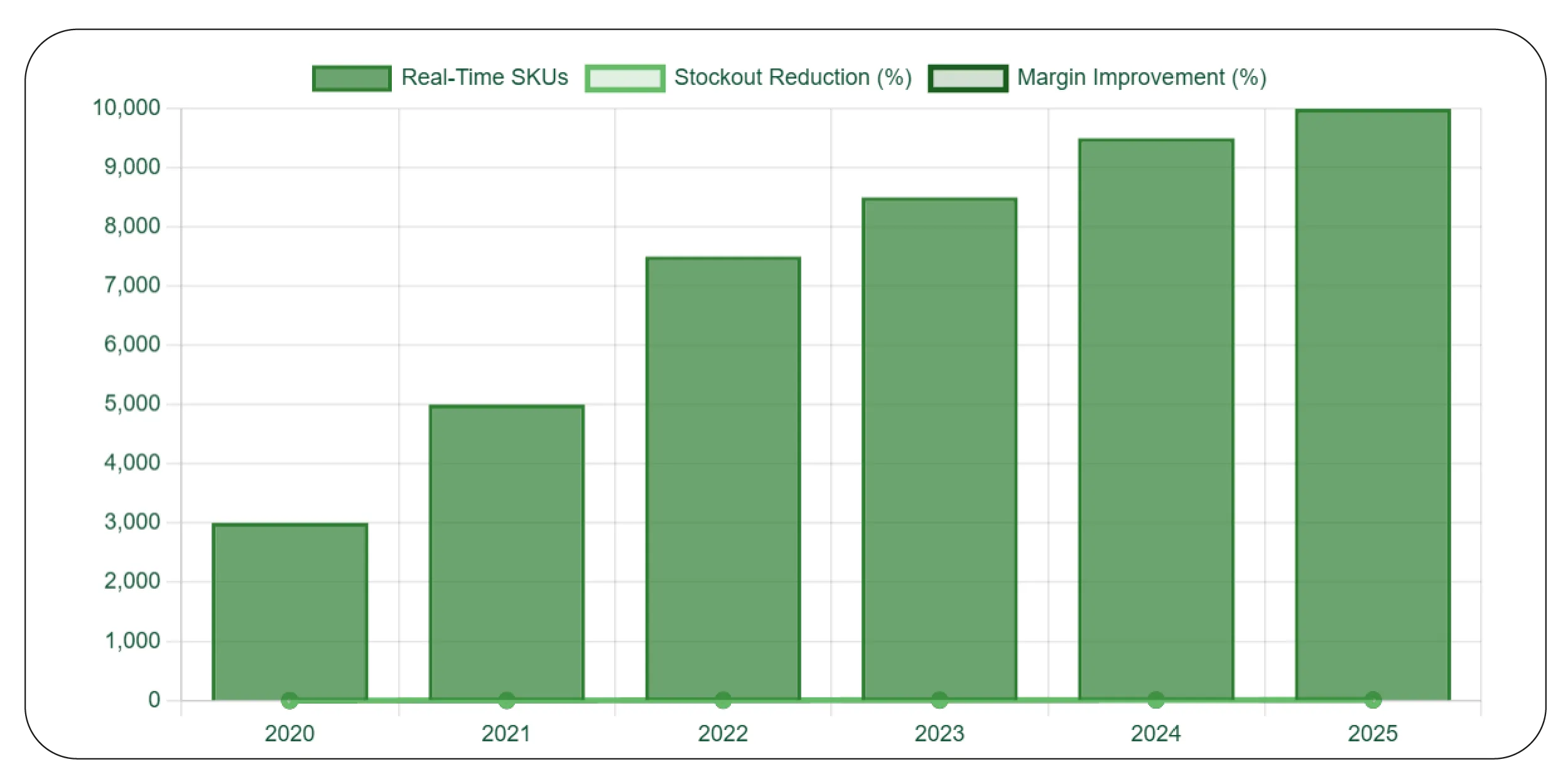
Finally, Real-time grocery price monitoring enables instant response to
competitor pricing and market shifts. From 2020 to 2025, real-time monitoring helped reduce
stockouts by 20% and improved margin optimization by 15%.
| Year |
Real-Time SKUs |
Stockout Reduction (%) |
Margin Improvement (%) |
| 2020 |
3,000 |
10 |
5 |
| 2021 |
5,000 |
12 |
7 |
| 2022 |
7,500 |
15 |
10 |
| 2023 |
8,500 |
17 |
12 |
| 2024 |
9,500 |
18 |
14 |
| 2025 |
10,000 |
20 |
15 |
This empowers retailers to stay competitive, enhance customer satisfaction, and
maximize profitability in a fast-changing market.
Why Choose Product Data Scrape?
Product Data Scrape offers a powerful solution for retailers looking to gain a
competitive edge through accurate pricing intelligence. With How to Use Price Data for
Supermarket Items, businesses can track thousands of SKUs across multiple stores, monitor price
fluctuations, promotions, and stock levels in real time. Our platform integrates seamlessly with
analytics tools, enabling data-driven decision-making for pricing strategies, inventory
management, and marketing campaigns. By leveraging advanced scraping technologies, automation,
and structured data outputs, Product Data Scrape ensures reliability, scalability, and
actionable insights. Choose Product Data Scrape to optimize margins, stay ahead of competitors,
and enhance overall profitability efficiently.
Conclusion
Leveraging Extract
Grocery & Gourmet Food Data through Product Data Scrape empowers supermarkets to make
smarter, data-driven pricing decisions. By tracking thousands of SKUs, monitoring promotions,
and analyzing competitor behavior in real time, retailers can optimize margins, reduce
stockouts, and respond swiftly to market trends. Historical insights from 2020 to 2025 enable
predictive strategies, ensuring seasonal and category-specific adjustments are accurate and
effective. With reliable, structured data and actionable intelligence, businesses can enhance
customer satisfaction while maximizing profitability. Start using Product Data Scrape today to transform How to
Use Price Data for Supermarket Items into a strategic growth advantage.
FAQs
1. How does Product Data Scrape help monitor supermarket prices?
Product Data Scrape extracts pricing, stock, and promotion data from thousands of SKUs, enabling
supermarkets to benchmark competitors and adjust strategies in real time.
2. Can I track specific grocery categories using Product Data Scrape?
Yes, Product Data Scrape allows targeted tracking of categories such as dairy, fresh produce,
beverages, and packaged goods for actionable insights.
3. How frequently is the price data updated?
With Product Data Scrape, pricing and stock data can be updated daily or in real time, ensuring
accurate and timely decision-making.
4. Is Product Data Scrape compliant with e-commerce regulations?
Yes, Product Data Scrape uses ethical data collection practices, ensuring compliance while
providing reliable pricing intelligence.
5. Can I integrate this data with my internal analytics tools?
Absolutely, Product Data Scrape outputs structured data compatible with dashboards, BI tools,
and reporting software for seamless integration.



 Singapore
 EMAIL
EMAIL
 PHONE
PHONE










.webp)