Introduction
The rapid rise of instant delivery models has transformed how consumers shop for daily essentials. At the heart of this transformation lies Pincode-Level Data Analytics in Quick Commerce, which enables brands to understand demand, pricing, and availability at a hyperlocal scale. However, extracting actionable insights at the pincode level is far from simple. Data inconsistencies, fluctuating inventory, and fragmented platforms make analytics complex and resource-intensive.
To address this complexity, businesses increasingly rely on Quick Commerce Grocery & FMCG Data Scraping to collect structured product, price, and availability data across platforms. This approach helps companies track regional demand shifts, monitor competitor strategies, and optimize inventory planning. Yet, without the right infrastructure and automation, scraped data alone cannot deliver real-time intelligence.
This blog explores the key challenges surrounding pincode-level analytics in quick commerce and explains how APIs and structured data extraction models are solving these issues at scale—especially in fast-moving grocery and FMCG segments.
When Hyperlocal Data Can’t Be Trusted
One of the biggest hurdles in quick commerce analytics is Real-Time Pincode Data Reliability Problems. Delivery platforms update product availability every few minutes, but backend data often lags due to sync delays between warehouses, dark stores, and consumer apps. As a result, analysts work with partial or outdated datasets, leading to inaccurate forecasts and poor operational decisions.
Between 2020 and 2026, India’s quick commerce market grew exponentially, but data accuracy did not always keep pace.
Hyperlocal Data Accuracy Trends (2020–2026)
.webp)
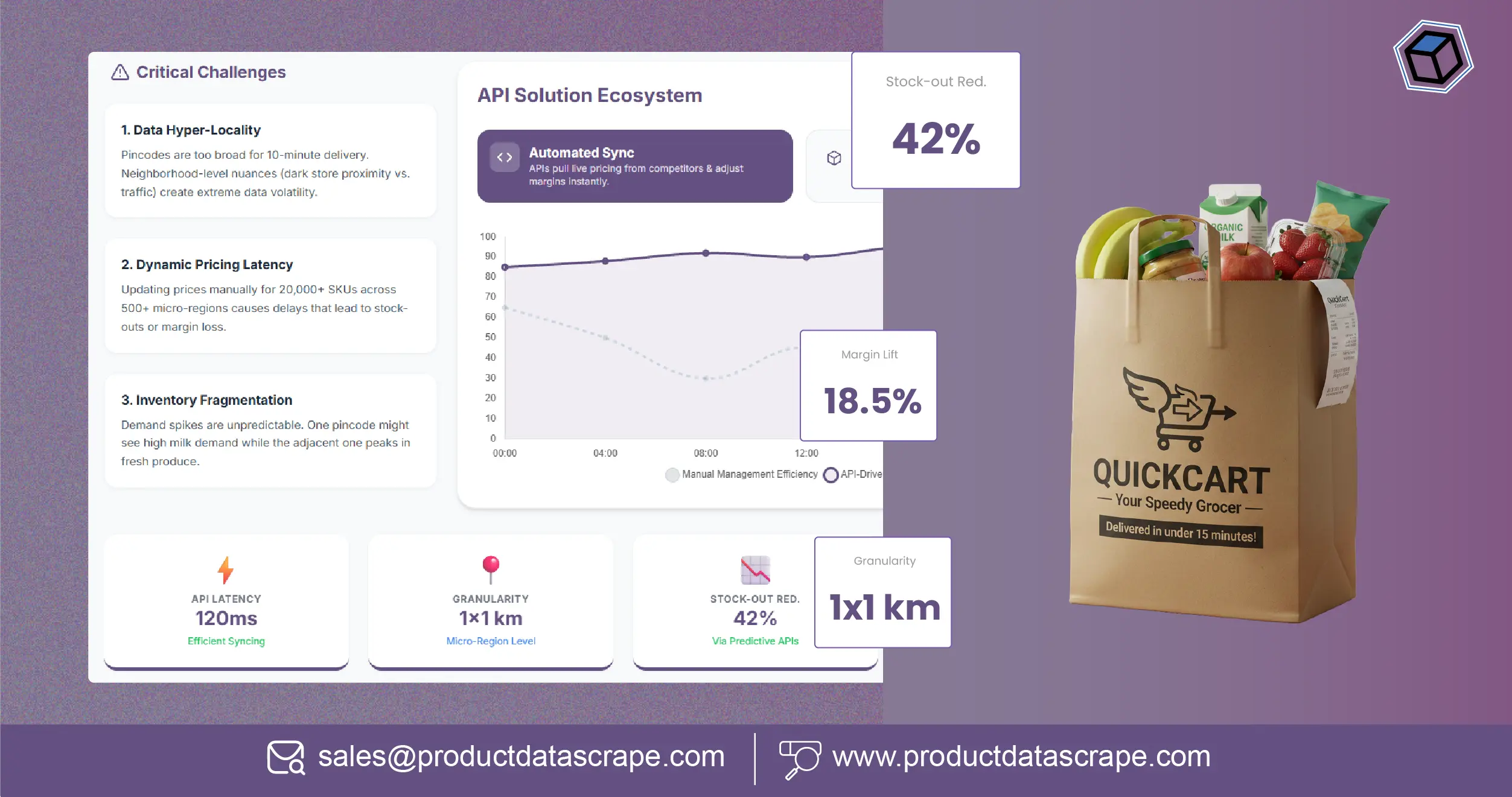
To overcome this, brands increasingly rely on a Web Data Intelligence API that standardizes incoming data streams. APIs validate pincode mappings, normalize product identifiers, and refresh datasets in near real time. This ensures decisions are based on reliable, continuously updated intelligence rather than static snapshots.
The Hidden Complexity Behind Local Price Variations
Pricing in quick commerce changes not just daily—but by the hour. Hyperlocal Pricing Data Challenges arise because the same product can carry different prices across pincodes due to demand surges, delivery costs, or competitive pressure. Manual tracking simply cannot keep up with this pace.
From 2020 to 2026, dynamic pricing adoption in Indian quick commerce rose sharply.
Dynamic Pricing Adoption by Year
| Year |
Platforms Using Dynamic Pricing |
| 2020 |
35% |
| 2022 |
52% |
| 2024 |
68% |
| 2026* |
85% |
Without automation, businesses miss these fluctuations and lose pricing competitiveness. Advanced data extraction enables continuous tracking of SKU-level price movements by location. When combined with analytics, brands can identify discount patterns, surge pricing windows, and regional elasticity—key insights for pricing teams navigating fast-moving grocery markets.
Growing Fast Without Breaking Data Pipelines
As quick commerce expands into Tier 2 and Tier 3 cities, Scaling Hyperlocal Data Analytics becomes a strategic necessity. What worked for 50 pincodes fails when expanded to 5,000. Larger datasets strain infrastructure, increase latency, and raise data quality risks.
Pincode Coverage Growth (2020–2026)
.webp)
Scalable analytics require automated ingestion, processing, and validation layers. Businesses that invest early in scalable architectures gain a competitive edge—enabling faster market entry, better demand planning, and improved customer satisfaction across regions.
Turning Location Signals into Business Intelligence
A robust Pincode-Level Data API for Quick Commerce acts as the backbone for real-time analytics. Instead of pulling fragmented datasets from multiple sources, APIs provide unified access to product listings, availability, prices, and delivery promises mapped accurately to pincodes.
API-Driven Data Efficiency Metrics
| Metric |
Before API |
After API |
| Data Refresh Time |
6 hrs |
<15 mins |
| Error Rate |
18% |
5% |
| Analytics Speed |
Slow |
Real-time |
By integrating API-driven datasets, brands unlock faster insights, automated reporting, and seamless integration with BI tools. This shift transforms raw hyperlocal data into decision-ready intelligence—essential for quick commerce operations operating on minute-level SLAs.
Capturing Movement at the Speed of Demand
The rise of instant fulfillment demands a Real-Time Location-Based Data Scraper capable of tracking changes as they happen. Whether it’s stock depletion, price updates, or delivery slot changes, real-time scraping ensures no critical signal is missed.
Real-Time Data Adoption Trends
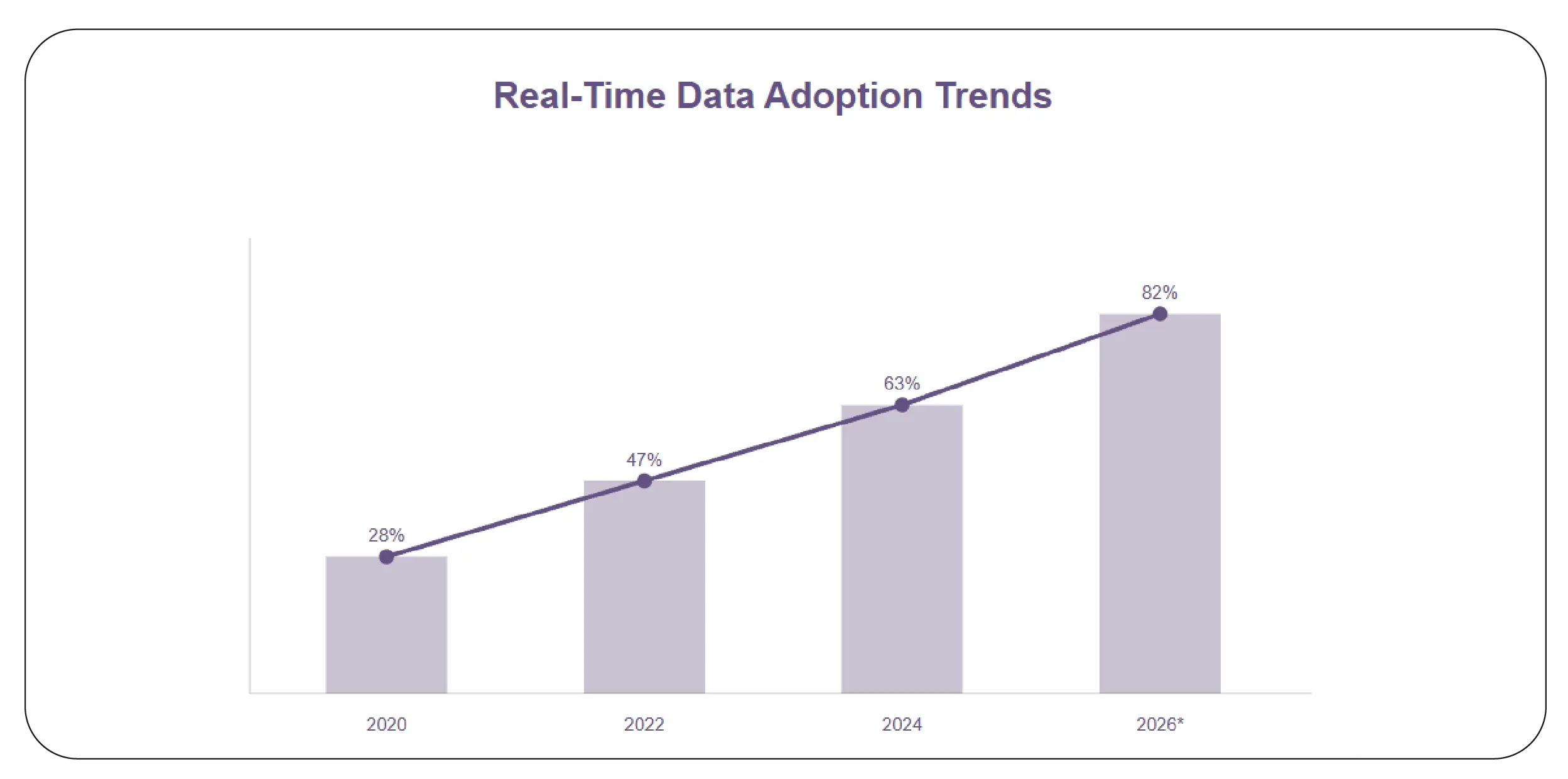
Such scrapers empower analytics teams with live dashboards, enabling proactive decision-making instead of reactive adjustments. This capability is especially valuable during flash sales, festive demand spikes, or sudden supply disruptions.
Competition That Changes by the Kilometer
Few markets are as aggressive as Pincode-Wise Price Wars in Indian Quick Commerce. Competitors frequently undercut each other by small margins within specific delivery zones, making hyperlocal price intelligence critical.
Average Price Variation by Pincode
| Year |
Avg. Price Difference |
| 2020 |
6% |
| 2022 |
9% |
| 2024 |
12% |
| 2026* |
15% |
Without granular data, brands risk losing market share silently. Continuous monitoring helps identify where competitors are discounting, which products drive traffic, and how pricing strategies evolve across neighborhoods.
Why Choose Product Data Scrape?
Product Data Scrape delivers high-quality, structured datasets tailored for quick commerce intelligence. From real-time grocery pricing to hyperlocal availability insights, our solutions support smarter decisions at scale. Whether you need to Buy Custom Dataset for competitive analysis or integrate automated feeds through a Web Data Intelligence API, we ensure accuracy, compliance, and speed. Our data empowers brands, analysts, and platforms to stay ahead in one of the most dynamic digital commerce ecosystems.
Conclusion
Pincode-level analytics is no longer optional—it’s the foundation of success in quick commerce. From pricing intelligence to availability tracking, APIs and automation are reshaping how businesses compete locally at scale. Leveraging Top Grocery Price Monitoring APIs alongside a robust Web Data Intelligence API enables brands to transform fragmented data into actionable insights.
Ready to unlock real-time, pincode-level intelligence for your quick commerce strategy? Partner with us to turn hyperlocal data into measurable growth.
FAQs
1. Why is pincode-level data critical in quick commerce?
It enables precise demand forecasting, local pricing optimization, and faster delivery planning by reflecting real consumer behavior at the neighborhood level.
2. How does data scraping support competitive analysis?
It tracks product prices, availability, and discounts across platforms, helping brands respond quickly to market changes.
3. Can APIs handle large-scale hyperlocal data?
Yes, APIs automate data collection, validation, and delivery, making large-scale pincode analytics reliable and efficient.
4. Is scraped data suitable for real-time decision-making?
When paired with real-time infrastructure, scraped data supports live dashboards and immediate operational insights.
5. Which provider offers scalable quick commerce datasets?
Product Data Scrape delivers customized, scalable datasets designed specifically for grocery and FMCG quick commerce analytics.



 Singapore
 EMAIL
EMAIL
 PHONE
PHONE











.webp)