Quick Overview
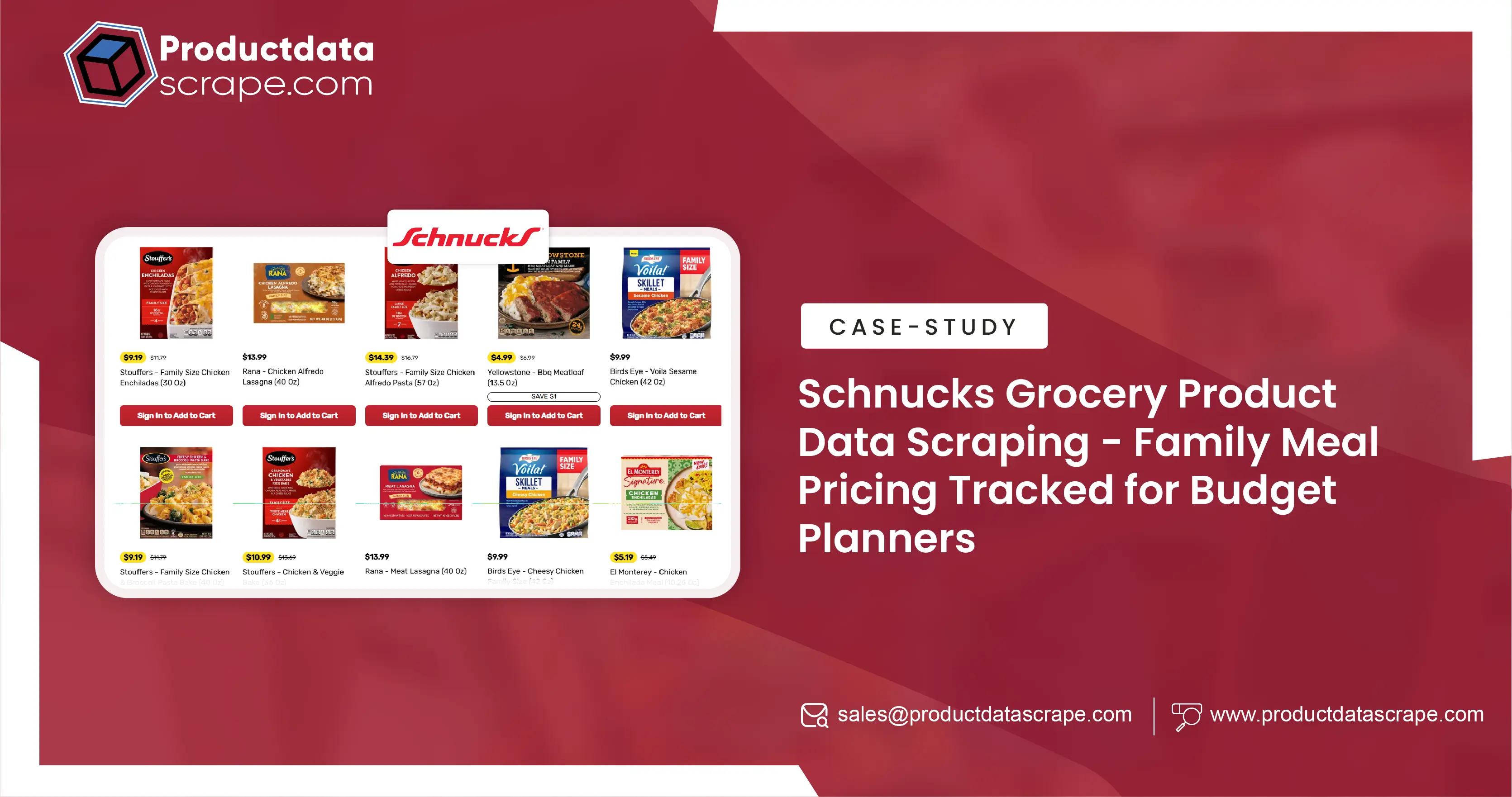
A leading meal-planning and budgeting platform partnered with Product Data Scrape to improve grocery price visibility for families and financial planners. The client needed reliable access to pricing, discounts, and product availability from Schnucks to better analyze household food costs. Using Schnucks Grocery Product Data Scraping, our team built an automated system to Extract Grocery & Gourmet Food Data including product names, pack sizes, prices, and promotions across multiple store locations. Over a 12-week implementation period, the solution delivered accurate product datasets and automated updates that supported smarter meal planning, improved grocery budget forecasting, and reliable retail analytics for planners and data analysts.
The Client
Our client is a fast-growing analytics company focused on helping families and financial planners track grocery spending and optimize weekly meal budgets. As grocery prices fluctuate due to supply chain shifts, seasonal demand, and promotional campaigns, households increasingly rely on data-driven planning to manage expenses effectively. The client aimed to provide a dashboard showing real-time grocery price trends, allowing users to compare ingredients and identify affordable meal combinations.
However, gathering consistent data from Schnucks was challenging. Manual data collection was slow and unreliable, and store promotions changed frequently. To overcome this limitation, the client required a robust Schnucks Grocery Product Data Scraper capable of capturing detailed product information at scale.
Before partnering with Product Data Scrape, their team relied on partial datasets and periodic manual checks that failed to reflect real-time pricing. This created gaps in their analytics platform and limited the value delivered to end users. By adopting our Web Scraping API Services, the client gained automated, structured product datasets that could feed directly into their budgeting and grocery analytics platform, enabling them to offer accurate and timely insights to thousands of users.
Goals & Objectives
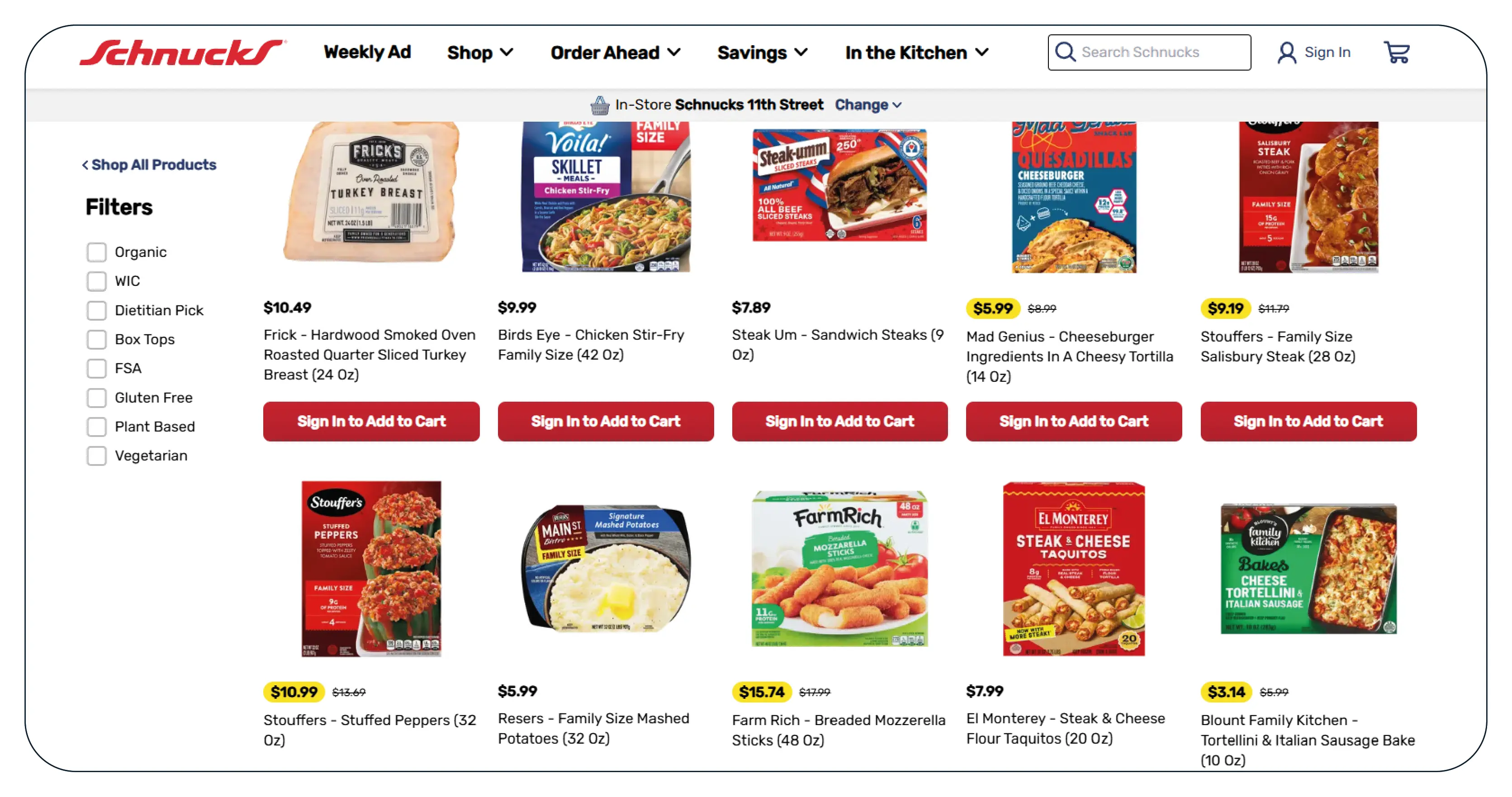
The project aimed to create a scalable data collection framework that could consistently monitor grocery product listings and pricing trends. Through Schnucks Grocery Product Data Extraction, the client wanted to build a reliable dataset of grocery items, enabling them to track ingredient prices used in common family meals and budgeting plans. Another key goal was improving speed and coverage so users could access near real-time grocery pricing insights.
From a technical perspective, the solution needed automation, structured data pipelines, and seamless integration with the client’s analytics dashboard. Our team also implemented Pricing Intelligence Services to analyze price fluctuations, promotional campaigns, and discount patterns. The objective was to automate product discovery, capture data across categories, and deliver regularly updated datasets that could support predictive price analysis.
Increase data collection coverage across grocery categories by 90%
Reduce manual data collection time by 80%
Improve dataset accuracy and freshness with daily automated updates
Enable real-time analytics integration for meal budgeting tools
Support scalable product monitoring across thousands of SKUs
The Core Challenge
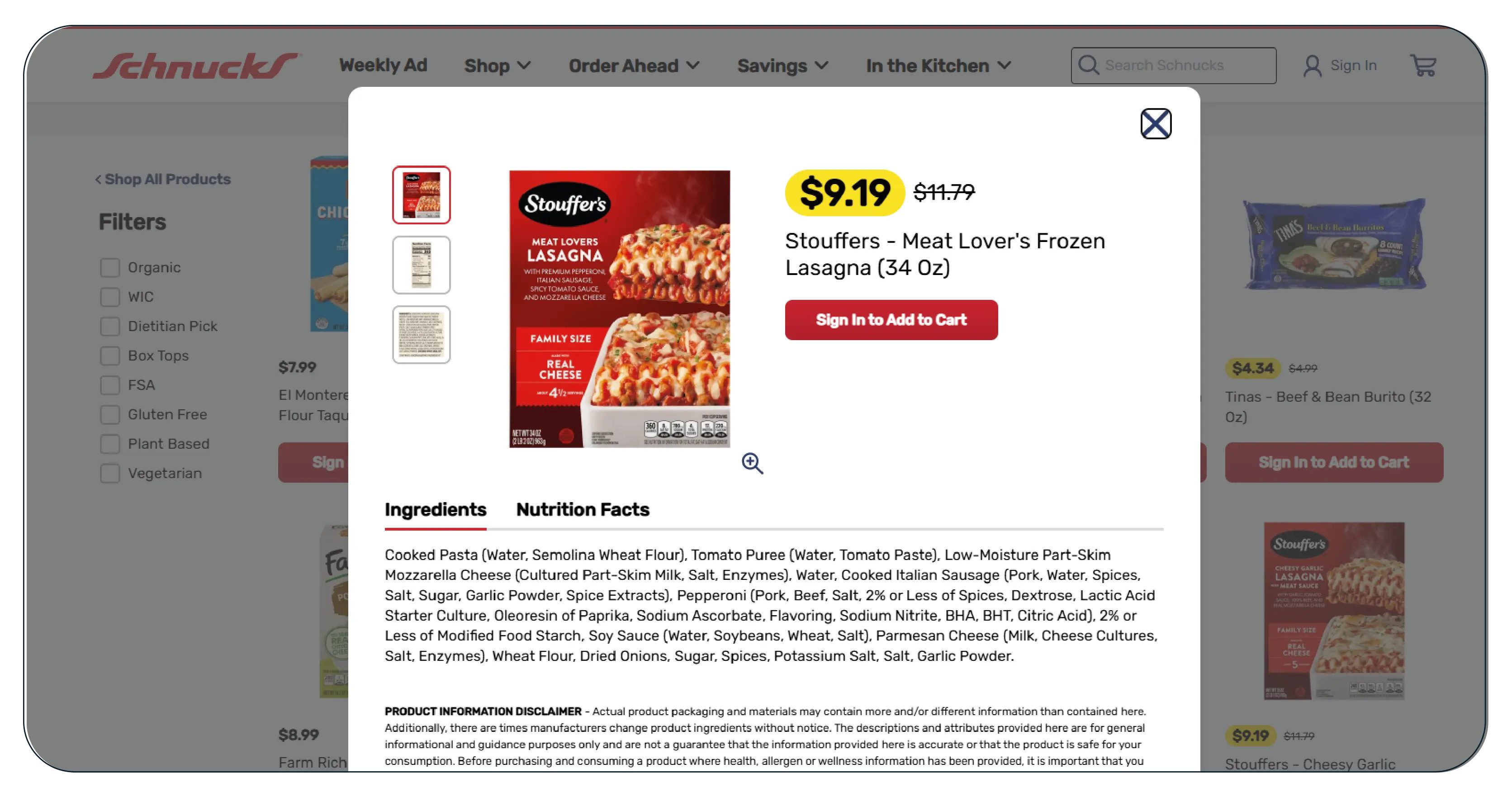
The client initially struggled with fragmented data sources and limited product coverage. Their analysts attempted to manually Extract Schnucks Grocery Product Information, but the process was slow and inconsistent. Product prices often changed daily due to promotions, seasonal discounts, and store-specific deals, making manual tracking unreliable.
Another major obstacle was the complexity of modern retail websites. Dynamic content loading and changing product pages made it difficult to maintain stable data extraction workflows. Without a structured data pipeline, the client frequently experienced incomplete datasets and delayed updates, reducing the reliability of their grocery price insights.
Additionally, the absence of competitive benchmarking tools prevented the client from understanding broader retail pricing strategies. Integrating Digital Shelf Analytics became essential to monitor how grocery products were displayed online, how promotions affected visibility, and how pricing changes impacted consumer purchasing behavior.
Because of these challenges, the client’s analytics platform struggled to provide accurate budgeting insights. Families using their platform could not always rely on the price estimates provided, which reduced user trust. A scalable and automated scraping infrastructure was required to deliver consistent product information and ensure reliable grocery price intelligence.
Our Solution
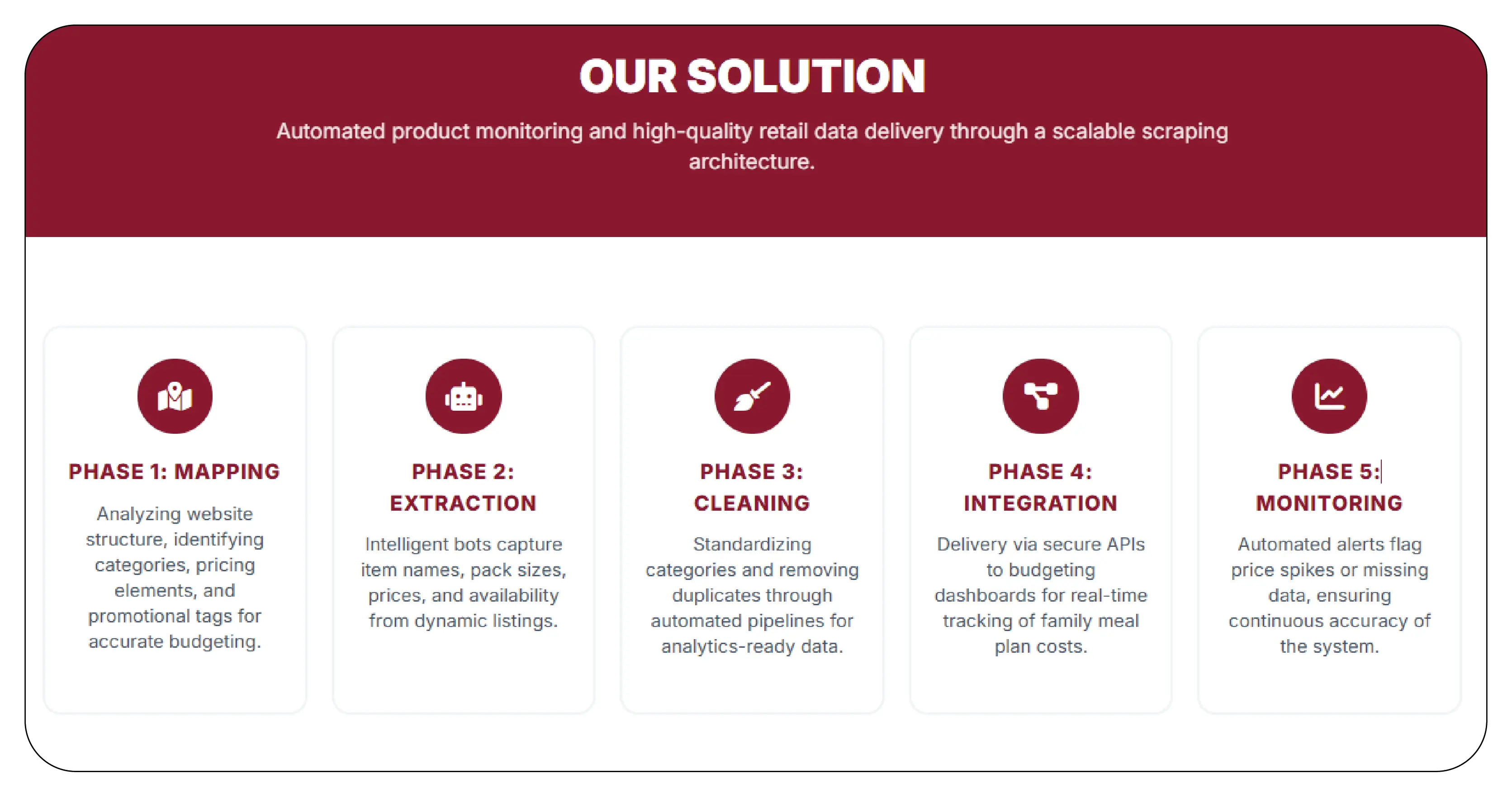
Product Data Scrape implemented a multi-phase solution designed to automate product monitoring and deliver high-quality retail datasets. The approach focused on building a scalable scraping architecture capable of continuously capturing product information from Schnucks.
Phase 1: Data Source Mapping
Our team analyzed the grocery website structure to identify product categories, pricing elements, and promotional tags. This stage helped define the data fields required for accurate budgeting insights.
Phase 2: Automated Data Extraction
We developed intelligent bots for Web Scraping Schnucks Grocery Product Listings, capturing product details such as item names, pack sizes, prices, discounts, and availability. The system was built to handle dynamic website elements and ensure stable data extraction even when page structures changed.
Phase 3: Data Structuring & Cleaning
Collected product data was processed through automated pipelines that standardized product categories and removed duplicate entries. This ensured the dataset remained accurate and analytics-ready.
Phase 4: Integration with Analytics Platform
The cleaned dataset was delivered through secure APIs and scheduled updates, enabling the client to integrate product data directly into their budgeting dashboard. This allowed real-time tracking of ingredient prices used in family meal plans.
Phase 5: Continuous Monitoring
Our monitoring system ensured that product listings and pricing updates were captured regularly. Automated alerts flagged anomalies such as sudden price spikes or missing data points.
This structured implementation allowed the client to build a reliable grocery price intelligence system that supports smarter budgeting tools, data-driven meal planning, and deeper retail analytics.
Results & Key Metrics
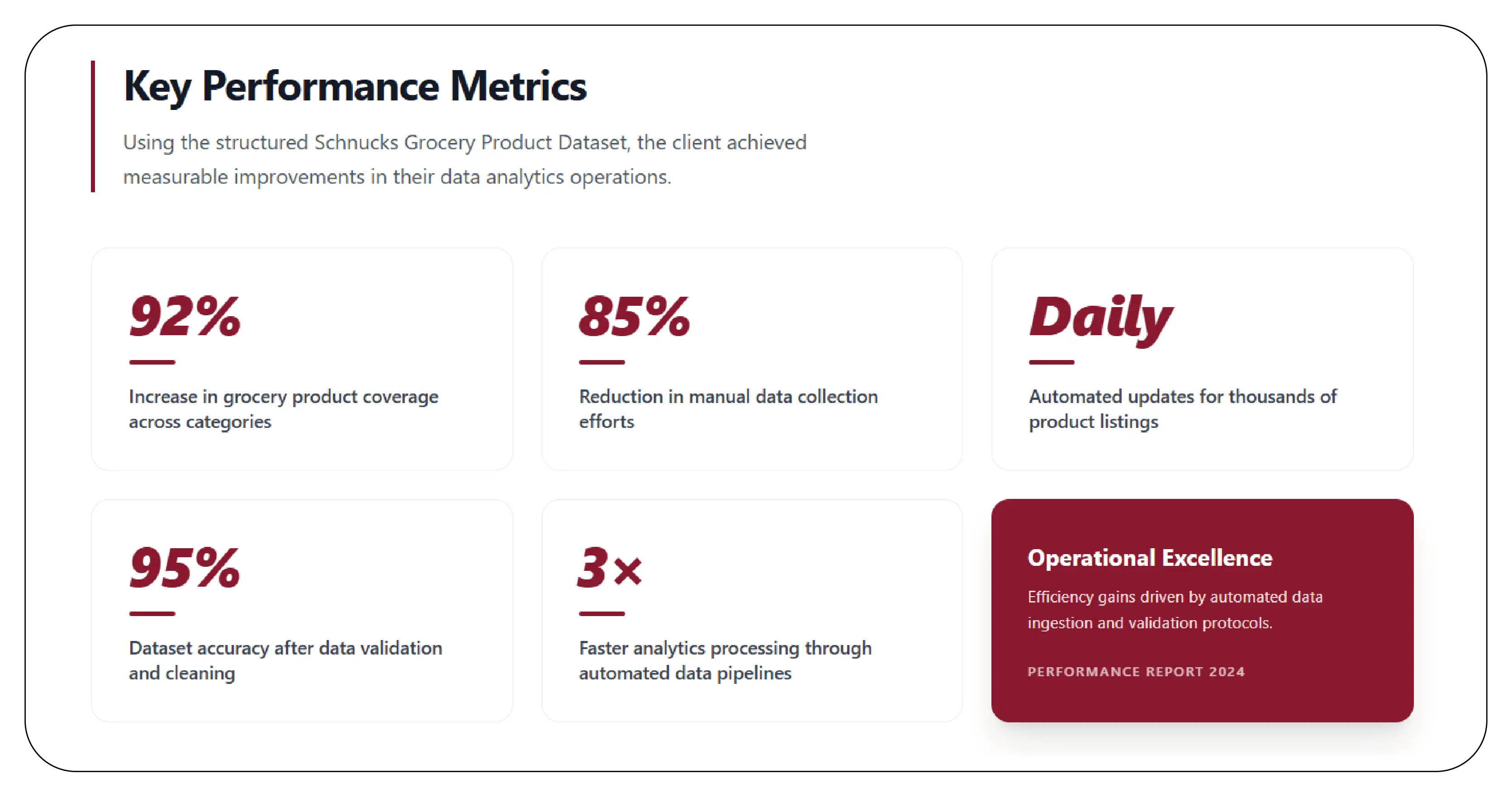
Using the structured Schnucks Grocery Product Dataset, the client achieved measurable improvements in their data analytics operations:
92% increase in grocery product coverage across categories
85% reduction in manual data collection efforts
Daily automated updates for thousands of product listings
95% dataset accuracy after data validation and cleaning
3× faster analytics processing through automated data pipelines
These improvements enabled the client to provide consistent grocery pricing insights to budgeting platforms and meal planning tools.
Results Narrative
The newly structured dataset transformed the client’s analytics capabilities. With access to an accurate and frequently updated Schnucks Grocery Product Dataset, the platform could track ingredient costs used in popular family meals. Users gained real-time visibility into grocery price trends and promotional deals. Analysts could also monitor seasonal price fluctuations and evaluate retail pricing strategies more effectively. The automated data pipeline ensured consistent insights without manual intervention, allowing the client to scale their grocery budgeting platform and deliver dependable cost-saving insights for households.
What Made Product Data Scrape Different?
Product Data Scrape distinguished itself through advanced automation and scalable scraping infrastructure. Our proprietary framework enabled seamless monitoring of thousands of product listings while maintaining high accuracy levels. By implementing intelligent scraping bots and structured data pipelines, we could efficiently Extract Schnucks Grocery & Gourmet Food Data from complex retail pages without disruptions.
Additionally, our platform integrates data validation, deduplication, and real-time monitoring to ensure dataset reliability. These innovations allow businesses to transform raw product listings into actionable analytics, empowering clients to build powerful grocery intelligence platforms that support budgeting tools, pricing insights, and retail trend analysis.
Client’s Testimonial
“Partnering with Product Data Scrape significantly improved our analytics platform. Their automated system delivered a reliable Schnucks Grocery Product Dataset that powers our grocery budgeting and meal planning tools. The data accuracy and consistency have enabled us to track real-time grocery price trends and help families make smarter purchasing decisions.
The team’s technical expertise and scalable scraping infrastructure ensured that our platform could grow without worrying about data gaps or manual updates. Their solution has become a critical component of our analytics ecosystem.”
—Director of Data Analytics
Conclusion
As grocery prices continue to fluctuate, reliable retail datasets are essential for data-driven budgeting and meal planning. Through this project, Product Data Scrape delivered a scalable solution that transformed how the client accesses and analyzes grocery product information. By building a structured Grocery store dataset and implementing automated Schnucks Grocery Product Data Scraping, we enabled accurate monitoring of product listings, pricing changes, and promotional trends.
The solution empowers analytics platforms to deliver reliable grocery insights, helping households plan affordable meals while giving businesses deeper visibility into retail pricing dynamics and consumer purchasing patterns.
FAQs
1. What is Schnucks grocery product data scraping?
It is the automated process of collecting product information such as prices, descriptions, and availability from Schnucks’ online grocery listings.
2. What type of data can be extracted from grocery websites?
Businesses can gather product names, prices, discounts, stock availability, product categories, images, ratings, and promotional offers.
3. How can scraped grocery data benefit businesses?
Retailers, analysts, and budgeting platforms use the data to track price trends, analyze promotions, and build grocery cost comparison tools.
4. Is automated grocery data extraction scalable?
Yes. With the right scraping infrastructure and APIs, businesses can collect data from thousands of product listings across multiple categories in real time.
5. Who typically uses grocery product datasets?
Data analytics firms, price comparison platforms, e-commerce companies, market researchers, and budgeting applications rely on structured grocery datasets to generate insights and support decision-making.


 Singapore
 EMAIL
EMAIL
 PHONE
PHONE


.webp)
.webp "thumb")
.webp "thumb")
.webp "thumb")








.webp)