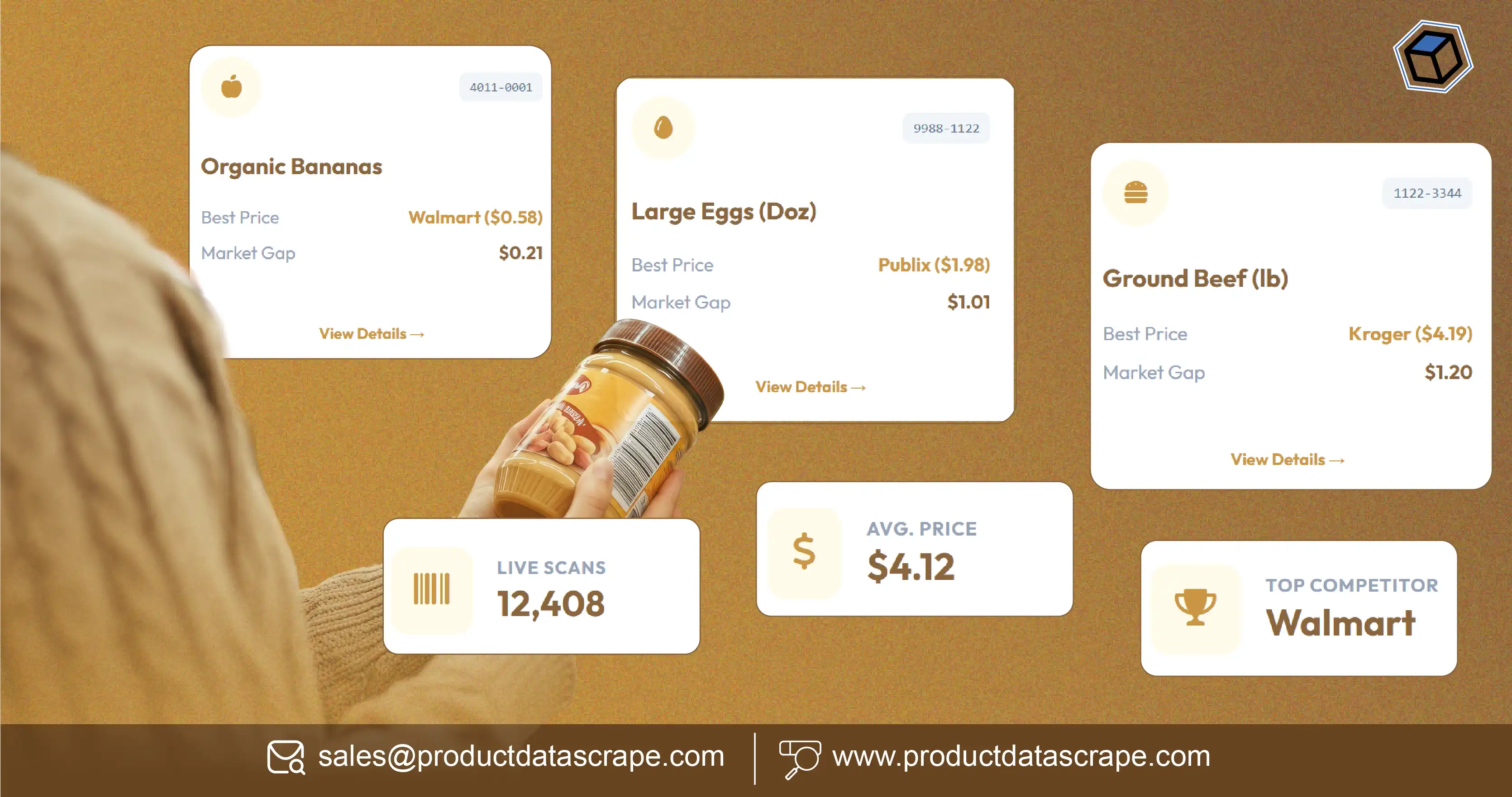
Introduction
Retailers use UPC-based grocery intelligence to compare identical products
across multiple supermarkets, benchmark competitor pricing, monitor promotions, and optimize
pricing strategies. With advanced Grocery Store Deal Matching Data Scraping by UPC scan systems
across HEB, Publix, Winn-Dixie, Walmart, and Kroger, businesses can improve pricing accuracy,
identify promotional gaps, and strengthen category-level competitiveness using structured
Grocery store dataset solutions.
The grocery industry has become increasingly data-driven between 2020 and 2026
as retailers aggressively compete through dynamic pricing and personalized promotions. UPC-level
analytics enable businesses to track identical products across multiple supermarket chains and
identify price variations in real time.
Retailers now depend on AI-powered grocery intelligence to benchmark discounts,
monitor inventory changes, and improve promotional effectiveness. Product Data Scrape helps
grocery brands, distributors, and retailers transform barcode-level grocery intelligence into
actionable pricing strategies and measurable business growth.
How Does UPC-Level Pricing Intelligence Improve Competitive Benchmarking?
UPC-level pricing intelligence helps retailers compare identical grocery
products across multiple chains, improving price optimization and promotional competitiveness.
Using scalable Scrape UPC based Grocery Price Comparison systems and
enterprise-grade Extract Grocery & Gourmet
Food Data infrastructures, businesses monitored
grocery pricing trends across leading supermarket chains more efficiently.
Key pricing intelligence areas included:
- UPC-level product matching
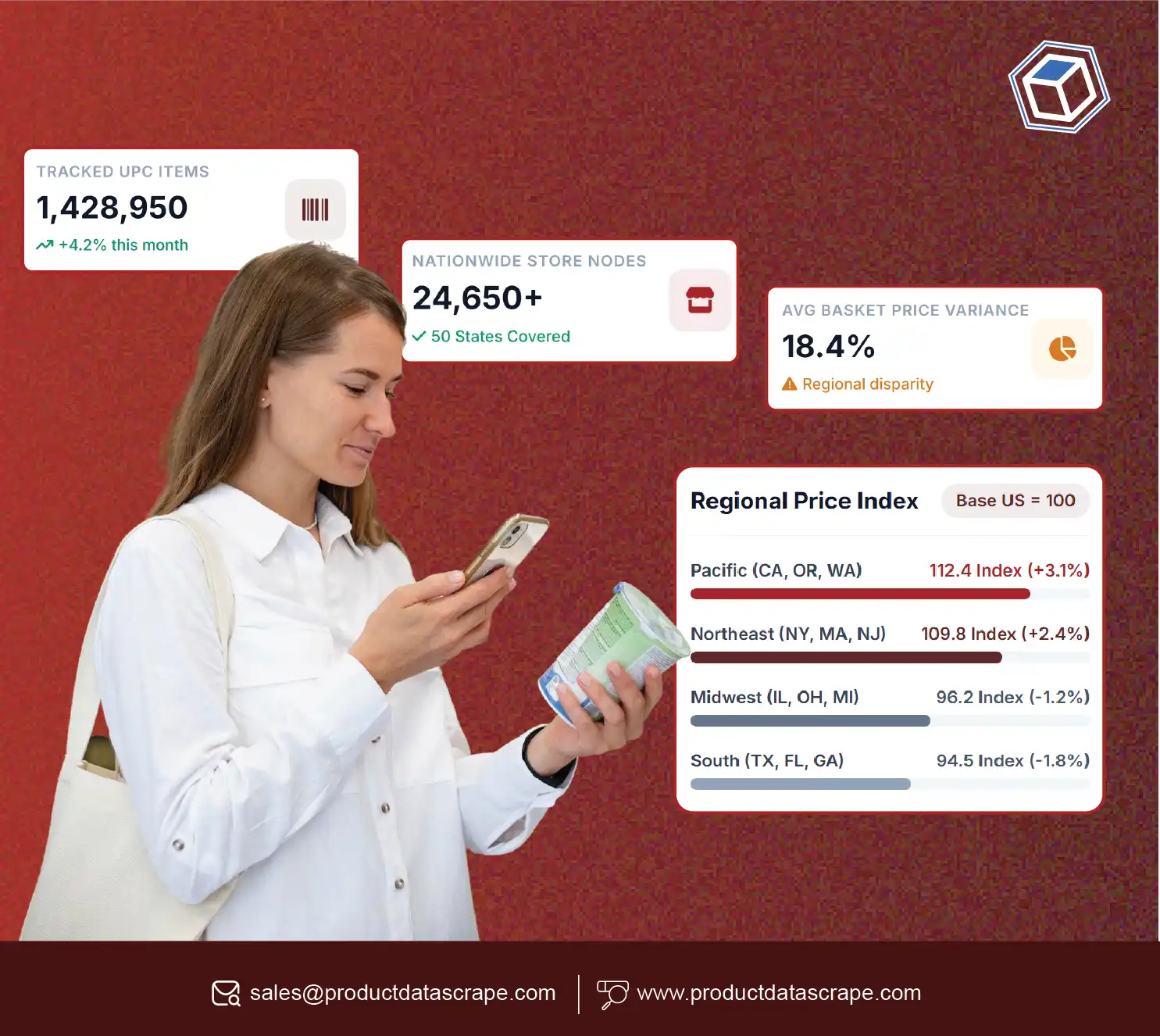
- Regional price comparison
- Grocery category benchmarking
- Promotion overlap analysis
- Competitor discount tracking
- Inventory pricing fluctuations
UPC Price Comparison Trends (2020–2026)
| Year |
UPCs Tracked |
Daily Price Comparisons |
Retailers Monitored |
| 2020 |
18,500 |
42K |
5 |
| 2021 |
27,300 |
61K |
5 |
| 2022 |
39,800 |
88K |
5 |
| 2023 |
54,700 |
117K |
5 |
| 2024 |
71,500 |
149K |
5 |
| 2025 |
92,600 |
188K |
5 |
| 2026 |
118,900 |
236K |
5 |
Retailers used these insights to identify inconsistent pricing, benchmark
competitors, and optimize grocery category pricing strategies more effectively.
The intelligence also improved promotional planning and helped reduce regional
pricing inefficiencies.
Why Are Coupon and Promotion Analytics Critical for Grocery Retailers?
Coupon and promotion analytics help retailers understand competitor discount
strategies and improve promotional campaign effectiveness.
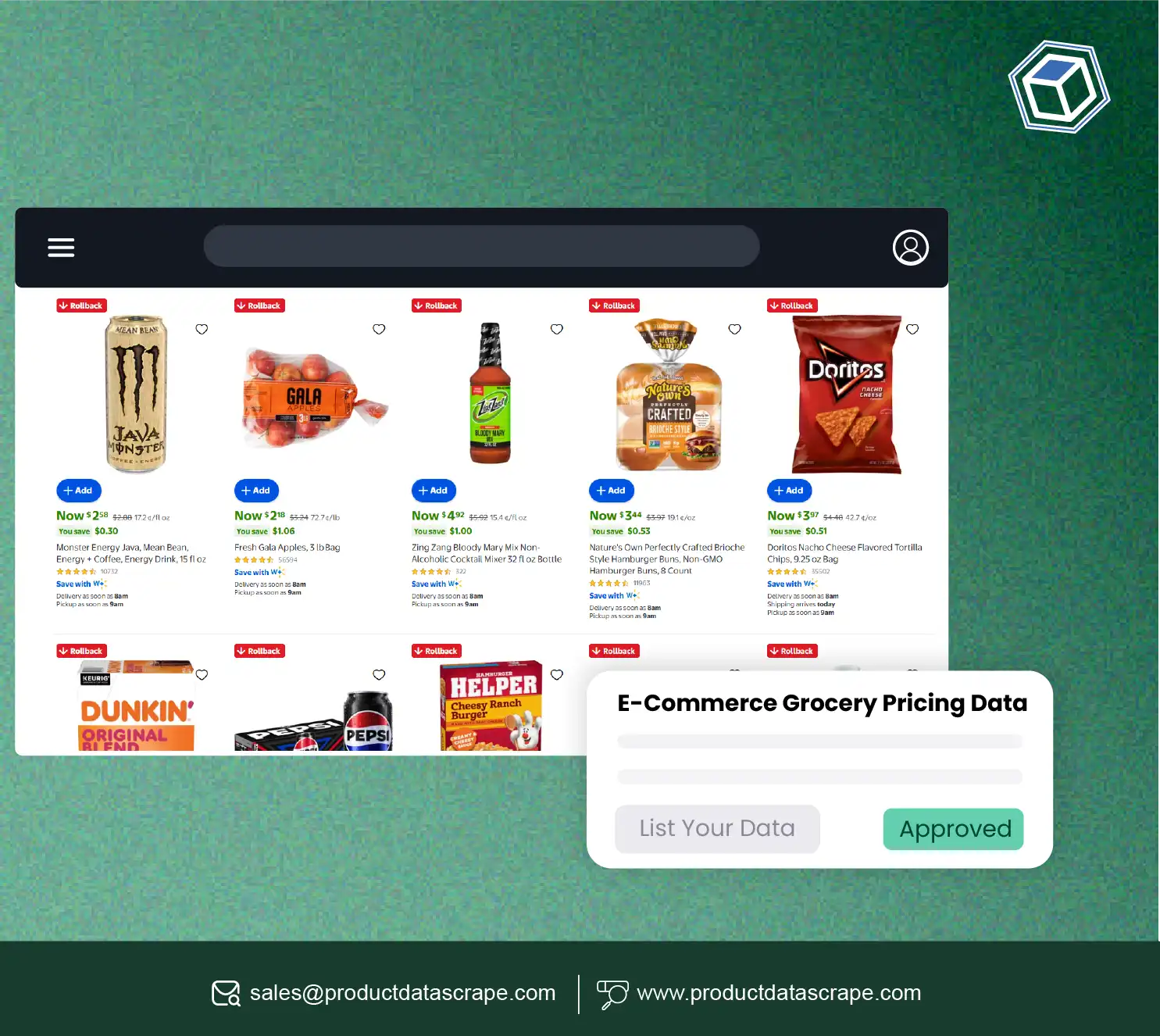
Businesses leveraging UPC Coupon and Deal tracking across grocery stores
systems combined with scalable Walmart Grocery
Data Scraping API solutions gained better
visibility into discount campaigns across multiple supermarket chains.
Promotion intelligence tracked:
- Digital coupons
- Buy-one-get-one offers
- Weekly promotions
- Loyalty discounts
- Flash sales
- Seasonal grocery campaigns
Grocery Promotion Analytics Trends
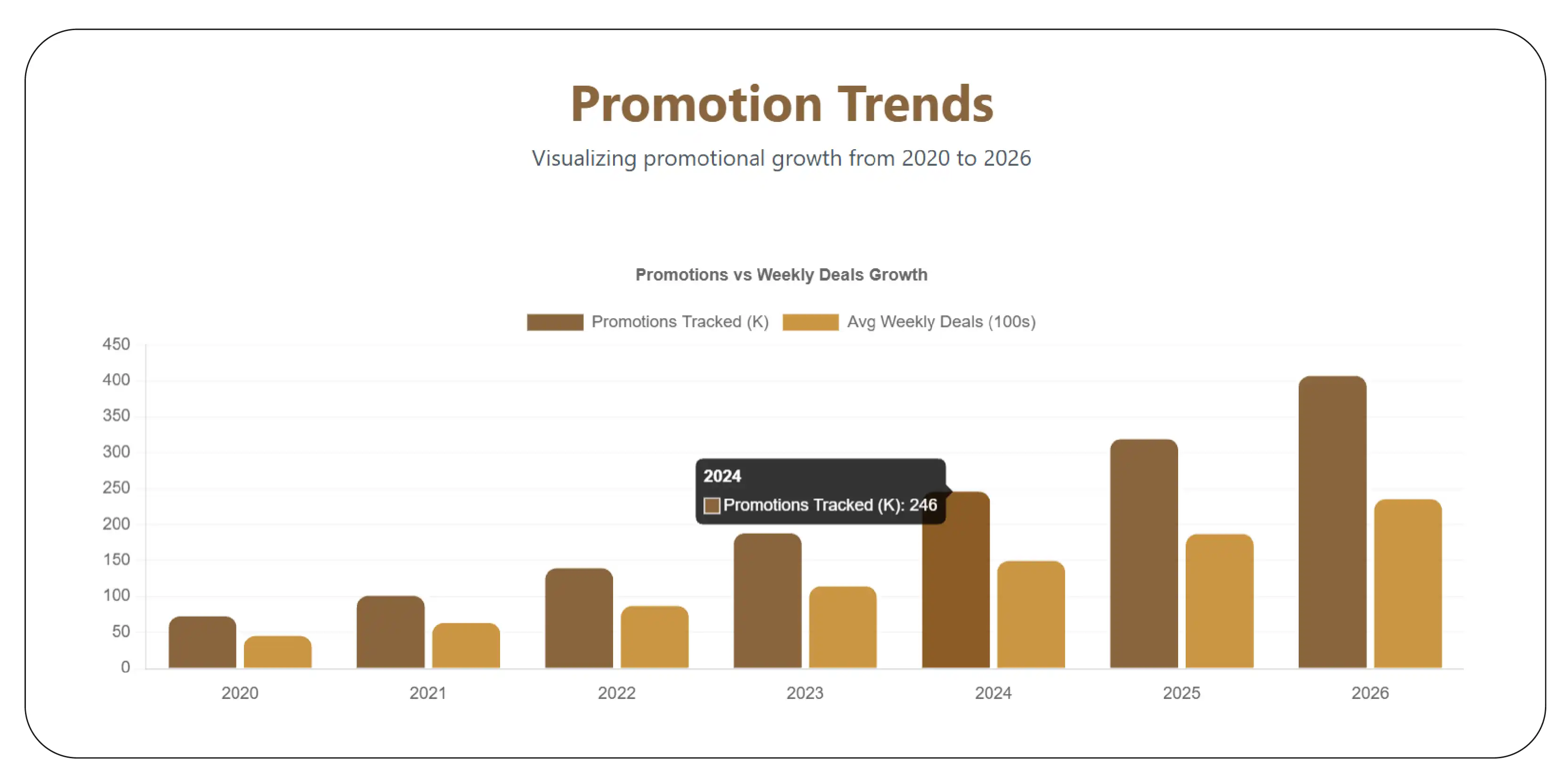
Retailers improved campaign timing and identified high-performing grocery
discounts using real-time promotion analytics.
The systems also helped businesses benchmark competitor coupon strategies more
accurately.
How Does Barcode-Level Grocery Extraction Improve Retail Intelligence?
Barcode-level extraction improves retail intelligence by enabling businesses to
standardize identical grocery products across multiple supermarket chains.
Using scalable UPC-Based Grocery Data Extraction frameworks powered by advanced
Web Scraping Kroger Data
infrastructures, retailers gained real-time visibility into grocery
assortment and pricing trends.
Barcode intelligence monitored:
- Product pricing changes
- SKU-level assortment trends
- Grocery category performance
- Competitor availability
- Inventory consistency
- Regional assortment variations
Barcode Grocery Intelligence Metrics
| Year |
Grocery SKUs Matched |
Data Accuracy |
Assortment Visibility |
| 2020 |
22,400 |
82% |
68% |
| 2021 |
31,800 |
85% |
73% |
| 2022 |
44,500 |
88% |
79% |
| 2023 |
59,700 |
91% |
84% |
| 2024 |
78,900 |
94% |
89% |
| 2025 |
102,600 |
96% |
93% |
| 2026 |
129,400 |
98% |
97% |
Retailers leveraged barcode-level insights to improve category management and
strengthen cross-retailer grocery comparisons.
The analytics also reduced duplicate product inconsistencies and improved
reporting accuracy.
Why Is H-E-B Grocery Deal Intelligence Valuable for Retailers?
H-E-B grocery analytics help businesses benchmark regional promotions, compare
product pricing, and improve discount strategy visibility across Texas grocery markets.
Retailers using scalable H-E-B grocery deal scraping by UPC systems and
AI-powered Extract Walmart Grocery &
Gourmet Food Data frameworks improved cross-retailer
pricing comparisons more effectively.
Key grocery insights included:
- UPC-level price matching
- Product-level discount tracking
- Regional assortment analytics
- Inventory stock visibility
- Weekly grocery promotions
- Brand-level pricing comparisons
H-E-B Competitive Pricing Trends
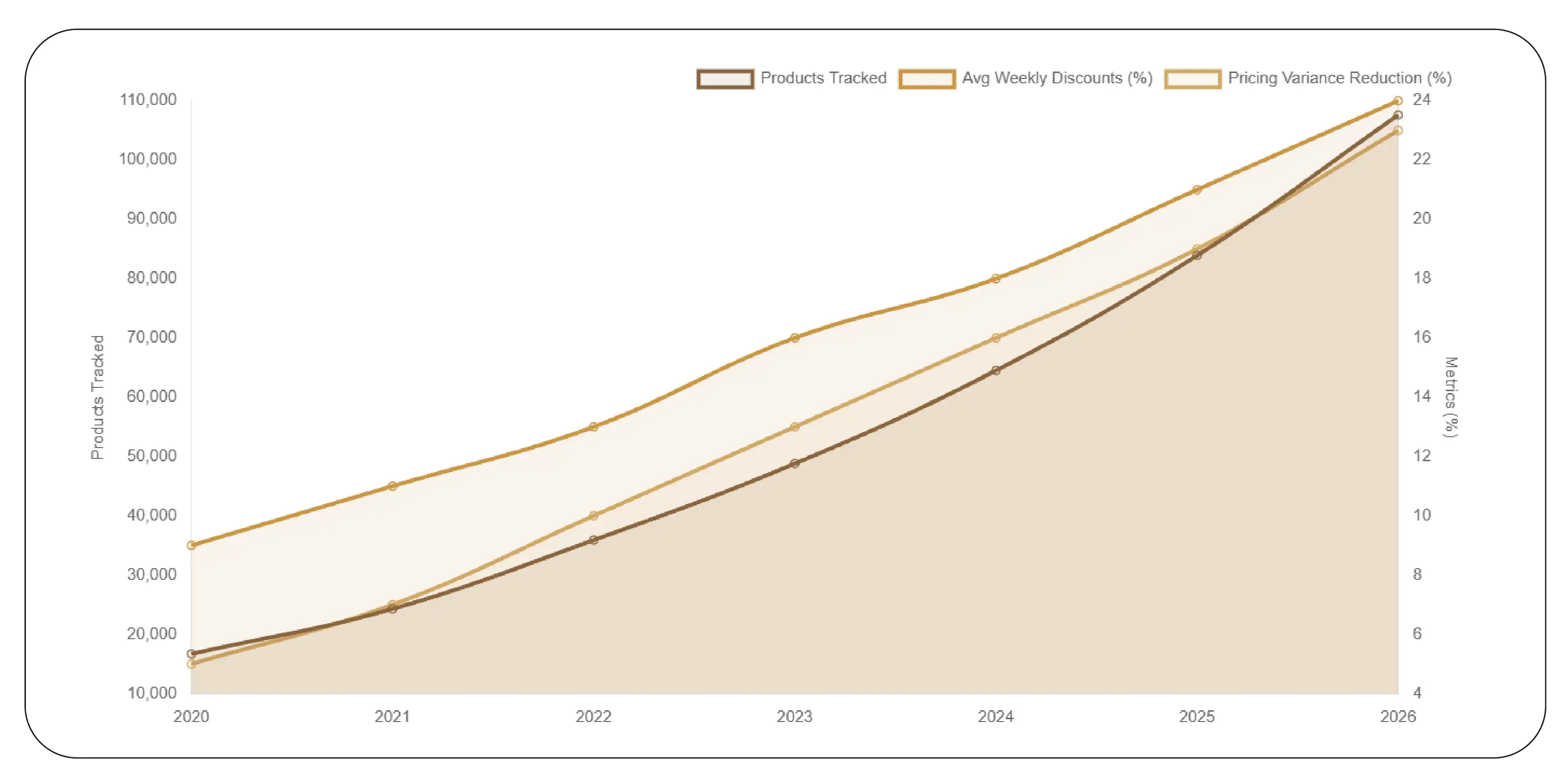
The analytics revealed growing promotional competition between H-E-B and
Walmart across grocery and gourmet food categories.
Retailers used these insights to improve category pricing responsiveness and
optimize promotional planning.
How Do Barcode-Level Comparisons Improve Publix and Winn-Dixie Analytics?
Barcode-level comparisons help retailers identify identical product pricing
differences across supermarkets and benchmark category competitiveness more accurately.
Using advanced Publix barcode price comparison data infrastructures and
scalable Extract Winn-Dixie Grocery &
Gourmet Food Data systems, businesses gained real-time
visibility into grocery pricing inconsistencies.
Cross-retailer comparisons tracked:
- Same-product pricing
- Discount overlap trends
- Promotional visibility
- Grocery category demand
- Inventory consistency
- Product ranking shifts
Grocery Barcode Comparison Metrics
| Year |
Same-Product Matches |
Avg Pricing Accuracy |
Retail Intelligence Growth |
| 2020 |
14,800 |
80% |
6% |
| 2021 |
22,500 |
84% |
9% |
| 2022 |
33,900 |
87% |
12% |
| 2023 |
47,100 |
91% |
15% |
| 2024 |
63,600 |
94% |
18% |
| 2025 |
82,700 |
96% |
21% |
| 2026 |
105,900 |
98% |
25% |
Retailers improved grocery benchmarking capabilities and optimized product
pricing across Publix and Winn-Dixie stores.
The insights also strengthened regional pricing alignment and category-level
promotional strategies.
Why Is Same-Product Price Tracking Important Across Grocery Retailers?
Same-product price tracking helps retailers compare identical UPC products
across multiple supermarkets and identify pricing gaps in real time.
Businesses leveraging Winn-Dixie same product price tracking systems powered by
enterprise-grade Price Monitoring Services improved grocery
intelligence and promotional
competitiveness significantly.
The tracking framework monitored:
- Barcode-level price changes
- Daily promotion updates
- Inventory stock fluctuations
- Product-level pricing gaps
- Hyperlocal retail pricing
- Grocery category competition
Same-Product Tracking Metrics
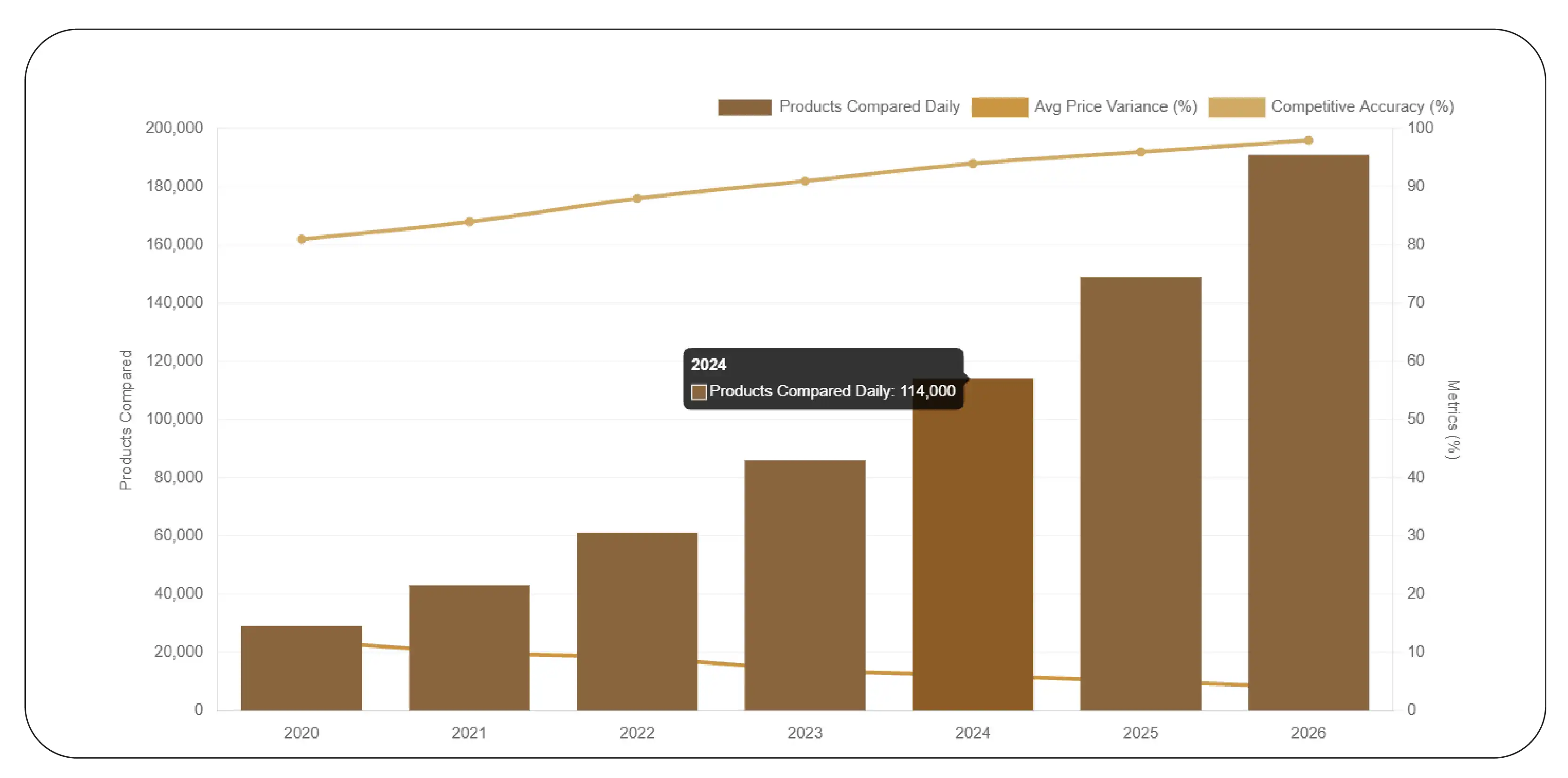
Retailers reduced pricing inconsistencies and improved promotional
competitiveness using barcode-level grocery intelligence systems.
These insights also improved supplier negotiations and optimized retail
assortment strategies.
Why Choose Product Data Scrape?
Product Data Scrape delivers enterprise-grade grocery intelligence powered by
scalable Walmart barcode price comparison data systems and advanced Grocery Store Deal Matching
Data Scraping by UPC scan infrastructures.
Our capabilities include:
- UPC-level grocery intelligence
- Real-time promotion monitoring
- Barcode-based price comparisons
- AI-powered retail analytics
- Grocery assortment benchmarking
- Competitive pricing dashboards
- Inventory visibility tracking
- Structured grocery datasets
Our solutions help retailers, grocery brands, suppliers, and distributors
optimize pricing strategies and improve retail competitiveness across multiple supermarket
ecosystems.
Conclusion
UPC-level grocery intelligence has become essential for retailers competing
across dynamic supermarket markets. By leveraging scalable Kroger grocery catalog scraping by
barcode infrastructures and advanced Grocery Store Deal Matching Data Scraping by UPC scan
solutions, businesses can improve pricing visibility, benchmark promotions, and strengthen
category competitiveness across HEB, Publix, Winn-Dixie, Walmart, and Kroger.
Product Data Scrape helps businesses transform barcode-level grocery
intelligence into actionable retail growth through AI-powered analytics, automated monitoring
systems, and scalable supermarket intelligence solutions.
Ready to optimize your grocery pricing intelligence strategy?
Contact Product Data Scrape
today to unlock real-time grocery analytics,
UPC-level benchmarking dashboards, and enterprise-grade retail intelligence solutions.
FAQs
1. Why is UPC-based grocery deal matching important?
UPC-level grocery matching helps retailers compare identical products across supermarkets and
identify pricing differences, promotions, and inventory trends more accurately.
2. What data can businesses collect using grocery barcode analytics?
Businesses can collect pricing, discounts, promotions, inventory availability, product rankings,
and barcode-level grocery assortment insights across multiple retailers.
3. How does same-product tracking improve grocery competitiveness?
Same-product tracking helps retailers benchmark competitor pricing and optimize promotional
strategies across identical grocery SKUs using real-time intelligence.
4. Can barcode analytics improve promotional planning?
Yes. Barcode analytics enables businesses to identify overlapping promotions, discount trends,
and pricing opportunities across multiple grocery retailers.
5. How does Product Data Scrape support grocery retailers?
Product Data Scrape provides scalable grocery intelligence solutions with AI-powered analytics,
UPC-level datasets, automated monitoring systems, and enterprise-grade retail dashboards.


 Singapore
 EMAIL
EMAIL
 PHONE
PHONE


.webp "thumb")








.webp)