Introduction
Retailers need real-time grocery intelligence to monitor pricing fluctuations,
stock availability, discount campaigns, and hyperlocal demand trends across fast-growing quick
commerce platforms. By leveraging Scrape Quick Commerce Price Battle — Fruits & Vegetables in
Pune and Mumbai capabilities and scalable Extract Quick
Commerce Product Data solutions,
businesses can benchmark competitors, optimize pricing strategies, and improve inventory
planning across Pune and Mumbai markets.
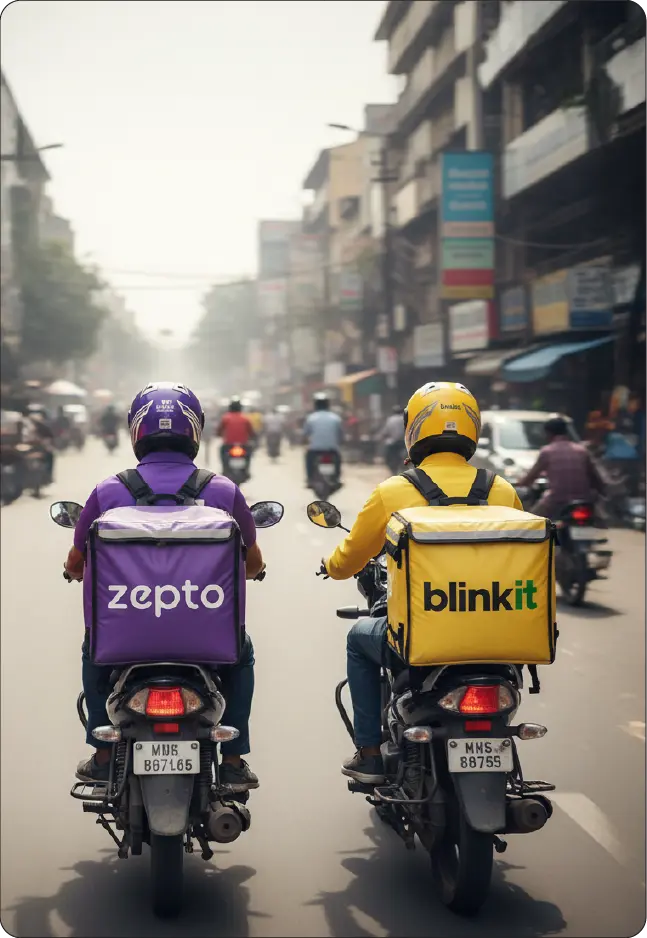
The rapid growth of Blinkit, Zepto, Swiggy Instamart, and BigBasket has
transformed the grocery ecosystem between 2020 and 2026. Consumers now expect faster deliveries,
competitive pricing, and consistent product availability for fruits and vegetables.
Retailers increasingly depend on AI-powered grocery intelligence to monitor
dynamic price wars, category-level demand fluctuations, and regional assortment strategies.
Product Data Scrape helps businesses collect structured quick commerce datasets that improve
operational efficiency and pricing responsiveness across highly competitive urban grocery
markets.
How Does Real-Time Grocery Tracking Improve Retail Competitiveness?
Real-time grocery tracking helps retailers respond quickly to competitor
pricing changes, monitor inventory availability, and optimize promotional campaigns across
hyperlocal grocery markets.
Actowiz-style analytics systems powered by Quick Commerce Price Tracking Fruits
& Vegetables in Pune and Mumbai capabilities and scalable Web Scraping API Services enable
retailers to benchmark pricing across multiple quick commerce platforms simultaneously.
Retailers monitored:
- Tomato and onion pricing
- Seasonal fruit discounts
- Inventory stock-outs
- Delivery availability
- Category-level pricing trends
- Hyperlocal competitor promotions
Grocery Price Tracking Trends (2020–2026)
.webp)
Retailers used these insights to improve price competitiveness and optimize
regional pricing strategies for high-demand produce categories.
The analytics also helped businesses reduce pricing gaps and strengthen
customer retention across quick commerce ecosystems.
Why Are Pune Grocery Markets Driving Hyperlocal Pricing Strategies?
Pune has emerged as one of India’s fastest-growing quick commerce markets due
to increasing urban demand for instant grocery delivery and digitally connected consumers.
Using advanced Pune quick commerce fruit price Tracking capabilities combined
with AI-driven Pricing Intelligence Services, retailers
monitored pricing trends across fruits,
vegetables, and grocery essentials more effectively.
Key analytics areas included:
- Apple and banana pricing trends
- Seasonal fruit demand shifts
- Retail discount fluctuations
- Hyperlocal pricing differences
- Inventory movement patterns
- Delivery-based pricing changes
Pune Grocery Intelligence Metrics
| Year |
Pune Grocery Orders |
Avg Fruit Price Volatility |
Customer Demand Growth |
| 2020 |
1.2M |
7% |
9% |
| 2021 |
1.9M |
9% |
12% |
| 2022 |
2.8M |
11% |
15% |
| 2023 |
4.1M |
13% |
18% |
| 2024 |
5.9M |
16% |
21% |
| 2025 |
7.8M |
18% |
24% |
| 2026 |
10.2M |
21% |
28% |
The analytics revealed that Pune consumers increasingly preferred promotional
pricing and bundled fruit offers during peak ordering periods.
Retailers leveraged these insights to optimize regional assortment planning and
improve hyperlocal grocery competitiveness.
How Do Demand Analytics Improve Grocery Forecasting?
Demand analytics improve forecasting accuracy by helping retailers identify
fast-moving produce categories, customer buying behavior, and seasonal demand spikes.
Businesses using advanced daily fruits and vegetables demand analytics combined
with intelligent Digital Shelf Analytics systems
gained real-time visibility into grocery
purchasing trends across quick commerce platforms.
The analytics framework monitored:
- Hourly order volumes
- Fast-moving vegetable SKUs
- Seasonal fruit demand
- Repeat customer purchases
- Product engagement patterns
- Delivery-zone demand trends
Grocery Demand Analytics Trends
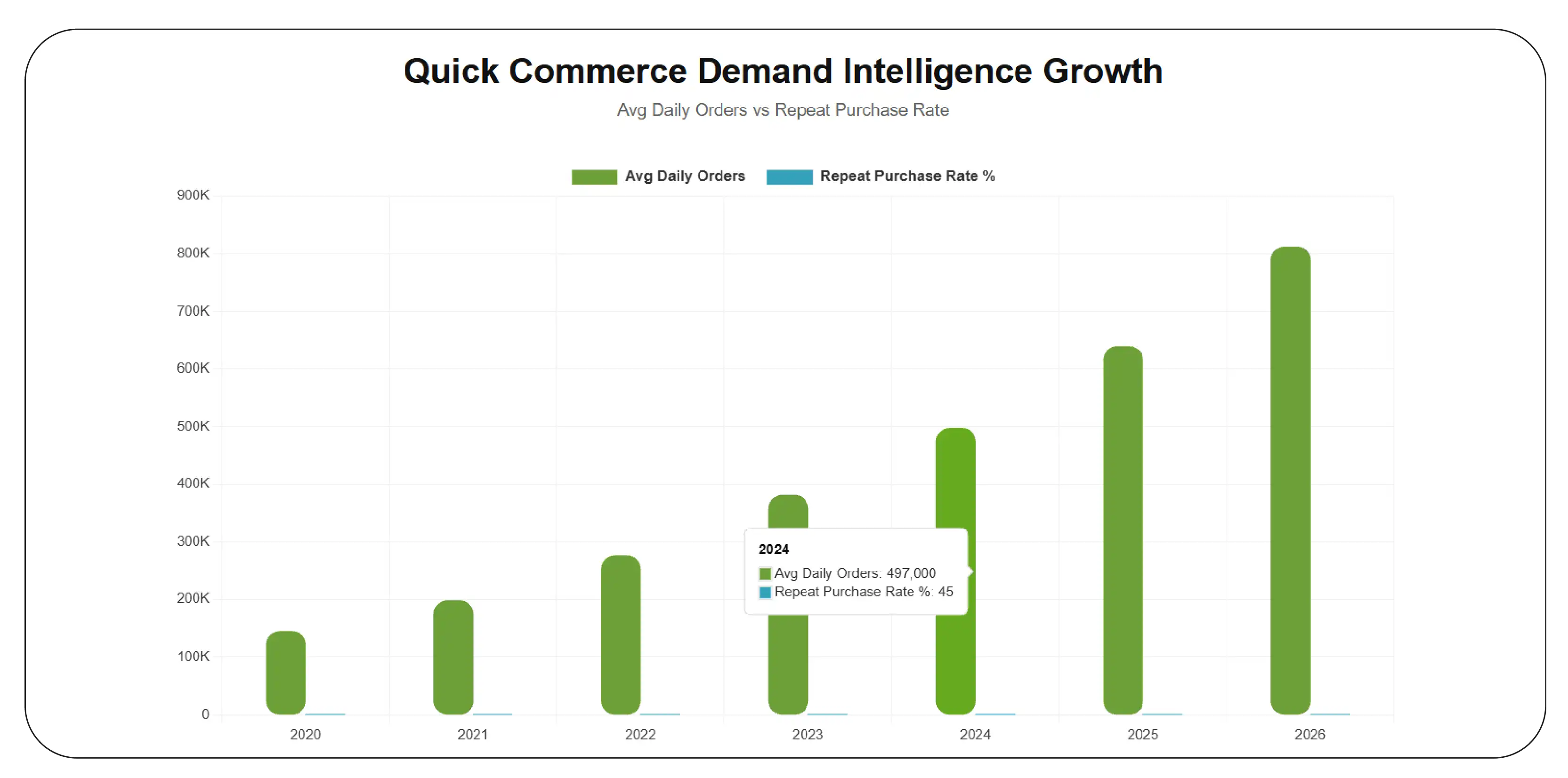
Retailers improved inventory forecasting and reduced stock-out incidents using
real-time demand intelligence.
The analytics also helped businesses identify peak grocery ordering windows
across Pune and Mumbai delivery zones.
Why Is Mumbai a Critical Market for Grocery Price Monitoring?
Mumbai’s dense urban population and strong quick commerce adoption make it one
of India’s most competitive grocery pricing markets.
Using scalable Mumbai quick commerce vegetable price scraping infrastructures
powered by enterprise-grade Price Monitoring Services,
retailers continuously
monitored product
pricing across multiple delivery platforms.
Key monitoring categories included:
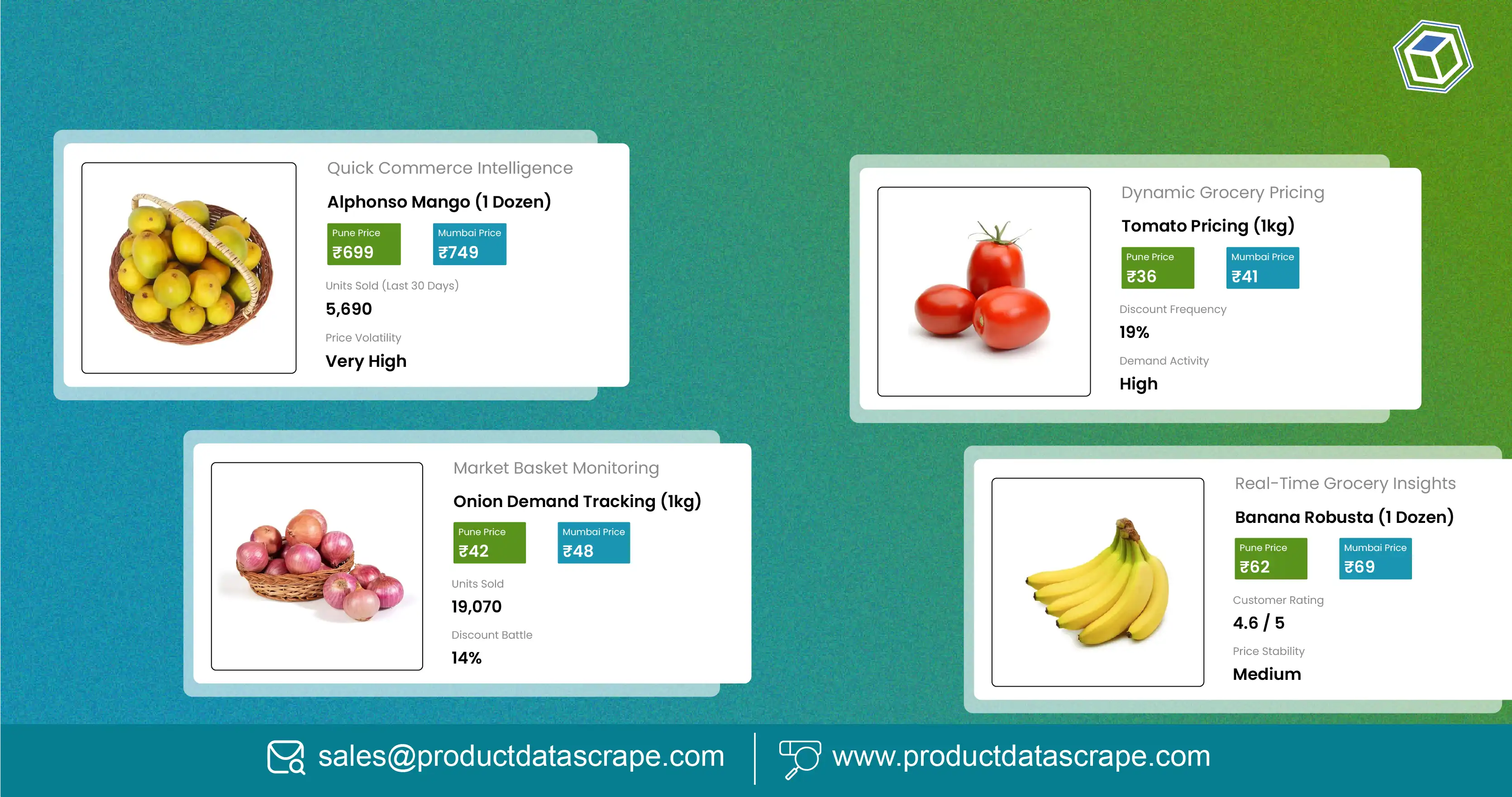
- Tomatoes
- Potatoes
- Onions
- Green vegetables
- Exotic produce
- Organic vegetables
Mumbai Price Monitoring Metrics
| Year |
Vegetable SKUs Tracked |
Avg Daily Price Changes |
Retail Coverage |
| 2020 |
9,500 |
12K |
72% |
| 2021 |
14,200 |
19K |
78% |
| 2022 |
21,700 |
28K |
83% |
| 2023 |
31,500 |
42K |
88% |
| 2024 |
45,900 |
61K |
92% |
| 2025 |
62,300 |
83K |
95% |
| 2026 |
81,800 |
109K |
98% |
The data revealed significant price fluctuations during monsoon seasons and
high-demand grocery periods.
Retailers used these insights to improve promotional timing and optimize
vegetable pricing strategies across Mumbai markets.
How Do City-Level Insights Help Retailers Benchmark Competitors?
City-level pricing intelligence helps retailers compare grocery performance
across hyperlocal delivery markets and benchmark regional pricing competitiveness.
Using advanced city wise grocery pricing battle analytics, businesses monitored
grocery price wars across Pune and Mumbai more effectively.
Competitive benchmarking included:
- Platform-wise pricing comparisons
- Delivery fee monitoring
- Promotional campaign analysis
- Regional assortment tracking
- Inventory availability comparisons
- Hyperlocal discount trends
City-Wise Grocery Intelligence Trends
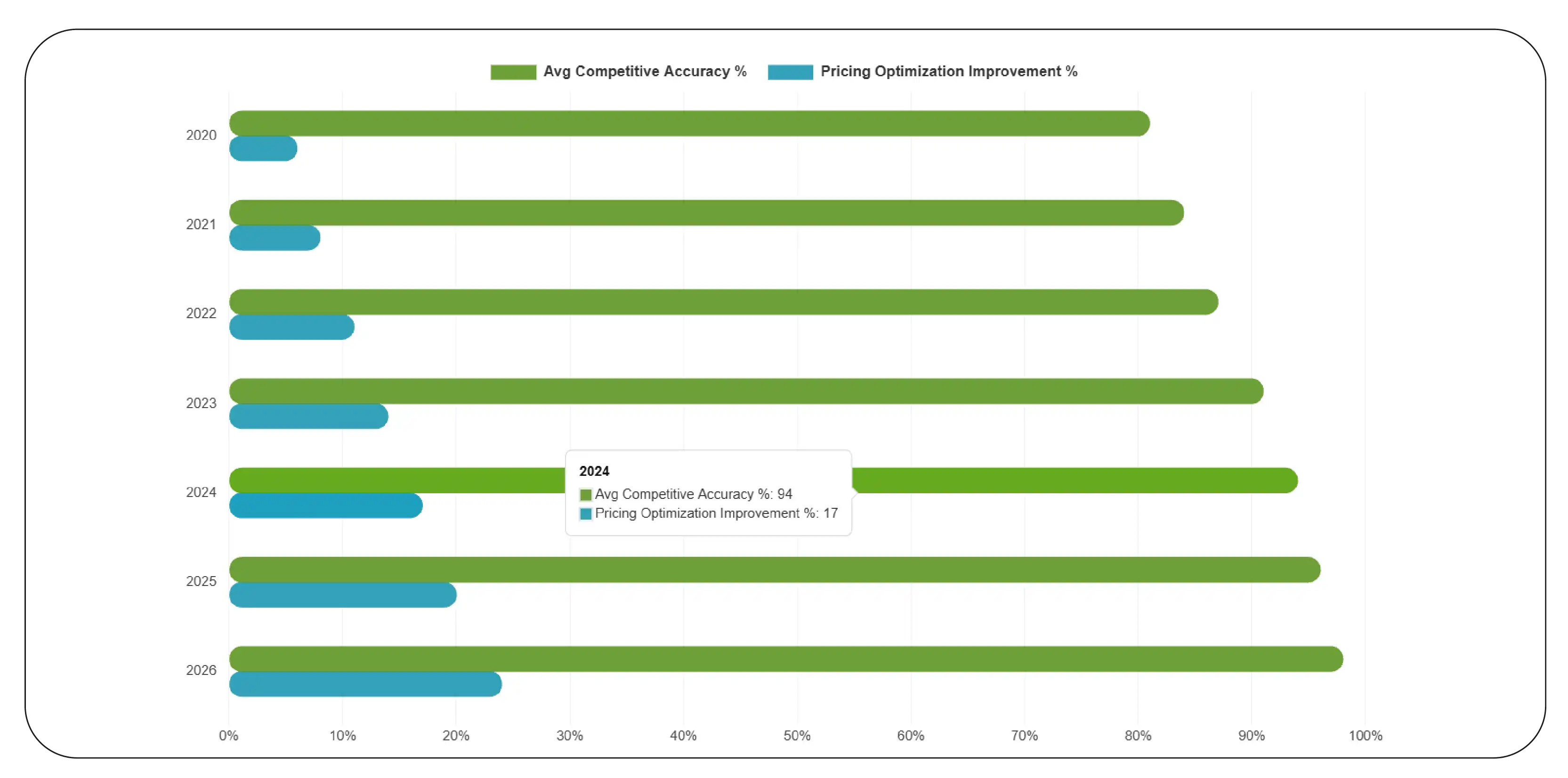
Retailers improved regional pricing responsiveness and strengthened competitor
benchmarking capabilities using city-level intelligence dashboards.
These insights also supported better promotional planning across highly dynamic
quick commerce environments.
Why Is Real-Time Stock Monitoring Essential in Quick Commerce?
Real-time inventory monitoring is essential because stock-outs directly impact
customer retention and platform visibility across quick commerce ecosystems.
Retailers leveraging scalable real time fruit and vegetable stock monitoring
infrastructures gained accurate visibility into inventory movement patterns and product
availability trends.
Inventory analytics monitored:
- Stock availability
- Delivery-zone inventory
- Seasonal supply fluctuations
- Fast-selling produce items
- Replacement product trends
- Inventory refill timelines
Stock Monitoring Intelligence Metrics
| Year |
Inventory Updates Daily |
Avg Stock-Out Reduction |
Fulfillment Improvement |
| 2020 |
16K |
5% |
6% |
| 2021 |
24K |
8% |
9% |
| 2022 |
36K |
11% |
12% |
| 2023 |
52K |
14% |
15% |
| 2024 |
71K |
17% |
18% |
| 2025 |
93K |
20% |
21% |
| 2026 |
118K |
24% |
25% |
Retailers used inventory intelligence to reduce stock shortages and improve
customer fulfillment performance across fruits and vegetables categories.
The insights also helped optimize supplier coordination and improve hyperlocal
inventory planning strategies.
Why Choose Product Data Scrape?
Product Data Scrape delivers enterprise-grade grocery intelligence solutions
powered by scalable fruits and vegetables stock tracking in Pune and Mumbai infrastructures and
advanced Scrape Quick Commerce Price Battle — Fruits & Vegetables in Pune and Mumbai
capabilities.
Our key advantages include:
- Real-time grocery price monitoring
- Hyperlocal demand analytics
- AI-powered competitor benchmarking
- Quick commerce inventory intelligence
- Structured grocery datasets
- Scalable analytics dashboards
- Automated retail monitoring workflows
- High-accuracy grocery intelligence systems
Our solutions help retailers, grocery chains, suppliers, and distributors
optimize pricing strategies and improve operational efficiency across quick commerce ecosystems.
Conclusion
Quick commerce grocery competition continues intensifying across Pune and
Mumbai as retailers battle for pricing visibility, inventory efficiency, and customer retention.
By leveraging scalable Grocery store dataset
infrastructures and advanced Scrape Quick Commerce
Price Battle — Fruits & Vegetables in Pune and Mumbai solutions, businesses can optimize pricing
strategies, benchmark competitors, and improve real-time grocery intelligence.
Product Data Scrape helps retailers transform quick commerce data into
measurable business growth using AI-powered analytics, automated monitoring systems, and
scalable grocery intelligence platforms.
Ready to unlock smarter quick commerce grocery intelligence?
Contact Product Data Scrape
today to access real-time grocery analytics,
competitor benchmarking dashboards, and advanced hyperlocal retail intelligence solutions!
FAQs
1. Why should retailers monitor quick commerce grocery pricing?
Retailers monitor grocery pricing to benchmark competitors, optimize discounts, and improve
hyperlocal pricing competitiveness across fruits and vegetables categories.
2. What grocery data can businesses collect from quick commerce platforms?
Businesses can collect pricing, discounts, inventory availability, product rankings, demand
trends, and delivery-zone analytics from quick commerce marketplaces.
3. How does demand analytics improve grocery operations?
Demand analytics improves inventory forecasting, reduces stock-outs, and helps retailers
optimize product assortment planning across regional grocery markets.
4. Why is real-time stock monitoring important?
Real-time inventory tracking helps businesses improve fulfillment accuracy, reduce lost sales
opportunities, and maintain consistent grocery availability.
5. How does Product Data Scrape help retailers?
Product Data Scrape provides scalable grocery intelligence solutions with AI-powered analytics,
structured datasets, and automated quick commerce monitoring systems.



 Singapore
 EMAIL
EMAIL
 PHONE
PHONE










.webp)