Introduction
Amazon Seller Central product data extraction is the process of collecting
structured marketplace information such as pricing, inventory, product rankings, seller details,
reviews, and listing performance. Businesses use this data to reduce inventory mismatches,
improve forecasting, and optimize marketplace operations.
Companies increasingly use Extract Amazon Seller Central Product Data solutions
to automate inventory monitoring and improve operational accuracy. Modern businesses also
leverage Amazon Seller Central
Product API Product Data Scraping tools to collect large-scale product intelligence
efficiently.
Why Inventory Mismatch Problems Happen on Amazon
Inventory mismatch issues occur when product availability shown on Amazon
differs from actual warehouse stock levels. This problem affects seller ratings, customer trust,
and operational performance.
Common Causes of Inventory Mismatches
- Delayed stock updates
- Duplicate product listings
- Incorrect SKU mapping
- Manual inventory management errors
- Multi-channel synchronization issues
- Pricing and listing inconsistencies
Businesses using Product Data Scrape solutions can automate inventory
monitoring and reduce stock-related errors significantly.
How Structured Marketplace Data Improves Inventory Accuracy
Businesses rely on automated product intelligence to maintain accurate listings
and synchronize stock updates across multiple sales channels. Advanced Amazon Seller Central
data scraping solutions help sellers track product-level changes in real time.
Many companies also use Product
Marketplace Selling Services to streamline catalog management and improve operational
visibility. Accurate product extraction supports inventory forecasting, stock reconciliation,
and pricing optimization.
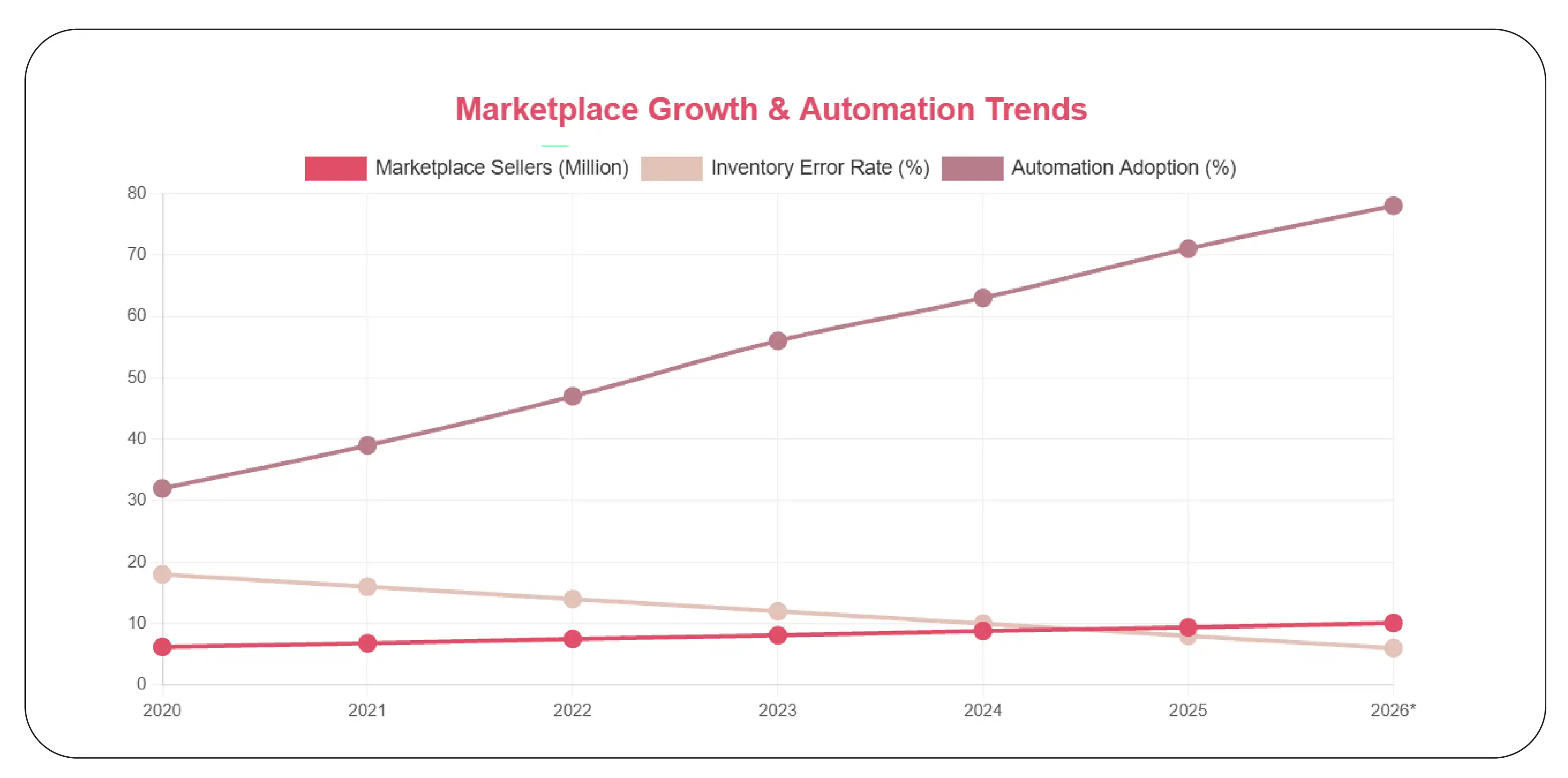
Amazon Marketplace Growth and Inventory Trends (2020–2026)
Benefits of Automated Data Collection
- Faster inventory updates
- Improved listing accuracy
- Reduced overselling risks
- Better stock synchronization
- Enhanced operational efficiency
Why Marketplace Analytics Matter for Amazon Sellers
Marketplace analytics help businesses monitor demand trends, customer behavior,
and inventory performance. Using Amazon Marketplace Seller Analytics, companies can improve
stock forecasting and optimize product availability.
Analytics-driven inventory systems allow sellers to identify seasonal demand
patterns and prevent stock shortages before they affect sales performance.
Marketplace Analytics Performance (2020–2026)
| Year |
Forecast Accuracy (%) |
Revenue Growth (%) |
Inventory Waste Reduction (%) |
| 2020 |
58 |
9 |
12 |
| 2021 |
61 |
11 |
15 |
| 2022 |
66 |
14 |
19 |
| 2023 |
70 |
17 |
23 |
| 2024 |
74 |
20 |
27 |
| 2025 |
79 |
24 |
31 |
| 2026* |
83 |
28 |
36 |
Key Advantages of Marketplace Analytics
- Better inventory forecasting
- Improved supply chain planning
- Reduced operational waste
- Faster decision-making
- Enhanced revenue management
Businesses that use analytics tools gain stronger control over inventory
movement and marketplace operations.
How Real-Time Monitoring Reduces Fulfillment Errors
Real-time tracking systems help businesses monitor product availability,
pricing, and seller performance continuously. Advanced Amazon Seller Performance Tracking tools
improve operational visibility and reduce stock synchronization delays.
Companies also depend on Digital Shelf
Analytics to evaluate marketplace positioning, customer engagement, and pricing
consistency.
Real-Time Seller Monitoring Trends (2020–2026)
.webp)
Benefits of Real-Time Monitoring
- Faster issue detection
- Improved listing consistency
- Better customer satisfaction
- Reduced fulfillment delays
- Increased marketplace transparency
Real-time inventory intelligence helps businesses maintain accurate stock
records and improve seller performance.
How Predictive Insights Improve Inventory Planning
Predictive inventory systems help businesses anticipate market demand and
optimize warehouse operations. Through Amazon Seller Central E-commerce Analytics, sellers can
analyze product movement, customer purchasing behavior, and inventory turnover rates.
Data-driven planning reduces overstocking and understocking issues while
improving overall operational efficiency.
Inventory Planning Performance (2020–2026)
| Year |
Inventory Accuracy (%) |
Operational Cost Reduction (%) |
Demand Prediction Accuracy (%) |
| 2020 |
64 |
8 |
59 |
| 2021 |
68 |
11 |
63 |
| 2022 |
72 |
15 |
68 |
| 2023 |
77 |
19 |
73 |
| 2024 |
82 |
23 |
78 |
| 2025 |
87 |
27 |
83 |
| 2026* |
91 |
31 |
88 |
Advantages of Predictive Inventory Systems
- Improved demand forecasting
- Lower operational costs
- Better warehouse management
- Faster inventory decisions
- Increased operational scalability
Businesses using our solutions gain deeper insights into marketplace demand
trends and inventory behavior.
How Pricing Intelligence Helps Maintain Competitive Visibility
Competitive pricing is essential for improving product visibility and
maintaining consistent inventory movement. Businesses use Amazon Seller Central product ranking
analytics to track keyword rankings, product visibility, and category performance.
At the same time, Pricing Intelligence
Services help sellers monitor competitor pricing strategies and automate price
adjustments.
Pricing Intelligence Trends (2020–2026)
.webp)
Benefits of Pricing Intelligence
- Improved profit margins
- Better ranking visibility
- Faster price optimization
- Reduced inventory stagnation
- Enhanced customer engagement
Pricing analytics support better marketplace competitiveness while improving
stock movement consistency.
Why Accurate Product Listings Matter for Seller Success
Accurate product listings improve discoverability, customer trust, and
conversion performance. Businesses use Amazon Seller Central Product listing data extraction to
maintain updated product catalogs across marketplaces.
Automated listing management helps identify duplicate products, incorrect
descriptions, and outdated inventory information.
Product Listing Optimization Trends (2020–2026)
| Year |
Listing Accuracy (%) |
Conversion Improvement (%) |
Return Rate Reduction (%) |
| 2020 |
66 |
7 |
5 |
| 2021 |
70 |
10 |
7 |
| 2022 |
75 |
14 |
10 |
| 2023 |
80 |
18 |
13 |
| 2024 |
85 |
22 |
16 |
| 2025 |
90 |
27 |
20 |
| 2026* |
94 |
32 |
24 |
Advantages of Optimized Product Listings
- Better search visibility
- Higher customer trust
- Reduced return rates
- Improved conversion performance
- Consistent catalog accuracy
Accurate listing management supports long-term marketplace growth and
operational efficiency.
Why Choose Product Data Scrape?
Businesses need scalable data extraction solutions to manage large Amazon
marketplaces efficiently. Product Data Scrape provides advanced inventory intelligence,
automated listing monitoring, and competitor analysis solutions.
Through Amazon Seller Central Pricing Intelligence, businesses can monitor
pricing changes and maintain competitive visibility across marketplaces. The company also offers
reliable Amazon Seller Product Data Scraping Service
solutions that help brands automate inventory tracking, pricing analysis, and seller monitoring.
These services improve operational accuracy, reduce manual effort, and support
data-driven eCommerce growth strategies.
Conclusion
Inventory mismatch problems can negatively impact customer experience, seller
ratings, and operational performance. Businesses increasingly use Ecommerce Website Data Scraping
solutions to maintain accurate inventory records, optimize pricing strategies, and improve
marketplace visibility.
Using advanced tools to Extract Amazon Seller Central Product Data helps
sellers automate stock monitoring, improve forecasting accuracy, and reduce operational
inefficiencies. From listing optimization to pricing intelligence and inventory synchronization,
automated data extraction supports scalable marketplace growth.
We help businesses transform marketplace data into actionable insights for
smarter inventory management and long-term eCommerce success.
Contact us today to automate Amazon inventory management, improve seller
intelligence, and scale your eCommerce operations with accurate product data extraction
solutions!
FAQs
1. What is Amazon Seller Central product data extraction?
Amazon Seller Central product data extraction is the process of collecting structured
marketplace information like inventory, pricing, product rankings, reviews, and seller details
for analytics and operational management purposes.
2. How does inventory mismatch affect Amazon sellers?
Inventory mismatches can lead to overselling, delayed fulfillment, poor customer experience,
negative reviews, and reduced seller ratings, ultimately affecting marketplace visibility and
profitability.
3. Why do businesses use marketplace analytics tools?
Marketplace analytics tools help businesses improve inventory forecasting, monitor product
performance, optimize pricing strategies, and identify sales trends for better operational
decision-making.
4. How does pricing intelligence improve marketplace performance?
Pricing intelligence tools monitor competitor prices, automate price adjustments, improve search
visibility, and help businesses maintain competitive product positioning across marketplaces.
5. Why do businesses choose Product Data Scrape?
Businesses choose Product Data Scrape because it provides scalable product data extraction,
automated inventory tracking, pricing intelligence, and marketplace analytics solutions for
efficient eCommerce operations.



 Singapore
 EMAIL
EMAIL
 PHONE
PHONE



.webp "thumb")
.webp "thumb")









.webp)