Quick Overview
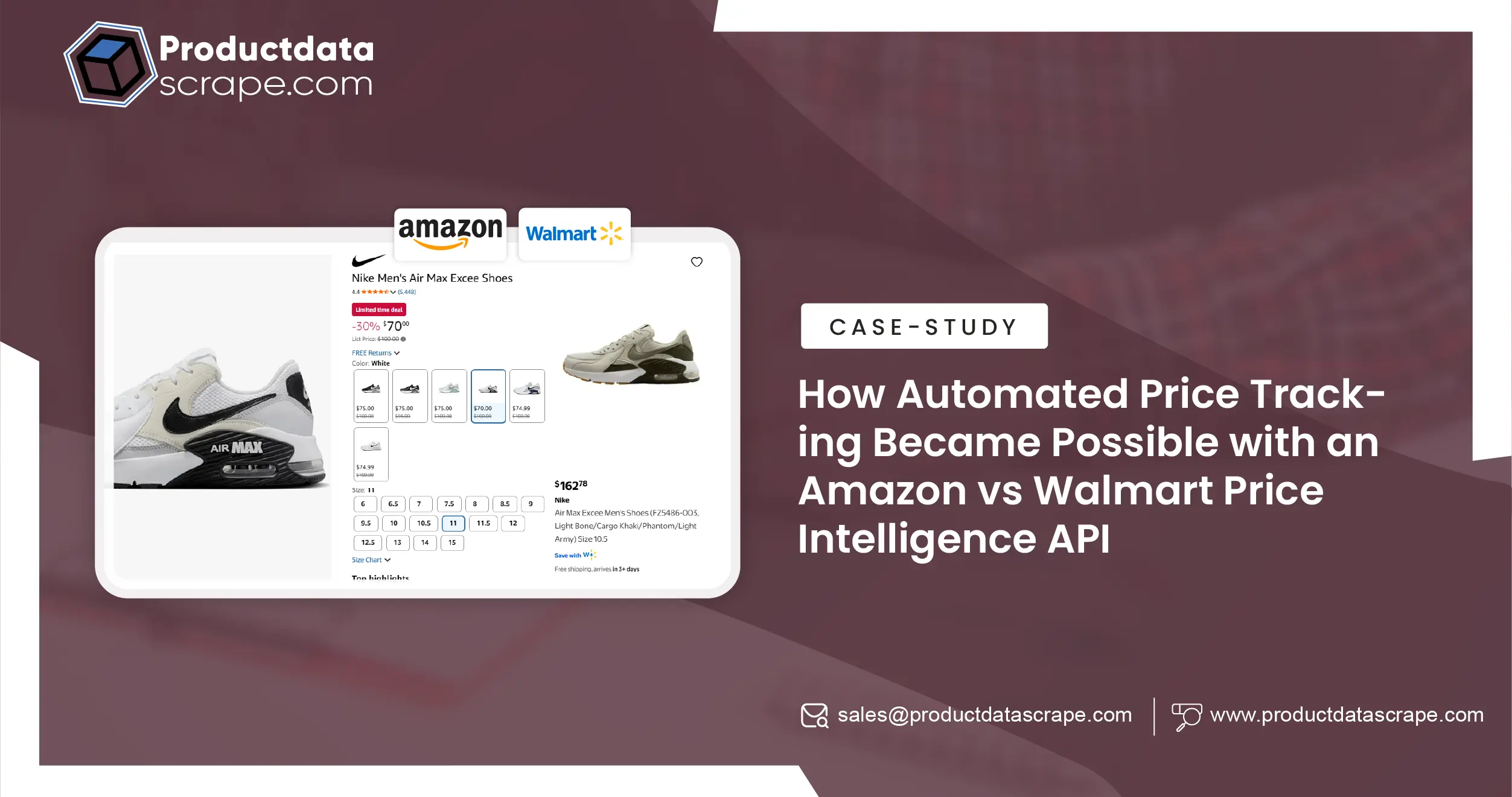
This case study highlights how a large U.S.-based retail analytics firm transformed its competitive pricing operations using Amazon vs Walmart Price Intelligence API and enterprise-grade Pricing Intelligence Services. The client operates in the retail intelligence and consumer analytics industry, serving brands that compete aggressively across Amazon and Walmart marketplaces. The engagement spanned six months and focused on automating daily price tracking at scale. As a result, the client achieved a 45% improvement in pricing data accuracy, reduced manual monitoring efforts by 60%, and accelerated competitive price response cycles by over 35%, enabling faster and more confident pricing decisions across multiple retail categories.
The Client
The client is a mid-to-large retail intelligence provider supporting consumer brands, distributors, and category managers across the U.S. ecommerce ecosystem. Their customers rely heavily on competitive price monitoring to remain profitable in highly dynamic marketplaces such as Amazon and Walmart. Rapid price changes, frequent promotions, and algorithm-driven repricing have made manual or semi-automated monitoring approaches increasingly ineffective.
Before partnering with us, the client relied on fragmented tools and internal scripts that struggled to scale and maintain accuracy. Tracking prices across thousands of SKUs was slow, error-prone, and lacked consistency. Market pressure intensified as brands demanded near real-time insights and daily competitive benchmarking. The lack of a unified Amazon And Walmart price monitoring API meant delayed insights, missed repricing opportunities, and unreliable reporting.
Additionally, the client needed a robust system to Scrape Amazon and Walmart USA Daily Prices without disruptions caused by frequent site changes, anti-bot measures, or SKU-level inconsistencies. The transformation was essential not only to meet existing customer expectations but also to remain competitive in the fast-growing retail analytics market.
Goals & Objectives

The primary business goal was to create a scalable and reliable pricing intelligence system that could track thousands of SKUs daily across Amazon and Walmart. Accuracy, speed, and automation were critical to supporting enterprise clients with actionable pricing insights.
From a technical standpoint, the client aimed to deploy a Real-time API for competitor price monitoring that could integrate seamlessly with their analytics dashboards. Automation was essential to eliminate manual interventions, while flexibility was required to Scrape Data From Any Ecommerce Websites as future expansion needs arose.
Improve daily price data accuracy by at least 40%
Reduce data collection latency to under 30 minutes
Achieve 99% SKU coverage across monitored categories
Enable real-time integration with internal BI tools
Reduce operational overhead related to price monitoring
Each KPI was aligned with measurable improvements in performance, scalability, and client satisfaction.
The Core Challenge
The client faced multiple operational bottlenecks that limited their ability to deliver reliable pricing intelligence. Existing tools struggled with frequent structural changes on Amazon and Walmart, causing data gaps and inconsistencies. Manual validation processes slowed down reporting cycles and increased dependency on engineering resources.
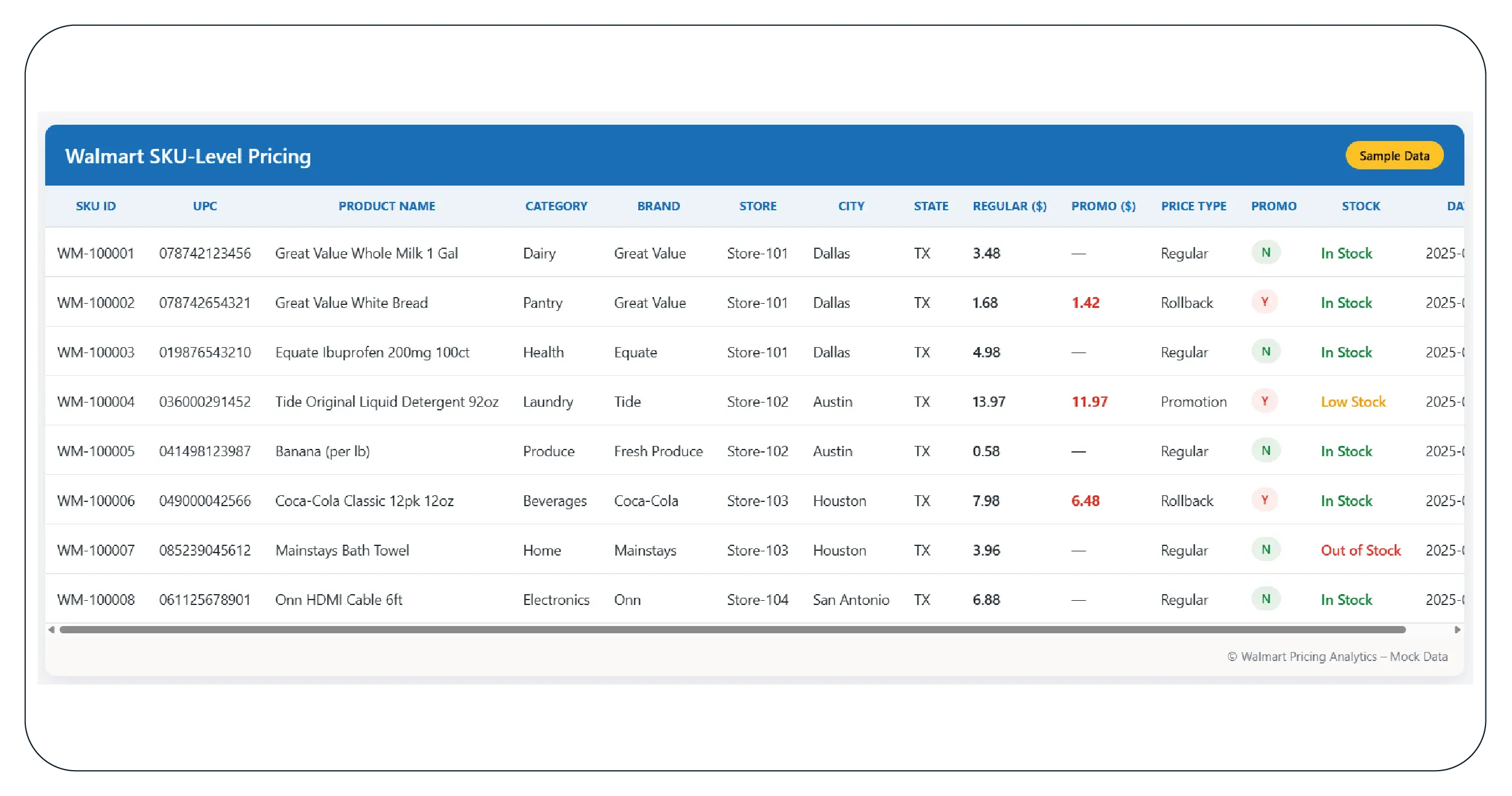
Another critical issue was the inability to monitor prices at the SKU level consistently. Without a dependable Walmart SKU-Level Price Monitoring API, granular price movements were often missed, especially during flash sales or competitive promotions. Data latency also posed a major challenge, with some updates arriving hours late.
Furthermore, the absence of a centralized Web Data Intelligence API meant fragmented datasets, poor standardization, and limited scalability. These challenges directly impacted the accuracy and timeliness of insights delivered to end clients, weakening trust and reducing the value of the client’s analytics offerings.
Our Solution
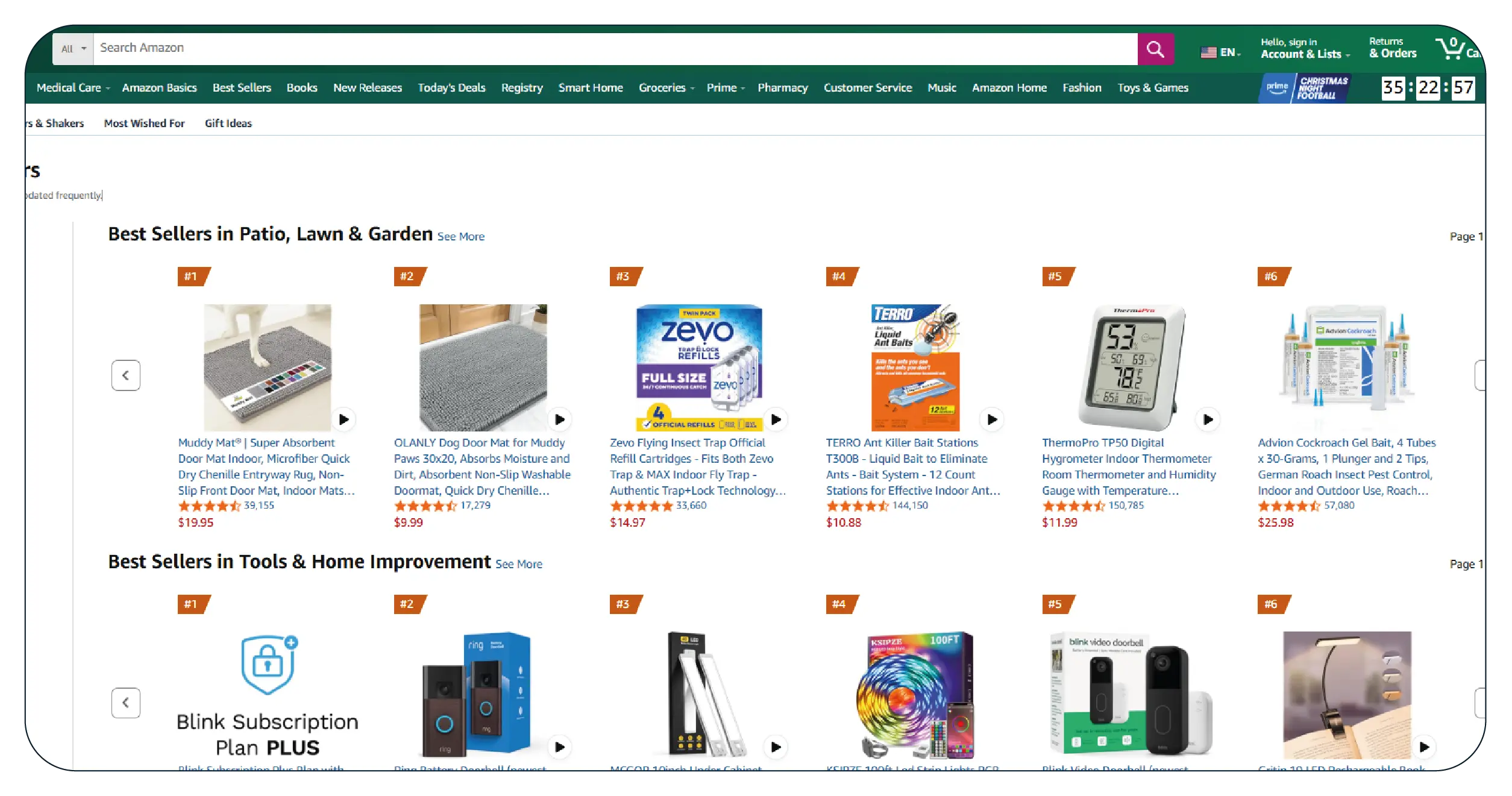
To address these challenges, we designed and deployed a robust, phased price intelligence framework tailored to the client’s scale and performance requirements. The first phase focused on building a resilient data extraction layer capable of handling frequent platform changes, high request volumes, and SKU-level complexity.
In the second phase, we implemented automation workflows that standardized price, availability, and seller data across Amazon and Walmart. The system leveraged a Dynamic Pricing API for Amazon to capture real-time price fluctuations, promotions, and seller-level variations without manual intervention.
The third phase focused on integration and analytics enablement. Clean, structured datasets were delivered via APIs and seamlessly integrated into the client’s dashboards and reporting tools. Automated alerts and validation checks ensured data reliability and minimized downtime.
Each phase directly addressed a core issue: scalability challenges were resolved through automation, data accuracy improved through validation logic, and speed was enhanced with real-time extraction pipelines. The result was a fully automated pricing intelligence solution noted for stability, accuracy, and extensibility, enabling the client to offer premium competitive insights to their customers.
Results & Key Metrics
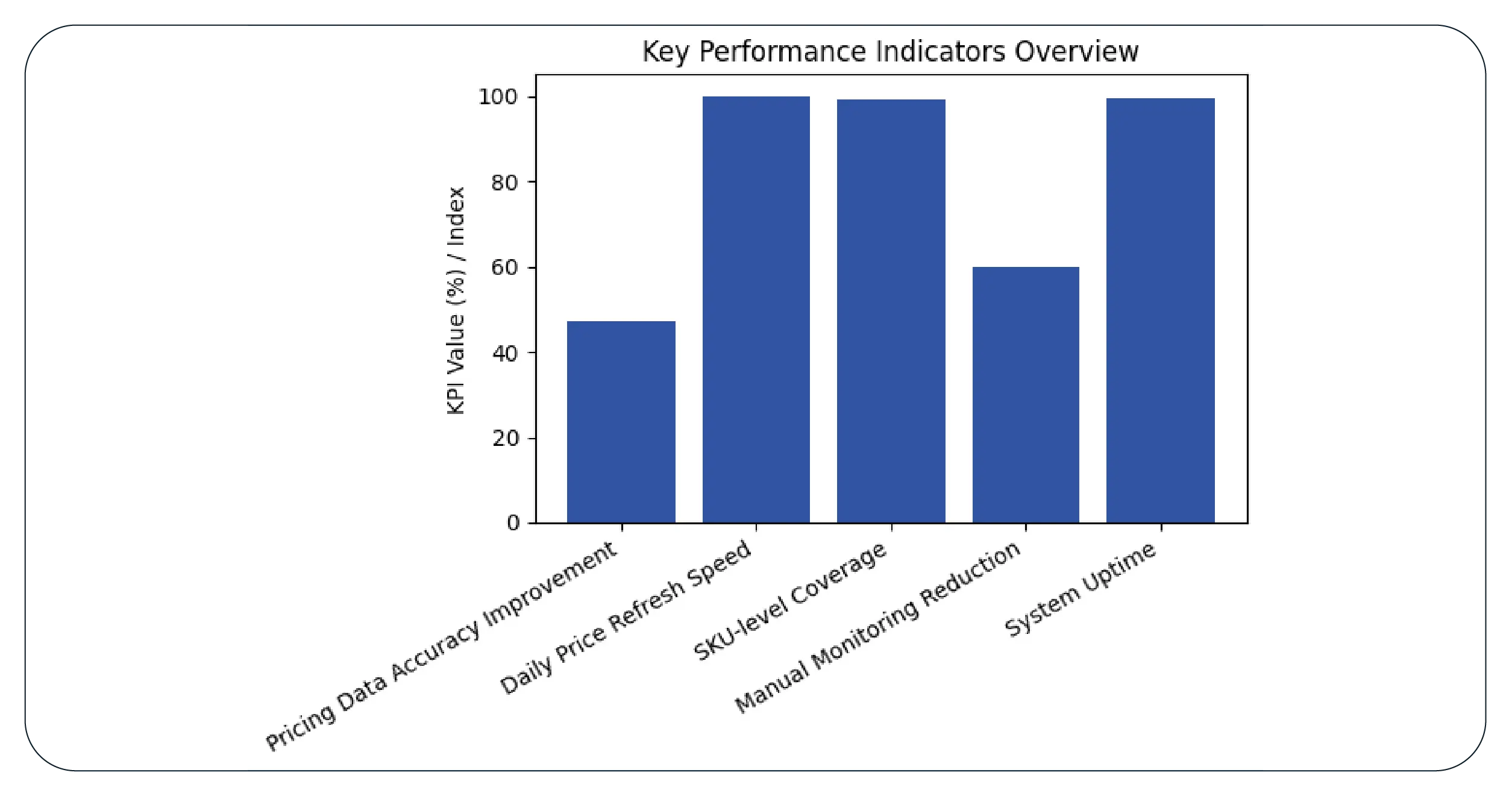
Pricing data accuracy improved by 47% after automation
Daily price refresh cycles reduced from hours to minutes
SKU-level coverage increased to 99.2% across categories
Manual monitoring efforts reduced by 60%
System uptime exceeded 99.5%
Faster competitive response enabled by Extract Walmart API Product Data
Results Narrative
The implementation significantly improved how the client delivered pricing insights. Automated workflows replaced fragile scripts, enabling consistent daily tracking across Amazon and Walmart. With reliable access to SKU-level pricing and promotions, the client delivered more actionable insights to enterprise customers. Faster updates and higher accuracy strengthened customer trust and positioned the client as a premium analytics provider. The ability to scale seamlessly using Extract Walmart API Product Data unlocked new revenue opportunities and long-term growth.
What Made Product Data Scrape Different?
Product Data Scrape differentiated itself through proprietary automation frameworks, adaptive scraping logic, and enterprise-grade reliability. Unlike generic tools, our solution dynamically adjusted to platform changes while maintaining high data accuracy. Smart retry mechanisms, intelligent scheduling, and seamless API delivery ensured uninterrupted intelligence. The flexibility to expand tracking using Extract amazon API Product Data allowed the client to future-proof their pricing intelligence offerings without reengineering their data stack.
Client’s Testimonial
“Implementing the Amazon vs Walmart Price Intelligence API completely transformed our pricing operations. The automation, accuracy, and scalability exceeded expectations. We can now deliver near real-time competitive insights with confidence, even at massive SKU volumes. This partnership has strengthened our product offering and significantly improved customer satisfaction.”
— Director of Product Analytics, Retail Intelligence Firm
Conclusion
This case study demonstrates how automated price tracking can drive measurable performance improvements in competitive retail environments. By leveraging robust APIs and automation, the client eliminated data gaps, improved speed, and enhanced analytical depth. Looking ahead, the solution also enables expansion into adjacent insights such as sentiment and reputation analysis through Scrape Amazon and Walmart Reviews. With a scalable foundation in place, the client is well-positioned to lead the next phase of ecommerce pricing intelligence.
FAQs
1. Why is automated price tracking essential for Amazon and Walmart?
Because prices change frequently, automation ensures accuracy, speed, and competitive responsiveness at scale.
2. Can this solution track prices daily or in real time?
Yes, the API supports daily, hourly, and near real-time tracking based on business needs.
3. Is SKU-level monitoring supported?
Absolutely. The solution is designed for high-volume SKU-level price tracking across categories.
4. How is data delivered to clients?
Data is delivered via APIs, dashboards, or custom datasets for seamless BI integration.
5. Can the system scale to additional ecommerce platforms?
Yes, the framework is extensible and supports expansion to other ecommerce websites.



 Singapore
 EMAIL
EMAIL
 PHONE
PHONE











.webp)