Quick Overview
A leading retail brand partnered with Product Data Scrape to strengthen
marketplace intelligence and improve pricing visibility across Mercado Libre Mexico. Using
scalable Scrape Mercado Libre Mexico Product data solutions and enterprise-grade Mercado Libre
Mexico Product API Product Data systems, the client gained real-time access to product
pricing,
stock availability, seller rankings, and marketplace trends.
The engagement lasted 12 months and focused on automating marketplace
monitoring workflows,
improving inventory visibility, and enhancing competitor benchmarking. The project delivered
measurable improvements, including a 38% increase in pricing responsiveness, 44% faster product
monitoring, and 31% better inventory forecasting accuracy. The solution enabled the client to
optimize marketplace operations and improve category-level competitiveness across multiple
product segments.
The Client
The client is a rapidly growing retail brand specializing in consumer
electronics, home essentials, and lifestyle products distributed across Latin American eCommerce
marketplaces. Increasing competition on Mercado Libre Mexico created strong pressure to improve
pricing intelligence, optimize product positioning, and benchmark competitor performance more
efficiently.
Before partnering with Product Data Scrape, the company relied heavily on
manual tracking systems and fragmented reporting workflows that slowed marketplace analysis. The
business lacked scalable infrastructure for continuous product monitoring, resulting in delayed
pricing updates and inconsistent inventory visibility.
Using advanced Mercado Libre Mexico Product Data Scraping solutions and
enterprise-grade Web Scraping API Services, the
client aimed to centralize marketplace
intelligence and improve operational efficiency. The transformation became essential as
marketplace pricing volatility and seller competition increased significantly between 2020 and
2026.
The client also required structured datasets capable of supporting long-term
retail analytics, category-level benchmarking, and real-time competitor monitoring across
thousands of SKUs.
Goals & Objectives
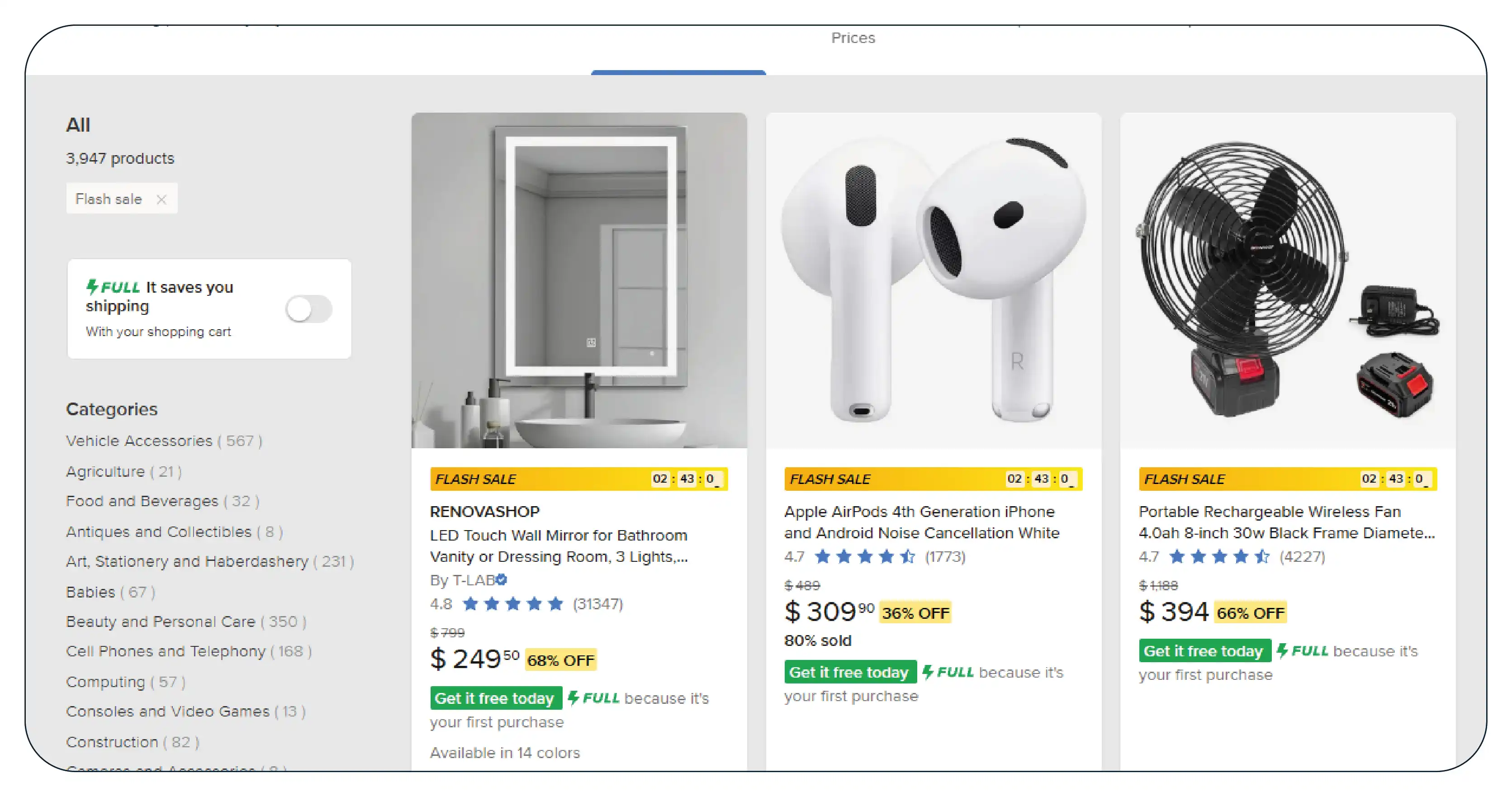
The client wanted to improve marketplace scalability, increase pricing
visibility, and automate product intelligence workflows across Mercado Libre Mexico. Using
advanced Mercado Libre Mexico stock availability tracking infrastructures, the business aimed to
improve operational responsiveness and marketplace competitiveness.
The technical objective focused on building scalable automation systems capable
of collecting real-time marketplace intelligence through structured eCommerce Dataset pipelines.
The company also required seamless dashboard integration, product matching capabilities, and
automated pricing alerts to improve decision-making speed.
Business KPIs
Improve pricing update speed by 35%
Increase inventory visibility accuracy by 30%
Reduce manual monitoring efforts by 45%
Technical KPIs
Automate real-time marketplace tracking
Improve SKU-level product matching
Enable scalable API-based reporting systems
Operational KPIs
Faster product monitoring workflows
Improved competitor benchmarking accuracy
Better promotional visibility tracking
The Core Challenge

The client faced multiple operational bottlenecks while attempting to scale
marketplace intelligence operations across Mercado Libre Mexico. Manual tracking methods
significantly delayed pricing analysis and reduced visibility into competitor product activity.
The lack of scalable systems for Real time inventory monitoring from Mercado
Libre created inconsistencies in inventory forecasting and product availability tracking.
Marketplace price fluctuations often went undetected for several hours, limiting the company’s
ability to respond quickly to competitor changes.
Additionally, fragmented reporting structures reduced data accuracy and created
delays in category-level analytics. Existing dashboards could not efficiently process
large-scale marketplace datasets or support automated pricing intelligence workflows.
Using advanced Pricing Intelligence
Services, we identified
several technical
limitations affecting operational performance, including:
- Inconsistent product matching
- Delayed inventory updates
- Incomplete seller visibility
- Limited real-time analytics
- Manual promotional tracking dependencies
These inefficiencies negatively impacted category competitiveness, pricing
responsiveness, and marketplace decision-making accuracy.
Our Solution
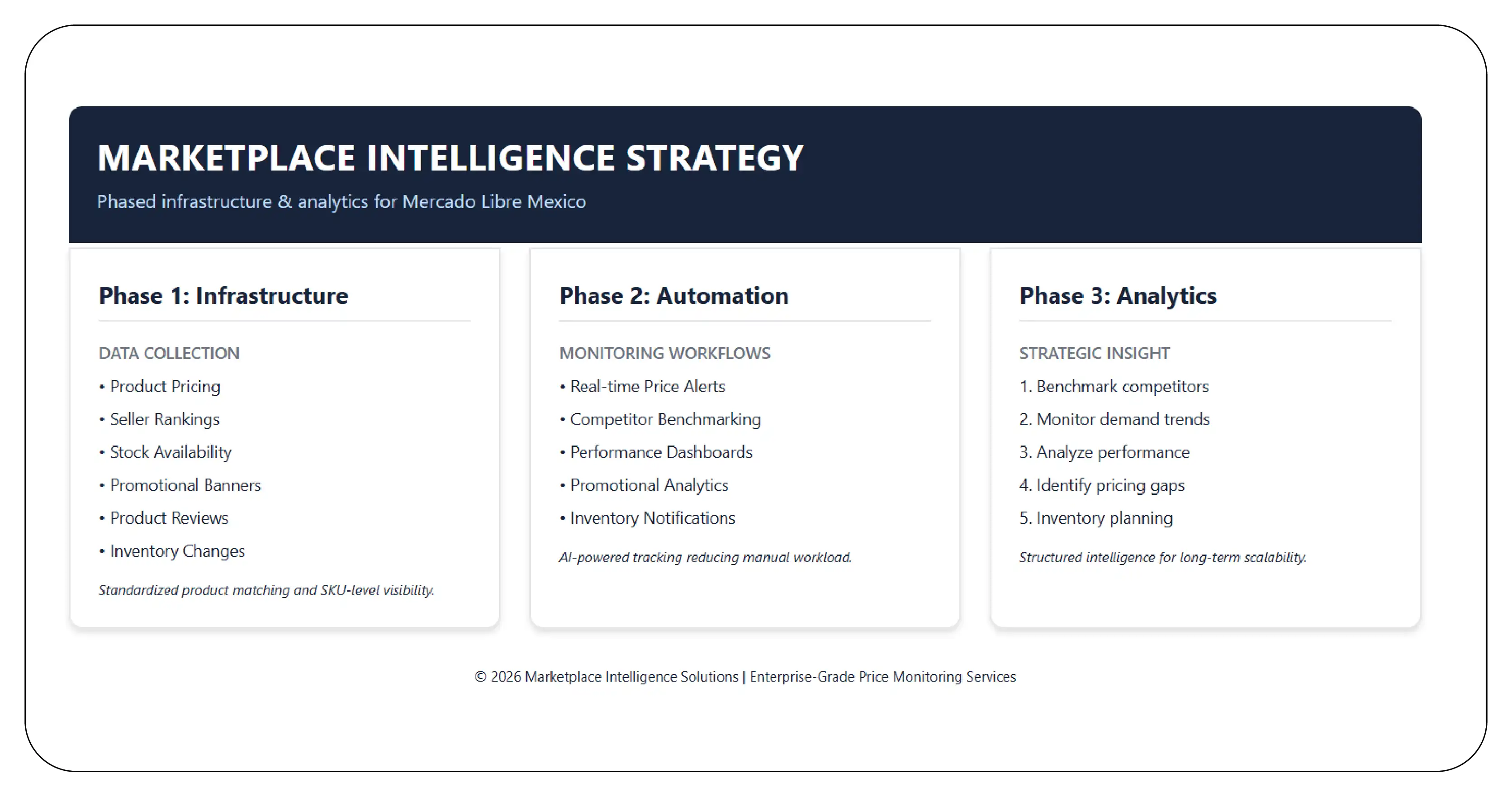
We implemented a phased marketplace intelligence strategy powered by scalable
Mercado Libre Mexico Product Price Intelligence infrastructures and enterprise-grade Price
Monitoring Services systems.
Phase 1 – Marketplace Data Infrastructure
We developed automated scraping pipelines capable of collecting real-time
marketplace data including:
- Product pricing
- Seller rankings
- Stock availability
- Promotional banners
- Product reviews
- Inventory changes
The infrastructure standardized product matching across multiple seller
listings and improved SKU-level visibility.
Phase 2 – Automation & Monitoring
Our engineering team integrated AI-powered monitoring systems that continuously
tracked marketplace pricing volatility and inventory fluctuations.
The automation workflows generated:
- Real-time price alerts
- Competitor benchmarking reports
- Seller performance dashboards
- Promotional analytics summaries
- Inventory availability notifications
These systems reduced manual monitoring workloads while improving marketplace
responsiveness significantly.
Phase 3 – Analytics & Dashboard Integration
We deployed centralized analytics dashboards capable of visualizing
category-level pricing trends and seller competitiveness.
The dashboards enabled the client to:
- Benchmark competitor pricing
- Monitor category demand
- Analyze promotional performance
- Identify pricing gaps
- Improve inventory planning
The complete solution transformed fragmented marketplace data into structured
retail intelligence optimized for scalability and long-term analytics operations.
Results & Key Metrics
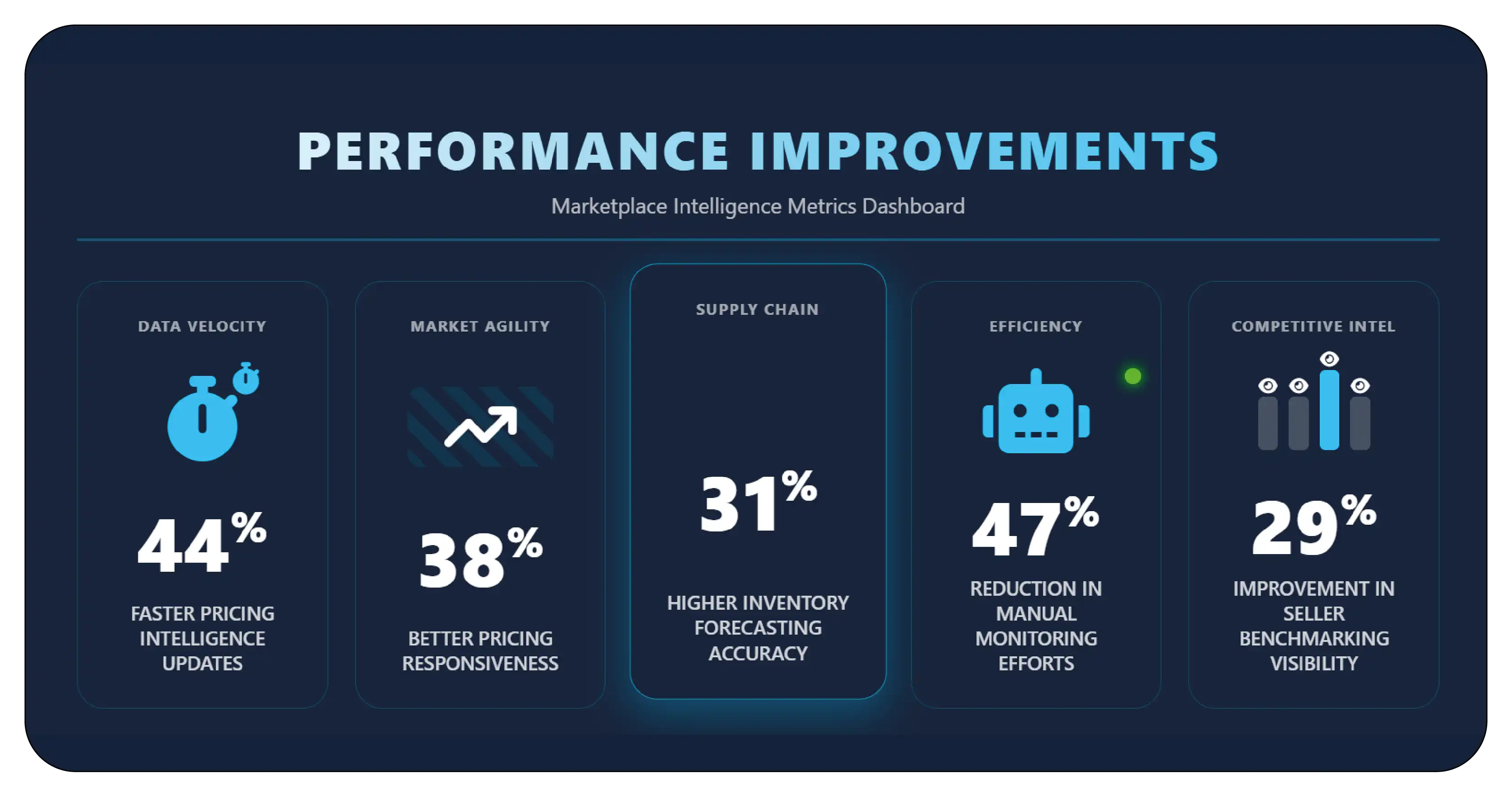
Using advanced Mercado Libre Mexico competitor price monitoring systems and
AI-driven Digital Shelf Analytics, the client achieved
measurable operational improvements.
Performance Improvements
- 44% faster pricing intelligence updates
- 38% better pricing responsiveness
- 31% higher inventory forecasting accuracy
- 47% reduction in manual monitoring efforts
- 29% improvement in seller benchmarking visibility
Marketplace Intelligence Gains
- Faster SKU-level product tracking
- Improved promotion monitoring accuracy
- Better category-level analytics visibility
Results Narrative
The marketplace intelligence infrastructure enabled the client to respond
faster to competitor pricing changes and optimize inventory planning across multiple
categories.
Automated analytics workflows improved product visibility and strengthened seller
benchmarking
operations.
The real-time dashboards also improved decision-making efficiency by
providing
continuous visibility into category pricing trends, promotional activity, and stock
availability. The client successfully transformed marketplace intelligence into a scalable
business advantage using automated retail analytics systems.
What Made Product Data Scrape Different
We delivered a highly scalable marketplace intelligence framework powered
by
AI-driven automation, advanced retail analytics, and real-time monitoring capabilities.
Using enterprise-grade Mercado Libre Mexico Retail benchmark analytics
systems
combined with scalable Scrape Mercado Libre Mexico Product data infrastructures, we enabled
the
client to automate large-scale marketplace tracking while improving operational accuracy and
scalability.
Our differentiators included:
- AI-powered pricing intelligence
- Real-time monitoring systems
- Automated product matching
- Scalable analytics dashboards
- High-accuracy marketplace datasets
- Enterprise-grade automation workflows
Our solution architecture supported continuous marketplace visibility while
reducing operational complexity across large retail environments.
Client’s Testimonial
“Product Data Scrape
completely transformed our marketplace
intelligence
capabilities. Their advanced Mercado Libre Mexico marketplace trend analytics systems
helped
us improve pricing visibility, automate inventory tracking, and benchmark competitors
far
more efficiently. The real-time dashboards and automation workflows significantly
improved
our operational responsiveness across Mercado Libre Mexico.”
— Head of eCommerce Strategy, Retail Brand
Conclusion
This case study demonstrates how scalable marketplace intelligence can
transform retail competitiveness across dynamic eCommerce ecosystems. By leveraging advanced
Ecommerce Website Data Scraping
systems and enterprise-grade Scrape Mercado Libre Mexico
Product
data infrastructures, the client improved pricing responsiveness, inventory forecasting, and
competitor benchmarking capabilities.
We continued helping retail brands unlock real-time marketplace
intelligence
through AI-powered automation, scalable analytics systems, and structured retail datasets
designed for long-term business growth and operational efficiency.
FAQs
1. Why do retailers scrape Mercado Libre Mexico product data?
Retailers scrape marketplace data to monitor pricing, track inventory, benchmark
competitors,
and improve category-level retail intelligence.
2. What data can businesses collect from Mercado Libre Mexico?
Businesses can collect product pricing, seller rankings, stock availability, promotions,
customer reviews, and marketplace trends.
3. How does real-time pricing intelligence improve retail performance?
Real-time pricing intelligence helps businesses respond faster to competitor pricing changes
and
optimize promotional strategies more effectively.
4. Can marketplace intelligence improve inventory forecasting?
Yes. Real-time inventory analytics helps businesses improve stock planning, reduce
shortages,
and optimize product availability strategies.
5. Why choose Product Data Scrape for marketplace analytics?
Product Data Scrape provides scalable marketplace intelligence solutions with AI-powered
analytics, automated monitoring systems, and structured retail datasets.



 Singapore
 EMAIL
EMAIL
 PHONE
PHONE












.webp)