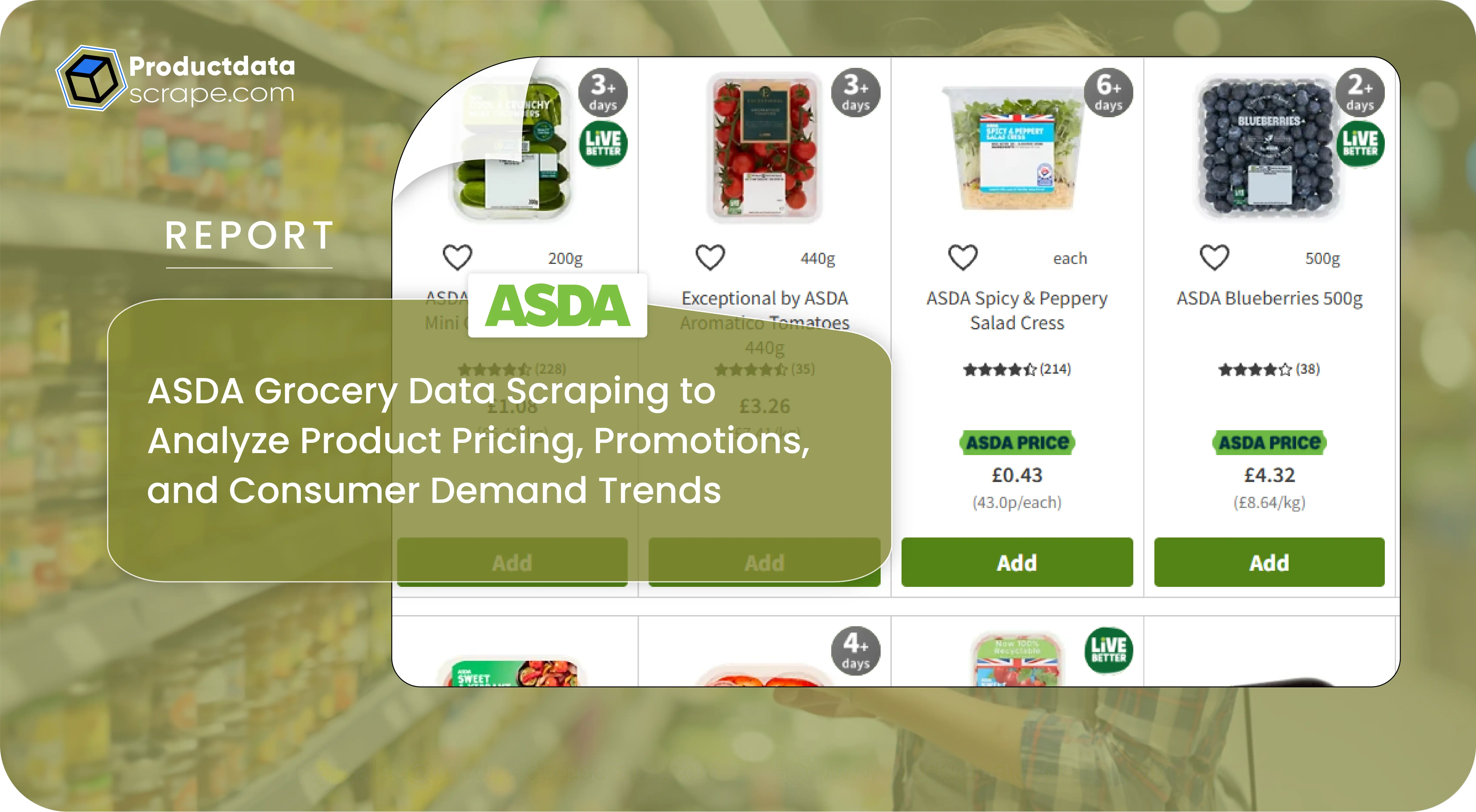
Introduction
Retailers increasingly depend on real-time grocery intelligence to monitor
pricing trends, analyze promotions, benchmark competitors, and optimize inventory strategies
across dynamic supermarket ecosystems. Using advanced ASDA Grocery Data Scraping infrastructures
and AI-powered ASDA Deals Data Scraper systems,
businesses can access structured grocery
intelligence that improves pricing responsiveness and consumer demand forecasting.
Between 2020 and 2026, the UK grocery sector experienced significant
transformation due to eCommerce growth, inflation-driven pricing fluctuations, and changing
customer purchasing behavior. Supermarkets rapidly expanded digital grocery operations while
increasing promotional competition across categories including packaged foods, beverages, dairy,
frozen products, and household essentials.
Retailers and grocery brands now require scalable grocery analytics to identify
product demand patterns, improve inventory visibility, and benchmark category-level pricing
trends. Product Data Scrape enables businesses to transform supermarket intelligence into
measurable retail growth using AI-driven analytics, structured grocery datasets, and real-time
monitoring systems.
How Does Inventory Visibility Improve Grocery Operations?
Inventory visibility helps retailers reduce stock shortages, improve
replenishment planning, and optimize grocery assortment strategies across high-demand
categories.
Businesses leveraging scalable systems to Monitor ASDA grocery stock
availability and advanced infrastructures to Extract Asda Groceries Grocery & Gourmet
Food Data
gained stronger operational efficiency across supermarket supply chains.
Key inventory analytics included:
- Product stock availability
- Out-of-stock alerts
- Category replenishment patterns
- Seasonal inventory trends
- Fast-moving grocery SKUs
- Regional assortment variations
Grocery Inventory Intelligence Trends (2020–2026)
.webp)
Retailers improved fulfillment performance and reduced lost sales opportunities
using real-time grocery inventory intelligence.
The analytics also enabled businesses to identify regional product shortages
and improve warehouse replenishment planning.
Why Is Real-Time Inventory Monitoring Essential for Grocery Retailers?
Real-time inventory monitoring helps supermarkets respond quickly to demand
spikes, optimize supply chain operations, and improve customer satisfaction.
Businesses using advanced systems for real time inventory monitoring from Asda
combined with enterprise-grade Price Monitoring Services
achieved better grocery inventory
forecasting and pricing responsiveness.
Retailers monitored:
- Hourly inventory changes
- Product availability fluctuations
- Category demand surges
- Regional grocery stock movement
- Inventory refill cycles
- Grocery pricing volatility
Real-Time Inventory Monitoring Metrics
| Year |
Daily Inventory Updates |
Forecast Accuracy |
Fulfillment Improvement |
| 2020 |
18K |
76% |
5% |
| 2021 |
27K |
81% |
8% |
| 2022 |
39K |
85% |
11% |
| 2023 |
56K |
89% |
14% |
| 2024 |
77K |
93% |
17% |
| 2025 |
101K |
96% |
21% |
| 2026 |
129K |
98% |
25% |
The insights revealed increasing demand volatility during seasonal campaigns
and holiday shopping periods.
Retailers leveraged these analytics to optimize grocery
replenishment workflows and improve category-level inventory stability.
How Does Category-Level Grocery Intelligence Improve Retail Strategy?
Category-level analytics help retailers understand customer buying behavior,
benchmark competitor performance, and improve merchandising strategies.
Using scalable systems to scrape category wise grocery data from Asda and
AI-driven Web Scraping API Services, businesses
gained structured grocery intelligence across
multiple supermarket categories.
Grocery categories monitored included:
- Packaged foods
- Dairy products
- Frozen foods
- Household essentials
- Personal care items
- Beverages and snacks
Category-Level Grocery Analytics Trends
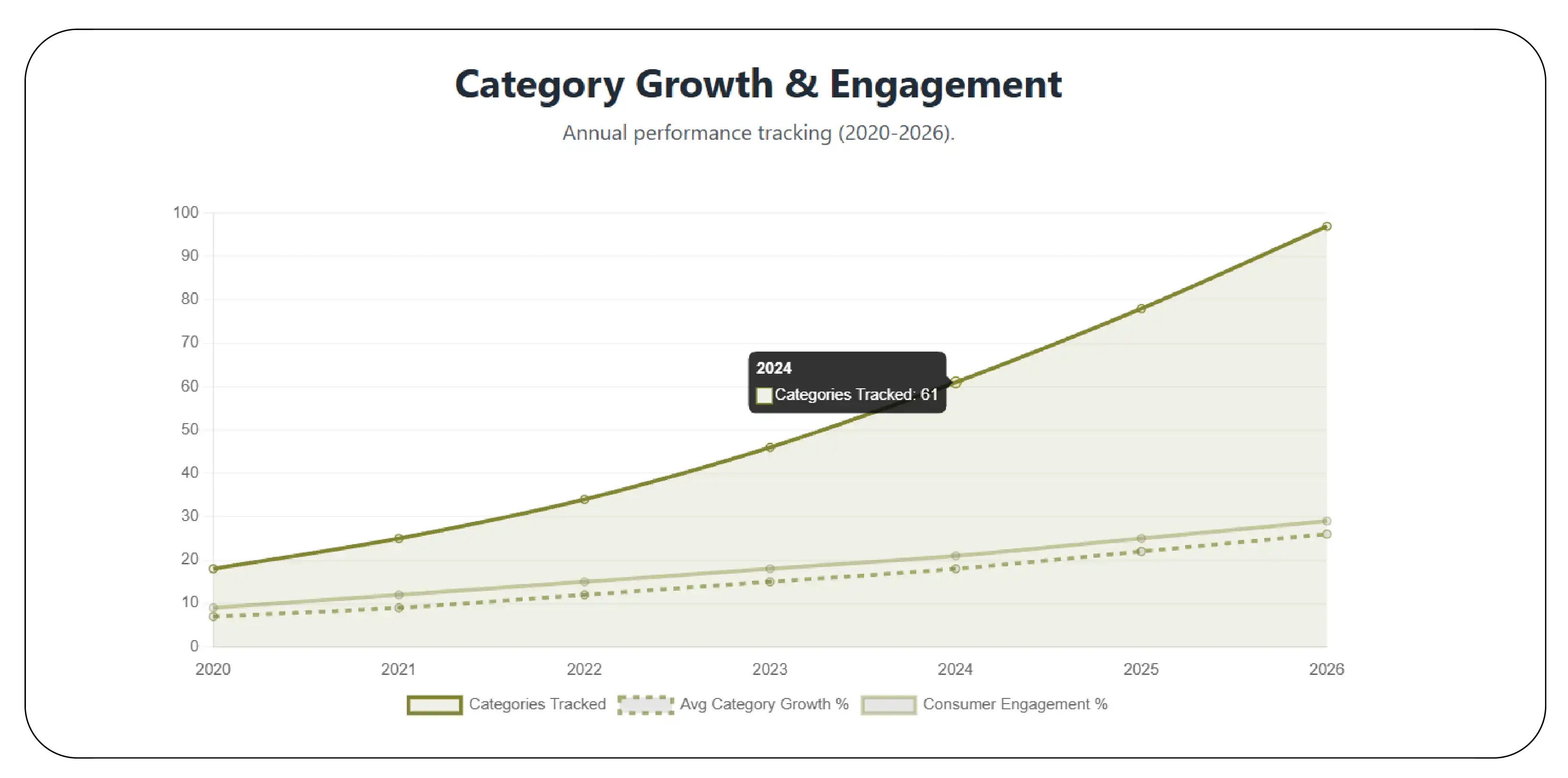
Retailers improved assortment optimization and category pricing alignment using
structured grocery intelligence dashboards.
The analytics also supported better promotional
targeting across high-growth grocery segments.
Why Is Grocery Pricing Intelligence Important for Retail Competitiveness?
Pricing intelligence helps retailers benchmark competitors, monitor promotions,
and optimize pricing strategies across dynamic supermarket markets.
Businesses leveraging scalable infrastructures to scrape pricing data from Asda
and AI-powered Digital Shelf Analytics systems gained
stronger visibility into grocery pricing
fluctuations and promotional trends.
Pricing analytics tracked:
- Product-level pricing changes
- Weekly discount campaigns
- Competitor price variations
- Grocery category promotions
- Bundle pricing strategies
- Hyperlocal pricing differences
Grocery Pricing Intelligence Metrics
| Year |
Daily Price Changes Monitored |
Avg Pricing Accuracy |
Competitive Visibility |
| 2020 |
31K |
80% |
68% |
| 2021 |
44K |
84% |
73% |
| 2022 |
61K |
88% |
79% |
| 2023 |
83K |
91% |
84% |
| 2024 |
109K |
94% |
89% |
| 2025 |
141K |
96% |
93% |
| 2026 |
178K |
98% |
97% |
Retailers optimized grocery pricing responsiveness and improved promotional
competitiveness using real-time supermarket intelligence.
The analytics also helped businesses
identify pricing gaps and strengthen category-level profitability.
How Can Grocery Intelligence Support Data-Driven Retail Decisions?
Data-driven grocery intelligence helps retailers improve forecasting, optimize
category management, and benchmark supermarket performance more accurately.
Businesses using scalable systems to Build Grocery Intelligence Using ASDA Data
combined with structured Grocery store dataset
infrastructures improved retail decision-making
significantly.
Intelligence frameworks monitored:
- Customer demand trends
- Product assortment shifts
- Promotional performance
- Inventory fluctuations
- Competitor pricing strategies
- Seasonal grocery patterns
Grocery Intelligence Growth Trends
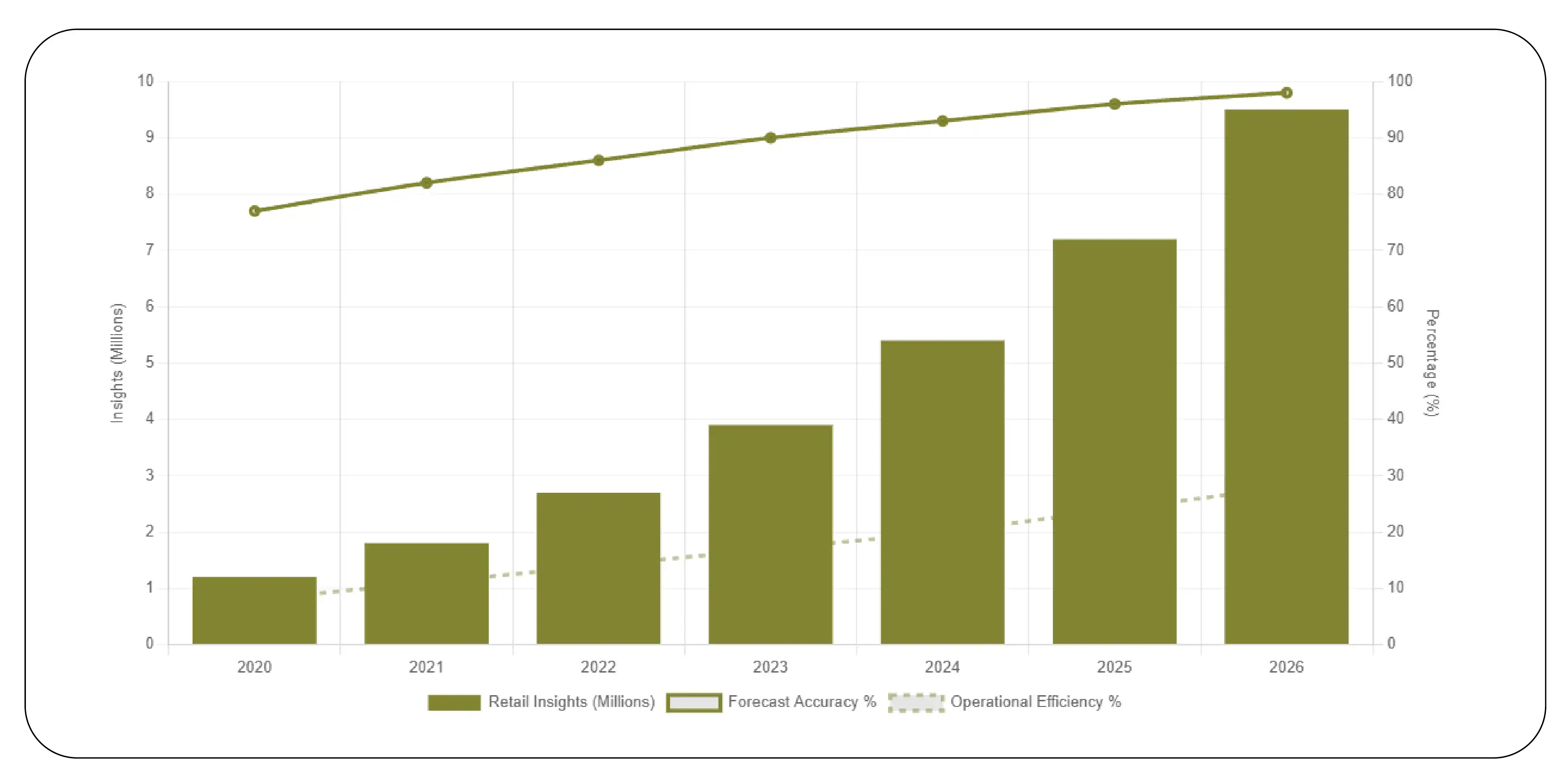
Retailers leveraged these insights to improve grocery planning, optimize supply
chain operations, and strengthen pricing strategies.
The structured datasets also enabled faster
business intelligence reporting across supermarket operations.
Why Does Real-Time Price Monitoring Matter in Grocery Retail?
Real-time price monitoring helps retailers benchmark promotions, respond to
competitor pricing changes, and improve customer retention.
Businesses using advanced systems to Track Real-Time Prices on ASDA gained
stronger visibility into supermarket pricing fluctuations and category-level promotional
activity.
Real-time monitoring included:
- Grocery price changes
- Flash sale tracking
- Category-level discounts
- Promotional timing analysis
- Retail competitor benchmarking
- Product pricing alerts
Real-Time Grocery Price Monitoring Metrics
| Year |
Products Monitored Daily |
Avg Promotion Detection Rate |
Pricing Responsiveness |
| 2020 |
42K |
74% |
69% |
| 2021 |
59K |
79% |
74% |
| 2022 |
81K |
84% |
79% |
| 2023 |
108K |
89% |
84% |
| 2024 |
139K |
93% |
89% |
| 2025 |
177K |
96% |
94% |
| 2026 |
221K |
98% |
97% |
Retailers improved promotional effectiveness and strengthened pricing
competitiveness using automated supermarket intelligence systems.
The analytics also enabled
businesses to optimize discount timing and improve grocery campaign performance.
Product Data Scrape delivers enterprise-grade supermarket intelligence powered
by scalable ASDA Grocery Demand Analytics systems and advanced ASDA Grocery Data Scraping
infrastructures.
Our grocery intelligence capabilities include:
- Real-time grocery pricing analytics
- Inventory availability monitoring
- Grocery category benchmarking
- Promotion tracking systems
- AI-powered pricing intelligence
- Structured grocery datasets
- Automated supermarket monitoring
- Scalable retail analytics dashboards
Our solutions help grocery retailers, supermarket chains, distributors, and CPG
brands improve pricing strategies and optimize retail competitiveness across dynamic grocery
markets.
Conclusion
The UK grocery market increasingly depends on real-time supermarket
intelligence to improve pricing optimization, inventory management, and promotional
competitiveness. By leveraging scalable ASDA
Grocery Data Scraping API infrastructures and
advanced ASDA Grocery Data Scraping solutions, retailers can benchmark competitors, monitor
category performance, and strengthen data-driven retail strategies.
Product Data Scrape helps businesses transform grocery intelligence into
measurable retail growth using AI-powered supermarket analytics, automated monitoring systems,
and scalable grocery intelligence platforms.
Ready to unlock smarter supermarket intelligence and grocery analytics?
Contact
Product Data Scrape today to access real-time
grocery pricing dashboards, structured supermarket datasets, and advanced retail intelligence
solutions.



 Singapore
 EMAIL
EMAIL
 PHONE
PHONE











.webp)