Introduction
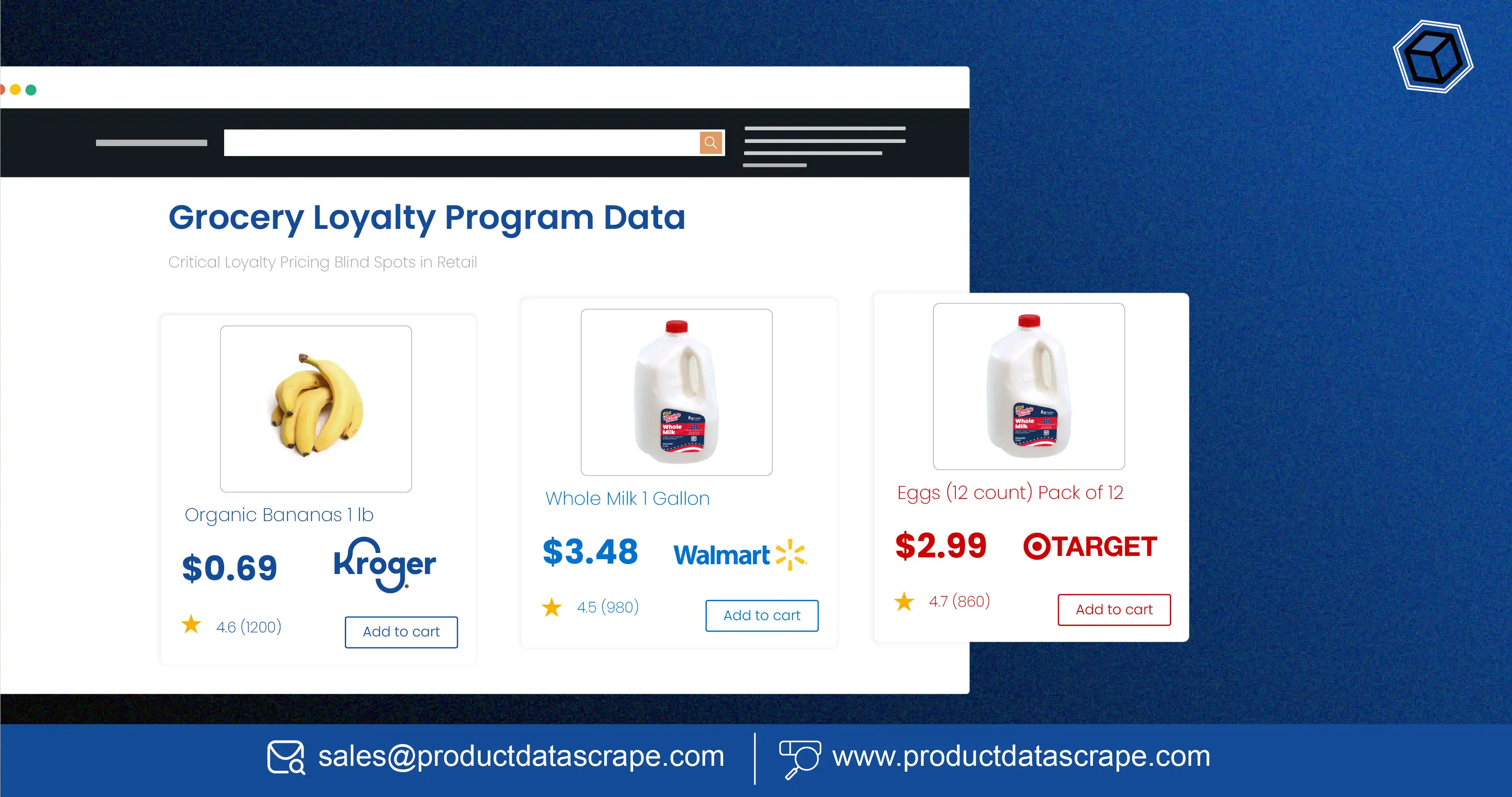
Retail competition is increasingly driven by personalized pricing, membership benefits, and loyalty-driven discounts. Modern grocery ecosystems like Kroger Plus, Walmart+, and Target Circle are no longer just reward programs—they are complex pricing engines that influence purchasing decisions at a granular level.
Leveraging Scrape Grocery Loyalty Program Data enables businesses to uncover how these loyalty systems modify prices based on user behavior, membership tiers, and targeted promotions. Meanwhile, Extract Grocery & Gourmet Food Data helps organizations understand product-level pricing, discounts, and competitive positioning across multiple retail chains.
Between 2020 and 2026, grocery loyalty programs have evolved significantly, shifting from simple point-based systems to AI-driven personalized pricing models. This transformation has created blind spots in retail pricing transparency, making data extraction essential for competitive intelligence. Businesses that utilize structured data insights can optimize pricing, improve customer retention, and enhance promotional strategies across grocery ecosystems.
Understanding Personalized Grocery Pricing Behavior
The first step in analyzing loyalty-driven pricing is understanding how personalized offers are structured across major platforms. Using Grocery personalized offers data extraction, businesses can identify how discounts vary by customer segment, location, and purchase history. This becomes even more powerful when combined with Extract Walmart Grocery & Gourmet Food Data, which provides large-scale visibility into pricing differences across product categories.
From 2020 to 2026, personalized discount adoption has increased significantly, with retailers using machine learning to optimize offers in real time.
Personalized Offer Impact (2020–2026)
.webp)
Walmart and Target have heavily invested in AI-driven pricing engines, while Kroger continues to refine segmented promotional strategies.
Loyalty Pricing Structures and Competitive Insights
Understanding loyalty-based pricing requires deep analysis of brand-specific programs. With Grocery Loyalty pricing data extraction for brands, businesses can compare how Kroger Plus and similar programs structure discounts across categories. Combined with Extract Kroger Grocery & Gourmet Food Data, this enables detailed benchmarking of pricing strategies.
Between 2020 and 2026, loyalty membership penetration has grown steadily across all major grocery chains.
Loyalty Program Adoption Trends
| Brand |
2020 Users |
2026 Users (Projected) |
| Kroger Plus |
55M |
78M |
| Walmart+ |
40M |
85M |
| Target Circle |
35M |
70M |
Walmart+ shows the fastest growth due to aggressive subscription bundling, while Kroger remains strong in localized pricing optimization.
FMCG Intelligence Through Loyalty Ecosystems
Loyalty programs are now central to FMCG brand strategies. Using Grocery Loyalty program insights for FMCG brands, companies can analyze how promotions influence purchase frequency. Additionally, Grocery store dataset helps track category-level movement across packaged foods, beverages, and essentials.
FMCG brands increasingly rely on grocery loyalty ecosystems to push targeted promotions and bundle deals.
FMCG Category Growth (2020–2026)
.webp)
This shift shows how loyalty programs are becoming essential distribution and marketing channels for FMCG companies.
Identifying Hidden Pricing Blind Spots in Retail
One of the biggest challenges in modern retail is uncovering hidden pricing gaps. Using Extract Grocery Loyalty Pricing blind spot data, businesses can detect inconsistencies in member pricing versus public pricing. Combined with Walmart Grocery Store Dataset, this helps identify competitive advantages and weaknesses across retail ecosystems.
From 2020 to 2026, blind spot analysis has revealed that loyalty members often receive 10–25% more targeted discounts compared to non-members.
Loyalty Pricing Gap Analysis
| Retailer |
Avg Price Gap |
Discount Variation |
| Walmart |
18% |
High |
| Kroger |
15% |
Medium |
| Target |
20% |
High |
These blind spots highlight how pricing transparency is increasingly segmented and personalized.
Competitive Deal Tracking and Pricing Intelligence
Retail competition is heavily influenced by promotional campaigns and club-based pricing strategies. Using Club deal tracking for Grocery platforms, businesses can monitor discount cycles, seasonal offers, and membership-exclusive pricing. This becomes more powerful when integrated with Price Monitoring Services.
Between 2020 and 2026, promotional frequency has increased by over 40% across major grocery chains.
Promotion Frequency Trends
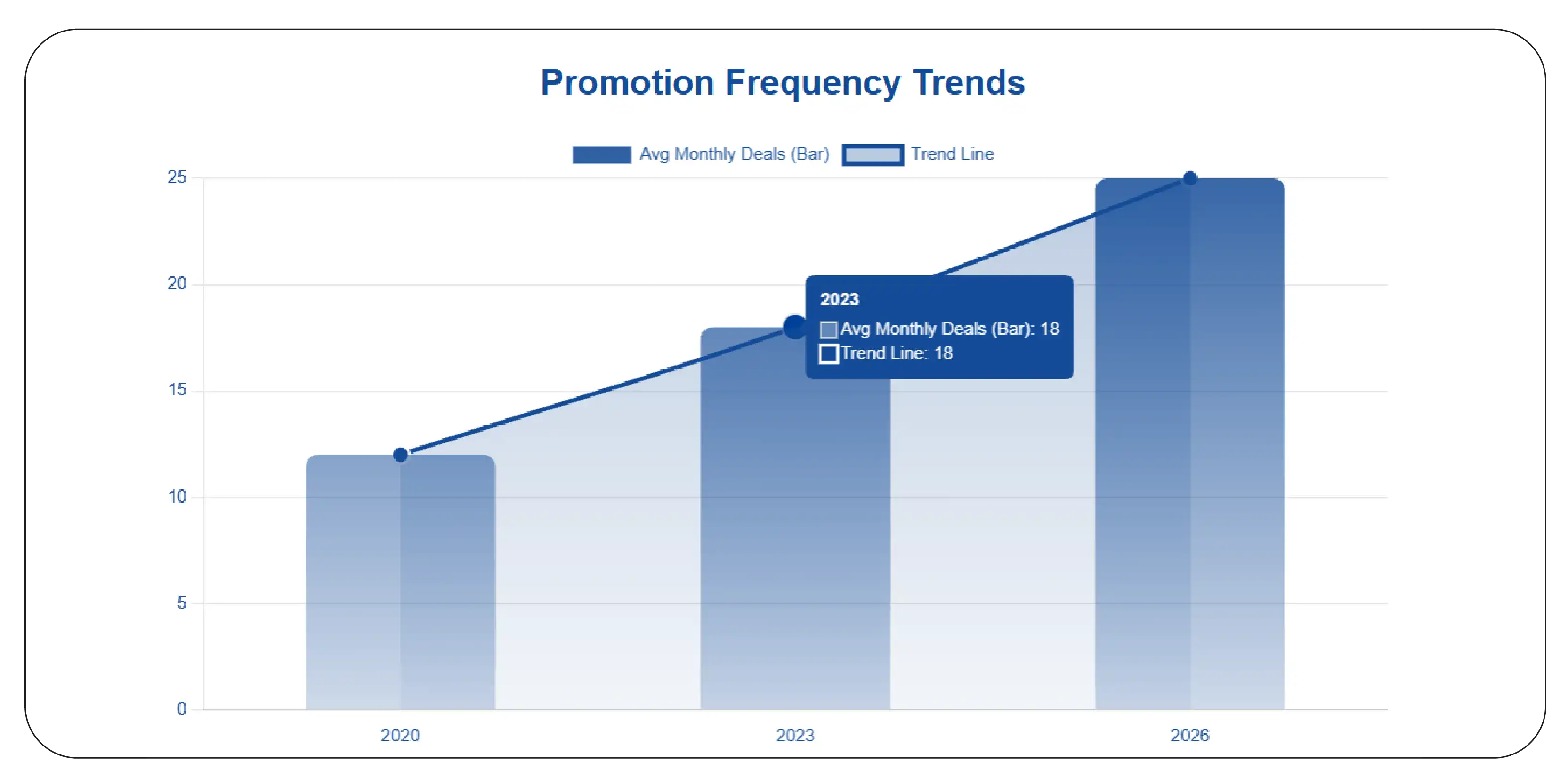
Retailers are increasingly using dynamic pricing models to adjust offers in real time based on demand fluctuations.
API-Driven Grocery Data Extraction
Modern retail analytics relies heavily on automation. With Scrape Grocery pricing data API, businesses can access structured datasets at scale. Combined with Web Scraping API Services, organizations can integrate real-time grocery pricing insights into dashboards and analytics platforms.
From 2020 to 2026, API-based data extraction adoption has grown by over 60%, driven by demand for real-time pricing intelligence.
API Adoption Growth
| Year |
Adoption Rate |
| 2020 |
25% |
| 2023 |
48% |
| 2026 |
70% |
This shift enables faster decision-making and more accurate pricing strategies across retail operations.
Why Choose Product Data Scrape?
Product Data Scrape empowers businesses with advanced retail intelligence solutions designed for grocery and FMCG markets. Our platform specializes in delivering accurate, scalable, and real-time data solutions for competitive analysis and pricing optimization.
With expertise in Grocery Membership price monitoring data and Pricing Intelligence Services, we help businesses uncover hidden pricing structures and optimize promotional strategies across major grocery platforms.
Our solutions enable brands to track competitor pricing, analyze loyalty program effectiveness, and improve market positioning with data-driven precision.
Conclusion
The grocery retail industry is rapidly evolving into a data-driven ecosystem where loyalty programs and personalized pricing dominate consumer experiences. Through Grocery Rewards and Discounts scraping data, businesses can uncover hidden pricing patterns, optimize promotions, and enhance customer retention strategies.
By leveraging advanced data extraction techniques, retailers and FMCG brands can bridge the gap between pricing transparency and personalization. This enables smarter decision-making, improved profitability, and stronger competitive positioning.
Product Data Scrape helps businesses unlock powerful grocery intelligence through scalable data solutions, enabling smarter pricing, better insights, and stronger retail strategies. Connect with us today to transform your retail analytics journey!
FAQs
1. What is Scrape Grocery Loyalty Program Data used for?
It is used to analyze grocery loyalty pricing, discounts, and personalized offers across platforms like Kroger Plus, Walmart+, and Target Circle for competitive insights.
2. How does Product Data Scrape help in grocery analytics?
Product Data Scrape provides structured data extraction solutions that help businesses track pricing trends, loyalty programs, and FMCG product performance across retail chains.
3. Why is grocery loyalty data important?
It reveals hidden pricing strategies, customer segmentation models, and discount patterns that are not visible in standard retail pricing analysis.
4. Can grocery pricing data be used for forecasting?
Yes, historical and real-time grocery pricing data helps in demand forecasting, pricing optimization, and promotional strategy planning.
5. What industries benefit from grocery data scraping?
Retail, FMCG, analytics firms, and e-commerce companies benefit by using grocery data to improve pricing intelligence, market analysis, and competitive benchmarking.


 Singapore
 EMAIL
EMAIL
 PHONE
PHONE










.webp)