Introduction
A 1688 product Data scraper can help wholesale buyers organize product listings, supplier details, specifications, and displayed prices into structured datasets for sourcing research. By standardizing this information, importers, retailers, and e-commerce businesses can compare supplier offers, evaluate product variations, and identify potential sourcing opportunities more efficiently.
China's expanding digital commerce market makes reliable supplier research increasingly important. Businesses sourcing through 1688 need more than product names and headline prices: they need minimum order quantities, specifications, seller information, shipping terms, and comparable product attributes. Demand Trend Intelligence helps turn these observations into useful market insights, provided that collected information is authorized, accurately validated, and refreshed appropriately.
This guide explains six practical areas of wholesale data analysis, reviews China's online retail growth from 2020 to 2025, and outlines what businesses should measure in 2026. It also explains how structured product and supplier information can improve purchasing decisions without relying on unverified supplier claims or invented performance statistics.
China's wholesale and online retail market: verified data from 2020–2026
China's online retail growth provides useful context for businesses researching wholesale suppliers. The National Bureau of Statistics (NBS) reports the following figures for online retail sales of physical goods from 2020–2025 and online retail sales of goods for January–September 2026.
| Year | Online retail sales of goods (RMB trillion) | Year-on-year growth |
|---|
| 2020 | 9.76 | 14.8% |
| 2021 | 10.80 | 12.0% |
| 2022 | 11.96 | 6.2% |
| 2023 | 13.02 | 8.4% |
| 2024 | 13.08 | 6.5% |
| 2025 | 13.09 | 5.2% |
| 2026 (Jan–Sep) | 9.51 | 3.8% |
Values rounded to two decimal places. 2020–2025 are annual figures; 2026 covers nine months only and is not a full-year result.
These are national Chinese online-goods retail figures, not 1688 platform sales or supplier statistics. They provide market context, not evidence of the performance of an individual wholesale marketplace. Sources: China MOFCOM, 2020, NBS, 2021, NBS, 2022, NBS, 2023, NBS, 2024, NBS, 2025, and NBS, January–September 2026.
How can businesses evaluate suppliers across a large wholesale catalogue?
1688.com is Alibaba Group’s domestic Chinese wholesale marketplace. Alibaba describes it as an integrated marketplace connecting wholesale suppliers with buyers and providing sourcing and online transaction services. Its catalogue covers areas such as apparel, accessories, packaging materials, home furnishings, electronics, and office supplies. Alibaba reported that 1688 had more than one million paying members as of fiscal year 2024. This scale makes structured supplier research valuable for businesses evaluating multiple sourcing options. (Alibaba Group – 1688; Alibaba SEC filing)
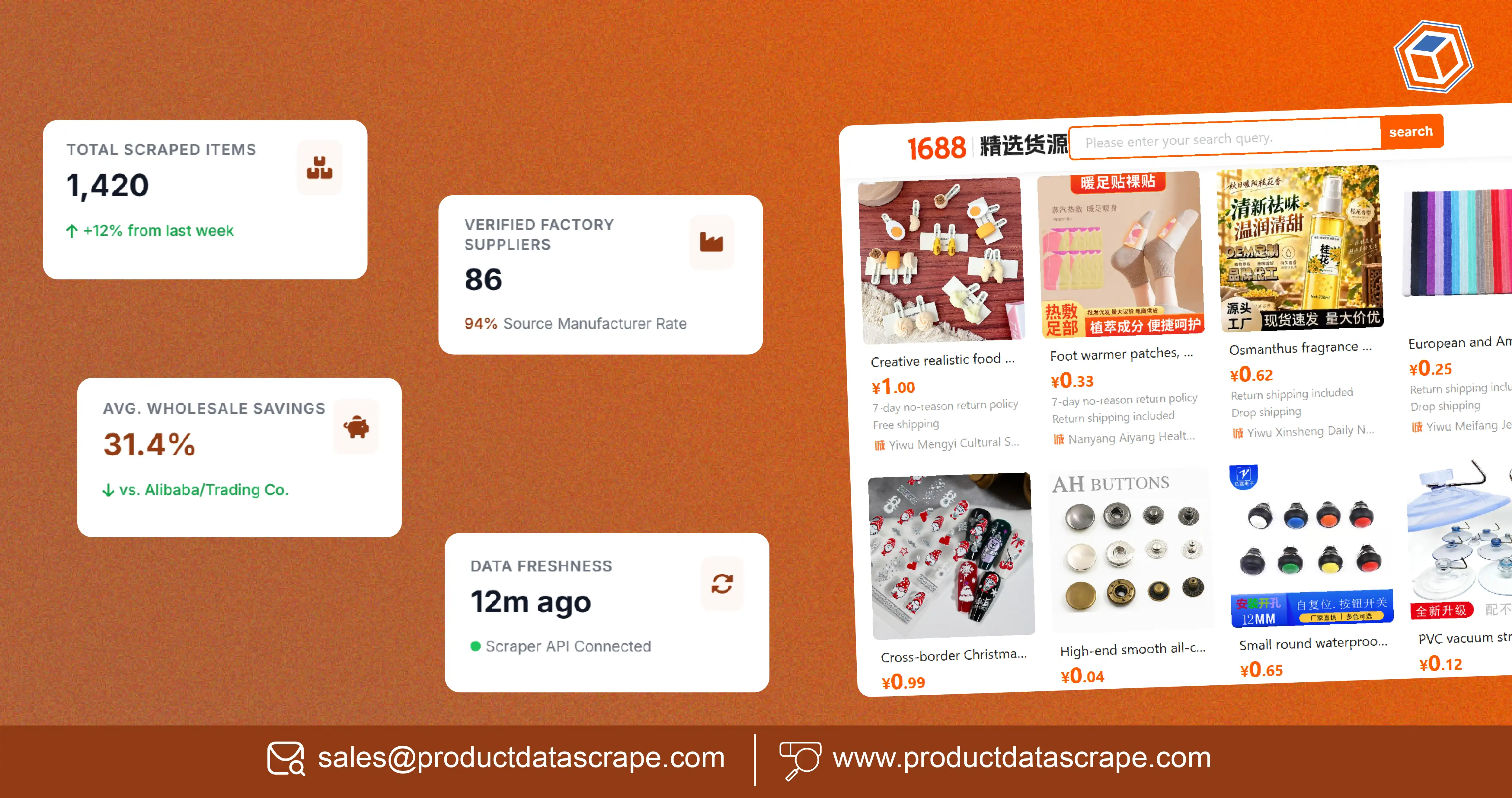
1688 Wholesale Data Monitoring can organize product listings into records containing product titles, supplier names, categories, minimum order quantities, specifications, and displayed prices. Businesses can then compare products using consistent fields rather than relying on screenshots or manually copied descriptions. Marketplace & Seller Intelligence also requires distinguishing between a supplier's marketplace profile and independently verified manufacturing credentials. A supplier listing alone does not prove factory ownership, product quality, export capability, or certification.
A practical monitoring process should preserve the original listing URL and collection timestamp. Analysts should also record changes to product descriptions, prices, and minimum order quantities without assuming every change represents a permanent supplier policy. This helps importers, wholesalers, and online retailers create a more transparent sourcing shortlist and identify which suppliers require direct verification before an order is placed.
Which product details should buyers collect before comparing wholesale offers?
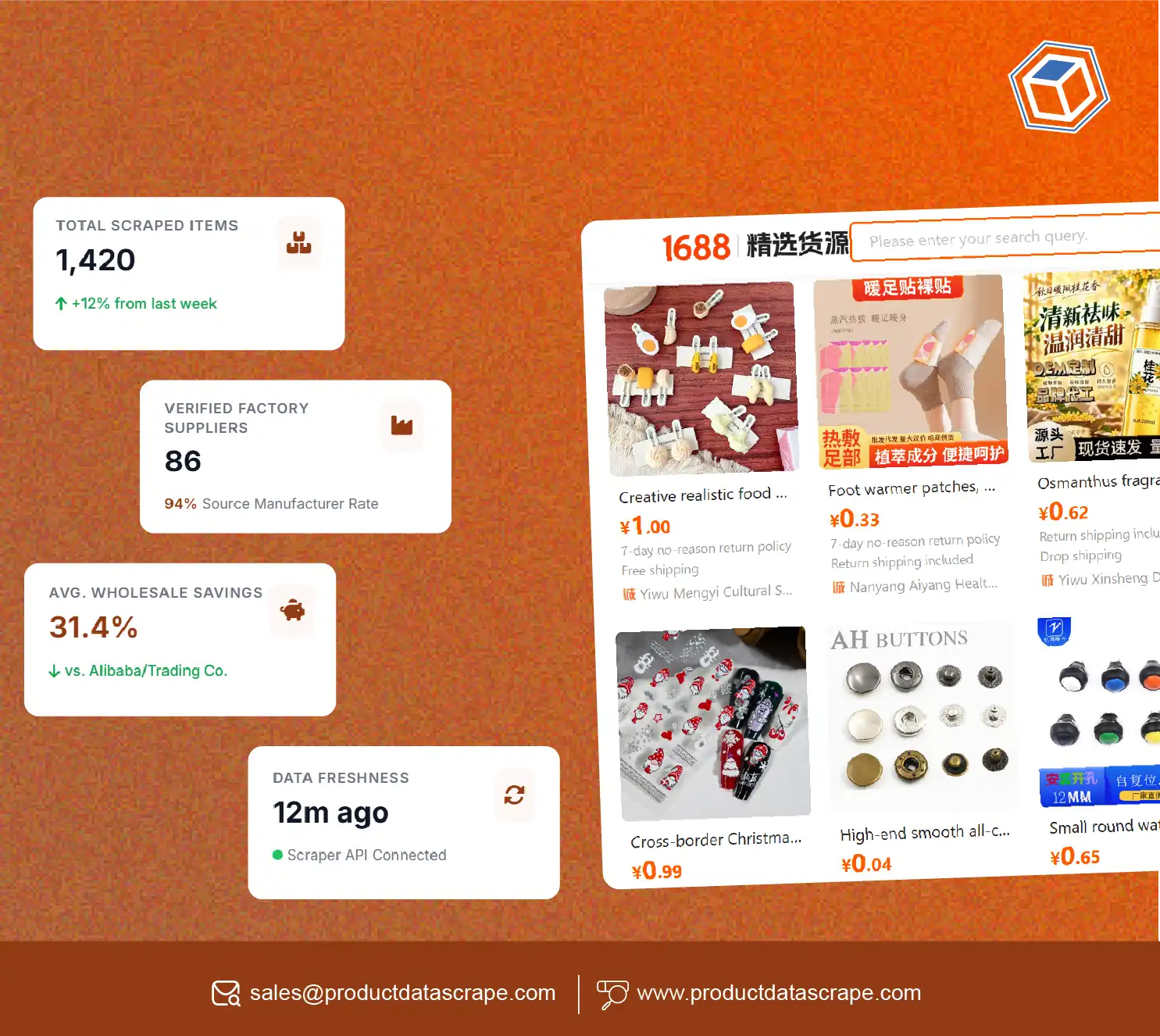
Product comparison starts with accurate product identification. Two listings may use similar names but describe different materials, dimensions, colours, packaging, or product grades. Buyers therefore need structured product attributes before comparing displayed prices. A low headline price does not necessarily represent the lowest landed cost or the best purchasing option.
A permitted workflow to Extract 1688 Marketplace Product Data should capture relevant listing information, including product title, category, specification, variant, unit, minimum order quantity, displayed price range, supplier profile reference, and listing URL. Where the source provides them, buyers can also record shipping terms, production lead time, sample availability, and customization options. These fields should be treated as source statements, not independently verified facts.
Competitive pricing data becomes more useful when each price is connected to the correct quantity and variant. For example, a quotation for a larger order should not be compared directly with a single-unit offer. Currency, tax treatment, shipping, packaging, and destination costs should also be considered separately.
A normalized dataset should retain both the original Chinese listing text and its translated or standardized interpretation. This is particularly important for technical specifications, where automated translation can change the meaning of material names, measurements, or manufacturing terms. Human review is advisable for high-value or safety-sensitive purchases.
How can historical product records improve wholesale price comparisons?
A single product listing provides only a point-in-time observation. It cannot explain whether a supplier's displayed price has changed, whether a promotion has ended, or whether the minimum order quantity has been revised. Historical records help buyers distinguish temporary changes from repeated pricing patterns.
A 1688 Wholesale Product Price Dataset can store product identifiers, listing URLs, supplier references, variants, price ranges, quantity tiers, currency, and timestamps. A reliable record should preserve the source value rather than overwrite earlier observations. This makes it possible to review historical changes and investigate discrepancies between collection dates.
A 1688 product Data scraper can support this process when the collection method is authorized and the required information is accessible. Its role is to structure observations, not guarantee that a supplier will honour a displayed price. Buyers should request a current quotation before purchasing, especially when order volume, customization, delivery destination, or payment terms affect the final amount.
| Period | Verified China online goods retail growth | Relevance to sourcing analysis |
|---|
| 2020 | 14.8% | Rapid online retail expansion |
| 2021 | 12.0% | Continued growth in digital commerce |
| 2022 | 6.2% | Growth continued at a slower rate |
| 2023 | 8.4% | Online goods sales accelerated |
| 2024 | 6.5% | Positive growth continued |
| 2025 | 5.2% | Online goods retail sales continued increasing |
| 2026 Jan–Sep | 3.8% | Partial-year growth; not a full-year comparison |
These national figures are useful context, not 1688-specific price or supplier performance measurements. See the NBS and MOFCOM sources linked above.
What supplier information should importers verify before placing an order?
Supplier evaluation should extend beyond the product listing. Buyers need to understand who is selling the product, what role the supplier performs, and whether the supplier can meet the intended order requirements. A marketplace account may belong to a manufacturer, trading company, distributor, or another type of seller. That distinction can affect communication, production control, customization, and fulfilment.
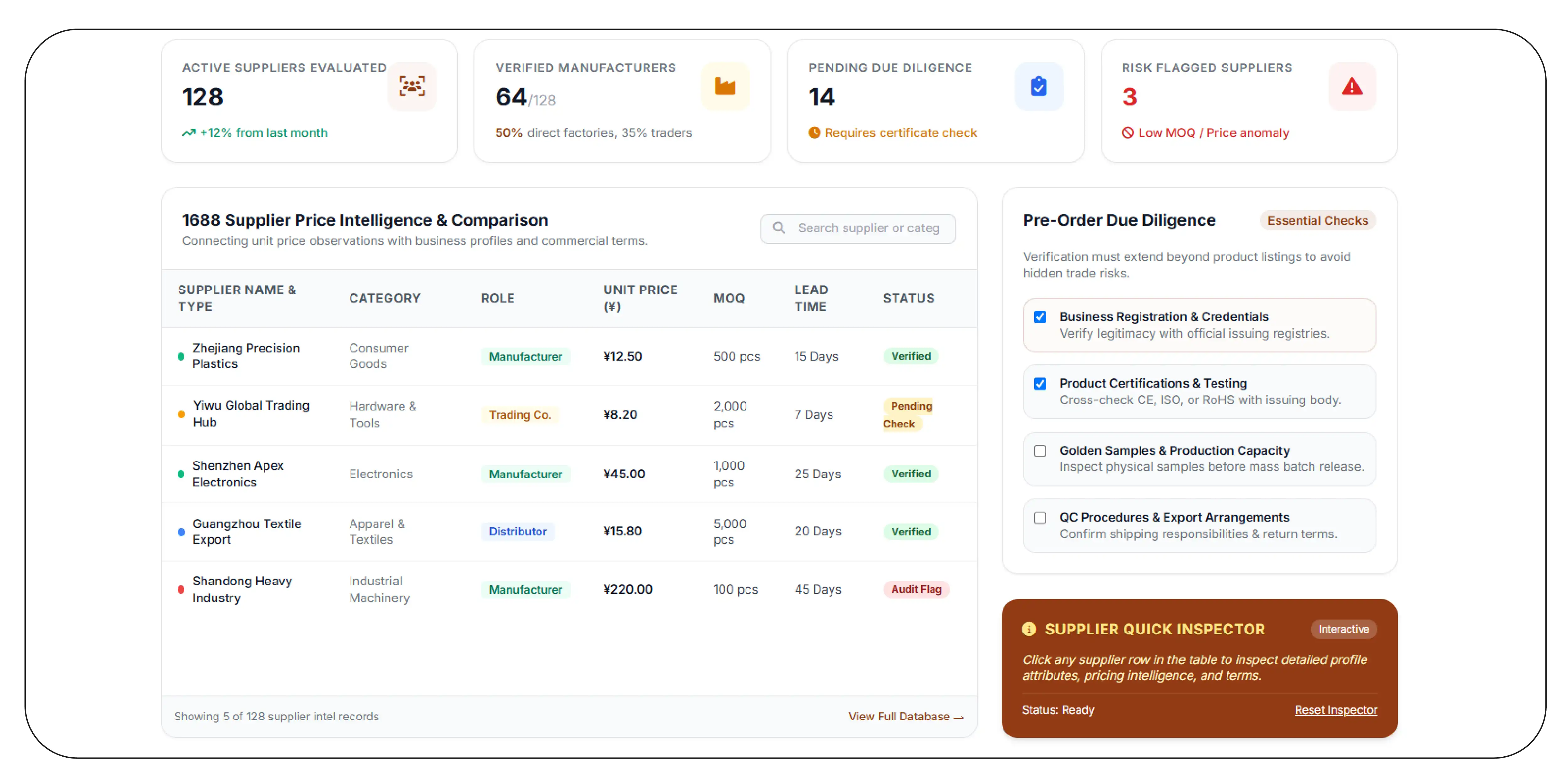
1688 Supplier Price Intelligence Data should therefore connect price observations with supplier identifiers and available business information. Useful fields include the supplier's displayed business name, profile URL, location where published, product categories, transaction-related indicators where accessible, and stated production or service capabilities. These records can help buyers prioritize suppliers for further checks, but they should not be treated as a substitute for due diligence.
Before placing an order, buyers should request current quotations and verify relevant business registration, product certifications, samples, production capacity, quality-control procedures, and export arrangements. The required checks depend on the product and destination market. Certifications should be checked with the issuing body where possible, and product claims should be supported by appropriate documentation.
A supplier comparison should also include minimum order quantities, sample charges, lead times, payment terms, packaging specifications, shipping responsibilities, and return or dispute arrangements. This approach reduces the risk of choosing a supplier solely because its displayed unit price appears lower.
How can buyers monitor product listing changes and stock signals?
Product listings can change as suppliers update prices, variants, descriptions, and order conditions. A buyer who relies on an old spreadsheet may unknowingly compare an outdated listing with a current quotation. Regular review can help teams identify records that need rechecking before they make sourcing decisions.
A permitted 1688 Product Availability and Price Tracking process should record the date and time of each observation, the product URL, the selected variant, the displayed price, and any visible availability or order-status information. It should distinguish between a listing that is no longer visible, a product marked unavailable, and a page that failed to load. These conditions do not mean the same thing.
A 1688 product Data scraper can organize repeat observations where access is authorized. Businesses should define refresh intervals according to purchasing frequency and product volatility rather than assuming that every listing needs continuous monitoring. For frequently purchased goods, shorter review intervals may be appropriate; for less active catalogue research, periodic checks may be sufficient.
Monitoring records should flag meaningful changes for human review. These can include a revised price range, removed variant, changed minimum order quantity, modified product specification, or altered supplier information. Buyers should confirm stock, production availability, and final pricing directly with the supplier before committing funds. Marketplace listing information is not a guarantee of inventory or fulfilment.
How can factory-level research support better sourcing decisions?
Factory sourcing requires careful separation of supplier claims from verified manufacturing capabilities. A listing may describe a product as factory-direct or identify a manufacturer, but the wording alone does not establish ownership of production facilities. Buyers should confirm the supplier's role through documentation, factory audits where appropriate, sample orders, and direct communication.
1688 Factory Listing Price Intelligence can help organize listings that describe manufacturing or wholesale supply. Relevant fields include the displayed business identity, product category, quoted price range, minimum order quantity, customization statements, production location where provided, and available contact or profile references. The dataset should retain the original description so that translated claims can be checked against the source.
For buyers comparing factory quotations, price analysis should account for order volume, material grade, dimensions, finishing, packaging, tooling, customization, and delivery terms. A lower quote may reflect a different specification or exclude costs that another supplier has included. Standardized comparison sheets help purchasing teams identify these differences before negotiating.
A useful sourcing scorecard can include:
- Product specification match.
- Current quotation and quantity conditions.
- Supplier identity and business documentation.
- Sample quality and inspection findings.
- Production capacity and lead-time confirmation.
- Export documentation and delivery arrangements.
- Communication responsiveness and agreed terms.
This approach makes factory research more evidence-based. It also prevents a product listing from being mistaken for proof of manufacturing capability or supplier reliability.
Why Choose Product Data Scrape?
A wholesale data project needs more than automated collection. It requires consistent field mapping, product deduplication, translation checks, price normalization, and source traceability. 1688 Web Scraping Data can be organized into business-ready records when collection is permitted and the source supports the required fields. Product Data Scrape focuses on defining the dataset around buyer requirements, validating available information, and preparing structured outputs for analysis. The result is a more consistent foundation for supplier comparison, purchasing research, and ongoing catalogue review without treating unverified listing claims as confirmed facts.
Conclusion
Wholesale sourcing decisions improve when buyers compare products and suppliers using consistent, current, and traceable information. Assortment and availability monitoring can help purchasing teams review listing changes, while historical price records provide context for supplier negotiations and product comparisons. A properly governed 1688 product Data scraper workflow should preserve source details, validate specifications, and respect platform terms. It should also support direct supplier verification before any order is placed.
Contact Product Data Scrape to discuss a structured wholesale dataset tailored to your product categories, supplier research needs, and pricing analysis requirements!
FAQs
1. What is 1688.com?
1688.com is Alibaba Group's domestic Chinese wholesale marketplace, connecting suppliers and buyers for product sourcing and online transactions.
2. Which details should buyers compare?
Compare product specifications, variants, minimum order quantities, displayed prices, supplier identity, lead times, and shipping conditions.
3. Can historical prices be monitored?
Yes, where collection is authorized. Store dated observations and confirm current quotations directly with suppliers before purchasing.
4. Does a listing prove factory ownership?
No. Buyers should independently verify business identity, manufacturing capabilities, certifications, and production claims.
5. How can Product Data Scrape help?
Product Data Scrape can help businesses plan structured datasets, validate available product fields, and organize supplier information for sourcing analysis.


 Singapore
 EMAIL
 PHONE










.webp)