Introduction
Australia's grocery sector has become increasingly competitive as retailers use price drops, promotions, loyalty programs, and digital shelf strategies to attract value-conscious shoppers. Major supermarket chains continue to invest in dynamic pricing and targeted promotions to strengthen customer retention and market share. This Australian Grocery Price-Drop & Promotions Report 2026 provides detailed insights into pricing trends, discount strategies, promotional activity, and digital shelf performance across leading Australian retailers.
Powered by advanced Grocery data scraping in Australia, this report analyzes how supermarkets adjust prices, launch promotions, and optimize product visibility across online and offline channels. The findings help FMCG brands, retailers, category managers, and market analysts identify emerging trends, benchmark competitors, and make informed pricing decisions.
As consumer demand continues shifting toward digital grocery shopping, real-time pricing intelligence has become critical for maintaining competitiveness. This report highlights key market developments, promotional patterns, and retailer strategies shaping Australia's grocery landscape between 2020 and 2026.
How Are Retailers Responding to Increased Pricing Competition?
Australian supermarkets face growing pressure to maintain affordability while protecting margins. As inflation, supply chain disruptions, and changing consumer expectations influence purchasing behavior, retailers increasingly rely on Australian Supermarket Price Drop Monitoring supported by Grocery data scraping to remain competitive.
Price reductions are no longer limited to seasonal promotions. Retailers now use targeted discounts, category-specific markdowns, and dynamic pricing strategies throughout the year. Continuous monitoring allows brands and retailers to identify pricing shifts quickly and respond before losing market share.
Several key categories experienced aggressive price competition between 2020 and 2026:
- Fresh produce
- Dairy products
- Packaged foods
- Frozen meals
- Household essentials
- Health and wellness products
Price monitoring also helps identify regional differences, allowing retailers to tailor pricing based on local demand and competitive activity.
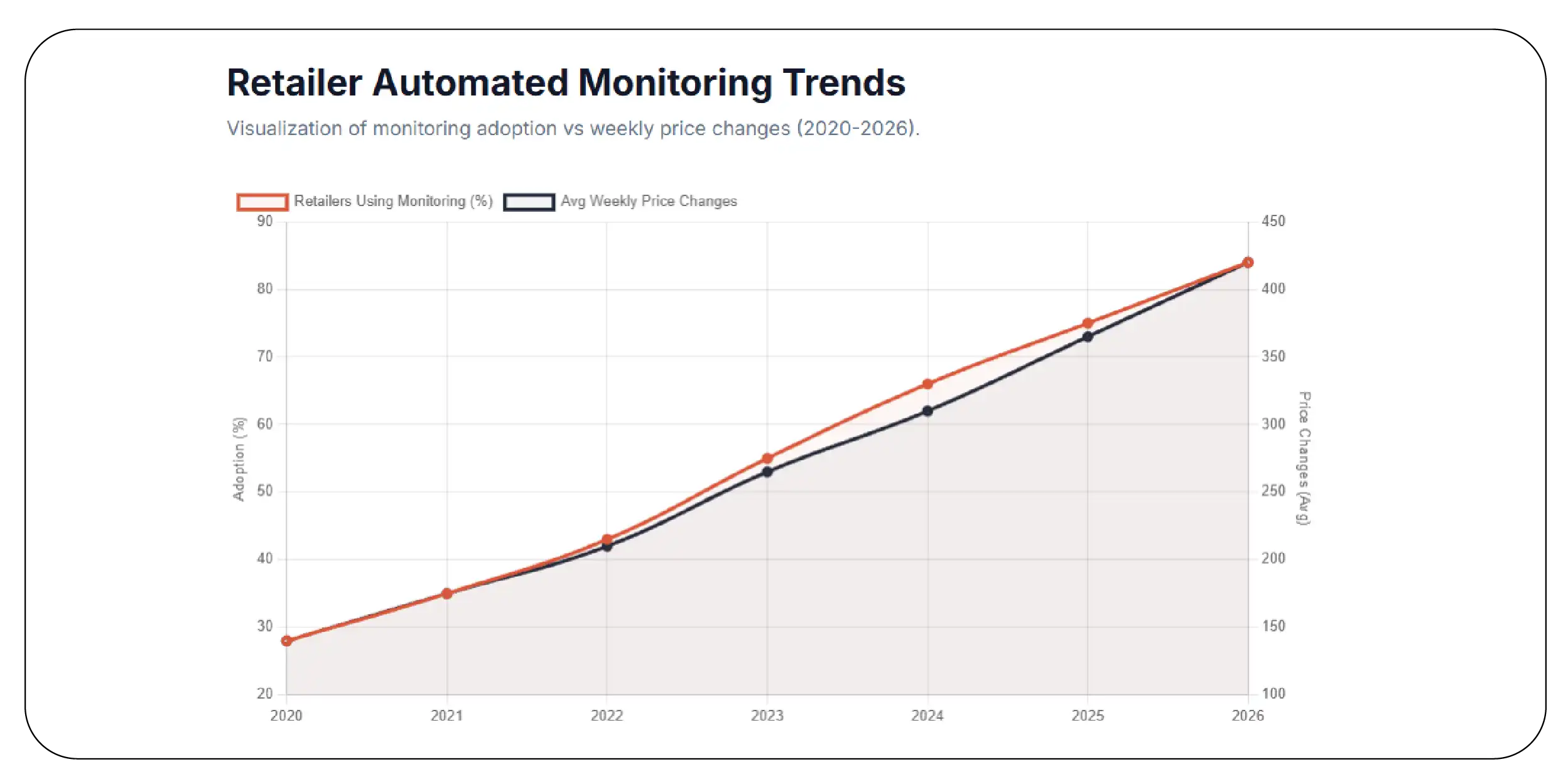
Australian Grocery Price Monitoring Trends (2020–2026)
| Year |
Retailers Using Automated Monitoring |
Average Weekly Price Changes |
| 2020 |
28% |
140 |
| 2021 |
35% |
175 |
| 2022 |
43% |
210 |
| 2023 |
55% |
265 |
| 2024 |
66% |
310 |
| 2025 |
75% |
365 |
| 2026 |
84% |
420 |
The growing adoption of automated pricing intelligence demonstrates how supermarkets are prioritizing data-driven decision-making. Retailers that continuously monitor competitor pricing gain stronger visibility into market movements and can implement pricing adjustments with greater confidence and speed.
What Promotional Strategies Are Driving Consumer Engagement?
Promotions remain one of the most powerful tools for attracting shoppers and increasing basket sizes. Retailers across Australia are expanding promotional campaigns to drive customer acquisition, strengthen loyalty, and improve category performance.
Advanced Australian Grocery Promotion Intelligence enables brands and retailers to evaluate promotional effectiveness by tracking discounts, bundled offers, loyalty rewards, and limited-time campaigns across multiple supermarkets.
Today's promotional landscape includes:
- Multi-buy offers
- Loyalty member discounts
- Seasonal campaigns
- Digital coupons
- Category-wide markdowns
- Flash sales
- Bundle pricing
Retailers increasingly use data analytics to determine which promotions generate the highest return on investment. This approach minimizes unnecessary discounting while maximizing customer engagement.
Promotion intelligence also helps FMCG brands understand how competitors position products and adjust promotional strategies accordingly.
Promotion Activity Growth (2020–2026)
| Year |
Average Promotions per Month |
Promotional Participation Rate |
| 2020 |
950 |
42% |
| 2021 |
1,120 |
47% |
| 2022 |
1,350 |
53% |
| 2023 |
1,620 |
59% |
| 2024 |
1,940 |
65% |
| 2025 |
2,280 |
71% |
| 2026 |
2,650 |
78% |
As promotional activity continues increasing, businesses that track campaign performance gain valuable insights into consumer behavior, category trends, and emerging opportunities for growth.
How Can Businesses Capture Real-Time Market Opportunities?
The speed of modern retail requires businesses to monitor pricing and promotions continuously. Static reports and periodic audits are no longer sufficient when product prices and offers can change multiple times within a single day.
This is where Real-Time Supermarket Deal Tracking Across Australia becomes essential. Combined with the ability to Track Product Pricing and Promotion, retailers and brands gain immediate visibility into market movements and promotional activity.
Real-time monitoring enables businesses to:
- Detect competitor promotions instantly
- Monitor daily price fluctuations
- Evaluate campaign performance
- Track category trends
- Optimize pricing strategies
- Improve inventory planning
For example, if a competitor launches a nationwide discount campaign on household products, brands can quickly assess the impact and determine whether a response is necessary.
Real-time intelligence also supports faster decision-making by delivering alerts and automated reports directly to category managers and pricing teams.
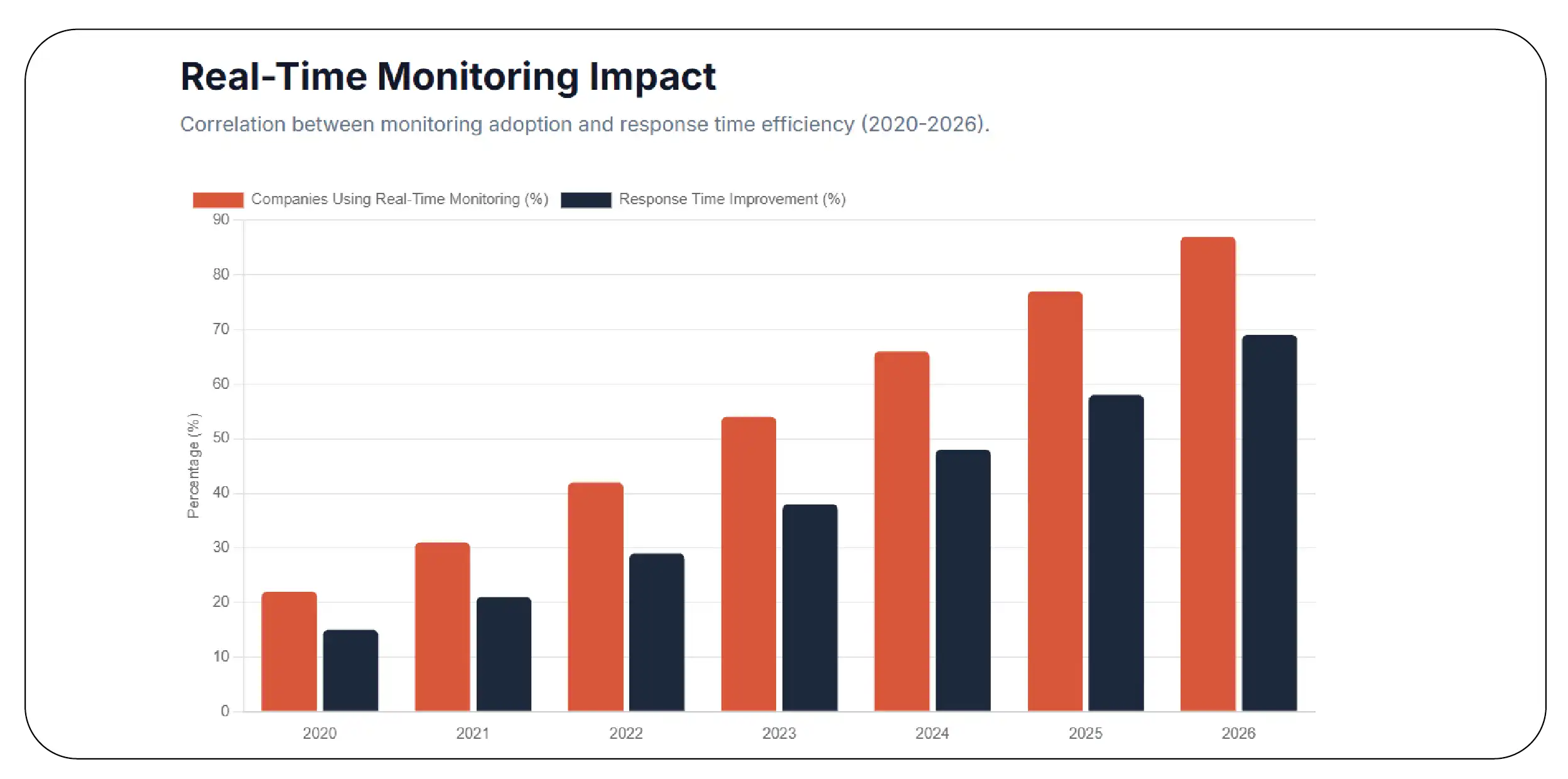
Real-Time Retail Intelligence Adoption (2020–2026)
| Year |
Companies Using Real-Time Monitoring |
Response Time Improvement |
| 2020 |
22% |
15% |
| 2021 |
31% |
21% |
| 2022 |
42% |
29% |
| 2023 |
54% |
38% |
| 2024 |
66% |
48% |
| 2025 |
77% |
58% |
| 2026 |
87% |
69% |
Organizations that invest in real-time monitoring technologies can identify market opportunities faster, improve promotional effectiveness, and strengthen their competitive position within Australia's rapidly evolving grocery industry.
How Can Automated Product Feed Collection Improve Retail Intelligence?
Retailers and FMCG brands need structured, high-quality product information to make informed pricing and merchandising decisions. Manually collecting product details from multiple supermarket websites is time-consuming and prone to inconsistencies. Automated data extraction simplifies this process by continuously gathering product information across leading grocery retailers.
Businesses that scrape grocery product feeds from Australian retailers gain access to comprehensive datasets that include product names, SKUs, pricing, categories, package sizes, nutritional information, promotional tags, stock status, and product images. These structured datasets enable brands to compare assortments, identify new product launches, and analyze category trends across multiple retailers.
Automated product feed collection supports:
- Product catalog benchmarking
- Assortment comparison
- New product launch tracking
- Category performance analysis
- Digital shelf optimization
- Inventory visibility
With centralized product intelligence, businesses can quickly identify assortment gaps, optimize merchandising strategies, and improve customer experiences across online grocery channels.
Product Feed Automation Growth (2020–2026)
| Year |
Retailers Using Automated Product Feeds |
Product Coverage Accuracy |
| 2020 |
26% |
81% |
| 2021 |
34% |
85% |
| 2022 |
45% |
89% |
| 2023 |
57% |
92% |
| 2024 |
68% |
95% |
| 2025 |
78% |
97% |
| 2026 |
87% |
99% |
As digital grocery continues expanding, automated product feeds provide the reliable foundation required for advanced pricing analytics, assortment optimization, and competitive intelligence.
Why Are Markdown Insights Becoming Essential for Grocery Retailers?
Retail markdowns influence consumer purchasing decisions more than ever before. Understanding when products are discounted, how long promotions remain active, and which categories receive the deepest price reductions enables retailers and manufacturers to build stronger pricing strategies.
Businesses using Monitor supermarket markdowns and discounts Data together with Price monitoring can identify recurring promotional patterns and respond more effectively to competitive activity.
Key insights obtained through markdown monitoring include:
- Frequency of discounts
- Category-level markdown trends
- Promotional duration
- Regional pricing variations
- Clearance campaigns
- Seasonal discount behavior
For example, FMCG brands can evaluate how often their products receive markdowns compared with competing brands, helping optimize future promotional investments.
Continuous monitoring also enables category managers to forecast demand more accurately and reduce the risks associated with overstocking or underpricing.
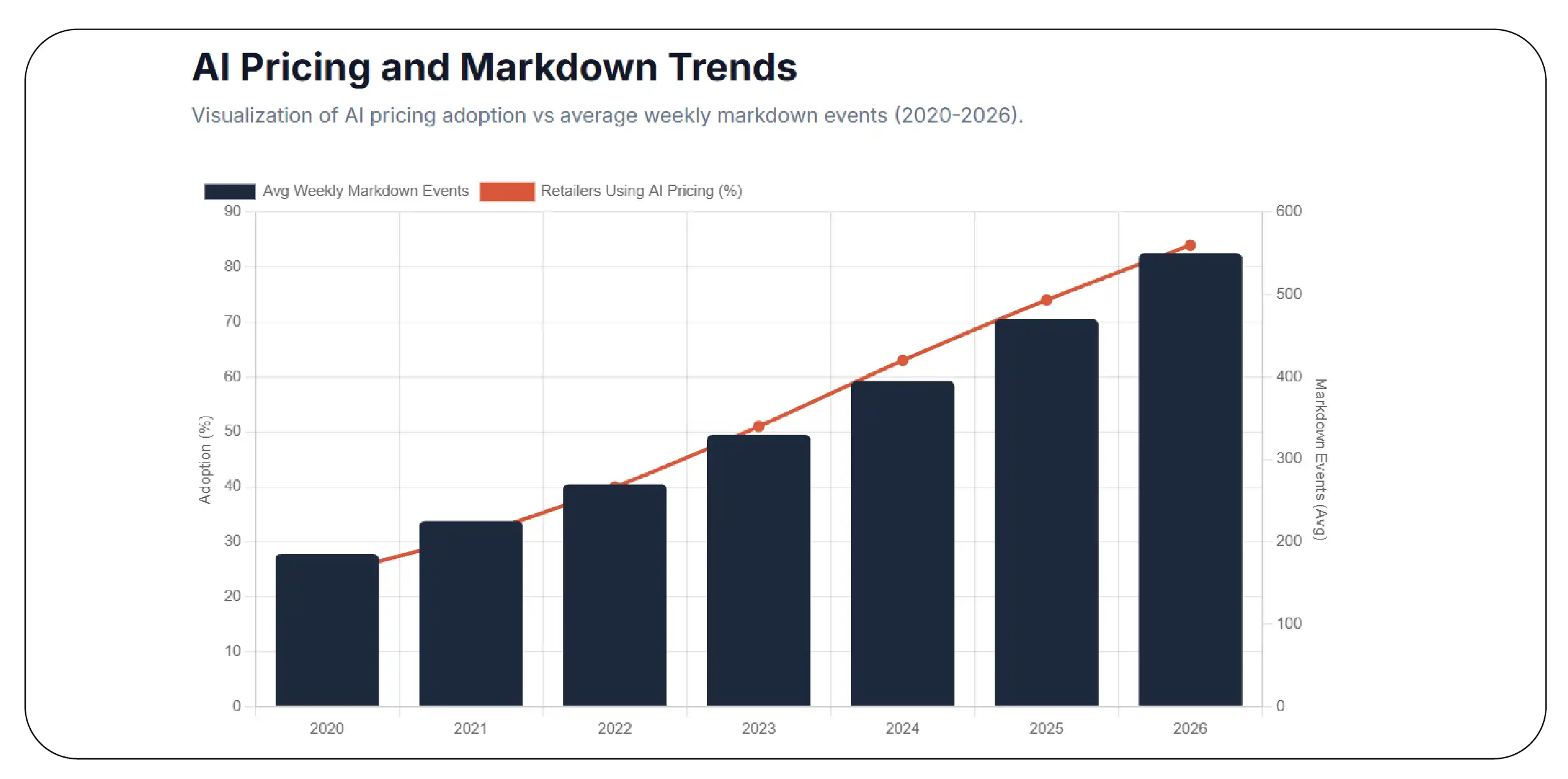
Grocery Markdown Activity (2020–2026)
| Year |
Average Weekly Markdown Events |
Retailers Using AI Pricing |
| 2020 |
185 |
24% |
| 2021 |
225 |
31% |
| 2022 |
270 |
40% |
| 2023 |
330 |
51% |
| 2024 |
395 |
63% |
| 2025 |
470 |
74% |
| 2026 |
550 |
84% |
By analyzing markdown behavior over time, businesses can strengthen pricing models, improve promotional planning, and maximize profitability while remaining competitive in a rapidly changing grocery market.
How Can Continuous Market Visibility Support Long-Term Growth?
Modern grocery retail requires constant visibility into pricing, promotions, availability, and assortment changes. Businesses that monitor market activity continuously are better positioned to respond quickly to competitor actions and evolving customer preferences.
The ability to Monitor grocery discounts across Australian supermarkets allows retailers, FMCG manufacturers, and market research firms to maintain an accurate understanding of market conditions across multiple chains and product categories.
Continuous grocery intelligence helps organizations:
- Compare competitor pricing strategies
- Evaluate promotion effectiveness
- Identify assortment gaps
- Detect stock availability trends
- Improve pricing consistency
- Support category planning
- Strengthen supplier negotiations
These insights enable decision-makers to move from reactive pricing strategies to proactive market planning based on reliable data.
Continuous Grocery Intelligence Adoption (2020–2026)
| Year |
Organizations Using Continuous Monitoring |
Decision-Making Efficiency |
| 2020 |
23% |
62% |
| 2021 |
32% |
68% |
| 2022 |
44% |
74% |
| 2023 |
56% |
80% |
| 2024 |
68% |
86% |
| 2025 |
79% |
91% |
| 2026 |
89% |
96% |
As Australia's grocery landscape becomes increasingly data-driven, continuous monitoring empowers businesses to improve operational efficiency, enhance promotional performance, and build sustainable competitive advantages.
Why Choose Product Data Scrape?
Product Data Scrape provides enterprise-grade grocery intelligence solutions designed to help retailers, FMCG brands, manufacturers, and market research firms make smarter business decisions. Our expertise in Australian Grocery Price Drop Tracking Across Major Retailers enables clients to monitor pricing movements, promotional activity, assortment changes, and competitor strategies across Australia's leading supermarket chains.
We also deliver advanced Retail media and ad intelligence to help brands measure sponsored product visibility, promotional placements, digital shelf performance, and campaign effectiveness across online grocery platforms.
Our capabilities include:
- Automated grocery price monitoring
- Promotion and discount tracking
- Product feed extraction
- Digital shelf analytics
- SKU-level competitive benchmarking
- Stock availability monitoring
- Retail media analytics
- Historical pricing datasets
- API-ready structured data
- Custom reporting dashboards
With scalable technology and reliable data pipelines, Product Data Scrape delivers accurate, actionable intelligence that helps businesses optimize pricing strategies, improve merchandising decisions, and strengthen their competitive position.
Conclusion
The Australian grocery industry continues to evolve through dynamic pricing, digital promotions, and increasingly sophisticated retail strategies. Organizations that invest in automated market intelligence gain a significant competitive advantage by making faster and more informed decisions.
Using advanced grocery analytics, businesses can Track product availability across retailers and marketplaces, monitor pricing trends, evaluate promotional performance, and identify new growth opportunities before competitors.
Ready to transform your grocery market intelligence strategy? Contact Product Data Scrape today to access customized pricing analytics, digital shelf insights, and automated grocery data solutions that help your business stay ahead in Australia's competitive retail landscape!



 Singapore
 EMAIL
EMAIL
 PHONE
PHONE


.webp)
.webp "thumb")








.webp)