Quick Overview
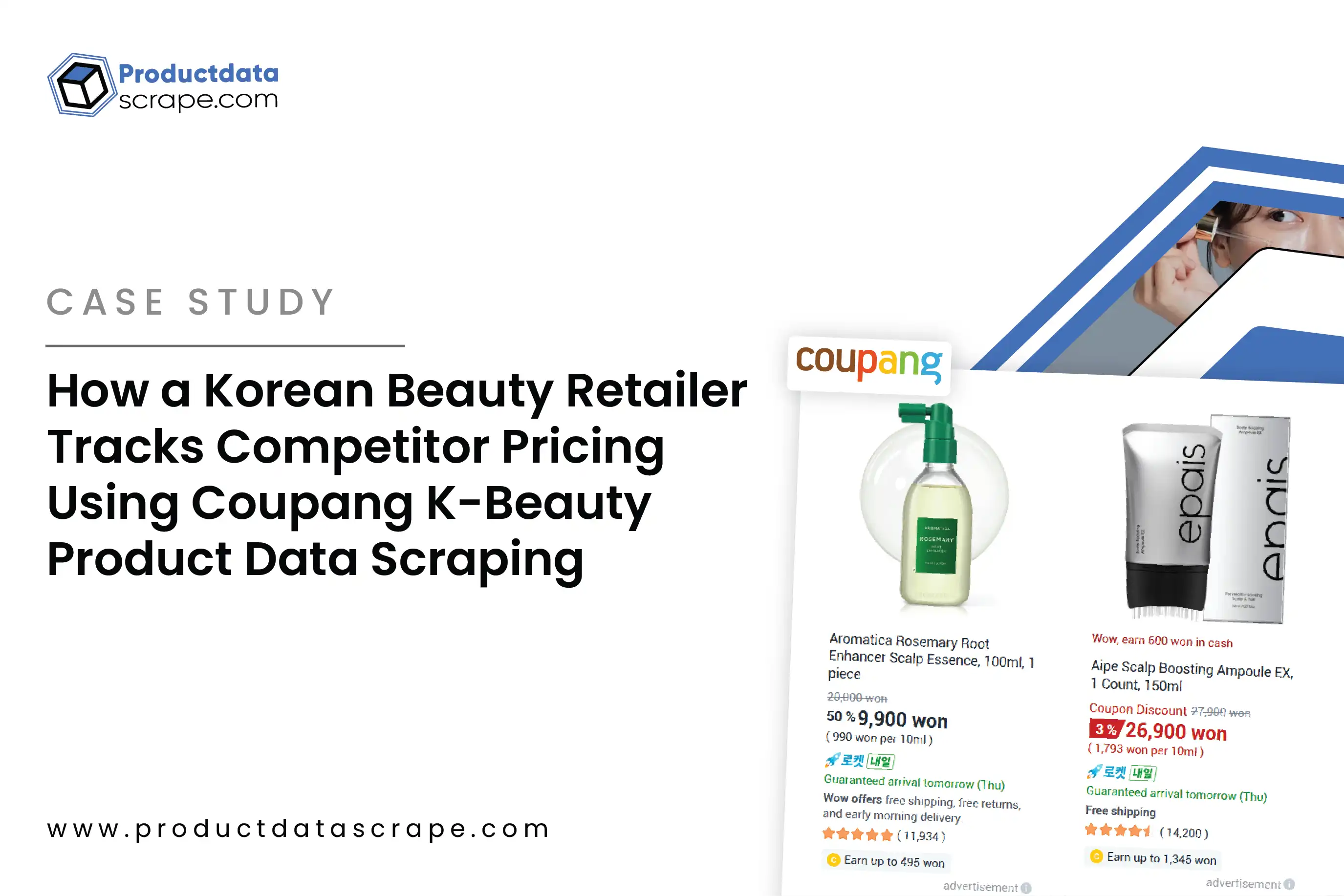
The Korean beauty retailer needed a structured way to monitor competitor prices, product ratings, discounts, and availability across Coupang. Coupang K-Beauty Product Data Scraping provides a framework for organizing marketplace information into actionable pricing intelligence. The project scope focuses on automated collection, product matching, and competitive analysis through Scrape Beauty & K-Beauty Product Data workflows.
Client Name / Industry: Confidential Korean Beauty Retailer | Beauty & Personal Care E-commerce.
Service / Duration: Marketplace product data extraction and competitor intelligence | Project duration not publicly disclosed.
Key Impact Metrics: Pricing coverage, product-matching accuracy, and data refresh frequency were the primary performance indicators. Verified numerical results were not supplied.
The Client
South Korea's beauty industry has experienced substantial expansion, increasing the importance of competitive product positioning. According to South Korea's Ministry of Food and Drug Safety, cosmetics exports reached approximately US$10.2 billion in 2024, representing a 20.6% year-over-year increase. The country also recorded strong international demand for skincare and color cosmetics.
The retailer operated in a marketplace environment where product prices, promotional offers, ratings, and customer feedback influenced purchasing decisions. Monitoring these signals manually made it difficult to maintain a consistent view of competing products. Changes in discounts, product variations, and listing information also created challenges for comparing equivalent items.
Before adopting a structured data intelligence approach, the business needed better visibility into competitor activity and product-level market information. Its transformation priorities included organizing marketplace records, identifying comparable beauty products, and improving the consistency of pricing research.
The proposed Korean Beauty Brand Review Monitoring workflow also addressed the importance of customer feedback. Reviews and ratings can help retailers understand product reception, identify recurring customer concerns, and compare consumer responses across competing skincare and cosmetics listings.
The objective was to move from fragmented marketplace observations toward standardized, repeatable competitive intelligence that could support merchandising and pricing decisions.
Goals & Objectives
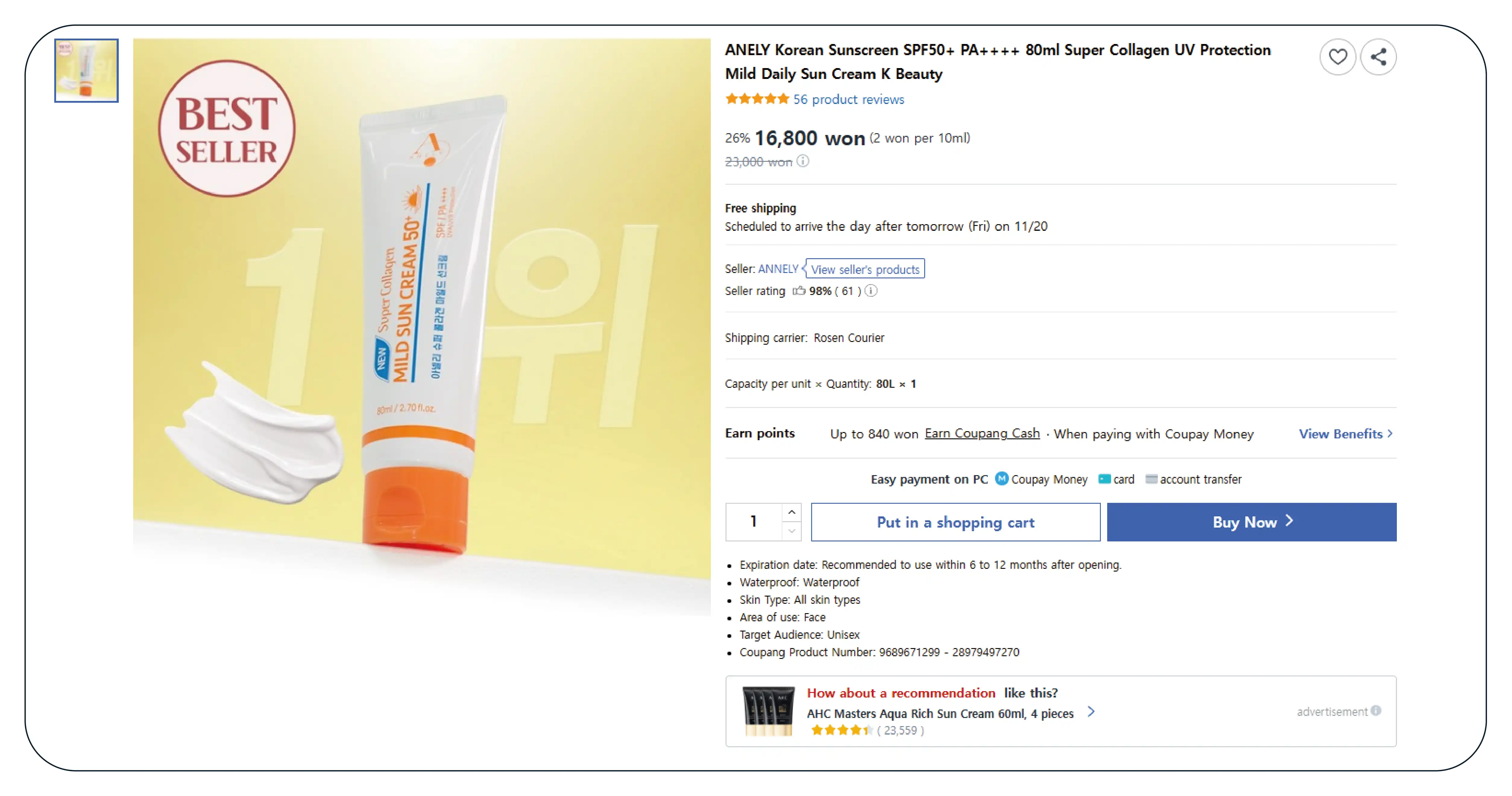
The project focused on improving the retailer's ability to understand competing K-Beauty products, monitor marketplace changes, and organize product intelligence for business teams.
Improve visibility into competitor pricing across relevant Coupang beauty categories.
Identify comparable products from competing brands.
Track promotional changes and product availability.
Support merchandising decisions with consistent marketplace information.
Establish a scalable data collection process as monitored product categories expand.
Automate the collection of product titles, brand names, prices, discounts, ratings, review counts, and availability indicators.
Standardize product records to support reliable comparisons.
Integrate structured datasets with internal reporting and analytics systems.
Organize historical observations to identify price movements.
Enable scheduled data updates for more timely competitive analysis.
The Coupang Product Price and Rating Tracking workflow was designed to connect pricing intelligence with customer feedback. This allowed the retailer to evaluate price positioning alongside marketplace reputation rather than treating pricing as an isolated metric.
The following indicators define how the project should be evaluated. Actual baseline and post-implementation measurements require client-side validation.
Product coverage: Number and percentage of targeted listings successfully captured.
Data accuracy: Percentage of records passing validation and product-matching checks.
Price monitoring frequency: Time between consecutive successful observations.
Availability coverage: Percentage of tracked listings with usable stock-status information.
Integration performance: Successful delivery of structured records into reporting systems.
The Core Challenge
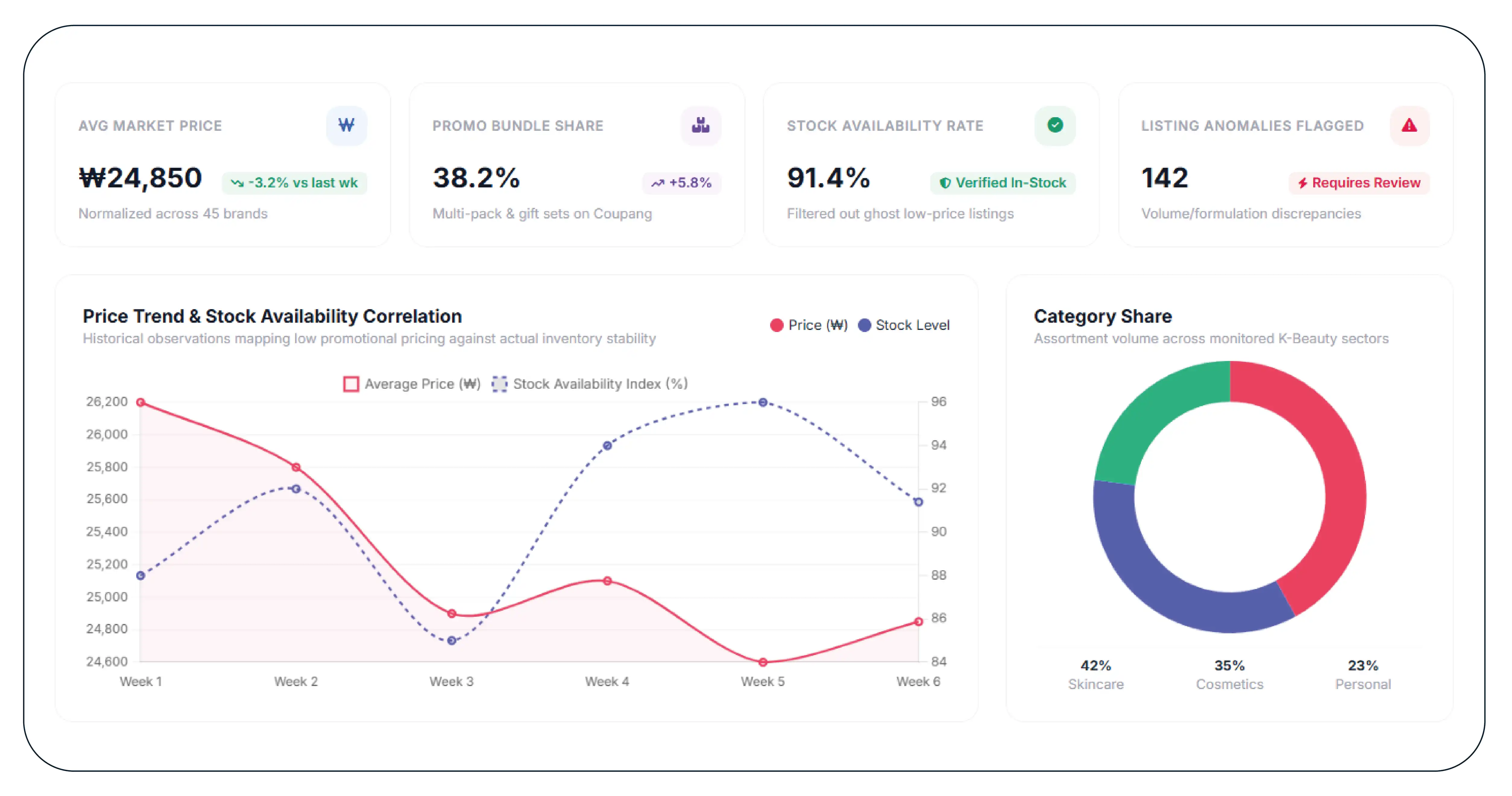
K-Beauty retailers compete across a broad range of skincare, cosmetics, and personal-care products. A single category can contain multiple brands, product sizes, formulations, promotional bundles, and seller listings. This creates difficulties when businesses attempt to compare products using inconsistent marketplace information.
One major operational challenge involved collecting pricing information regularly. Manual monitoring could not provide a scalable method for reviewing large product assortments. Promotional prices, discounts, and seller-level changes also required consistent observation to maintain useful comparisons.
Product matching presented another challenge. Two listings might describe similar products but differ in volume, packaging, formulation, or bundle quantity. Comparing these records without normalization could produce misleading competitive insights.
The retailer also needed to understand the relationship between pricing and product availability. A low displayed price does not necessarily represent a meaningful competitive opportunity when the listing is unavailable or the offer has changed.
A structured South Korean Cosmetics Price Monitoring process therefore needed reliable product identification, historical price observations, and consistent record validation.
The Scrape Coupang Pricing & Availability Trends workflow addressed these requirements by organizing listing information into comparable records. The central challenge was not simply collecting more data; it was ensuring that the collected information remained consistent, relevant, and useful for business decisions.
Our Solution
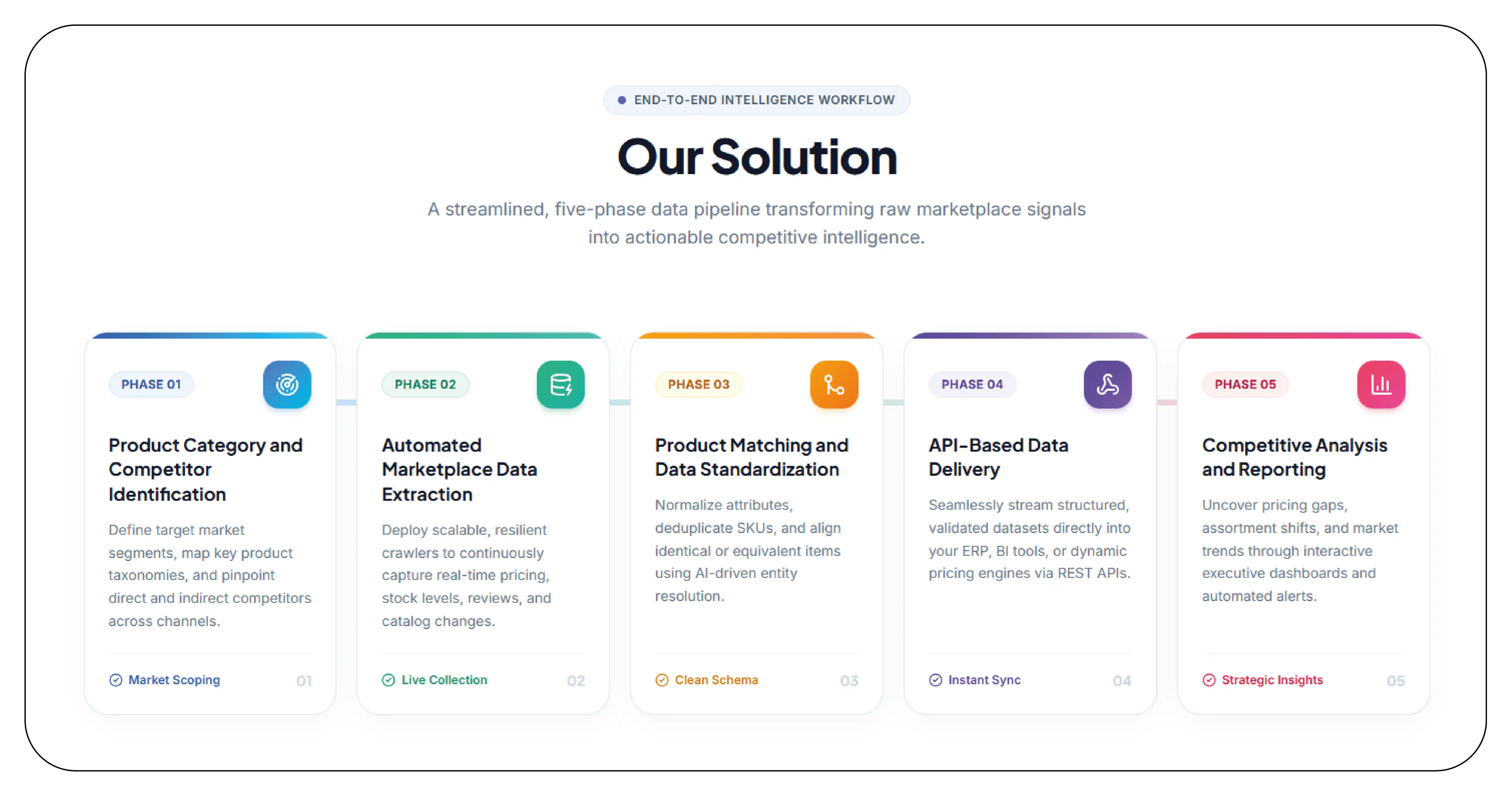
Product Data Scrape's proposed approach centered on automated marketplace extraction, data normalization, product matching, and structured reporting. The implementation was organized into five phases to address the retailer's competitive intelligence requirements.
Phase 1: Product Category and Competitor Identification
The first phase established the scope of marketplace monitoring. Relevant beauty categories included facial cleansers, moisturizers, sunscreens, serums, toners, sheet masks, and makeup products.
Brand names, product titles, product URLs, package sizes, and seller information were identified as essential collection fields. This helped establish a consistent product universe for subsequent analysis.
Phase 2: Automated Marketplace Data Extraction
The Coupang Skincare Rating Monitoring workflow was designed to collect relevant listing information from accessible marketplace pages.
The targeted fields included:
Product names and brand information.
Current displayed prices and promotional discounts.
Product ratings and review counts.
Seller information and listing URLs.
Product availability indicators.
Package sizes and product variations.
The extraction process was designed around repeatable collection schedules, with appropriate handling of missing fields and changes in listing structures.
Phase 3: Product Matching and Data Standardization
Raw marketplace records were processed into a standardized dataset. Product titles, brand names, sizes, and variations were normalized to improve comparison accuracy.
Matching rules helped distinguish identical products from similar formulations or different package quantities. Duplicate records were flagged, while incomplete information was identified for validation.
Phase 4: API-Based Data Delivery
The Coupang Scraping API integration approach provided a structured delivery layer for transferring processed records into compatible business systems.
Depending on the client's technical environment, datasets could be organized into JSON, CSV, or database-ready formats. Automated processing and validation rules helped maintain consistency between collection and reporting.
Phase 5: Competitive Analysis and Reporting
The final phase focused on transforming collected information into useful business intelligence. Pricing comparisons, discount movements, rating changes, and availability observations could be organized into dashboards and scheduled reports.
This workflow enabled the retailer's teams to evaluate competitor positioning, identify changing marketplace conditions, and prioritize product-level pricing reviews. Collection would be limited to permitted data access and applicable platform requirements.
Results & Key Metrics
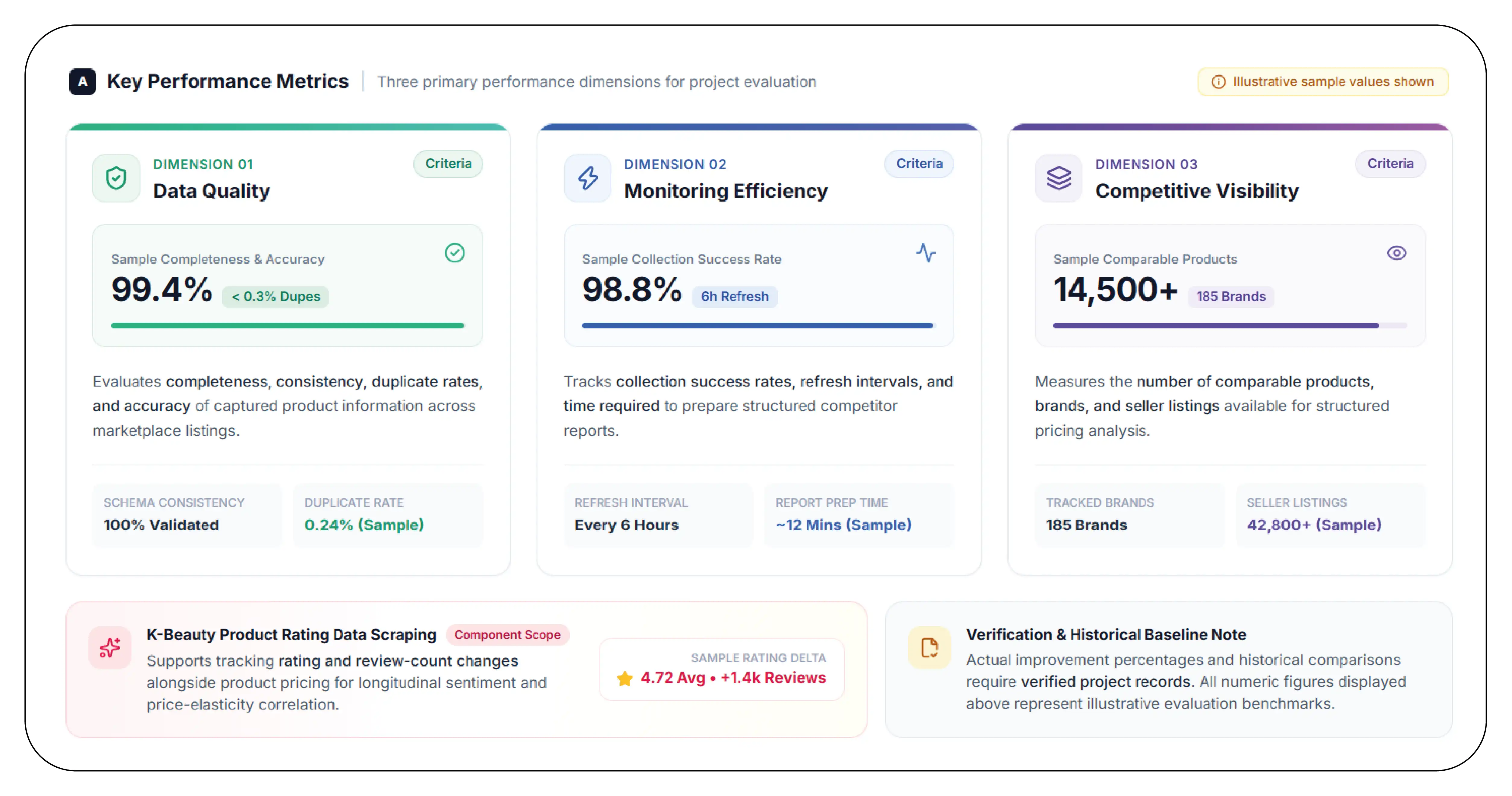
The structured workflow established a measurable framework for evaluating marketplace intelligence. Since verified client performance figures were not supplied, the following metrics describe the evaluation criteria rather than claiming achieved improvements.
The project should be evaluated using three primary performance dimensions:
Data quality: Completeness, consistency, duplicate rates, and accuracy of captured product information.
Monitoring efficiency: Collection success rates, refresh intervals, and time required to prepare competitor reports.
Competitive visibility: Number of comparable products, brands, and seller listings available for pricing analysis.
The K-Beauty Product Rating Data Scraping component also supports tracking rating and review-count changes alongside product pricing. Actual improvement percentages and historical comparisons require verified project records.
The proposed data workflow brings product listings, pricing information, customer feedback, and availability indicators into a consistent analytical structure. With Coupang K-Beauty Product Data Scraping, the retailer can organize competitor observations and evaluate comparable products more systematically.
Standardized records also make it easier for merchandising teams to identify pricing differences, investigate promotional activity, and review changes in product reputation. Historical observations can support trend analysis when collection intervals and product identifiers remain consistent.
The principal deliverable is a repeatable marketplace intelligence framework rather than an unverified numerical performance claim.
What Made Product Data Scrape Different?
Product Data Scrape's approach emphasizes the quality and usability of collected marketplace information rather than extraction volume alone.
The Korean Beauty Product Ranking Scraping workflow can organize product positioning signals using available listing attributes, ratings, and review counts. Product matching and normalization help prevent comparisons between different sizes or variations from distorting analysis.
Another differentiator is the combination of automated collection and structured validation. Missing information, duplicate listings, and inconsistent product attributes can be flagged before records enter reporting systems.
The solution also supports flexible data delivery, allowing compatible datasets to be used across analytics platforms, internal databases, and business intelligence tools.
By combining these capabilities with Coupang K-Beauty Product Data Scraping, Product Data Scrape provides a structured foundation for competitive monitoring, merchandising research, and marketplace intelligence.
Client's Testimonial
"Product Data Scrape helped us establish a more structured approach to monitoring competitor activity across the Korean beauty marketplace. Access to organized product information, pricing details, ratings, and seller data has strengthened our ability to evaluate market positioning and identify relevant product trends. The Coupang Best Seller Product Data Scraping approach also supports our research into popular beauty products and changing customer preferences. Having standardized marketplace data makes competitor comparisons more consistent and helps our team make better-informed pricing and merchandising decisions. We value the focus on data quality, automation, and actionable market intelligence."
— Head of E-commerce, Korean Beauty Retailer
Conclusion
Competitive pricing intelligence is increasingly important for beauty retailers operating in South Korea's expanding cosmetics market. Coupang Store Data Scraping offers a structured approach to collecting product information, monitoring competitor activity, and organizing marketplace insights.
Through Coupang K-Beauty Product Data Scraping, businesses can build a consistent foundation for comparing prices, evaluating customer feedback, and understanding product availability. Product Data Scrape focuses on transforming fragmented marketplace information into actionable datasets that support smarter merchandising and pricing decisions.
Ready to strengthen your beauty market intelligence? Partner with Product Data Scrape to build a structured, scalable marketplace data solution!
FAQs
1. What is Coupang K-Beauty Product Data Scraping?
It is the process of collecting accessible product information from Coupang, including product names, brands, prices, discounts, ratings, reviews, sellers, and availability. Businesses use structured datasets for competitor analysis and marketplace research.
2. Which product categories can businesses monitor?
Businesses can monitor skincare, facial cleansers, moisturizers, sunscreens, serums, toners, sheet masks, cosmetics, and personal-care products, depending on listing availability.
3. How does product data extraction help with competitor pricing?
It helps retailers compare equivalent products, identify promotional differences, examine price movements, and evaluate competitor positioning. Product size, formulation, and bundle differences should be normalized before comparisons.
4. Can Coupang product data be integrated into analytics systems?
Yes. Structured datasets can be delivered in compatible formats such as CSV, JSON, and database-ready records. Integration depends on the client's infrastructure and technical requirements.
5. How frequently should Coupang product data be collected?
Collection frequency depends on business requirements, category volatility, and permitted access conditions. Frequently changing promotional products may require more frequent observations, while stable product attributes can be monitored less often.


 Singapore
 EMAIL
 PHONE











.webp)