Introduction
The Australian grocery market is undergoing rapid transformation driven by inflation, supply chain volatility, and shifting consumer demand. The Australian Grocery Price & Promotion Trends Report 2026 provides a data-driven view of how pricing, promotions, and product availability are evolving across major supermarkets. It highlights how Grocery data scraping in Australia is enabling brands and retailers to track real-time pricing, store-level variations, historical price movements, and promotional cycles across Woolworths, Coles, Aldi, and IGA.
Modern retail intelligence platforms and AU grocery price apps now integrate real-time, store-level, and UPC-based tracking systems. These systems allow businesses to monitor product-level changes, promotional cadence, and historical pricing trends across thousands of SKUs. This shift is powered by real-time data scraping and automated product intelligence pipelines.
Industry Insight: Between 2020 and 2026, Australian grocery price volatility has increased by over 28%, while promotional frequency across major retailers has grown by nearly 35%, making real-time monitoring essential for competitive decision-making.
How Is Grocery Pricing Intelligence Evolving in Australia?
Modern retailers rely on structured data systems to improve pricing decisions. The Australia Grocery Pricing Intelligence Report 2026, Woolworths dataset shows how pricing intelligence is becoming central to retail strategy across Australia.
Pricing Intelligence Trends (2020–2026)
| Year |
Retail Pricing Changes Frequency |
Data Coverage (SKUs) |
| 2020 |
Low |
15,000 |
| 2021 |
Medium |
22,000 |
| 2022 |
Medium-High |
35,000 |
| 2023 |
High |
48,000 |
| 2024 |
High |
60,000 |
| 2025 |
Very High |
75,000 |
| 2026 |
Real-Time |
90,000+ |
Retailers use pricing intelligence to:
- Optimize category margins
- Track competitor pricing shifts
- Identify regional price differences
- Improve promotional timing
Woolworths dataset insights show that price changes now occur multiple times per week across key categories like dairy, snacks, and fresh produce. This shift has made static pricing models obsolete. Businesses now depend on real-time scraping systems to maintain competitive parity.
Why Is UPC-Based Product Tracking Critical for Retail Intelligence?
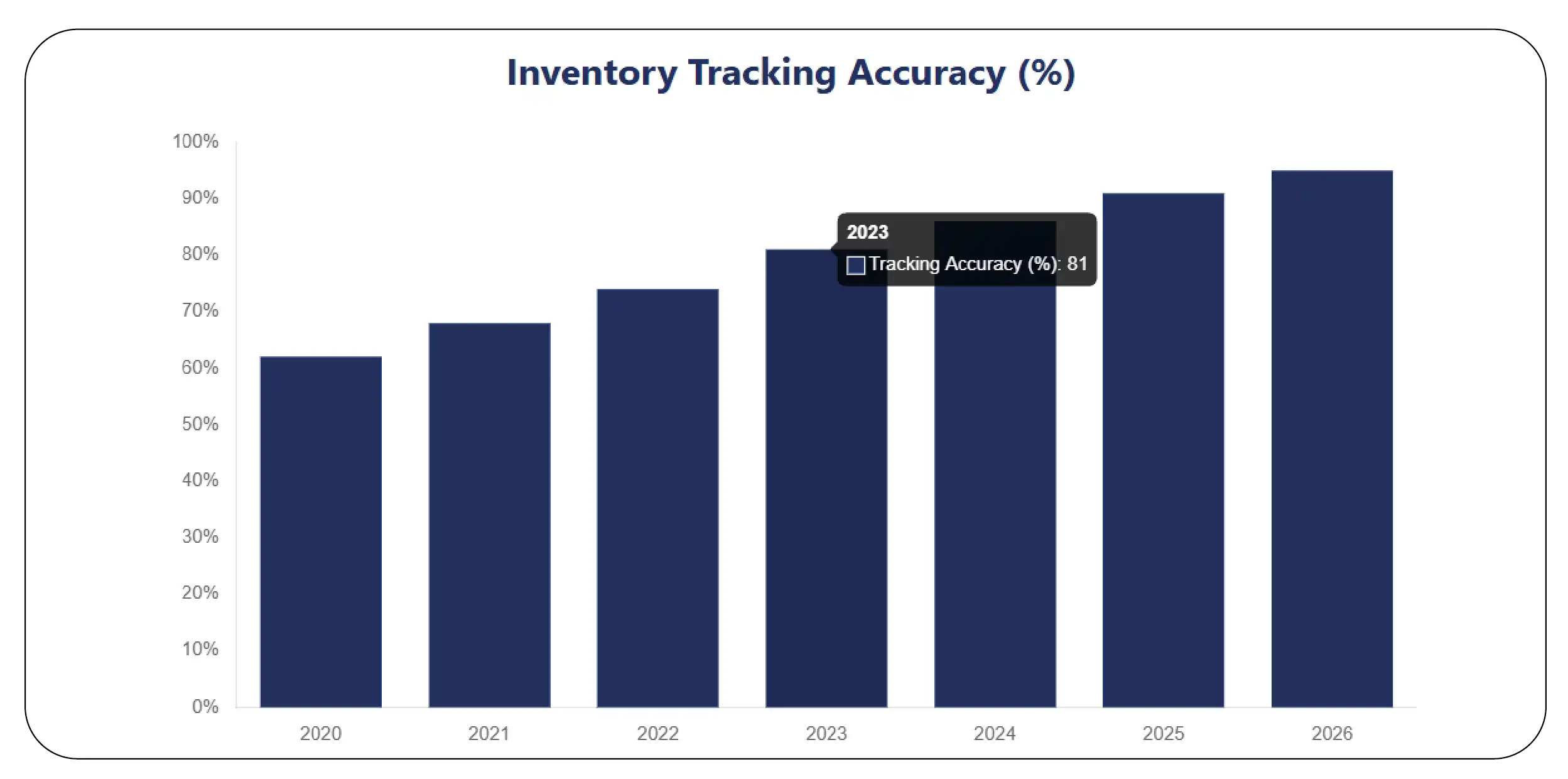
Product-level tracking is essential for understanding granular market behavior. UPC-based grocery product tracking, Price monitoring allows businesses to monitor individual SKUs across multiple retailers in real time.
Product Tracking Accuracy Improvement (2020–2026)
| Year |
Tracking Accuracy |
SKU Coverage |
| 2020 |
62% |
18,000 |
| 2021 |
68% |
25,000 |
| 2022 |
74% |
40,000 |
| 2023 |
81% |
55,000 |
| 2024 |
86% |
70,000 |
| 2025 |
91% |
85,000 |
| 2026 |
95% |
100,000+ |
UPC-based tracking helps businesses:
- Match identical products across retailers
- Detect price discrepancies instantly
- Monitor product lifecycle changes
- Track stock availability fluctuations
Retailers increasingly rely on automated systems to map UPCs across Woolworths, Coles, Aldi, and IGA. This ensures consistent product benchmarking and reduces data mismatches.
With real-time price monitoring, companies can respond faster to competitor discounts and optimize pricing strategies dynamically.
How Do Retailers Scrape Pricing and Promotions Across Supermarkets?
Retailers now actively collect competitive intelligence using automated systems. Scrape grocery prices from Woolworths and Coles, Promotion and deal intelligence enables businesses to analyze pricing and promotional patterns across major Australian supermarkets.
Promotion Frequency Growth (2020–2026)
| Year |
Weekly Promotions |
Discount Depth (%) |
| 2020 |
120 |
10% |
| 2021 |
150 |
12% |
| 2022 |
190 |
14% |
| 2023 |
240 |
16% |
| 2024 |
310 |
18% |
| 2025 |
380 |
20% |
| 2026 |
450+ |
22% |
Retailers use promotion intelligence to:
- Track competitor discount cycles
- Identify high-performing promotions
- Optimize pricing elasticity
- Plan seasonal campaigns
Woolworths and Coles dominate promotional frequency in the Australian grocery sector, making real-time monitoring essential for competitive pricing. Promotion scraping helps identify short-term discount strategies and long-term pricing trends.
This intelligence enables brands to time promotions more effectively and maximize revenue impact.
What Does Australian Supermarket Analytics Reveal About Consumer Behavior?
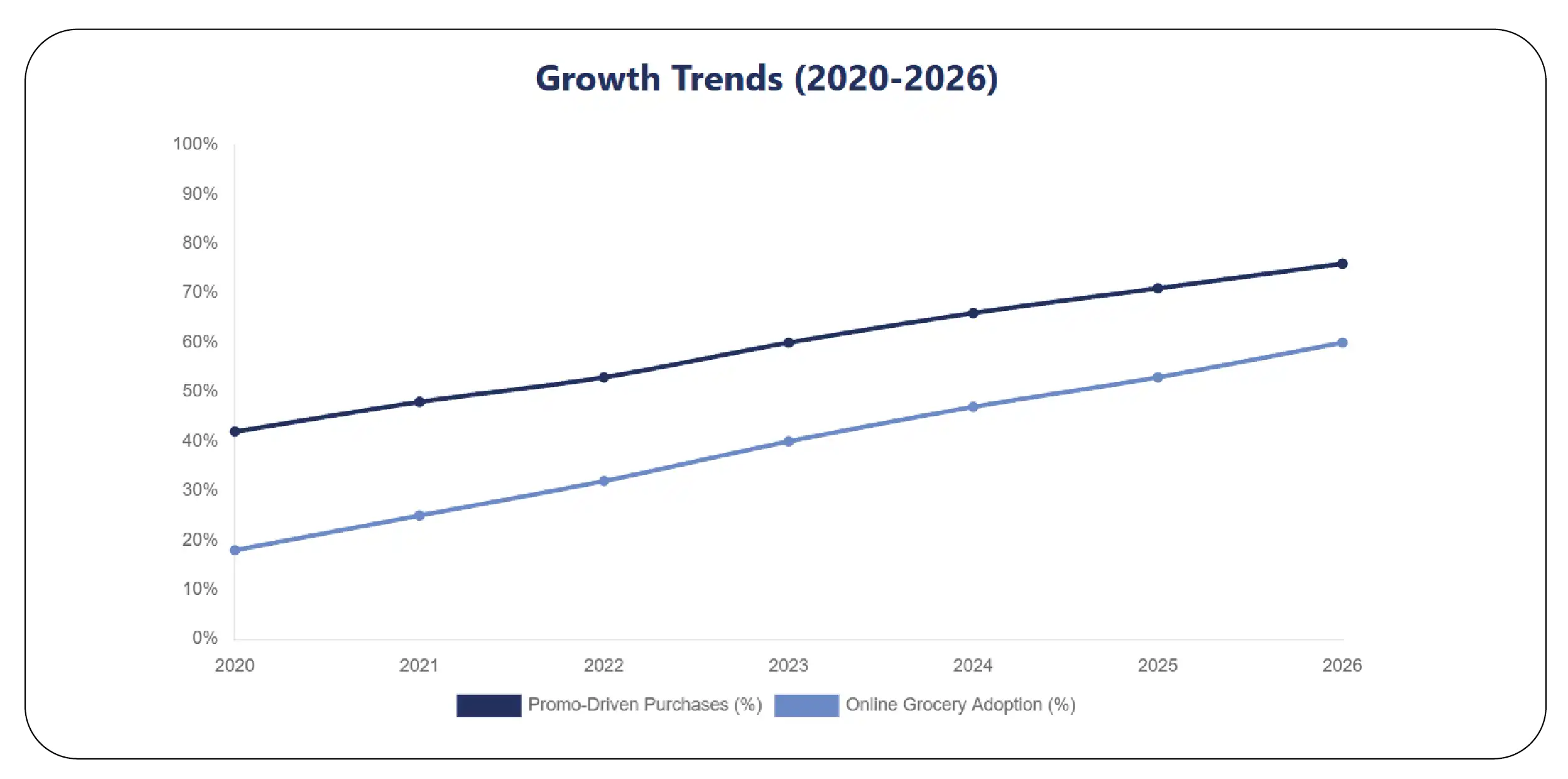
Consumer purchasing patterns are increasingly shaped by pricing and promotions. Australian Supermarket Price & Promotion Analytics, Buy Grocery Datasets helps businesses understand demand fluctuations and category performance.
Consumer Behavior Trends (2020–2026)
| Year |
Promo-Driven Purchases |
Online Grocery Adoption |
| 2020 |
42% |
18% |
| 2021 |
48% |
25% |
| 2022 |
53% |
32% |
| 2023 |
60% |
40% |
| 2024 |
66% |
47% |
| 2025 |
71% |
53% |
| 2026 |
76% |
60% |
Retailers use grocery datasets to:
- Analyze category performance
- Identify high-demand SKUs
- Optimize store-level pricing
- Improve promotion targeting
Buy grocery datasets are now widely used by FMCG companies, market analysts, and retail intelligence teams. These datasets provide structured insights into product pricing, discounts, and availability across Australia’s major supermarket chains.
This helps businesses make more informed decisions about pricing, distribution, and marketing strategies.
How Does Benchmarking Improve Grocery Market Competitiveness?
Benchmarking is essential for maintaining competitiveness in a price-sensitive market. The Australia Grocery Pricing and Promotion Benchmark Report, Price scraping enables companies to compare performance across retailers and categories.
Benchmarking Improvement Metrics (2020–2026)
| Year |
Benchmarking Adoption |
Pricing Accuracy |
| 2020 |
30% |
65% |
| 2021 |
38% |
70% |
| 2022 |
47% |
75% |
| 2023 |
58% |
81% |
| 2024 |
67% |
86% |
| 2025 |
75% |
90% |
| 2026 |
83% |
94% |
Benchmarking allows retailers to:
- Compare pricing across competitors
- Evaluate promotional effectiveness
- Identify underperforming categories
- Improve shelf pricing strategies
Price scraping ensures continuous updates, enabling businesses to maintain accurate benchmarks. This improves decision-making speed and reduces pricing inefficiencies.
Retailers that adopt benchmarking tools outperform competitors in pricing agility and promotional effectiveness.
Why Is Multi-Retailer Grocery Monitoring Essential?
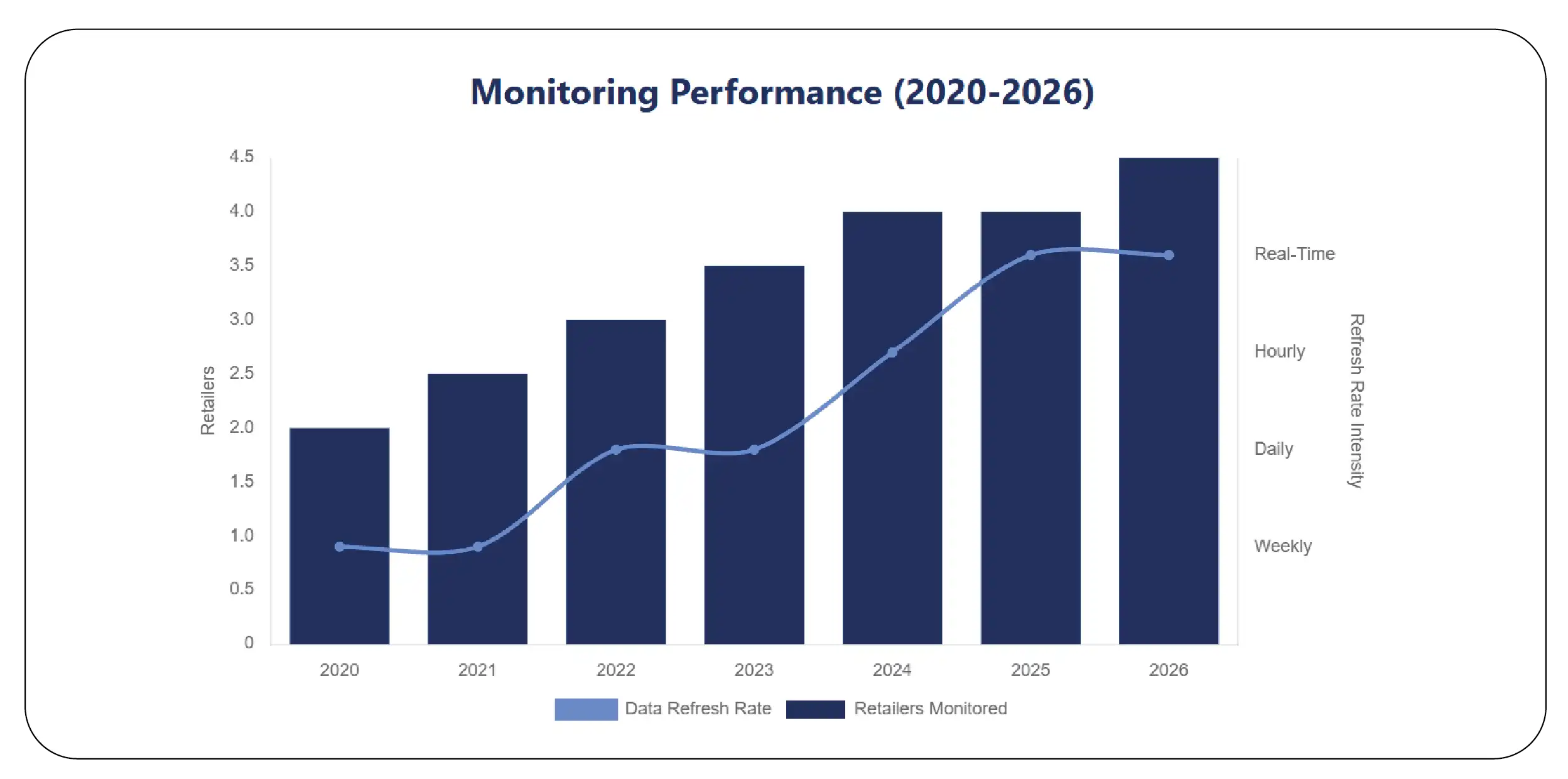
The Australian grocery market is highly competitive, with four major players dominating: Woolworths, Coles, Aldi, and IGA. Grocery Price Monitoring Across Woolworths, Coles, Aldi & IGA enables businesses to track price differences and promotional behavior across all major chains.
Multi-Retailer Monitoring Growth (2020–2026)
| Year |
Retailers Monitored |
Data Refresh Rate |
| 2020 |
2 |
Weekly |
| 2021 |
2–3 |
Weekly |
| 2022 |
3 |
Daily |
| 2023 |
3–4 |
Daily |
| 2024 |
4 |
Hourly |
| 2025 |
4 |
Real-Time |
| 2026 |
4+ |
Real-Time |
Multi-retailer monitoring helps businesses:
- Identify pricing gaps
- Track competitor promotions
- Improve product positioning
- Optimize category strategy
A unified view across all major retailers ensures consistent pricing intelligence and better strategic planning.
This level of visibility is critical in a market where pricing changes frequently and promotions vary across chains.
Why Choose Product Data Scrape?
Product Data Scrape provides advanced solutions for retail intelligence and structured data extraction. The Australian Grocery Price & Promotion Trends Report 2026 demonstrates the importance of real-time insights in competitive grocery markets.
Key advantages include:
- Real-time grocery price tracking
- Store-level and SKU-level monitoring
- UPC-based product intelligence
- Automated promotion detection
- Scalable data infrastructure
- Multi-retailer coverage
These capabilities empower businesses to make faster, smarter, and more accurate decisions.
Conclusion
The Australian Grocery Price & Promotion Trends Report 2026 highlights how rapidly the retail landscape is evolving. With increasing competition, inflation pressure, and dynamic consumer behavior, Grocery data scraping has become essential for pricing intelligence, promotional strategy, and market analysis.
Businesses that adopt real-time grocery monitoring systems gain a strong competitive advantage through better pricing accuracy, improved promotions, and deeper market visibility.
Ready to unlock real-time grocery intelligence and transform your retail strategy? Contact Product Data Scrape today to access advanced data solutions for smarter decision-making in the Australian grocery market!



 Singapore
 EMAIL
EMAIL
 PHONE
PHONE


.webp)
.webp)








.webp)