Quick Overview
A leading FMCG-focused D2C brand partnered with Product Data Scrape to improve quick-commerce expansion and distribution planning across India. Through a strategic initiative centered on D2C Brand Mapped 4,000+ Blinkit Dark Stores, the company gained unprecedented visibility into store coverage, product availability, and regional distribution opportunities. Leveraging advanced Quick commerce intelligence, the project enabled the brand to identify high-potential markets, optimize inventory placement, and strengthen hyperlocal fulfillment strategies. Within months, the brand achieved significantly improved market coverage, enhanced location-level decision-making, and faster distribution planning across thousands of Blinkit fulfillment locations.
The Client
The client was a rapidly growing D2C FMCG brand focused on packaged food and convenience products. As quick-commerce platforms became a primary purchase channel for urban consumers, the company recognized the need for deeper visibility into fulfillment networks and regional coverage opportunities.
The rise of quick-commerce has transformed retail distribution. Consumers increasingly expect same-hour deliveries, making dark-store presence a critical competitive factor. However, the brand lacked detailed Blinkit Dark store location intelligence needed to evaluate coverage gaps and expansion opportunities.
Prior to partnering with us, the company relied on fragmented retailer reports and manual tracking processes. These methods provided limited insight into dark-store availability, geographic reach, and fulfillment density. The absence of structured Blinkit data scraping capabilities created challenges in identifying underserved markets and prioritizing inventory allocation.
The leadership team needed a scalable solution capable of monitoring thousands of locations simultaneously while delivering actionable insights for growth planning. Without accurate location intelligence, distribution decisions were slower, less precise, and difficult to scale. This created an urgent need for a data-driven approach that could support long-term quick-commerce expansion objectives.
Goals & Objectives
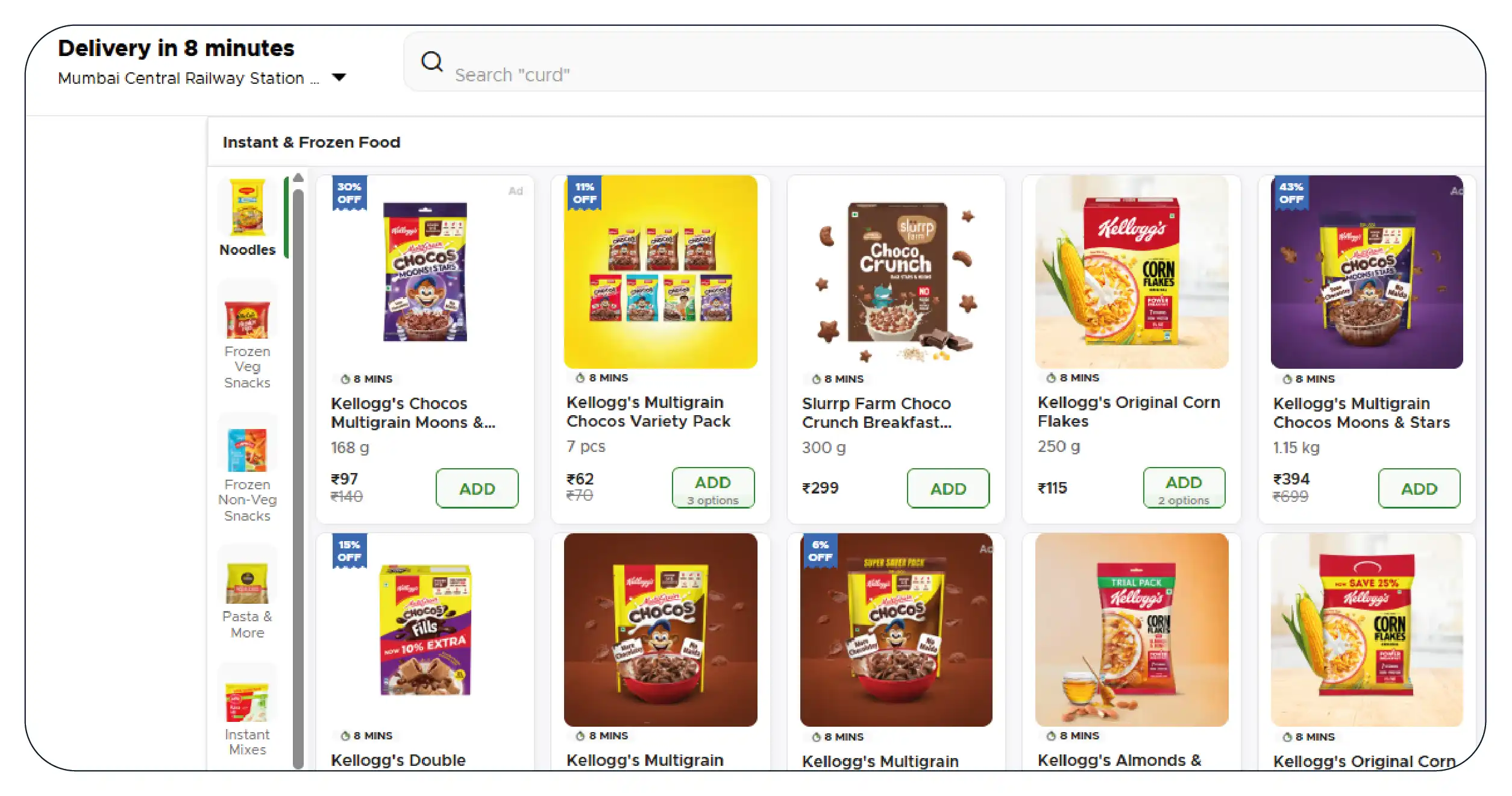
The primary business goal was to build a comprehensive understanding of Blinkit's dark-store network and use location intelligence to improve distribution coverage. The client sought enhanced scalability, faster decision-making, and greater operational accuracy through Blinkit dark store location intelligence for D2C brands.
The project aimed to automate dark-store mapping, centralize data collection, and provide real-time visibility into fulfillment coverage. By leveraging the Blinkit grocery dataset, the client wanted to identify expansion opportunities and optimize inventory deployment across regions.
Map 4,000+ active Blinkit dark stores.
Improve geographic coverage visibility.
Reduce manual location research efforts.
Increase distribution planning efficiency.
Identify underserved hyperlocal markets.
Enhance location-level analytics accuracy.
Accelerate inventory allocation decisions.
Support future quick-commerce expansion initiatives.
The Core Challenge
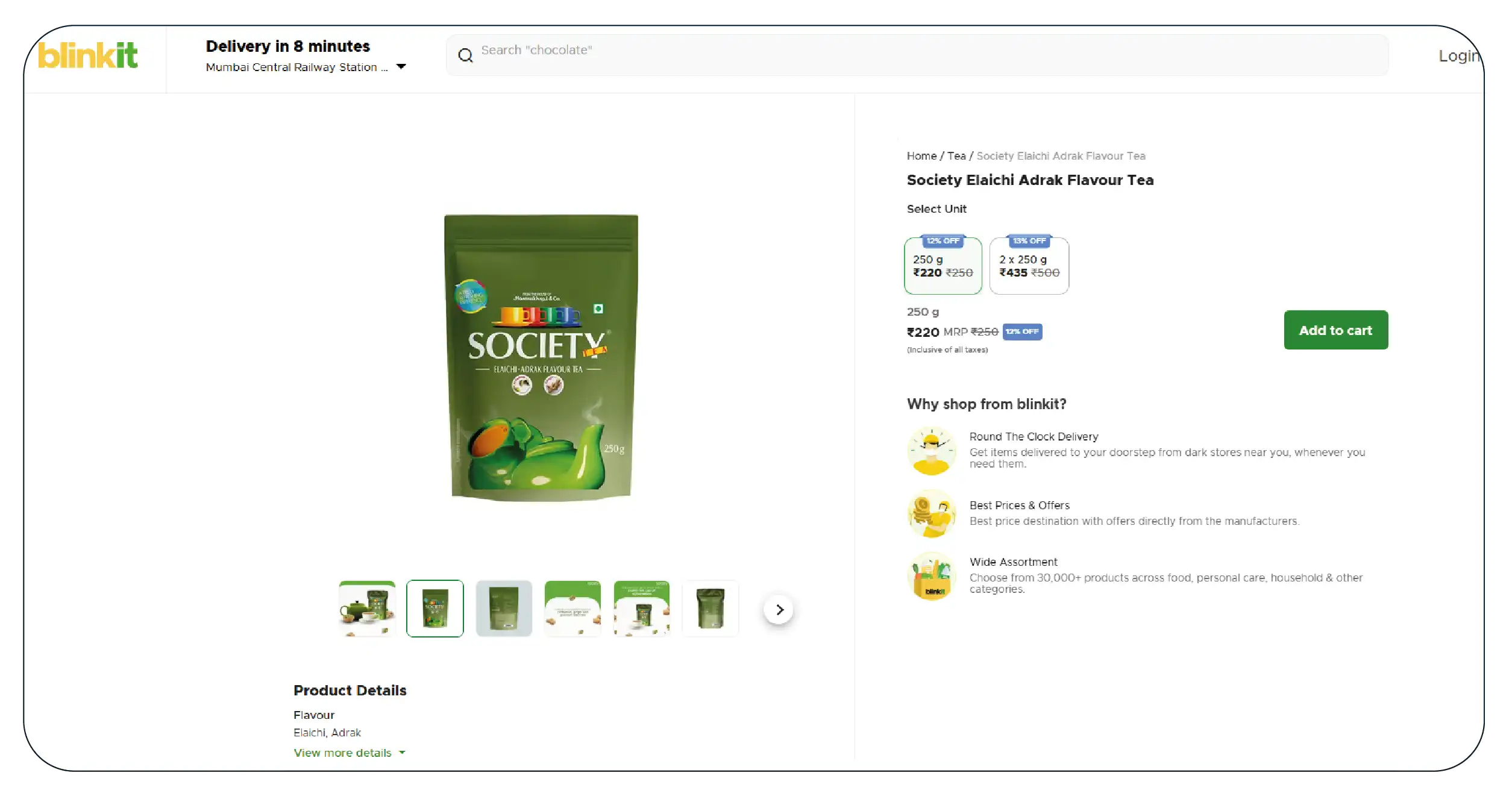
Before implementation, the client faced several operational and analytical challenges. The absence of centralized visibility into Blinkit's dark-store ecosystem made expansion planning difficult.
The organization lacked reliable Store-level distribution planning using Blinkit data, forcing teams to depend on assumptions rather than measurable insights. Market expansion strategies often relied on incomplete location information, increasing the risk of inventory misallocation.
Another challenge involved understanding local market dynamics. Without access to Hyperlocal pricing intelligence, the client struggled to identify how regional demand patterns influenced product availability and competitive positioning.
Key obstacles included:
Limited visibility into dark-store locations.
Manual mapping processes.
Inconsistent coverage assessments.
Delayed expansion planning.
Difficulty identifying distribution gaps.
Lack of location-level performance insights.
These issues affected planning speed, operational efficiency, and market responsiveness. As the quick-commerce landscape expanded rapidly, the client required a scalable solution capable of transforming fragmented data into actionable intelligence.
Our Solution
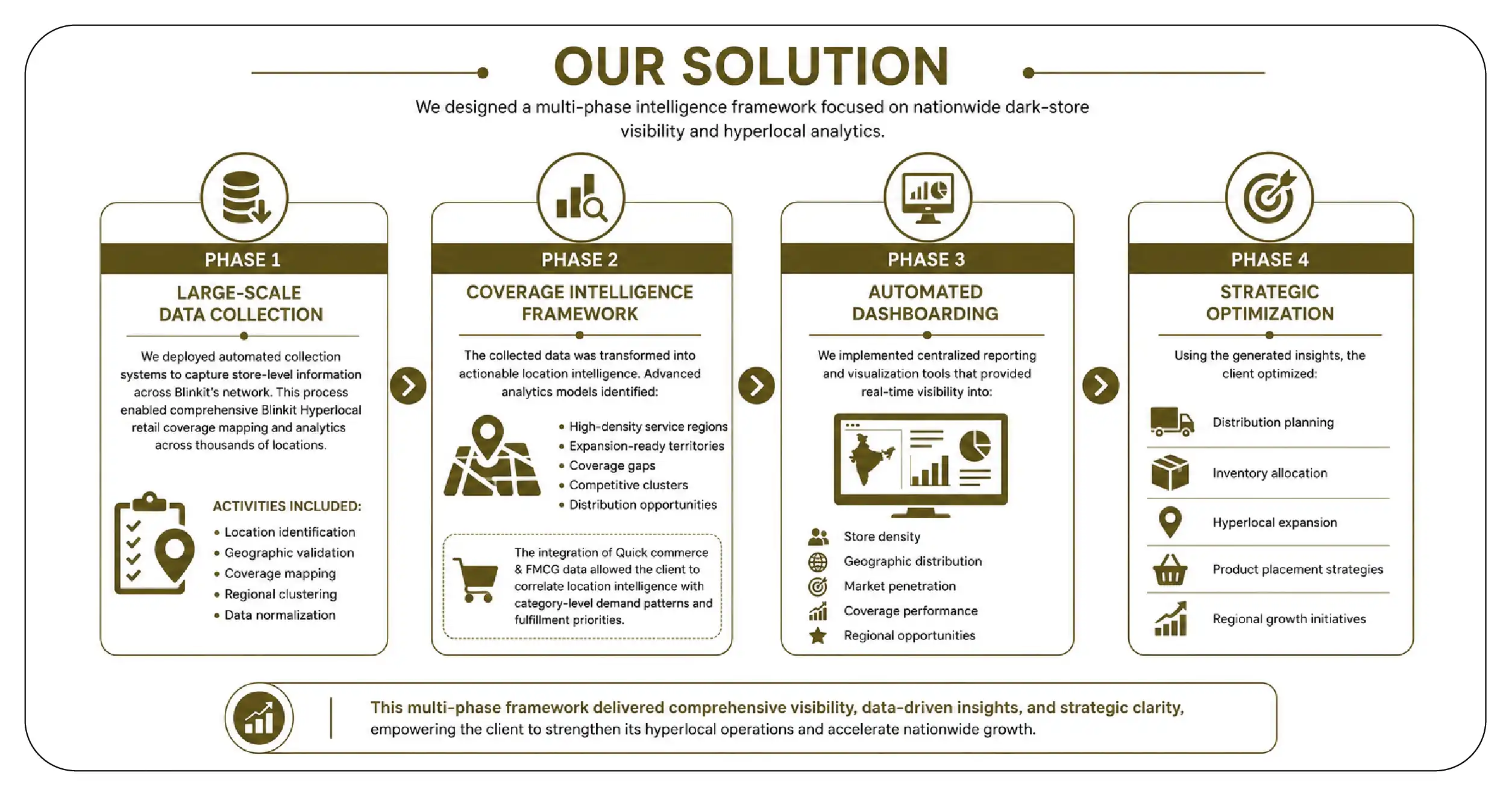
We designed a multi-phase intelligence framework focused on nationwide dark-store visibility and hyperlocal analytics.
Phase 1: Large-Scale Data Collection
We deployed automated collection systems to capture store-level information across Blinkit's network. This process enabled comprehensive Blinkit Hyperlocal retail coverage mapping and analytics across thousands of locations.
Activities included:
Location identification.
Geographic validation.
Coverage mapping.
Regional clustering.
Data normalization.
Phase 2: Coverage Intelligence Framework
The collected data was transformed into actionable location intelligence. Advanced analytics models identified:
High-density service regions.
Expansion-ready territories.
Coverage gaps.
Competitive clusters.
Distribution opportunities.
The integration of Quick commerce & FMCG data allowed the client to correlate location intelligence with category-level demand patterns and fulfillment priorities.
Phase 3: Automated Dashboarding
We implemented centralized reporting and visualization tools that provided real-time visibility into:
Store density.
Geographic distribution.
Market penetration.
Coverage performance.
Regional opportunities.
Phase 4: Strategic Optimization
Using the generated insights, the client optimized:
Distribution planning.
Inventory allocation.
Hyperlocal expansion.
Product placement strategies.
Regional growth initiatives.
This phased approach transformed previously fragmented information into a scalable intelligence system supporting long-term quick-commerce growth.
Results & Key Metrics

Mapped over 4,000 active dark stores.
Improved location visibility by 90%.
Reduced manual research efforts by 80%.
Accelerated distribution planning cycles.
Increased hyperlocal market identification accuracy.
Enhanced inventory allocation efficiency.
Improved regional expansion decision-making.
Enabled real-time geographic intelligence.
Results Narrative
The initiative demonstrated how a D2C Brand Mapped 4,000+ Blinkit Dark Stores to gain strategic control over hyperlocal distribution planning. By replacing manual processes with automated intelligence, the company gained comprehensive visibility into Blinkit's fulfillment ecosystem.
The resulting insights helped identify untapped growth regions, strengthen inventory deployment strategies, and support data-driven expansion planning. The client established a scalable framework capable of adapting to evolving quick-commerce market conditions while improving operational efficiency across multiple regions.
What Made Product Data Scrape Different
We combined automation, analytics, and retail intelligence into a unified solution. Our proprietary methodologies for Mapping Blinkit dark stores for distribution planning enabled rapid data collection and large-scale geographic analysis.
Unlike traditional research approaches, we provided:
- Automated location discovery.
- Real-time intelligence updates.
- Advanced geographic analytics.
- Scalable data infrastructure.
- Custom reporting frameworks.
Our expertise helped ensure that the D2C Brand Mapped 4,000+ Blinkit Dark Stores efficiently while maintaining data quality, consistency, and long-term scalability. This approach empowered the client to make faster, smarter, and more accurate distribution decisions.
Client Testimonial
"The visibility we gained through this project completely transformed our approach to quick-commerce distribution. The ability to understand dark-store coverage at scale allowed us to prioritize expansion efforts with confidence. The intelligence generated from the initiative where our D2C Brand Mapped 4,000+ Blinkit Dark Stores helped us identify opportunities that were previously invisible. The insights were accurate, actionable, and instrumental in strengthening our hyperlocal growth strategy."
— Head of Growth & Distribution, Leading D2C FMCG Brand
Conclusion
Quick-commerce success increasingly depends on accurate location intelligence and scalable distribution planning. By leveraging advanced mapping and analytics capabilities, the client gained a powerful competitive advantage across Blinkit's fulfillment ecosystem.
The project demonstrated how comprehensive visibility into dark-store networks can support expansion planning, inventory optimization, and market prioritization. Combined with ongoing Dark-store inventory tracking, the client is now positioned to respond faster to market opportunities and scale efficiently within India's rapidly evolving quick-commerce landscape.
FAQs
1. What is Blinkit dark-store mapping?
Blinkit dark-store mapping involves identifying, validating, and analyzing fulfillment locations to understand service coverage, distribution opportunities, and regional market penetration for D2C and FMCG brands.
2. Why is dark-store intelligence important for D2C brands?
Dark-store intelligence helps brands optimize inventory placement, improve delivery coverage, identify underserved markets, and support faster expansion decisions within quick-commerce ecosystems.
3. How many dark stores were mapped in this project?
The project successfully mapped more than 4,000 Blinkit dark stores, providing extensive geographic visibility and enabling hyperlocal distribution planning across multiple regions.
4. What business benefits did the client achieve?
The client improved location visibility, accelerated planning processes, reduced manual research efforts, enhanced inventory allocation, and strengthened regional growth strategies through data-driven insights.
5. How does Product Data Scrape support quick-commerce intelligence?
Product Data Scrape provides automated data collection, geographic intelligence, distribution analytics, coverage mapping, and scalable reporting solutions that help brands make informed quick-commerce decisions.



 Singapore
 EMAIL
EMAIL
 PHONE
PHONE


.webp)
.webp "thumb")
.webp "thumb")
.webp "thumb")








.webp)