Introduction
Taiwan and Japan are two of Asia's richest e-commerce markets, but brands that track them often rely on a single marketplace or on manual checks. That leaves blind spots. In Taiwan, momo is a leading local e-commerce platform alongside Shopee Taiwan. In Japan, Rakuten Ichiba and Amazon Japan dominate, each with its own seller ecosystem and pricing culture.
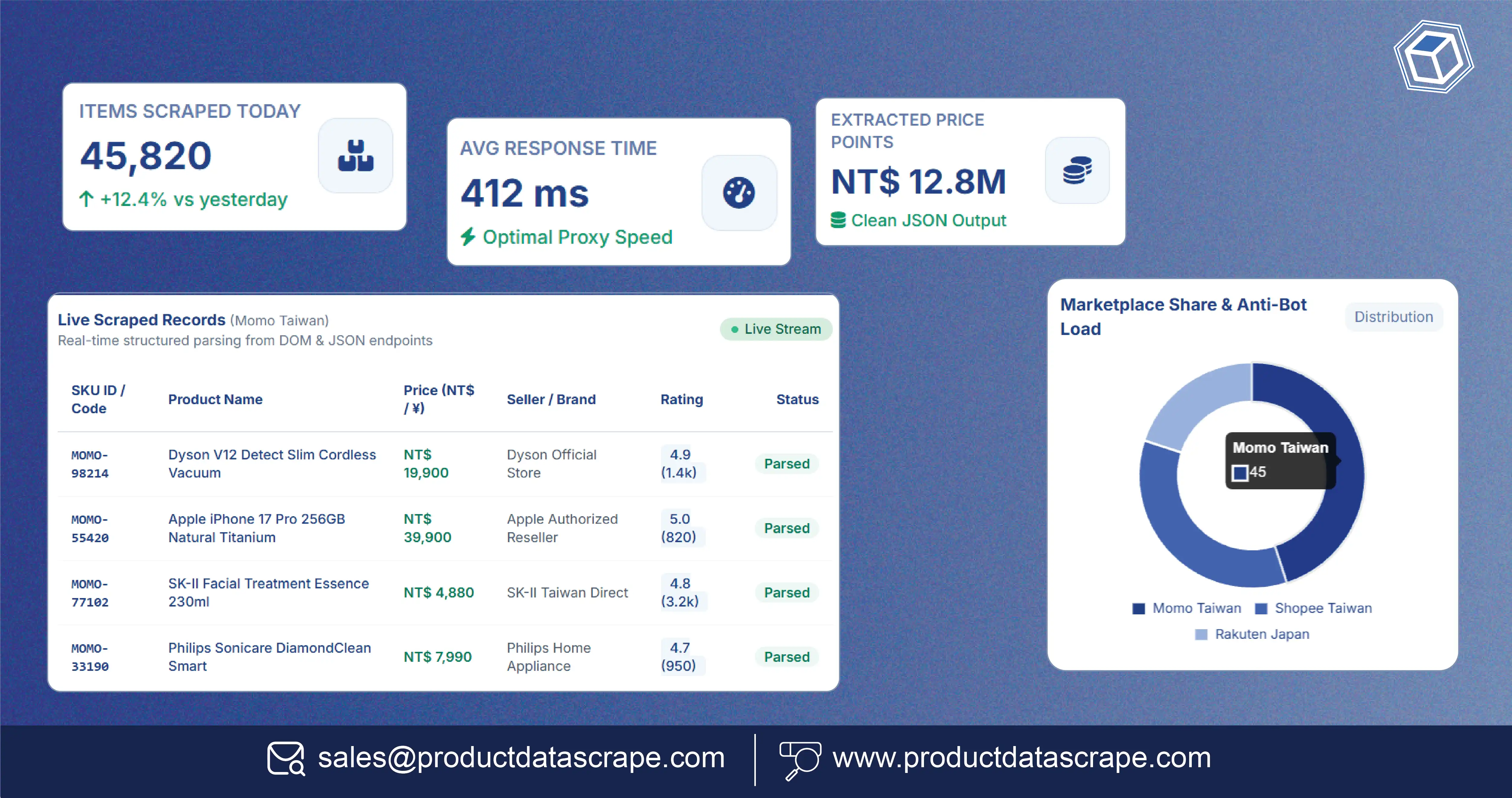
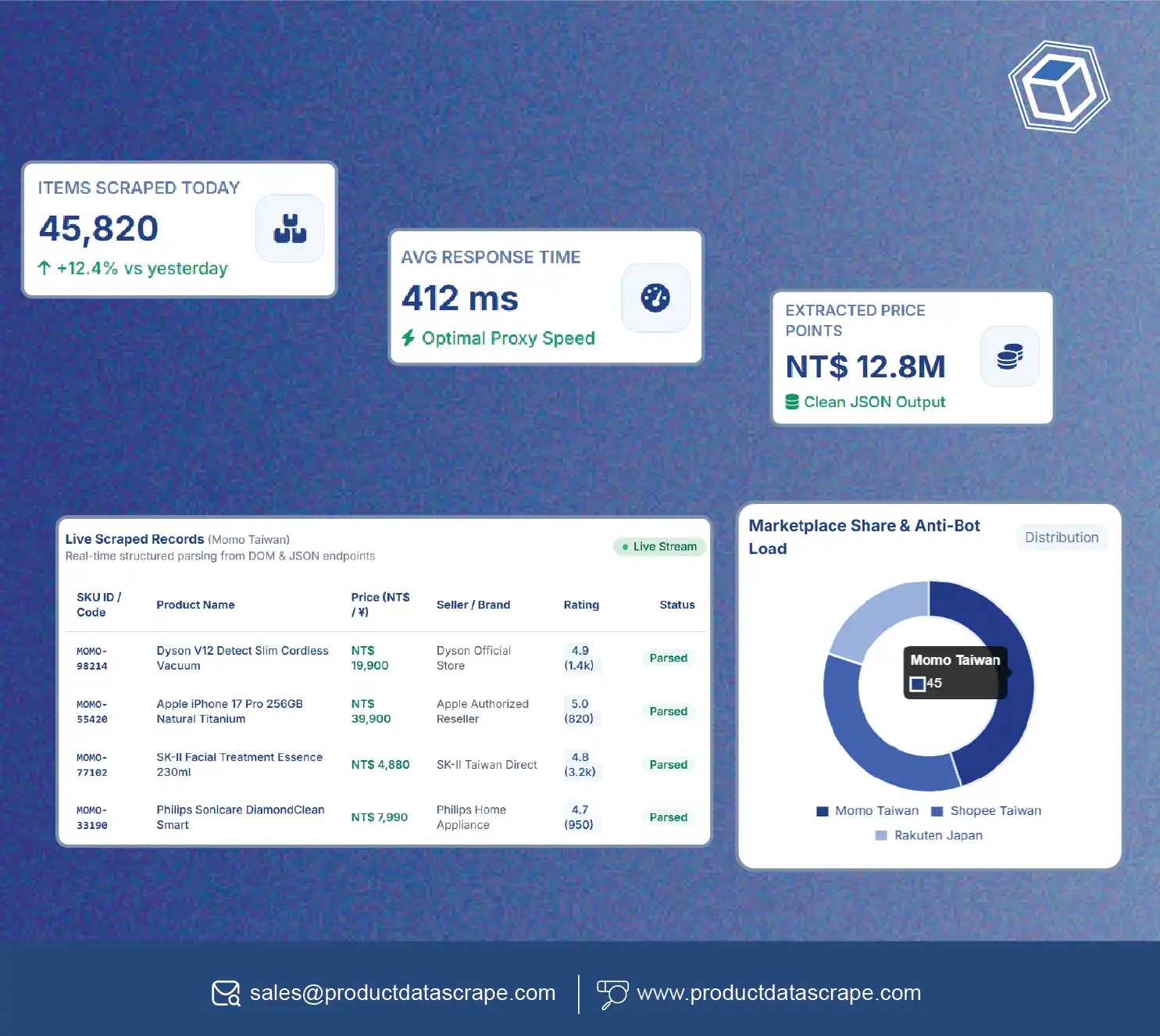
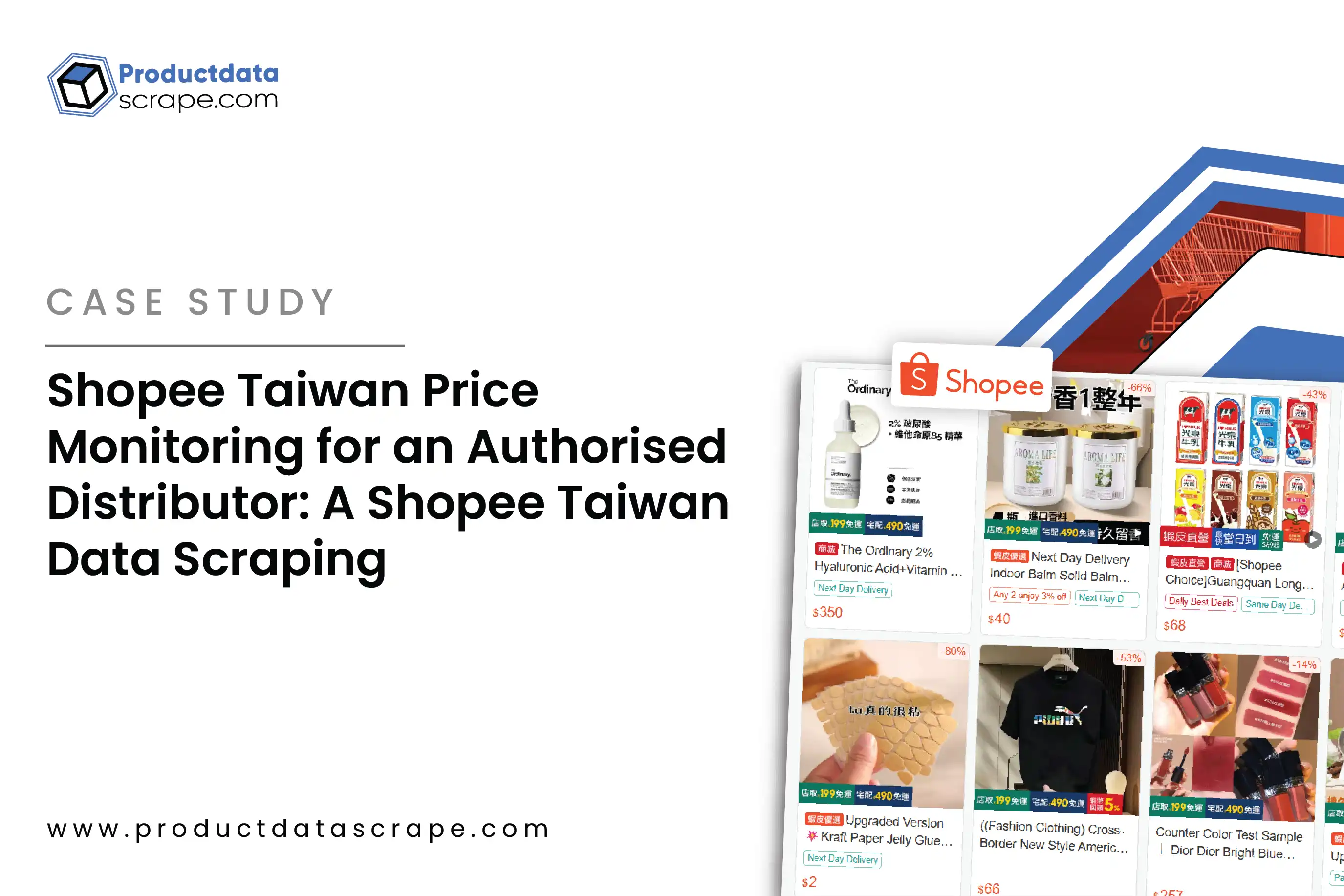
In September 2026 a regional e-commerce enabler asked Product Data Scrape to evaluate "a web scraping solution for e-commerce product data across Taiwan and Japan, covering Momo Taiwan, Shopee Taiwan, Rakuten Japan and Amazon Japan." An authorised distributor in Taiwan separately asked for Shopee Taiwan monitoring of 200 products. This guide explains how Momo Taiwan Data Scraping works alongside Shopee Taiwan and the main Japanese marketplaces, and how to build one comparable dataset across them.
Why these four marketplaces
| Marketplace |
Market |
What makes it important |
| momo (momoshop) |
Taiwan |
Large local platform with strong electronics, beauty and household categories, fast delivery |
| Shopee Taiwan |
Taiwan |
Large marketplace with many third-party sellers and frequent campaigns |
| Rakuten Ichiba |
Japan |
Merchant-based mall where each shop sets its own price, points and shipping |
| Amazon Japan |
Japan |
Major marketplace with Amazon retail and third-party offers |
Each platform answers a different question. momo shows how a product is positioned by a major local retailer. Shopee Taiwan shows seller competition and campaign pricing. Rakuten shows how many independent shops carry a product and how they use points. Amazon Japan shows Buy Box dynamics and rankings.
Fields to collect
| Field group |
momo |
Shopee TW |
Rakuten |
Amazon JP |
| Identity |
Product ID, title, brand |
Item ID, shop ID, title, brand |
Item code, shop, title |
ASIN, title, brand |
| Price |
Price, promotional price |
Price, price range for variants |
Price, shipping, points |
Buy Box price, offer list |
| Seller |
momo or third-party |
Shop name, Mall flag, shop rating |
Shop name, shop rating |
Seller, fulfilment type |
| Promotions |
Coupons, credit-card offers |
Vouchers, campaign tags |
Points multipliers, shop coupons |
Coupons, time sales |
| Demand signals |
Ratings, review count |
Sold count, ratings |
Review count, ranking |
Best Sellers Rank, reviews |
| Availability |
In stock, delivery speed |
Stock, shipping from |
In stock, shipping time |
Availability, delivery date |
| Identifiers |
Barcode where shown |
Rarely shown |
JAN code where shown |
JAN or EAN where shown |
In Japan, the JAN code (Japan's barcode standard, part of the GTIN family) is the best matching key where it appears.
Language and format challenges
Traditional Chinese and Japanese text. Titles are in Traditional Chinese (Taiwan) or Japanese. Matching works best on brand, model number and size, which are often written in Latin characters inside the title. Product Data Scrape keeps the original title and adds a cleaned English title for reporting.
Full-width characters. Japanese listings often use full-width numbers and letters (for example "500ml"). These are converted to standard characters before parsing sizes.
Tax-inclusive pricing. Japanese consumer prices are normally shown including consumption tax, sometimes with the pre-tax price alongside. Both are captured where shown.
Points as price. On Rakuten and Amazon Japan, points can be worth several percent of the price. An "effective price" field subtracts the value of standard points so offers can be compared fairly.
Sample cross-market record
The record below is illustrative.
{
  "brand": "Sample Beauty",
  "model": "SB Hydrating Serum 30ml",
  "gtin": "4900000000000",
  "collected_at": "2026-10-06T02:00:00Z",
  "offers": [
    {"marketplace": "momo", "market": "TW", "price_twd": 899, "promo_price_twd": 799, "seller_type": "platform", "rating": 4.8, "reviews": 412},
    {"marketplace": "shopee_tw", "market": "TW", "price_twd": 760, "seller": "Example Beauty Mall", "mall_shop": true, "sold": "1.2K"},
    {"marketplace": "rakuten", "market": "JP", "price_jpy": 3980, "points_jpy": 199, "effective_price_jpy": 3781, "shop": "Example Cosme Shop", "shipping_jpy": 0},
    {"marketplace": "amazon_jp", "market": "JP", "price_jpy": 3850, "buy_box_seller": "Amazon.co.jp", "bsr": 1240}
  ]
}
Comparing prices across Taiwan and Japan
| Metric (illustrative, 120 beauty SKUs) |
momo |
Shopee TW |
Rakuten |
Amazon JP |
| Median price index (market median = 100) |
104 |
96 |
101 |
99 |
| Share of SKUs on promotion |
38% |
52% |
44% |
29% |
| Median number of sellers per SKU |
1 |
6 |
9 |
4 |
| Share of SKUs out of stock |
4% |
7% |
6% |
3% |
Within Taiwan, Shopee often shows the lowest prices because of seller competition, while momo shows higher list prices but frequent coupons and fast delivery. In Japan, Rakuten has more sellers per product, and points change the effective price ranking.
Use cases
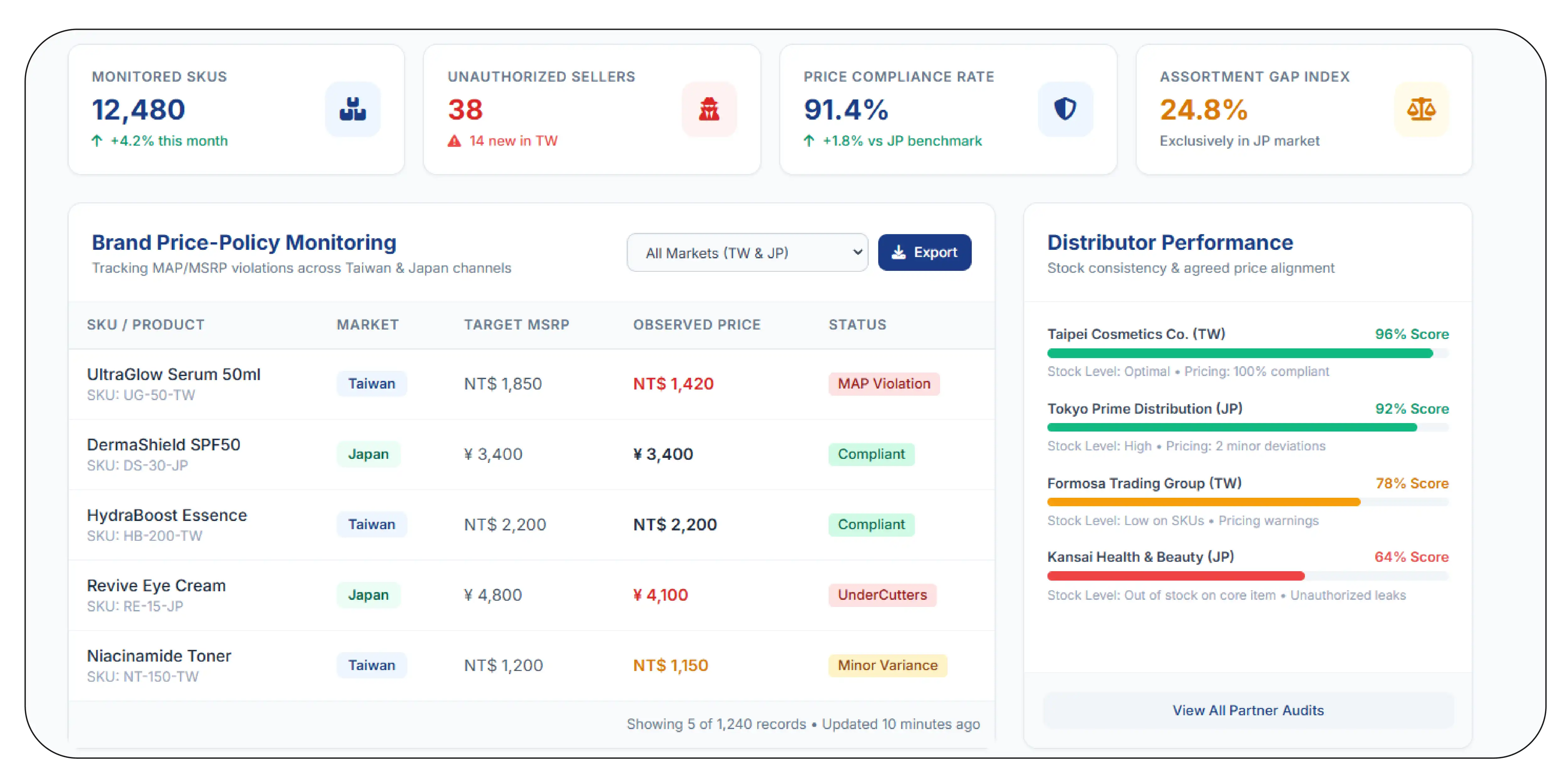
- Brand price-policy monitoring across Taiwan and Japan, including unauthorised sellers.
- Distributor performance tracking, checking that authorised partners keep prices and stock in line.
- Market-entry research for brands planning to launch in Taiwan or Japan.
- Campaign analysis around major sales events such as Double 11 in Taiwan and Rakuten Super Sale in Japan.
- Assortment gap analysis, finding products sold in one market but not the other.
Campaign calendars in Taiwan and Japan
Prices on these marketplaces move sharply around major campaigns. A data plan should increase collection frequency around them:
| Market |
Campaign periods to watch |
| Taiwan |
Double 11 (11 November), Double 12, mid-year 6.18 and 7.7 sales, Lunar New Year, monthly "double-date" sales on Shopee |
| Japan |
Rakuten Super Sale (quarterly), Rakuten "Okaimono Marathon", Amazon Prime Day, Amazon Black Friday, year-end sales |
During these windows, Momo Taiwan data scraping and Shopee Taiwan collection can run several times a day to capture flash deals and coupon changes. After the campaign, a post-campaign report compares how deeply each marketplace and seller discounted.
Building a regional dashboard
| View |
What it shows |
| Price position by market |
Your product's price versus the market median in Taiwan and Japan |
| Effective price |
Price after points, coupons and shipping |
| Seller map |
Authorised and unknown sellers by marketplace |
| Stock and delivery |
Availability and delivery speed by platform |
| Campaign tracker |
Depth and timing of discounts during major sales |
How often to collect
| Use case |
Frequency |
| Price policy and seller monitoring |
Daily |
| Campaign periods |
Several times a day |
| Assortment and ranking research |
Weekly |
| Market-entry study |
One-time plus monthly refresh |
Setting up a project
- List SKUs and identifiers. Provide product names, model numbers and barcodes (JAN, EAN or UPC) for your products and competitors.
- Choose marketplaces and markets. Start with the platforms where you sell; add others for comparison.
- Agree effective-price rules. Decide whether points, coupons and shipping are included in comparisons.
- Run a pilot. Collect one week of data and review match rates.
- Automate delivery. Receive daily CSV, JSON or Parquet files, or load to your warehouse.
A note on scope
This guide covers marketplaces in Taiwan and Japan. For mainland China marketplaces, Product Data Scrape advises clients case by case, and some platforms are not currently supported. Contact us with your target sites for a feasibility check.
Frequently asked questions
Can momo Taiwan data scraping capture credit-card and coupon offers?
Visible coupon and offer text is captured. Offers that depend on a logged-in account or a specific card are recorded as text but not applied to the effective price unless agreed.
Can I monitor Shopee Taiwan shops by name?
Yes. Specific shops can be monitored for all their listings, prices and stock.
How do you match products without barcodes?
By brand, model number and size, with a match method field and manual review for top SKUs.
What delivery formats are available?
CSV, JSON, Parquet, API or warehouse push, with a 1,000-record free sample for evaluation.
Key takeaways
- momo, Shopee Taiwan, Rakuten and Amazon Japan each show a different side of the market.
- Momo Taiwan data scraping works best combined with Shopee Taiwan for a full Taiwan view.
- Language, full-width characters, tax and points must be normalised for fair comparison.
- Barcodes are the best matching key; brand, model and size are the fallback.
Get a Taiwan and Japan marketplace sample
Product Data Scrape delivers momo Taiwan data scraping, Shopee Taiwan monitoring and Rakuten and Amazon Japan data for brands and distributors. Share your SKU list and we will send a free 1,000-record sample across your chosen marketplaces.



 Singapore
 EMAIL
EMAIL
 PHONE
PHONE












.webp)