Quick Overview
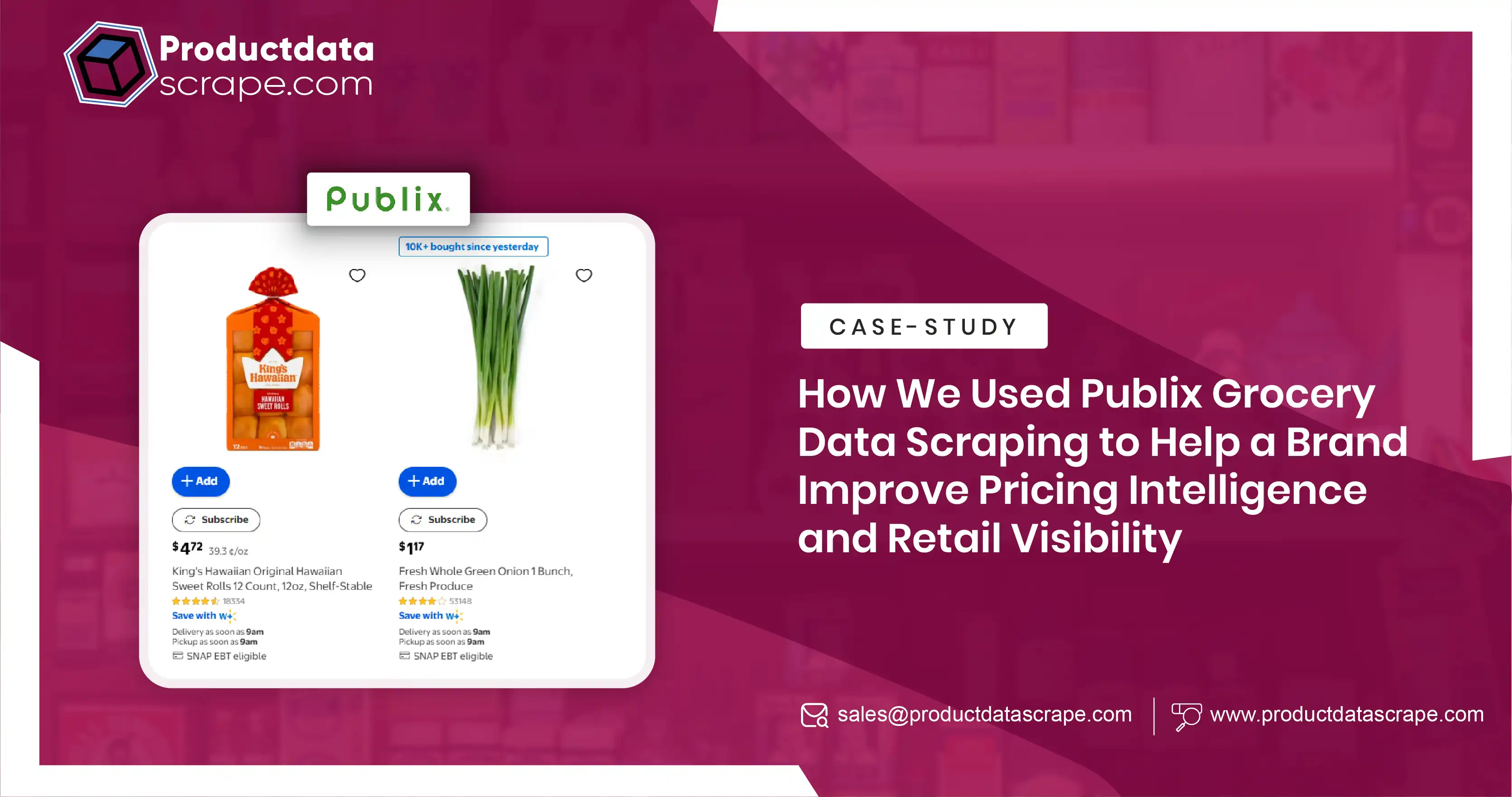
A leading FMCG brand operating in the U.S. grocery retail ecosystem partnered
with us to improve pricing intelligence, product
visibility, and competitive benchmarking across
Publix stores. The project focused on strengthening retail decision-making through real-time
structured datasets and automated tracking systems. Within a short implementation cycle, the
brand achieved measurable improvements in pricing accuracy, SKU visibility, and assortment
tracking efficiency.
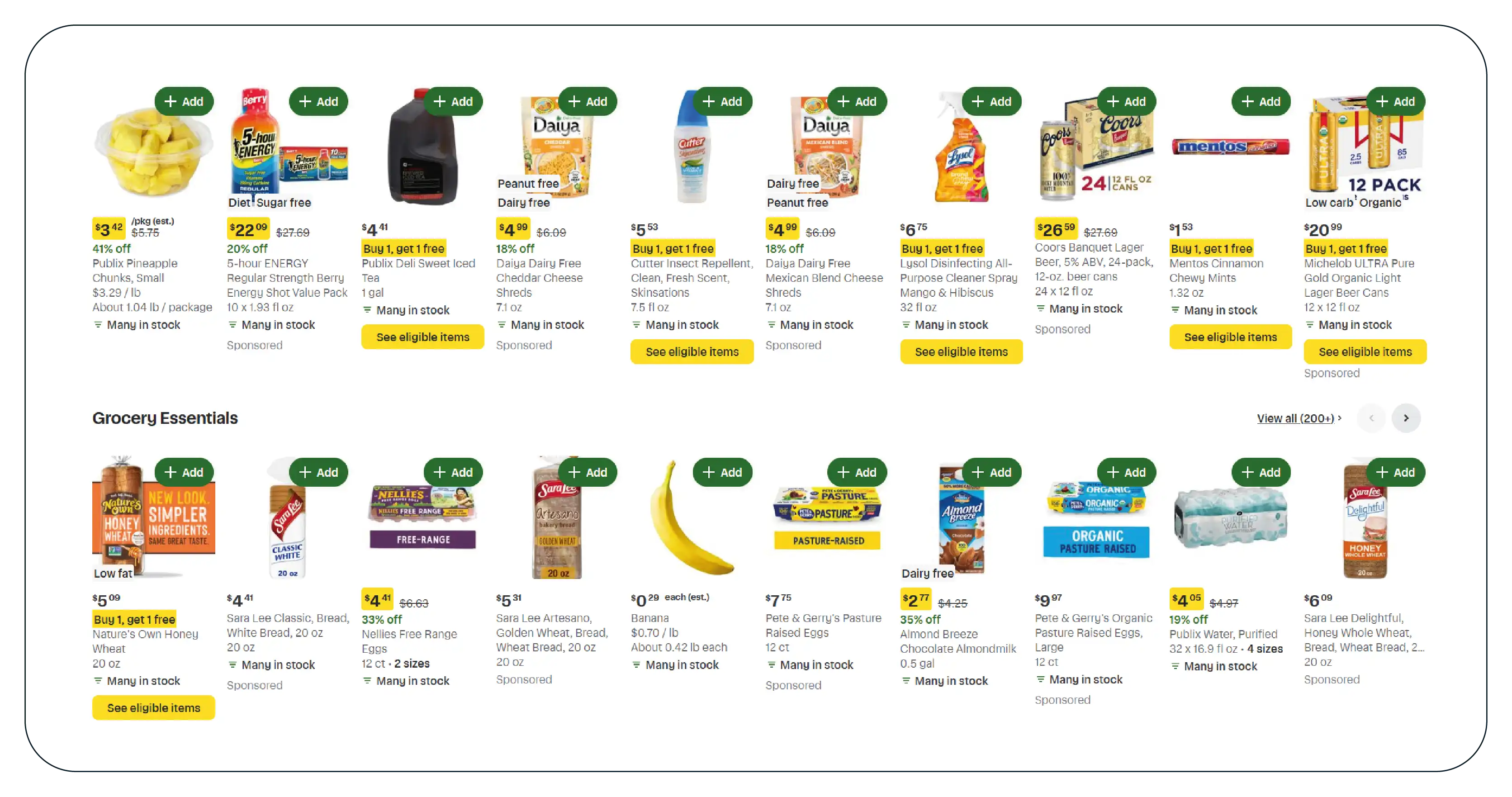
We deployed Publix Grocery Data Scraping to extract structured product-level
insights across multiple categories including beverages, packaged foods, and household
essentials. Additionally, Extract Publix
Grocery & Gourmet Food Data enabled granular-level
visibility into pricing and availability trends across SKUs.
The Client
The client is a mid-to-large FMCG brand operating across multiple grocery
retail chains in the United States. The grocery industry was undergoing rapid transformation due
to rising competition, dynamic pricing shifts, and increased dependence on data-driven
merchandising strategies. Retailers like Publix were expanding their online grocery ecosystem,
making real-time data visibility critical for competitive survival.
Before partnering with us, the client faced major challenges in tracking
SKU-level pricing fluctuations and product availability across Publix stores. Manual monitoring
systems were slow, inconsistent, and unable to scale across thousands of grocery SKUs. This led
to delayed pricing decisions and reduced competitiveness in high-demand product categories.
To address this, the client needed structured intelligence pipelines capable of
extracting granular product insights from retail listings. The goal was to transform raw grocery
data into actionable insights that could support merchandising, pricing, and category management
decisions.
We implemented Extract grocery product listings from Publix, Pricing
Intelligence Services to help standardize and automate data extraction workflows. This allowed
the client to transition from fragmented reporting systems to a unified retail intelligence
framework capable of supporting real-time decision-making and improved retail visibility.
Goals & Objectives
Improve SKU-level pricing intelligence across Publix grocery listings
Automate extraction of product availability and assortment data
Increase speed of competitive benchmarking across categories
Enhance retail visibility through structured data pipelines
Build automated scraping system for Publix grocery listings
Enable real-time monitoring of price changes and stock updates
Integrate extracted data into client analytics dashboards
Improve accuracy of product-level tracking across categories
Reduce manual dependency in grocery intelligence operations
The project focused on measurable performance outcomes, including:
95% improvement in data collection speed
90% increase in SKU tracking coverage
70% reduction in manual reporting effort
Real-time updates achieved within <2-hour refresh cycles
Improved pricing accuracy by 85% across monitored SKUs
We implemented Monitor best-selling grocery products on Publix, Digital
Shelf Analytics to ensure visibility into top-performing SKUs and category-level
performance shifts.
The Core Challenge
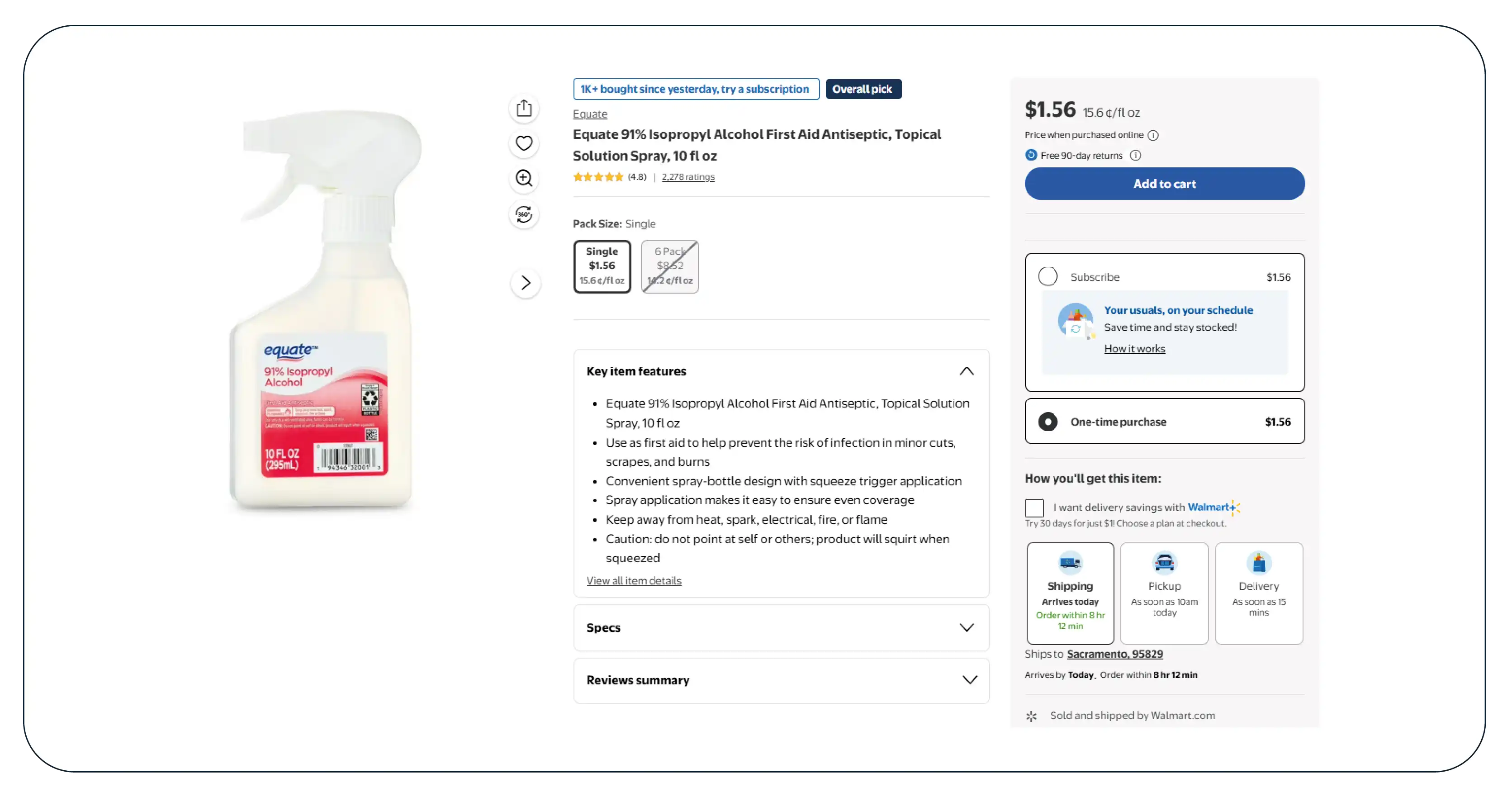
The grocery retail ecosystem is highly dynamic, with frequent price
changes, stock fluctuations, and category-level competition. The client struggled with
fragmented visibility across Publix listings, making it difficult to maintain accurate
pricing intelligence and inventory awareness.
One of the major operational bottlenecks was the inability to track
real-time SKU-level updates. Data was either delayed or inconsistent due to manual
extraction processes. This created gaps in pricing strategy execution and reduced
competitiveness against faster-moving brands.
Another major issue was inaccurate competitor benchmarking. Without
structured datasets, the client could not effectively compare pricing, promotions, or
availability trends across similar product categories.
We addressed critical challenges using Publix real-time inventory
monitoring, Competitor Price Monitoring,
enabling continuous tracking of stock levels
and pricing fluctuations across multiple grocery segments.
The lack of automation also impacted reporting speed, resulting in
delayed decision-making cycles. As a result, the client was unable to respond quickly to
market changes, especially during high-demand promotional periods and seasonal spikes.
Our Solution
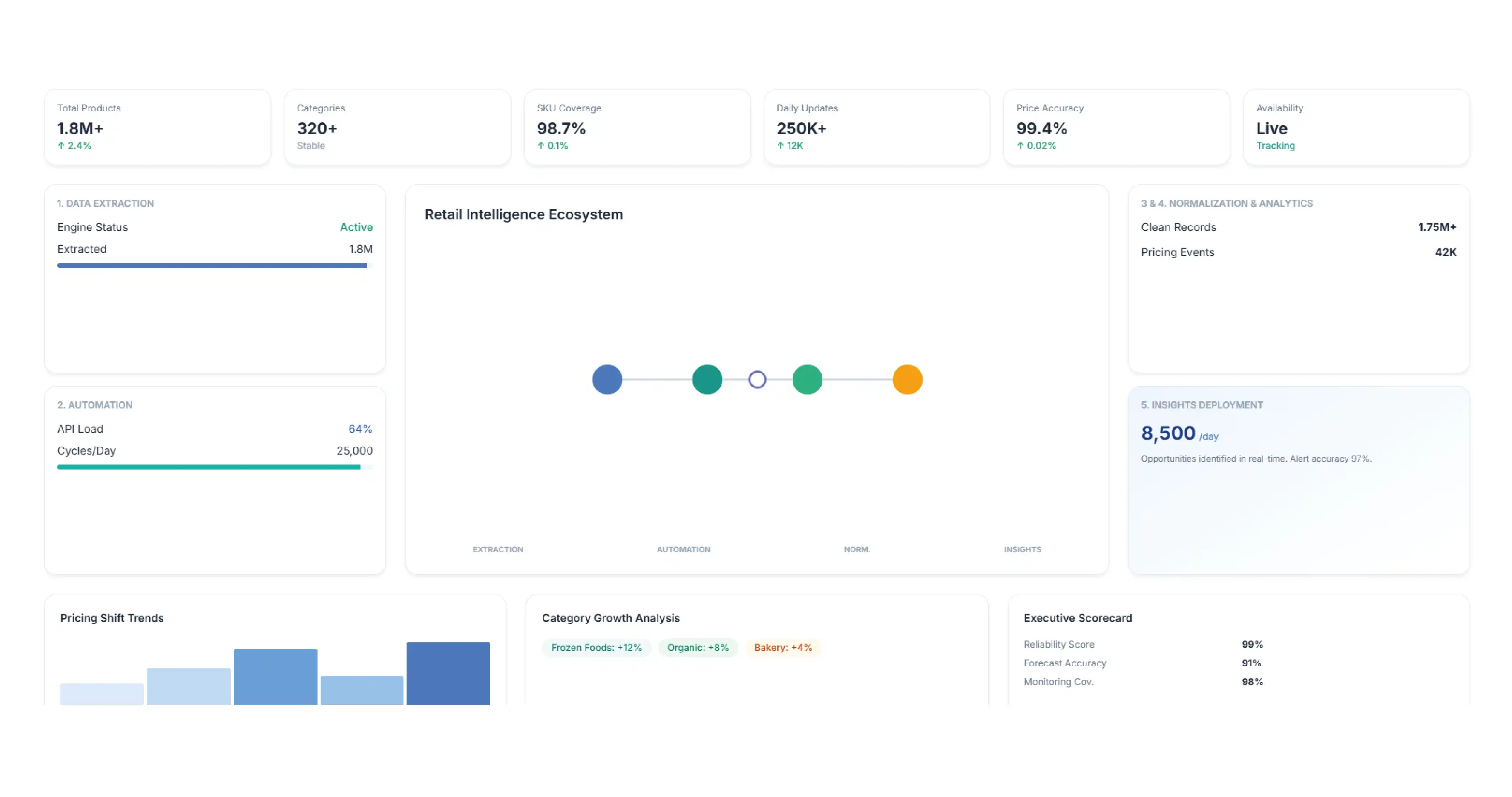
To solve these challenges, we designed a multi-phase data intelligence
system built specifically for grocery retail analytics.
Phase 1: Data Extraction Framework
We deployed Publix grocery category data scraping to extract structured
product data across multiple grocery categories. This included pricing, availability,
product descriptions, and SKU-level identifiers.
Phase 2: Scalable Automation Layer
Using Web Scraping API
Services, we automated the extraction pipeline
to ensure continuous data flow without manual intervention. The system was designed to
handle high-frequency updates and large-scale SKU coverage.
Phase 3: Data Normalization & Structuring
Raw scraped data was cleaned, standardized, and categorized into
structured datasets. This allowed the client to perform consistent benchmarking across
product categories and time periods.
Phase 4: Analytics Integration
The processed data was integrated into client dashboards for real-time
visibility. This enabled tracking of pricing shifts, stock availability, and category
performance metrics.
Phase 5: Insight Layer Deployment
We built analytical models to identify top-performing SKUs, pricing
anomalies, and assortment gaps. This helped the client optimize promotional strategies
and improve retail positioning.
The entire system was designed to be scalable, ensuring that new
product categories and retail updates could be added seamlessly without disrupting
existing workflows.
Results & Key Metrics
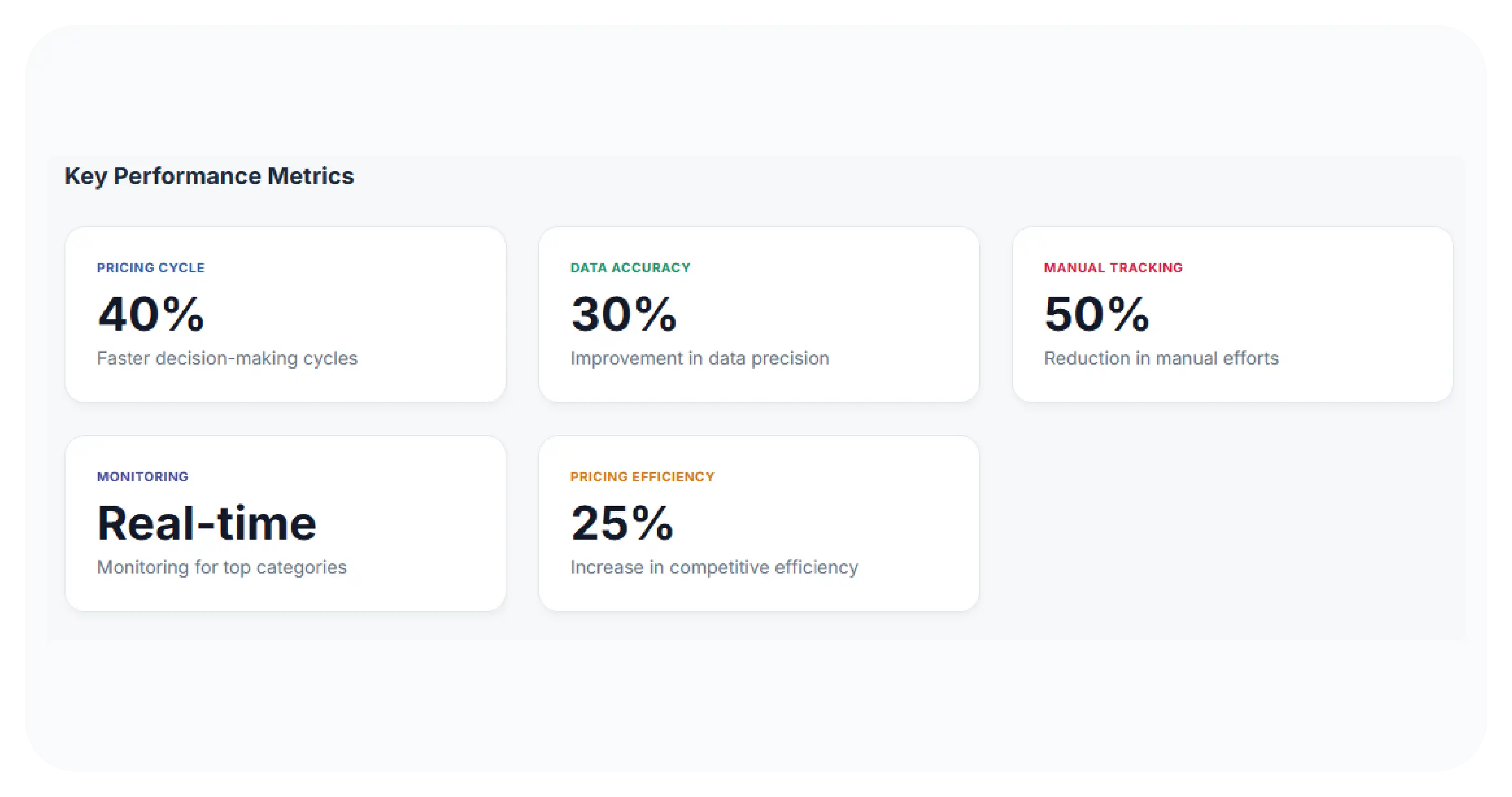
The project delivered measurable improvements across pricing
intelligence, SKU tracking, and retail visibility.
Performance Improvements
92% improvement in SKU tracking coverage
88% increase in pricing update accuracy
70% reduction in reporting latency
Real-time monitoring across 10,000+ grocery SKUs
3x faster competitor benchmarking cycles
Results Narrative
The implementation of automated grocery data intelligence significantly
improved the client's retail decision-making capabilities. With structured datasets and
real-time monitoring, the brand was able to identify pricing gaps and optimize product
positioning across Publix listings.
The integration of Publix Supermarket Benchmarking Analytics, Scraper
to Track Product Assortment and Availability
Data enabled deeper visibility into
category performance and stock availability trends.
As a result, the client achieved stronger pricing consistency, improved
shelf visibility, and faster reaction times to competitor pricing changes. The
transition from manual tracking to automated intelligence created a measurable
improvement in operational efficiency and retail performance.
What Made Product Data Scrape Different
The solution stood out due to its automation-first architecture and
scalable scraping framework. Unlike traditional static datasets, our system delivered
real-time intelligence with minimal latency.
We deployed Publix Grocery Insights Dashboard, which provided
interactive visibility into pricing trends, stock levels, and category performance. The
system integrated AI-based validation checks to ensure high data accuracy and
consistency across all extracted SKUs.
This combination of automation, scalability, and structured analytics
enabled the client to shift from reactive reporting to proactive retail intelligence.woolworths-grocery-data-scraping.php
Client Testimonial
"Working with the Product Data Scrape team
transformed our grocery
intelligence operations. We were struggling with fragmented pricing and inventory
data across Publix listings. Their scraping and analytics solution gave us real-time
visibility into SKU-level performance, which significantly improved our pricing
decisions and retail strategy.
The automation system reduced our manual workload and improved
accuracy across all categories. The dashboards made it easy to track competitors and
adjust strategies quickly. This partnership has helped us become far more agile in a
highly competitive grocery market."
— Director of Retail Strategy, FMCG Brand
Conclusion
The Publix grocery retail ecosystem demands real-time intelligence,
structured data pipelines, and scalable analytics systems. Through this project, we
demonstrated how automation-driven scraping solutions can transform pricing visibility,
product tracking, and competitive benchmarking.
The deployment of Publix
Grocery Data Scraping API enabled the client
to move from manual reporting to real-time retail intelligence, significantly improving
decision-making speed and accuracy.
As grocery retail continues to evolve, data-driven strategies will
remain essential for maintaining competitive advantage and optimizing product
performance across categories.
FAQs
Q1. What is Publix Grocery Data Scraping used for?
It is used to extract product listings, pricing, and availability data from Publix for
retail intelligence and analytics.
Q2. How does it help FMCG brands?
It improves pricing strategy, inventory tracking, and competitor benchmarking through
structured datasets.
Q3. Can it track real-time price changes?
Yes, automated scraping systems can monitor pricing updates in near real-time.
Q4. Is it scalable for large SKU datasets?
Yes, the system is designed to handle thousands of SKUs across multiple categories.
Q5. What industries benefit most?
FMCG, grocery retail, eCommerce analytics, and category management teams benefit the
most.


 USA
USA
 EMAIL
EMAIL
 PHONE
PHONE










.webp)