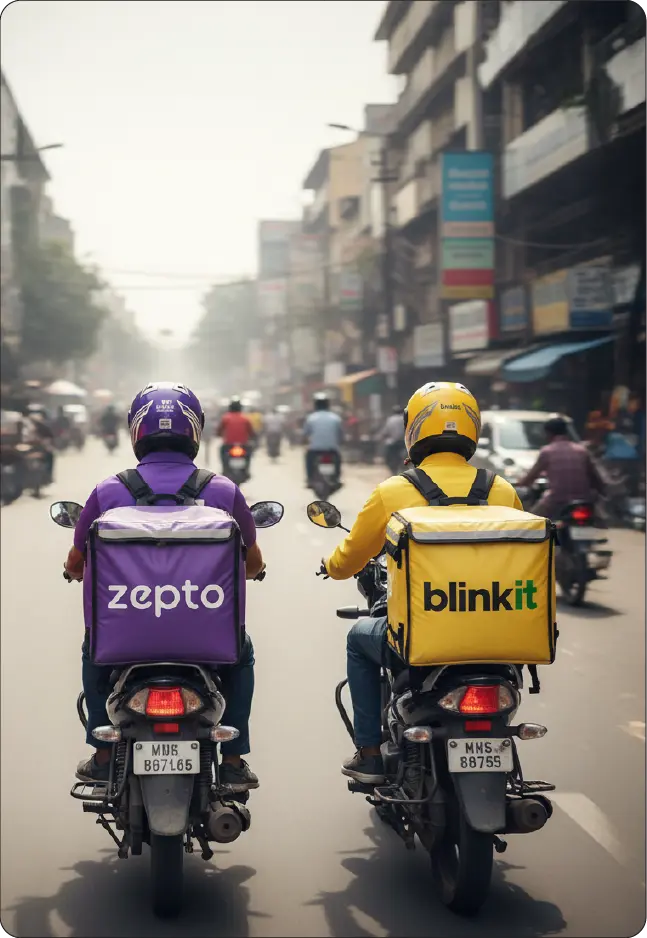
Quick Overview
A fast-growing beverage brand in the quick-commerce space partnered with Product Data Scrape to accelerate growth using Q-Commerce Beverage Brand Data Scraping. Operating in a highly competitive environment, the brand needed real-time insights into pricing, availability, and competitor positioning. Over a 5-month engagement, we implemented advanced solutions to Extract Quick Commerce Product Data across multiple platforms.
The results were impactful and immediate. The brand achieved a 35% increase in product visibility, a 28% improvement in pricing accuracy, and a 40% faster decision-making cycle. By transforming fragmented data into actionable insights, the brand scaled operations efficiently, optimized its digital shelf presence, and strengthened its competitive position in the rapidly evolving q-commerce ecosystem.
The Client
The client is a mid-sized beverage brand operating across multiple quick-commerce platforms, where speed, visibility, and pricing agility define success. With the rise of instant delivery services, the importance of Q-Commerce Product Visibility Data for Beverages has grown significantly. Consumers now expect real-time availability, competitive pricing, and seamless ordering experiences.
Before partnering with Product Data Scrape, the brand struggled to maintain consistent visibility across platforms. Their reliance on manual tracking and limited analytics tools hindered their ability to respond to market changes. Despite investing in marketing and promotions, they lacked accurate insights into how their products were positioned on digital shelves.
Additionally, the absence of scalable Web Scraping API Services meant that data collection was slow, incomplete, and often outdated. This created gaps in decision-making, leading to missed opportunities in pricing optimization and inventory planning. As competition intensified, the need for a data-driven transformation became critical for sustaining growth and improving operational efficiency.
Goals & Objectives
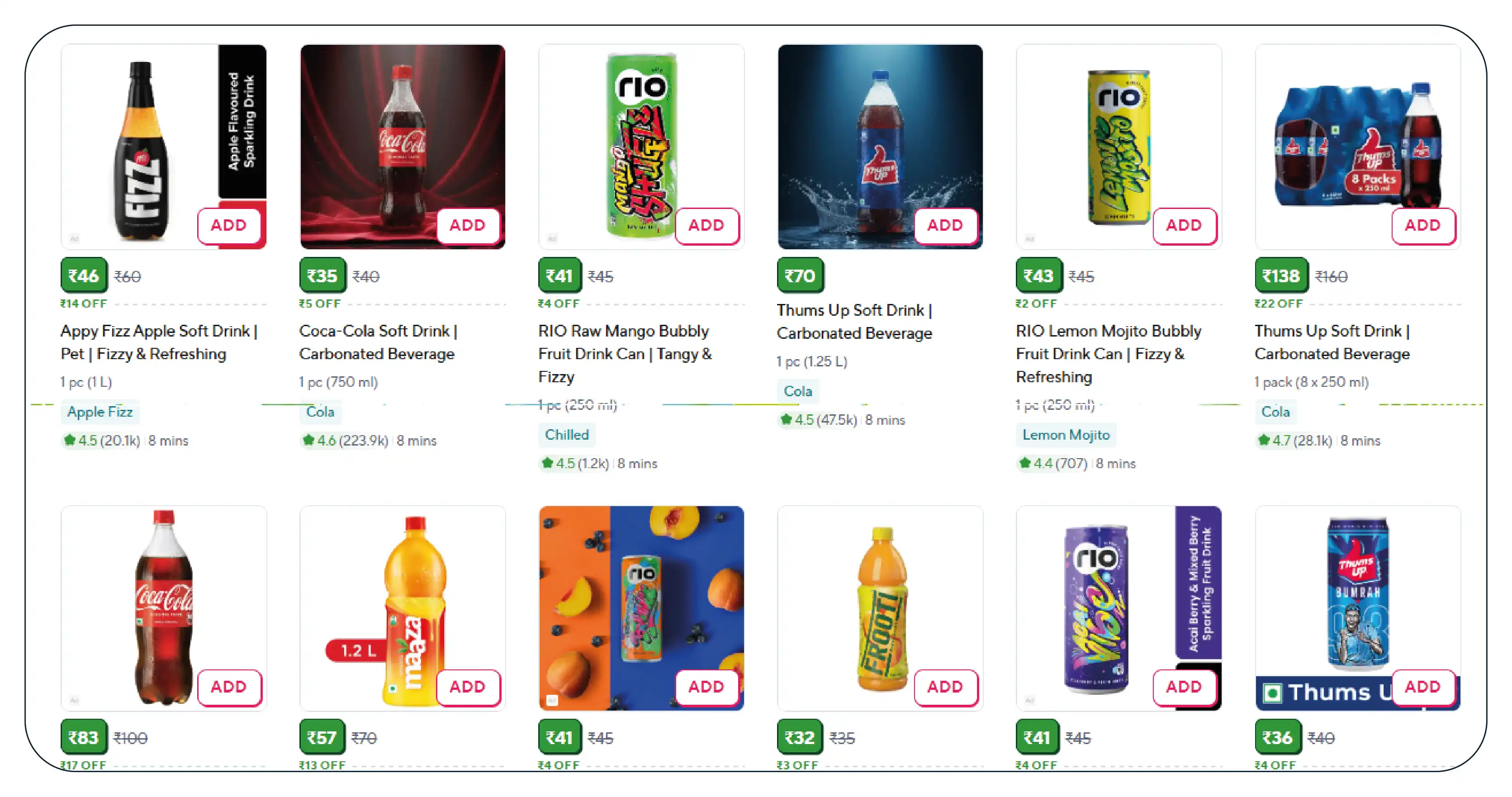
The primary goal was to enable real-time Q-Commerce Beverage Price Monitoring to improve pricing strategies and enhance competitiveness. The brand aimed to increase product visibility, optimize promotions, and scale operations effectively across multiple platforms.
From a technical standpoint, the project focused on building automated systems for data extraction and analysis. Integration with analytics platforms was essential to support real-time insights and reporting. Additionally, the implementation of Digital Shelf Analytics ensured better tracking of product placement, availability, and competitor activity.
35% increase in product visibility
30% improvement in pricing accuracy
40% faster decision-making cycles
25% growth in conversions
Real-time analytics across platforms
The Core Challenge
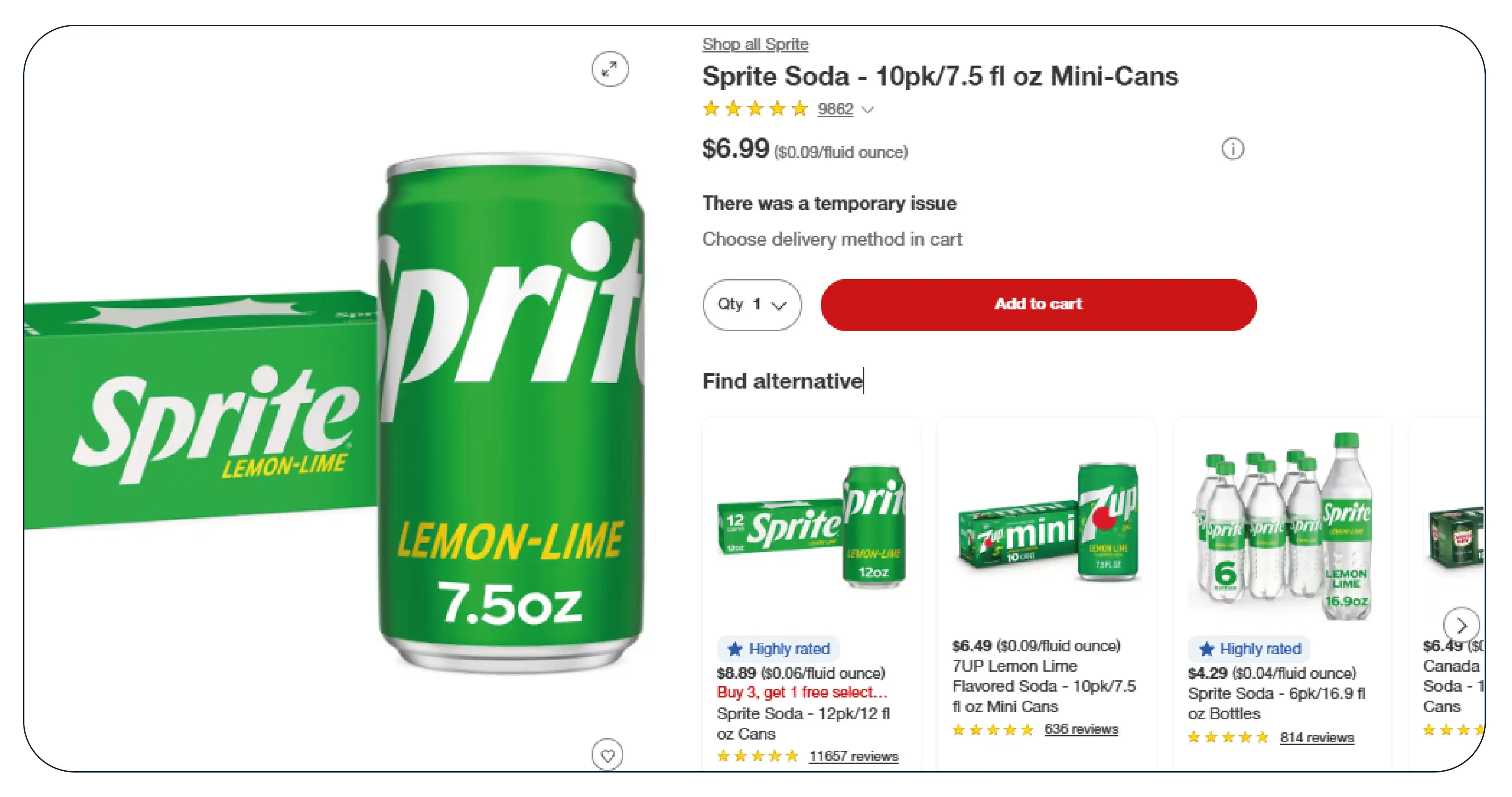
The brand faced significant operational challenges that limited its ability to scale. One of the key issues was inefficient Beverage Product Brand Listing Data Extraction, which relied heavily on manual processes. This not only slowed down data collection but also introduced inconsistencies and errors.
Additionally, the brand struggled with poor visibility into competitor strategies and digital shelf positioning. Without accurate and timely data, it was difficult to adjust pricing or optimize listings effectively. Performance issues further compounded the problem, as delayed insights led to missed opportunities in promotions and inventory management.
These challenges directly impacted data accuracy and speed, preventing the brand from making informed decisions. As a result, the brand risked losing market share in a fast-paced q-commerce environment where agility and precision are critical.
Our Solution
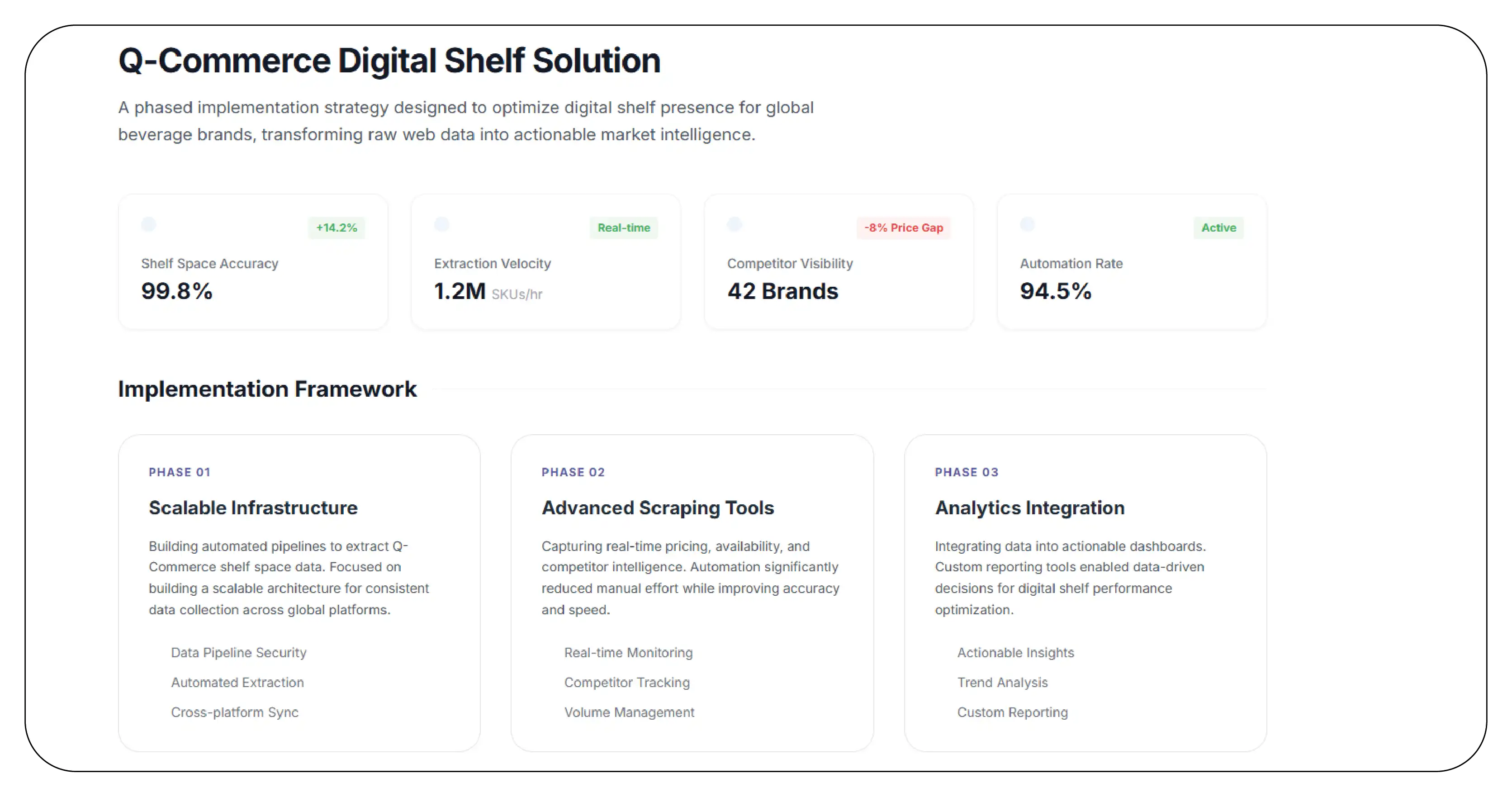
Product Data Scrape implemented a comprehensive, phased approach to address the client’s challenges. The first phase focused on building a scalable infrastructure for data extraction. Automated pipelines were developed to Extract Q-Commerce Shelf Space Data for Beverages, ensuring consistent and reliable data collection across platforms.
In the second phase, advanced scraping tools and frameworks were deployed to capture real-time pricing, availability, and competitor data. Automation significantly reduced manual effort while improving accuracy and speed. The system was designed to handle large volumes of data, enabling continuous monitoring of digital shelf performance.
The third phase involved integrating the extracted data into analytics dashboards. These dashboards provided actionable insights into pricing trends, product visibility, and competitor positioning. Custom reporting tools enabled the brand to make data-driven decisions quickly and effectively.
Each phase was tailored to solve a specific challenge, from improving data accuracy to enhancing scalability. The end result was a robust solution that empowered the brand to optimize its operations, improve digital shelf presence, and achieve faster growth in the q-commerce market.
Results & Key Metrics
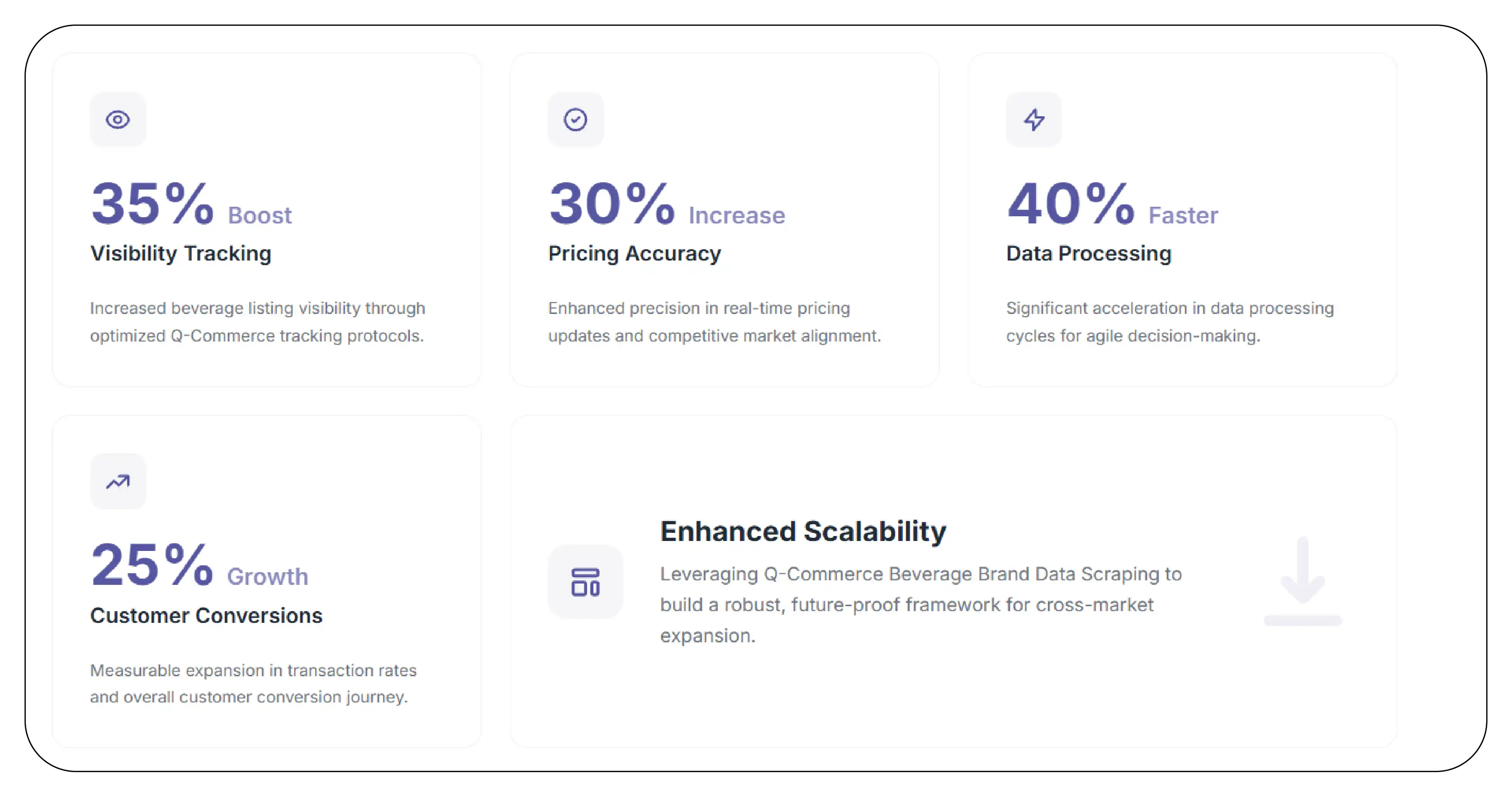
35% boost in visibility through Beverage Listing Visibility Tracking Q-Commerce
30% increase in pricing accuracy
40% faster data processing and decision-making
25% growth in customer conversions
Enhanced scalability using Q-Commerce Beverage Brand Data Scraping
Results Narrative
The implementation of advanced data scraping and analytics solutions transformed the brand’s operations. Real-time insights enabled better pricing strategies and improved digital shelf positioning. The ability to monitor competitor activity and track product performance allowed the brand to optimize its approach continuously.
These improvements not only increased efficiency but also strengthened the brand’s market presence. With a scalable and reliable data infrastructure in place, the brand is now well-positioned to adapt to future trends and maintain a competitive edge in the q-commerce space.
What Made Product Data Scrape Different?
Product Data Scrape delivered a unique combination of innovation and expertise. Their ability to provide Beverage Brand Digital Shelf Insights Q-Commerce ensured comprehensive visibility into product performance across platforms.
Advanced automation and proprietary frameworks enabled seamless data extraction and analysis. This approach minimized manual intervention while maximizing accuracy and scalability. By focusing on tailored solutions, Product Data Scrape helped the client achieve superior results and long-term growth.
Client’s Testimonial
“Working with Product Data Scrape has been a game-changer for our business. Their expertise in Q-Commerce shelf space data extraction provided us with insights we never had before. The real-time analytics and automation capabilities have significantly improved our decision-making and operational efficiency. We’ve seen measurable growth in visibility and conversions, and their solution continues to support our expansion in the competitive q-commerce market.”
— Head of E-commerce, Beverage Brand
Conclusion
This case study highlights the power of data-driven strategies in scaling q-commerce operations. By leveraging advanced Price Monitoring Services, the brand gained real-time insights into pricing and market trends.
The implementation of Q-Commerce Beverage Brand Data Scraping enabled faster decision-making, improved visibility, and enhanced competitiveness. As the q-commerce landscape continues to evolve, businesses that embrace data and automation will be better positioned for sustained growth and success.
FAQs
1. What is Q-commerce data scraping?
Q-commerce data scraping involves extracting real-time data from quick-commerce platforms to analyze pricing, availability, and trends.
2. How does it benefit beverage brands?
It helps brands improve visibility, optimize pricing, and make data-driven decisions for better growth.
3. What is digital shelf analytics?
It refers to analyzing product placement, availability, and performance on online platforms.
4. Can scraping handle real-time data?
Yes, advanced solutions provide real-time insights for faster decision-making.
5. Why is automation important in scraping?
Automation improves speed, accuracy, and scalability while reducing manual effort.



 Singapore
 EMAIL
EMAIL
 PHONE
PHONE










.webp)