Introduction
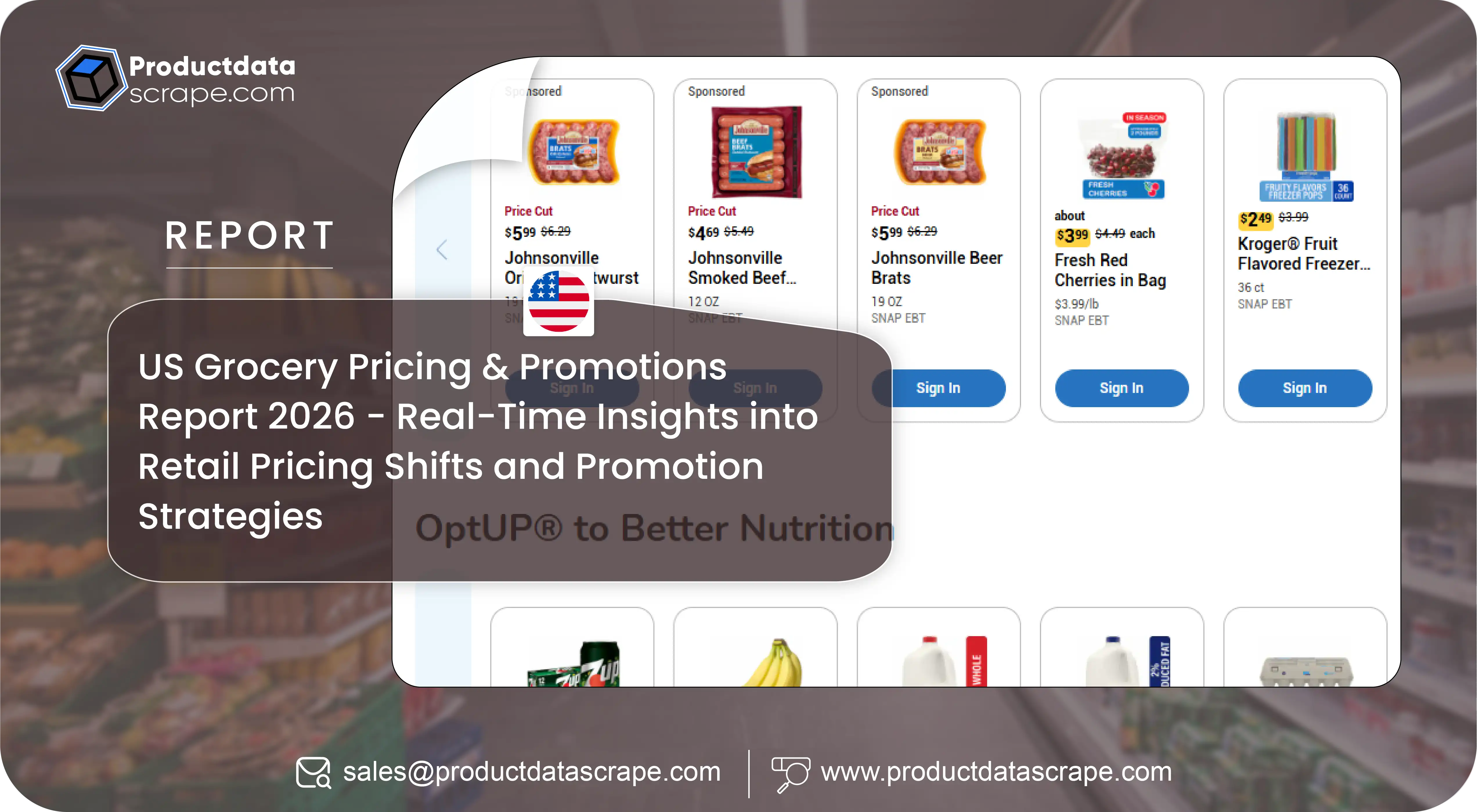
The US grocery market is undergoing rapid transformation driven by inflation, supply chain disruptions, and evolving consumer behavior. The US Grocery Pricing & Promotions Report 2026 provides a comprehensive view of how pricing strategies and promotional campaigns are evolving across major supermarket chains in the United States. It highlights how Grocery Data Scraping United States is enabling retailers, brands, and analysts to capture real-time pricing shifts, promotional patterns, and product-level insights at scale.
Modern grocery intelligence systems now integrate structured datasets that include store-level pricing, weekly promotions, catalog changes, and product availability. These systems rely heavily on automated scraping pipelines that convert unstructured retail data into actionable intelligence.
Industry Insight: Between 2020 and 2026, US grocery price volatility has increased by approximately 32%, while promotional frequency across major supermarket chains has grown by nearly 40%, making real-time monitoring essential for competitive advantage.
How Are US Grocery Pricing and Catalog Datasets Transforming Retail Intelligence?
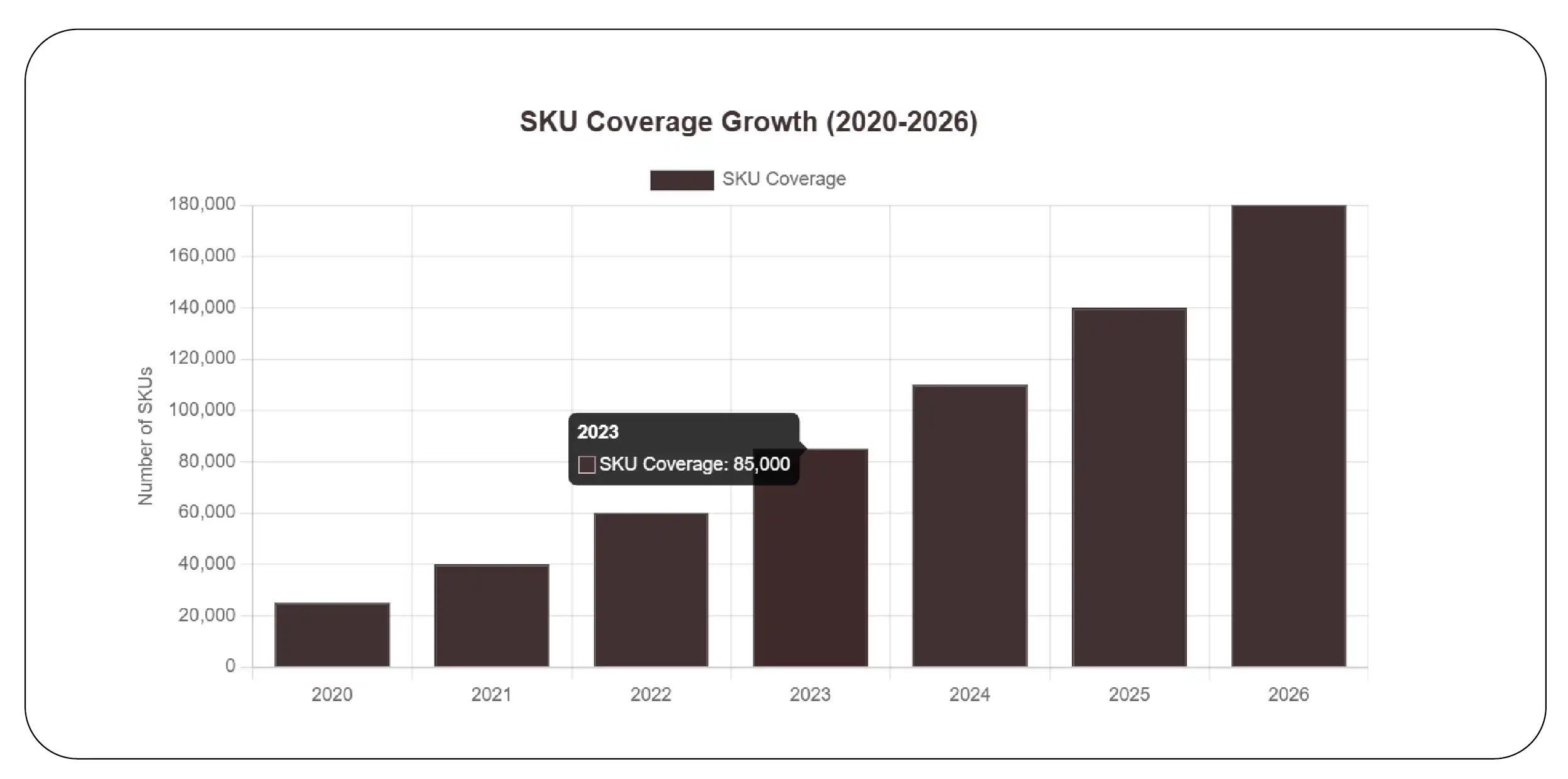
Retailers increasingly rely on structured datasets to manage pricing and inventory strategies. The US Grocery Supermarket catalog and pricing dataset, Buy Grocery Datasets provides granular insights into product pricing, category performance, and store-level variations.
Grocery Dataset Growth (2020–2026)
| Year |
SKU Coverage |
Pricing Updates Frequency |
| 2020 |
25,000 |
Weekly |
| 2021 |
40,000 |
Bi-weekly |
| 2022 |
60,000 |
Weekly |
| 2023 |
85,000 |
Daily |
| 2024 |
110,000 |
Daily |
| 2025 |
140,000 |
Hourly |
| 2026 |
180,000+ |
Real-Time |
Retailers use grocery datasets to:
- Optimize category pricing
- Track competitor assortments
- Improve demand forecasting
- Analyze regional pricing differences
These datasets are critical for FMCG companies and retail analysts seeking to understand price elasticity and product performance. The shift from static datasets to real-time feeds has significantly improved decision-making speed and accuracy.
Why Is Competitor Pricing Intelligence Critical for US Grocery Retailers?
Understanding competitor pricing is essential in highly competitive grocery markets. Publix grocery pricing and promotions data, Scraper to Track Competitor Product Pricing and Promotions enables retailers to monitor competitor strategies in real time.
Competitor Pricing Trends (2020–2026)
| Year |
Price Change Frequency |
Promo Depth (%) |
| 2020 |
Low |
8% |
| 2021 |
Medium |
10% |
| 2022 |
Medium |
12% |
| 2023 |
High |
14% |
| 2024 |
High |
16% |
| 2025 |
Very High |
18% |
| 2026 |
Real-Time |
20%+ |
Retailers leverage competitor intelligence to:
- Adjust pricing dynamically
- Identify promotional gaps
- Benchmark against Publix pricing strategies
- Improve margin optimization
A Scraper to Track Competitor Product Pricing and Promotions allows businesses to continuously monitor competitor pricing behavior, ensuring faster response times to market changes. This is especially important in high-frequency promotion environments like grocery retail.
How Does Grocery Product Monitoring Improve Market Visibility?
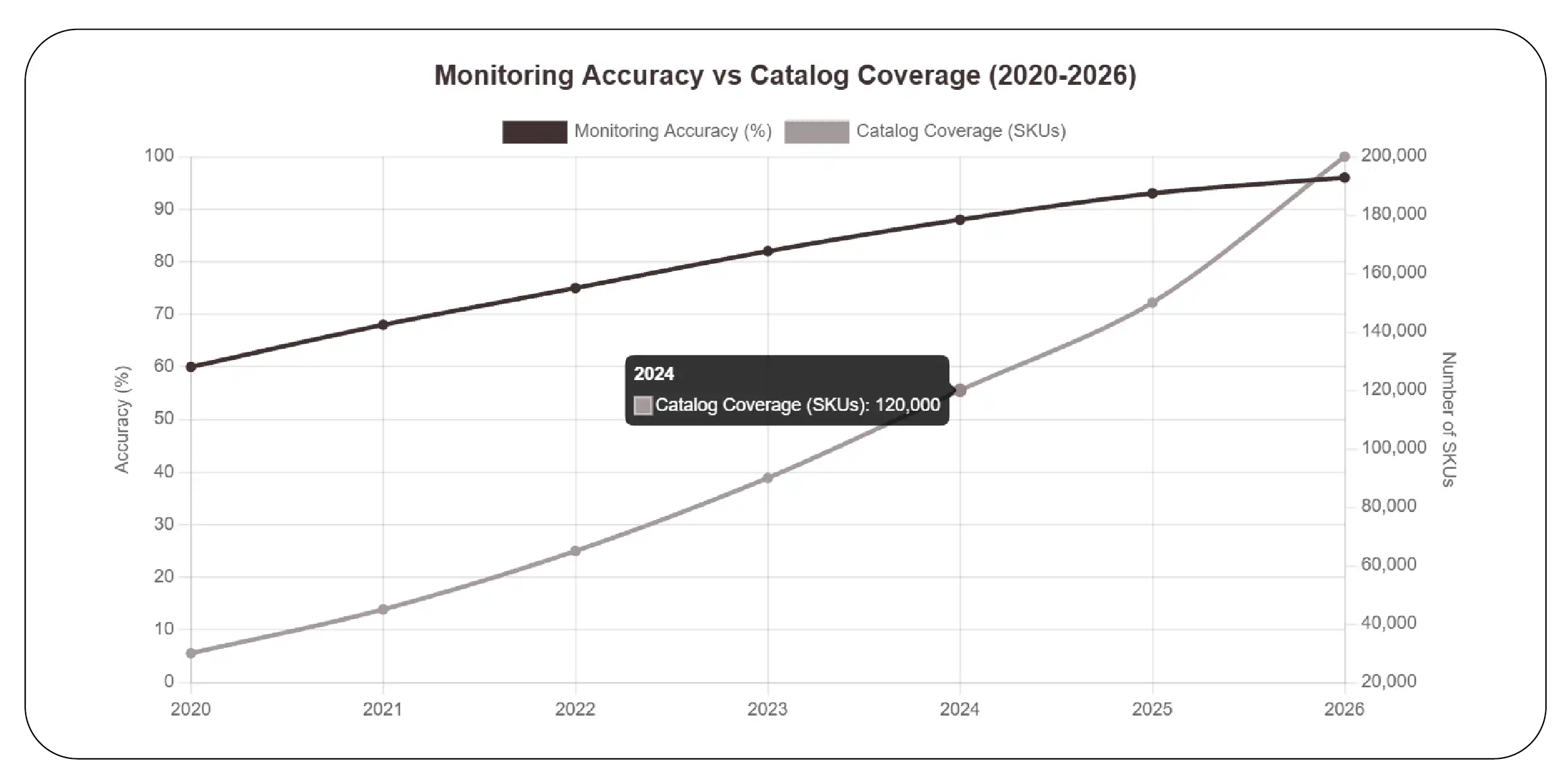
Modern retail systems depend heavily on product-level tracking. US grocery product catalog monitoring, Grocery data scraping enables businesses to track product availability, pricing changes, and catalog updates across multiple retailers.
Product Monitoring Improvement (2020–2026)
| Year |
Monitoring Accuracy |
Catalog Coverage |
| 2020 |
60% |
30,000 SKUs |
| 2021 |
68% |
45,000 SKUs |
| 2022 |
75% |
65,000 SKUs |
| 2023 |
82% |
90,000 SKUs |
| 2024 |
88% |
120,000 SKUs |
| 2025 |
93% |
150,000 SKUs |
| 2026 |
96% |
200,000+ SKUs |
Businesses use product monitoring for:
- Price tracking across retailers
- Availability checks
- Assortment optimization
- Competitive benchmarking
Grocery data scraping systems allow companies to process large volumes of structured and unstructured retail data. This enables more accurate forecasting and better supply chain planning.
How Do Image and Catalog Datasets Improve Retail Conversion?
Visual data is becoming a critical part of retail intelligence. The US grocery product image and pricing dataset, Turn messy catalogs into conversion-ready data enables businesses to standardize product listings and improve digital shelf performance.
Visual Data Adoption (2020–2026)
| Year |
Image-Enabled Listings |
Conversion Rate Impact |
| 2020 |
35% |
3% |
| 2021 |
42% |
5% |
| 2022 |
50% |
7% |
| 2023 |
63% |
10% |
| 2024 |
74% |
13% |
| 2025 |
85% |
16% |
| 2026 |
92% |
20% |
Retailers use image datasets to:
- Standardize product catalogs
- Improve search accuracy
- Enhance online merchandising
- Reduce listing inconsistencies
Turning messy catalogs into structured, conversion-ready data improves e-commerce performance significantly. It also enhances customer trust and improves product discovery across digital platforms.
How Does Promotion Tracking Improve Grocery Retail Strategy?
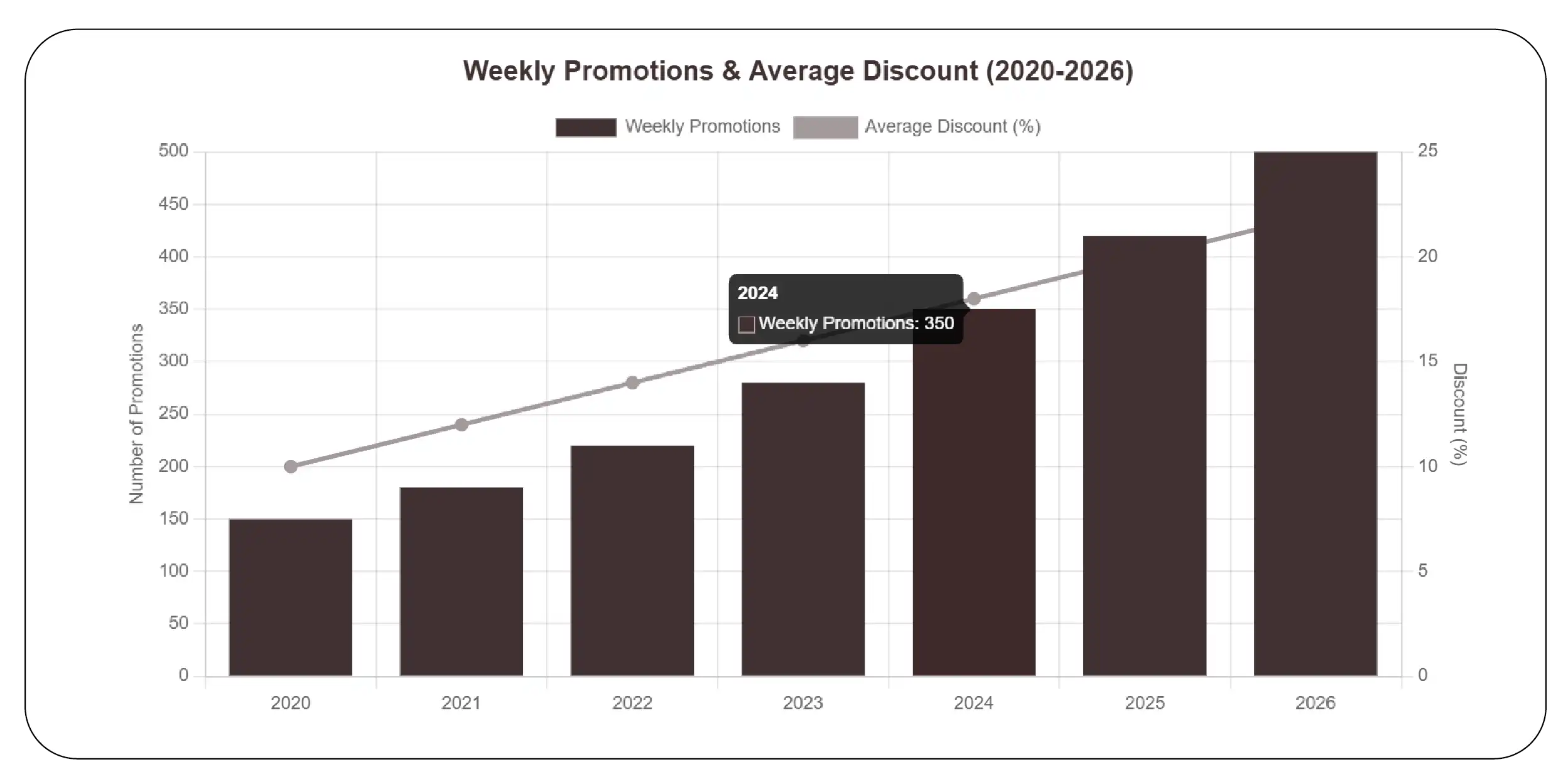
Promotion cycles are critical in grocery retail. Grocery promotion tracking across Publix and Winn-Dixie enables businesses to analyze discount patterns and optimize promotional timing.
Promotion Tracking Trends (2020–2026)
| Year |
Weekly Promotions |
Average Discount (%) |
| 2020 |
150 |
10% |
| 2021 |
180 |
12% |
| 2022 |
220 |
14% |
| 2023 |
280 |
16% |
| 2024 |
350 |
18% |
| 2025 |
420 |
20% |
| 2026 |
500+ |
22% |
Retailers use promotion tracking to:
- Identify competitor discount cycles
- Optimize promotional calendars
- Increase basket size
- Improve customer retention
Continuous monitoring of Publix and Winn-Dixie promotions helps retailers adjust pricing strategies in real time. This ensures better alignment with market demand and seasonal trends.
What Insights Do Weekly Deals and Pricing Analytics Provide?
Weekly pricing cycles are a major driver of grocery retail behavior. Publix weekly deals and pricing insights, US Grocery Pricing & Promotions Report 2026 help businesses understand short-term market movements.
Weekly Deal Impact Trends (2020–2026)
| Year |
Deal-Driven Sales (%) |
Customer Response Rate |
| 2020 |
38% |
45% |
| 2021 |
42% |
50% |
| 2022 |
48% |
56% |
| 2023 |
55% |
62% |
| 2024 |
61% |
68% |
| 2025 |
67% |
74% |
| 2026 |
72% |
80% |
Retailers use weekly insights for:
- Short-term pricing adjustments
- Inventory clearance planning
- Promotion optimization
- Customer engagement improvement
Product Data Scrape provides advanced retail intelligence solutions designed for high-scale grocery analytics. The Winn-Dixie pricing intelligence platform, US Grocery Pricing & Promotions Report 2026 enables businesses to access real-time grocery data across major US retailers.
Key benefits include:
- Real-time grocery pricing data
- Multi-retailer promotion tracking
- SKU-level catalog intelligence
- High-frequency data updates
- Scalable scraping infrastructure
These capabilities help businesses improve pricing decisions, optimize promotions, and strengthen competitive positioning in the US grocery market.
Conclusion
The US Grocery Pricing & Promotions Report 2026 highlights the growing importance of real-time intelligence in grocery retail. With rising competition and frequent pricing changes, Publix Grocery Data Scraping API, US Grocery Pricing & Promotions Report 2026 has become essential for businesses seeking accurate market insights.
Real-time Grocery data scraping enables retailers and brands to optimize pricing, track promotions, and improve decision-making across the entire grocery ecosystem.
Ready to unlock real-time US grocery intelligence? Contact Product Data Scrape today to access advanced grocery pricing and promotion datasets for smarter retail decision-making!


 Singapore
 EMAIL
EMAIL
 PHONE
PHONE


.webp)
.webp)








.webp)