Quick Overview
A leading retail analytics company partnered with our team to build a smarter system for monitoring grocery price reductions and promotional rollbacks at scale. By implementing the Walmart Rollback Tracker API, the client gained real-time visibility into grocery price drops, helping thousands of households make informed shopping decisions. The project focused on enabling faster and more reliable Extract Grocery & Gourmet Food Data workflows from Walmart’s digital shelves. Within months, the platform successfully tracked rollback discounts across multiple product categories and locations. As a result, more than 5,000 families received automated price alerts, reducing grocery costs by nearly 20% while improving shopping efficiency and data transparency.
The Client
The client is a retail intelligence startup operating in the consumer analytics industry. Their platform helps shoppers and consumer brands track grocery price trends and promotional campaigns across major online retailers. With rising inflation and changing consumer buying behavior, grocery price monitoring has become increasingly important for families seeking savings and brands aiming to remain competitive.
The retail market has seen a dramatic increase in digital shelf competition since 2020. Large retailers frequently introduce flash promotions, discounts, and rollback deals to attract customers. However, tracking these price movements manually was inefficient and prone to delays. The client needed a reliable solution that could automate promotional tracking using a Walmart Rollback Deals Data Scraping API to collect accurate and up-to-date pricing information.
Before partnering with us, the company relied on fragmented tools and partial datasets, which limited their ability to provide real-time price insights. Their internal system struggled to compile a comprehensive Walmart Grocery Store Dataset, resulting in incomplete coverage of rollback promotions and delayed price alerts for customers.
As their user base grew, they needed a scalable solution capable of delivering accurate product pricing intelligence across thousands of grocery items. Implementing a reliable automated data extraction pipeline became essential to remain competitive and deliver valuable insights to consumers.
Goals & Objectives
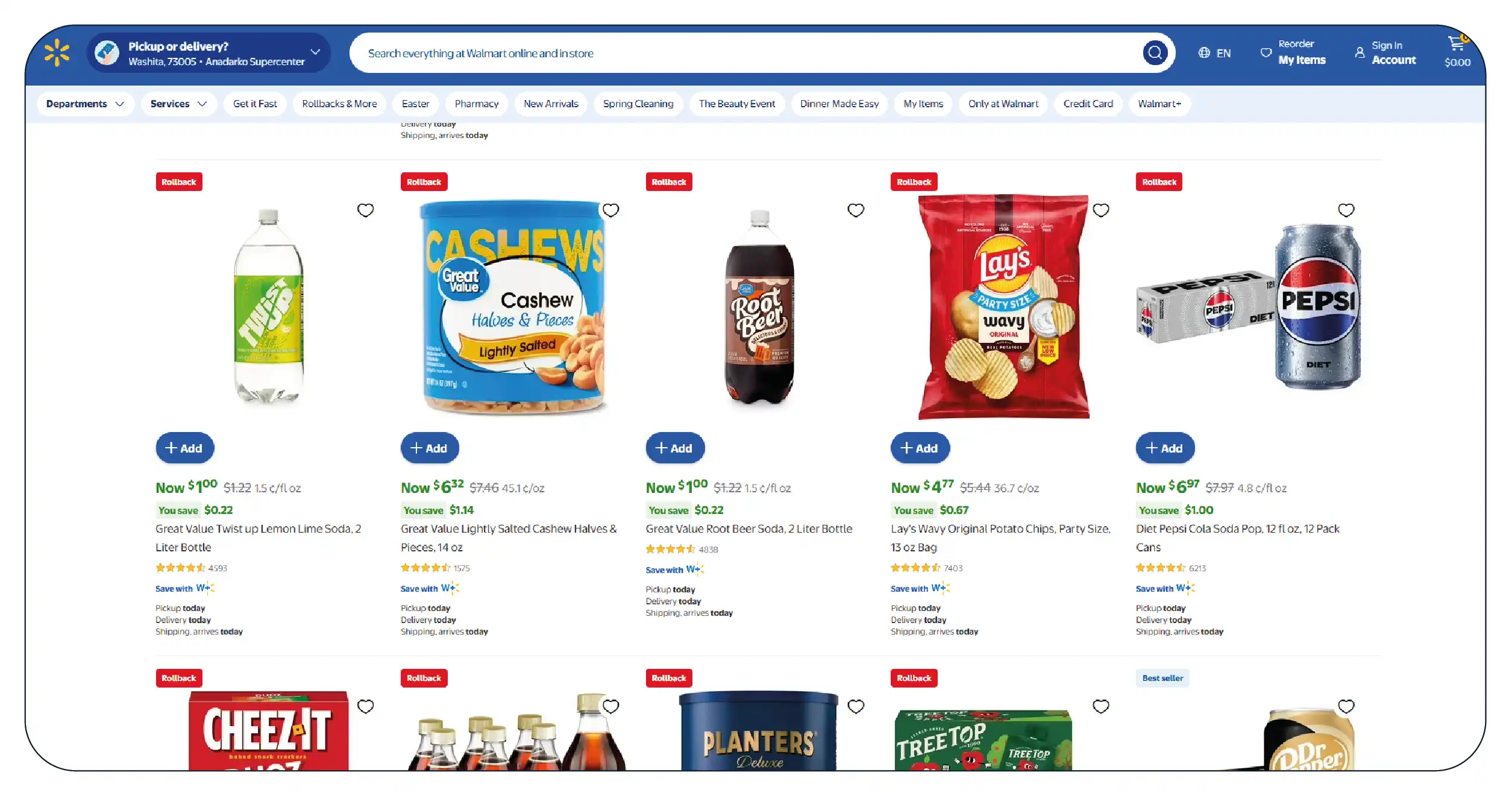
The primary goal of the project was to build a robust system capable of automatically tracking grocery discounts and rollback promotions across Walmart’s digital catalog. The client wanted the ability to Scrape Walmart Rollback grocery Deals And Discounts in real time so that consumers could receive timely alerts about price reductions on essential items.
From a technical perspective, the platform needed to integrate automated pipelines that could continuously Extract Walmart API Product Data while ensuring high accuracy and minimal latency. The system also required seamless integration with the client’s analytics dashboard so users could visualize price fluctuations and historical discount patterns across multiple grocery categories.
Improve grocery price tracking accuracy to over 98%
Monitor 50,000+ Walmart grocery SKUs in real time
Deliver price alerts within seconds of rollback activation
Reduce manual monitoring workload by 80%
Enable daily updates across the entire product catalog
These goals ensured that both business growth and technical efficiency were achieved through a scalable retail intelligence solution.
The Core Challenge
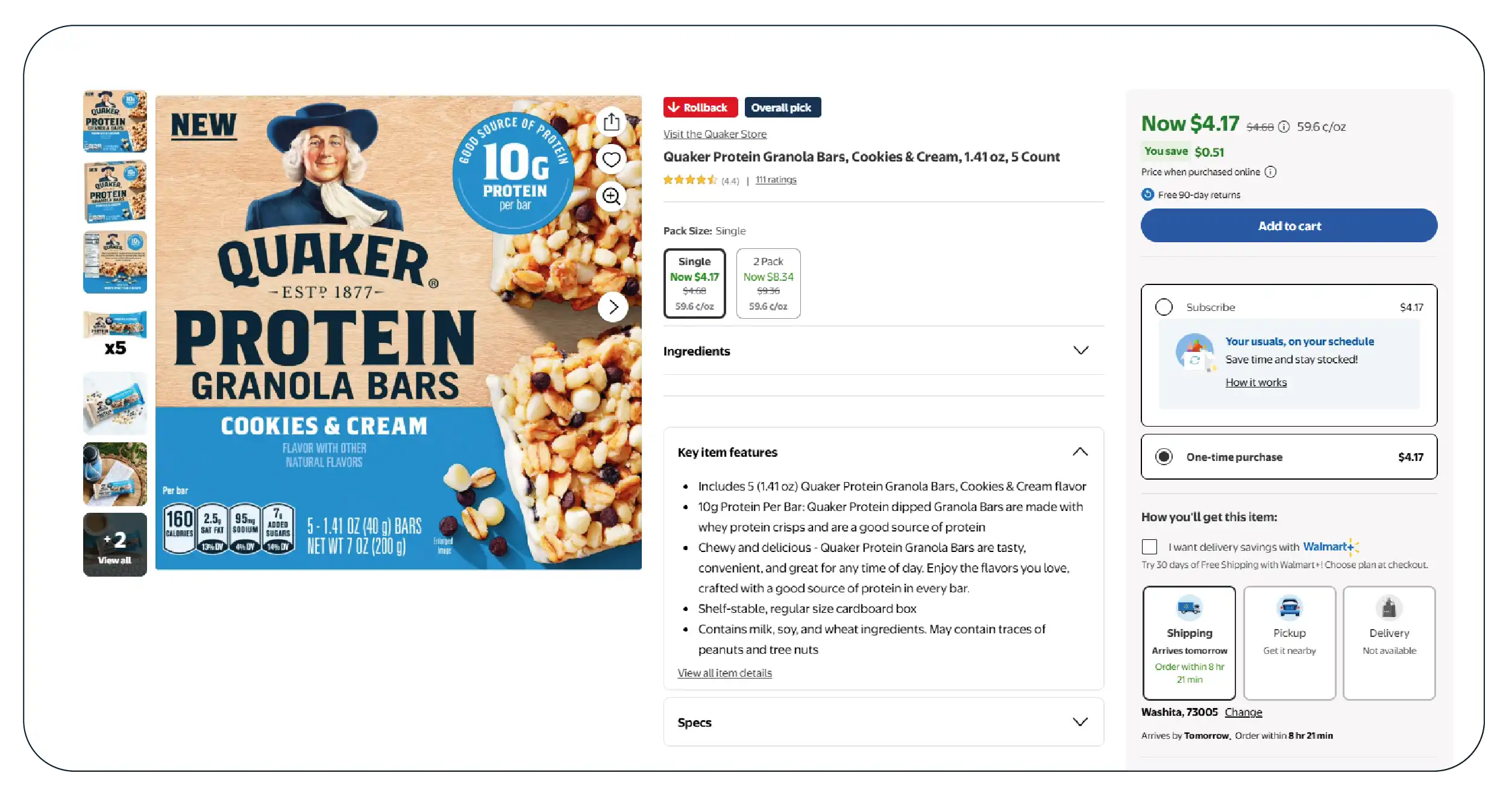
Before the project began, the client faced multiple technical and operational challenges while tracking grocery promotions. One of the biggest difficulties was identifying accurate price drops across thousands of products without missing short-lived promotions.
Retail pricing changes frequently, sometimes several times per day, making manual monitoring ineffective. Without an automated system, the client struggled to track rollback promotions consistently. They required a system powered by a Walmart Rollback Pricing Intelligence API that could detect changes instantly and notify users in real time.
Another challenge involved consolidating data from multiple sources into a unified analytics platform. Their existing infrastructure lacked the ability to process large-scale grocery pricing information and maintain a clean Grocery store dataset. Data inconsistencies caused delays in price alerts, which reduced the value of their service for customers.
Additionally, scaling the system to handle thousands of grocery SKUs created performance bottlenecks. The platform needed improved infrastructure to process high volumes of product data without affecting response times.
Without resolving these challenges, the client risked losing users who depended on timely grocery price insights to manage their household budgets.
Our Solution
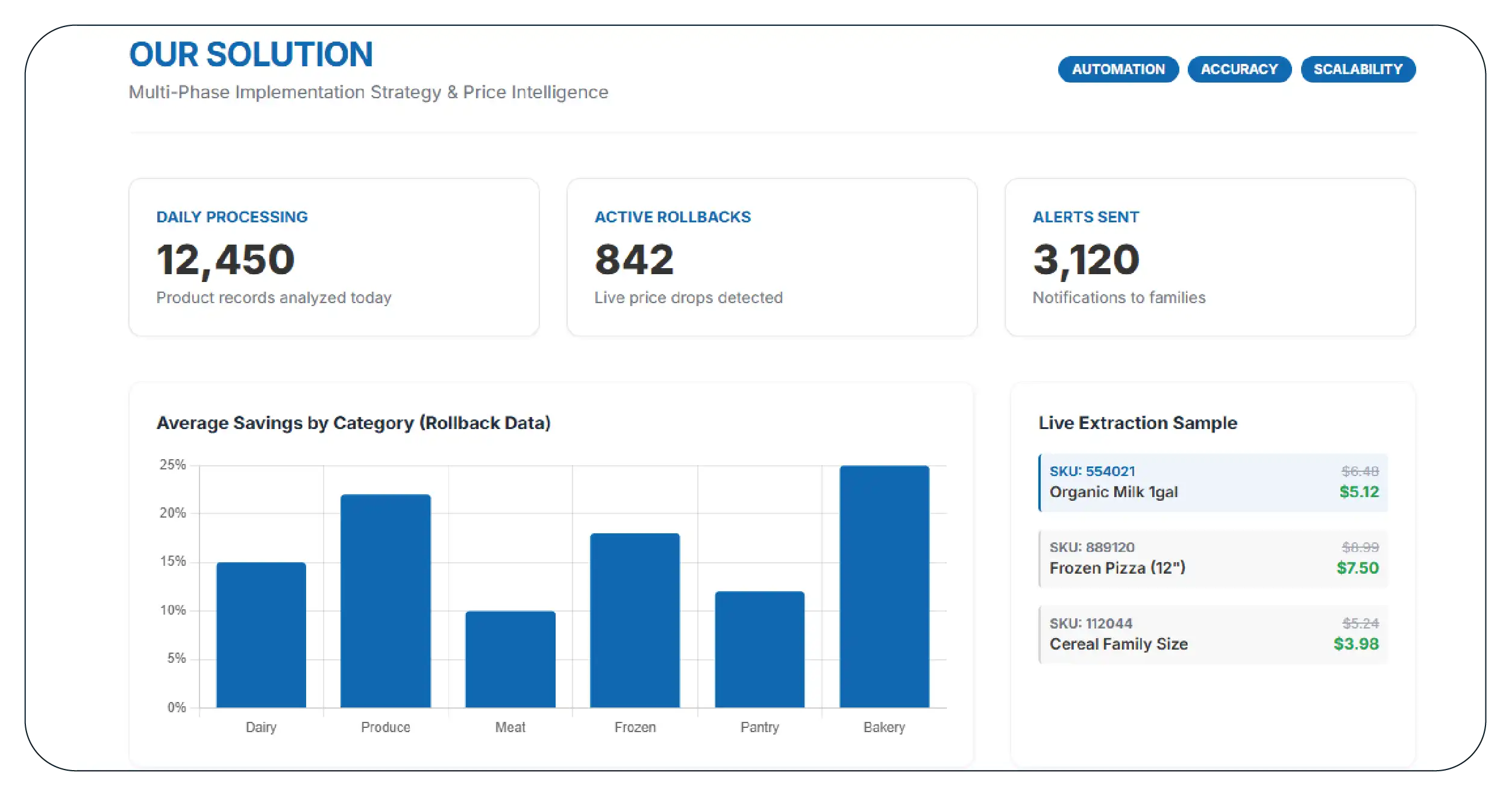
To overcome the challenges, our team designed a multi-phase implementation strategy that focused on automation, accuracy, and scalability. The solution centered around advanced data extraction pipelines that could continuously monitor Walmart grocery listings and detect promotional price changes.
In the first phase, we built a robust framework capable of tracking rollback promotions through Walmart Rollback Grocery Promotion Price Intelligence systems. This allowed the platform to monitor product pricing patterns and instantly identify rollback discounts across thousands of grocery items.
The second phase focused on integrating advanced automation technologies and Web Scraping API Services to collect product data from Walmart’s digital store environment. Our APIs extracted essential information including product name, SKU, category, current price, rollback price, and promotion details. This data was automatically structured into clean datasets ready for analytics processing.
Next, we implemented intelligent scheduling and update mechanisms to ensure the system captured pricing changes in near real time. Automated crawlers continuously scanned product listings to detect price fluctuations without overwhelming the platform’s infrastructure.
Another critical phase involved optimizing the client’s data pipeline. We developed scalable data storage systems capable of processing tens of thousands of product records daily. This allowed the client to maintain a constantly updated database of grocery price information.
Finally, the solution was integrated with the client’s consumer-facing alert platform. When a rollback promotion was detected, the system instantly triggered notifications to subscribed users. These alerts enabled families to take advantage of grocery discounts before the promotions expired.
Through this structured approach, the client gained a powerful price intelligence solution capable of delivering reliable grocery discount insights at scale.
Results & Key Metrics
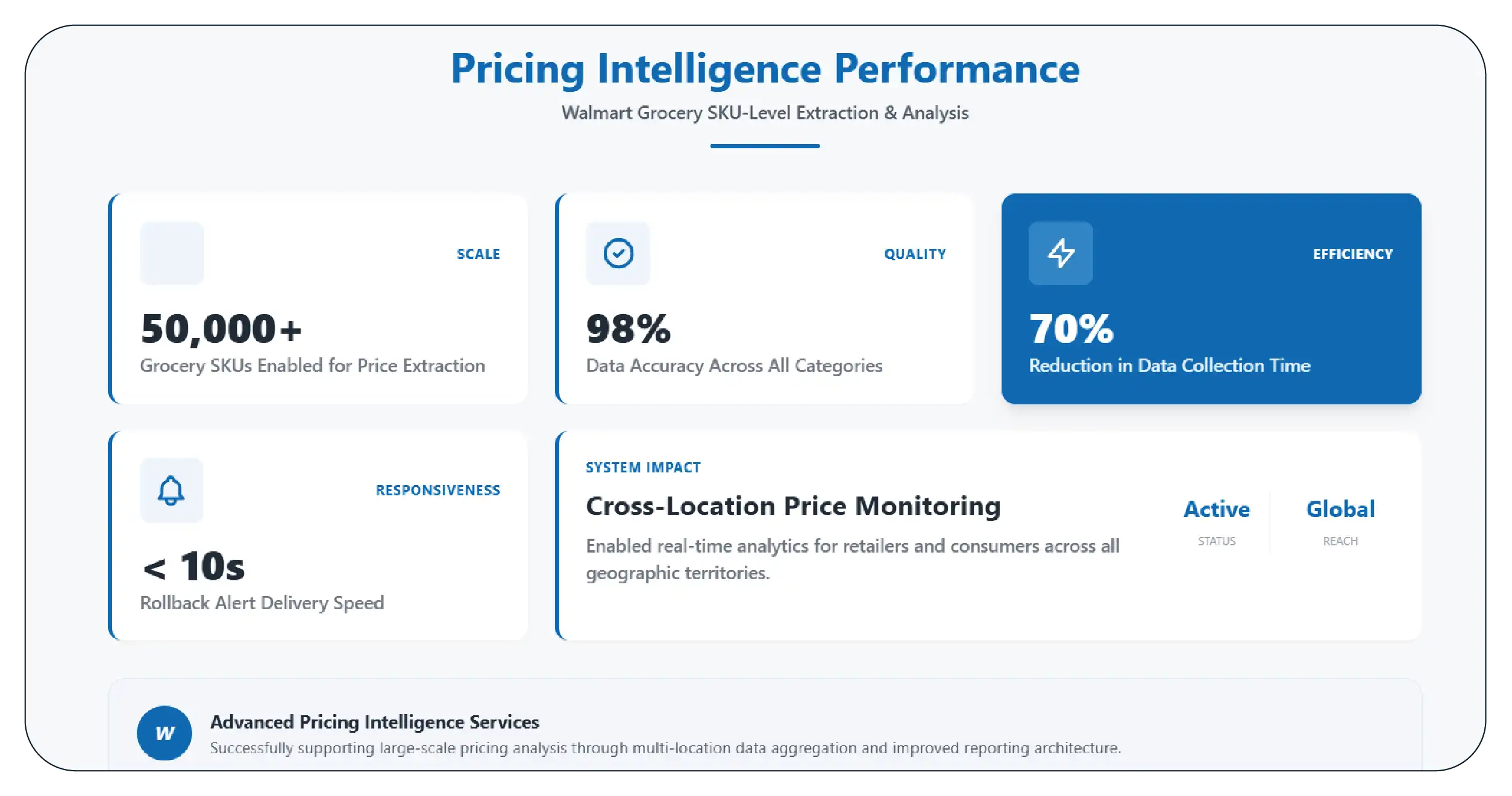
Enabled Walmart Grocery SKU-Level Price Extraction for 50,000+ products
Achieved 98% data accuracy across grocery categories
Reduced data collection time by 70%
Delivered rollback alerts in under 10 seconds
Monitored grocery price changes across multiple locations
Improved analytics reporting for retailers and consumers
Supported large-scale pricing analysis through advanced Pricing Intelligence Services
Results Narrative
Following implementation, the client experienced significant improvements in both platform performance and customer satisfaction. Automated price tracking ensured families received instant notifications when grocery prices dropped, allowing them to save more on everyday purchases. With accurate SKU-level insights, the platform expanded its grocery monitoring coverage and provided better price comparisons across products.
The enhanced infrastructure also improved data reliability and scalability, allowing the client to onboard thousands of new users without performance issues. By leveraging automated pricing intelligence tools, the platform transformed into a powerful resource for shoppers seeking smarter grocery savings.
What Made Product Data Scrape Different?
One of the key differentiators of our approach was the ability to build a comprehensive Walmart Rollback Tracker Dataset that captured real-time promotional insights across thousands of grocery products. Our system was designed to support large-scale retail analytics without compromising speed or data accuracy.
We also integrated advanced Digital Shelf Analytics capabilities that enabled the client to visualize pricing trends, promotional patterns, and competitive market behavior. These insights allowed the client to deliver deeper value to both consumers and retail analysts by transforming raw product data into actionable intelligence.
Client’s Testimonial
“Working with this team transformed the way our platform monitors grocery pricing. Their implementation of the Walmart Rollback Grocery Price Monitoring API enabled us to track thousands of product price changes in real time with incredible accuracy. Our users now receive instant alerts whenever rollback promotions appear, helping them save money on everyday groceries.
The scalability and reliability of the solution exceeded our expectations, allowing us to grow our user base while maintaining exceptional performance. Their expertise in retail data extraction and automation made a significant difference to our business.”
—Head of Product, Retail Analytics Platform
Conclusion
Retail pricing transparency has become increasingly important as families look for ways to reduce grocery expenses. By implementing advanced data extraction technologies, the client successfully built a powerful platform that helps thousands of households track grocery discounts and maximize savings.
Through automated systems designed to Extract Grocery & Gourmet Food Data, the platform now delivers accurate real-time price intelligence across Walmart’s digital catalog. This case study demonstrates how data-driven retail insights can empower consumers while enabling businesses to build smarter analytics platforms that respond quickly to changing market conditions.
FAQs
1. What is a Walmart rollback tracker system?
A rollback tracker system monitors Walmart products and detects temporary price reductions known as rollback promotions.
2. How does grocery price monitoring benefit consumers?
It helps shoppers identify the best time to buy products, enabling them to save money on essential grocery items.
3. What type of data is collected from Walmart grocery listings?
Typical datasets include product name, SKU, category, price, discount price, availability, and promotional details.
4. How often can grocery pricing data be updated?
Automated systems can track and update product prices multiple times per day to ensure accurate pricing insights.
5. Who benefits from grocery price intelligence solutions?
Consumers, retail analysts, eCommerce platforms, and consumer brands all benefit from insights derived from grocery pricing and promotion tracking systems.



 Singapore
 EMAIL
EMAIL
 PHONE
PHONE


.webp)
.webp "thumb")
.webp "thumb")
.webp "thumb")








.webp)