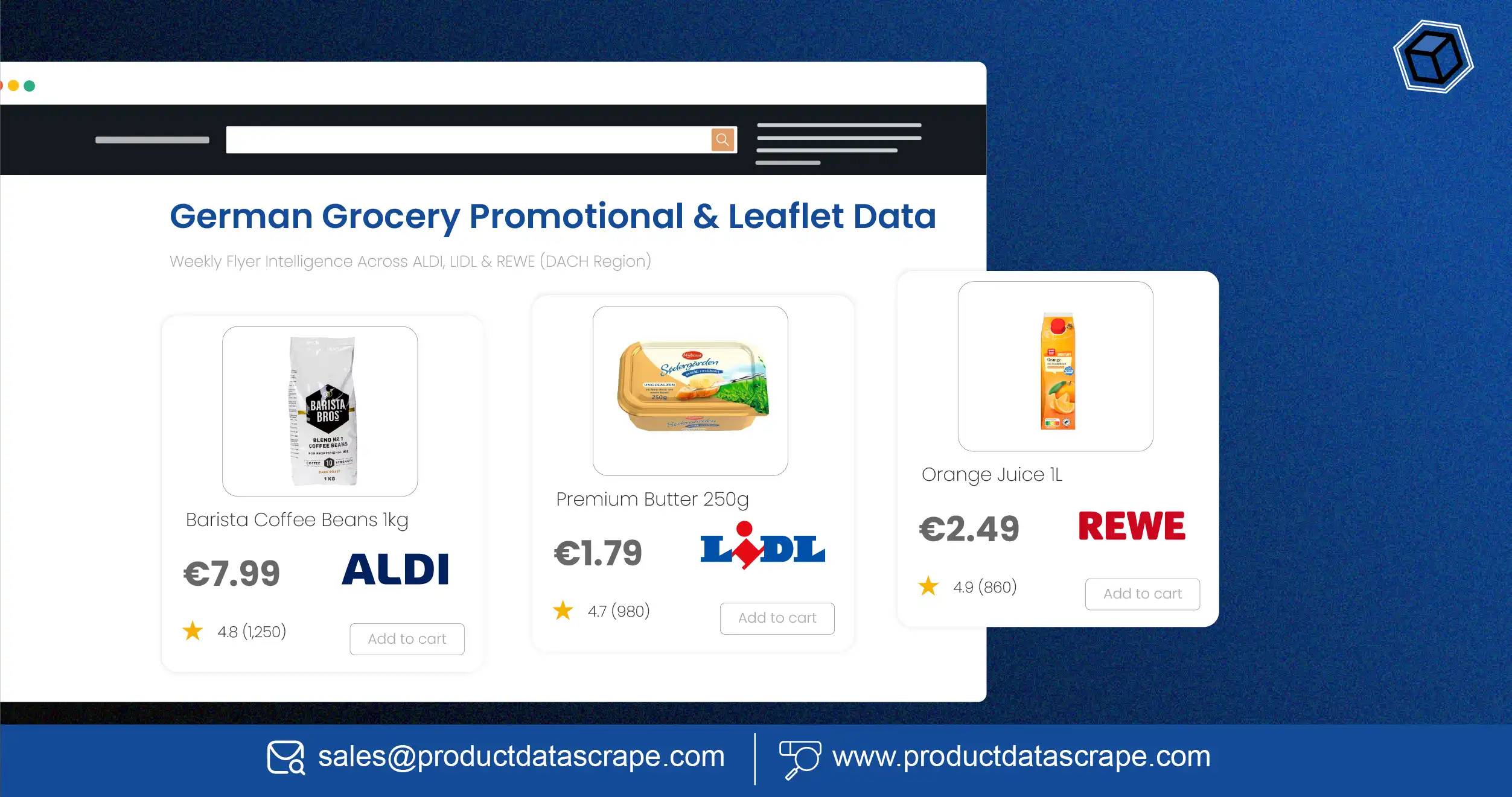
Introduction
The most effective way to extract actionable retail intelligence in Europe is through Scrape Promotional & Leaflet Data from German Grocery Chains, combined with structured E-commerce data scraping in Germany. This enables FMCG brands, retailers, and analysts to track weekly promotions, pricing strategies, and competitive offers across ALDI, LIDL, and REWE in the DACH region.
Industry studies show that over 70% of grocery purchase decisions in Germany are influenced by weekly promotional leaflets and discount campaigns. As competition intensifies across offline and online grocery channels, brands need continuous visibility into promotional cycles, pricing depth, and category-level discounts.
By using Scrape Promotional & Leaflet Data from German Grocery Chains, businesses can transform unstructured flyer data into structured insights. This includes identifying discount trends, promotional frequency, SKU-level offers, and competitor benchmarking. Combined with E-commerce data scraping in Germany, organizations gain a unified view of both digital and offline grocery ecosystems.
How Is Grocery Promotion Intelligence Transforming Retail Decisions?
Retail competition in Germany is highly promotion-driven. Brands rely on discount cycles, seasonal offers, and flyer campaigns to attract customers.
Businesses using German grocery promotion intelligence, E-commerce data scraping can track competitor strategies across multiple retail channels in real time. This includes identifying pricing gaps, promotional depth, and category-level performance shifts.
Grocery Promotion Activity (2020–2026)
| Year |
Promotion Frequency Index |
Retail Coverage (%) |
| 2020 |
100 |
62% |
| 2021 |
108 |
66% |
| 2022 |
115 |
71% |
| 2023 |
123 |
76% |
| 2024 |
132 |
81% |
| 2025 |
140 |
85% |
| 2026 |
150 |
90% |
Key benefits:
- Real-time promotion tracking
- Competitor benchmarking
- Category performance analysis
- Pricing optimization
- Demand forecasting
Retailers continuously adjust promotions to drive footfall and basket size. Without structured intelligence, brands risk missing critical pricing shifts. Promotion intelligence helps companies respond faster, reduce revenue loss, and improve campaign effectiveness across Germany's highly competitive grocery market.
Why Is Weekly Grocery Offer Tracking Important in the DACH Region?
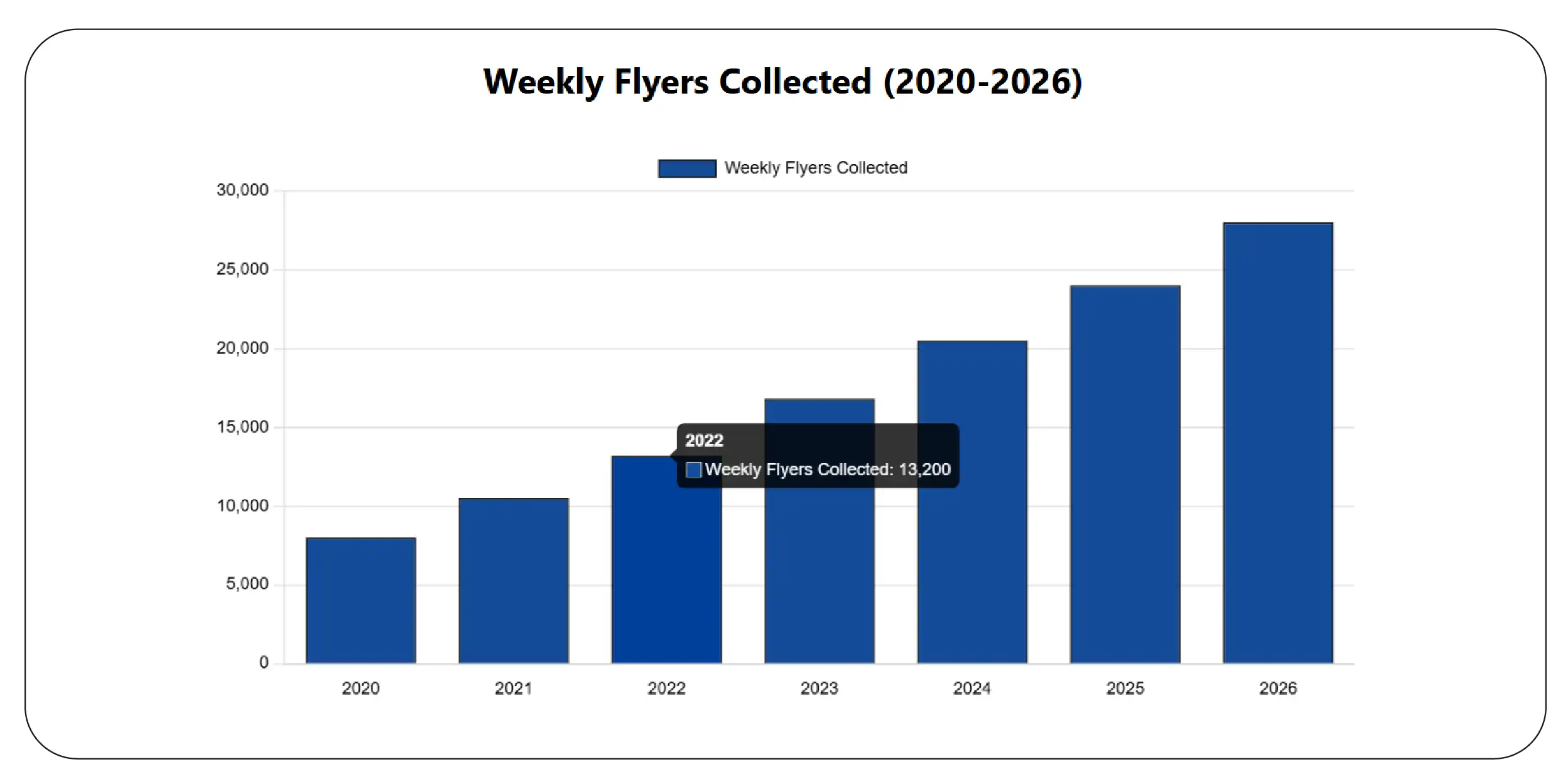
Weekly flyers are the backbone of grocery retail marketing in Germany, Austria, and Switzerland. They influence purchasing decisions across millions of households.
Using scrape weekly grocery offers from DACH retailers, businesses can systematically analyze promotional cycles and identify high-impact discount strategies.
Weekly Offer Coverage Trends (2020–2026)
| Year |
Weekly Flyers Collected |
Retailers Covered |
| 2020 |
8,000 |
20 |
| 2021 |
10,500 |
25 |
| 2022 |
13,200 |
30 |
| 2023 |
16,800 |
35 |
| 2024 |
20,500 |
40 |
| 2025 |
24,000 |
45 |
| 2026 |
28,000 |
50 |
Key insights:
- Identifying recurring discounts
- Tracking seasonal campaigns
- Monitoring competitor pricing strategies
- Understanding product visibility patterns
- Improving promotional planning
Weekly offer scraping ensures that brands never miss important retail movements. It also helps FMCG companies optimize trade marketing budgets and align pricing strategies with market demand patterns.
How Do Grocery Chains Design Their Promotional Pricing Strategies?
Grocery chains in Germany use dynamic promotional pricing to drive traffic and clear inventory. These strategies vary by season, product category, and competitor activity.
Organizations that analyze promotional pricing strategies of grocery chains, E-commerce Data by Industry gain deeper insights into how pricing influences consumer behavior.
Promotional Pricing Trends (2020–2026)
| Year |
Avg Discount Depth (%) |
Campaign Volume |
| 2020 |
18% |
5,000 |
| 2021 |
20% |
6,500 |
| 2022 |
22% |
8,200 |
| 2023 |
24% |
10,000 |
| 2024 |
26% |
12,300 |
| 2025 |
28% |
14,500 |
| 2026 |
30% |
16,800 |
Key advantages:
- Understanding discount strategies
- Tracking promotional intensity
- Measuring campaign effectiveness
- Improving pricing decisions
- Optimizing revenue performance
Retailers often use deep discounts for private-label products while maintaining stable pricing for branded goods. Analyzing these strategies helps FMCG companies position their products more competitively across German grocery chains.
How Can Businesses Track ALDI Weekly Offers Effectively?
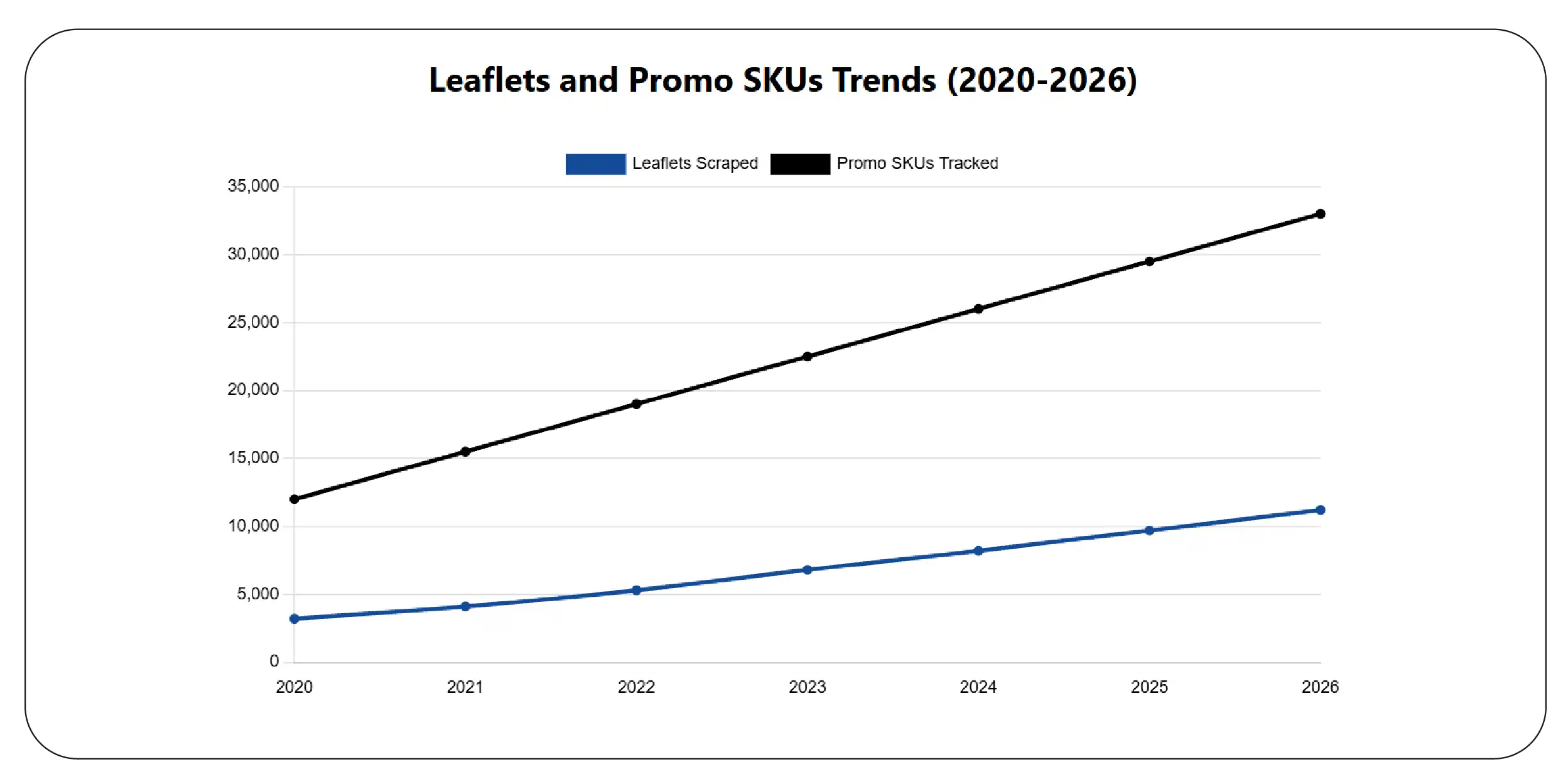
ALDI is known for its aggressive pricing and weekly promotional cycles. Monitoring its leaflet data is critical for FMCG benchmarking.
Businesses that scrape ALDI weekly offers and promotional leaflets can track discount frequency, product launches, and seasonal campaigns.
ALDI Promotion Coverage Trends (2020–2026)
| Year |
Leaflets Scraped |
Promo SKUs Tracked |
| 2020 |
3,200 |
12,000 |
| 2021 |
4,100 |
15,500 |
| 2022 |
5,300 |
19,000 |
| 2023 |
6,800 |
22,500 |
| 2024 |
8,200 |
26,000 |
| 2025 |
9,700 |
29,500 |
| 2026 |
11,200 |
33,000 |
Key insights:
- Weekly discount monitoring
- Private-label promotion tracking
- Seasonal campaign analysis
- SKU-level pricing intelligence
- Competitor benchmarking
ALDI's pricing strategy is highly structured and predictable, making it a key benchmark for the entire DACH grocery ecosystem. Tracking its promotional activity helps brands align pricing and maximize shelf competitiveness.
What Insights Can Be Extracted From LIDL Promotional Data?
LIDL plays a major role in European grocery competition with frequent promotional campaigns and flyer-based marketing.
Using Extract LIDL grocery promotions and flyer data, Promotion and deal intelligence, businesses can analyze discount depth, promotional cycles, and product-level performance.
LIDL Promotion Trends (2020–2026)
| Year |
Deals Captured |
Discount Campaigns |
| 2020 |
10,000 |
4,500 |
| 2021 |
12,800 |
5,800 |
| 2022 |
15,600 |
7,200 |
| 2023 |
18,900 |
8,900 |
| 2024 |
22,400 |
10,500 |
| 2025 |
26,100 |
12,300 |
| 2026 |
30,500 |
14,200 |
Key insights:
- Promotion frequency analysis
- Deal structure evaluation
- Category-level benchmarking
- SKU performance tracking
- Price competitiveness assessment
LIDL's promotional intensity makes it a critical data source for understanding market-wide pricing behavior in Germany and the broader DACH region.
How Can Brands Monitor ALDI, LIDL, and REWE Together?
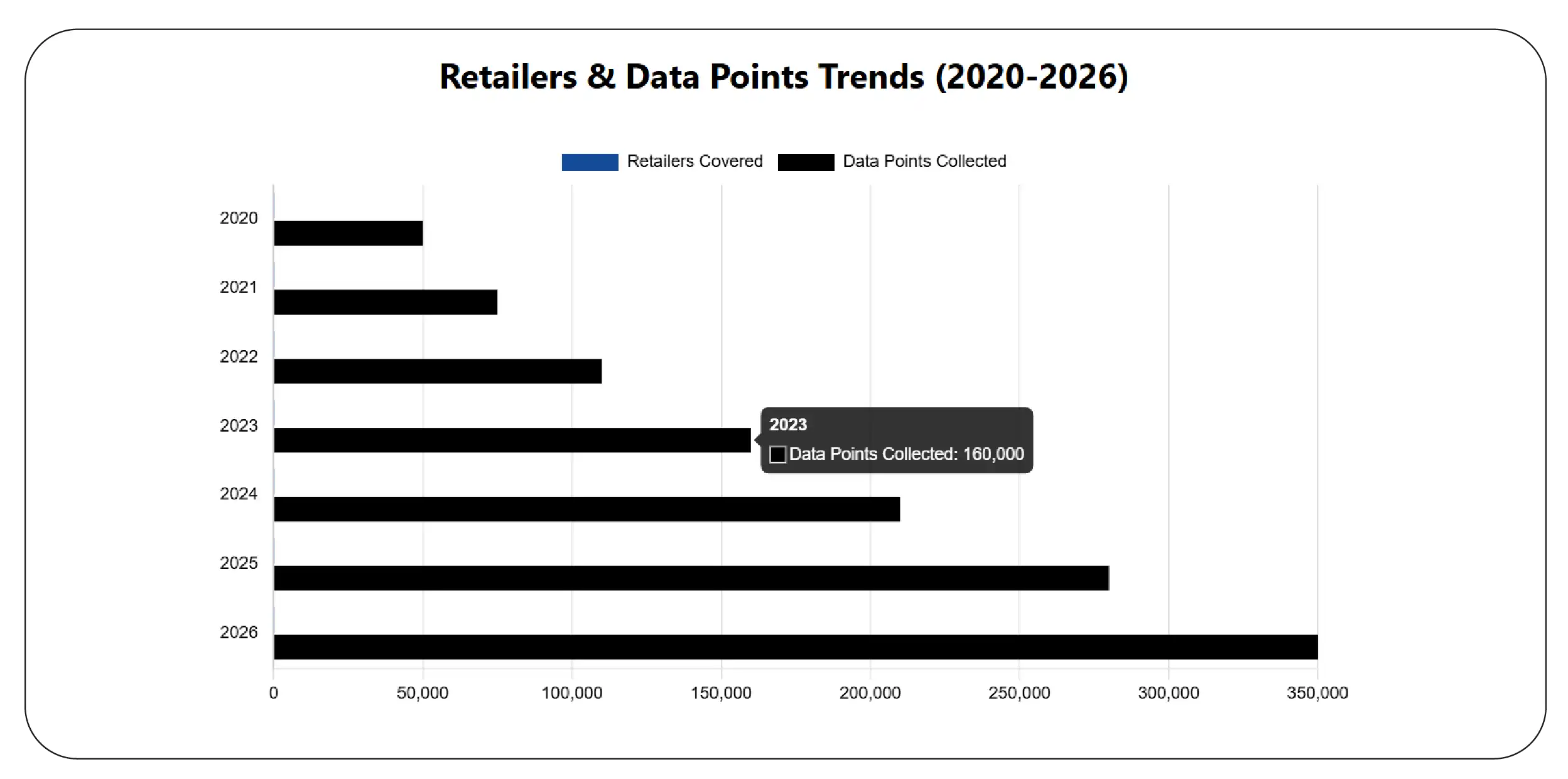
Combining data from multiple retailers provides a complete view of grocery market dynamics.
Businesses that monitor ALDI, LIDL and REWE promotional activity can compare pricing strategies, promotional intensity, and category positioning across leading German retailers.
Multi-Retailer Intelligence Growth (2020–2026)
| Year |
Retailers Covered |
Data Points Collected |
| 2020 |
15 |
50,000 |
| 2021 |
20 |
75,000 |
| 2022 |
25 |
110,000 |
| 2023 |
30 |
160,000 |
| 2024 |
35 |
210,000 |
| 2025 |
40 |
280,000 |
| 2026 |
45 |
350,000 |
Key outcomes:
- Cross-retailer benchmarking
- Promotion strategy comparison
- Category performance insights
- Pricing gap identification
- Market trend forecasting
Unified monitoring across ALDI, LIDL, and REWE enables FMCG brands to develop stronger pricing strategies and improve retail negotiations.
Why Choose Product Data Scrape?
Modern grocery competition in Europe requires structured intelligence to stay ahead. Product Data Scrape helps FMCG brands and analysts transform unstructured flyer data into actionable insights using scrape German grocery Leaflet data for retail intelligence, retailers price and promote your brand.
Key capabilities include:
- Weekly flyer scraping automation
- Promotional benchmarking
- Competitor price tracking
- Category-level analytics
- Retail performance insights
With scalable data pipelines, businesses can track thousands of SKUs across the DACH region and optimize pricing strategies effectively.
Conclusion
Retail success in Germany depends on understanding promotions, pricing cycles, and competitor strategies. Marketplace selling intelligence enables brands to respond faster to market changes and improve performance. Through Scrape Promotional & Leaflet Data from German Grocery Chains, businesses gain visibility into real-time grocery promotions across ALDI, LIDL, and REWE.
Partner with Product Data Scrape to unlock deep promotional insights, strengthen retail strategies, and build a data-driven advantage in the DACH grocery market using Scrape Promotional & Leaflet Data from German Grocery Chains.
FAQs
1. What is grocery leaflet data scraping?
Grocery leaflet data scraping collects promotional offers, discounts, and product listings from retail flyers. It helps brands analyze competitor pricing and promotional strategies across supermarkets.
2. Why is DACH grocery data important?
DACH grocery data helps businesses understand retail trends in Germany, Austria, and Switzerland. It supports better pricing decisions and competitive benchmarking.
3. How does ALDI promotional tracking help brands?
ALDI tracking helps brands understand discount patterns, SKU promotions, and pricing benchmarks. This improves competitive positioning and retail strategy.
4. What insights can LIDL flyer data provide?
LIDL flyer data reveals promotional frequency, discount depth, category performance, and competitor pricing behavior across multiple product segments.
5. How does Product Data Scrape help retailers?
Product Data Scrape provides automated data collection, promotional analytics, competitor monitoring, and retail intelligence solutions for FMCG and grocery businesses.


 Singapore
 EMAIL
EMAIL
 PHONE
PHONE


.webp)
.webp "thumb")
.webp "thumb")
.webp "thumb")








.webp)