Introduction
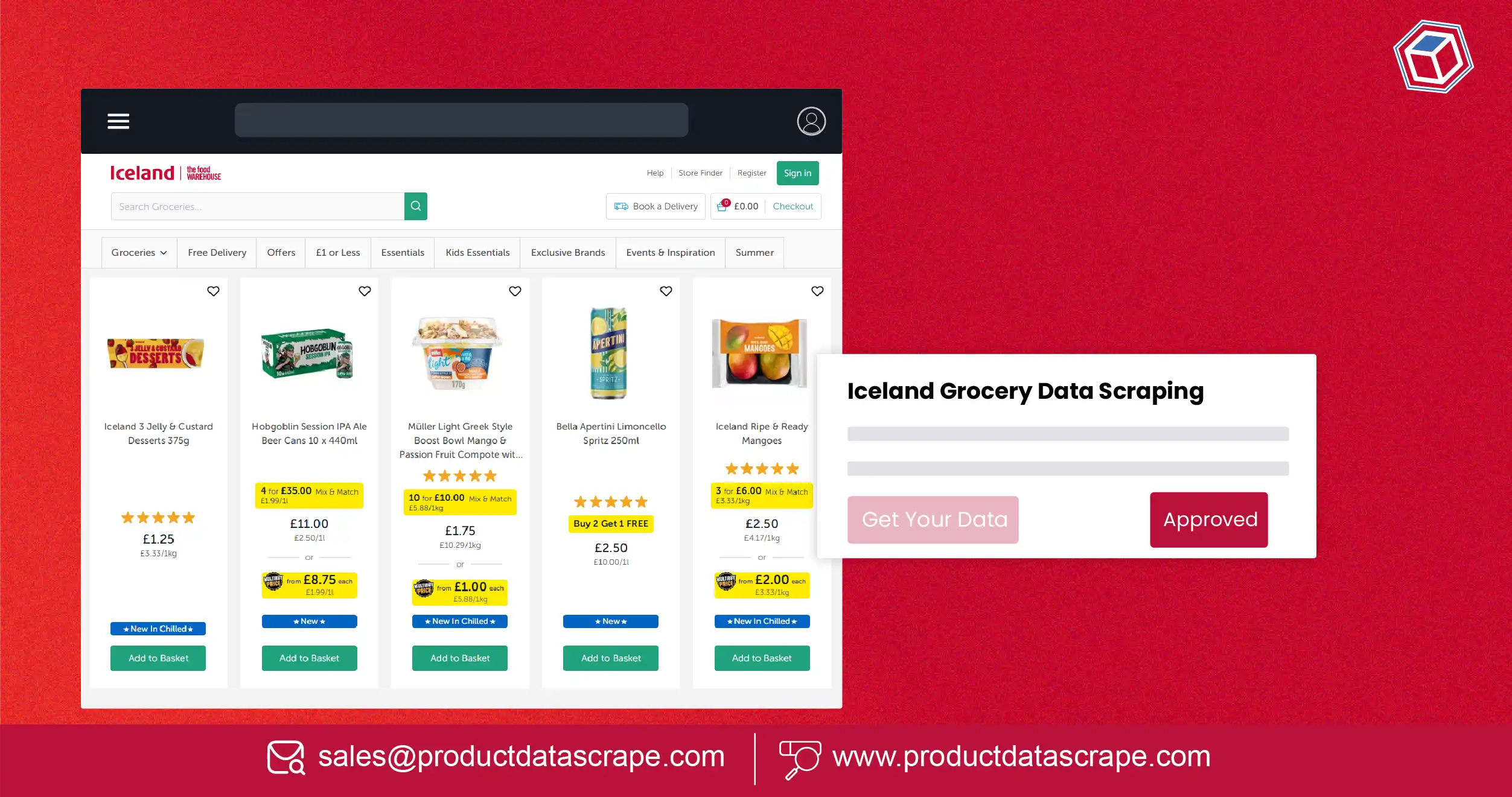
The grocery retail industry is rapidly evolving as supermarkets and FMCG brands compete through dynamic pricing, personalized promotions, and faster delivery services. Businesses increasingly rely on Iceland Grocery Data Scraping to collect real-time insights into product pricing, inventory availability, promotional campaigns, and changing customer demand patterns. Automated grocery intelligence helps retailers improve operational efficiency and respond quickly to competitive market shifts.
Using advanced solutions to Extract Iceland Grocery & Gourmet Food Data, businesses can automate the collection of SKU-level information, category trends, discounts, and delivery performance metrics from Iceland’s digital grocery platforms. These insights support inventory planning, competitor benchmarking, and smarter pricing decisions.
Interactive dashboards powered by scraped grocery data enable organizations to monitor consumer purchasing behavior, analyze seasonal demand fluctuations, and optimize promotional strategies more efficiently. AI-powered analytics further improve forecasting accuracy and business intelligence capabilities.
As online grocery shopping and quick commerce continue expanding in 2026, businesses using real-time grocery data extraction gain stronger visibility into market trends, improved customer engagement, and scalable retail analytics solutions.
Enhancing Product Visibility Through Automated Inventory Tracking
.webp)
Modern grocery retailers require continuous visibility into product availability and assortment changes across digital platforms. Businesses increasingly use Iceland Product availability Monitoring systems to analyze inventory status, stock fluctuations, and category performance in real time.
Automated inventory intelligence enables retailers to identify out-of-stock products, monitor replenishment cycles, and optimize supply chain planning more effectively. Businesses also use a Scraper to Track Product Assortment for monitoring SKU diversity, category expansion, and promotional product availability across grocery departments.
Real-time dashboards simplify inventory reporting by centralizing grocery datasets into visual analytics systems. Procurement and merchandising teams can quickly identify low-stock items, trending products, and assortment gaps that may affect sales performance.
Grocery Inventory Analytics Trends (2020–2026)
| Year |
Retailers Using Inventory Analytics |
Improvement in Stock Visibility |
| 2020 | 24% | 19% |
| 2021 | 33% | 28% |
| 2022 | 42% | 37% |
| 2023 | 52% | 47% |
| 2024 | 63% | 58% |
| 2025 | 75% | 70% |
| 2026 | 88% | 83% |
Key benefits include:
- Better inventory forecasting
- Improved stock availability tracking
- Faster assortment optimization
- Enhanced supply chain planning
- Stronger category management visibility
Understanding Consumer Demand Through Real-Time Digital Analytics
Consumer purchasing behavior changes rapidly due to seasonal demand, promotional campaigns, and economic conditions. Businesses increasingly rely on Iceland online grocery demand Insights to understand customer preferences and improve retail forecasting.
Automated analytics systems collect and process information related to product popularity, search behavior, category trends, and promotional performance across online grocery platforms. Businesses use these insights to optimize marketing strategies and improve demand forecasting accuracy.
AI-powered Digital Shelf Analytics platforms help organizations analyze customer engagement metrics, category visibility, and product ranking performance. Interactive dashboards transform raw grocery datasets into actionable intelligence that supports pricing optimization and assortment planning.
Retailers can also identify emerging purchasing patterns and regional demand variations through centralized analytics systems. These insights improve decision-making across merchandising, procurement, and digital marketing departments.
Online Grocery Demand Analytics Growth (2020–2026)
| Year |
Businesses Using Demand Analytics |
Improvement in Forecast Accuracy |
| 2020 | 23% | 18% |
| 2021 | 32% | 27% |
| 2022 | 41% | 36% |
| 2023 | 51% | 46% |
| 2024 | 62% | 57% |
| 2025 | 74% | 69% |
| 2026 | 87% | 82% |
Important advantages include:
- Better consumer demand forecasting
- Improved promotional effectiveness
- Enhanced category performance analysis
- Faster trend identification
- Stronger customer engagement visibility
Building Smarter Pricing Strategies Through Automated Data Collection
.webp)
Pricing intelligence has become a critical component of modern grocery retail operations. Businesses increasingly use systems to Extract Grocery prices from Iceland for real-time analysis of category-level pricing, discounts, and promotional offers.
Automated pricing intelligence systems collect structured grocery data continuously, enabling retailers to benchmark competitor pricing and optimize promotional campaigns. Businesses also leverage Pricing Intelligence Services to identify pricing fluctuations, compare regional pricing strategies, and improve margin optimization.
Interactive dashboards help analytics teams monitor dynamic pricing changes across grocery categories such as dairy, frozen foods, snacks, beverages, and household essentials. AI-powered forecasting systems further enhance pricing optimization by analyzing historical sales trends and customer purchasing behavior.
Automation reduces manual reporting workloads while improving operational scalability and pricing accuracy.
Grocery Pricing Intelligence Growth (2020–2026)
| Year |
Retailers Using Pricing Intelligence |
Improvement in Pricing Accuracy |
| 2020 | 25% | 20% |
| 2021 | 34% | 29% |
| 2022 | 43% | 38% |
| 2023 | 53% | 48% |
| 2024 | 64% | 59% |
| 2025 | 76% | 71% |
| 2026 | 89% | 84% |
Key benefits include:
- Better dynamic pricing optimization
- Improved promotional planning
- Enhanced regional pricing analysis
- Faster competitor benchmarking
- Stronger profitability insights
Tracking Retail Market Movements Through Competitive Monitoring
Retail grocery competition continues intensifying as supermarkets and quick commerce platforms expand digital operations. Businesses increasingly use systems to Monitor Iceland Grocery Trends for real-time visibility into category performance, competitor promotions, and inventory fluctuations.
Automated retail intelligence frameworks simplify Competitor Price Monitoring by collecting data related to discounts, delivery fees, promotional offers, and SKU-level pricing changes across grocery platforms. Retailers can benchmark market performance and react quickly to changing pricing conditions.
Centralized dashboards provide actionable insights into regional market trends, seasonal purchasing patterns, and customer demand fluctuations. AI-powered analytics models further improve strategic planning by forecasting category growth and promotional effectiveness.
Retailers also benefit from automated alerts that notify teams about pricing shifts and competitor campaign launches.
Grocery Competitor Analytics Statistics (2020–2026)
| Year |
Businesses Using Competitor Analytics |
Improvement in Market Visibility |
| 2020 | 24% | 19% |
| 2021 | 33% | 28% |
| 2022 | 42% | 37% |
| 2023 | 52% | 47% |
| 2024 | 63% | 58% |
| 2025 | 75% | 70% |
| 2026 | 88% | 83% |
Major advantages include:
- Better competitor benchmarking
- Faster pricing response strategies
- Improved promotional tracking
- Enhanced market intelligence visibility
- Stronger retail forecasting capabilities
Improving Delivery Intelligence Through API-Driven Automation
.webp)
The growth of online grocery shopping has increased demand for real-time delivery analytics and operational transparency. Businesses increasingly rely on Iceland Supermarket Delivery Intelligence to monitor delivery performance, service availability, and customer fulfillment trends.
Automated delivery analytics systems powered by Web Scraping API Services collect structured data related to delivery timelines, regional service coverage, inventory fulfillment rates, and customer engagement metrics. Businesses use these insights to optimize logistics planning and improve customer satisfaction.
Cloud-based dashboards centralize delivery analytics into visual reports that simplify operational monitoring and forecasting. Retailers can identify delivery bottlenecks, improve route planning, and monitor fulfillment efficiency more effectively.
Grocery Delivery Analytics Growth (2020–2026)
| Year |
Businesses Using Delivery Analytics |
Improvement in Fulfillment Efficiency |
| 2020 | 22% | 17% |
| 2021 | 31% | 26% |
| 2022 | 40% | 35% |
| 2023 | 50% | 45% |
| 2024 | 61% | 56% |
| 2025 | 73% | 68% |
| 2026 | 86% | 81% |
Key advantages include:
- Better delivery performance monitoring
- Improved fulfillment planning
- Enhanced logistics optimization
- Faster operational reporting
- Stronger customer service visibility
Transforming Retail Decision-Making Through Advanced Market Analytics
Modern retailers require scalable intelligence systems capable of processing large grocery datasets efficiently. Businesses increasingly depend on Iceland Grocery market analytics to analyze pricing trends, inventory fluctuations, and customer purchasing behavior across digital grocery ecosystems.
Advanced market analytics frameworks integrate scraped grocery datasets into centralized dashboards for real-time operational visibility. Businesses can monitor category performance, analyze promotional effectiveness, and improve strategic planning through AI-powered reporting systems.
Retailers also use predictive analytics models to forecast seasonal demand, optimize pricing strategies, and improve assortment planning. Structured grocery intelligence supports better collaboration between procurement, merchandising, marketing, and analytics teams.
Grocery Market Analytics Adoption (2020–2026)
| Year |
Retailers Using Market Analytics |
Improvement in Strategic Decision-Making |
| 2020 | 23% | 18% |
| 2021 | 32% | 27% |
| 2022 | 41% | 36% |
| 2023 | 51% | 46% |
| 2024 | 62% | 57% |
| 2025 | 74% | 69% |
| 2026 | 87% | 82% |
Important benefits include:
- Better retail forecasting
- Improved category planning
- Enhanced promotional analytics
- Faster operational decision-making
- Stronger customer demand visibility
Why Choose Product Data Scrape?
Product Data Scrape provides advanced grocery intelligence, retail automation, and analytics solutions designed for modern supermarket ecosystems. Businesses leveraging Iceland Grocery Deal intelligence gain access to real-time pricing analytics, inventory tracking, promotional monitoring, and consumer demand forecasting systems.
Companies using Iceland Grocery Data Scraping benefit from scalable extraction infrastructure, AI-powered dashboards, and automated analytics workflows that improve retail visibility and operational efficiency. We help organizations transform grocery datasets into actionable intelligence for smarter decision-making, stronger competitor benchmarking, and long-term retail growth strategies.
Conclusion
The grocery retail industry continues evolving through digital transformation, real-time analytics, and AI-powered decision-making systems. Businesses leveraging a structured Grocery store dataset gain deeper insights into pricing trends, inventory performance, customer demand, and promotional effectiveness.
By adopting Iceland Grocery Data Scraping, retailers can automate grocery intelligence workflows, improve forecasting accuracy, and optimize operational efficiency through scalable analytics systems. Real-time dashboards and predictive analytics further support smarter pricing decisions and stronger customer engagement strategies.
As competition across online grocery and quick commerce platforms intensifies in 2026, businesses investing in automated grocery intelligence solutions will achieve stronger market visibility and sustainable growth.
Contact Product Data Scrape today to implement advanced Iceland Grocery Data Scraping solutions and transform your retail analytics into real-time business growth opportunities!
FAQs
1. What is Iceland Grocery Data Scraping?
Iceland Grocery Data Scraping is the automated extraction of grocery pricing, inventory, promotions, product availability, and customer demand data from Iceland’s online grocery platform for analytics and retail intelligence.
2. How does grocery data scraping improve retail analytics?
Grocery data scraping helps retailers monitor competitor pricing, analyze inventory trends, improve forecasting accuracy, optimize promotions, and enhance operational decision-making through real-time business intelligence dashboards.
3. Why is pricing intelligence important in grocery retail?
Pricing intelligence helps businesses benchmark competitors, optimize discounts, improve profit margins, monitor dynamic pricing trends, and respond quickly to changing customer purchasing behavior across grocery categories.
4. How do delivery analytics improve customer experience?
Delivery analytics help retailers monitor fulfillment performance, reduce delivery delays, optimize logistics planning, and improve service efficiency for better customer satisfaction and operational scalability.
5. Why do businesses choose Product Data Scrape for grocery analytics?
Product Data Scrape provides scalable grocery scraping infrastructure, AI-powered dashboards, automated analytics workflows, and real-time retail intelligence solutions that help businesses improve forecasting, pricing optimization, and market visibility.



 Singapore
 EMAIL
EMAIL
 PHONE
PHONE


.webp "thumb")
.webp "thumb")








.webp)