Introduction
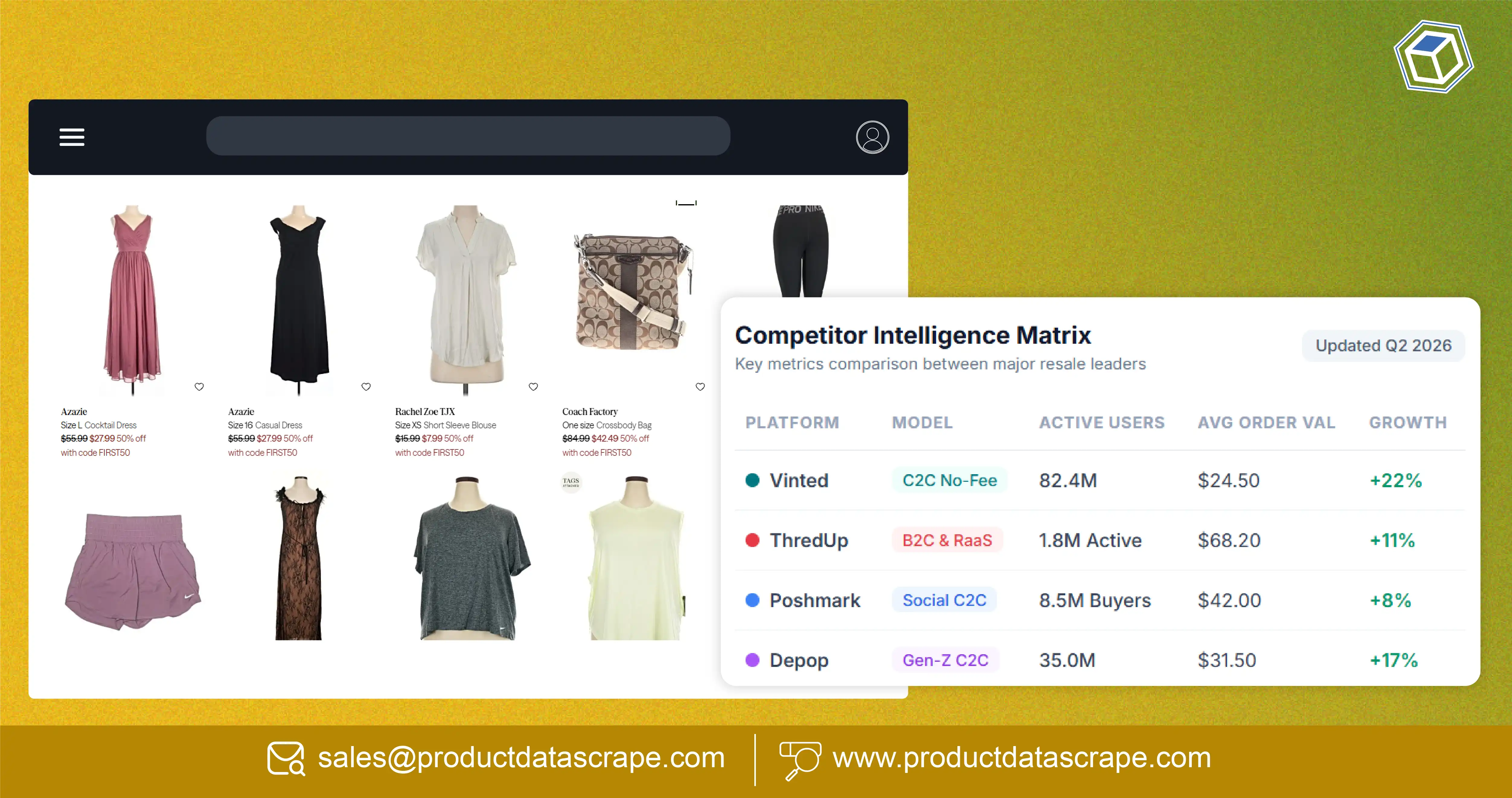
Why is resale marketplace intelligence essential for modern retail businesses? Businesses can improve pricing strategies, identify demand trends, and gain a competitive advantage by leveraging Resale Marketplace Data Intelligence. Automated marketplace monitoring provides real-time insights into product pricing, inventory, seller performance, and consumer behavior, enabling smarter decisions in the rapidly expanding global secondhand economy.
Industry Insight: The global secondhand apparel market is projected to surpass $77 billion by 2026, fueled by sustainability initiatives, value-conscious consumers, and the rapid growth of online resale platforms. Brands using marketplace analytics consistently improve pricing accuracy, inventory planning, and customer engagement.
The resale economy has transformed how consumers buy and sell fashion, electronics, luxury goods, and lifestyle products. Platforms such as ThredUp and Vinted continue to attract millions of users looking for affordable, sustainable alternatives to new products. For brands, retailers, marketplaces, and investors, this creates an enormous opportunity to monitor product demand, pricing movements, inventory availability, and seller behavior.
Leveraging Fashion data scraping enables organizations to automate the collection of marketplace information, helping them monitor resale pricing, identify emerging product trends, analyze category performance, and benchmark competitors. Instead of relying on manual research, businesses gain structured, real-time datasets that support data-driven pricing, merchandising, and market expansion strategies.
How Can Retailers Monitor Product Performance Across Resale Platforms?
Resale marketplaces generate millions of product listings every day, making manual monitoring impossible. Automated product intelligence enables businesses to collect accurate listing information, identify pricing trends, evaluate inventory movement, and understand changing consumer preferences across major resale platforms.
Using ThredUp Product Data Scraping, organizations can collect structured information from one of the world's largest online resale marketplaces. Businesses can monitor product titles, brands, categories, prices, discounts, seller activity, product conditions, availability, and listing frequency.
When combined with Social commerce data, these insights become even more valuable. Retailers can correlate marketplace activity with social media trends, influencer campaigns, and consumer engagement to identify products experiencing increasing resale demand.
Automated marketplace intelligence enables businesses to:
- Monitor product listings continuously.
- Track pricing fluctuations.
- Analyze inventory availability.
- Measure seller activity.
- Identify trending fashion categories.
- Benchmark competing brands.
- Improve assortment planning.
- Support demand forecasting.
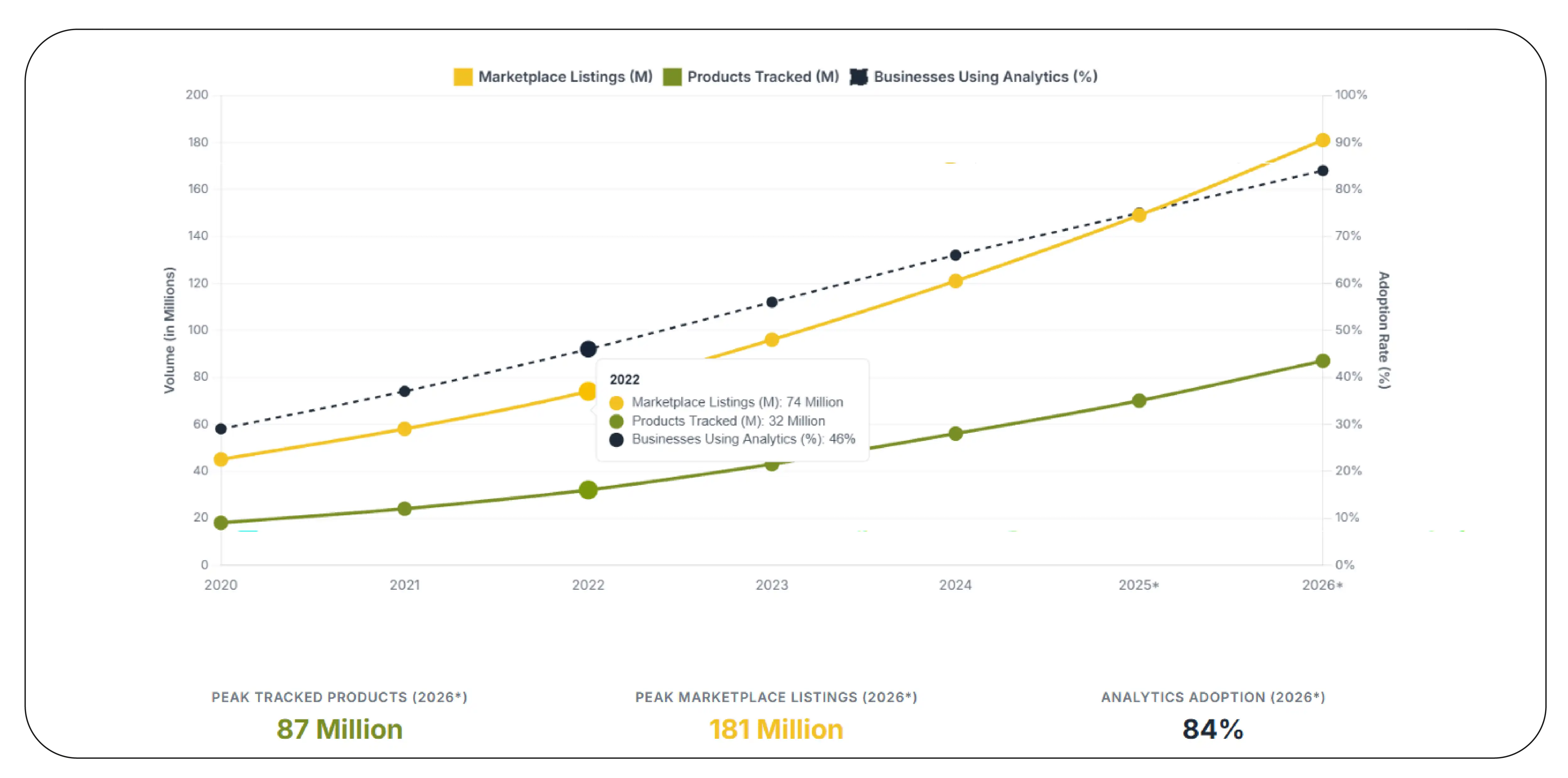
Resale Marketplace Growth (2020–2026)
| Year |
Products Tracked |
Marketplace Listings |
Businesses Using Marketplace Analytics |
| 2020 |
18 Million |
45 Million |
29% |
| 2021 |
24 Million |
58 Million |
37% |
| 2022 |
32 Million |
74 Million |
46% |
| 2023 |
43 Million |
96 Million |
56% |
| 2024 |
56 Million |
121 Million |
66% |
| 2025* |
70 Million |
149 Million |
75% |
| 2026* |
87 Million |
181 Million |
84% |
Projected industry estimates.
Organizations that automate resale marketplace intelligence gain better visibility into product demand, pricing behavior, and seller performance. These insights support strategic pricing, inventory optimization, and improved competitiveness in the rapidly expanding circular economy.
How Can Businesses Gain Better Visibility into Consumer Buying Trends?
Understanding buyer preferences is essential for succeeding in the secondhand marketplace. Consumer demand changes rapidly based on fashion trends, seasonality, sustainability preferences, and product availability. Businesses that monitor these shifts can react faster and improve merchandising decisions.
Using Extract Vinted Marketplace Data, retailers and brands gain access to valuable insights across one of Europe's fastest-growing resale platforms. Structured marketplace intelligence enables businesses to monitor listing activity, product availability, pricing changes, category performance, seller behavior, and customer demand across thousands of fashion and lifestyle products.
Businesses can leverage these insights to:
- Identify fast-selling categories.
- Monitor regional demand trends.
- Compare brand popularity.
- Evaluate inventory turnover.
- Detect emerging resale opportunities.
- Improve pricing strategies.
- Optimize product sourcing.
- Strengthen marketplace competitiveness.
Historical marketplace data also enables organizations to recognize seasonal buying patterns and forecast future demand. These insights help brands make informed sourcing decisions while identifying opportunities for expanding into high-growth resale categories.
Vinted Marketplace Analytics (2020–2026)
| Year |
Active Listings Monitored |
Product Categories |
Businesses Using Marketplace Intelligence |
| 2020 |
26 Million |
180 |
31% |
| 2021 |
34 Million |
210 |
39% |
| 2022 |
45 Million |
245 |
48% |
| 2023 |
59 Million |
285 |
58% |
| 2024 |
75 Million |
330 |
68% |
| 2025* |
93 Million |
375 |
77% |
| 2026* |
114 Million |
430 |
85% |
Projected industry estimates.
Continuous marketplace intelligence enables retailers, brands, and investors to understand evolving consumer behavior with greater accuracy. By monitoring resale activity across major platforms, businesses can identify growth opportunities, improve inventory planning, optimize pricing, and strengthen their competitive position in the global secondhand market.
How Can Businesses Track Pricing Trends Across the Secondhand Economy?
The resale market changes rapidly as sellers adjust prices based on product condition, brand popularity, seasonal demand, and inventory availability. Businesses that monitor these fluctuations gain valuable insights into consumer purchasing behavior and competitive pricing strategies.
Using Scrape Secondhand Marketplace Data, organizations can automatically collect structured information from leading resale platforms, including product listings, prices, discounts, seller activity, product conditions, availability, and category performance. When combined with Resale Marketplace Pricing Data, retailers and brands can build comprehensive pricing models that reveal historical trends and predict future market movements.
Automated pricing intelligence enables businesses to:
- Monitor daily price fluctuations.
- Compare prices across marketplaces.
- Analyze demand by product category.
- Identify premium resale brands.
- Track discount frequency.
- Measure inventory turnover.
- Detect seasonal pricing patterns.
- Support dynamic pricing decisions.
Historical resale data also helps organizations determine the average resale value of products throughout their lifecycle. This intelligence enables brands to optimize pricing strategies, evaluate product depreciation, and identify categories with strong long-term resale potential.
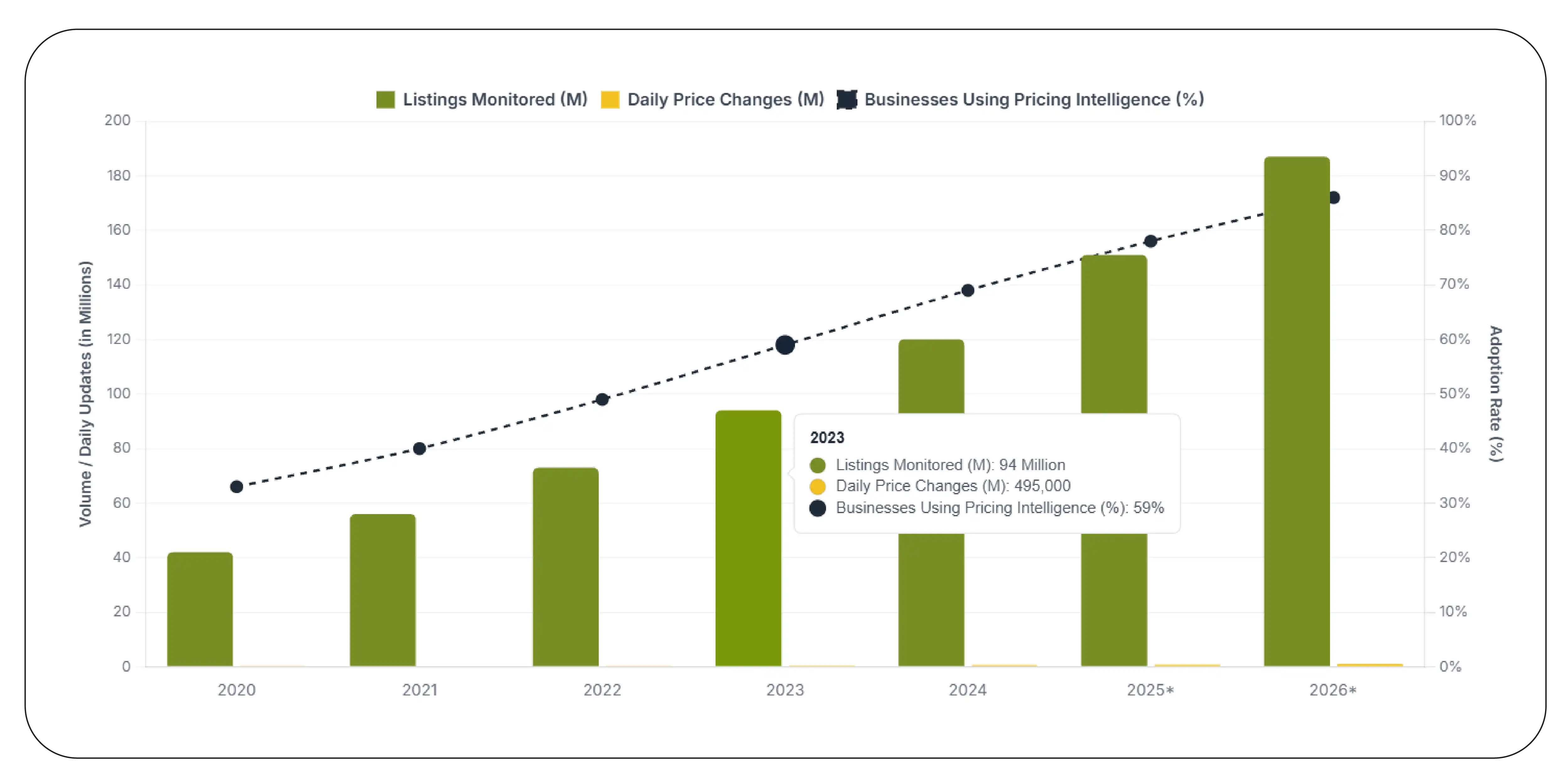
Global Secondhand Pricing Trends (2020–2026)
| Year |
Listings Monitored |
Average Daily Price Changes |
Businesses Using Pricing Intelligence |
| 2020 |
42 Million |
210,000 |
33% |
| 2021 |
56 Million |
285,000 |
40% |
| 2022 |
73 Million |
375,000 |
49% |
| 2023 |
94 Million |
495,000 |
59% |
| 2024 |
120 Million |
640,000 |
69% |
| 2025* |
151 Million |
810,000 |
78% |
| 2026* |
187 Million |
1.02 Million |
86% |
Projected industry estimates.
Organizations leveraging automated pricing intelligence can quickly identify pricing opportunities, benchmark competitors, improve resale valuation models, and maximize profitability in an increasingly competitive secondhand marketplace.
How Can Continuous Price Monitoring Improve Competitive Advantage?
Price movements in resale marketplaces occur throughout the day as sellers react to demand, inventory availability, and competitor listings. Businesses that rely on periodic manual checks often miss valuable opportunities to optimize pricing strategies or identify emerging trends.
Implementing Secondhand Marketplace Price Tracking enables organizations to monitor real-time pricing activity across thousands of resale listings. Automated monitoring captures changes in selling prices, promotional discounts, listing updates, seller activity, and inventory availability, providing a complete view of marketplace dynamics.
Continuous price monitoring helps businesses:
- Detect instant price changes.
- Benchmark competing sellers.
- Monitor premium product pricing.
- Identify fast-moving inventory.
- Evaluate promotional effectiveness.
- Improve pricing consistency.
- Support inventory forecasting.
- Strengthen revenue optimization.
Historical pricing intelligence also enables predictive analytics, allowing businesses to forecast demand, identify seasonal trends, and optimize product sourcing decisions. Retailers can better understand how pricing influences customer behavior while maximizing margins through data-driven pricing strategies.
Marketplace Price Tracking Growth (2020–2026)
| Year |
Prices Monitored Daily |
Active Sellers Tracked |
Automated Price Tracking Adoption |
| 2020 |
5.6 Million |
780,000 |
30% |
| 2021 |
7.9 Million |
1.02 Million |
38% |
| 2022 |
10.8 Million |
1.35 Million |
47% |
| 2023 |
14.7 Million |
1.78 Million |
57% |
| 2024 |
19.5 Million |
2.28 Million |
67% |
| 2025* |
25.3 Million |
2.89 Million |
76% |
| 2026* |
32.8 Million |
3.64 Million |
85% |
Projected industry estimates.
Businesses that invest in continuous marketplace monitoring gain faster access to actionable pricing intelligence, improve competitive positioning, reduce pricing inconsistencies, and respond proactively to changing consumer demand across the global resale ecosystem.
How Can Pricing Analytics Improve Profitability in the Resale Economy?
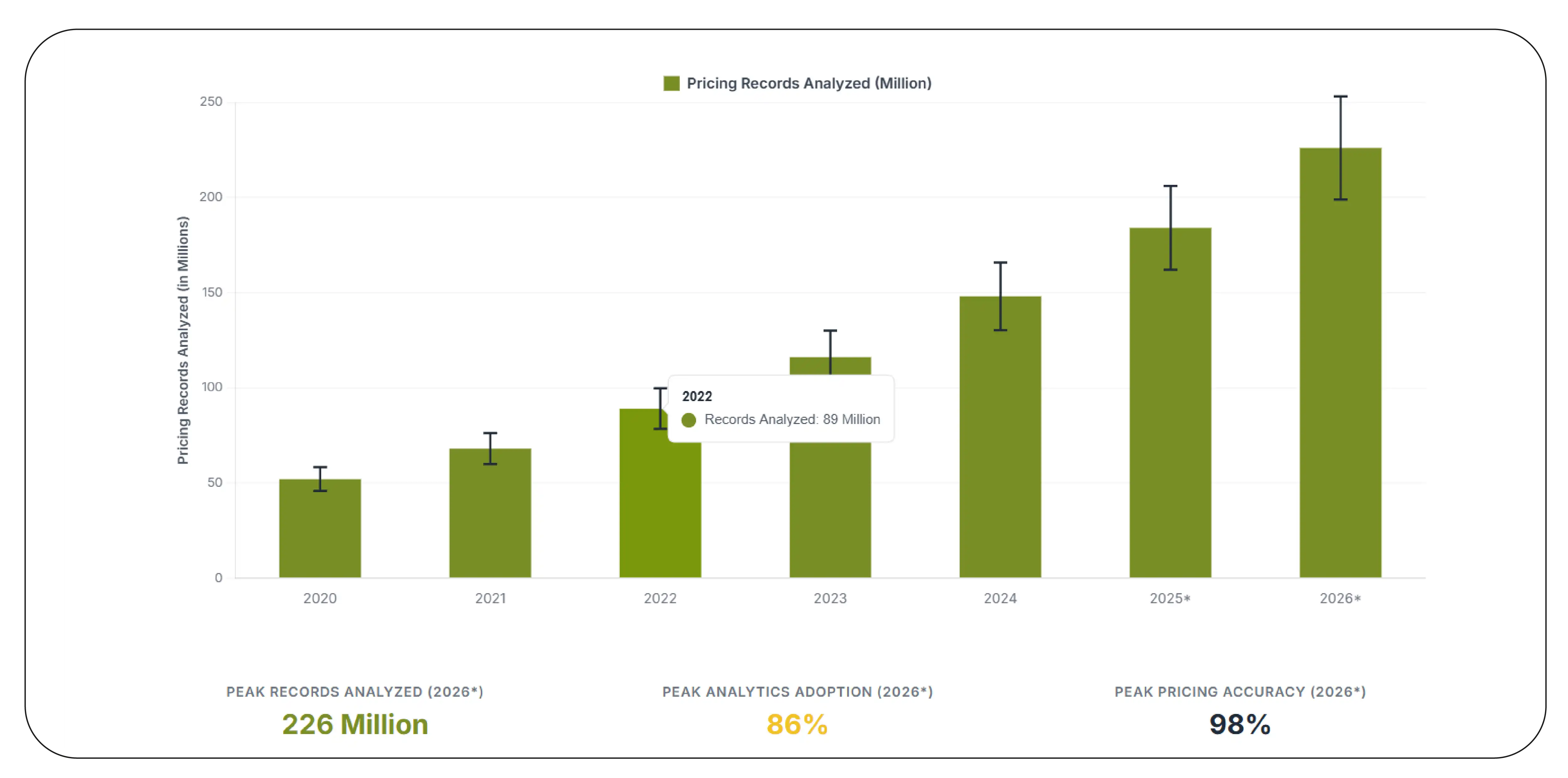
As the resale marketplace grows, businesses require more than historical pricing records. They need advanced analytics that reveal pricing trends, demand shifts, competitor strategies, and consumer purchasing patterns. Pricing analytics enables retailers, brands, and marketplace sellers to optimize margins while remaining competitive.
Using Resale Marketplace Pricing Analytics, organizations can evaluate historical price movements, discount frequency, category performance, and seller competitiveness across multiple resale platforms. These insights help businesses establish data-driven pricing strategies instead of relying on assumptions or manual research.
Pricing analytics supports businesses by helping them:
- Identify profitable resale categories.
- Benchmark competitor pricing.
- Measure promotional performance.
- Detect seasonal pricing trends.
- Forecast resale value.
- Optimize listing prices.
- Improve revenue management.
- Support strategic sourcing decisions.
Historical analytics also helps businesses understand how product condition, brand reputation, rarity, and demand influence resale pricing. These insights improve inventory acquisition strategies and strengthen long-term profitability across rapidly changing marketplaces.
Resale Pricing Analytics Growth (2020–2026)
| Year |
Pricing Records Analyzed |
Businesses Using Pricing Analytics |
Pricing Accuracy |
| 2020 |
52 Million |
34% |
84% |
| 2021 |
68 Million |
41% |
87% |
| 2022 |
89 Million |
50% |
90% |
| 2023 |
116 Million |
60% |
93% |
| 2024 |
148 Million |
69% |
95% |
| 2025* |
184 Million |
78% |
97% |
| 2026* |
226 Million |
86% |
98% |
Projected industry estimates.
Businesses leveraging advanced pricing analytics improve decision-making, optimize resale pricing, strengthen profitability, and maintain a competitive edge in the rapidly evolving circular economy.
How Can Market Intelligence Shape the Future of Circular Commerce?
The resale industry continues to evolve as sustainability, affordability, and digital commerce influence consumer purchasing behavior. Businesses need comprehensive market intelligence that goes beyond pricing to understand product demand, category growth, inventory trends, and customer preferences.
Through Fashion Resale Market Data Analysis, organizations can evaluate brand performance, product lifecycle trends, resale velocity, seller behavior, and marketplace demand across multiple resale platforms. These insights help retailers identify emerging opportunities while supporting long-term strategic planning.
Market intelligence enables organizations to:
- Monitor category growth.
- Evaluate consumer demand.
- Benchmark resale platforms.
- Track inventory movement.
- Measure brand popularity.
- Forecast future trends.
- Optimize sourcing strategies.
- Support expansion into new markets.
Comprehensive analysis also allows brands to understand how sustainability initiatives and circular commerce influence customer purchasing decisions. Organizations can identify high-growth product segments and improve marketplace competitiveness while supporting environmentally responsible retail practices.
Global Circular Commerce Intelligence (2020–2026)
| Year |
Marketplace Datasets Analyzed |
Categories Monitored |
Enterprises Using Market Intelligence |
| 2020 |
75 Million |
220 |
32% |
| 2021 |
96 Million |
255 |
40% |
| 2022 |
122 Million |
295 |
49% |
| 2023 |
156 Million |
340 |
59% |
| 2024 |
196 Million |
390 |
69% |
| 2025* |
243 Million |
445 |
78% |
| 2026* |
298 Million |
510 |
86% |
Projected industry estimates.
Organizations that invest in advanced resale market intelligence gain a stronger understanding of consumer behavior, improve strategic planning, optimize inventory decisions, and capitalize on the expanding global secondhand economy.
Why Choose Product Data Scrape?
Product Data Scrape provides scalable data extraction and analytics solutions that help brands, retailers, investors, and marketplace operators unlock actionable insights from global resale platforms. Our expertise in Resale Marketplace Data Intelligence enables businesses to monitor product listings, pricing, inventory, seller performance, and demand trends in real time. We also deliver comprehensive Resale market data that supports dynamic pricing, competitive benchmarking, inventory optimization, demand forecasting, and strategic decision-making. With automated data collection, customizable dashboards, and API-ready datasets, businesses gain accurate intelligence that improves operational efficiency and drives sustainable growth in the circular economy.
Conclusion
The global resale economy is transforming retail by creating new opportunities for brands, sellers, and marketplaces to maximize value through data-driven decisions. Businesses leveraging Resale Marketplace Data Intelligence gain continuous visibility into pricing trends, inventory movements, consumer demand, and seller performance. Combined with resale & second-hand marketplace data, these insights enable smarter pricing strategies, stronger competitive positioning, and improved profitability.
Partner with Product Data Scrape to unlock powerful Resale Marketplace Data Intelligence and comprehensive resale & second-hand marketplace data solutions that help your business optimize pricing, identify emerging trends, and lead the future of circular commerce!
FAQs
1. What is resale marketplace data intelligence?
Resale marketplace data intelligence collects and analyzes pricing, listings, inventory, seller activity, and consumer demand from resale platforms to support competitive pricing, forecasting, and market strategy.
2. Which businesses benefit from resale marketplace analytics?
Retailers, fashion brands, marketplace operators, investors, pricing analysts, resale platforms, and supply chain teams use resale analytics to improve pricing, inventory planning, sourcing, and competitive intelligence.
3. What data can be collected from resale marketplaces?
Businesses can monitor product listings, pricing, discounts, inventory availability, seller performance, customer demand, product conditions, brand popularity, and marketplace trends through automated data collection.
4. How does Product Data Scrape support resale analytics?
Product Data Scrape provides automated marketplace data extraction, pricing intelligence, trend monitoring, API-ready datasets, and customizable analytics that help businesses make faster, data-driven resale decisions.
5. Why is continuous marketplace monitoring important?
Continuous monitoring captures pricing changes, demand fluctuations, inventory updates, and seller activity in real time, enabling businesses to respond quickly to market changes and maintain a competitive advantage.


 Singapore
 EMAIL
 PHONE













.webp)